全球化

Search documents
韧性生长!TCL全球化跋涉不停歇
Shang Hai Zheng Quan Bao· 2025-09-25 18:20
Core Viewpoint - TCL's globalization strategy is essential for its growth, focusing on high-end products, localization, and empowering local industrial chains for sustainable development [2][10]. Group 1: Globalization Strategy - TCL's globalization strategy includes three main aspects: pursuing high-end product lines, implementing localization, and enabling local industrial chains for mutual benefits and sustainable development [2][10]. - The company has established a relatively complete global industrial and supply chain system, with nearly half of its total revenue coming from overseas products [2][5]. - TCL has expanded its operations to over 160 countries and regions, with a focus on smart terminals, semiconductor displays, and new energy photovoltaics [4]. Group 2: Market Expansion and Challenges - TCL began its international market expansion in 1997, initially relying on ODM exports before realizing the need to establish its brand in foreign markets [3]. - The company made significant strides in Southeast Asia by acquiring a Vietnamese factory and targeting niche markets with tailored products [3]. - After joining the WTO in 2001, TCL accelerated its globalization efforts, transitioning from product exports to establishing manufacturing bases abroad [3]. Group 3: Performance and Achievements - In 2024, TCL's television shipment volume reached 29 million units, making it the second-largest globally, while air conditioning sales reached 2,008,000 units [5]. - The revenue from overseas markets for TCL's industrial segment has exceeded 60% and continues to grow [5]. Group 4: Brand Development and Cultural Connection - TCL has transformed from a "Made in China" brand to a "Global Brand," emphasizing the importance of connecting emotionally with local consumers [9][10]. - The company has engaged in sports sponsorships across various regions, using sports as a means to connect with consumers and enhance brand recognition [10]. Group 5: Future Goals - TCL aims to establish five regional entities in North America, Latin America, Europe, Asia-Pacific, and the Middle East and Africa, focusing on building local supply chains and service systems [11].


评论丨21年数度“折戟”,奇瑞为何此时敲开港交所大门?
Mei Ri Jing Ji Xin Wen· 2025-09-25 13:02
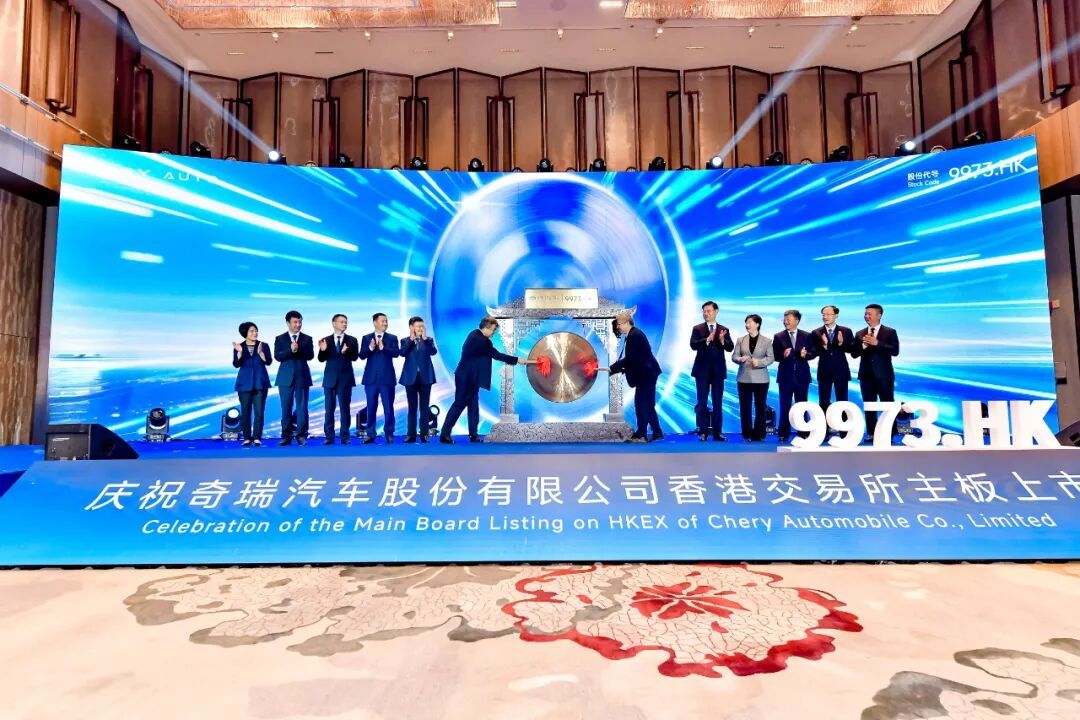
Core Viewpoint - Chery Automobile successfully completed its IPO on the Hong Kong Stock Exchange, raising approximately HKD 9.145 billion, marking the largest IPO for a car company in the Hong Kong market in 2025, with an initial price increase of over 13% on the first day [1][6] Group 1: IPO Journey - Chery's IPO journey began in 2004 but faced multiple setbacks, including complex equity relationships with SAIC Motor Corporation that delayed its plans [3][4] - In 2009, Chery sold 20% of its shares for CNY 2.9 billion, signaling a potential preparation for an IPO, but the plan was postponed in 2011 due to "related party transaction issues" [4] - Attempts to list Chery New Energy through a backdoor listing in 2016 failed due to the complexity of the proposal and unclear policies regarding new energy vehicles [4][5] Group 2: Recent Developments - The successful IPO in 2025 was facilitated by Chery's improved financial performance, with revenues exceeding CNY 269.9 billion and net profits reaching CNY 14.3 billion in 2024 [6] - Chery restructured its equity and organizational framework, introducing diverse investors and establishing a domestic business unit to enhance strategic focus and resource integration [6][7] - The company launched the "Yaoguang 2025" strategy to strengthen its position in the new energy sector and partnered with Huawei to enhance its smart vehicle offerings [6][7] Group 3: Market Reception and Future Challenges - The IPO attracted 13 cornerstone investors who collectively subscribed for USD 587 million, indicating strong market confidence in Chery's dual strategy of technology and international expansion [7] - Despite the successful listing, challenges remain, including the fact that new energy revenue accounts for less than 30% of total income and reliance on external partnerships for smart technology [7][8] - The company plans to allocate 35% of the raised funds for developing various passenger vehicles, 25% for next-generation automotive technologies, and 20% for global expansion, aiming to leverage capital for a "smart breakthrough" and "global upgrade" [7][8]
国泰海通 · 洞察价值丨合集
国泰海通证券研究· 2025-09-25 12:07
Core Insights - The article discusses the transformation in various industries driven by new consumption patterns, technological advancements, and the need for quality over quantity in market offerings [3][4][5][6][17]. Group 1: New Consumption Trends - The new consumption era is characterized by a mismatch between supply and demand, with marketing playing a crucial role in driving consumption growth [3]. - There is a focus on quality and value in the real estate market, which is expected to stabilize consumer confidence [4]. Group 2: Industry Innovations - The article highlights the importance of technological innovation in sectors such as AI, robotics, and communication, indicating a shift towards hardware and algorithm-driven solutions [6][9][10]. - The automotive industry is noted for its vast potential for growth, driven by technological advancements and market expansion [6]. Group 3: Economic and Market Outlook - The article suggests that the Chinese stock market is poised for further growth, with expectations of new highs despite current economic challenges [18]. - It emphasizes the macroeconomic policy framework of "fiscal dominance and monetary cooperation," which is shaping market dynamics [18]. Group 4: Sector-Specific Insights - The steel industry is highlighted as having long-term investment opportunities, particularly in leading companies [5]. - The healthcare sector is undergoing significant changes, with a focus on innovative drug development as a key to its future [4]. Group 5: Broader Economic Context - The article discusses the impact of global changes on China's economic landscape, suggesting that the country is adapting to new macroeconomic realities [17]. - It also mentions the potential for increased industry prosperity due to the easing of competitive pressures and interest rate reductions [17].

深夜中国资产大爆发,一场会议在广州讨论如何“做多中国”
Feng Huang Wang Cai Jing· 2025-09-25 00:54
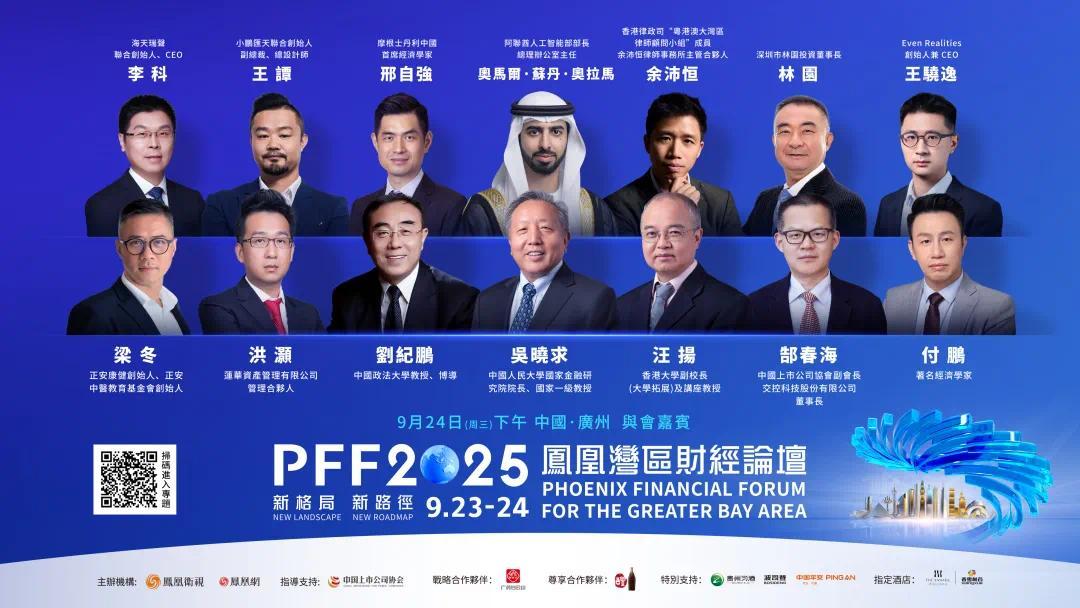
Market Overview - The three major U.S. stock indices closed lower on September 24, with the Dow Jones Industrial Average down 171.5 points, a decline of 0.37%, the S&P 500 down 18.95 points, a decline of 0.28%, and the Nasdaq Composite down 75.61 points, a decline of 0.33% [1] Technology Sector Performance - Popular tech stocks showed mixed results, with Intel rising over 6% amid news of seeking investment from Apple, Tesla increasing nearly 4%, while Google fell over 1%, and Nvidia and Apple both dropped close to 1% [2] Chinese Market Insights - The Nasdaq China Golden Dragon Index rose by 2.83%, with major Chinese concept stocks like Alibaba and Global Data rising over 8%, Baidu and JD.com up over 5%, and NIO increasing over 2% [3] Global Trade Dynamics - The World Trade Organization's Director-General warned that tariffs are causing unprecedented damage to the international trade system, with global trade under WTO terms dropping to 72% and potentially declining further [3] - Geopolitical tensions, tariff barriers, and regional supply chain restructuring are pushing the world towards a high-friction, low-trust trade era, impacting small and medium enterprises significantly [3] New Trade Era - The current situation does not signify the end of globalization but indicates its evolution into a new form centered on regional cooperation, digital infrastructure, and resilient supply chains [4] - The Greater Bay Area is emerging as a new global trade hub, leveraging its industrial capabilities and cross-border service strengths to adapt to these changes [4][5] Economic Resilience - Despite global economic uncertainties, China's economy is showing resilience, with a record high in goods trade value expected to reach 43.85 trillion yuan in 2024, and a 2.5% year-on-year increase in the first five months of 2025 [9] - The share of high-tech product exports is also increasing, projected to reach 18.2% in 2024 [9] Consumption and Investment Trends - In the first half of 2025, retail sales of consumer goods grew by 5.0%, contributing over 50% to economic growth [11] - The capital market is witnessing a shift, with A-shares breaking a ten-year pressure line, indicating a transition from a policy-driven market to a system-driven market [12] Future Economic Discussions - The "Phoenix Bay Area Finance Forum 2025" will address key topics such as the reconstruction of the global economic and trade order, new paths for corporate globalization, and the integration of artificial intelligence [6][13] - The forum aims to foster dialogue and collaboration among global leaders to navigate the uncertainties in the current economic landscape [7][14]
别再说“走出去”了!瞎出海,同样出局
凤凰网财经· 2025-09-24 14:08
Core Viewpoint - The urgency for domestic companies to globalize is emphasized, but caution is advised against reckless expansion without proper understanding of local markets [2][8]. Group 1: Globalization Trends - The global economic outlook for 2025 is significantly deteriorating, with rising tariffs and trade policy uncertainties increasing production costs and slowing down corporate investments [7]. - Despite challenges, globalization is seen as an inevitable trend, with companies needing to adapt to a complex environment characterized by tariff barriers and a multipolar world [8][10]. - The former Deputy Governor of the People's Bank of China, Li Dongrong, highlights that the underlying logic of globalization remains strong, driven by the pursuit of optimal resource allocation and efficiency maximization [12][17]. Group 2: The Nature of True Globalization - True globalization extends beyond merely selling products; it involves deep localization and integration into foreign markets [18][24]. - Chinese companies are increasingly moving from simple sales to a more systematic approach in their global strategies, becoming vital links between the Chinese and global economies [20][21]. - The concept of "selling goods" is insufficient; companies must build brand loyalty through localized services and community engagement [25][36]. Group 3: Localization Strategies - Effective localization requires companies to become integral parts of the local ecosystem, rather than just temporary visitors [37][41]. - The example of BYD's successful entry into the Los Angeles market illustrates the importance of understanding local needs and engaging with community stakeholders [38]. - Xiaopeng Motors emphasizes that true globalization involves establishing local R&D and manufacturing capabilities, fostering long-term partnerships, and creating a win-win situation for both the company and the local community [39][40].


科沃斯(603486):如何看待科沃斯未来潜力空间
Xin Lang Cai Jing· 2025-09-24 12:27
Core Viewpoint - The company has reached a performance bottom in 2023, with a turning point expected in the first half of 2024-2025, highlighting future potential through product cycles, globalization, platformization, and supply chain advantages [1] Group 1: Globalization Space - The industry is entering a new penetration cycle, with the company holding a significant first-mover advantage and a comprehensive strategy, leading to a 73% market share in online drum retail by the first half of 2025, with further growth expected in Q3 [2] - Future growth drivers include penetration growth against national subsidy baselines and international expansion, with potential revenue catch-up of 5 billion yuan annually from overseas contributions of brands like Ecovacs and Roborock [2] - The overseas average price is significantly higher, indicating potential for margin improvement as the company expands its international footprint [2] Group 2: Platformization Space - The company's third growth curve has transitioned from early losses to profitability, with platformization enhancing growth certainty [3] - Preliminary estimates suggest that the third growth curve, focusing on consumer-grade robots like lawn mowers and window cleaners, could generate over 5 billion yuan in profit and a scale of over 50 billion yuan in the long term [3] Group 3: Supply Chain Space - The company's robotics industry chain has been successfully incubated over a decade, with strategic investments in over 100 technology companies since 2016, providing future growth options [4] - Potential outcomes include new high-quality projects contributing directly to performance and expanded collaboration opportunities through investment empowerment and cost reduction [4] Conclusion - Revenue projections for the company are 19 billion, 22.9 billion, and 25.7 billion yuan for 2025-2027, with year-on-year growth rates of 19%, 16%, and 12% respectively, and net profits of 2.1 billion, 2.6 billion, and 3 billion yuan, with growth rates of 155%, 27%, and 16% [4] - The company is expected to achieve a profit of 2.5 billion yuan from floor and drum cleaning machines and an additional 500 million yuan from the third growth curve by 2027, supported by the robotics industry chain providing further growth options [4]

海外零部件巨头系列八:安道拓:汽车座椅之王并购、专注、全球发展
Minsheng Securities· 2025-09-24 11:49
Investment Rating - The report maintains a positive outlook on the automotive parts industry, particularly focusing on the opportunities presented by the transition to smart electric vehicles in China [2]. Core Insights - The report emphasizes the historical opportunity for Chinese automotive companies to leverage the shift from traditional fuel vehicles to electric vehicles, potentially allowing them to surpass established global players [2]. - It highlights the successful growth strategies of global automotive parts giants, particularly in the context of mergers and acquisitions, technological innovation, and market expansion [3][7]. - The report details the evolution of Adient, a leading automotive seating company, from its separation from Johnson Controls to its current status as a global leader in the seating market, driven by strategic acquisitions and a focus on core competencies [7][10]. Summary by Sections Historical Overview - The report outlines the historical development of Adient, detailing its key acquisitions and strategic decisions that have shaped its growth in the automotive seating sector [41][50]. - It notes the transition from being part of Johnson Controls to becoming an independent entity focused on seating solutions, highlighting significant milestones in its journey [10][41]. Success Factors - Adient's success is attributed to its ability to capitalize on market opportunities, strategic mergers and acquisitions, and a strong focus on product innovation and technology [7][10]. - The report identifies three primary growth strategies employed by global automotive parts suppliers: technology-driven growth, reliance on major automotive manufacturers, and expansion through acquisitions [6][33]. Market Outlook - The report anticipates a significant shift in the automotive parts landscape due to the rise of electric and smart vehicles, with a focus on the development of new technologies and products that cater to these trends [8][10]. - It discusses the competitive dynamics of the automotive parts industry, noting the increasing importance of innovation and customer responsiveness in maintaining market leadership [19][28].
何小鹏:中国要做大、做强公司,全球化是“水电煤”,是必需品
Feng Huang Wang Cai Jing· 2025-09-24 11:47
小鹏汽车董事长、CEO何小鹏 小鹏汽车董事长、CEO何小鹏出席论坛,并在"企业全球化新路径"环节发表主旨演讲。他指出,对于志在做大做强的中国公司而言,全球化已如同"水电 煤"一样,是最基础的事情。 他将此与十多年前关于互联网与移动互联网的讨论相类比,指出如今全球化已是企业发展的必然选项,而非可议话题。 在何小鹏看来, "全球化"是企业的 基础,是一体多面的一面,只是它的节奏问题,它是一个必需品。 "就像十几年前,中国很多在数字产业创新或者已经做大的公司,他们在问:到底未来的数字领域是互联网的世界,还是移动互联网的世界?15年前,很多 人在讨论这个话题。但是,现在都不用讨论了,因为互联网也好,移动互联网也好,是所有在数字产业做创业公司的一个基础,不能按照在互联网或者在其 他媒介平台上的划分,只能按照业务划分。"何小鹏如此解释。 基于此,何小鹏透露,小鹏汽车为其新十年立下目标:成为一家"面向全球的AI汽车公司",期望未来一半的销量来自海外市场。 据何小鹏介绍,小鹏汽车已经做了12年的飞行汽车,2026年小鹏汽车会把全球第一台"汽车+飞机"组合折叠的飞行汽车真正量产并且开始交付。为此,小鹏 汽车过去做了7代原型机, ...

谁敢动手试试?特朗普算盘落空,中方发话不到24小时,日本拒绝对华加税,用3个字向美国解释
Sou Hu Cai Jing· 2025-09-24 08:41
Group 1 - Japan's Finance Minister Kato Katsunobu's response to the U.S. request for tariffs on China was a firm rejection, highlighting Japan's strategic balance in global trade and politics [1][3] - The U.S. has pressured G7, EU, and NATO members to impose tariffs of 50%-100% on China and India, citing their continued import of Russian oil as justification, but this approach lacks broad international support [3][4] - Japan's refusal to impose tariffs is rooted in its economic dependence on China, which is its largest trading partner, with bilateral trade expected to reach $380 billion in 2024 [3][4] Group 2 - Japan continues to import energy from Russia, with oil imports accounting for 1% and liquefied natural gas for 2.3% of total imports, making the U.S. request contradictory [4][6] - Japan's stance emphasizes the importance of WTO rules, as the proposed tariffs violate the most-favored-nation principle, reflecting Japan's commitment to maintaining a rules-based international trade order [4][9] - The rejection of U.S. tariff proposals is not an isolated incident, as other countries like the EU, South Korea, and Australia have also expressed reservations, indicating a decline in U.S. influence among allies [6][9] Group 3 - Japan's economic strategy prioritizes its own interests, balancing its security alliance with the U.S. while maintaining strong economic ties with China [7][9] - Kato's succinct response is seen as a diplomatic art, allowing Japan to assert its position without alienating either the U.S. or China, reflecting Japan's cautious approach in international relations [7][9] - Japan's refusal is viewed as a victory for multilateralism and rules-based trade, reinforcing the commitment to fair trade and economic cooperation in the context of globalization [9]

蓝色光标CEO潘飞:All in AI 重塑营销 深耕东南亚等新兴市场
Xin Hua Cai Jing· 2025-09-24 07:14
Core Insights - BlueFocus Communication Group is positioning itself to become a world-class marketing communication company by fully embracing artificial intelligence (AI) and accelerating its global expansion [1][3] Company Overview - Founded in 1996, BlueFocus will celebrate its 30th anniversary and 15th anniversary of being listed on the Shenzhen Stock Exchange in 2024 [3] - The company has evolved into a comprehensive marketing communication group, ranking among the top ten globally by revenue and is the only Chinese company in this category [3] - BlueFocus serves over 100,000 clients, including more than 100 Fortune China 500 companies, and operates in nearly 200 countries and regions [3] AI Strategy - The "All in AI" strategy signifies a complete commitment to integrating AI across all business processes, transforming data analysis, content production, and automated deployment [4] - AI is expected to enhance efficiency by 10 to 20 times in suitable scenarios, with potential improvements exceeding 50% in complex situations [4] - The company has launched 137 AI applications, generating approximately 1.2 billion RMB in revenue driven by AI [5] Global Expansion - In 2024, BlueFocus anticipates total revenue of around 60.8 billion RMB, with nearly 80% coming from cross-border business [5] - The company has entered the "Overseas 2.0" phase, focusing on localized operations and technology-driven strategies [6] - BlueFocus has established offices in key markets including the US, Vietnam, Thailand, Indonesia, and Singapore, with significant growth expected in Southeast Asia and the Middle East [6]