关税政策

Search documents
美股材料板块成特朗普关税政策“隐形赢家”!2026年盈利增速有望创五年新高
美股IPO· 2025-12-30 16:23
Core Viewpoint - Despite the challenges posed by the Trump administration's tariff policies and fluctuating consumer confidence, the earnings growth of U.S. materials stocks is expected to reach its highest level in five years by 2026 [1] Group 1: Earnings Growth in the Materials Sector - The materials sector is projected to see a 20% earnings growth in 2026, with companies like Nucor Corporation (NUE.US), Sherwin-Williams (SHW.US), Smurfit WestRock (SW.US), and Ball Corporation (BALL.US) included in this growth forecast [3] - Earnings growth in the materials sector is expected to surpass that of the S&P 500 index, driven primarily by companies in the metals and packaging industries, which are anticipated to see earnings growth of over 30% [6] Group 2: Key Drivers of Growth - The imposition of tariffs on steel imports has granted domestic steel producers pricing power, with Nucor Steel expected to benefit from increased backlog orders driven by sectors such as energy, infrastructure, and manufacturing [8] - Analysts note that many contracts are lagging, meaning their effects will become apparent in the following year, contributing to a recovery for most metal companies [8] Group 3: Packaging and Consumer Goods - Food manufacturers are leveraging promotions to boost sales, which supports demand for consumer packaging suppliers like Amcor (AMCR.US), despite tariffs posing challenges for packaging and container manufacturers [8] - The North American containerboard supply is expected to be in a "healthy tight state," supporting price increases and ongoing cost and efficiency optimization efforts by companies like International Paper (IP.US) and Smurfit WestRock [9] Group 4: Outlook for Other Industries - The chemical industry is expected to recover after three years of contraction, while the building materials sector is projected to reverse last year's decline, benefiting from a favorable interest rate environment [12] - Companies like Sherwin-Williams are anticipated to benefit from a recovery in existing home sales, while Albemarle Corporation (ALB.US) is expected to gain from improving lithium prices driven by demand from energy storage systems [12]


全球媒体聚焦 | 美媒:通货膨胀和关税政策下的美国农民在苦苦挣扎
Sou Hu Cai Jing· 2025-12-30 15:39
Core Viewpoint - Despite a $12 billion relief plan from the U.S. federal government, American farmers continue to struggle under the impacts of inflation and tariff policies [1][3]. Group 1: Government Relief and Its Implications - The U.S. government has announced significant funding to assist farmers in response to the adverse effects of tariff policies on agriculture [3]. - The relief plan implicitly acknowledges that past government policies have fundamentally altered the agricultural landscape and threaten farmers' livelihoods [3][4]. - There is uncertainty regarding whether these damaging policies will also harm the relationship between the president and his most loyal voter base [3]. Group 2: Economic Challenges Faced by Farmers - Farmers have faced rising costs for tractors, combines, and fertilizers due to tariffs imposed on specific goods from countries like Canada [4]. - The Iowa Farmers Union leader expressed concerns that the current situation has dismantled trade systems without establishing effective plans for reconstruction [4]. - A significant increase of 60% in bankruptcy filings among farmers in the first half of this year compared to the same period in 2024 has been reported, marking the highest level since 2020 [5]. Group 3: Historical Context and Current Sentiments - Iowa Senator Chuck Grassley noted that farmers are experiencing a "storm" of low food prices, high input costs, industry consolidation, and tariff policy uncertainty, reminiscent of the agricultural crisis in the 1980s [7]. - The president of the Iowa Soybean Association indicated that the government relief may not be sufficient, with many farmers fearing this could be their last year in business [7]. - Farmers are questioning the effectiveness of the government relief plan, with some expressing a preference for more sensible economic and trade policies over reliance on government aid [8].

AI供应链博弈与库存“堰塞湖”隐忧——2026年铜价真的高枕无忧吗?
Xin Hua Cai Jing· 2025-12-30 13:42
Core Viewpoint - Copper prices have surged to historical highs due to supply constraints and increasing demand from emerging sectors like AI and renewable energy, while concerns about potential tariffs and inventory levels in the U.S. add complexity to the market dynamics [1][2][10]. Supply Dynamics - On December 3, 2023, copper prices reached $11,448.50 per ton, marking a new high since May 2021, driven by supply tightness exacerbated by the cancellation of warehouse receipts by major commodity traders like Mercuria [1]. - The global copper supply has been disrupted, with mining pressures affecting smelting operations, leading to a forecasted reduction in copper production capacity by over 10% for 2026 [1][2]. - U.S. copper inventories account for nearly 50% of global stocks, while the remaining regions hold less than half, indicating a potential depletion of copper outside the U.S. [2]. Demand Drivers - Structural growth in demand for copper is being fueled by sectors such as electric vehicles, renewable energy, and AI, with significant investments in AI infrastructure expected to drive copper consumption [2][4]. - The AI sector alone is projected to increase copper demand by 47,500 tons by 2026, significantly impacting the supply-demand balance in a market that typically has a shortfall of only 10-20 thousand tons annually [4]. Market Sentiment and Price Projections - Despite recent price fluctuations, the market remains optimistic about copper's long-term prospects, with forecasts suggesting prices could stabilize around $11,400 per ton in 2026 [5][12]. - Analysts warn that U.S. inventory levels may create a "dam" effect, potentially flooding the market if tariffs are lifted or delayed, which could lead to significant price volatility [10][11]. Infrastructure and Regulatory Challenges - The construction of AI data centers is facing delays due to bottlenecks in electrical grid access and supply chain issues for critical power equipment, which may slow down the anticipated demand growth for copper [6][7]. - In Europe, regulatory measures are being implemented to limit the expansion of data centers, further complicating the supply landscape for copper [8][9]. Alternative Materials and Recycling - High copper prices may accelerate the adoption of aluminum as a substitute, particularly in non-AI sectors, while advancements in recycling technology could increase the supply of recycled copper [12].

最高法院裁决在即!特朗普或已备好关税“B计划”
Jin Shi Shu Ju· 2025-12-30 12:25
AI播客:换个方式听新闻 下载mp3 音频由扣子空间生成 外交官和贸易律师表示,如果最高法院裁定特朗普目前的关税措施违宪,他将准备依据替代法案发起新 一轮关税浪潮。 最高法院最早可能在明年1月就特朗普利用紧急权力打击贸易伙伴的合法性做出裁决,这使得他经济政 策的核心命悬一线。 市场交易员正为可能的动荡做准备,如果美国最高法院作出不利于特朗普的裁决,联邦政府可能需要偿 还数十亿美元已征收的关税。但外交官和贸易律师认为,无论法院如何裁决,政府都制定了一系列计 划,结合现有贸易措施和替代法律来维持关税。 贸易律师表示,美国政府可能会利用被称为《1974年贸易法》第122条的措施,该条款允许华盛顿在150 天内对贸易伙伴征收最高15%的关税。 另一项条款,即《1930年关税法》第338条也可能被触发,尽管该条款在近代史上极少使用。它允许美 国政府立即对歧视美国商业的外国征收最高50%的关税,并可用于应对任何"不合理的收费、勒索、监 管或限制"。 据熟悉相关讨论的人士透露,特朗普政府在今年早些时候曾讨论过第338条和第122条,将其作为实施对 等关税的手段。 但是,虽然白宫或许能重建关税壁垒,但这些替代法律途径将削弱特 ...
涉及多个行业,数量增长明显,美国“分散性”破产潮冲击就业
Huan Qiu Shi Bao· 2025-12-29 22:49
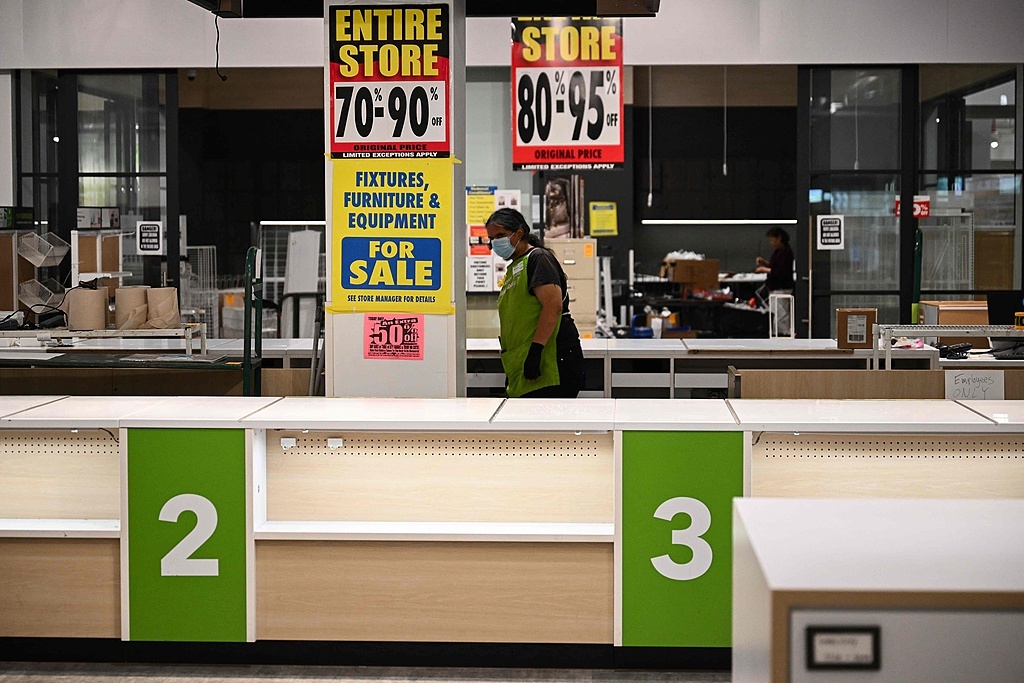
Group 1 - A widespread bankruptcy wave is affecting various sectors in the U.S., from large corporations to small businesses and households, marking an unusual and shocking trend in American history [1][2] - As of November 2025, at least 717 large companies have filed for bankruptcy, a 14% increase compared to the same period in 2024, the highest level since 2010 [2] - The industrial sector is the most impacted, with 110 large companies in manufacturing, construction, and transportation filing for bankruptcy in the first 11 months of 2025 [2] Group 2 - High inflation, elevated interest rates, and current trade policies are cited as primary reasons for the bankruptcies, particularly affecting companies reliant on overseas materials [3][6] - Consumer-facing businesses offering non-essential services or products, such as home goods and fashion, represent the second-largest group of bankruptcies, driven by reduced consumer spending due to inflation and cost-of-living pressures [4][6] - Small businesses are increasingly filing for bankruptcy, with over 2,300 applications submitted by mid-December 2025, reflecting a nearly 10% year-over-year increase [6] Group 3 - Despite a reported 4.3% annualized GDP growth in Q3 2025, this economic growth is not evenly benefiting all sectors, highlighting structural contradictions in the U.S. economy [7] - Experts warn of potential future bankruptcies if trade policies remain volatile, interest rates stay high, and geopolitical uncertainties persist, with predictions of no employment growth in 2026 [7]
美国经济将借力减税东风,但仍面临多重风险
Xin Lang Cai Jing· 2025-12-29 11:47
与此同时,特朗普关祱政策对物价的影响预计将在 2026 年上半年达到峰值。美联储政策制定者愈发认 为,此后物价压力将逐步缓解。若事实果真如此,薪资增长跑赢通胀的空间将进一步扩大,从而进一步 改善家庭财务状况。 得益于唐纳德・特朗普总统的减税政策、关祱相关不确定性减弱、人工智能热潮持续推进以及美联储年 末开启的降息周期,经历了 2025 年跌宕起伏的美国经济,有望在 2026 年迎来更强劲的增长。 特朗普签署的《宏伟美好法案》还为企业提供了多项税收抵免与优惠政策,其中包括允许企业对投资相 关支出全额税前扣除。这一政策有望推动企业资本支出,覆盖范围将突破数据中心及其他人工智能相关 领域。 经济学家指出,经济增速回升的最大驱动力之一,是退税金额增加与薪资预扣税额减少,这两项利好预 计将提振作为美国经济支柱的消费支出。 毕马威首席经济学家黛安・斯旺克表示:"单是财政刺激这一项,就有望为 2026 年一季度国内生产总值 (GDP)增速贡献 0.5 个百分点甚至更多。" 此外,2025 年经济增长的核心引擎 —— 人工智能基础设施相关的企业支出,预计将延续增长态势。亚 马逊、谷歌母公司字母表等科技巨头均已承诺未来将加大相 ...
【世界说】美媒:必需品通胀吞噬购买力,美国消费者感受到寒意
Xin Lang Cai Jing· 2025-12-29 09:58
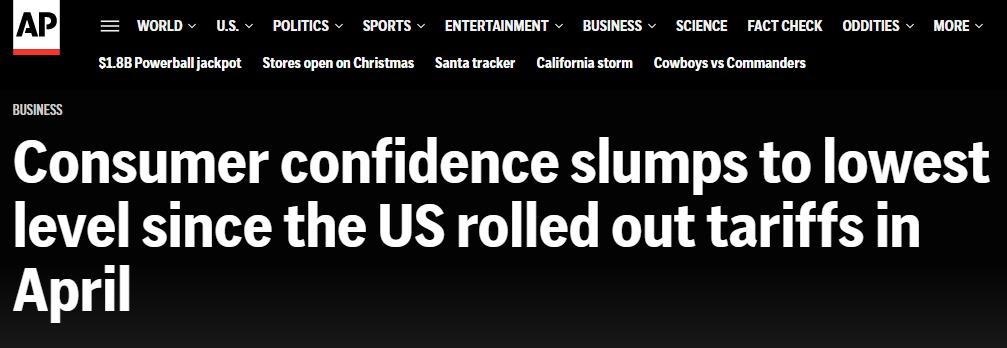
Group 1 - The core viewpoint of the article highlights a decline in consumer confidence in the U.S. due to rising prices and the impact of comprehensive tariff policies, with the consumer confidence index dropping 3.8 points to 89.1, marking the fifth consecutive month of decline [1][2] - The index measuring Americans' short-term expectations regarding income, business conditions, and the job market remains stable at 70.7 but is significantly below the 80 threshold that indicates recession risk, marking the 11th consecutive month below this level [2] - Concerns over inflation and tariffs are the primary worries for consumers, despite government claims that inflation is a hoax, with current economic assessments plummeting 9.5 points to 116.8 [2][3] Group 2 - The article discusses the disconnect between economic growth and consumer sentiment, attributing it to tariffs and inflation, with consumers spending most of their money on necessities rather than discretionary items [3] - The combination of tariffs and inflation has exacerbated financial burdens, with inflation having surged to a 40-year high, and tariffs further increasing prices, leading to renewed consumer anxiety [3] - The article notes that tariffs not only raise costs for businesses but also create economic uncertainty that dampens hiring intentions, contributing to a significant decline in new job creation and a rise in the unemployment rate to a four-year high [3][4] Group 3 - The pressure on low-income households is particularly severe, as they are often the most affected by persistent inflation and insufficient employment opportunities, highlighting the widening wealth gap in the U.S. economy [3][4] - Analysts indicate that individuals are seeking ways to save money and adopt more frugal lifestyles, especially among middle and low-income groups facing significant pressure on basic needs [4]
【环球财经】美媒集体抨击特朗普政府贸易政策
Xin Hua She· 2025-12-29 06:15
Core Viewpoint - The editorial criticizes the Trump administration's trade policies, arguing that the need for a $12 billion aid package for farmers indicates the negative impact of tariffs and trade wars on the U.S. economy [1][2]. Group 1: Trade Policy Critique - The editorial highlights fundamental flaws in U.S. tariff policy, stating that it is based on outdated and incorrect understandings of international trade [1]. - It argues that tariffs no longer significantly contribute to federal revenue in the era of globalization and that trade wars will have disastrous consequences for the U.S. economy, harming consumer interests and slowing economic growth [1]. Group 2: Impact on Farmers - The editorial points out that the $12 billion aid announced by the Trump administration is an attempt to cover up the problems created by its own policies, as many farmers who receive subsidies previously had smooth access to international markets [1]. - It emphasizes that the government should not block farmers' access to overseas markets through trade wars and then provide aid as a remedy [1]. Group 3: Context of the Aid Package - The aid package was announced following significant disruptions in global trade due to extensive tariff increases, which have led to low prices for U.S. agricultural products like soybeans and corn, alongside rising costs for fertilizers and farming equipment [2]. - Many farmers are struggling to maintain profitability, with some facing severe financial difficulties as a result of these trade policies [2].
全球瞭望|美媒集体抨击特朗普政府贸易政策
Sou Hu Cai Jing· 2025-12-29 05:08
新华社洛杉矶12月28日电(记者黄恒)美国加利福尼亚州多家地方媒体28日集体刊登同一篇社论,抨击 特朗普政府贸易政策。 南加州新闻集团在加州南部地区拥有近20家地方媒体,覆盖该地区主要县市,包括《洛杉矶日报》《奥 兰治县纪事报》《圣贝纳迪诺太阳报》等。 美国总统特朗普12月8日在白宫宣布,联邦政府将为美国农民提供规模为120亿美元的救助。特朗普政府 今年早些时候出台大范围加征关税政策,扰乱全球贸易秩序,结果导致美国出口市场受阻。美国大豆和 玉米等农产品售价低迷,加上化肥和农用机械成本升高,美国农场经营难以盈利,不少农民陷入困境。 (完) 文章指出,美国关税政策存在根本性缺陷,在对外贸易方面的理解"错误且过时"。在全球化时代,关税 对增加美国联邦收入不再发挥重要作用。相反,"贸易战将对美国经济造成灾难性后果,损害消费者利 益,破坏美国最具生产力的企业,减缓经济增长,并损害美国与世界各国的关系"。 文章认为,特朗普政府12月初宣布为美国农民提供规模为120亿美元的救助,目的是掩盖其自身制造的 问题,因为大部分接受补贴农户的产品之前本可顺畅销售到海外。文章强调,美国政府不应该用贸易战 先把农民销往海外产品的通路堵死 ...
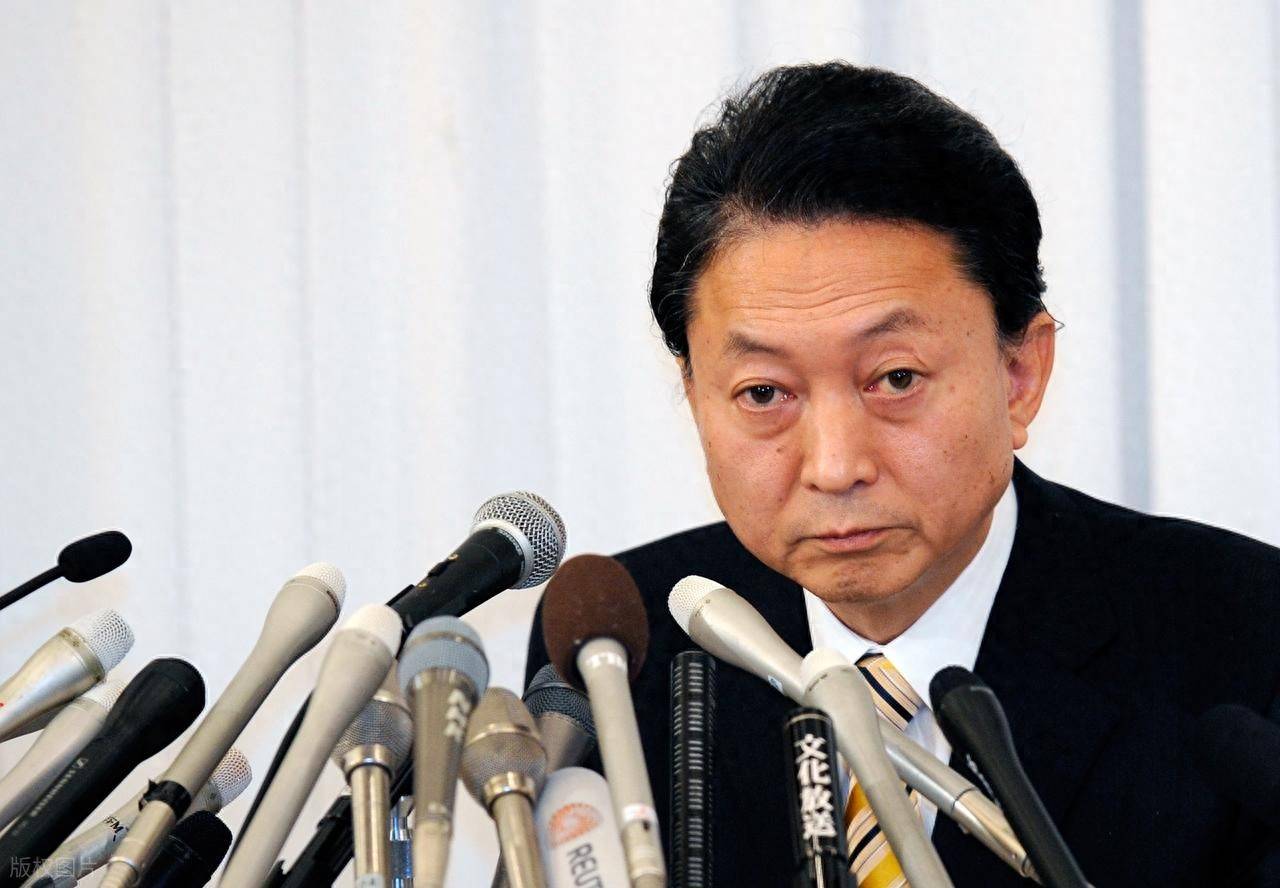
鸠山由纪夫直言:中国不应该独自对抗美国,应联合日韩应对压力
Sou Hu Cai Jing· 2025-12-29 05:05
Group 1 - Former Japanese Prime Minister Yukio Hatoyama suggested that China should not face U.S. trade pressure alone and should collaborate with other countries to counteract tariffs imposed by the Trump administration [1] - Japan expressed willingness to increase purchases of U.S. agricultural products and energy, but insisted that tariffs on steel and automobiles, which are crucial to Japan's export interests, must be exempted [3] - After negotiations failed, President Trump publicly pressured Japan, indicating that Japan had benefited from long-term trade and would face tariffs of over 10% as part of a new tariff system targeting countries with perceived trade imbalances [5] Group 2 - Japanese media reacted strongly to the situation, with Asahi Shimbun commenting that U.S.-Japan relations were nearing a breaking point, and potential retaliation from Japan could lead to broader impacts on finance, investment, and technology cooperation [6] - Hatoyama argued that Japan could no longer follow the U.S. unconditionally, and suggested that Japan should enhance its independence while avoiding direct confrontation with Trump, advocating for regional cooperation to mitigate U.S. pressure [8] - He noted that while China's power is growing, it is not suitable for China to bear the costs of a direct confrontation with the U.S., and emphasized the importance of cooperation among China, Japan, and South Korea to counter U.S. demands [10] Group 3 - In July 2019, Japan and the U.S. reached a framework trade agreement where the U.S. abandoned high punitive tariffs, and Japan committed to invest approximately $550 billion in various sectors including semiconductors, energy, and agriculture [15] - The agreement received mixed reactions in Japan, with supporters viewing it as a way to avoid the worst outcomes, while critics believed Japan was forced to accept the situation by making a significant investment [15] - The high tariff policies of the U.S. have increased trade uncertainty, prompting many countries to reassess their dependence on the U.S., making the proposed cooperation among China, Japan, and South Korea a necessary response to current pressures [15]