AI泡沫

Search documents
深夜!全线跳水,发生了什么?
券商中国· 2025-11-17 23:34
隔夜美股市场再遭猛烈抛售,三大指数盘初短暂冲高后,全线跳水,纳指盘中一度大跌近1.5%,恐慌指数VIX日内涨幅达13%。 有分析指出,目前投资者正在更加深入地审视人工智能(AI)热潮的基本面。近几周来,对于科技股估值过高的担忧情绪一直主导着市场。 与此同时,市场对美联储的降息预期正持续降温。据CME"美联储观察",截至发稿,美联储12月降息25个基点的概率降至42.9%,此前降息概率一度超过70%。 号 称"美联储传声筒"的Nick Timiraos最新撰文称,美联储官员正面临一项重大挑战——在缺乏新的经济数据可供参考的情况下,如何弥合内部在利率路径上的分歧, 并做出艰难判断。 美股全线跳水 美东时间11月17日,美股三大指数全线下挫,截至收盘,道指跌1.18%,标普500指数跌0.92%,纳指跌0.84%。 Baird投资策略师Ross Mayfield警告称,如果英伟达对芯片需求给出任何哪怕稍显温和的指引或预测,市场都会作出负面反应。 Aberdeen Investments基金经理Xin-Yao Ng表示,科技股将在一段时间内像过山车一样,在多头和空头之间摇摆。科技股和AI相关股票在前瞻性指引方面可能继 ...


机构年末科技投资抉择:谁在坚守 谁在撤退 又是谁在观望?
Shang Hai Zheng Quan Bao· 2025-11-17 19:25
Core Viewpoint - As the year-end approaches, institutional investors are adjusting their portfolios, with a notable divergence in views on technology stocks, where some remain optimistic, some are retreating, and others are taking a wait-and-see approach [1] Group 1: Optimists ("坚守者") - The AI industry is still in its early development stage, and significant growth in AI applications is expected in the coming years, leading to a positive cycle of capital investment and revenue [2] - Domestic companies are expected to increase their capital expenditure on AI, with Alibaba planning to invest 380 billion yuan over three years, indicating substantial growth potential compared to international counterparts [2][3] - Despite discussions about AI bubbles in overseas markets, there are no such concerns domestically, and funds continue to flow into AI-related investments, with a recent net subscription of 4.868 billion yuan for AI-themed ETFs [3] Group 2: Retreaters ("撤退者") - The rapid rise in stock prices poses risks, and some fund managers have reduced their positions in technology stocks after observing that strong earnings reports did not lead to expected stock price increases [4] - As of the end of Q3, public funds' allocation to technology sectors reached 40.16%, indicating a historically high level of investment in this area [4] - The concentration of holdings in technology stocks is at a high level, with significant over-allocations in the electronics and communications sectors, exceeding 10% [4][5] Group 3: Observers ("观望者") - Many fund managers are currently undecided about whether to increase or decrease their positions in technology stocks, as they face profit-taking challenges [7] - There has been a marked increase in institutional research on technology sectors, with over 2,000 instances of institutional inquiries in semiconductor, electronic equipment manufacturing, and computer software industries in the past month [7] - The focus is shifting towards the performance and core business development of technology companies, with a heightened sensitivity to earnings and valuation expectations [7]
机构年末科技投资抉择:谁在坚守,谁在撤退,又是谁在观望?
Shang Hai Zheng Quan Bao· 2025-11-17 19:14
Core Viewpoint - As the year-end approaches, institutional investors are adjusting their portfolios, with a notable divergence in views on technology stocks, where some remain optimistic, some are retreating, and others are taking a wait-and-see approach [1] Group 1: Optimists ("坚守者") - The AI industry is still in its early development stage, and significant growth in AI applications is expected in the coming years, leading to a positive cycle of capital investment and revenue [2] - Domestic companies are expected to increase their capital expenditures on AI, with Alibaba planning to invest 380 billion yuan over three years, indicating substantial growth potential compared to international counterparts [2][3] - Despite discussions about AI bubbles in overseas markets, there are no such concerns domestically, and funds continue to flow into AI-related investments, with a recent net subscription of 4.868 billion yuan for AI-themed ETFs [3] Group 2: Retreaters ("撤退者") - Rapid stock price increases pose risks, and some fund managers have reduced their positions in technology stocks after observing that strong earnings reports did not lead to expected stock price increases [4] - As of the end of Q3, public funds' allocation to technology sectors reached 40.16%, indicating a historically high level of investment in technology stocks [4] - The concentration of holdings in technology stocks is at a high level, with significant over-allocations in the electronics and communications sectors, exceeding 10% [4] Group 3: Observers ("观望者") - Many fund managers are currently undecided about whether to increase or decrease their positions in technology stocks, having recently entered the market and now facing profit-taking [7] - There has been an increase in institutional research on technology sectors, with over 2,000 instances of institutional inquiries in semiconductor, electronic equipment manufacturing, and computer software industries in the past month [7] - The focus is shifting towards the quality of technology stocks, with a heightened sensitivity to earnings performance and capital expenditure plans impacting stock price volatility [7]
大模型离商业应用最近、泡沫最小?业界热议“AI泡沫论”
Nan Fang Du Shi Bao· 2025-11-17 16:34
Core Viewpoint - The ongoing global investment in AI has sparked debates about whether it represents a revolutionary advancement or a speculative bubble, with experts suggesting that the current AI investment wave is unlikely to cool down regardless of its classification [1][3]. Group 1: Perspectives on AI Investment - Michael Spence views the current AI investment trend as a "rational bubble," arguing that the costs of under-investment outweigh those of over-investment [1]. - Wu Buxi, CEO of Hangzhou Darwen Intelligent Co., believes that while AI does exhibit bubbles, particularly in areas like embodied intelligence and video generation, the potential for AI to surpass previous industrial revolutions remains strong [3]. - Ma Jing from Ant Group emphasizes the disconnect between technological capabilities and real demand, highlighting that many AI products have yet to achieve practical application [5]. Group 2: Technological and Market Dynamics - The rapid advancement in computing power, from Deep Blue in 1998 to the current requirements for GPT-level training, indicates that humanity is at a pivotal moment in AI development [4]. - The uneven distribution of AI bubbles across different sectors suggests that while some areas are overhyped, others, like large models, are closer to commercial viability [3][5]. - The expectation of achieving AGI within a decade is seen as unrealistic, contributing to the perception of a bubble in AI investments [6]. Group 3: Strategies for Addressing AI Bubbles - Wu Buxi advocates for a "survival of the fittest" approach, where startups must adapt to real-world demands to avoid ineffective investments [8]. - Ma Jing suggests that improving asset utilization and clarifying business models can help the industry return to rationality, particularly in smart manufacturing and foundational layers [5]. - The importance of open-source initiatives is highlighted as a means to mitigate bubbles by fostering equal competition and reducing information asymmetry [9].

从英伟达转向谷歌?液冷产业出海信息更新
傅里叶的猫· 2025-11-17 13:04
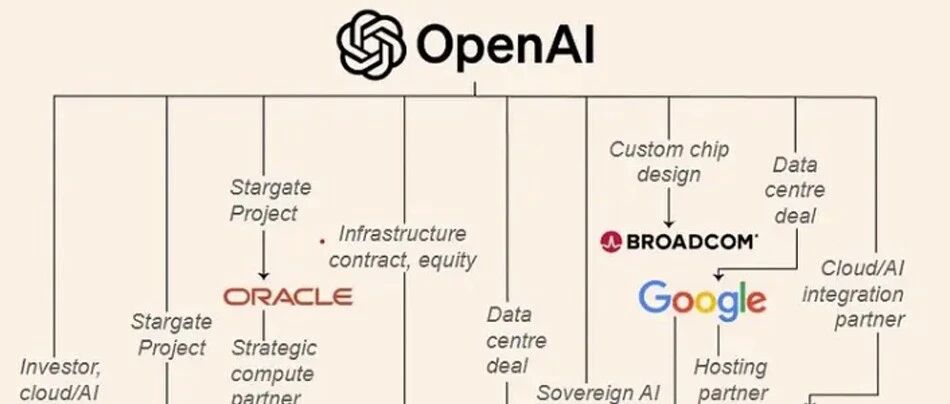
Group 1: Nvidia vs Google - Nvidia is expected to report its earnings soon, with market sentiment indicating that only results exceeding expectations will be considered normal, while meeting expectations would be viewed negatively [2] - Notable investors like Masayoshi Son and Peter Thiel have sold their entire holdings in Nvidia, which is relatively minor compared to Nvidia's market capitalization of 4.6 trillion [4] - Discussions around an AI bubble are increasing, with significant investments like the $1.4 trillion from Altman raising concerns about the sustainability of the AI industry's growth [5][6] - OpenAI's role is critical in the AI ecosystem, and any issues it faces could impact the entire sector's valuation, leading to the notion that "OpenAI is too big to fail" [9][10] - In contrast, there is growing confidence in Google, with data suggesting that Google is expected to dominate the AI model market by the end of 2025, holding an 86% market share compared to competitors [11][12] Group 2: Liquid Cooling Industry - The liquid cooling market is projected to be worth hundreds of billions, with key players like Invec and others making significant strides in North America [15] - Invec's 2026 data center and energy storage business is expected to generate substantial orders, with Nvidia and Google being major clients [16] - Companies like Shiquan New Materials and Kexin New Source are also expanding their operations in the liquid cooling sector, with plans to secure direct supply orders from major tech firms [18][19]


喜娜AI速递:今日财经热点要闻回顾|2025年11月17日
Sou Hu Cai Jing· 2025-11-17 11:15
来源:喜娜AI 金融市场犹如变幻莫测的海洋,时刻涌动着投资与经济政策的波澜,深刻影响着全球经济的走向。在 此,喜娜AI为您呈上今日财经热点新闻,全方位覆盖股市动态、经济数据、企业财务状况以及政策更 新等关键领域,助您精准洞察金融世界的风云变幻,把握市场脉搏。 沪指争夺4000点关口,机构研判年末风格趋于平衡 11月以来,沪指围绕4000点反复震荡,板块轮动加快,AI、新能源等主线上涨持续性有限。券商认 为,这受内外因素影响,海外风险偏好降温传导至A股,沪指在4000点遇阻,资金需消化前期涨幅大的 板块估值。后市短期内维持区间震荡,风格再平衡或持续数月,科技成长板块中长期有望引领指数突 破。详情>> 国常会部署"促消费稳投资",新一轮降准降息有望实施 逆势加仓!资金涌入这一方向 上周(11月10 - 14日),大盘宽基产品成交活跃,跟踪中证A500指数的ETF成交额超1300亿,科技题材 回调但相关ETF获资金青睐,科创50指数净流入居首。港股市场冲高回落,创新药板块异军突起。机构 认为,结构性修复趋势将延续,A股有望稳健偏强,可关注大盘成长核心资产和新兴产业指数。详情>> 英伟达遭重要人物清仓 继软银、桥水后 ...
利空突袭!英伟达,又遭清仓!
Zheng Quan Shi Bao· 2025-11-17 11:05
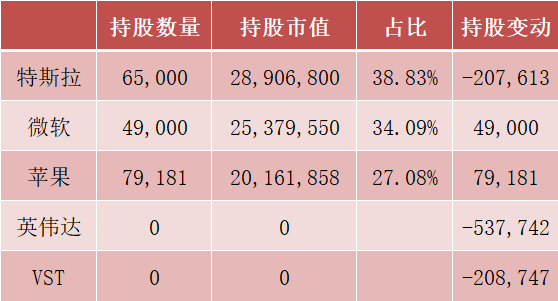
Core Viewpoint - Peter Thiel's investment firm has completely divested from Nvidia, following similar actions by other major institutions, indicating a potential shift in market sentiment towards the AI chip giant [1][2][5]. Group 1: Thiel's Macro Fund Actions - Thiel Macro Fund sold approximately 537,742 shares of Nvidia, representing nearly 40% of its portfolio, and as of September 30, it no longer holds any Nvidia shares [2][4]. - The estimated value of the shares sold during the third quarter is close to $100 million based on Nvidia's average stock price during that period [4]. - The fund also liquidated its position in Vistra and reduced its Tesla holdings by 207,613 shares, while initiating new positions in Microsoft and Apple [4]. Group 2: Other Institutional Actions - SoftBank has completely exited its Nvidia position, realizing $5.83 billion from the sale [5]. - Bridgewater Associates significantly reduced its Nvidia holdings from 7.23 million shares to 2.51 million shares, a decrease of 65.3% [5]. - Michael Burry disclosed a substantial short position against Nvidia, purchasing $186 million in put options, indicating a bearish outlook [6]. Group 3: Market Sentiment and Analyst Predictions - Nvidia is set to release its Q3 fiscal 2026 earnings report on November 19, with expected revenue of $55.28 billion, a year-over-year increase of over 55% [7]. - Analysts from Jefferies and Wedbush express optimism, predicting Nvidia will exceed expectations and raise future guidance [7]. - Oppenheimer and Citigroup have raised their target prices for Nvidia, with Citigroup initiating a "30-day bullish" outlook ahead of the earnings report, emphasizing the supply-demand imbalance in the AI chip market [8].
ETF基金周报:港股高股息类ETF基金获资金青睐-20251117
Dongguan Securities· 2025-11-17 10:14
Group 1 - The report highlights that after the longest government shutdown in U.S. history lasting 43 days, market liquidity has improved, leading to a rebound in equity markets, with MSCI Emerging Markets up 0.29% and MSCI Developed Markets up 0.43% [10][11] - Commodity ETFs performed exceptionally well, with an average weekly increase of 2.95%, reflecting strong price movements in precious metals and oil [10][11] - The report notes a net inflow of 29.597 billion yuan into ETFs this week, with all types of ETFs experiencing varying degrees of inflow except for bond ETFs, which saw a slight outflow [11][12] Group 2 - The report indicates that the stock ETF indices with the highest returns are primarily in the pharmaceutical, consumer, and chemical sectors, while the technology growth sector has shown caution due to concerns over AI bubble narratives [16][18] - The report mentions that the bond ETF market is seeing a preference for interest rate bonds over credit bonds, with convertible bond ETFs showing an average weekly increase of 0.44% [20][21] - The report emphasizes that the high dividend yield of 5.5% for Hong Kong stocks, compared to a 3.69 percentage point spread over the 10-year government bond yield, makes them attractive to investors seeking stable returns in a low-interest environment [23]
AI这一年,进入黄金年代还是泡沫时代
3 6 Ke· 2025-11-17 09:17
Core Viewpoint - The AI industry is experiencing significant growth and investment, but there are ongoing debates about the potential for an AI bubble, with contrasting opinions from various stakeholders in the tech and finance sectors [1][5][8]. Group 1: Market Dynamics - By 2025, major companies like Nvidia, Microsoft, and Google have reached unprecedented market valuations, with Nvidia surpassing $5 trillion, Microsoft over $4 trillion, and Google exceeding $3 trillion [1]. - OpenAI signed a five-year cloud computing agreement worth $300 billion with Oracle, followed by partnerships with Nvidia, AMD, Microsoft, and Samsung, bringing the total to over $1 trillion [2]. - Despite the optimism, OpenAI reported a staggering loss of $12 billion in Q3 2025, marking one of the largest quarterly losses in tech history [6]. Group 2: AI Bubble Debate - Analysts express concerns about the sustainability of AI investments, with some likening the current situation to the 1999 internet bubble, while others argue that AI companies have established cash flow models that differentiate them from past bubbles [8][19]. - Michael Burry, a notable investor, has raised alarms about irrational AI investments, while others, like Cathie Wood, maintain that AI does not exhibit bubble characteristics due to existing revenue models [8][19]. - IDC forecasts that AI will contribute approximately $22.3 trillion to the global economy by 2030, accounting for 3.7% of global GDP [8]. Group 3: Industry Transformation - AI is revolutionizing game development, significantly lowering barriers to entry and increasing the number of games produced, with a reported 800% increase in AI-generated games on platforms like Steam [10][13]. - The competitive landscape in cloud computing is shifting from resource-based competition to AI capability, with companies like Baidu and Volcano Engine emerging as key players in the AI cloud market [17][18]. - The integration of AI in various sectors is leading to significant job cuts, with over 1 million layoffs reported in the U.S. by October 2025, as companies restructure their workforce around AI technologies [19].


“硅谷风投教父”清仓英伟达
Di Yi Cai Jing· 2025-11-17 07:51
多家机构减持甚至清仓英伟达股票,引发了近期市场上关于AI泡沫可能破裂的讨论。 又有一家机构减持了英伟达。 美国证券交易委员会(SEC)公布的最新13F持仓文件显示,美国知名投资人彼得·蒂尔(Peter Thiel)旗下的基金Thiel Macro Fund第三季度出售了约53.7万股英 伟达股票,占其投资组合的近40%。截至9月30日,该机构不再持有英伟达股份。 彼得·蒂尔有"硅谷创投教父"之称,此前他曾参与创立了PayPal并成为Facebook的首位外部投资者,他曾警告,人工智能的炒作远超出其实际经济可行性。近 期在给投资者的一份报告中,桥水首席投资官Karen Karniol-Tambour等人则警告称,当前的市场稳定性正面临越来越高风险。 近期也有一些公司负责人警告称,股市可能走向下跌。 AI公司DeepL CEO Jarek Kutylowski上周表示,很多市场评估都相当夸张,有迹象表明泡沫即将出现。图片编辑工具公司Picsart的CEO Hovhannes Avoyan表 示,能看到很多AI公司在没有很多收入的情况下获得极高估值,这令人担忧。知名"大空头"、曾精准预言2008年美国次贷危机的Mi ...