
降准

Search documents
期货市场交易指引2025年12月15日-20251215
Chang Jiang Qi Huo· 2025-12-15 02:36
Report Industry Investment Ratings - **Macro Finance**: Index futures are expected to be bullish in the medium to long term, with a strategy of buying on dips; Treasury bonds are expected to trade sideways [1]. - **Black Building Materials**: Coking coal is suitable for short - term trading; rebar for range trading; glass for shorting on rallies [1]. - **Non - ferrous Metals**: Copper is recommended to reduce long positions on rallies and replenish on lows; aluminum for increased observation; nickel for waiting or shorting on rallies; tin for range trading; gold for range trading; silver for holding long positions and cautious new positions; lithium carbonate for strong - side oscillation [1]. - **Energy and Chemicals**: PVC for range trading; caustic soda for temporary waiting; soda ash for temporary waiting; styrene for range trading; rubber for range trading; urea for range trading; methanol for range trading; polyolefins for weak - side oscillation [1]. - **Cotton Textile Industry Chain**: Cotton and cotton yarn for strong - side oscillation; PTA for upward oscillation; apples for strong - side oscillation; red dates for weak - side oscillation [1]. - **Agriculture and Animal Husbandry**: Pigs for a strategy of shorting on rallies for near - term contracts and cautious bullishness for far - term contracts; eggs for limited upside; corn for cautious chasing of highs in the short term and hedging on rallies for grain holders; soybean meal for range operation; oils for gradually taking profit on previously established short positions [1]. Core Views - The market is influenced by a variety of factors, including macro - policies, supply - demand relationships, and international situations. Different sectors and varieties have different trends and investment strategies due to their unique fundamentals [1][6][8]. - Some commodities are facing supply - demand imbalances, such as oversupply in soda ash and strong supply pressure in the pig market, while others benefit from factors like improving demand or supply disruptions, like the potential support for tin prices from supply tightness [18][34]. Summary by Categories Macro Finance - **Index Futures**: Medium - to long - term bullish, with short - term possible sideways movement. Influenced by factors such as potential Fed chair appointments, Chinese economic data, and policy responses to the central economic work conference [6]. - **Treasury Bonds**: Expected to trade sideways. Driven by factors like central bank policies, regulatory changes, and the need for year - end configuration [6]. Black Building Materials - **Coking Coal**: Short - term trading is recommended. The market is in a game between strong bearish realities and weak marginal supports [8]. - **Rebar**: Range trading is advised. With low valuations and weak drivers, prices may oscillate weakly [8]. - **Glass**: Shorting on rallies is suggested. High inventory, weak demand, and potential supply increases lead to a bearish outlook [10]. Non - ferrous Metals - **Copper**: High - level oscillation is expected. Macro - easing expectations and long - term supply shortages support prices, but short - term over - rise has curbed consumption and increased adjustment risks [11][12]. - **Aluminum**: A rebound is possible, but increased observation is recommended. Factors include changes in bauxite prices, alumina and electrolytic aluminum production capacities, and demand in the off - season [13]. - **Nickel**: Sideways movement. Long - term supply surplus exists, but new RKAB policies bring uncertainties [16]. - **Tin**: Range trading is recommended. Supply is tight, and downstream consumption is weak, but prices are expected to be supported [18]. - **Silver**: Sideways movement. Fed policies, economic data, and industrial demand support prices, with a strategy of holding long positions and cautious new positions [18]. - **Gold**: Range trading is advised. Fed policies and economic uncertainties lead to a bullish medium - term outlook [20]. - **Lithium Carbonate**: Strong - side oscillation. Supply is affected by mine situations, and demand is strong, with attention needed on mine developments [20]. Energy and Chemicals - **PVC**: Low - level oscillation. Weak domestic demand, high inventory, and uncertain export growth lead to a weak outlook, but low valuations and potential policy supports exist [22]. - **Caustic Soda**: Cautiously bearish, with temporary waiting. High inventory, weak demand from downstream alumina, and potential production changes are factors [23]. - **Styrene**: Sideways movement. Overseas blending logic has limited impact on the weak fundamentals, with attention on price changes [24]. - **Rubber**: Sideways movement. Uncertain supply - demand, high inventory, and weak downstream demand lead to a range - bound market [24][25]. - **Urea**: Sideways movement. Supply increases, and demand is a mix of weakening agricultural demand and strengthening industrial demand, with inventory changes affecting prices [26][27]. - **Methanol**: Sideways movement. Supply is stable, demand from methanol - to - olefins is mixed, and traditional demand is weak, with inventory decreases [27]. - **Polyolefins**: Weak - side oscillation. Supply is strong, demand is weak, especially for PE agricultural film, but inventory reduction provides some support [29]. - **Soda Ash**: Temporary waiting. Supply surplus is the main pressure, but cost support and potential supply contractions are factors [31]. Cotton Textile Industry Chain - **Cotton and Cotton Yarn**: Strong - side oscillation. Global supply - demand is relatively loose, but domestic sales and yarn prices support the market [31]. - **PTA**: Upward oscillation. Geopolitical factors drive up oil prices, and PTA supply - demand is in a de - stocking phase [31][33]. - **Apples**: Strong - side oscillation. Market trading is general, with prices in different regions showing certain ranges [33]. - **Red Dates**: Weak - side oscillation. Acquisition progress is in the late stage, and enterprise acquisition enthusiasm is general [33]. Agriculture and Animal Husbandry - **Pigs**: Sideways bottom - building. Short - term supply pressure exists, and long - term prices are affected by capacity reduction and cost changes, with different strategies for near - and far - term contracts [34]. - **Eggs**: Limited upside. Short - term spot and futures are range - bound, medium - term supply - demand improves marginally, and long - term supply pressure remains [35][36][37]. - **Corn**: Rebound. Short - term selling pressure needs to be digested, and long - term demand gradually recovers, but supply - demand is relatively loose [37]. - **Soybean Meal**: Range oscillation. Near - term contracts are strong due to supply delays and de - stocking, while far - term contracts are weak due to South American production expectations [38]. - **Oils**: Soybean and palm oils for weak - side oscillation, rapeseed oil for limited rebound. Different supply - demand situations and external factors lead to different trends [38][42].
中泰国际首席经济学家李迅雷:2026年货币政策总量宽松幅度有限
Xin Lang Cai Jing· 2025-12-11 06:01
在中泰证券举办的年度策略会上,中泰国际首席经济学家李迅雷表示,2026年货币政策总量宽松空间受 限,降息面临低息差、资金空转入市等约束,其稳市场信号意义强于经济刺激,预计7天逆回购利率下 调10-20bp;当前加权存款准备金率已降至6.2%,接近5%的隐性下限,央行流动性投放工具已趋完善, 预计全年降准1-2次;同时,受人民币贬值压力缓解、债市预期分化等因素影响,2026年资金面或难重 现2025年3月的明显收紧。 ...
财联社C50风向指数调查:跨年流动性有望维持平稳,美联储降息为我国货币政策提供窗口期
Sou Hu Cai Jing· 2025-12-11 03:57
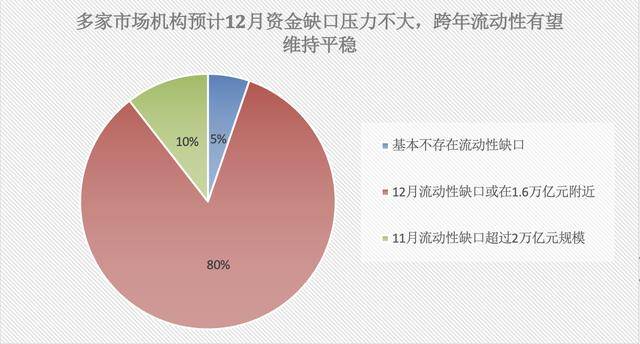
智通财经12月11日讯(记者 夏淑媛)继9月、10月分别降息25基点后,今日美联储再宣布降息25个基 点,将联邦基金利率目标区间下调至3.50%-3.75%。 美联储如期降息,对我国货币政策将产生什么影响?财通证券首席经济学家孙彬彬表示:"我国当前适 度宽松总基调不变,货币政策仍然要强化逆周期和跨周期调节,外部限制放松的前提下,总量型政策有 其可能性。"粤开证券首席经济学家罗志恒表示:"在美联储降息的窗口期,中国货币政策能够更加'以 我为主',进一步降准降息。" 新一期智通财经"C50风向指数"结果也显示,尽管本月银行间流动性或阶段性承压,但在央行呵护态度 下,12月资金缺口压力不大,跨年流动性有望维持平稳。在20家参与调查的市场机构中,1家认为基本 不存在流动性缺口;16家认为整体资金缺口压力或处于季节性偏大水平,12月的流动性缺口或在1.6万 亿元附近;3家认为中性趋紧,流动性缺口超过2万亿元规模。展望2026年,多家市场机构认为2025年国 内50个bp的降准和10bp的降息低于预期,2026年我国或再有1-2次降准,累计幅度25-50BP。 "C50风向指数调查"是由智通财经发起,由市场中的各类研究机 ...

国泰海通|固收:2026年货币政策展望:目标函数和宽松模式重构
国泰海通证券研究· 2025-12-05 10:48
Core Viewpoint - The article discusses the evolution of monetary policy in China, highlighting a shift towards a more nuanced approach that balances liquidity management and financial stability, particularly in the context of the bond market and economic growth support. Group 1: Monetary Policy Outlook for 2025 - In 2025, the overall liquidity environment is characterized as "quantitative easing plus stability," with a focus on enhancing the execution and transmission of monetary policy rather than aggressive counter-cyclical adjustments [1] - The central bank has been iterating its tools since mid-2024 to improve liquidity control and guide bond market pricing, providing relatively cheap medium- to long-term funds without signaling clear interest rate cuts [1] - The optimization of liquidity tools serves a dual purpose: to avoid concentrated speculation around loose monetary expectations while enhancing the sensitivity of major banks to central bank liquidity injections [1] Group 2: Monetary Policy Goals for 2026 - The monetary policy in 2026 is expected to maintain a supportive stance, with a significant change in the target function emphasizing that "broad credit" does not equate to indiscriminate "broad loans" for households and enterprises [2] - With fiscal policy beginning to take effect, the role of monetary policy will shift towards providing a stable liquidity environment to support fiscal growth, ensuring the stability of the financial system and avoiding systemic risks [2] - The focus will be on improving interest rate transmission within the financial system and stabilizing the interest margin as a core observation indicator [2] Group 3: Central Bank Operations and Interest Rate Adjustments - The central bank is likely to continue a "quantitative easing plus stability" approach, with the overnight interest rate lower limit around OMO-10bp, and will focus on "lengthening" funding in the medium to long term [3] - The central bank may implement 1-2 interest rate cuts totaling 10-20 basis points throughout 2025 and 2026, primarily responding to key statements and unlocking long-term funding costs [3] - The timing of interest rate cuts may depend on the effectiveness of reducing bank funding costs, particularly through lowering deposit rates, potentially delaying until mid-2026 [3] Group 4: Reserve Requirement Ratio (RRR) Adjustments - The necessity for RRR cuts is expected to decrease, with only one potential cut of 50 basis points anticipated in 2026, likely occurring in the first quarter [4] - The central bank's motivation for RRR cuts is relatively low due to the opportunity cost of releasing long-term funds and a cautious stance on large-scale long-term funding injections [4] - Government bond purchases may serve as a substitute for RRR cuts, with the first quarter being the most probable window for any RRR adjustments [4]

冲刺时刻|央行12月“大手笔”续作1万亿元买断式逆回购,什么信号?
Sou Hu Cai Jing· 2025-12-04 11:43
Core Viewpoint - The People's Bank of China (PBOC) is injecting liquidity into the banking system through a 1 trillion yuan reverse repurchase operation, maintaining a stable liquidity environment as the year-end approaches [1][4]. Group 1: Reverse Repo Operations - The PBOC will conduct a 1 trillion yuan buyout reverse repo operation with a term of 3 months, which is a continuation of the previous month's operation, effectively a "same amount rollover" [1][5]. - The buyout reverse repo tool, introduced in October 2024, allows the PBOC to buy bonds from primary dealers and agree to repurchase them later, providing medium-term liquidity to the market [3]. Group 2: Factors Influencing Liquidity - Multiple factors are contributing to liquidity pressure in the banking system, including a significant issuance of local government bonds and the rapid formation of loans linked to new policy financial tools [4]. - The maturity peak of interbank certificates of deposit in December is expected to reach 3.7 trillion yuan, creating additional rollover pressure on banks [4]. Group 3: Future Expectations - The decision to maintain the same amount of reverse repo rather than increasing it may relate to the structure of financial institutions' funding needs, but does not indicate a reduction in liquidity support [5]. - There is a widespread expectation that the PBOC may implement a new round of reserve requirement ratio (RRR) cuts by early 2026, which could further ease liquidity pressures in the banking system [6][7].
股指期货周报:企稳反弹,量能不佳-20251201
Cai Da Qi Huo· 2025-12-01 05:06
Report Summary 1. Report Industry Investment Rating - Not provided in the given content 2. Core Viewpoints - The four stock index futures varieties showed a stable rebound last week, with relatively large rebound amplitudes in CSI 1000 and CSI 500. All main contracts remained in the futures discount mode. The A - share market presented features of "index stabilization, sector - structure differentiation, and focused capital preference" last week. The market turnover decreased compared to the previous week, and the trading sentiment was still cautious. In November, the market showed an overall pattern of volatile adjustment, with significant differentiation in the trends of major stock indices. The core hotspots were concentrated in the battery industry chain, regional themes, and computing power hardware. Some state - owned large - scale banks in the weight camp also reached new stage highs, indicating the capital's preference for low - valuation and high - dividend assets in a volatile market [2] - In November 2025, China's manufacturing PMI was 49.2%, up 0.2 percentage points from the previous month, and the non - manufacturing PMI was 49.5%, down 0.6 percentage points from the previous month. The manufacturing prosperity declined, possibly due to weak demand and fewer working days. Looking ahead, the long - term liquidity released by the central bank's reserve requirement ratio cut and the increasing policy expectations due to the approaching Central Economic Work Conference support the market to bottom out and rebound. However, external market fluctuations may cause short - term emotional fluctuations. The short - term market may continue the feature of "bottom - range oscillation with a focus on structure" [3][4] 3. Summary by Related Contents Market Review - The four stock index futures varieties mainly rebounded stably last week, with relatively large rebound amplitudes in CSI 1000 and CSI 500. The basis of the four stock index futures varieties fluctuated slightly, and all main contracts were in the futures discount mode. The basis of the main futures contracts (futures - spot) was - 6.42 for IH, - 20.86 for IF, - 57.35 for IC, and - 73.41 for IM. The A - share market showed "index stabilization, sector - structure differentiation, and focused capital preference" last week. By the Friday close, major stock indices generally rose slightly, but the weekly trading volume decreased compared to the previous week, and the trading sentiment was cautious. In November, the market was in a volatile adjustment pattern, with significant differentiation in the trends of major stock indices. The core hotspots were in the battery industry chain, regional themes, and computing power hardware. Some state - owned large - scale banks in the weight camp reached new stage highs, reflecting the capital's preference for low - valuation and high - dividend assets in a volatile market [2] Comprehensive Analysis - In November 2025, China's manufacturing PMI was 49.2%, up 0.2 percentage points from the previous month, and the non - manufacturing PMI was 49.5%, down 0.6 percentage points from the previous month. The manufacturing prosperity decline might be related to weak demand and fewer working days. Looking ahead, the long - term liquidity released by the central bank's reserve requirement ratio cut and the increasing policy expectations due to the approaching Central Economic Work Conference support the market to bottom out and rebound. However, external market fluctuations may cause short - term emotional fluctuations. The short - term market may continue the feature of "bottom - range oscillation with a focus on structure" [3][4]
A股盘前播报 | 国家主席习近平同美国总统特朗普通电话 中概股指数涨近3%
智通财经网· 2025-11-25 00:24
Macro - President Xi Jinping and President Trump held a phone call, emphasizing the overall stability and positive direction of China-U.S. relations, advocating for cooperation and mutual respect [1] - The People's Bank of China (PBOC) conducted a 1 trillion yuan MLF operation to maintain liquidity in the banking system, with predictions of a potential new round of reserve requirement ratio (RRR) cuts by year-end [3] Market - U.S. stock markets rebounded with the Nasdaq rising 2.69%, marking the largest single-day gain since May, driven by expectations of a 25 basis point rate cut by the Federal Reserve in December, with an 81% probability [2][13] - The Nasdaq China Golden Dragon Index increased by 2.82%, reflecting positive sentiment in Chinese concept stocks [2][13] Industry - Trump signed an executive order to launch the "Genesis Project," aimed at utilizing artificial intelligence to transform scientific research and accelerate discoveries, directing the Department of Energy to create an AI experimental platform [4] - The domestic AI competition is intensifying with Alibaba's launch of the Qianwen project, indicating a shift towards application-level AI, with expectations for increased investment in AI infrastructure [10] - The storage sector is experiencing a strong rebound, with predictions of long-term tightness in memory supply driven by surging AI inference demand, suggesting a super cycle for storage companies [11] - China's space exploration initiatives are gaining momentum, with plans to explore the origins of life in the universe, indicating potential investment opportunities in the commercial space sector [12]
分析师称不排除中国央行年底前后实施新一轮降准的可能
Sou Hu Cai Jing· 2025-11-24 22:29
Core Viewpoint - The central bank has injected 1 trillion yuan through MLF, marking the ninth consecutive month of increased MLF operations, aimed at maintaining liquidity and supporting credit growth to stabilize economic expectations [1] Monetary Policy Actions - The central bank is utilizing various monetary policy tools to ensure ample liquidity in the market, which is expected to encourage financial institutions to increase credit issuance [1] - There is a possibility of implementing a new round of reserve requirement ratio (RRR) cuts by the end of the year, as indicated by analysts [1] Economic Outlook - Given the fluctuations in the external environment and changes in domestic economic growth momentum, new policies aimed at stabilizing growth may be introduced to support macroeconomic performance in the fourth quarter and the first quarter of the following year [1]
央行连续九个月加量续作MLF!专家:年终前后可能实施新一轮降准
Sou Hu Cai Jing· 2025-11-24 11:34
Core Viewpoint - The People's Bank of China (PBOC) is injecting liquidity into the banking system through MLF and reverse repos to counter potential liquidity tightening, aiming to maintain a stable and ample funding environment, which supports government bond issuance and encourages financial institutions to increase credit supply [1][2]. Group 1: MLF Operations - On November 25, the PBOC announced a 10 trillion yuan MLF operation, with 9 trillion yuan of MLF maturing this month, resulting in a net injection of 1 trillion yuan, marking the ninth consecutive month of increased MLF operations [1]. - The total net liquidity injection for November, including a 5 trillion yuan reverse repo, reached 6 trillion yuan, consistent with the previous month and maintaining a high level for four consecutive months [1]. Group 2: Economic Implications - The PBOC's actions are seen as a response to tightening liquidity in the banking system, driven by factors such as the maturity of bank interbank certificates and the completion of new policy financial tools, which are expected to increase government bond issuance and support credit growth [1][2]. - The central bank's continued support through MLF indicates a commitment to a supportive monetary policy stance, which is crucial for stabilizing economic growth and expectations amid recent macroeconomic fluctuations [2][3]. Group 3: Future Predictions - Predictions suggest that a new round of reserve requirement ratio (RRR) cuts may be implemented by year-end, driven by external economic conditions, domestic growth dynamics, and the need to stabilize the real estate market [2]. - The anticipated policies, marked by the "two 5 trillion yuan" measures, are expected to enhance fiscal strength and monetary easing, contributing to a stable macroeconomic environment for the fourth quarter and the first quarter of the following year [2].