对等关税

Search documents
听美国企业主讲述“制造业回流”难在哪
Huan Qiu Shi Bao· 2025-05-28 23:02
Core Viewpoint - The article discusses the challenges faced by American small business owners in the context of the U.S. government's "reciprocal tariff" policy aimed at bringing manufacturing back to the U.S. It highlights the reluctance of consumers to pay higher prices for "American-made" products, despite public support for domestic manufacturing [1][3]. Group 1: Challenges of "American Manufacturing" - A small business owner conducted an online test revealing that all nearly 600 showerheads sold were produced in Asia, with zero sales for the "American-made" option priced at $239 compared to $129 for the Asian-made version [1][2]. - The high cost of "American-made" products, which can exceed $100 more than their Asian counterparts, is attributed to the lack of specialized manufacturing facilities in the U.S. and the need for collaboration with multiple manufacturers to produce a single product [2][5]. - The complexity and cost of logistics in the U.S. further hinder the competitiveness of "American manufacturing," as multiple factories are required to complete different production stages, leading to increased expenses and time delays [5][6]. Group 2: Economic Implications - The "reciprocal tariff" policy may lead to job losses among small business owners who rely on global supply chains, as raising prices to maintain profitability could result in zero sales [7][9]. - The article emphasizes that the U.S. lacks the necessary resources, infrastructure, and skilled labor to support a fully domestic manufacturing model, making it impractical to produce all consumer goods within the country [5][6]. - The uncertainty surrounding future tariffs and trade policies has led companies to pause new product development and reduce marketing efforts, reflecting a cautious approach to risk management in an unpredictable environment [8][9].
“TACO”交易主导,市场完全不把关税当回事
Hua Er Jie Jian Wen· 2025-05-28 08:43
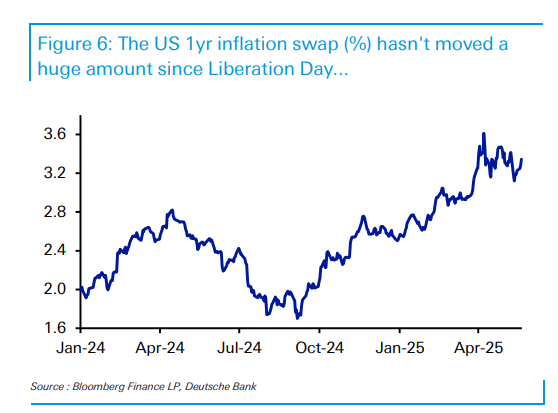
Core Viewpoint - The current global market is experiencing a significant structural misalignment, indicating investors' indifference towards tariff policy threats, as evidenced by the stable performance of inflation swaps and strong asset performance in countries most affected by tariffs [1][6]. Group 1: Market Reactions to Tariff Threats - Despite ongoing tariff threats, the U.S. inflation swap prices have remained largely unchanged since April 2, with the 1-year inflation swap slightly adjusting from 3.40% to 3.36% and the 5-year swap increasing from 2.54% to 2.56% [4][3]. - The phenomenon known as "TACO trading" reflects market behavior where declines follow tariff threats, but subsequent reversals occur when the government retracts its stance, highlighting a pattern of market resilience [2][6]. Group 2: Performance of Affected Assets - Surprisingly, assets in developed economies most vulnerable to tariff impacts have shown strong performance, with the S&P/TSX Composite Index in Canada reaching a historical high and increasing by 5.4% year-to-date [8][10]. - The Canadian bond index has also risen by 0.3% year-to-date, and the Canadian dollar has appreciated over 4% against the U.S. dollar, indicating a stronger-than-expected performance despite economic growth forecasts being downgraded [10]. - Germany's DAX index reached a historical high, only down 0.4% from that level, outperforming other major indices like Stoxx 600 and CAC40, which is notable given Germany's reliance on trade [11][10].

特朗普放出“好消息”?中越服装制造商:这回我们不信了
Guan Cha Zhe Wang· 2025-05-27 12:56
Group 1 - Trump's statement about not planning to produce sneakers and T-shirts has provided temporary relief to Vietnamese and Chinese garment manufacturers, particularly benefiting Vietnam's large textile industry [1][3] - Despite the temporary relief, industry players remain skeptical and are not planning to change their strategies, focusing instead on expanding markets outside the U.S. due to the uncertainty surrounding Trump's trade policies [1][4] - In 2022, nearly 17% of China's textile and apparel exports went to the U.S., while Vietnam's share was significantly higher at 38% [1] Group 2 - The American Apparel and Footwear Association has expressed that tariffs negatively impact the industry, as 97% of apparel and footwear products rely on imports, and higher tariffs would increase costs for manufacturers and consumers [3] - The U.S. Treasury Secretary has indicated that the textile industry is becoming obsolete, which has drawn criticism from industry representatives who highlight the sector's contributions to the military and employment [3][4] - Vietnamese textile exporters are experiencing significant upheaval, with many companies actively diversifying and reducing reliance on the U.S. market in response to the unpredictable trade policies [3][5] Group 3 - Foreign direct investment in Vietnam has surged by 40% compared to the same period in 2024, with over $1.5 billion of new capital coming from China, indicating a shift in investment patterns [7] - Vietnamese officials are eager to negotiate with Trump to lower tariffs before the end of the 90-day tariff suspension period, but a trade agreement remains elusive [8] - The U.S. government's pressure on Vietnam to sever supply chains with China poses significant challenges for countries reliant on Chinese production, with analysts suggesting that reconfiguring supply chains could take decades [8]
特朗普表示将延长对欧盟商品征收50%关税的期限
Shang Wu Bu Wang Zhan· 2025-05-27 03:44
Group 1 - The core point of the article is that President Trump has extended the deadline for imposing a 50% tariff on the EU to July 9, following complaints about slow progress in trade negotiations and perceived unfair regulations targeting U.S. companies [1] - The original tariff rate announced in April was set at 20%, which was reduced to 10% after the suspension of the implementation until July 9 [1] - The U.S. Treasury Deputy Secretary highlighted the challenge of negotiating tariffs with the EU as a whole while also addressing non-tariff barriers in separate discussions with individual European countries, creating a "negotiation dilemma" [1] Group 2 - Trump aims to use tariffs to encourage companies to manufacture in the U.S. rather than overseas, threatening a 25% tariff on smartphones produced abroad by companies like Apple and Samsung [2] - Despite the tariff threats, Trump agreed with Treasury Secretary Mnuchin's recent comments that the U.S. does not need to bring textile manufacturing back to the country [2]
特朗普极限施压!冯德莱恩主动示好!特朗普接到电话,放欧洲一马
Sou Hu Cai Jing· 2025-05-26 08:08
Group 1 - Trump has taken the initiative in negotiations with the EU by threatening a 50% tariff increase, which has caused significant turmoil within the EU [2][3] - The EU's response includes a request from Ursula von der Leyen to extend the negotiation deadline to July 9, indicating a willingness to accelerate trade talks [3][5] - The EU's internal divisions and lack of a unified response to Trump's pressure suggest that they may be leaning towards compromise rather than confrontation [5][8] Group 2 - The EU's reliance on exports to the US in sectors like automotive and pharmaceuticals complicates their ability to adopt a hardline stance similar to China [8][12] - Trump's demands include the cancellation of digital taxes and a reduction in industrial tariffs, while maintaining a 25% tariff on automobiles to protect US car manufacturers [10][12] - The EU insists on a "reciprocal" approach and has previously rejected a model similar to the UK's 10% tariff, indicating a desire for more favorable terms [9][12] Group 3 - The lack of trust between the US and EU, exacerbated by Trump's history of withdrawing from trade agreements, poses challenges for negotiations [12][14] - The EU's need to coordinate among its 27 member states adds complexity to the negotiation process, as differing national interests may hinder a cohesive strategy [12][14] - Other countries, such as Japan, are also resistant to US tariff demands, highlighting a broader international reluctance to accept Trump's trade policies [14]
欧盟倒向中国?美国施压起反作用?特朗普示好日本!中国成赢家?
Sou Hu Cai Jing· 2025-05-25 04:19
Group 1 - The core issue is the urgency for the U.S. to finalize trade agreements with other countries before the 90-day tariff suspension expires, as failure to do so could lead to significant market declines [1][4] - Currently, only the UK and China have signed agreements with the U.S., leaving other major economies unaddressed [1] - Trump's aggressive stance towards the EU includes a proposed 50% tariff increase, while he shows signs of compromise with Japan [3][17] Group 2 - Japan's Prime Minister, Shigeru Ishiba, has taken a firm stance against U.S. tariffs, indicating that Japan will not sacrifice its national interests for trade negotiations [6][11] - The U.S. has shown a willingness to negotiate with Japan, as evidenced by Trump's approval of a partnership between U.S. and Japanese steel companies, which marks a significant shift in U.S. policy [11][13] - Japan's current approach to trade negotiations has yielded positive outcomes, suggesting that a tougher stance against the U.S. may be beneficial [8][13] Group 3 - The EU's response to U.S. tariffs has been characterized by internal divisions, making it difficult for the bloc to present a united front [13][15] - Trump has threatened to impose tariffs on €95 billion worth of EU goods if negotiations fail, indicating a high-stakes environment for transatlantic trade [19] - Despite U.S. pressure, the EU has stated it will not decouple from China, maintaining its existing trade policies [20][22]
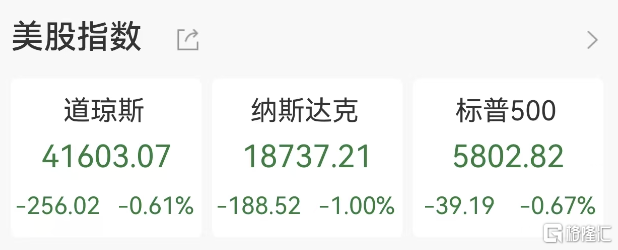
突然拉升!剧烈波动,超15万人爆仓
Zheng Quan Shi Bao Wang· 2025-05-24 12:21
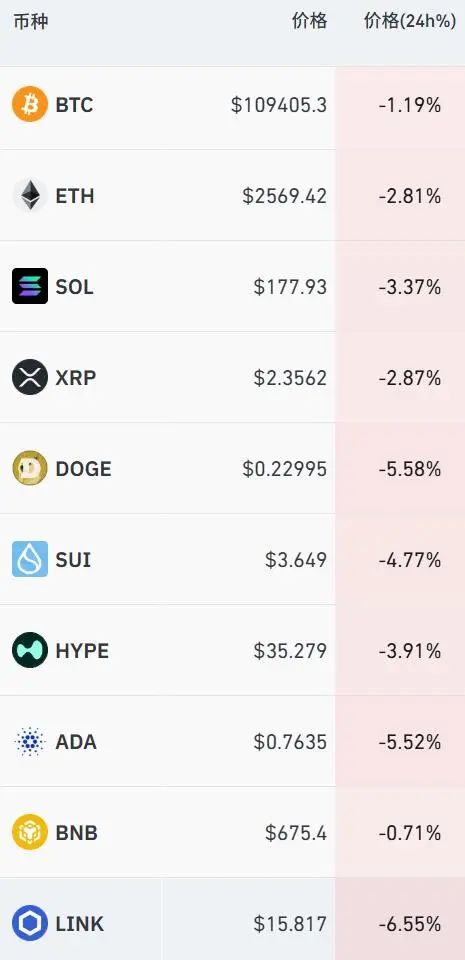
比特币,剧烈波动,超15万人爆仓。 5月23日晚比特币跌破110000美元后,今日早间一度跌破107000美元,其他数字货币也普跌。不过下午比特 币又突然出现拉升,重返109000上方。 | 而种 | 价格 | 价格(24h%) | | --- | --- | --- | | B BTC | $109405.3 | -1.19% | | + ETH | $2569.42 | -2.81% | | SOL | $177.93 | -3.37% | | X XRP | $2.3562 | -2.87% | | DOGE | $0.22995 | -5.58% | | SUI | $3.649 | -4.77% | | HYPE | $35.279 | -3.91% | | ADA | $0.7635 | -5.52% | | BNB | $675.4 | -0.71% | | O LINK | $15.817 | -6.55% | 剧烈波动之下,过去24小时之内,加密货币共有超15万人爆仓。 | 1小时爆仓 | $1788.07万 | 4小时爆仓 | $2713.95万 | | --- | --- | --- | ...
突发!关税,传出大消息!美国财长,最新发声!
券商中国· 2025-05-24 11:44
针对关税谈判,美国又释放了新信号! 在美国总统特朗普威胁对欧盟征收50%的关税,并引发欧美股市跳水后,美国财长贝森特当地时间23日对外宣 称,美国政府可能在未来几周宣布几个大型贸易协议,并表示许多亚洲国家都提出了非常好的条件。 贝森特指出,大多数美国贸易伙伴"非常认真"对待谈判,只有欧盟是个"例外"。谈到特朗普发出的威胁时,贝 森特说,希望这(威胁)能刺激欧盟赶快行动。 另外,5月24日,有日本媒体爆料称,特朗普23日在与日本首相石破茂通话时,向石破茂"推销"了美国战机。 截至目前,石破茂和特朗普方面尚未就相关消息作出回应。 美财长:未来几周可能会宣布几个大型贸易协议 特朗普23日在社交媒体发文称,他建议从6月1日开始对来自欧盟的商品征收50%的关税。特朗普还表示,将对 不在美国生产的手机制造商征收25%的关税。他还特意点名了苹果及三星,称将在六月底前对苹果公司和三星 征收关税。特朗普的相关言论,再次引发了投资者对于关税对世界经济和贸易影响的担忧,欧美股市盘中大幅 跳水,苹果公司股价重挫3%。 不过,随后没多久,美国财政部长贝森特出来喊话称,美国政府可能在未来几周宣布几个大型贸易协议,他预 计美国与一些国家的 ...


新形势下全球资产配置的方向与前景|财富与资管
清华金融评论· 2025-05-24 10:37
Core Viewpoint - The article discusses the implications of President Trump's tariff strategy on the market, evaluating whether it will create significant obstacles or merely short-term "noise" [2][3]. Tariff Measures Impact - Trump's "reciprocal tariffs" have led to higher-than-expected tariffs on U.S. imports, particularly targeting Asian countries, with the EU facing a 20% tariff and Japan a 24% tariff [4]. - The International Monetary Fund and the U.S. Federal Trade Commission estimate that if these tariffs are fully implemented, they could account for over 2% of U.S. GDP, increasing consumer inflation by nearly 2% and negatively impacting GDP growth by 1% to 2% [4]. Economic Growth and Recession Risks - Historical data indicates that significant stock market declines are typically linked to economic contractions rather than political actions, with the S&P 500 index showing a strong correlation with economic recessions since 1928 [10]. - The Atlanta Federal Reserve's GDPNow model predicts a 2.3% GDP growth for Q1 2025, with an unemployment rate of 4.1%, suggesting resilience in the U.S. economy despite tariff concerns [10]. Financial Crisis Potential - Financial markets react sharply to uncertainty, but volatility does not equate to systemic risk. Historical crises have shown that while markets may react to shocks, they do not always lead to economic downturns [13]. - Current U.S. banks are in a stronger position with adequate capital and liquidity buffers, reducing the likelihood of a financial crisis stemming from tariff-related uncertainties [13].
传奇基金经理出手了!
Ge Long Hui· 2025-05-24 07:12
Group 1 - The core viewpoint of the article highlights the impact of Trump's threats to impose tariffs on the EU and Apple, which has led to a significant decline in the U.S. stock market, particularly affecting major tech stocks like Apple [1][2] - The S&P 500 index has experienced a four-day decline, with Apple leading the drop among the tech giants, marking an eight-day losing streak [1] - Bill Ackman, a prominent hedge fund manager, has taken advantage of the market dip by buying Amazon shares after a significant price drop due to tariff concerns, indicating a potential undervaluation of the company [1][2] Group 2 - Ackman's investment strategy is supported by two main reasons: the resilience of Amazon Web Services (AWS) as the core profit driver and the limited impact of tariffs on Amazon's retail business, as less than 15% of its self-operated products are imported [2] - Ackman is recognized for his legendary investment acumen, having predicted the subprime mortgage crisis in 2007 and profiting significantly during the COVID-19 pandemic [2] - The article notes Ackman's strategic timing in selling Nike shares before the tariff announcement, raising questions about his investment decisions and market timing [2][4] Group 3 - Yang Dong, another notable fund manager, has made significant adjustments to his investment portfolio in April, reducing exposure to convertible bonds while increasing investments in sectors like real estate, power, and chemicals [5] - Yang's focus on domestic demand growth and the stabilization of the real estate market is seen as a key strategy for future investments [5] - He emphasizes that stocks remain a favorable investment choice compared to fixed-income assets, citing the potential for structural opportunities in consumption, healthcare, and new infrastructure [5] Group 4 - The first batch of new floating-rate funds has been rapidly approved, reflecting regulatory attention to enhancing the public fund industry [6][10] - These funds will feature a performance-based fee structure, linking management fees to investment performance, which is expected to improve active management capabilities and align interests between fund managers and investors [10][14] - The floating-rate funds are designed to encourage long-term investment by requiring a minimum holding period of one year to benefit from fee adjustments, thereby reducing short-term speculation [14]