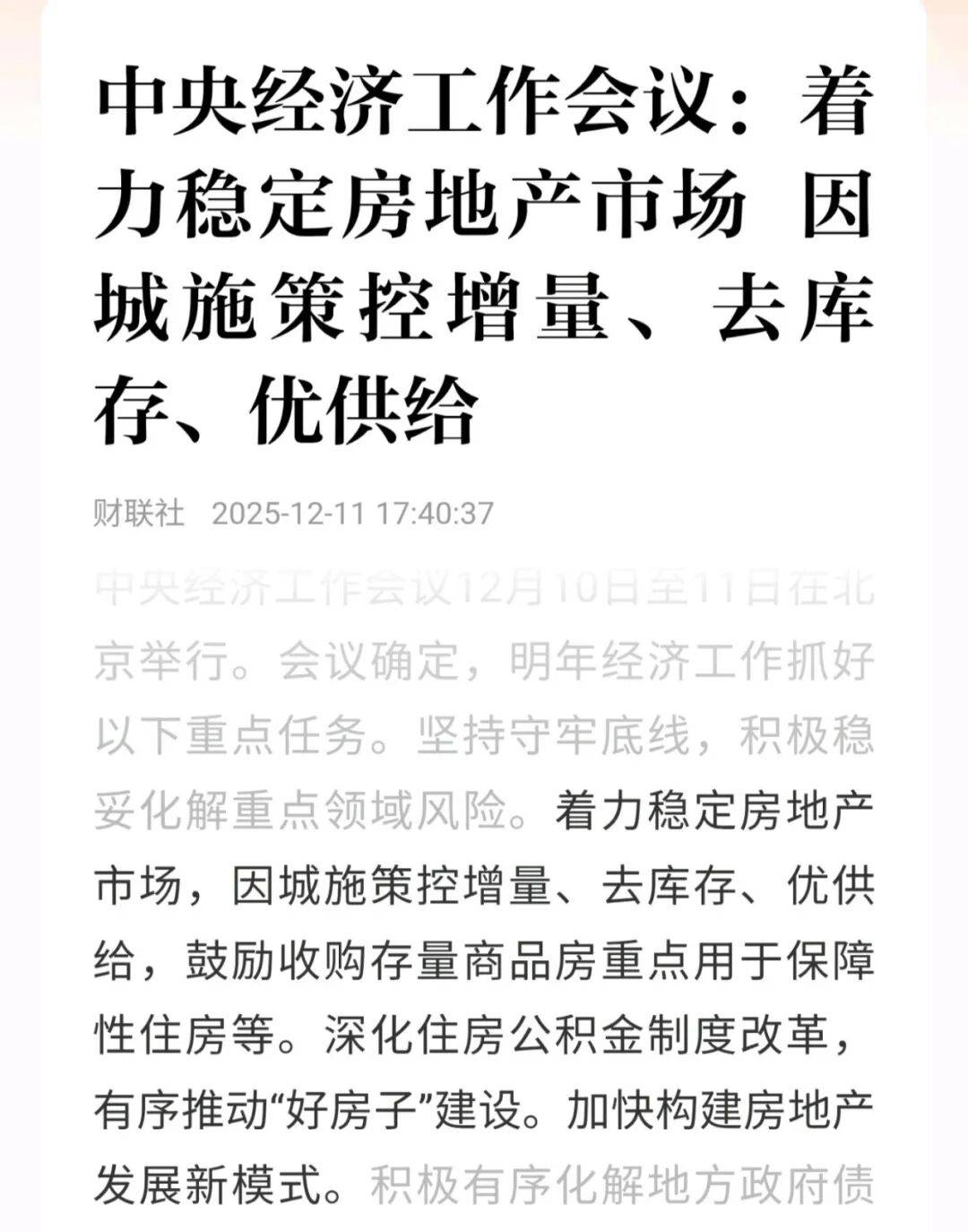
中央经济工作会议召开

Search documents
掌楼热评| 多地发布住宅限高令!京东花35亿港元在香港买楼!
Sou Hu Cai Jing· 2025-12-14 03:25
Group 1: Real Estate Regulations - Multiple first and second-tier cities have implemented height restrictions for residential buildings, capping them at 80 meters, which translates to a maximum of 26 floors based on a standard floor height of 3 meters [1] - Recent documents from Shenzhen and Guangzhou require that residential projects exceeding 80 meters seek opinions from local fire rescue agencies to ensure alignment with local firefighting capabilities [1] - The Ministry of Housing and Urban-Rural Development has set clear guidelines for residential land use, including maximum building heights and density, effective from May 1 [1] Group 2: Economic Policies and Market Outlook - The Central Economic Work Conference emphasized the need for proactive macroeconomic policies to enhance demand and optimize supply, aiming for a stable and harmonious social environment [4] - The conference highlighted the importance of maintaining a balance between existing and new policies, with a focus on fiscal and monetary measures to support economic growth [4] Group 3: Trade and Economic Performance - China's trade surplus exceeded $1 trillion in the first 11 months of the year, with exports increasing by 5.9% year-on-year in November, reversing a previous decline [6] - The trade value with the EU grew by 5.4%, while trade with the US saw a decline of 16.9%, indicating shifting trade dynamics [6] Group 4: Technology and AI Developments - Meta is shifting its focus towards commercializable AI models, with a new model named Avocado expected to launch in spring, likely in a closed-source format [9] - Alibaba's Qwen app has rapidly gained popularity, surpassing 30 million active users within 23 days of its public testing, indicating strong demand for AI applications [11] Group 5: Safety and Regulatory Changes - The production of mercury thermometers and blood pressure monitors will be banned starting January 1, 2026, due to health and environmental concerns [15] - The National Taxation Administration has mandated that platform companies cannot transfer tax obligations to gig workers, ensuring better protection for this growing workforce [14]



2026年中国经济向“内”求变,让老百姓“有钱花、敢花钱”
Sou Hu Cai Jing· 2025-12-14 02:06
Group 1 - In 2025, China's economy faced significant challenges but showed resilience, with a focus on domestic demand and building a strong domestic market as highlighted in the Central Economic Work Conference [1][16] - The total value of China's goods trade import and export reached 41.21 trillion yuan, a year-on-year increase of 3.6%, with a trade surplus exceeding 1 trillion USD for the first time [1][3] - Private enterprises have become the mainstay of foreign trade, with their import and export value reaching 23.52 trillion yuan, a year-on-year increase of 7.1%, accounting for 57.1% of China's total foreign trade [7][9] Group 2 - The export growth of private enterprises outpaced that of state-owned and foreign enterprises, indicating their crucial role in driving trade growth [9] - Despite a decline in exports to the US by 18.9%, exports to ASEAN and the EU increased significantly, compensating for the drop [3][5] - The overall import growth was sluggish at 0.2%, reflecting weak domestic demand, which the Central Economic Work Conference emphasized needs to be addressed [10][20] Group 3 - The Central Economic Work Conference identified the imbalance between strong supply and weak demand as a major challenge, necessitating a focus on balancing supply and demand [20][22] - The government plans to implement a "rural and urban residents' income increase plan" to enhance consumer purchasing power, indicating a shift towards a more inclusive economic strategy [36][42] - The emphasis on quality over quantity in production is crucial for addressing the current economic challenges, with a focus on enhancing the supply of high-quality goods and services [29][31] Group 4 - The real estate market's stability is vital for consumer confidence, with measures proposed to stabilize the market and support affordable housing [49][51] - The government aims to shift fiscal spending from traditional infrastructure to social services like education and healthcare, which could enhance consumer spending capacity [47][46] - The Central Economic Work Conference set a policy direction of "seeking progress while maintaining stability" and "improving quality and efficiency," indicating a focus on sustainable economic growth [51]

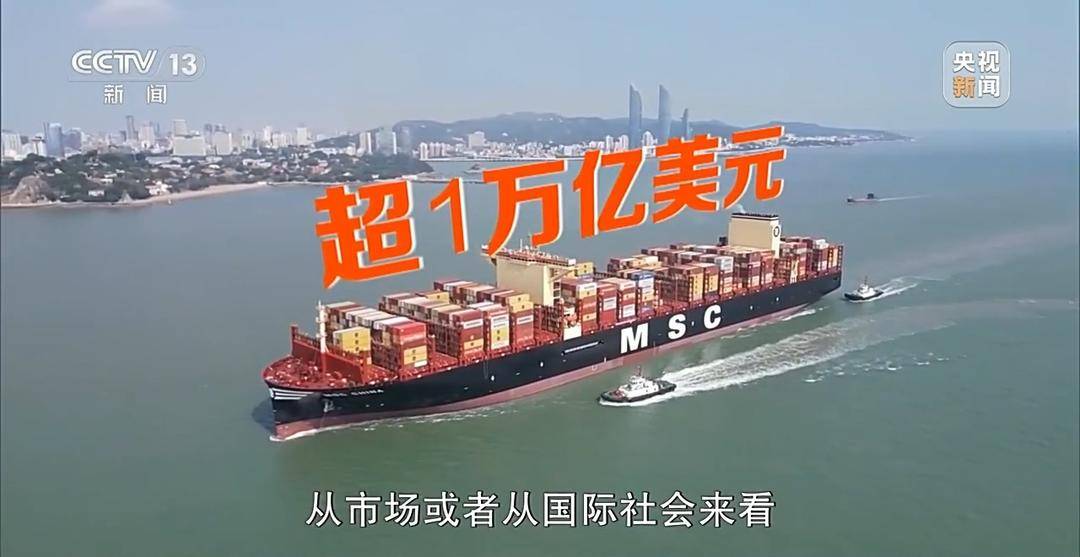
从政策到投资、从壮大新动能到“人工智能+”,怎么干?
Yang Shi Wang· 2025-12-14 01:50
中央经济工作会议指出,2026年继续实施更加积极的财政政策。如何理解2026年财政政策的取向? 中国财政科学研究院院长杨志勇表示,2026年继续实施更加积极的财政政策,这是基于对国内外经济形势判断所作出的选择。这也 可以看到政策是一以贯之的,是保持相当力度的。跟2026年的经济工作的目标来说是相称的,它能够支撑经济目标的实现。 中央经济工作会议指出,要继续实施更加积极的财政政策,保持必要的财政赤字、债务总规模和支出总量。专家表示,2026年的财 政政策取向与2025年保持了一致。 粤开证券首席经济学家、研究院院长罗志恒表示,从量的角度,要确保必要的财政赤字规模,新增债务总规模以及必要的财政支出 力度。通过政府的支出,比如政府采购以及基建工程项目来扩大社会的总需求,形成居民部门、企业部门的收入,推动经济运行的 循环。第二是结构的优化,要坚持将投资于物和投资于人的结合,提高居民的医疗、教育和养老,这样居民的后顾之忧得到了缓 解,进而有利于去释放潜在的消费需求。 提高财政资金使用效率 更多资金投到民生 实施更加积极的财政政策,如何确保财政资金使用更加高效,让每一分钱都花到"刀刃"上? 中央经济工作会议指出,加强财政 ...

坚定信心用好优势 不断巩固拓展经济稳中向好势头——韩文秀解读中央经济工作会议精神
Xin Hua Wang· 2025-12-14 01:29
Core Viewpoint - The recent Central Economic Work Conference outlines the economic work for 2025 and 2026, emphasizing the need to maintain confidence and leverage advantages to address challenges, ensuring a stable and positive economic momentum [1][2]. Economic Performance and Goals - The economic and social development goals for 2025 are expected to be achieved smoothly, with a projected GDP growth of around 5% year-on-year, making China the largest engine of global economic growth [2][3]. - The "14th Five-Year Plan" is nearing completion, with 20 key indicators set to be met, showcasing resilience and vitality in the face of challenges such as the pandemic [2][3]. Key Challenges - The economy faces persistent issues, including weak domestic demand and risks in key sectors, which are seen as challenges that can be addressed through concerted efforts [2][3]. Five Imperatives for Economic Work - The conference highlighted five essential strategies for economic work: 1. Fully explore economic potential by expanding consumption, investment, and regional development [3][4]. 2. Combine policy support with reform innovation to address intertwined economic issues [4]. 3. Balance deregulation with effective governance to enhance productivity while maintaining market order [4]. 4. Invest in both physical and human capital to promote comprehensive development and improve public welfare [4]. 5. Strengthen internal capabilities to face external challenges and enhance self-innovation [5]. Economic Work for 2026 - The economic work for 2026 will focus on maintaining stable growth, ensuring employment and price stability, and promoting income growth alongside economic growth [6][7]. - A proactive fiscal policy will be implemented, maintaining necessary fiscal deficits and optimizing expenditure structures to support strategic initiatives [6][7]. - A moderately loose monetary policy will be adopted to ensure liquidity and support key sectors such as technology and small enterprises [7][8]. Eight Key Tasks for 2026 - The conference identified eight key tasks for economic work in 2026, including: 1. Prioritizing domestic demand and building a strong domestic market. 2. Accelerating innovation and nurturing new growth drivers. 3. Enhancing high-quality development through reform. 4. Promoting cooperation in various fields through openness. 5. Coordinating urban-rural integration and regional development. 6. Leading with carbon neutrality to drive green transformation. 7. Focusing on people's livelihoods and addressing practical issues. 8. Safeguarding against risks in key areas [9][10]. Employment and Risk Management - Employment remains a priority, with policies aimed at stabilizing job markets for key demographics such as graduates and migrant workers [10]. - Measures will be taken to stabilize the real estate market and manage local government debt risks, ensuring no systemic risks arise [10].
夯实基础全面发力 确保“十五五”开好局起好步
Liao Ning Ri Bao· 2025-12-14 00:54
Group 1: Economic Development Strategies - The central economic work meeting emphasized the importance of innovation-driven development and the cultivation of new growth drivers, focusing on key industries such as aerospace equipment and fine chemicals [1] - The provincial government aims to enhance the business environment and support high-quality development through comprehensive reforms and innovation [2] - The meeting highlighted the need for precise macroeconomic policies to ensure stable and high-quality economic growth, which will benefit the province's development [4] Group 2: Industry-Specific Initiatives - The provincial housing and urban-rural development department plans to advance urban renewal projects, including the renovation of old residential areas and the promotion of smart construction [3] - The provincial natural resources department is focused on optimizing land use and enhancing resource efficiency while ensuring ecological protection [2] - The provincial power company is set to support the green transition by optimizing the power grid for renewable energy integration and enhancing electricity supply reliability [6] Group 3: Local Economic Contributions - The Lanqi Fine Chemical Materials Company is investing 3 billion yuan in a project to produce 100,000 tons of adiponitrile and 200,000 tons of nylon 66, which is expected to generate an annual output value of approximately 5.8 billion yuan [8] - Local governments are actively implementing strategies to foster high-quality development, focusing on sectors such as non-ferrous metals and clean energy [9] - The emphasis on rural revitalization includes strengthening grassroots party organizations and promoting diverse industries to enhance economic vitality [10]
新闻周刊丨2026年中国经济向“内”求变 让老百姓“有钱花、敢花钱”
Yang Shi Wang· 2025-12-13 23:21
Economic Overview - In 2025, China's economy faced significant challenges but showed notable achievements, with a focus on domestic demand and building a strong domestic market highlighted in the Central Economic Work Conference [1][12] - China's total import and export value reached 41.21 trillion yuan, a year-on-year increase of 3.6%, with a trade surplus exceeding 1 trillion USD for the first time [1] Trade Dynamics - Despite a decline in exports to the US by 18.9% (approximately 897.6 billion yuan), exports to ASEAN and the EU increased significantly, compensating for the loss [3][5] - Private enterprises emerged as the main force in stabilizing foreign trade, with their import and export value reaching 23.52 trillion yuan, a growth of 7.1%, accounting for 57.1% of China's total foreign trade [5][6] Domestic Demand and Consumption - The Central Economic Work Conference emphasized the need to expand domestic demand and improve consumer spending, with consumer spending currently accounting for 56.6% of GDP, still below the 80% level of developed countries [12][18] - A new initiative to implement a "rural and urban residents' income increase plan" aims to enhance income levels and boost consumption capacity [20][21] Supply and Demand Imbalance - The economy faces a prominent contradiction of strong supply but weak demand, leading to issues such as price competition and market inefficiencies [10][13] - The government plans to shift focus from quantity to quality in production, encouraging businesses to enhance product quality rather than engage in price wars [16] Real Estate Market Stability - The Central Economic Work Conference proposed measures to stabilize the real estate market, including policies to control inventory and encourage the acquisition of existing homes for affordable housing [25] - Stabilizing the real estate market is seen as crucial for boosting consumer confidence and supporting overall economic growth [25][26]
2026年中国经济向“内”求变 让老百姓“有钱花、敢花钱”
Yang Shi Xin Wen· 2025-12-13 19:24
Economic Overview - In 2025, China's economy faced significant challenges but showed resilience, with a focus on domestic demand and building a strong domestic market highlighted in the Central Economic Work Conference [1][15] - China's total import and export value reached 41.21 trillion yuan, with a year-on-year growth of 3.6%, and a trade surplus exceeding 1 trillion USD for the first time [1][3] Trade Dynamics - Despite a decline in exports to the US by 18.9%, China saw increased exports to ASEAN and the EU, indicating a diversification of trade markets [4][6] - Private enterprises have become the mainstay of foreign trade, with their imports and exports growing by 7.1%, accounting for 57.1% of China's total foreign trade [6][8] Domestic Demand and Consumption - The Central Economic Work Conference emphasized the need to boost domestic demand and consumer spending, with a focus on addressing the imbalance between strong supply and weak demand [19][25] - The proportion of final consumption in GDP reached 56.6%, indicating room for growth compared to developed countries [17] Policy Initiatives - A new initiative to implement a "rural and urban residents' income increase plan" aims to enhance income levels and stimulate consumption [27][28] - The government plans to optimize policies related to consumption, including doubling the budget for the "two new" policies to 300 billion yuan, which has already driven significant sales growth [26][30] Market Stability and Quality Improvement - The focus is shifting from quantity to quality in production, with measures to combat "involution" in various industries [21][24] - The government aims to stabilize the real estate market to boost consumer confidence, with policies to manage inventory and improve supply [33][35]

有色金属周报20251213:国内外财政+货币共振,金属价格继续上行-20251213
Guolian Minsheng Securities· 2025-12-13 14:33
Investment Rating - The report maintains a "Buy" rating for all key companies listed, including Zijin Mining, Luoyang Molybdenum, and Huayou Cobalt [2][4]. Core Views - The report highlights that the metal prices are expected to continue rising due to the resonance of domestic and foreign fiscal and monetary policies, with a focus on the upcoming economic growth under the "14th Five-Year Plan" [8][21]. - The report emphasizes the strong demand in the lithium battery sector and the ongoing supply constraints in cobalt, indicating a bullish outlook for energy metals [8][83]. Summary by Sections Industry and Stock Performance - The report notes a decline in the Shanghai Composite Index by 0.34% and a 1.10% drop in the SW Nonferrous Index during the week [8]. - Key stocks in the nonferrous metal sector showed varied performance, with significant recommendations for companies like Zijin Mining and Luoyang Molybdenum [2][11]. Base Metals - Aluminum prices decreased by 0.88% to $2875 per ton, while copper prices fell by 0.96% to $11552.5 per ton, with zinc prices increasing by 1.31% to $3139 per ton [12][21]. - The report indicates that the domestic aluminum production capacity is stable at 44.39 million tons, with a slight increase in operational capacity due to high profits [21][23]. Precious Metals - Gold prices increased by 2.42% to $4329.80 per ounce, and silver prices rose by 5.59% to $62.09 per ounce, driven by the Federal Reserve's interest rate cuts [12][68]. - The report suggests a bullish outlook for gold and silver prices, supported by central bank purchases and weakening dollar credit [68][69]. Energy Metals - The lithium market is experiencing stable growth in supply, while demand from the energy storage sector continues to rise, leading to a positive outlook for lithium prices [8][83]. - Cobalt supply remains tight, with the Congo's cobalt export quotas expected to impact the market dynamics positively [8][83]. Other Minor Metals - The report discusses the fluctuations in prices for minor metals, including molybdenum and tungsten, with significant price increases noted for tungsten [15][83]. - The overall sentiment in the minor metals market remains cautious, with a focus on supply-demand dynamics and policy changes [55][85].




中央经济工作会议定调“投资于人”,如何实现?
Sou Hu Cai Jing· 2025-12-13 12:25
在12月10日至11日召开的中央经济工作会议上,"人"被摆在了重要位置。会议将"坚持投资于物和投资于人紧密结合"列为五个"新的认识和体 会"之一。 "坚持投资于物和投资于人紧密结合",是对我国投资理念、方向、重点的提升和优化,对于增强发展动能、扩大国内需求、促进人的全面发展意 义重大。 为何要投资于人? 从2025年政府工作报告首次提出"投资于人"理念,到"十五五"规划建议提出"坚持惠民生和促消费、投资于物与投资于人紧密结合",再到今年中 央经济工作会议强调"必须坚持投资于物和投资于人紧密结合",我国的宏观政策更加注重民生导向,人力资本所发挥的作用不断受到重视。 过去数十年间,对于"物"的投资构筑了我国经济的硬实力。目前,我国固定资产投资年度规模已达到50万亿元。 北京大学经济学院教授、国民经济研究中心主任苏剑在接受《中国报道》记者采访时指出,随着传统物质资本投入的增长红利逐步减弱,部分领 域甚至出现过度竞争与边际收益下滑,这使得完全依赖传统基建与产能扩张的发展路径难以为继。 "相反,投资于人是一个充满潜力的战略方向,因为对人力资源的投入能够有效激发创新活力、开拓更广阔的发展空间,并产生更可持续的长期回 报。 ...

2026,最重要的事定了
Sou Hu Cai Jing· 2025-12-13 11:34
Group 1 - The central economic work conference emphasizes the need to stabilize the real estate market and new birth population scale, prioritizing domestic demand and reiterating policies like interest rate cuts [1][5] - The focus on stabilizing the real estate market is highlighted by the term "efforts" indicating a strong policy commitment, with strategies including controlling new supply, reducing inventory, and encouraging the acquisition of existing homes for affordable housing [4][2] - The long-term goal for real estate is to shift towards a "new model" that includes quality housing construction, urban renewal, and a dual rental and purchase system [5] Group 2 - The conference advocates for a positive marriage and childbirth outlook to stabilize the birth population, with recent data showing a slight increase in marriage rates [6][7] - A dual approach of fiscal and monetary easing is proposed, with a focus on maintaining necessary deficits and ensuring liquidity, while also considering price stability as a key factor [8][9] - The emphasis on stimulating consumption is elevated to a primary task, with a clear shift towards "domestic demand-led" growth, indicating that consumption will be the main driver of economic growth [9][10] Group 3 - Major city clusters like Beijing, Shanghai, and the Guangdong-Hong Kong-Macau Greater Bay Area are designated for specific roles in innovation and economic development, highlighting their importance as economic and technological hubs [10][11] - The future competition among cities will focus on innovation and emerging industries rather than traditional infrastructure investments, with a call for coordinated development and regional collaboration [11]