出口制造业

Search documents
人民币“破7”,后市怎么走?
Sou Hu Cai Jing· 2026-01-07 07:10
Group 1 - A moderate but sustained appreciation of the Renminbi (RMB) is underway, with the offshore RMB exchange rate recently reaching 6.9985, marking its return to the "6" level for the first time since September 2024 [2] - The People's Bank of China (PBOC) is guiding the exchange rate rather than imposing hard controls, allowing market fluctuations while preventing extreme volatility [3] - The current appreciation is supported by multiple favorable factors, including the resilience of the Chinese economy, reduced need for a weaker exchange rate to stimulate exports, and improved market sentiment [4] Group 2 - Market sentiment is shifting from a focus on depreciation to a bullish outlook on the RMB, with the currency becoming a confidence indicator for foreign investment in A-shares and risk appetite [5] - The weakening of the US dollar, driven by expectations of Federal Reserve rate cuts and improved global risk sentiment, has significantly reduced external pressures on the RMB [6][8] - The RMB is expected to transition from a passive variable influenced by the dollar to an active variable reflecting China's economic fundamentals, potentially opening up greater appreciation space [11] Group 3 - The RMB is currently undervalued by approximately 25% compared to its fundamental value, indicating that the ongoing appreciation is part of a long-term valuation correction rather than a short-term speculation [12] - A shift in market expectations from depreciation to appreciation could lead to a rapid inflow of capital, further supporting the RMB's value [13] - The RMB is expanding its role from a settlement currency to a financing currency, with increasing use in overseas debt issuance and trade transactions [14] Group 4 - The appreciation of the RMB may not necessarily tighten financial conditions; instead, it could enhance market confidence and liquidity if managed carefully [15] - Different industries will experience varying impacts from RMB appreciation: export-oriented sectors may face challenges, while import-dependent industries could benefit from lower costs [16][17] - Domestic companies that are less affected by exports may indirectly benefit from improved overall economic confidence [19]

一万亿美元顺差?吃大亏了!
Sou Hu Cai Jing· 2025-12-20 16:27
Core Viewpoint - The article discusses the implications of China's $1 trillion trade surplus, arguing that it represents a significant economic imbalance rather than a true profit, as it reflects a trade of real goods for mere currency [1][4][24]. Trade Surplus Analysis - The $1 trillion trade surplus is likened to a "gold mine," but it is suggested that this surplus is misleading, as it does not equate to actual wealth [1][4]. - The narrative compares two fictional islands: "Labor Island" (China) and "Consumption Island" (the U.S.), illustrating how Labor Island exports real goods while receiving only paper currency in return [4][7]. - The article emphasizes that the true wealth lies in tangible goods, not in the currency received for them, highlighting a fundamental misunderstanding of wealth [5][6]. Economic Mechanisms - The article critiques the artificial management of currency exchange rates, which prevents the natural appreciation of the Chinese yuan despite significant exports [9][13]. - It explains that maintaining a low exchange rate effectively subsidizes foreign consumers while distorting price signals for domestic producers [16][20]. - The process of printing more yuan to manage the exchange rate leads to inflation, diminishing the purchasing power of Chinese citizens [18][20]. Consequences of Trade Practices - The article argues that the current trade practices result in a cycle where increased exports lead to more yuan being printed, which in turn causes inflation and reduces the purchasing power of the populace [21][24]. - It suggests that the trade surplus, rather than being a sign of economic strength, is a burden that restricts consumer spending and industrial advancement [24][25]. Proposed Solutions - The article advocates for allowing the yuan to float freely in the market, which would lead to a natural adjustment in the exchange rate and potentially higher prices for exports [24]. - It calls for increased imports to utilize the trade surplus effectively, suggesting that China should invest in technology and consumer goods to enhance domestic welfare [24]. - The article emphasizes the importance of consumer spending as a measure of economic health, rather than merely focusing on export figures [24].
港股异动 | 特朗普关税扰动再起 创科实业(00669)跌超3% 申洲国际(02313)跌近2%
智通财经网· 2025-10-13 06:27
Core Viewpoint - Export stocks are generally underperforming due to the announcement of additional tariffs on Chinese goods by the U.S. starting November 1, which may lead to stock volatility in the affected companies [1] Group 1: Stock Performance - Companies such as Techtronic Industries (00669) saw a decline of 3.64%, trading at HKD 91.3; Haier Smart Home (06690) dropped 3.38% to HKD 24.56; Shenzhou International (02313) fell 1.71% to HKD 63.15; and QuanFeng Holdings (02285) decreased by 1.04% to HKD 20.84 [1] Group 2: Policy Impact - On October 10, former President Trump announced that the U.S. would impose an additional 100% tariff on Chinese goods starting November 1, along with export controls on key software [1] - Citigroup's report indicates uncertainty regarding the duration of this policy, but suggests that stock volatility during this period may be lower than during the retaliatory tariffs implemented in Q2 2025, as the new tariffs will only apply to manufacturers exporting directly from China to the U.S. [1] Group 3: Stock Preferences - Citigroup's preference order among Chinese exporters is Techtronic Industries > Shenzhou International > JiuXing, considering the Federal Reserve's interest rate cut cycle and the low proportion of Chinese imports in their U.S. sales [1]

牛津经济学家:科创将长期支撑中国增长
2 1 Shi Ji Jing Ji Bao Dao· 2025-10-04 00:49
Core Insights - The resilience of Asian economies amidst global economic uncertainty is highlighted, with optimism for growth in several Asian economies due to supportive government policies and regional cooperation mitigating the impact of U.S. protectionism [1][5][6] Group 1: Economic Performance and Factors - Many Asian economies have shown strong performance this year, partly due to the "pre-order" effect from U.S. tariff policies, which has bolstered exports [1][5] - The growth momentum for some Asian economies is expected to remain optimistic in the coming quarters, supported by government policies and deepening regional cooperation [1][5] - The manufacturing sector in China, which constitutes about one-quarter of its GDP, is crucial for long-term growth through productivity enhancement via technological innovation [3][4] Group 2: Regional Cooperation and Trade Agreements - The Regional Comprehensive Economic Partnership (RCEP) is facilitating regional trade and could provide an additional GDP gain of about 2% for member economies if trade commitments are upheld [6][7] - Regional cooperation is seen as a core driver for sustained economic growth in Asia, potentially offsetting some negative impacts from U.S. trade protectionism [6][7] Group 3: Future Outlook and Investment Climate - The recent 25 basis point rate cut by the Federal Reserve is expected to positively influence capital flows into emerging Asian markets, enhancing investor sentiment [8] - Despite challenges from external trade environments, Asian economies are likely to focus on regional trade strategies and internal demand transformation for long-term growth [9] - Countries like China and South Korea are anticipated to benefit from ongoing technological advancements, supporting their long-term economic growth [9]

数据背后,一个比肩楼市的红利出现了?
大胡子说房· 2025-08-23 04:51
Core Viewpoint - The article highlights the paradox of increasing money supply (M2) without corresponding inflation or asset price increases, raising questions about the flow of this new money and its implications for the economy [1][3]. Group 1: Money Supply and Inflation - M2 balance reached 330.29 trillion yuan in the first half of the year, growing by 8.3% year-on-year, indicating an increase in the money supply [1]. - CPI rose slightly to 0.1%, while PPI fell to -3.6%, suggesting persistent deflationary pressures despite the increase in money supply [1][3]. Group 2: Allocation of New Money - Approximately 30% of the new money has flowed to the government through bond financing, used for debt servicing and infrastructure investments [4]. - About 60% of the new money has gone to enterprises, primarily for production expansion, leading to potential overproduction and price deflation [5]. Group 3: Export and Currency Dynamics - Trade surplus reached 586.7 billion USD in the first half of 2025, while foreign currency deposits hit a record high of 824.87 billion USD, indicating a significant increase in foreign currency holdings by export enterprises [7][8]. - Many export companies are retaining their foreign currency earnings overseas instead of converting them to RMB, which limits domestic liquidity and complicates the inflation situation [10][12]. Group 4: Capital Market Strategies - The article suggests that enhancing the capital market, particularly in Hong Kong, is crucial for attracting foreign and repatriated funds, with measures like allowing mainland investors to buy Hong Kong stocks directly [11]. - The anticipated easing of monetary policy by the Federal Reserve and expectations of RMB appreciation may further incentivize capital to flow into Hong Kong's markets [13].

美国关税开启“机遇”以重新定位泰经济
Shang Wu Bu Wang Zhan· 2025-08-04 16:50
Core Viewpoint - The economist urges the Thai government to adopt a phased strategy to mitigate the impact of the newly implemented 19% U.S. tariffs, highlighting the need for structural reforms to address deeper economic vulnerabilities [1] Group 1: Immediate Response - The tariffs should not only be seen as a threat but as an opportunity to reposition the economy for long-term resilience [1] - A proposed emergency fund should provide low-interest loans and liquidity support to affected exporters, particularly small and medium-sized enterprises [1] Group 2: Mid-term Strategy - The mid-term plan (6-18 months) should focus on supply chain restructuring, reducing external dependencies, and promoting industries aligned with sustainability goals [1] - New investment incentives must comply with global standards, such as ESG criteria and carbon border taxes [1] - Emphasis on enhancing workforce skills and integrating digital tools like artificial intelligence and big data is necessary [1] Group 3: Long-term Vision - In the long term (1.5-5 years), Thailand needs to transition from a low-cost manufacturing base to a regional hub for high-value services and innovation [1] - Significant investments in research and development, specialized development, and upstream technology are required [1] - Establishing a Thailand-U.S. economic dialogue platform and actively participating in multilateral forums is recommended to avoid future trade frictions [1]
美国加征关税下,中国出口企业如何破局?
Zhi Tong Cai Jing· 2025-08-04 14:53
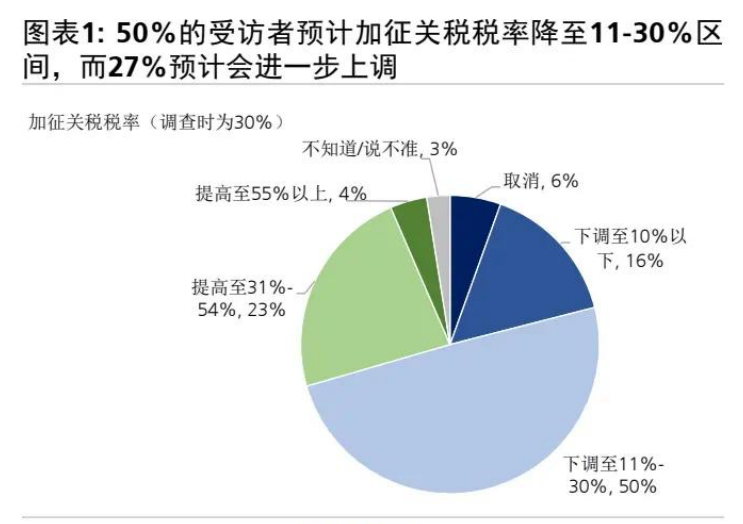
Group 1 - The uncertainty of the US tariff policy continues to impact Chinese export companies, with a survey conducted by UBS Evidence Lab revealing insights into their strategies and industry trends [1] - 71% of surveyed companies expect a decrease in US tariffs over the next 12 months, with about half anticipating rates to fall within the 11-30% range; however, 27% believe tariffs may increase further, with most expecting rates to rise to the 31-54% range [2] - 94% of companies believe that a trade agreement between China and the US will eventually be reached, but there is caution regarding the timing, with only 20% expecting it by Q3 2025 [5] Group 2 - There is significant pressure on orders from the US market, with 81% of exporting companies reporting current order volumes below the same period last year; if tariffs remain unchanged, 87% expect further declines, with 15% predicting a drop of over 30% [8] - Macro data supports this trend, showing a 24% year-on-year decline in China's exports to the US in Q2, while exports to other regions grew by 11% [11] - UBS forecasts that the decline in China's exports to the US in the second half of the year may exceed the 24% drop seen in Q2 [14] Group 3 - Chinese export companies are actively negotiating with US importers to adjust pricing strategies, with about 50% considering lowering export prices to retain US orders, while 29% are contemplating price increases [15][16] - Currently, companies can only pass on 35-40% of tariff costs to US buyers, significantly lower than during the 2018-19 trade war, influenced by a 2% appreciation of the RMB against the USD [18] Group 4 - Companies are taking proactive measures alongside government support to stabilize exports, with 46% planning to expand into non-US markets, primarily in the Middle East, Europe, and Northeast Asia [19] - 38% of companies intend to shift more orders to overseas factories, with expectations that the share of overseas production orders will rise from 44% in 2024 to 59% in 2025 [21] - 63% of companies plan to relocate some production out of mainland China, with 41% citing US tariffs as a significant motivating factor [23] - 78% of companies have received support from the government, mainly in areas such as market expansion, employment, and credit [26] - The combination of market diversification and production layout adjustments, along with policy support, raises questions about the ability to stabilize export volumes [29]
数据背后,一个比肩楼市的红利出现了?
大胡子说房· 2025-07-29 11:28
Group 1 - The core viewpoint of the article is that despite an increase in the money supply (M2) and a slight recovery in CPI, there is no corresponding rise in commodity and asset prices, leading to questions about where the excess money is going [1][2] - M2 increased by 8.3% year-on-year, reaching 330.29 trillion yuan, while CPI rose to 0.1% and PPI fell to -3.6%, indicating a disconnect between money supply and price levels [1][2] - The majority of the new money supply is not reaching households, as only 1.17 trillion yuan in new loans were taken by residents, representing about 7% of the M2 increase [2] Group 2 - Approximately 30% of the new money is directed towards government financing through bonds, with some funds used for debt refinancing and infrastructure investments [2] - About 60% of the new money flows to enterprises, which primarily use it to expand production, but this can lead to overproduction as demand does not keep pace [3][4] - The phenomenon of "capital outflow" occurs when export companies do not convert their foreign currency earnings back to RMB, leading to a significant increase in foreign currency deposits in domestic banks [4] Group 3 - The increase in production without corresponding demand results in price deflation, making it difficult for commodity prices to rise [3][4] - The article suggests that the current strategy to attract capital back to the domestic market involves enhancing the Hong Kong capital market, which is seen as a key area for foreign and repatriated funds [4][5] - The expectation of interest rate cuts by the Federal Reserve and the appreciation of RMB may further drive capital out of dollar assets towards Hong Kong-listed quality companies [5]

关税风暴,谁成最大牺牲者?草根求生秘籍
Sou Hu Cai Jing· 2025-06-30 01:13
Group 1 - The global trade environment is significantly impacted by tariff wars, leading to increased import costs and reduced export profits for companies, particularly in manufacturing [3][10] - In 2023, global trade growth dropped to 1.7%, a significant decline compared to previous years, indicating a broader economic slowdown [3] - Chinese exporters faced a 15% profit reduction due to tariffs, while the average price of imported consumer goods rose by 8% [3] Group 2 - The manufacturing sector is particularly hard-hit, with a reported 5% job loss in the industry and over 30,000 small businesses shutting down [3][6] - Consumer prices have increased, with the consumer price index rising by 2.5% in 2023, affecting low-income households the most [6] - The job market is tightening, with a reported 5.8% layoff rate and a significant decrease in new job creation, impacting various sectors including IT and automotive [6][10] Group 3 - Companies are encouraged to adapt by investing in employee training and skill development to remain competitive in a changing economic landscape [8][10] - Financial strategies should focus on long-term stability, with recommendations for low-risk investments such as government bonds and fixed deposits [8] - The government is promoting local consumption and innovation, providing support for small and micro enterprises, which could present new opportunities for growth [8][10]
普涨后下周迎关键验证,警惕2大变盘信号!
Sou Hu Cai Jing· 2025-06-29 01:48
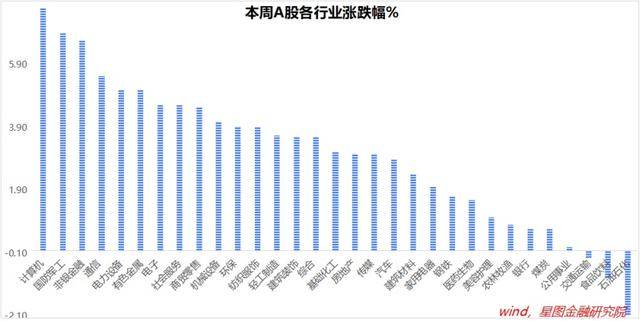
Group 1 - Global capital markets experienced a broad rally in risk assets, driven by easing geopolitical risks and a shift in Federal Reserve policy expectations [1][2] - The Nikkei 225 index led with a weekly increase of 4.55%, benefiting export manufacturers like Toyota due to a significant depreciation of the yen against the dollar [1][2] - The Nasdaq index rose by 4.25%, with Nvidia regaining its position as the world's most valuable company and Apple's acquisition of AI firm Perplexity boosting the tech sector [1][2] Group 2 - The easing of supply disruption risks in the Strait of Hormuz, following a ceasefire agreement between Israel and Iran, led to a significant drop in oil prices, with Brent crude falling by 12.11% [2] - Gold prices also decreased by 2.94% as safe-haven demand weakened [2] - The Federal Reserve's policy shift, indicated by Powell's congressional testimony suggesting a potential rate cut in July, has led to market expectations of two rate cuts this year, contributing to a decline in U.S. Treasury yields [2] Group 3 - In the A-share market, the Shenzhen Component Index rose by 3.73%, with the ChiNext Index increasing by 5.69%, reflecting a recovery in market sentiment and active growth sectors [3] - The computer sector led gains with a 7.70% increase, supported by policy backing for industries like gaming and AI, while oil and food sectors faced pressure due to falling energy prices [3] - The Hong Kong market also saw gains, with the Hang Seng Index up 3.2%, driven by large tech and financial stocks, supported by a net inflow of 28.4 billion HKD from mainland investors [3] Group 4 - Looking ahead, key focus areas include the final decision on the U.S. tariff suspension period expiring on July 9, U.S. non-farm payroll data for June, and China's PMI for June to assess policy effectiveness [4] - The A-share market showed a 1.91% increase in the Shanghai Composite Index, with major indices recording gains, while the micro-cap index rose by 6.18% [4][5] - The average daily trading volume increased to 14,884.48 billion CNY, up by 2,720.63 billion CNY from the previous week [5]