
住宿餐饮

Search documents
民间投资为何持续下滑?国家统计局回应
第一财经· 2025-09-15 07:09
Core Viewpoint - The article highlights the continuous decline in private investment in China, with a 2.3% year-on-year decrease in private fixed asset investment from January to August, primarily driven by a 16.7% drop in real estate development investment [2][4]. Group 1: Investment Trends - Private fixed asset investment in China has seen a year-on-year growth of only 0.5% from January to August, with a notable decline in private investment [2]. - Excluding real estate development, private project investment has shown a growth of 3% during the same period, indicating stability in other sectors [4]. - Manufacturing sector private investment has increased by 4.2%, surpassing the growth rate of overall private project investment [4]. Group 2: Sector-Specific Insights - The real estate sector's decline has significantly impacted overall private investment, contributing to a 4.5 percentage point drop in the growth rate of total private investment [4]. - In the manufacturing sector, 16 out of 31 major industries reported double-digit growth in private investment, with notable increases in automotive manufacturing (22.6%) and transportation equipment (16.2%) [4]. Group 3: Innovation and Future Growth - Private enterprises are recognized as the main force behind innovation in China, with significant investments in emerging industries such as high-tech sectors, which saw a 26.7% increase in information services investment [5]. - Infrastructure investment from private sources has grown by 7.5%, outpacing overall infrastructure investment growth by 5.5 percentage points, with energy and water supply sectors seeing a 23.5% increase [5]. Group 4: Policy and Support - The implementation of the "Private Economy Promotion Law" signals strong governmental support for private investment, enhancing the investment environment and encouraging private sector participation in major projects [6]. - The resilience and adaptability of private enterprises are emphasized, showcasing their ability to respond to market changes and maintain investment levels despite external pressures [6].


国家统计局:未来我国民间投资增长有支撑
Xin Hua Cai Jing· 2025-09-15 06:31
Core Viewpoint - China's private investment has slowed down due to changes in the international environment and adjustments in the real estate market, but investment excluding real estate development remains stable, indicating potential for future growth [1][4]. Group 1: Investment Trends - Private fixed asset investment decreased by 2.3% year-on-year from January to August, primarily due to a 16.7% decline in real estate development investment, which pulled down the overall growth rate by 4.5 percentage points [1]. - Excluding real estate development, private project investment grew by 3% year-on-year during the same period, outpacing overall investment growth [1]. Group 2: Manufacturing and Innovation - Manufacturing private investment showed a positive trend, increasing by 4.2% year-on-year from January to August, which is 1.2 percentage points higher than the growth of private project investment [2]. - In the manufacturing sector, 16 out of 31 industries experienced double-digit growth, with notable increases in automotive manufacturing (22.6%) and transportation equipment manufacturing (16.2%) [2]. - Private investment in high-tech industries, particularly in information services, surged by 26.7%, while professional technical services saw a 17.6% increase [2]. Group 3: Infrastructure and Policy Support - Private investment in infrastructure rose by 7.5% year-on-year, exceeding the overall infrastructure investment growth by 5.5 percentage points, with significant growth in the electricity, gas, and water supply sectors (23.5%) [3]. - The implementation of the "Private Economy Promotion Law" has provided strong signals for the development of the private economy, enhancing the investment environment and ensuring support for private investment growth [4].
行业首发!中国饭店协会最新成果亮相服贸会
Zhong Guo Jing Ji Wang· 2025-09-12 06:19
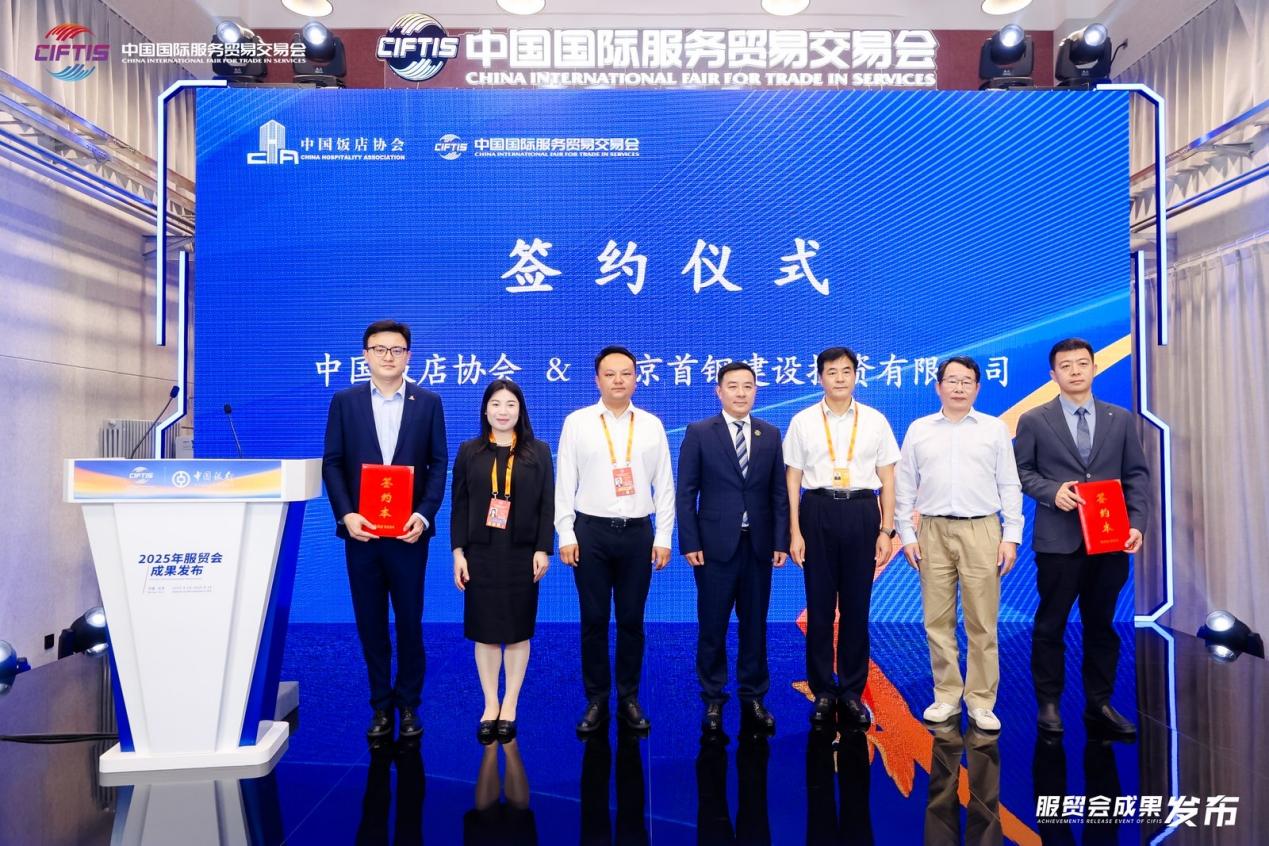
Core Insights - The Chinese government has introduced 20 measures to promote high-quality service consumption, prioritizing the accommodation and catering sectors as key drivers for economic growth and consumer spending [1] Group 1: Industry Development - The accommodation and catering industry is recognized as a crucial area for expanding domestic demand and driving growth, adapting to trends of consumption upgrades and new energy transitions [1] - The China Hotel Association has launched a consumption index system based on big data to measure market development levels and capture changes in the accommodation and catering sectors [2] Group 2: Standards and Regulations - The Ministry of Commerce has released two industry standards focused on ESG management and digital operations for accommodation enterprises, developed in collaboration with leading hotel groups and digital service companies [3] - These standards aim to provide actionable guidelines for the industry's transition towards greener and more digital operations [3] Group 3: Future Initiatives - The China Hotel Association plans to continue promoting digital and green development in the hospitality sector through various initiatives, including summits, reports, and talent cultivation [4] - A collective initiative titled "Beijing Initiative for Sustainable Development of Accommodation Enterprises" has been launched to promote ESG governance and digital transformation within the industry [4] Group 4: Strategic Collaborations - A strategic cooperation agreement was signed between the China Hotel Association and Beijing Shougang Construction Investment Co., emphasizing resource integration and innovation in service consumption [7]
2025年服贸会期间北京拟推出20余场精品消费活动
Zhong Guo Xin Wen Wang· 2025-09-04 14:19
Group 1 - The 2025 China International Service Trade Fair (CIFTIS) will be held from September 10 to 14 in Beijing, with over 20 premium consumption activities planned to enhance consumer engagement and stimulate spending [1] - Beijing will host 13 premium consumption activities at Shougang Park and 12 additional activities in the surrounding areas, including events at Shijingshan Amusement Park and Beijing Garden Expo Park [1] - The city aims to create a vibrant consumption atmosphere by integrating various consumer needs and promoting regional collaboration [1] Group 2 - Beijing plans to issue themed consumption vouchers totaling 3 million yuan, targeting the accommodation and dining sectors, with over 300 participating restaurants and more than 20 hotels [2] - A "ticket root" themed activity will be organized to provide shared discounts for attendees of CIFTIS and WTT Grand Slam events, involving around 200 merchants from six major shopping districts [2] - Various experiential activities will be held, including a creative market at the Yongding River and a candy carnival at Shougang Park, enhancing the shopping and dining experience [2] Group 3 - During CIFTIS, Beijing Fashion Week and China International Fashion Week will take place simultaneously, featuring fashion events that integrate cultural and commercial elements [3] - The events will include the WEEK UP trend exhibition and various fashion brand activities across multiple venues, showcasing new collections and promoting fashion consumption [3] - Notable brand launches will occur at the Beijing Exhibition Hall, featuring renowned designers and brands [3]
惠阳“刷新”政策为企业“撑腰”
Sou Hu Cai Jing· 2025-09-03 01:36
Core Points - The "2025 Version Measures" aims to support the high-quality development of the real economy in Huiyang District, revising previous policies to enhance industrial growth and innovation capabilities [1][2][3] Group 1: Financial Incentives for Industrial Growth - New policies include financial rewards for industrial enterprises achieving significant growth, with a maximum reward of 180,000 yuan for those exceeding 100 billion yuan in annual output [1][2] - The criteria for rental factory rewards have been relaxed, with support for companies achieving a 30% growth rate on an annual output of 50 million yuan or more [2] - Additional rewards are provided for newly recognized "newly upgraded" industrial enterprises, with 60,000 yuan for those achieving over 1 billion yuan in output [2] Group 2: Support for Innovation and Technology - The measures include support for the establishment of technology innovation platforms, with financial incentives for recognized incubators and research centers [3] - National-level incubators can receive up to 30,000 yuan, while provincial and municipal accelerators can receive 50,000 yuan and 30,000 yuan respectively [3] - New awards are available for enterprises recognized as national-level "specialized and innovative" small giants, with a reward of 20,000 yuan [3] Group 3: Foreign Trade Development - Huiyang District has allocated 1 million yuan annually to support foreign trade enterprises, including subsidies for participation in international trade fairs [4] - Companies can receive up to 5,000 yuan for exhibition fees and full reimbursement for travel expenses for government-organized trade events [4] Group 4: Talent Attraction and Support - Significant funding is available for technology innovation teams and talent recognized at the municipal and national levels, with project funding reaching up to 1 million yuan [5] - Support is also provided for teams selected for major talent programs, with matching funds available [5] Group 5: Support for Commerce and Retail - New incentives for commercial enterprises include a reward of 36,000 yuan for businesses newly included in statistical reporting [7] - Specific rewards are outlined for retail and wholesale businesses based on sales growth, with a maximum reward of 60,000 yuan for significant sales increases [7] - A one-time reward of 100,000 yuan is available for new brand dealerships entering the Huiyang market [6]
中国银河证券:PMI为何回升?
智通财经网· 2025-08-31 08:05
Core Viewpoint - The recovery of the PMI manufacturing index in August, along with improvements in production, new orders, and prices, indicates the initial effects of policies aimed at expanding domestic demand and countering excessive competition. The stock market's recovery is boosting economic confidence, which may lead to a rebound in consumer spending. Future policies to expand domestic demand are expected to strengthen the positive economic trend, especially in the service consumption sector as the impact of durable goods policies diminishes [1][7]. Group 1: Economic Resilience - The production index in August rose to 50.8%, while the new orders index was at 49.5%, indicating a strong resilience in the economy despite a widening supply-demand gap of 1.3 percentage points [2]. - The increase in production is attributed to stable domestic demand and a recovering stock market, alongside exporters rushing to ship goods due to new tax regulations [2]. Group 2: Price Index Trends - The PMI output price index and raw material purchase price index increased by 0.8 percentage points and 1.8 percentage points to 49.1% and 53.3%, respectively, marking three consecutive months of price increases [3]. - The rise in prices is linked to the initial success of measures to curb excessive competition, with 11 out of 16 industries showing price increases [3]. Group 3: Inventory and Procurement Dynamics - The finished goods inventory index fell by 0.6 percentage points to 46.8%, while raw material inventory and procurement levels rose, indicating a shift towards passive inventory reduction [4]. - Companies are adjusting procurement levels in response to new orders, maintaining low inventory levels as demand and exports increase [4]. Group 4: Performance of Enterprises - Large enterprises saw a significant increase in their index to 50.8%, while small enterprises slightly rose to 46.6%, and medium enterprises fell to 48.9% [5]. - The service sector, particularly transportation and entertainment, benefited from summer consumption, with business activity indices for rail and air transport exceeding 55% [6]. Group 5: Future Outlook - The PMI manufacturing index remains in contraction for five consecutive months, highlighting ongoing economic pressures, particularly for small and medium enterprises [7]. - Continued policy support is necessary to sustain economic recovery, especially in demand, with upcoming measures to stimulate service consumption and digital economy initiatives [7].

周末重磅!统计局公布!
Zheng Quan Shi Bao· 2025-08-31 03:32
Economic Indicators - The manufacturing PMI for August is reported at 49.4%, indicating a slight improvement from the previous month, while the non-manufacturing business activity index and comprehensive PMI output index are at 50.3% and 50.5%, respectively, both showing increases of 0.2 and 0.3 percentage points [1][3] - The overall economic climate in China continues to expand, with expectations for sustained release of domestic demand potential in September and the fourth quarter [1][11] Manufacturing Sector - In August, various sub-indices within the manufacturing sector, including production, new orders, and procurement volume, showed increases ranging from 0.1 to 1.8 percentage points, while the inventory and employment indices saw slight declines [3][10] - The prices of major raw materials and factory output have also improved, with indices at 53.3% and 49.1%, respectively, marking a continuous rise for three months [3] Non-Manufacturing Sector - The non-manufacturing business activity index has stabilized above 50%, with new orders showing a slight increase, indicating a stable operational environment [5] - The financial services sector, including banking and capital markets, has shown strong performance, with business activity indices above 60% [5][4] Consumer Activity - The hospitality and restaurant sectors have seen significant increases in their business activity indices, with both indices rising over 5 percentage points compared to the previous month [6] - Transportation sectors, including rail and air travel, have maintained high activity levels, with indices above 59% [7] Emerging Industries - The information services sector, particularly telecommunications and internet services, is experiencing robust growth, with business activity indices above 55% [8] - The ongoing "Artificial Intelligence+" initiative is expected to further enhance the application scenarios and development potential of the information services industry [8] Future Outlook - Experts predict that the macroeconomic environment will continue to improve, with stable recovery in manufacturing demand and expansion in production activities [11][12] - The impact of recent policies aimed at stabilizing economic growth, including support for new industrialization and carbon market development, is expected to inject new momentum into the economy [12]
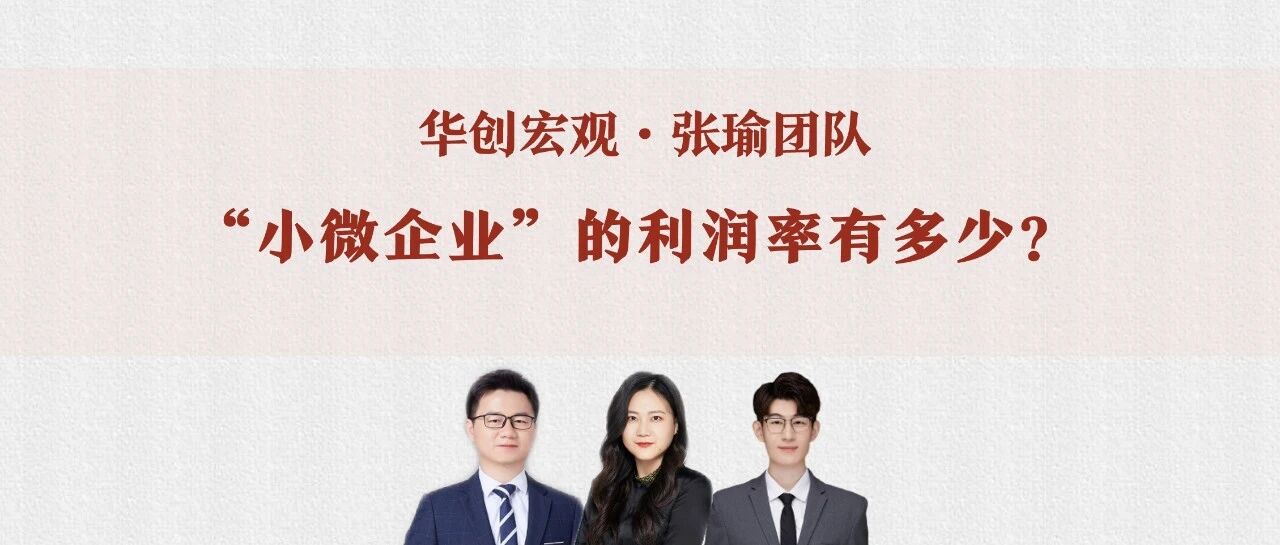
“小微企业”的利润率有多少?
一瑜中的· 2025-08-29 08:34
Core Viewpoint - Small and micro enterprises are a significant part of the economy, but their statistical data is limited, making it challenging to assess their profitability accurately [2][4]. Group 1: Definition of "Small and Micro Enterprises" - Three perspectives are used to define small and micro enterprises: 1. Observing enterprises below a certain scale, with industrial enterprises defined as those with annual main business income of 20 million yuan or more classified as large-scale [4][13]. 2. Classifying enterprises into large, medium, small, and micro based on the "Statistical Classification of Large, Medium, Small, and Micro Enterprises" [4][15]. 3. Considering individual businesses, which, while not classified as legal entities, are still crucial to the economy, with 180 million individuals employed in this sector [5][17]. Group 2: Profitability of Small and Micro Enterprises - For industrial small and micro enterprises, the estimated profit margin is around 4.6% for 2023, based on data from the National Bureau of Statistics [6][21]. - In the service sector, the estimated profit margin for 11 small and micro enterprises is approximately 7.7%, excluding the impact of the wholesale and retail industry [7][26]. - A comprehensive survey indicates that the average profit margin for small and micro enterprises across all industries is projected to be 4.9% in 2024, with a slight decline to 4.5% expected in 2025 [8][27].
详解千亿级增值税留抵退税政策大调整
第一财经· 2025-08-23 07:38
Core Viewpoint - China has made a significant policy adjustment regarding the value-added tax (VAT) refund system, becoming more cautious about refunds to reduce fiscal pressure and improve management efficiency [3][4]. Summary by Sections VAT Refund Policy Adjustment - The Ministry of Finance and the State Taxation Administration announced a new VAT refund policy effective from September, aimed at enhancing policy precision and reducing compliance costs [3][4]. - The VAT is China's largest tax, generating over 6 trillion yuan annually [3]. Historical Context - Since 2011, China has piloted VAT refunds for specific industries to alleviate financial pressure on enterprises, with significant expansions in 2019 and 2022 [4][5]. - The total amount of VAT refunds surged to 2.46 trillion yuan in 2022, a 3.8-fold increase from 2021, as part of measures to support businesses during the pandemic [5]. Changes in Eligible Industries - The new policy continues to allow full monthly refunds for the manufacturing, scientific research, software, and environmental sectors, while imposing restrictions on previously eligible sectors like wholesale and retail [6][10]. - Industries such as wholesale, retail, agriculture, and hospitality will now receive partial refunds (60% or 30%) instead of full refunds [6][10]. Real Estate Sector Provisions - The real estate sector has a separate VAT refund policy, allowing developers to apply for refunds under specific conditions, maintaining stability in the sector [7][9]. - The policy aims to support the real estate market amidst ongoing challenges, with a focus on maintaining operational stability [8][9]. General Industry Adjustments - Other industries not included in the specified categories will face stricter requirements for VAT refunds, including a minimum threshold of 500,000 yuan for new refundable amounts [10][11]. - The new policy reflects a shift from broad tax cuts to more targeted fiscal measures, addressing the need for fiscal sustainability and risk prevention [10][11]. Implementation and Management - The State Taxation Administration has issued detailed guidelines to ensure the effective implementation of the new VAT refund policy [11]. - Tax revenue data indicates a slight decline in overall tax income, with VAT revenue showing a modest increase of 3% year-on-year [11].
人民银行上海市分行:加力推出面向居民个人的消费补贴等优惠
Bei Jing Shang Bao· 2025-08-22 12:11
Core Viewpoint - The People's Bank of China Shanghai Branch has launched a financial consumption promotion initiative to boost and expand consumer spending in Shanghai, aligning with national and local government policies aimed at enhancing the city's status as an international consumption center [1][2]. Group 1: Financial Support for Consumers - The initiative emphasizes increasing financial support for consumers, encouraging financial institutions to innovate and integrate consumer subsidy measures, and utilize policies such as personal consumption loan interest subsidies and trade-in programs to unlock consumer potential in Shanghai [1][2]. - Financial institutions are required to enhance their services by developing targeted financial products that cater to various consumer segments, including the elderly and those engaged in lifestyle services and tourism [2]. Group 2: Financial Services for Businesses - The initiative also focuses on optimizing financial services for businesses, particularly in the service sector, by promoting financing solutions that meet the credit needs of service industry operators [1][2]. - The People's Bank of China Shanghai Branch plans to collaborate with local industry authorities to implement supportive policies, such as interest subsidies for service industry loans, to reduce financing costs and stimulate market activity [2].