健身

Search documents
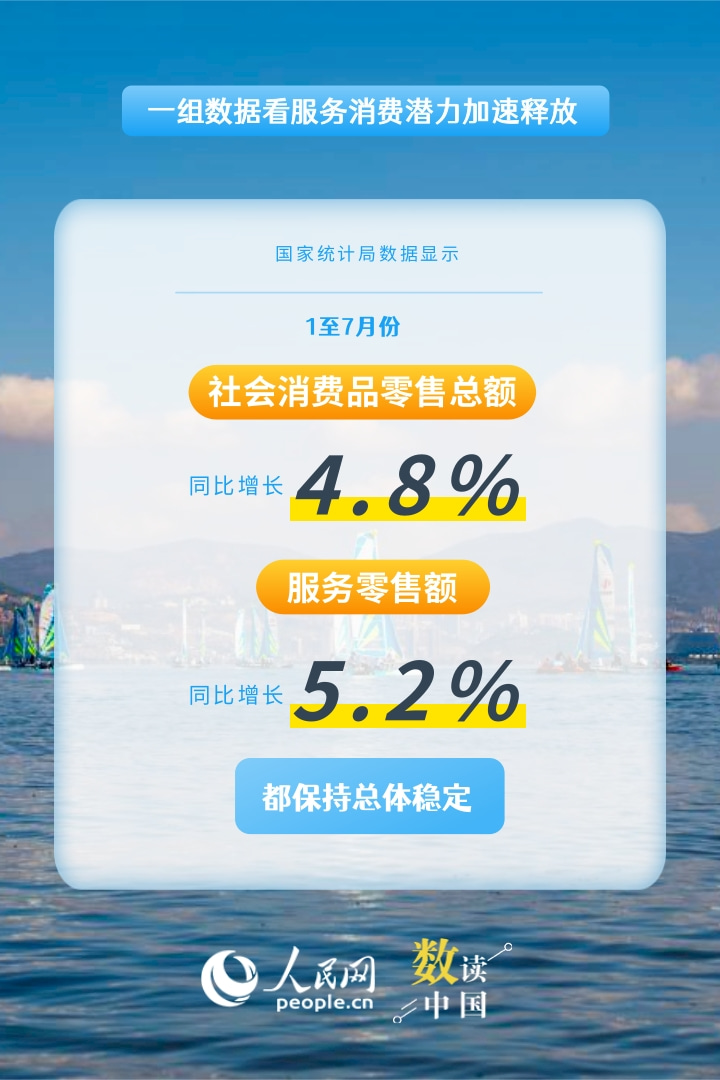
数读中国 一组数据看服务消费潜力加速释放
Ren Min Wang· 2025-08-19 05:47
Core Viewpoint - The expansion of service consumption is crucial for both the economy and people's livelihoods, with significant potential for growth as household spending on services surpasses that on goods [1] Group 1: Service Consumption Growth - In the first seven months of the year, retail sales in tourism consulting, transportation services, and cultural and recreational services maintained double-digit growth [3][4] - Retail sales in communication and information services grew by over 10%, with an acceleration of 0.2 percentage points compared to the first half of the year [5] - From 2020 to 2024, China's service consumption has shown rapid growth, with per capita service consumption expenditure increasing by 9.46% annually [6] Group 2: Contribution to Overall Consumption - By 2024, per capita service consumption expenditure is expected to account for 46.1% of total per capita consumption expenditure [8] - The contribution rate of service consumption to the growth of household consumption expenditure is significant [9] Group 3: Employment Impact - In 2024, the service industry is projected to play a unique role in job creation, with service sector employment accounting for 3,896 million of the total workforce [11] - Employment in sectors such as resident services, catering, accommodation, and cultural entertainment has shown notable growth compared to the previous year [11] Group 4: Financial Support for Service Consumption - The People's Bank of China has established a 500 billion yuan loan for service consumption and elderly care, encouraging financial institutions to increase credit supply in the consumption sector [13] - The balance of household consumption loans, excluding personal housing loans, reached 2.2 trillion yuan [14] - The loan balance for key service consumption sectors, including accommodation, catering, cultural entertainment, education, and resident services, stands at 8 trillion yuan [15]

希腊6月零售额下降
Shang Wu Bu Wang Zhan· 2025-08-14 15:07
Core Insights - In June, Greek consumers experienced a significant decline in both essential and non-essential spending, with personal care and fitness, dining, and clothing and accessories seeing the largest drops [1] Group 1: Consumer Spending Trends - Personal care and fitness spending decreased by 50% [1] - Dining expenditures also fell by 50% [1] - Clothing and accessories spending dropped by 45% [1] Group 2: Apparel Industry Performance - According to the Greek Apparel Association (SEPEE), apparel exports and domestic retail market have been sluggish in the first four months of the year [1] - Apparel and textile exports declined by 4% [1] - Clothing retail saw a slight increase of 0.6%, which is below the inflation rate [1]
2025银发经济,偷偷赚钱的四大新机会
3 6 Ke· 2025-08-13 11:31
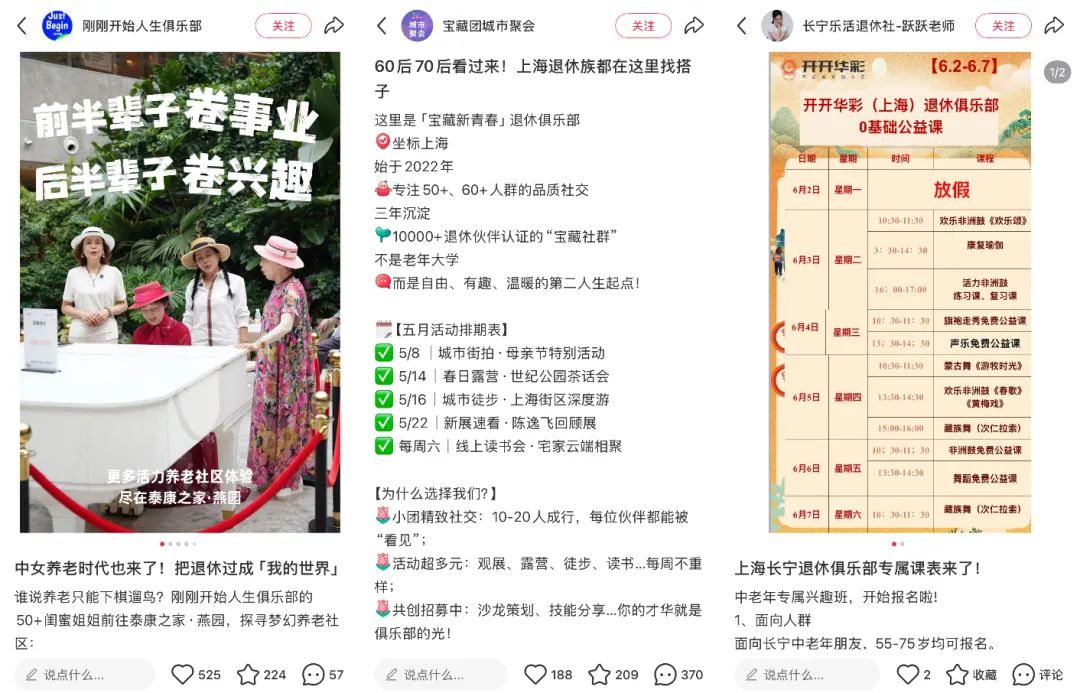
Group 1 - The core idea of the articles revolves around the transformation of the elderly consumer market, highlighting a shift from basic survival consumption to a focus on personalized, self-satisfying experiences, termed "悦己银发" [1][2][49] - The emergence of retirement clubs catering to the elderly's new social and entertainment needs, offering activities like DJing, dancing, and games, indicates a significant market opportunity [4][5][49] - The trend of "情怀消费" (emotional consumption) is exemplified by the growing interest of the elderly in attending concerts, such as those of the artist 刀郎, which serve as a nostalgic experience and a way to connect with their past [25][49] Group 2 - Four new consumption trends for the elderly have been identified: social clubs beyond traditional activities, emotional consumption through concert tickets, tailored fitness products for the elderly, and beauty services aimed at enhancing their appearance [2][31][49] - The business models of retirement clubs vary, with some operating on a membership basis and others offering pay-per-activity options, reflecting the diverse preferences of the elderly [6][8] - The beauty industry is responding to the elderly's desire to maintain their appearance, with brands launching products specifically designed for older consumers, indicating a growing market segment [35][36][49]
毕马威中国经济研究院院长蔡伟:消费市场的积极变化将利好消费板块的估值修复
Zheng Quan Ri Bao Wang· 2025-08-13 11:05
Group 1 - The positive changes in the consumption market will benefit the valuation recovery of the consumption sector, enhancing performance growth expectations for companies supported by policy and market demand [1] - The investment attractiveness of the consumption sector is expected to increase further, boosting investor confidence and attracting more capital inflow [1] Group 2 - In July, the PPI decline in industries such as coal, steel, cement, photovoltaic, and lithium batteries has narrowed, while CPI for fuel and new energy vehicles has stabilized after several months of decline [2] - To consolidate the foundation for moderate price recovery, it is necessary to strengthen policy coordination on both supply and demand sides, promoting industrial upgrades and demand creation [2] - On the supply side, improving standards for technology, energy consumption, and emissions is essential to phase out outdated capacity and replace it with high-quality capacity [2] Group 3 - The new consumption sector is expected to further contribute to domestic demand, particularly through the acceleration of service consumption potential, innovation in consumption scenarios and channels, and the emergence of the emotional economy [3] - The "self-care economy" trend is driving growth in new sectors such as light luxury, trendy toys, pet care, and fitness, becoming new engines for industrial upgrades and economic growth [3] Group 4 - The implementation of policies like "old for new" has led to positive changes in the consumption market, with suggestions to expand subsidy coverage to essential goods and services [4] - The focus should also be on balancing the pace of subsidy distribution to ensure policy continuity and optimize financial support and tax incentives [4] - The emotional economy-related sectors in the A-share market have shown active performance, indicating high market recognition of their growth potential [4] Group 5 - The younger consumer group increasingly values "emotional value" and "cultural identity," making "emotional price ratio" a significant factor in their purchasing decisions [5] - The rise of national brands and cultural exports is driving high growth in sectors like trendy toys and IP derivatives, with companies that possess brand advantages and innovation capabilities standing out [5]
健身房不跑路才奇怪了
虎嗅APP· 2025-08-12 10:31
Core Viewpoint - The fitness industry, particularly gyms, is facing significant challenges leading to a high rate of closures, primarily due to the mismatch between consumer demand and the operational realities of gym businesses [5][17][34]. Group 1: Industry Challenges - Many established gym brands, such as 威尔仕, are struggling to survive in the current market [5][7]. - The phenomenon of gyms going bankrupt is common, with many consumers experiencing multiple gym closures [14][16]. - The fundamental issue is that the gym model is counterintuitive to human nature, as most people lack the self-discipline to maintain a consistent workout routine [19][21]. Group 2: Consumer Behavior - A significant portion of the population does not require gym memberships to achieve fitness goals, as resources for self-guided workouts are widely available [21][22]. - The demographic of hardcore gym users is very small, with many opting for free public spaces to exercise instead [23][25]. - The high costs associated with gym memberships and personal training deter many potential customers, leading to a reliance on cheaper alternatives [26][27]. Group 3: Financial Viability - The operational costs of running a gym are substantial, including high rent, equipment costs, and utilities, making it difficult to sustain profitability [45][46]. - The reliance on selling personal training sessions for revenue is problematic, as many gym members do not attend regularly, limiting sales opportunities [49][50]. - The cash flow issues in gyms are exacerbated by the fact that many members do not utilize their memberships, leading to a lack of recurring revenue [36][38]. Group 4: Sales Practices - The pressure to sell personal training sessions has led to questionable sales tactics, where some trainers may exaggerate the necessity of their services [56][63]. - The disconnect between skilled trainers and sales ability results in a market where less qualified individuals may succeed in selling services over more knowledgeable trainers [58][62]. - The prevalence of negative experiences with personal trainers has tarnished the reputation of the industry, leading to a general distrust among consumers [67]. Group 5: Business Models - Some gym owners have adopted a "pump and dump" strategy, where they quickly sell memberships and then close down, leaving customers with unused services [70][72]. - The industry is characterized by a high turnover of new gyms, with many failing within the first few years of operation [72][73]. - The operational model of gyms is increasingly viewed as unsustainable, with many owners recognizing that long-term viability is unlikely [69][68].

健身房不跑路才奇怪了
半佛仙人· 2025-08-11 03:50
Core Viewpoint - The fitness industry, particularly gyms, is facing significant challenges leading to a high rate of closures, driven by inherent human behavior and economic factors [2][4]. Group 1: Industry Challenges - Many gyms, including established brands, are struggling to survive, with a notable trend of closures [2][4]. - The fitness business model is fundamentally flawed as it relies on a small percentage of dedicated users, while the majority do not consistently attend [6][8]. - The high costs associated with running a gym, including rent, equipment, and utilities, make it difficult to maintain profitability [8][9]. Group 2: Consumer Behavior - Most individuals lack the self-discipline to maintain a regular gym routine, leading to a high number of unused memberships [5][6]. - The perception that gym memberships are necessary for fitness is misleading; many can achieve their goals through self-directed methods without incurring costs [5][6]. - The time commitment required for regular gym attendance is often unfeasible for many, particularly working professionals [8][9]. Group 3: Financial Dynamics - Gyms often struggle with cash flow issues, as the prepayment model does not guarantee ongoing revenue if members do not attend [8][9]. - The reliance on selling personal training sessions for profitability creates a conflict of interest, where sales tactics may overshadow genuine fitness guidance [11][12]. - The high initial investment in gym facilities and equipment does not translate into sustainable revenue, leading to financial instability [8][9]. Group 4: Market Trends - The fitness industry is witnessing a trend where new gyms may operate under a "pump and dump" model, quickly selling memberships before closing down [13]. - The market is characterized by a lack of trust, with many consumers associating personal trainers with aggressive sales tactics rather than professional guidance [11][12]. - The overall demand for fitness services exists, but the traditional gym model is not effectively meeting this demand [8][9].

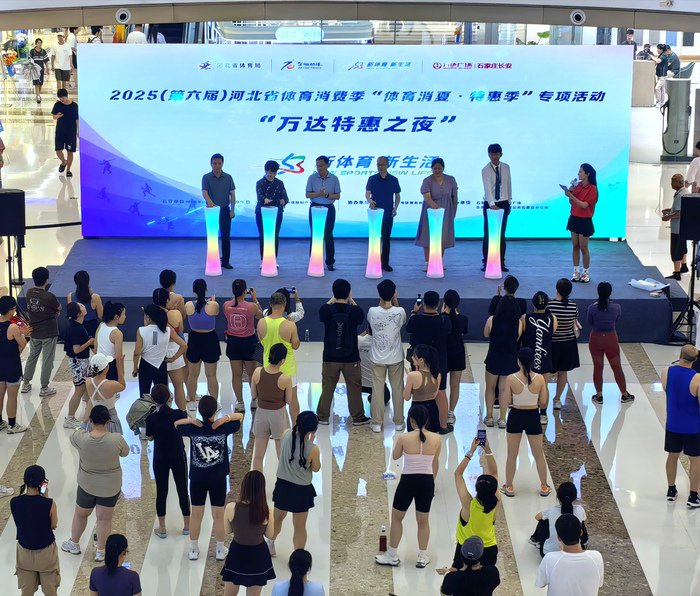
2025(第六届)河北省体育消费季“体育消夏・特惠季”专项活动——“万达特惠之夜”
Xin Lang Cai Jing· 2025-08-09 04:01
Core Insights - The event "Wanda Special Night" is a key activity of the 2025 (6th) Hebei Sports Consumption Season, promoting both sports participation and consumer engagement [1][10] - The event aims to activate the night economy in the city while promoting the concept of "New Sports, New Life" through interactive experiences [1][10] Event Highlights - The event commenced with a dynamic fitness class, attracting over 150 fitness enthusiasts and media representatives [3][10] - More than 20 brands participated, offering exclusive discounts, with some promotions reaching nearly 50% off, valid until August 31 [3][5] Discounts and Offers - Sports equipment discounts included 59% off on new products from Hongxing Erke, and significant savings on children's apparel from Jordan [5] - Food and beverage discounts featured items like a signature watermelon ice for 12.9 yuan, and various tea brands offering up to 8.8% off [6] Leisure and Lifestyle Promotions - The event also included lifestyle discounts, such as 150 yuan off on jewelry repairs and various promotions on home goods and entertainment [7] - Fitness services were offered at low prices, including a 9.9 yuan trial class and 30% off summer training courses [8] Overall Impact - The "Wanda Special Night" created a consumption chain linking sports activities with shopping, enhancing the synergy between exercise and consumer spending [10] - The Hebei Sports Consumption Season has introduced over 782 promotional measures across more than 300 sports enterprises, focusing on benefiting the public [10]

立秋 “减重经济”撬动千亿级大市场
2 1 Shi Ji Jing Ji Bao Dao· 2025-08-07 00:19
Core Insights - The "weight management economy" in China is experiencing significant growth, driven by rising obesity rates and increasing public awareness of health issues [4][8][19] - The market for weight management products and services is projected to reach 326 billion yuan in 2025, indicating a substantial economic opportunity [8][9] - The government is actively promoting weight management initiatives, including a three-year "Weight Management Year" campaign starting in June 2024 [8][19] Group 1: Obesity Statistics and Trends - Over 50% of Chinese adults are classified as overweight or obese, with adult overweight rates at 34.3% and obesity rates at 16.4% as of 2018 [4][8] - Predictions indicate that by 2030, the rates of overweight and obesity among adults could rise to 70.5% and 31.8%, respectively [4][6] - The youth obesity rates are also concerning, with overweight rates for children aged 6-17 at 11.1% and obesity rates at 7.9%, both showing an increasing trend [4][8] Group 2: Market Opportunities - The weight management market is diversifying, with a rise in demand for low-calorie, low-sugar meal replacements and healthy food options [9][10] - The health food delivery market is expected to grow, with healthy meal orders increasing from 12% in 2020 to an anticipated 25% by 2025 [9] - The weight loss drug market is projected to reach 8.7 billion yuan by 2025 and 14.9 billion yuan by 2030, with GLP-1 drugs gaining popularity [10][19] Group 3: Consumer Behavior and Challenges - There is a growing consumer preference for medically guided, nutritionally balanced, and sustainable weight management solutions [19] - Complaints regarding weight management products have surged, highlighting issues such as false advertising and ineffective results [16][18] - The industry faces challenges related to regulatory standards and the credibility of weight loss institutions, with many lacking proper verification and oversight [18][19]

工业跃升!消费沸腾!博州经济岂止“热辣滚烫”!
Sou Hu Cai Jing· 2025-08-04 09:30
Economic Overview - The economy of Bozhou is showing steady progress and positive trends in both industrial and consumer sectors in the first half of the year [1] Industrial Economic Growth - Bozhou has abundant mineral resources, particularly high-quality limestone, which supports industrial development [2] - Under the "dual carbon" goals, Bozhou has innovatively established a "green process + resource value-added" investment model, leading to continuous improvement in production processes among traditional enterprises like Tianbo Chenye Mining Co., Ltd. [2] - In the first half of the year, the industrial added value of Bozhou increased by 27.2% year-on-year, indicating robust high-quality industrial development [9] Key Industries - The region has developed advantageous industrial clusters around cotton, goji berries, beef cattle, sheep, corn, and marble, with products like Jinghe goji berries and Tianlai fragrant beef being exported domestically and internationally [7] - The abundant solar and thermal resources are being effectively utilized, with wind, solar, and thermal energy projects progressing steadily, injecting new momentum into the clean energy industry [7] Consumer Market Growth - The Bozhou Business Bureau has organized various promotional activities to boost consumption, including a New Year goods festival and automobile exhibitions [11] - In the first half of the year, the total retail sales of social consumer goods in Bozhou increased by 9.7% year-on-year, with automobile retail sales rising by 32% due to the "old-for-new" policy [13] - The tourism sector is thriving, with hotels experiencing over 90% occupancy rates, especially during the peak tourist season [15] Emerging Consumer Trends - Fitness has become a popular consumption area in Bozhou, with increasing participation in gyms and fitness clubs [17]

综训鞋服市场再起混战,谁能从健身新格局中受益
3 6 Ke· 2025-08-04 01:41
Core Insights - The domestic fitness industry in 2025 shows positive signs of growth, with companies like LeKe proposing new strategies and expanding their store count to over 2000 [1] - The rise of comprehensive training methods is transforming the fitness landscape, moving from niche to mainstream, as evidenced by the growth of events like HYROX [1][2] - A significant shift in the exercise mindset among younger generations is driving this growth, with Gen Z showing a preference for competitive training and quantifiable performance [2] Group 1: Industry Trends - Comprehensive training is becoming a bridge between professional sports and everyday fitness, with brands like lululemon and alo blurring the lines between workout and casual wear [7] - Market segmentation is accelerating, with major brands targeting hardcore players through event IPs, while smaller brands focus on specific communities [7] - Brand competition is evolving beyond products to encompass the entire experience, including equipment, content, and community engagement [8] Group 2: Company Strategies - Adidas is actively engaging in the fitness market by partnering with major events and signing prominent athletes to establish authority in the professional domain [4] - Puma is focusing on the emerging HYROX event, planning to expand its presence in China and solidifying its position in the comprehensive training sector [4] - Nike maintains a subtle yet effective strategy, with its Mecton series products gaining traction in comprehensive training venues [4] Group 3: Market Dynamics - Li Ning reported that running, basketball, and comprehensive training contributed to 64% of its revenue, highlighting the importance of these categories [5] - Smaller brands are finding niches in the market, with collaborations and targeted products catering to specific audiences, indicating a diversification in the comprehensive training market [5] - The competitive landscape is characterized by a mix of established brands and emerging players, each vying for a share of the growing comprehensive training market [9]