Workflow
钢铁行业
icon
Search documents
前9月全社会用电量达7.77万亿千瓦时,经济动能持续增强
Core Insights - In September, China's total electricity consumption reached 888.6 billion kWh, marking a year-on-year increase of 4.5% [1][3] - From January to September, total electricity consumption accumulated to 7,767.5 billion kWh, with a year-on-year growth of 4.6% [1][3] - The third quarter saw a total electricity consumption of 2.9 trillion kWh, with significant monthly increases, indicating a new phase in energy consumption scale [1][3] Electricity Consumption by Sector - In September, electricity consumption by sector showed varied growth: primary industry at 12.9 billion kWh (7.3% increase), secondary industry at 5,705 billion kWh (5.7% increase), and tertiary industry at 1,765 billion kWh (6.3% increase) [3][4] - Urban and rural residential electricity consumption decreased by 2.6% to 128.7 billion kWh [3][4] - The secondary industry contributed significantly to the overall growth, with a 5.1% increase in the third quarter, accounting for 51% of total electricity consumption growth [4] Policy Impact and Industrial Recovery - Government policies have positively influenced the recovery of the secondary industry, with a notable increase in electricity consumption due to various industry stabilization plans [4] - High-energy-consuming industries saw a 3.2% increase in electricity consumption in the third quarter, driven by traditional peak seasons and recovery in production [4] - High-tech and equipment manufacturing sectors experienced a 9.5% increase in electricity consumption, surpassing the average growth rate of the manufacturing sector [4] Tertiary Industry Performance - The tertiary industry maintained robust growth, with a 7.5% year-on-year increase in electricity consumption for the first three quarters and an 8.3% increase in the third quarter [5] - New infrastructure developments, such as electric vehicles and 5G, significantly boosted electricity consumption in information transmission and retail sectors, with growth rates of 18.3% and 11.7% respectively [5] - The internet and related services saw a remarkable 33.8% increase in electricity consumption, while electric vehicle charging services surged by 49.6% [5] Regional Electricity Consumption Trends - Electricity consumption growth varied significantly across regions, with provinces like Hainan (18.6%), Tibet (15.4%), and Jilin (14.9%) showing the highest increases in September [6] - In the third quarter, Tibet (14.7%), Jilin (11.9%), and Hebei (11.7%) led in electricity consumption growth [6] - High temperatures during the summer contributed to record levels of residential electricity consumption, exceeding 500 billion kWh in the third quarter [6] Residential and Manufacturing Sector Insights - Urban and rural residential electricity consumption grew by 5.6% in the first three quarters, with a 6.4% increase in the third quarter [7] - Several provinces, including Tibet and Jilin, reported manufacturing electricity consumption growth exceeding 5%, with Tibet achieving a remarkable 25.8% increase [7]
“反内卷”“稳增长”组合拳发力,三季度第二产业用电量高增
Bei Ke Cai Jing· 2025-10-23 06:05
Core Insights - In September, the total electricity consumption reached 888.6 billion kWh, marking a year-on-year increase of 4.5% [2] - The secondary industry's electricity consumption was 570.5 billion kWh, with a year-on-year growth of 5.7%, indicating a significant rebound [2] - The third industry's electricity consumption in September was 176.5 billion kWh, showing a year-on-year increase of 6.3% [3] Group 1: Electricity Consumption Trends - The total electricity consumption for the third quarter increased by 5.1% year-on-year, with the secondary industry contributing 51.0% to this growth [2] - Industrial electricity consumption grew by 5.4% year-on-year in the third quarter, an increase of 2.3 percentage points from the second quarter [2] - Manufacturing electricity consumption rose by 5.2% year-on-year in the third quarter, up by 3.2 percentage points from the previous quarter [2] Group 2: Sector-Specific Growth - The rapid development of new energy vehicles and charging infrastructure has significantly boosted electricity consumption in the information transmission/software and IT services sectors, which grew by 18.3% and 11.7% respectively in the third quarter [3] - The internet and related services sector saw a remarkable year-on-year growth of 33.8% in electricity consumption during the third quarter [3] - The electric vehicle charging services sector experienced a staggering year-on-year increase of 49.6% in electricity consumption [3]
螺纹钢:市场观望情绪浓厚,宽幅震荡,热轧卷板:市场观望情绪浓厚,宽幅震荡
Guo Tai Jun An Qi Huo· 2025-10-22 02:03
Report Overview - The report focuses on the market conditions of rebar and hot-rolled coil, providing fundamental data, macro and industry news, and trend strength analysis [2][3]. Market Conditions - **Rebar and Hot-rolled Coil**: The market is characterized by strong wait-and-see sentiment and wide fluctuations [2][3]. - **Futures Prices**: The closing prices of RB2601 and HC2601 were 3,047 yuan/ton and 3,219 yuan/ton respectively, with daily changes of -11 yuan/ton (-0.36%) and -10 yuan/ton (-0.31%) [3]. - **Trading Volume and Open Interest**: The trading volume of RB2601 was 894,573 lots, and the open interest was 1,995,833 lots, a decrease of 10,093 lots. The trading volume of HC2601 was 441,068 lots, and the open interest was 1,509,998 lots, an increase of 6,767 lots [3]. - **Spot Prices**: The spot prices of rebar and hot-rolled coil in major cities remained unchanged [3]. - **Basis and Spreads**: The basis of RB2601 decreased by 2 yuan/ton to 153 yuan/ton, and the basis of HC2601 decreased by 4 yuan/ton to 51 yuan/ton. The spreads between different contracts also showed certain changes [3]. Macro and Industry News - **Crude Steel Production**: In September 2025, China's crude steel production was 73.49 million tons, a year-on-year decrease of 4.6%. From January to September, the cumulative production was 746.25 million tons, a year-on-year decrease of 2.9% [4]. - **Weekly Data**: According to the weekly data of Steel Union on October 16, the production of rebar decreased by 224,000 tons, and the production of hot-rolled coil decreased by 145,000 tons. The total inventory of rebar decreased by 1.859 million tons, and the total inventory of hot-rolled coil increased by 629,000 tons. The apparent demand for rebar increased by 7.374 million tons, and the apparent demand for hot-rolled coil increased by 2.458 million tons [4][5]. - **Production of Key Steel Enterprises**: In early October 2025, the average daily production of crude steel by key steel enterprises increased by 7.5% month-on-month, the average daily production of pig iron increased by 3.2% month-on-month, and the average daily production of steel decreased by 8.5% month-on-month [5]. - **Steel Inventory of Key Enterprises**: In early October 2025, the steel inventory of key steel enterprises was 15.88 million tons, an increase of 8.2% compared with the previous ten days [5]. - **Steel Exports and Imports**: In August 2025, China exported 9.51 million tons of steel, a month-on-month decrease of 3.3%, and imported 500,000 tons of steel, a month-on-month increase of 10.4% [5]. Trend Strength - The trend strength of rebar and hot-rolled coil is 0, indicating a neutral market sentiment [6].
华宝期货晨报铝锭-20251021
Hua Bao Qi Huo· 2025-10-21 02:38
Report Industry Investment Rating - No relevant content provided Core Viewpoints - The finished product is expected to move in a volatile and consolidated manner, with its price center shifting downward and showing a weak trend [1][3] - The aluminum ingot price is expected to remain high in the short - term, with inventory slightly decreasing [1][4] Summary by Related Catalogs Finished Products - Yunnan - Guizhou region's short - process construction steel enterprises' Spring Festival shutdown from mid - January is expected to affect 741,000 tons of construction steel output. In Anhui, 1 out of 6 short - process steel mills stopped production on January 5, and most others will stop around mid - January, with a daily output impact of about 16,200 tons during shutdown [2][3] - From December 30, 2024, to January 5, 2025, the transaction area of new commercial housing in 10 key cities was 2.234 million square meters, a 40.3% decrease from the previous period and a 43.2% increase year - on - year [3] - The finished product continued to decline yesterday, reaching a new low. In the context of weak supply and demand and pessimistic market sentiment, the price center keeps moving down. This year's winter storage is sluggish, providing weak price support [3] Aluminum - The US government shutdown has lasted 20 days, delaying key economic data release and creating a data vacuum before the Fed's policy meeting [2] - The domestic alumina operating capacity is at a high level. Shanxi reduced production by 400,000 tons due to rainy - season supply issues, but there is still an oversupply. Some high - cost enterprises are in the red, but the industry as a whole still has a profit margin. The spot market is in a state of loose supply, and the alumina price is expected to remain weak [3] - Last week, the average operating rate of domestic aluminum downstream processing leading enterprises was 62.5%, a 1.4 - percentage - point decrease from the same period last year. Different sectors such as aluminum plate and strip, cable, and profile have different operating rate trends and face various challenges [3] - On October 20, the inventory of electrolytic aluminum ingots in domestic mainstream consumption areas was 625,000 tons, a decrease of 2,000 tons from last Thursday and 25,000 tons from last Monday [3]
三季度全国企业销售收入增速达4.4% 盈利改善带动税收稳步回升
Jing Ji Ri Bao· 2025-10-21 00:38
Group 1 - The implementation of a package of incremental policies since September 26 last year has led to a steady recovery in both invoice sales and tax revenue, indicating a positive trend in the economy [1] - The capital market-related tax revenue has shown a high growth rate, with a year-on-year increase of 56.8% in capital market services tax, and a significant 110.5% increase in securities transaction stamp duty [2] - The manufacturing sector's tax revenue has increased by 5.4% year-on-year, contributing 31% to total tax revenue, with high-end manufacturing sectors like railway and aerospace showing a notable growth of 31.5% [2] Group 2 - The real estate sector has seen a narrowing decline in tax revenue, with a year-on-year decrease of 9.8%, reflecting the effectiveness of policies aimed at stabilizing the real estate market [3] - There has been a significant increase in the procurement of machinery and equipment by enterprises, with a 9.7% year-on-year growth, and high-tech manufacturing showing an 11.8% increase [3] - The steady growth in invoice data reflects an improving economic operation, gradual enhancement in corporate profitability, and sustained consumer vitality, supported by active capital market transactions [3]
资讯早班车-2025-10-17-20251017
Bao Cheng Qi Huo· 2025-10-17 09:25
1. Report Industry Investment Rating No relevant content provided. 2. Core Viewpoints of the Report - The overall economic situation shows a complex picture with some indicators improving while others remain weak. For example, GDP growth has a slight decline, but export and import values have increased. The gold market has strong upward momentum, and the bond market is in an interval - shock pattern. The stock market has mixed performance in different regions and sectors [1][5][22][33] - Policy measures are expected to play an important role in stabilizing the economy. The government may introduce new policies to support foreign trade, and the central bank's monetary policy may be adjusted to address low - inflation issues [2][30] 3. Summary by Relevant Catalogs 3.1 Macro Data - GDP growth in Q2 2025 was 5.2% year - on - year, slightly lower than the previous quarter's 5.4% [1] - In September 2025, the manufacturing PMI was 49.8%, up from 49.4% in the previous period; the non - manufacturing PMI for business activities was 50.0%, down from 50.3% [1] - Social financing scale increment in September 2025 was affected by high - base effects, and government bond issuance decreased [28][29] - Export and import values in September 2025 increased year - on - year, with export growth at 8.3% and import growth at 7.4% [1] 3.2 Commodity Investment 3.2.1 Comprehensive - The Ministry of Commerce will introduce new policies to stabilize foreign trade and will optimize the license process for rare - earth export controls [2][16] - The trading fees of some options on the Shanghai Futures Exchange will be adjusted from November 10, 2025 [2] - The China E - commerce Logistics Index in September 2025 reached a new high for the year, with the total business volume index rising [3][18] 3.2.2 Metals - On October 17, 2025, spot gold reached $4380 per ounce, and spot silver hit a record high of $54.4 per ounce. Gold's upward momentum is expected to continue until 2026 [5] - The US may take more actions on rare - earth issues and may increase its stake in rare - earth companies [6] 3.2.3 Coal, Coke, Steel, and Minerals - The China Iron and Steel Association held a symposium to clarify the goal of building a modern steel power by 2030 and proposed relevant measures [7][8] 3.2.4 Energy and Chemicals - The National Development and Reform Commission issued a regulatory measure for the fair opening of oil and gas pipeline network facilities, which will take effect on November 1, 2025 [9] - Russia plans to produce 5.1 billion tons of oil in 2025, a 1% decrease from last year due to OPEC+ agreements [9] - The global oil industry may face a supply shortage in the future, and Saudi Aramco's CEO called for increased investment in exploration and production [9] 3.2.5 Agricultural Products - The summer grain purchase in 2025 ended in September, with a total purchase of 107.95 million tons of wheat. The price of wheat in the main producing areas has been rising steadily since October [13] - The US is discussing soybean processing cooperation with some South American countries and is urging South Korea to increase soybean imports [13][14] 3.3 Financial News 3.3.1 Open Market - On October 16, 2025, the central bank conducted 236 billion yuan of 7 - day reverse repurchase operations, with a net withdrawal of 376 billion yuan due to 612 billion yuan of reverse repurchases maturing [15] 3.3.2 Important News - The Ministry of Commerce responded to multiple hot issues, including Sino - US economic and trade talks and rare - earth export controls [2][16] - The survey of economists shows that most are positive about the stock market in Q4 2025 and expect economic improvement [17] - The VAT invoice data shows that the equipment renewal of enterprises is accelerating, and the new - energy vehicle sales have increased by 30.1% year - on - year [18] 3.3.3 Bond Market - The Chinese bond market is generally strong, with most spot - bond yields declining. The 30 - year treasury bond "25 Super Long Special Treasury Bond 06" has a significant decline in yield [22] - The exchange - traded bond market has mixed performance, and the convertible bond market also shows different trends among different bonds [23] - The yields of European and US bonds mostly declined [26] 3.3.4 Foreign Exchange Market - The on - shore RMB against the US dollar closed at 7.1249 on October 17, 2025, down 11 points from the previous trading day [27] - The US dollar index fell 0.31% in New York trading, and most non - US currencies rose [27] 3.3.5 Research Report Highlights - Banks are facing increasing profit pressure, and investment income is becoming more important. There may be some bond - selling pressure in Q4 [28] - September's financial data reflects weak real - economy demand, and the social financing balance growth rate may decline slightly in Q4 [28][29] - The bond ETF market has developed rapidly, but there is still much room for growth compared with the European and American markets [29] 3.4 Stock Market - On October 17, 2025, the A - share market had a narrow - range shock. The Shanghai Composite Index rose 0.1%, and the Shenzhen Component Index fell 0.25% [33] - The Hong Kong Hang Seng Index fell 0.09%, and the Hang Seng Tech Index fell 1.18%. Southbound funds had a large - scale net purchase [33]
综合晨报-20251017
Guo Tou Qi Huo· 2025-10-17 06:09
Industry Investment Ratings No industry investment ratings are provided in the report. Core Views - The report analyzes the market conditions of various commodities, including energy, metals, chemicals, and agricultural products, and provides short - to medium - term outlooks and trading suggestions based on supply - demand relationships, geopolitical factors, and policy expectations [2][3][4] - Geopolitical factors such as the Russia - US summit, the US government shutdown, and Sino - US trade frictions have significant impacts on the market, causing price fluctuations and uncertainties [2][3][44] - Many commodities face challenges such as high inventory, weak demand, and supply - demand imbalances, which affect their price trends [37][38][40] Summary by Commodity Categories Energy - **Crude Oil**: Overnight futures prices declined. Geopolitical risks decreased, and Sino - US trade frictions and inventory increases put pressure on the market. The medium - term outlook is bearish [2] - **Fuel Oil & Low - Sulfur Fuel Oil**: Geopolitical factors affected prices. High - sulfur fuel oil has short - term support but medium - term pressure, and low - sulfur fuel oil has a weak fundamental outlook [22] - **Liquefied Petroleum Gas**: Saudi's price forecast increased. In the traditional peak season, demand expectations are strong, and the market is gradually recovering from the low level [24] - **Asphalt**: Inventory decreased, and the supply - demand balance is tight. There is a slight inventory accumulation expectation at the end of 2025, and the support may weaken in the later Q4 [23] Metals - **Precious Metals**: Gold and silver reached new highs. The US government shutdown and expected interest rate cuts support the long - term upward trend, but short - term volatility risks are high [3] - **Base Metals**: - **Copper**: Prices are expected to fluctuate temporarily, affected by trade tensions and inventory changes [4] - **Aluminum**: It is running strongly in the short term, testing the previous high resistance. The inventory is at a neutral level, and the supply - demand situation is relatively stable [5] - **Zinc**: LME inventory is low, and the decline has slowed. The domestic market has support at the bottom but lacks upward momentum, and it is expected to fluctuate in a range [8] - **Lead**: It is in a low - level and weak oscillation. The cost has strong support, and it is expected to fluctuate within a specific range [9] - **Nickel & Stainless Steel**: Nickel prices are weak, and the fundamentals of stainless steel are poor. The market is affected by macro - factors and inventory changes [10] - **Tin**: High - position short positions can be held. There are resistance levels at certain price points [11] - **Carbonate Lithium**: The price rebounds, and the market trading is light. It is in a low - level oscillation, waiting for a clear trend [12] - **Industrial Silicon**: The futures price rises slightly, and the spot is under pressure. It is expected to oscillate in the short term due to production and cost factors [13] - **Polysilicon**: The futures price rebounds, driven by policy expectations. There is a risk of a callback due to high inventory and uncertain policies [14] - **Iron Ore**: The supply is relatively stable, and the demand is in a recovery stage. The price is expected to oscillate at a high level [16] - **Coke & Coking Coal**: The prices are oscillating upward. The supply is abundant, and the downstream demand provides support. The market is affected by safety inspections and trade frictions [17][18] - **Manganese Silicon & Ferrosilicon**: The prices are oscillating. The demand is stable, and the supply is at a high level. They are affected by external trade frictions [19][20] Chemicals - **Urea**: The price is in a low - level oscillation. The supply is high, and the demand is weak. The market is expected to remain weak [25] - **Methanol**: The import supply in coastal areas has slowed down, and the inventory in production enterprises has increased. It is necessary to pay attention to port inventory and trade disputes [26] - **Pure Benzene**: The current fundamentals are good, but the price may be dragged down by falling oil prices. The industry valuation is low [27] - **Styrene**: The supply is sufficient, and the demand is uncertain due to high inventory and trade conflicts [28] - **Polypropylene, Plastic, & Propylene**: The supply is loose, and the demand is weak. The downstream is cautious in purchasing [29] - **PVC & Caustic Soda**: PVC supply is high, and the demand is weak. The export is under pressure. Caustic soda demand has improved, and the price decline is limited [30] - **PX & PTA**: PX supply is temporarily reduced, and PTA supply is expected to increase. The overall demand is expected to weaken [31] - **Ethylene Glycol**: The price is at the bottom of the range, and the market is affected by oil prices and trade relations [32] - **Short - Fiber & Bottle - Chip**: Short - fiber demand has improved, and bottle - chip has a good spot market but faces long - term over - capacity pressure [33] Agricultural Products - **Soybeans & Soybean Meal**: The supply is sufficient, and the inventory is high. The price is expected to oscillate downward if the Sino - US trade relationship does not improve [37] - **Edible Oils**: The market has certain resilience. Palm oil has a production reduction cycle, and domestic soybean oil has high inventory. It is recommended to buy at low prices after the price bottoms out [38] - **Rapeseed Meal & Rapeseed Oil**: The price is expected to oscillate in the short term. The inventory is decreasing slowly, and the trade relationship between China and Canada needs attention [39] - **Soybeans**: The price of domestic soybeans is strong, and the price of imported soybeans may be affected by demand [40] - **Corn**: The price is at the bottom and is expected to gradually approach the bottom [41] - **Pigs**: The futures price is at a low level, and the spot price is rebounding. The industry is in the process of capacity reduction, and the market has support in the medium - term [42] - **Eggs**: The spot price rebounds, and the futures price declines. There is a risk of further price decline in the medium - term [43] - **Cotton**: The price is oscillating. The new cotton cost provides support, but there is also hedging pressure. The demand is weak in the peak season [44] - **Sugar**: The international supply is sufficient, and the domestic production expectation is good. The price is affected by weather and production in different regions [45] - **Apples**: The price is oscillating. The supply is stable, and the inventory may be higher than expected, so the price faces pressure [46] - **Wood**: The supply is low, and the demand is weak. The inventory pressure is small. It is recommended to wait and see [47] - **Paper Pulp**: The supply is relatively loose, and the demand is average. The price is affected by inventory and overseas quotations [48] Others - **Shipping Index (European Line)**: The market is in a situation of weak reality and strong expectation, and the price is oscillating. The actual implementation of price increases needs to be observed [21] - **Stock Index**: The market is oscillating with volume contraction. The style may rotate, and it is recommended to increase the allocation of technology - growth sectors in the medium - term [49] - **Treasury Bonds**: The futures price rises, and the yield curve steepening may end. The market is expected to enter a repair stage [50]
前8个月制造业享受减税降费及退税近1.3万亿元
Zheng Quan Ri Bao· 2025-10-15 15:41
Core Insights - The high-quality development of the manufacturing sector is crucial for the overall high-quality economic development in China [1] - Tax reduction and fee exemption policies have significantly alleviated the financial burden on manufacturing enterprises, providing strong support for their development [3] Tax Policies and Financial Impact - From January to August this year, tax reduction and fee exemption policies, along with tax refunds, amounted to 1.2925 trillion yuan, directly benefiting the manufacturing sector [1] - Key policies include R&D expense deductions and a reduced corporate income tax rate of 15% for high-tech enterprises, which provided a total benefit of 485.7 billion yuan [1] - The advanced manufacturing, integrated circuit, and industrial mother machine sectors received a VAT offset benefit of 112 billion yuan, while other supportive policies contributed 694.8 billion yuan [1] Manufacturing Sector Performance - The manufacturing sector showed a positive growth trend in the first three quarters, with sales revenue increasing by 4.7% year-on-year, accounting for 29.8% of total sales revenue across all enterprises [1] - The equipment manufacturing sector experienced a sales revenue growth of 9%, with significant increases in specific areas such as computer communication equipment (13.5%) and industrial mother machines (11.8%) [2] - High-end manufacturing sectors, including new energy vehicles and aerospace, saw substantial tax revenue growth, with increases of 49.7% and 12% respectively [2] Transformation Trends - The intelligent transformation of the manufacturing sector is evident, with a 10.6% year-on-year increase in digital technology procurement, leading to a 23.6% growth in smart equipment manufacturing [2] - The green transformation is progressing, with high-energy-consuming manufacturing's revenue share decreasing by 1.4 percentage points year-on-year, and a 34% increase in procurement of energy-saving and environmental protection services [2]
中泰期货:螺纹钢维持偏弱走势
Qi Huo Ri Bao· 2025-10-15 00:33
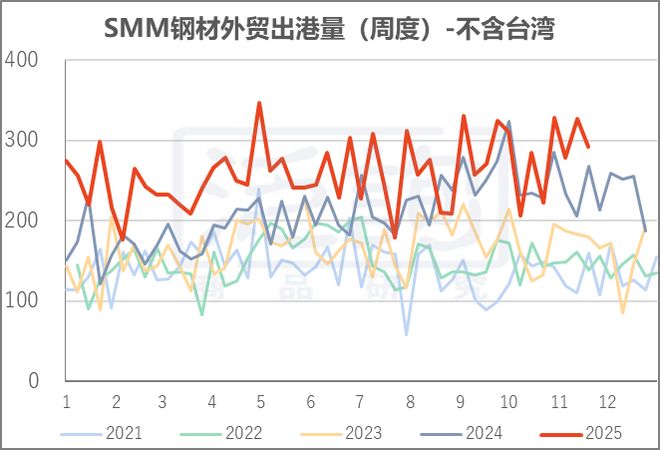
Core Viewpoint - The steel market, particularly rebar, is experiencing weak demand and inventory pressure due to the ongoing adjustments in the real estate sector, leading to a subdued performance during the traditional peak seasons [1][4]. Group 1: Rebar Market Dynamics - The demand for rebar is expected to remain weak as new construction and construction area data continue to adjust downward, prompting steel mills to implement production control measures [1][4]. - Despite low rebar production levels, the supply-demand structure still faces pressure, with a notable shift in production towards hot-rolled coils and steel billets due to profit differentials [1][2]. - As of October 10, the average daily molten iron output from 247 steel enterprises remains above 2.4 million tons, indicating high production levels despite the weak demand [1]. Group 2: Hot-Rolled Coil Risks - The main risks for hot-rolled coils in Q4 include a potential decline in domestic demand and export pressures, with downstream orders for cold-rolled galvanized products shrinking [2]. - Current hot-rolled coil inventory levels and accumulation rates are higher than the same period last year, indicating a potential oversupply situation [2]. - The EU's plans to reduce steel import quotas and impose a 50% tariff, along with escalating trade tensions between China and the U.S., add uncertainty to steel exports [2]. Group 3: Steel Billet Export Trends - In August, China's steel billet exports reached 1.76 million tons, marking a historical high with a 12% month-on-month increase and a 230% year-on-year increase [2]. - However, steel billet production profits have turned negative, raising concerns about potential production declines in the future [2]. - The high energy consumption associated with steel billet exports is seen as a waste of domestic processing capabilities, leading to increased competition in the market [2]. Group 4: Raw Material Price Support - High molten iron production has supported raw material prices, with coal and iron ore prices performing better than finished steel products since August [3]. - As of October 13, rebar long-process profits are below 100 yuan per ton, while short-process profits in Jiangsu are around -100 yuan per ton, indicating pressure on steel mill profitability [3]. - The lack of a significant downward correlation between raw material and finished product prices suggests that cost support for rebar remains, limiting downside potential [3]. Group 5: Macro Factors and Market Sentiment - The rebar market is currently facing a contradiction between weak demand and strong costs, but this has not yet reached a level of negative feedback that would significantly impact prices [4]. - Concerns over escalating trade tensions and expectations from upcoming important meetings may lead to increased market volatility [4]. - Overall, the rebar market is expected to maintain a weak and fluctuating trend under various constraints, with potential for short-term weakness driven by market sentiment [4].
钢材&铁矿石日报:市场情绪偏弱,钢矿承压下行-20251014
Bao Cheng Qi Huo· 2025-10-14 09:32
Report Industry Investment Rating No relevant information provided. Core Viewpoints of the Report - The main contract price of rebar continued to decline in a volatile manner, with a daily decline of 0.81%, and the volume decreased while the open interest increased. Under the current situation of weak supply and demand, the industrial contradictions in the rebar industry are accumulating, the pressure of inventory reduction is relatively large, and the steel price continues to be under pressure. The relative positive factor is the cost support. With the game between multiple and short factors, it is expected that the steel price will seek the bottom in a volatile manner. Attention should be paid to the demand performance [4]. - The main contract price of hot-rolled coil plate fluctuated weakly, with a daily decline of 0.70%, and the volume decreased while the open interest increased. At present, the supply pressure of hot-rolled coil is relatively large, and there are concerns about demand. The industrial contradictions are accumulating, the inventory has increased significantly, and the price of hot-rolled coil continues to be under pressure and operate weakly. Attention should be paid to the demand performance and beware of the intensification of industrial contradictions caused by the weakening of demand [4]. - The main contract price of iron ore turned weak and declined, with a daily decline of 2.07%, and both the volume and open interest increased. At present, the demand for iron ore is performing well, which supports the price of iron ore. However, the supply of iron ore is high, and the resilience of demand is weakening. The fundamental expectation is weakening, and the upward driving force of the high-valued iron ore price is not strong. It is expected that the trend will maintain a high-level volatile operation. Attention should be paid to the performance of steel [4]. Summary by Relevant Catalogs Industry Dynamics - In September 2025, 19,858 excavators of various types were sold, a year-on-year increase of 25.4%. Among them, domestic sales were 9,249 units, a year-on-year increase of 21.5%; exports were 10,609 units, a year-on-year increase of 29%. From January to September, a total of 174,039 excavators were sold, a year-on-year increase of 18.1%. Among them, domestic sales were 89,877 units, a year-on-year increase of 21.5%; exports were 84,162 units, a year-on-year increase of 14.6% [6]. - From January to September 2025, the production and sales of automobiles in China were 24.333 million and 24.363 million respectively, a year-on-year increase of 13.3% and 12.9% respectively. Among them, the production and sales of new energy vehicles both exceeded 11 million, a year-on-year increase of more than 30%, and the new car sales of new energy vehicles reached 46.1% of the total new car sales. From January to September, automobile exports were 4.95 million, a year-on-year increase of 14.8%. Among them, the export of new energy vehicles was 1.758 million, a year-on-year increase of 89.4%. From the perspective of the consumer terminal, from January to September, the retail sales of new energy vehicles maintained a high - speed growth of 24.4%, and the retail penetration rate in September reached 57.8% [7]. - The World Steel Association expects that the global steel demand in 2025 will be about 1.75 billion tons, the same as in 2024, and will rebound moderately by 1.3% in 2026 to reach 1.772 billion tons [8]. Spot Market - The spot prices of rebar, hot-rolled coil plate, Tangshan billet, and Zhangjiagang heavy scrap all showed varying degrees of decline. The prices of 61.5% PB powder, SGX swaps, and the Platts Index also decreased, while the price of Tangshan iron concentrate remained unchanged, and the ocean freight increased slightly [9]. Futures Market - The closing prices of rebar, hot-rolled coil plate, and iron ore futures all declined. The decline rates were 0.81%, 0.70%, and 2.07% respectively. The trading volume of rebar and hot-rolled coil plate decreased, while that of iron ore increased. The open interest of all three increased [11]. Relevant Charts - Multiple charts show the inventory changes of steel and iron ore (including rebar, hot-rolled coil plate, and iron ore in ports and at steel mills), as well as the production situation of steel mills (including blast furnace operation rate, capacity utilization rate, electric furnace operation rate, and profitability) [13][20][28]. Market Outlook - For rebar, the supply and demand are both weak during the holiday. The production of construction steel mills is weak, and the weekly output decreased by 36,200 tons. The supply has shrunk to a relatively low level, but the space for production reduction during the peak season is questionable, and the inventory is high, so the positive effect is not strong. The demand is also weak, and the weekly apparent demand decreased. Weak demand will continue to suppress the steel price. It is expected that the steel price will seek the bottom in a volatile manner under the game of multiple and short factors [35]. - For hot-rolled coil plate, the supply and demand pattern continues to weaken. The production of plate steel mills is weakly stable, and the weekly output decreased by 14,000 tons, but it is still at a high level within the year, and the inventory is high, so the supply pressure is relatively large. The demand during the holiday is weak, and the weekly apparent demand decreased by 336,400 tons. Although the production of cold-rolled products, the main downstream, remains at a high level, there are concerns about the demand for hot-rolled coil. The price of hot-rolled coil continues to be under pressure and operate weakly [35]. - For iron ore, the supply and demand have changed. The production of steel mills is stable, and the terminal consumption of iron ore remains at a high level. The demand for iron ore is performing well, but the industrial contradictions in the steel market are accumulating, and the resilience is expected to weaken. The arrival at domestic ports continues to rise, and the overseas miners' shipments decline slightly, both maintaining high levels within the year. The supply pressure of iron ore increases. It is expected that the price of iron ore will maintain a high-level volatile operation [36].