
饮料

Search documents
【太平洋研究院】11月第一周线上会议
远峰电子· 2025-11-02 08:07
01 主题:蜂助手推荐 时间: 11月4日(周二)15 : 00 主讲: 郭梦婕 食饮首席分析师 林叙希 食饮分析师 参会密码: 798873 03 主 题:锦江航运报告解读 时间:11月3日(周一)20:00 主讲:曹佩 计算机首席分析师 参会密码: 158210 02 主 题:茶饮板块调研和近期更新反馈 时间: 11月5日(周三)21 : 00 主讲:程志峰 交运分析师 参会密码: 013530 04 主题: 有色新材料三季报总结及投资展望 时间: 11月6日(周四)20 : 00 主讲:张文臣 有色及新材料首席分析师 参会密码: 528893 05 主题:医药行业观点更新及推荐 时间: 11月7日(周五)15 : 00 主讲: 周豫 医药首席分析师 参会密码:496618 Um 业首席分析 识别二维码立即参; 会议号码: +86-4001888938 (中国大陆) +86-01053827720 (全球) +886-277083288 (中国台湾) +852-51089680 (中国香港) 参会密码: 158210 EII+z 板块 调 和近期更新反馈 11.04 ª / 15:00 =37 料行业分 ...


3816.7亿美元!伯克希尔新纪录
Zhong Guo Zheng Quan Bao· 2025-11-02 00:27
Company News - Berkshire Hathaway reported a net profit of $30.796 billion for Q3, up from $26.251 billion year-on-year, exceeding market expectations of $12.73 billion [4] - The company's operating revenue reached $94.972 billion, slightly up from $92.995 billion year-on-year, and above market expectations of $91.55 billion [4] - As of September 30, cash reserves reached a record $381.67 billion (approximately 2716.5 billion RMB) [4] - The top five holdings accounted for 66% of the total fair value of equity securities, including American Express, Apple, Bank of America, Coca-Cola, and Chevron [4] Automotive Industry - Hongmeng Zhixing reported a record delivery of 68,216 new vehicles in October, marking the highest monthly delivery in history, with total deliveries surpassing 1 million [4] - Geely Automobile announced a total passenger car sales of 307,133 units in October, a year-on-year increase of 35% and a month-on-month increase of 12%, achieving a historical monthly sales record [5] - BYD reported sales of 441,706 vehicles in October, the highest for the year, with cumulative sales of 3,701,852 units from January to October, including over 14.2 million new energy vehicles [5] - NIO delivered 40,397 vehicles in October, a year-on-year increase of 92.6%, with total deliveries from early 2025 reaching 241,618 units, up 41.9% year-on-year [5] - XPeng Motors delivered 42,013 new vehicles in October, setting a historical monthly delivery record, with cumulative deliveries of 355,209 units from January to October, a year-on-year increase of 190% [5] Industry Research - Zhongshan Securities reported that the growth rate of mobile phone sales is slowing, reducing the likelihood of exceeding performance expectations for consumer electronics and semiconductor companies in the mobile supply chain [6] - The demand for storage chips and related production equipment is strong due to AI-related needs, while power semiconductor companies are expected to perform well driven by new energy demand [6] - Zhongyuan Securities noted that the photovoltaic industry is still undervalued historically, with potential for valuation recovery as the competitive landscape and industry chain ecology improve [6]




最后一次!伯克希尔重大发布,“巴菲特溢价”面临考验
Zheng Quan Shi Bao· 2025-11-01 23:07
Core Insights - Berkshire Hathaway, led by Warren Buffett, released its latest financial report before his resignation as CEO, showing stable performance but underperforming compared to the market [1] Financial Performance - In Q3, Berkshire Hathaway reported revenue of $94.972 billion, a year-on-year increase of 2.13% - Net profit attributable to shareholders was $30.796 billion, up 17% year-on-year - Operating profit reached $13.49 billion, a significant increase of 34% compared to $10.09 billion in the same period last year [2] Investment Portfolio - As of September 30, the fair value of the company's equity securities investments was $283.241 billion - The top five holdings, which account for 66% of the total fair value of equity securities, include American Express, Apple, Bank of America, Coca-Cola, and Chevron - The company announced a major acquisition plan to purchase Occidental Petroleum's chemical business for $9.7 billion in cash, expected to be completed by Q4 2025 [2] Stock Performance - Since Buffett announced his resignation in May, Berkshire's stock has underperformed the market, dropping 11% from a historical high of $812,855 [3] - In contrast, the S&P 500 index has risen by 21% during the same period [3] Analyst Ratings - Analyst Meyer Shields downgraded Berkshire Hathaway's A-class stock rating from "in line with the market" to "underperform," citing various factors moving in the wrong direction [3][4] - The target price for Berkshire's A-class stock was lowered from $740,000 to $700,000, with concerns about the uncertainty surrounding Buffett's successor and weak performance in key business areas [4] Leadership Transition - Greg Abel, Vice Chairman of Non-Insurance Operations, will succeed Buffett as CEO, while Buffett will remain as Chairman of the Board [4]
A股迎大变局,政策调整提速,降税利好真来?
Sou Hu Cai Jing· 2025-11-01 16:49
Core Viewpoint - The recent surge in A-shares on October 29 is accompanied by underlying concerns, suggesting that the market's enthusiasm may be short-lived and could lead to a pullback [1][25]. Market Performance - On October 29, A-shares saw a significant increase in trading volume, rising from 1.2 trillion to 2.29 trillion, indicating a lively market atmosphere, but this volume spike may not be a reliable signal of sustained growth [1][5]. - The market index crossed the 4000-point mark, with technical indicators suggesting overbought conditions, which typically necessitate a correction to consolidate the trend [3][5]. Sector Analysis - The market is experiencing a clear sector divergence, with cyclical sectors like energy, metals, and photovoltaics performing well, while defensive sectors such as beverages and liquor are declining [9][11]. - Institutional investors are showing a preference for sectors like AI and automotive components, while also significantly buying into photovoltaics and quantum technology [11][17]. External Influences - The upcoming Federal Reserve meeting on October 30 is expected to influence market sentiment, with a general anticipation of a 25 basis point rate cut, adding uncertainty to the market [13][17]. - Concurrently, geopolitical factors, such as Trump's comments on tariffs and fentanyl, introduce additional market uncertainties [15][21]. Policy Support - Recent measures from the State Administration of Foreign Exchange to facilitate cross-border trade and initiatives from the Beijing Securities Regulatory Commission to attract long-term capital are seen as solid policy support for the A-share market [15][17]. - These policy actions are expected to alleviate external trade pressures and provide a more stable influx of long-term capital into the A-share market [17][21]. Investment Strategy - The recommendation is to wait for a market pullback and stabilization before increasing positions, emphasizing a cautious approach rather than aggressive buying [7][25]. - Maintaining a controlled position and avoiding impulsive trading decisions is highlighted as a prudent strategy in the current market environment [23][25].

钟睒睒四登首富!农夫山泉凭什么?
Sou Hu Cai Jing· 2025-11-01 15:54
Core Insights - Zhong Shanshan's wealth has increased by 190 billion RMB, reaching 530 billion RMB, making him the richest person in China for the fourth time, surpassing the second richest, Zhang Yiming, by 60 billion RMB [1][10]. Wealth Growth and Rankings - In the latest Hurun Rich List, Zhong Shanshan ranks first with a wealth of 530 billion RMB, reflecting a 56% increase [3]. - The second place is held by Zhang Yiming with 470 billion RMB, showing a 34% increase [3]. - Other notable figures include Ma Yun's family at 210 billion RMB and Lei Jun at 330 billion RMB, with respective increases of 27% and 65% [3]. Business Development Phases - **Entrepreneurial Enlightenment (1988-1995)**: Zhong transitioned from a journalist to a businessman, initially facing failures before finding success in curtain fabric trading and becoming a distributor for Wahaha [4]. - **Foundation Phase (1996-2009)**: He founded Nongfu Spring in 1996, breaking into the bottled water market and establishing a strong brand despite facing controversies [5][6]. - **Diversification Phase (2010-2019)**: Zhong expanded into the pharmaceutical sector by acquiring a controlling stake in Wantai Biological Pharmacy, focusing on HPV vaccine development [7]. - **Wealth Explosion Phase (2020-2025)**: His wealth surged due to the success of Nongfu Spring and Wantai Biological, with significant revenue growth from both companies [8][9]. Financial Performance - In the first half of 2025, Nongfu Spring reported revenues of 25.62 billion RMB, a 15.6% increase year-on-year, with a net profit of 7.62 billion RMB, up 22.2% [10][11]. - The tea beverage segment, particularly the "Oriental Leaf" brand, has become the largest revenue source, contributing 10.09 billion RMB, a 19.68% increase [12][13]. Market Challenges - Despite the recovery in bottled water sales, the tea beverage segment's growth rate has slowed significantly compared to previous years, indicating increased competition [12][14]. - The beverage market is facing challenges from rising competition and changing consumer preferences, which may limit Nongfu Spring's profitability [14][15]. Leadership and Governance - Zhong Shanshan's centralized decision-making style has been effective in the early stages but poses risks as the company grows, particularly concerning succession planning [16][17]. - The potential lack of involvement from his son in daily operations raises concerns about future leadership stability [17].

巴菲特卸任前,伯克希尔现金储备再创新高,最新重仓股曝光
2 1 Shi Ji Jing Ji Bao Dao· 2025-11-01 14:42
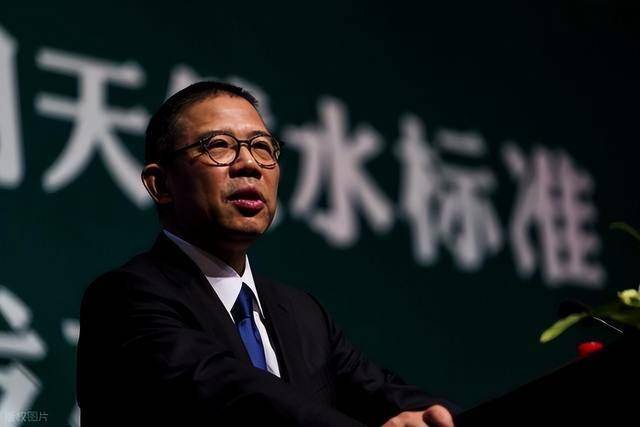
Core Insights - Berkshire Hathaway reported a net profit of $30.796 billion for Q3 2025, up from $26.251 billion in the same period last year, exceeding market expectations of $12.73 billion [1] - The operating profit for Q3 reached $13.485 billion, a 34% increase from $10.090 billion year-over-year, driven by improvements in the insurance underwriting business [2] - The company's revenue for Q3 was $94.972 billion, slightly up from $92.995 billion year-over-year, surpassing market expectations of $91.55 billion [2] Financial Performance - Net earnings attributable to Berkshire shareholders for the first nine months of 2025 were $47.769 billion, compared to $69.301 billion in the same period of 2024 [6] - Investment gains for Q3 2025 were $17.311 billion, compared to $16.161 billion in Q3 2024 [6] - The average equivalent Class A shares outstanding remained stable at 1,438,223, while Class B shares outstanding were 2,157,335,139 [6] Cash Reserves and Investments - Berkshire Hathaway's cash reserves reached a record high of $381.67 billion [3] - The fair value of the top five equity holdings accounted for 66% and 71% of total equity investments as of September 30, 2025, and December 31, 2024, respectively [3] - The top five holdings include American Express, Apple, Bank of America, Coca-Cola, and Chevron [3] Leadership Transition - Warren Buffett's tenure as CEO is entering its final two months, with Greg Abel set to take over [6] - Since the announcement of the leadership transition, Berkshire's Class B shares have declined nearly 12%, while the S&P 500 index has risen by 21% [6] - Abel will begin writing the annual shareholder letter and presiding over the annual meeting in Omaha starting next year [9]
钟慧娟以1410亿元财富首次成为中国女首富 宗馥莉以875亿元排第三
Sou Hu Cai Jing· 2025-10-31 16:02
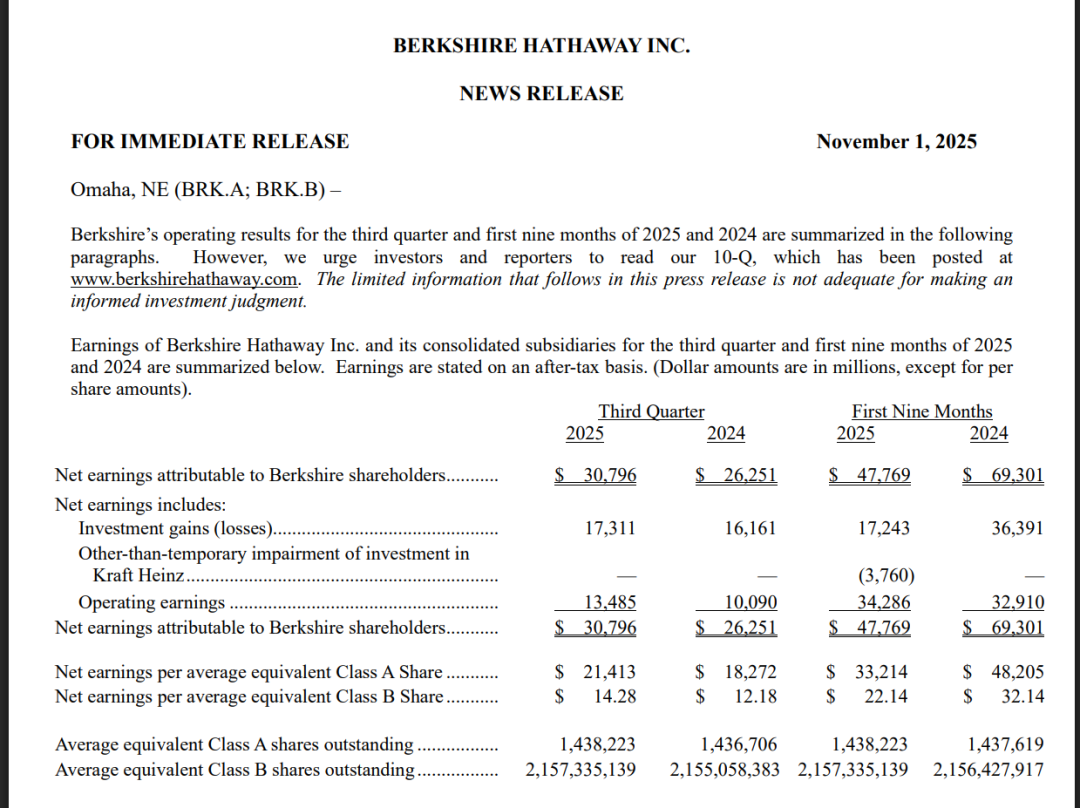
Core Insights - The 2025 Hurun Richest Women in China list reveals that the total wealth of the top 50 female entrepreneurs reached 1.9 trillion yuan, a significant increase of 32% compared to last year, with the entry threshold rising to 16 billion yuan, up 33% [1][2][11] - The average age of the top 50 female entrepreneurs is 60 years, with 66% being self-made and 34% inheriting wealth [1][2][25] - The industrial products sector is the primary source of wealth for female entrepreneurs, with 15% representation, while the real estate sector follows at 13% [21][22] Company Performance - The top female entrepreneur, Zhong Huijuan, and her mother, saw their wealth increase by 640 million yuan, reaching 1.41 billion yuan, marking an 83% growth [6][12] - Lens Technology, led by Zhou Qunfei, ranked second with a wealth of 1.1 billion yuan, a 75% increase from the previous year [7][12] - Wahaha's Zong Fuli ranked third with a wealth of 875 million yuan, experiencing an 8% increase [8][12] Industry Trends - The industrial products sector has eight female entrepreneurs in the top 50, contrasting with only two male entrepreneurs from the same sector [5][21] - The life sciences and food and beverage sectors are also significant contributors to the wealth of female entrepreneurs, with 12% and 10% representation, respectively [21][22] - The emergence of successful female entrepreneurs in the consumer electronics sector is notable, with companies like Luxshare Precision and Lens Technology leading the way [2][5] Wealth Distribution - Among the top 50 female entrepreneurs, 47 experienced wealth growth, with eight new entrants to the list [11] - The average wealth of the top 50 female entrepreneurs is 340 million yuan, with a notable increase in the number of self-made entrepreneurs [25][31] - The wealth of the top ten female entrepreneurs has seen a significant increase, with the threshold for entry rising to 55 billion yuan [4][11] Geographic Distribution - Hong Kong leads with nine female entrepreneurs in the top 50, followed by Beijing with six [16][17] - The distribution of female entrepreneurs' birthplaces shows a strong representation from Jiangsu and Guangdong [19][20] Historical Comparison - The total wealth of the top 50 female entrepreneurs has doubled over the past decade, indicating a long-term growth trend [1][2][30] - The diversity in industries represented by the top five female entrepreneurs has increased significantly compared to previous years, moving away from a heavy reliance on real estate [28][29]
日本消费行业9月跟踪报告:刚需消费疲软,体验消费走强
Haitong Securities International· 2025-10-31 14:10
Investment Rating - The report suggests a cautious outlook on the Japanese consumer sector, highlighting a divergence between essential and discretionary spending, with a focus on companies with optimistic profit growth prospects [5]. Core Insights - Basic necessity demand remains sluggish, while experiential consumption gains momentum, indicating a shift in consumer preferences towards services like dining and entertainment [2][15]. - Inflationary pressures are impacting essential goods, with food and beverage prices rising significantly, while clothing retail is underperforming due to prolonged hot weather [2][15]. - The report notes a decrease in foot traffic in physical retail stores due to fewer holidays, affecting sales across various sectors [2][15]. - The duty-free business continues to decline, but there are signs of recovery in shopping demand as the yen depreciates [2][15]. Summary by Sections Macro Overview - The consumer confidence index in Japan rose to 35.3 in September, the highest since December 2024, indicating improving consumer sentiment [7]. - Real wages fell by 1.4% year-on-year in August, marking the eighth consecutive month of decline, while nominal wages increased by 1.5% [7][9]. - The core CPI in Japan increased by 2.9% year-on-year in September, driven primarily by rising food prices, particularly rice, which saw a nearly 100% increase [9][11]. Essential Consumption - Retail sales in the food and beverage sector decreased by 0.2% year-on-year in August, with major retailers like Aeon and 711 reporting modest same-store sales growth [16][19]. - Drugstore sales showed slight growth, but foot traffic declined, indicating a shift in consumer behavior [19][20]. - The beverage industry continues to struggle, with major brands like Suntory and Coca-Cola reporting stagnant sales [20][22]. Discretionary Consumption - The restaurant sector showed strong performance, with companies like Salia and McDonald's reporting significant same-store sales growth [4][28]. - Clothing sales were negatively impacted by warm weather, with Uniqlo experiencing a decline in foot traffic despite an increase in average transaction value [30][35]. - Department store sales increased by 1.4% year-on-year in September, supported by a recovery in domestic sales and inbound tourism [35][38]. Market Performance - The consumer sector's performance lagged behind the broader market, with essential goods showing mixed results and discretionary items performing better [5]. - The report highlights specific companies with positive profit outlooks, such as Salia and Asahi Group, which are expected to benefit from favorable market conditions [5].
康师傅冰红茶成为第十五届全国运动会官方指定茶饮
Zhong Guo Jin Rong Xin Xi Wang· 2025-10-31 13:39
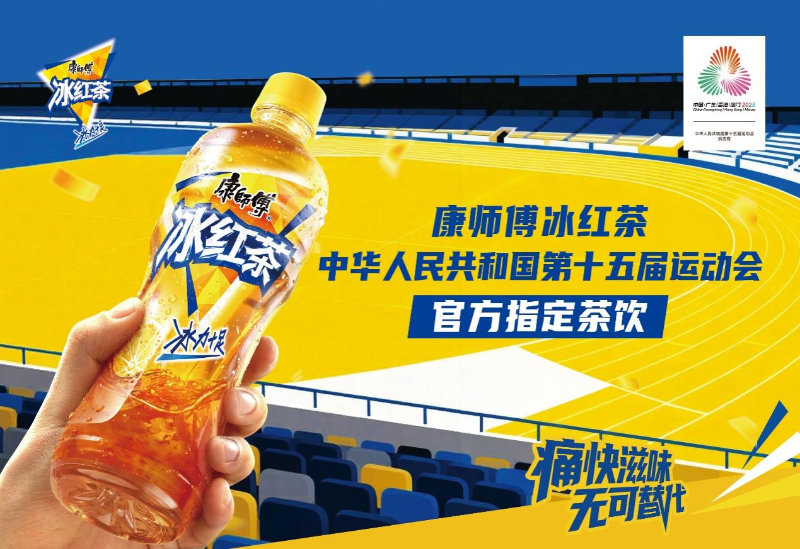
Core Points - 康师傅饮品投资(中国)有限公司's product 康师傅冰红茶 has been officially designated as the tea beverage for the 15th National Games [1][3] - The 15th National Games will take place from November 9 to November 21 in Guangzhou and Shenzhen, featuring 34 major events and 419 sub-events, with over 15,000 athletes expected to participate [3] - 康师傅冰红茶 is the only tea beverage brand selected for the event and will sponsor the archery competition [3] - Since its launch in 1996, 康师傅冰红茶 has maintained a strong market presence and has introduced several new products this year, including low-sugar and high-fiber options, which have received positive consumer feedback [3] - 康师傅冰红茶 also participated as the designated tea beverage during the Chengdu World Games earlier this year, enhancing the spectator experience with its classic flavor [3]

可口可乐公司加大投资提升在摩洛哥产能
Shang Wu Bu Wang Zhan· 2025-10-31 07:16
Core Insights - Coca-Cola Morocco Company (ECCBC) has launched two new production lines at its bottling plant in Nouaceur, with an investment of approximately $70 million aimed at expanding capacity and strengthening its industrial presence in Morocco [1] Group 1: Investment and Capacity Expansion - The new production lines are primarily for carbonated beverages and bottled water, increasing the plant's annual production capacity by about 40% [1] - The project utilizes advanced production technology that is energy-efficient and low-emission, with over 60% of energy sourced from solar and wind power [1] Group 2: Economic Impact - In 2024, Coca-Cola's local procurement in Morocco is projected to reach $302 million, covering areas such as sugar, packaging, transportation, and advertising, significantly enhancing local industry integration [1] - The company is expected to contribute approximately $724 million in added value to the Moroccan economy and support over 37,000 direct or indirect jobs [1] Group 3: Sustainability Initiatives - Coca-Cola is implementing the "Africa Water Stewardship" program across 20 African countries, with a planned investment of $25 million by 2030 to promote sustainable water resource management, including in Morocco [1]
