动力电池

Search documents
肖成伟:车用动力电池技术发展趋势
Zhong Guo Qi Che Bao Wang· 2025-06-10 03:48
Core Insights - The core component of the automotive industry's electrification transformation is the power battery, which is a highly competitive segment within the industry [4] - In 2024, global sales of new energy vehicles are projected to reach 17 million units, with China accounting for approximately 70% of the market share, maintaining its position as the world's largest market for ten consecutive years [5] - China is expected to produce around 0.5 TWh of power batteries in 2024, representing 60% to 70% of the global market share, significantly contributing to the electrification of both the Chinese and global automotive markets [5] Battery Technology Development - The development path of automotive power batteries is primarily based on lithium-ion technology, evolving from liquid lithium iron phosphate and liquid ternary lithium to solid-liquid hybrid batteries, with a future focus on all-solid-state battery systems [6] - Current energy density levels for lithium iron phosphate batteries can reach 190 Wh/kg, with volume energy density standards achieving up to 400 Wh/L [6] - Solid-state batteries are being researched globally, with various electrolyte types including oxides, sulfides, chlorides, and polymers being explored [7] Safety and Performance - Solid-state batteries offer significant improvements in safety performance, with thermal runaway temperatures reaching around 300°C, compared to 180°C for ternary liquid batteries and 220°C for lithium iron phosphate batteries [8] - The industry has seen successful trials of solid-liquid hybrid batteries, such as NIO's 360 Wh/kg battery, which can provide a driving range of 1,000 kilometers [8] Future Directions - Solid-liquid hybrid batteries are expected to exist for a considerable time as a transitional phase, with future research focusing on material systems, including high nickel and lithium-rich manganese-based cathodes, and silicon-carbon anodes [9] - The cost of solid-state batteries remains high, estimated to be 5 to 10 times that of current liquid batteries, but is expected to decrease as production scales up [9] - The development of sodium-ion batteries is also underway, with plans to enhance their energy density to 200 Wh/kg and explore solid-state options [10] Standards and Definitions - The definition of all-solid-state batteries is based on standards set by the China Automotive Engineering Society, which includes specific criteria for weight loss during testing [10] - Many companies have achieved the technical indicators necessary for all-solid-state battery development, which is crucial for advancing this technology [10]


金川集团发挥链主作用—— 链动上下游协同共赢
Jing Ji Ri Bao· 2025-06-09 21:41
Core Viewpoint - The Gansu Jinchuan Group is leveraging its local resources and innovative capabilities to enhance its competitive position in the nickel-cobalt and copper industries, driving growth and collaboration among over 100 related enterprises in the region [1][4][6]. Group 1: Production and Cost Efficiency - The company produces batteries with lower manufacturing costs, approximately 12% less than coastal regions, by sourcing most raw materials locally [1]. - The Jinchuan Group's smart copper smelting factory has implemented intelligent control in its operations, enhancing efficiency [2]. Group 2: Innovation and Product Development - The establishment of the "Gansu Nickel-Cobalt Resource Efficient Utilization and New Product Development Innovation Consortium" has facilitated collaborative innovation and technology research [3]. - New products such as 4N5 oxygen-free copper and 6N5 high-purity nickel have been developed, breaking foreign monopolies and meeting critical material demands [3]. Group 3: Economic Impact and Industry Collaboration - The industrial cluster around Jinchuan Group achieved a production value of 2.8 billion yuan in the first quarter of the year, reflecting a year-on-year growth of 27.3% [4]. - The collaboration with other companies has effectively addressed long-standing issues related to hazardous waste and by-product utilization in the region [4]. Group 4: Market Expansion and High-End Products - The company is expanding into high-end nickel alloys and copper foil markets, with products like "hand-torn nickel" achieving significant market differentiation [6]. - The copper foil project has reached full production capacity, with a monthly output of 900 tons, catering to high-end applications such as lithium batteries and 5G base stations [7]. Group 5: Future Development Strategy - Jinchuan Group aims to deepen the integration of its supply chain, focusing on vertical and horizontal expansion of its industrial chain to enhance product quality and production capabilities [7].
磷酸铁锂的反攻
远川研究所· 2025-06-09 13:04
以下文章来源于远川科技评论 ,作者徐珊珊 远川科技评论 . 刻画这个时代(的前沿科技) 失意者通常有两种结局,要么一蹶不振,要么绝地求生,磷酸铁锂电池属于后者。 2021年6月,磷酸铁锂电池装机量反超三元锂电池,成为动力电池市场的主流选择。此后开启神挡杀神的开挂人生, 份额一路提高到72%,重回十年前的巅峰水平。 今年1-4月,国内磷酸铁锂电池装机份额超过80%,可谓独孤求败。向来以技术先进性自我标榜的海外车企,也罕见地 为磷酸铁锂摇旗呐喊。 磷酸铁锂和三元锂的技术讨论几乎与新能源车的历史一样长,这个问题在当下似乎又有了新的解读。 过去十年的动力电池市场可以清晰的划分为两个阶段,也是磷酸铁锂电池从波峰到谷底、再卷土重来的过程。 到"十城千辆"计划结束,25个示范城市共售出27432辆新能源车,其中个人采购量只有4400辆[1]。虽说成绩单不算理 想,但最大成果是培育了以"锂电四大天王"比克、比亚迪、力神和ATL(后孵化出宁德时代)为代表的电池生产商。 危险的地位 磷酸铁锂和三元锂的缠斗,可以一路追溯到2009年的"十城千辆"计划。 时值新能源产业链蹒跚起步,迎来为期三年的培育期,补贴力度可以用送钱形容:10米 ...

对话蜂巢能源杨红新:中国电池出海,已越过“卖货”的浅滩
Nan Fang Du Shi Bao· 2025-06-09 12:49
Core Insights - The power battery industry is experiencing rapid growth with a trillion-level market space emerging, driven by electric vehicles and energy storage systems [2] - A significant challenge is the price war across the industry, leading to profit compression and the need for careful financial management to maintain balance [2] - The industry faces a dilemma between focusing on short-term market share versus ensuring long-term sustainability and safety in technology development [2] Industry Trends - The competition in the battery sector is characterized by a "bloodbath" price war, with previously high-tech battery packs now being commoditized [2] - There is an inflation of technical parameters, with charging rates rapidly increasing from 6C to 12C, while the industry grapples with unresolved user concerns regarding range anxiety and charging convenience [2] - The emergence of new battery technologies, such as solid-state and semi-solid batteries, is creating a complex landscape where companies must balance innovation with practical engineering solutions [4][5] Strategic Focus - Companies are encouraged to return to first principles, emphasizing the importance of a robust manufacturing platform as a prerequisite for the commercialization of next-generation battery technologies [4] - The focus should be on creating advanced, reliable, and efficient manufacturing processes, particularly through stacking technology, to address the challenges posed by high charging rates [5] - Identifying new market opportunities outside the saturated mainstream passenger vehicle market is crucial, with potential growth in niche segments driven by technological advancements and changing consumer behaviors [6] Market Opportunities - The "off-road new energy" segment is emerging as a significant market, driven by cultural shifts where vehicles are seen as emotional assets rather than mere transportation [7] - The hybrid electric vehicle (HEV) market presents a strategic opportunity for Chinese manufacturers to compete globally, particularly in regions with underdeveloped charging infrastructure [8] - The commercial vehicle sector is witnessing a shift towards new energy solutions as the total cost of ownership becomes more favorable compared to traditional fuel vehicles [8] Future Exploration - Companies are advised to explore solid-state batteries and AI applications cautiously, focusing on niche markets where performance and safety are prioritized over cost [9][10] - The commercialization of solid-state batteries is expected to face significant challenges, particularly in terms of cost and manufacturing complexity, necessitating a phased approach to market entry [9][10] - The AI and humanoid robot sectors present unique challenges due to their early-stage development and low demand, requiring flexible production models to meet specific needs [10] Long-term Strategy - Companies must adopt a "finality thinking" approach, balancing offensive strategies with defensive capabilities to ensure sustainable growth [11] - A strong manufacturing platform is essential for maintaining competitive advantage, allowing for rapid adaptation to customer needs while minimizing costs [12] - The next phase of globalization for Chinese battery companies will involve not just product export but also the establishment of comprehensive operational systems in foreign markets [13]
以半固为阶 向全固而行
Zhong Guo Qi Che Bao Wang· 2025-06-09 01:31
Core Viewpoint - Solid-state batteries are a hot topic in the electric vehicle industry, but their commercialization faces significant challenges despite recent advancements by leading battery companies [2][6]. Group 1: Industry Trends - Leading battery companies are adopting a dual strategy of developing both solid-state and semi-solid-state batteries to accelerate technological breakthroughs and market positioning [3][6]. - CATL has launched a semi-solid-state battery with an energy density of 500Wh/kg and plans to achieve small-scale production of solid-state batteries by 2027 [3][4]. - BYD has been developing solid-state batteries since 2016, with plans to launch a 60Ah solid-state battery in 2024 and achieve mass production by 2030 [4][5]. - Guoxuan High-Tech has completed its first solid-state battery production line with a design capacity of 0.2GWh and a yield rate of 90% [4][5]. Group 2: Technical Challenges - The transition from laboratory samples to mass production of solid-state batteries is expected to take 8 to 10 years, with many current offerings being semi-solid or quasi-solid-state batteries [6][7]. - The industry lacks a clear and suitable production technology for solid-state batteries, with various technical routes each having distinct advantages and disadvantages [6][7]. - High production costs and low yield rates hinder the large-scale adoption of solid-state batteries, with significant modifications required for existing production lines [7][8]. Group 3: Market Outlook - Semi-solid-state batteries are projected to have a stronger commercial viability in the short term, with expectations that they will dominate the market in the next five years [8][9]. - The energy density of semi-solid-state batteries ranges from 350 to 450Wh/kg, supporting rapid charging and stable performance across a wide temperature range [8][9]. - Several automakers have already begun mass production of semi-solid-state batteries, indicating a growing acceptance and integration of this technology in the market [9][10]. Group 4: Strategic Implications - The dual approach of advancing semi-solid-state batteries while continuing to invest in solid-state technology is seen as a strategic advantage for companies in the industry [10][12]. - Solid-state batteries are viewed as a potential game-changer for the electric vehicle market, but their development is still in the early stages, requiring time for the industry to mature [11][12].






中国光伏商城www.pvshop.cn
Sou Hu Cai Jing· 2025-06-09 01:02
Group 1: Global Recognition Day and Its Importance - The theme for World Accreditation Day 2025 is "Empowering Small and Medium Enterprises" [1] - Established in 2008, World Accreditation Day aims to promote the development of certification and accreditation activities globally [1] - Recognition plays a crucial role in reducing trade and business costs, providing trust within supply chains [1] Group 2: International Mutual Recognition and Economic Impact - The international mutual recognition system covers economies that account for 96% of global GDP, supporting cross-border trade [2] Group 3: Trends in Quality Recognition in the New Energy Sector - The focus is shifting from single product performance to a comprehensive assessment of technology, environmental impact, and social benefits [4] - Companies are required to embed certification requirements during the R&D phase and utilize digital tools to enhance quality credibility [4] Group 4: Key Characteristics of Quality Recognition in 2025 - Global standardization and certification systems are being accelerated, with major economies collaborating to reduce trade barriers [5] - Lifecycle quality assessment is becoming central, with policies like the EU's Carbon Border Adjustment Mechanism (CBAM) enforcing carbon footprint tracking [6] - Safety standards are being upgraded, particularly for power batteries, with new national standards imposing higher requirements [7] - Mandatory certification for charging facilities will be enforced starting March 2025, with unapproved products banned from production and sale by August 2026 [8] - Stricter dual credit policies are increasing the difficulty of obtaining new energy credits, pushing for technological optimization [9] - New standards require comprehensive environmental management throughout the product lifecycle, emphasizing green supply chain management [10] Group 5: Differentiated Quality Competition in Niche Markets - In the power battery sector, safety certifications and fast charging cycle life are critical indicators for competition [11] - Hydrogen energy certification and pressure testing standards will influence commercialization, with Japan and China potentially leading in this area [11] - In the photovoltaic sector, parameters like PID resistance and bifacial generation rates will distinguish high-end from low-end markets [12] Group 6: Policy-Driven Quality Standards - New regulations in China may mandate transparency in battery health data, compelling companies to optimize battery management systems [13] - U.S. and EU regulations are reshaping supply chain quality competition through local production requirements and recycling material quotas [13] Group 7: Consumer Awareness and Brand Trust - The proliferation of quality transparency tools such as blockchain traceability and third-party evaluation platforms is influencing purchasing decisions [14] - A "zero-defect culture" is emerging, with companies enhancing defect repair capabilities through over-the-air updates, challenging traditional recall models [14]
美媒失望:中美“短暂和解”,但美企发现中国不再买美国货了
Sou Hu Cai Jing· 2025-06-08 20:02
Group 1 - The core point of the article is the impact of the recent US-China tariff agreement, where the US cancels 91% of tariffs on Chinese goods, while China suspends additional tariffs for 90 days, leading to significant shifts in trade dynamics between the two countries [1][3][12] - Following the agreement, there was a surge in cargo traffic from US ports to China, but traditional US exports like energy and agricultural products faced a decline in demand from China [3][6] - The US soybean exports to China dropped by 32% in Q1 2025, while Brazil's soybean exports reached 60 million tons, indicating a shift in China's sourcing preferences towards South America [6][10] Group 2 - In the energy sector, US propane shipments were not approved for entry into China, redirecting to Southeast Asia, while China signed long-term contracts for liquefied natural gas with Qatar and Canada [8][22] - In manufacturing, China has replaced US scrap steel imports with nickel pig iron from Indonesia, and cobalt exports from the Democratic Republic of Congo to China surged by 47% [10][15] - China's chip self-sufficiency has increased to 35%, indicating a significant reduction in reliance on US semiconductor imports despite ongoing US restrictions [11][12] Group 3 - The article highlights a broader trend of China reducing imports from the US due to various factors, including a shift towards clean energy and a growing domestic market for electric vehicles, which has decreased the demand for US energy imports [15][17] - The trust crisis stemming from US policy fluctuations has led Chinese companies to seek stable and reliable supply sources outside the US [19][20] - The restructuring of supply chains and the establishment of a new global trade order based on the renminbi is underway, as China diversifies its energy and commodity sources [22][24] Group 4 - The article discusses the current state of the US economy, noting a decline in support for the Trump administration and a general perception of poor economic performance among Americans [26][28] - Economic uncertainty in the US has led to increased inflation and rising prices for consumers, with estimates suggesting an annual loss of $1,200 per household due to higher import tariffs [30][31] - The article concludes that the temporary resolution of the US-China trade conflict may provide short-term relief, but without a change in US policy, a trend towards economic recession is likely [37][38]

估值暴击点:零碳文旅的新故事
凤凰网财经· 2025-06-08 14:30
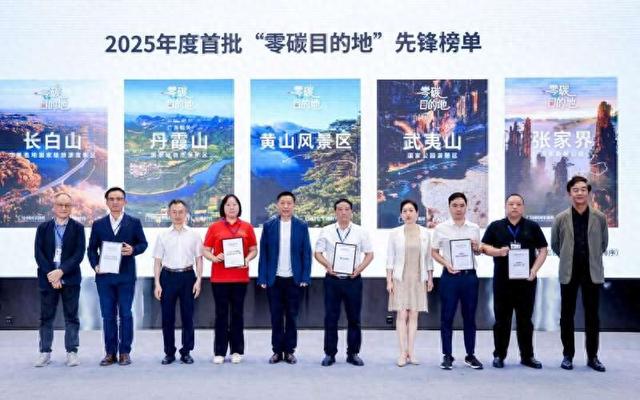
6 月 5 日,北京。当《中国国家地理》 杂志社 与宁德时代将五块 " 零碳景区 " 铭牌推向台前时,武夷山村民手中的碳汇凭证正悄然升值 —— 这 片用 1572 吨碳汇(相当于 1600 亩竹林固碳量)置换的 " 绿色黄金 " ,刚为当地带来 16 万元真金白银的收益。 五座名山(丹霞山、黄山、张家界、长白山、武夷山)把竹林变现成金矿,宁德时代藏在评审团身后的 " 四化 " 方案,则为这场撬动千亿碳账本的 豪赌埋下暗桩: 一场由权威科学媒体与新能源巨头共同发起的零碳革命,正在重塑中国文旅产业的财富逻辑。 01 为什么是文旅? 碳经济量身定制的"试验场" 席卷海外 时至今日,生态旅游市场早已不再是环保主义的乌托邦,零碳也不再仅仅是环保口号,而是实打实的降本引擎和溢价筹码。 2023 年中国生态旅游规模已飙至 1490 亿, 2028 年将突破 2500 亿的蛋糕,年复合增长率 10.5% 的暴利赛道,恰似为 碳经济 量身定制的 " 试验场 " :景区为争夺 " 零碳标签 " 豪掷千万改造费,游客为 " 碳概念 " 旅行心甘情愿地支付溢价。此外,重押零碳市场的战略选择,本质也是 一场政策红利与产业试验田的精准卡 ...
首批《“零碳”目的地·先锋榜单》出炉,新能源技术助推绿色文旅提速升级
Zhong Guo Qing Nian Bao· 2025-06-08 09:32
Group 1 - The core viewpoint of the article is the launch of the first "Zero Carbon Destination Pioneer List" by CATL and China National Geography, highlighting five scenic spots as leaders in green tourism [3][4] - The selected scenic spots include Danxia Mountain National Nature Reserve, Huangshan Scenic Area, Zhangjiajie National Forest Park, Changbai Mountain Huamei Resort, and Wuyi Mountain National Park Recreation Area [3] - The tourism industry contributes approximately 8% to 10% of global greenhouse gas emissions, with China's tourism sector accounting for about 6% to 8% of the country's total carbon emissions [3] Group 2 - CATL aims to facilitate the electric transformation of transportation in tourism destinations through innovations in battery and charging technologies, thereby reducing operational costs [4] - The company has invested over 70 billion yuan in research and development over the past decade, establishing a comprehensive layout in the zero-carbon technology sector [4] - The evaluation of the "Zero Carbon Destination Pioneer List" was conducted by a panel of experts from various fields, using a rigorous assessment system based on four core evaluation criteria [4]
宜宾:促进大学生就业 人才与城市“双向奔赴”
Si Chuan Ri Bao· 2025-06-08 02:12
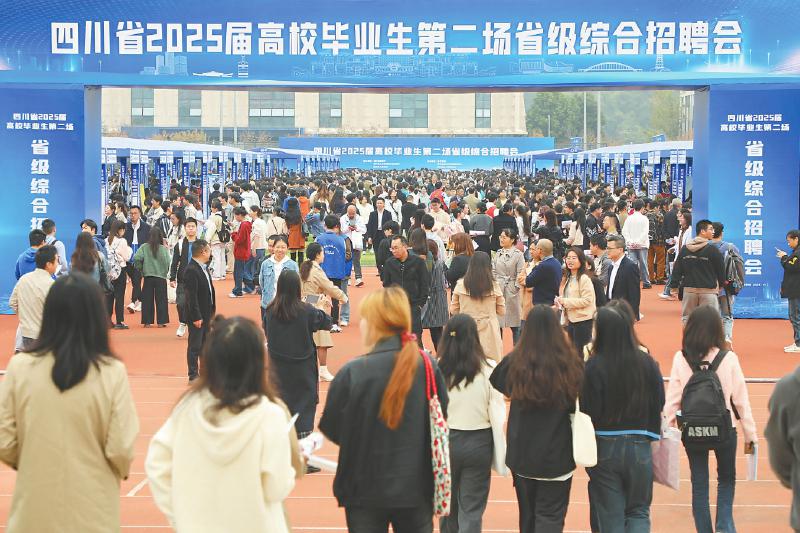
Core Viewpoint - The city of Yibin is actively promoting employment for college graduates, with a focus on aligning educational programs with local industry needs and expanding job opportunities in various sectors [7][11][20] Group 1: Employment Initiatives - Yibin has hosted multiple job fairs and recruitment events, including a provincial comprehensive recruitment fair and a spring employment fair, providing thousands of job opportunities for graduates [16][19] - The city has seen over 28,000 college graduates this year, with a strong emphasis on enhancing their employability through skills training and practical experience [7][8] - Yibin's government has implemented policies to support job creation, including financial incentives for companies to expand job offerings and initiatives to encourage graduates to stay in the region [17][20] Group 2: Educational Alignment with Industry - Yibin College has introduced new undergraduate programs in digital economy, intelligent manufacturing engineering, and artificial intelligence to meet the demands of the local job market [10][11] - The city has established a dynamic adjustment mechanism for academic programs, adding 23 new majors and aligning 138 core related majors with key industries [11] - Collaboration between educational institutions and local enterprises has been strengthened, with 86 companies participating in educational partnerships and 80 training bases established [11][12] Group 3: Job Creation and Sector Focus - Yibin's industrial base is robust, with significant job creation in sectors such as new energy, photovoltaic technology, and digital economy, contributing to over 100,000 new jobs in the past three years [14][15] - The city is focusing on four major industrial clusters: high-quality liquor, power batteries, crystalline silicon photovoltaic, and digital economy, to drive employment growth [14] - Local enterprises, particularly in the power battery sector, have been significant employers, with one company hiring over 5,000 graduates [14] Group 4: Comprehensive Support Services - Yibin has launched various support measures, including a "skills illuminate the future" initiative and a three-year plan to enhance employment opportunities for recent graduates [17][19] - The city is actively engaging in outreach to educate students about job market conditions and employment opportunities through various events and workshops [19] - A comprehensive employment service network has been established, including job fairs, training programs, and employment guidance initiatives to support graduates [18][20]