债券

Search documents
研判2025!中国可持续债券行业相关政策、市场现状及发展趋势分析:中国累计发行规模位居全球前列,绿色债券为主要发行类型[图]
Chan Ye Xin Xi Wang· 2025-11-10 00:54
Core Insights - The article discusses the growth and classification of sustainable bonds, emphasizing their role in promoting sustainable development and aligning with sustainability goals [1][2]. Group 1: Overview of Sustainable Bonds - Sustainable bonds are defined by the International Capital Market Association (ICMA) as bonds that finance projects beneficial to sustainable development or are linked to sustainability goals [2]. - ICMA categorizes sustainable bonds into green bonds, social responsibility bonds, sustainable development bonds, and sustainability-linked bonds [2]. Group 2: Global Market Status - As of mid-2025, the cumulative issuance of GSS+ bonds globally reached $6.2 trillion, with sovereign issuers leading at $926.1 billion, followed by the US ($859.8 billion), France ($628.6 billion), and China ($611.4 billion) [6]. - In the first half of 2025, the total issuance of GSS+ bonds was $555.8 billion, reflecting a 3.6% year-on-year decline [6]. Group 3: China's Sustainable Bond Market - In 2024, China's GSS+ bond issuance was $84.6 billion, a 3.8% decrease from $87.9 billion in 2023, with a cumulative total surpassing $500 billion by the end of 2024 [6][8]. - Green bonds accounted for over 80% of the issuance, with $68.9 billion issued in 2024, down 18.2% year-on-year [8]. - Social responsibility bonds saw a significant increase, with issuance rising by 312.5% to $13.2 billion in 2024 [8]. Group 4: Investment Focus Areas - In 2024, the majority of funds raised through green bonds were directed towards clean energy projects, including wind, solar, and hydropower, which accounted for 52.2% of the total [8]. - The transportation sector received 30.4% of the funding, indicating a strong focus on decarbonizing the energy system and upgrading transportation infrastructure [8]. Group 5: Future Trends - The sustainable bond market is expected to continue focusing on key economic and social development tasks, driven by policy guidance and market demand [10]. - The support capacity for low-carbon development through sustainable bonds is anticipated to strengthen, particularly for green bonds, as central policies are implemented [10]. - Enhanced information disclosure standards are expected to improve transparency and investment efficiency in the sustainable bond market [11].


超长债周报:国债买卖落地,超长债小跌-20251109
Guoxin Securities· 2025-11-09 14:57
Report Industry Investment Rating No relevant content provided. Core View - The probability of a bond market rebound is high. For 30 - year Treasury bonds, the 30 - 10 spread is expected to compress periodically with the bond market rebound. For 20 - year CDB bonds, the variety spread is expected to compress again in the short term [2][3][11][12] Summary by Directory Weekly Review Ultra - long Bond Review - Last week, the central bank announced 20 billion yuan of Treasury bond transactions in October. The A - share market reached 4000 points again, the bond market had a slight correction, and ultra - long bonds declined slightly. The trading activity of ultra - long bonds increased slightly and was very active. The term spread and variety spread of ultra - long bonds narrowed [1][4][10] Ultra - long Bond Investment Outlook - **30 - year Treasury Bonds**: As of November 7, the spread between 30 - year and 10 - year Treasury bonds was 34BP, at a historically low level. With economic downward pressure increasing in September, Q3 GDP at 4.8% year - on - year (down 0.4% from Q2), and deflation risks existing (September CPI at - 0.3% and PPI at - 2.3%), the bond market is likely to rebound. The 30 - 10 spread is expected to compress periodically [2][11] - **20 - year CDB Bonds**: As of November 7, the spread between 20 - year CDB bonds and 20 - year Treasury bonds was 15BP, at a historically extremely low level. Considering the economic situation and central bank's actions, the bond market is likely to rebound, and the variety spread of 20 - year CDB bonds is expected to compress again in the short term [3][12] Ultra - long Bond Basic Overview - The balance of outstanding ultra - long bonds is 23.9 trillion yuan. As of October 31, the ultra - long bonds with a remaining term over 14 years totaled 23.9836 trillion yuan, accounting for 15.0% of all bonds. Local government bonds and Treasury bonds are the main varieties. By remaining term, the 30 - year variety has the highest proportion [13] Primary Market Weekly Issuance - Last week, the issuance volume of ultra - long bonds was small. From November 3 to 7, 2025, 6.29 billion yuan of ultra - long bonds were issued, a significant decrease compared with the previous week. By variety, Treasury bonds were 2 billion yuan, local government bonds were 4.14 billion yuan, etc. By term, 15 - year bonds were 0.86 billion yuan, 20 - year bonds were 2.01 billion yuan, etc. [19] This Week's Planned Issuance - The announced issuance plan for this week is 13.22 billion yuan, including 2.7 billion yuan of ultra - long Treasury bonds, 10.42 billion yuan of ultra - long local government bonds, and 0.1 billion yuan of ultra - long medium - term notes [25] Secondary Market Trading Volume - Last week, the trading of ultra - long bonds was very active. The trading volume was 1.0951 trillion yuan, accounting for 12.1% of all bonds. The trading activity increased slightly compared with the previous week. By variety, the trading volume of ultra - long Treasury bonds was 790.6 billion yuan, etc. [28] Yield - Last week, due to the central bank's announcement of Treasury bond transactions and the A - share market reaching 4000 points, the bond market had a slight correction and ultra - long bonds declined slightly. The yields of 15 - year, 20 - year, 30 - year, and 50 - year Treasury bonds changed by 3BP, 2BP, 2BP, and 3BP to 2.05%, 2.15%, 2.16%, and 2.23% respectively. Similar changes occurred in CDB bonds, local bonds, and railway bonds [34] Spread Analysis - **Term Spread**: Last week, the term spread of ultra - long bonds narrowed, and the absolute level was low. The spread between 30 - year and 10 - year Treasury bonds was 34BP, down 1BP from the previous week, at the 14% percentile since 2010 [41] - **Variety Spread**: Last week, the variety spread of ultra - long bonds narrowed, and the absolute level was low. The spread between 20 - year CDB bonds and Treasury bonds was 15BP, and the spread between 20 - year railway bonds and Treasury bonds was 17BP, with changes of 0BP and - 2BP respectively from the previous week, at the 12% percentile since 2010 [47] 30 - year Treasury Bond Futures - Last week, the main contract TL2512 of 30 - year Treasury bond futures closed at 115.95 yuan, a decrease of 0.63%. The total trading volume was 573,900 lots (down 104,798 lots), and the open interest was 180,600 lots (down 2,293 lots), with a significant decrease in trading volume and a slight decrease in open interest compared with the previous week [49]
买在市场纠结时
HUAXI Securities· 2025-11-09 14:24
Market Overview - Since November, the bond market has shown a V-shaped trend in long-term interest rates, but the volatility has narrowed compared to September and October, indicating a state of indecision in the market[1] - The central bank's bond purchases have resumed, but the scale of operations in October was limited, which does not support a strong bullish sentiment in the market[1] Regulatory Changes - The new redemption fee regulations for bond funds are expected to be implemented soon, with a proposed exemption threshold of 6 months for fee waivers, which could limit institutional flexibility[2] - If the exemption period is shortened to 3 months, it may significantly reduce the impact of the new regulations on public fund liabilities[2] Economic Indicators - October's PMI, export, and inflation data have been released, showing that manufacturing PMI and export performance are relatively weak, while inflation data indicates signs of recovery[3] - The upcoming financial and economic data for October will focus on credit, consumption, investment, and real estate, which could influence interest rate cut expectations if macroeconomic pressures increase[3] Investment Strategy - In the current indecisive market, the pace of duration chasing has slowed, with funds net buying 757 billion yuan, primarily in credit bonds, while government bonds saw a net sell of 44 billion yuan[4] - The average duration of interest rate bonds remains stable at 3.7-3.8 years, indicating that risk exposure is still manageable[4] Risk Factors - Potential risks include unexpected adjustments in monetary policy, liquidity changes, and fiscal policy shifts that could impact market stability[5]
11月信用债行情或仍可保持乐观:信用分析周报(2025/11/3-2025/11/7)-20251109
Hua Yuan Zheng Quan· 2025-11-09 13:57
Report Industry Investment Rating - The report does not explicitly mention the industry investment rating. Core Viewpoints of the Report - The credit strategy in November can remain relatively optimistic. There are three reasons: First, the historical quantiles of medium - and long - term credit bonds are still at relatively high levels since the beginning of the year, especially the 5Y secondary and perpetual bonds still have room to decline. Second, the restart of Treasury bond trading, the overall loose capital interest rates, and the decline in market risk appetite due to the recent adjustment of the equity market are expected to continue the phased upward trend of credit bonds, and there are more positive factors than negative factors in the bond market currently. Third, the rapid decline in bank liability costs supports banks to significantly increase bond investments [4][42]. Summary According to the Directory 1. This Week's Credit Hot Events - Guangxi Jintou's former Party secretary and chairman are under disciplinary review, with the remaining bond balance of the entity being 19.4 billion yuan [1][9]. - Minister of Finance Lan Fuan stated that not increasing implicit debt should be regarded as an "iron - clad discipline" [1][10]. - On November 5, the National Association of Financial Market Institutional Investors warned four institutions including Dongjin Huai Investment and Jintang Xingjin for non - market - based bond issuance [1][11]. - Two bonds, 25 Xiaoshan Airport MTN002B (green) and 25 Jinneng Coal Industry MTN017, cancelled their issuance due to market factors, with a total planned issuance scale of 1.45 billion yuan [1][12]. 2. Primary Market 2.1 Net Financing Scale - The net financing of traditional credit bonds this week increased compared to last week, and the net financing of asset - backed securities increased by 1.17 billion yuan compared to last week. Among different product types, the net financing of urban investment bonds and industrial bonds increased, while that of financial bonds decreased [2][13]. - In terms of the number of issuances and redemptions, the number of urban investment bond issuances and redemptions decreased, the number of industrial bond issuances increased and redemptions decreased, and the number of financial bond issuances decreased and redemptions increased [15]. 2.2 Issuance Cost - Except for a slight increase in the issuance interest rate of AA urban investment bonds, the issuance interest rates of other bonds with different ratings declined to varying degrees. Specifically, the issuance interest rates of industrial and financial bonds with different ratings decreased by 11 - 29BP compared to last week, the AA urban investment bond issuance interest rate increased by 9BP, and the AA + and AAA urban investment bond issuance interest rates decreased by 19BP and 7BP respectively [18]. 3. Secondary Market 3.1 Trading Volume - The trading volume of credit bonds decreased by 53.4 billion yuan compared to last week. Among them, the trading volume of urban investment bonds and industrial bonds decreased, while that of financial bonds increased slightly. The trading volume of asset - backed securities also decreased [19]. - In terms of turnover rate, the turnover rate of most credit bonds decreased compared to last week [20]. 3.2 Yield - The yield of 5Y AA credit bonds decreased by 7BP compared to last week, and the yield of 3Y AAA + credit bonds increased by 4BP. The yield fluctuations of other credit bonds with different ratings and maturities were within 3BP compared to last week [21]. - Taking the 5Y AA + bonds of each variety as an example, the yields of different varieties rose and fell this week [25]. 3.3 Credit Spreads - Overall, except for a slight widening of the credit spread of the AA + non - ferrous metal industry compared to last week, the credit spreads of other industries and ratings compressed to varying degrees. For example, the credit spread of the AA + non - ferrous metal industry widened by 1BP, and the credit spread of the AA non - banking financial industry compressed by 7BP [28]. 3.3.1 Urban Investment Bonds - By maturity, the 3 - 5Y urban investment credit spreads compressed significantly by 8BP, and the compression of other maturities was within the range of 3 - 5BP [31]. - By region, the urban investment credit spreads in different regions compressed to varying degrees, and many regions have reached historical lows since the beginning of 2024 [33]. 3.3.2 Industrial Bonds - Except for a slight widening of the industrial credit spreads of a few maturities and ratings, most industrial credit spreads compressed to varying degrees [35]. 3.3.3 Bank Capital Bonds - Except for a 5BP and 4BP widening of the credit spreads of 5Y AAA - and AA + bank perpetual bonds respectively, the credit spreads of other secondary and perpetual bonds with different maturities and ratings fluctuated slightly within 2BP [37]. 4. This Week's Bond Market Sentiment - "Xiangyiyou" issued by Shanghai Xiangyuan Investment Holding Co., Ltd. defaulted in essence, and the implied ratings of "17 Fucheng A" and "17 Fucheng B" issued by Fujian Fucheng Group Co., Ltd. were downgraded [40]. 5. Investment Suggestions - Overall, except for a slight widening of the credit spread of the AA + non - ferrous metal industry, the credit spreads of other industries and ratings compressed to varying degrees. In terms of urban investment bonds, the 3 - 5Y urban investment credit spreads compressed significantly, and in terms of industrial bonds, most credit spreads compressed. In terms of bank capital bonds, most credit spreads fluctuated slightly [4][42].
[11月9日]美股指数估值数据(全球股市下跌,原因为何;美股会有长熊市吗;全球指数星级更新)
银行螺丝钉· 2025-11-09 13:55
Group 1 - The global stock market experienced an overall decline this week, with the US market down by 1.59% and other global markets down by 0.58% [3] - The Asia-Pacific region saw significant volatility, particularly with declines in South Korea and Japan [4] - Chinese assets remained relatively strong, with the A-share CSI All Share Index rising by 0.63% for three consecutive weeks [6] Group 2 - The Hong Kong stock market outperformed the A-share market, with the Hang Seng Index increasing by 1.29% this week [7] - Chinese assets are currently valued slightly lower than the global market average, providing a degree of protection against potential downturns [8] Group 3 - Market fluctuations this week were primarily driven by uncertainty regarding the Federal Reserve's potential interest rate cuts in December [9] - The Federal Reserve did lower rates in October, but the decision for December remains uncertain [10] - Long-term expectations suggest that the Federal Reserve will continue to lower interest rates [11] Group 4 - The US stock market reached a high valuation at the end of October and early November, marking the first instance of overvaluation in the past year [12][13] - Following this, the Nasdaq 100 and S&P 500 indices have seen a valuation correction, returning to a normal but slightly elevated level [14][15] Group 5 - Current valuations in the US stock market are not particularly low, but they do not indicate a significant bubble [16] - Historical comparisons show that the Nasdaq's valuation during the 1990s internet bubble exceeded 100 times, whereas it currently hovers around 30 times [17] Group 6 - There are two types of bear markets: one occurring during economic recessions with slow or declining corporate earnings, and another during periods of normal economic growth with short bear markets [18] - The US stock market has experienced long bear markets following the bursting of bubbles, such as the 2000 internet bubble and the 2008 financial crisis [19][20] Group 7 - Despite the potential for future economic downturns and long bear markets, the US stock market has shown relatively good earnings growth in recent years, primarily experiencing short bear markets [24] - Current valuations in the US stock market are not low enough to present significant buying opportunities [25] Group 8 - A global stock market star rating chart indicates that the market was undervalued during previous periods in 2018, 2020, and 2022, with current ratings around 3.0 stars, suggesting a relatively low valuation [27] - The global stock index can be accessed through various funds, although there are currently no global stock index funds available in mainland China [29] Group 9 - The company has launched a "Global Index Advisory Portfolio" that diversifies investments across US, UK, Hong Kong, and A-share indices to track the global stock market [30] - There are limitations on the purchase amounts for overseas market funds, typically capped at around 100 yuan [32] Group 10 - A new edition of the book "The Long-Term Investment Secret" has been released, which has been influential in the investment field for over 30 years [35] - The book emphasizes that stocks are the best long-term investment vehicle and provides extensive data on asset class returns over the past two centuries [36]

2025长三角绿色债券发展报告
Sou Hu Cai Jing· 2025-11-09 13:15
Core Insights - The report titled "2025 Yangtze River Delta Green Bond Development Report" highlights the role of green finance in facilitating the region's low-carbon transition, indicating that after a short-term adjustment in 2024, the market is poised for growth [1][2]. Policy Developments - National and local governments have introduced various guiding documents and incentive measures to support green bond development, including the launch of a green finance service platform in Shanghai and the establishment of evaluation standards for financing entities in Jiangsu [2][18]. - The report outlines a comprehensive policy framework for green bond development in the Yangtze River Delta, promoting regional collaboration in green finance innovation [2]. Market Analysis - In 2024, the issuance scale of green bonds in the Yangtze River Delta saw a decline, with 261 "green labeled" bonds issued, totaling 268.04 billion yuan, and 167 "green tagged" bonds amounting to 146.96 billion yuan [2]. - Jiangsu led in issuance scale, while Zhejiang and Shanghai showed active innovation in bond types, and Anhui successfully issued the first green financial bond in the financial leasing sector [2]. - The market structure is undergoing adjustments, with local government and corporate credit bonds dominating, while the proportion of green financial bonds has decreased [2]. Environmental Impact Disclosure - The report emphasizes the importance of environmental impact disclosure for the sustainable development of the green bond market, noting that over 90% of "green tagged" bonds disclosed environmental impact data in 2024 [3]. - These bonds are estimated to reduce carbon dioxide emissions by approximately 7.79 million tons annually and replace 3.11 million tons of standard coal [3]. - There are regional disparities in disclosure quality, with Shanghai and Anhui leading in completeness, while Jiangsu and Zhejiang have room for improvement [3]. Future Development Recommendations - The report suggests four key areas to enhance the high-quality development of the green bond market: incentivizing enterprises to issue green bonds, exploring a framework for domestic green government bond issuance, establishing a unified directory and standards for transition bonds, and strengthening international cooperation to align China's green standards with global practices [3].
久期布局摇摆期:品种久期跟踪
SINOLINK SECURITIES· 2025-11-09 12:50
1. Report Industry Investment Rating No relevant content provided. 2. Core View of the Report As of November 7, the durations of general credit bonds and secondary bonds have returned to high levels. The weighted average trading durations of urban investment bonds and industrial bonds are at over 90% of their historical highs since 2021. Among commercial bank bonds, the weighted average trading durations of secondary capital bonds, bank perpetual bonds, and general commercial financial bonds are at different historical levels, and the durations of other financial bonds have generally shortened, with lease company bonds at a relatively high historical percentile [2][9]. 3. Summary by Relevant Catalog 3.1 Full - Variety Maturity Overview - As of November 7, the weighted trading durations of urban investment bonds and industrial bonds are 2.20 years and 2.82 years respectively, at over 90% of their historical highs since 2021 [2][9]. - Among commercial bank bonds, the weighted average trading durations of secondary capital bonds, bank perpetual bonds, and general commercial financial bonds are 4.45 years, 3.81 years, and 2.16 years respectively. The general commercial financial bonds are at a relatively low historical level [2][9]. - For other financial bonds, the durations of securities company bonds, securities sub - bonds, insurance company bonds, and lease company bonds are 1.74 years, 2.38 years, 3.31 years, and 1.32 years respectively. The overall duration of other financial bonds has shortened, and lease company bonds are at a relatively high historical percentile [2][9]. - The coupon duration congestion index has slightly increased. After reaching its peak in March 2024 and then declining, it has rebounded this week and is currently at the 35.6% level since March 2021 [11]. 3.2 Variety Microscope Urban Investment Bonds - The weighted average trading duration of urban investment bonds hovers around 2.32 years. The duration of Gansu provincial - level urban investment bonds has extended to 3.25 years, while the trading duration of Shanghai district - level urban investment bonds has shortened to around 1.47 years [3][15]. - The historical percentiles of the durations of urban investment bonds in regions such as Chongqing district - level, Henan prefecture - level, and Anhui prefecture - level have exceeded 90%. The durations of Chongqing district - level and Gansu provincial - level urban investment bonds are approaching their highest levels since 2021 [3][15]. Industrial Bonds - The weighted average trading duration of industrial bonds has slightly shortened compared to last week and is generally around 2.27 years. The trading durations of the non - ferrous metals and public utilities industries have extended to 2.48 years and 3.29 years respectively [3][21]. - The trading duration of the real estate industry is at a relatively low historical percentile, while the building materials and commercial retail industries are at relatively high historical percentiles [3][21]. Commercial Bank Bonds - The duration of general commercial financial bonds has extended to 2.16 years, at the 67.6% historical percentile, lower than the level of the same period last year [3][23]. - The duration of secondary capital bonds has shortened to 4.45 years, at the 97.9% historical percentile, higher than the level of the same period last year [3][23]. - The duration of bank perpetual bonds has shortened to 3.81 years, at the 69.7% historical percentile, higher than the level of the same period last year [3][23]. Other Financial Bonds - In terms of the weighted average trading duration, insurance company bonds > securities sub - bonds > securities company bonds > lease company bonds, at the 70%, 63.9%, 63.9%, and 78% historical percentiles respectively. The duration of insurance company bonds has significantly extended compared to last week [3][26].
周观:债市震荡格局难破,如何应对?(2025年第43期)
Soochow Securities· 2025-11-09 12:03
1. Report Industry Investment Rating No relevant content provided. 2. Core Viewpoints of the Report - The bond market remained in a box - shock range this week. Despite the lower - than - expected net Treasury bond purchase scale announced this week, the central bank's support for liquidity remains unchanged. The 10 - year Treasury bond yield is expected to continue the narrow - range shock pattern this year, and the impact of the redemption fee rate new rules will be mitigated. A rapid rise in interest rates due to the new rules could present a good entry opportunity [1][16]. - Last week, the monetary policy orientations of the US, Europe, and Japan tended towards marginal balance. After the China - US Busan dialogue, the overall overseas certainty decreased marginally, and the technology valuation faced short - term pressure. However, in 2026, with the change of the Fed chairman, the Fed is likely to maintain a loose monetary policy, and the technology market may continue until the second half of 2026 [2][19]. 3. Summary According to the Directory 3.1 One - Week View 3.1.1 Analysis of the Central Bank's Treasury Bond Purchase - From November 3 to 7, 2025, the yield of the 10 - year Treasury bond active bond rose 1.35bp from 1.7925% to 1.8060%. Market sentiment, the central bank's bond - buying scale, the stock - bond relationship, and the expected implementation of the new fund fee rules all affected the yield fluctuations [1][11][12]. - The bond market is expected to continue narrow - range fluctuations. The impact of the new redemption fee rate rules will be mitigated by the transition period, and the central bank's support for liquidity remains strong. A rapid rise in interest rates due to the new rules will create a good entry opportunity [16]. 3.1.2 Analysis of US Bond Yield Trends - Last week, the monetary policy orientations of the US, Europe, and Japan tended towards marginal balance. After the China - US Busan dialogue, overseas uncertainty increased, and risk - aversion sentiment emerged. The technology market may face short - term pressure but is expected to recover in 2026 [2][19]. - In the US, the commercial crude oil inventory increased significantly in the week of October 31, 2025, mainly due to loose supply and insufficient demand. The ISM manufacturing PMI index in October was lower than expected, indicating weak manufacturing vitality. The Fed's internal differences on the December interest - rate cut path intensified, with different stances from radical doves, moderate doves, and hawks [2][20][24]. 3.2 Domestic and Overseas Data Summary 3.2.1 Liquidity Tracking - In the open - market operations from November 3 to 7, 2025, the net investment was - 15,722 billion yuan, mainly due to the large - scale maturity of reverse repurchases [35]. - The money - market interest rates showed a downward trend overall this week [36][37]. 3.2.2 Domestic and Overseas Macro Data Tracking - The total commercial housing transaction area showed mixed trends. Steel prices declined across the board, and LME non - ferrous metal futures official prices showed mixed trends [57][58][61]. - The prices of coking coal and thermal coal, inter - bank certificate of deposit rates, 7 - day annualized yield of Yu'E Bao, and vegetable price index all had their own trends [62][65][70]. - The VIX panic index led the rise, and the Philadelphia Semiconductor Index led the fall. US bond yields increased overall compared to half a month ago, and the term spreads between 10 - year and 2 - year US bonds, and between 10 - year and 3 - month US bonds decreased [74][79][80]. 3.3 One - Week Review of Local Bonds 3.3.1 Primary Market Issuance Overview - This week, 32 local bonds were issued in the primary market, with a total issuance amount of 91.607 billion yuan, including 45.211 billion yuan of refinancing bonds and 46.396 billion yuan of new special bonds. The net financing was - 33.641 billion yuan, mainly invested in comprehensive, highway, and shantytown renovation projects [89]. - Five provinces and cities issued local special refinancing special bonds for replacing hidden debts, with Yunnan, Shaanxi, Ningbo, Fujian, and Inner Mongolia ranking in the top five in terms of issuance amount [96]. 3.3.2 Secondary Market Overview - This week, the stock of local bonds was 53.78 trillion yuan, with a trading volume of 40.6417 billion yuan and a turnover rate of 0.76%. The top three provinces with active local bond trading were Guangdong, Jiangxi, and Shandong, and the top three active terms were 30Y, 10Y, and 20Y [104]. - The overall yield of local bonds declined this week [109]. 3.3.3 Local Bond Issuance Plan for the Month The local bond issuance plans of various provinces and cities for this month are presented, including the planned issuance amounts of Chongqing, Shandong, and other places [112]. 3.4 One - Week Review of the Credit Bond Market 3.4.1 Primary Market Issuance Overview - This week, 316 credit bonds were issued in the primary market, with a total issuance amount of 288.652 billion yuan, a total repayment amount of 198.141 billion yuan, and a net financing amount of 90.511 billion yuan, an increase of 106.811 billion yuan compared to last week [110]. - Specifically, the net financing of urban investment bonds was - 9.80 billion yuan, and the net financing of industrial bonds was 91.491 billion yuan [111][115]. 3.4.2 Issuance Interest Rates The issuance interest rates of various credit bond types decreased this week, with short - term financing bonds, medium - term notes, enterprise bonds, and corporate bonds all showing downward trends [122]. 3.4.3 Secondary Market Transaction Overview The total trading volume of credit bonds this week was 592.039 billion yuan, with different trading volumes for different ratings and bond types [123]. 3.4.4 Yield to Maturity - The yield of China Development Bank bonds increased across the board this week [124]. - The yields of short - term financing bonds and medium - term notes showed mixed trends, while the yields of enterprise bonds and urban investment bonds generally declined [124][125][127]. 3.4.5 Credit Spreads The credit spreads of short - term financing bonds, medium - term notes, enterprise bonds, and urban investment bonds generally narrowed this week [130][132][134]. 3.4.6 Rating Spreads The rating spreads of short - term financing bonds, medium - term notes generally narrowed this week [137][140].
净融资额环比回升,信用利差多数收窄
Xiangcai Securities· 2025-11-09 11:05
Group 1: Report Overview - The report is a weekly credit bond research report by Xiangcai Securities, dated November 9, 2025 [1][2] Group 2: Industry Investment Rating - No industry investment rating is provided in the report Group 3: Core Viewpoints - The credit bond market showed a mixed performance this week. The primary market saw an increase in issuance and net financing, while the secondary market experienced slower trading and a narrowing of most credit spreads. Looking ahead, the credit bond market is expected to continue its volatile pattern, and investors could consider moderately extending the duration and focusing on the narrowing spread opportunities of 5 - year credit bonds [3][4][6] Group 4: Primary Market of Credit Bonds - From November 3 - 9, 2025, a total of 337 credit bonds (excluding policy - bank bonds) were issued, with a scale of about 457.667 billion yuan, and 155 bonds matured, with a total repayment of about 250.715 billion yuan, resulting in a net financing of about 206.952 billion yuan. The issuance volume increased, and the total repayment decreased, leading to a significant rise in net financing [3][9] - By category, enterprise bonds issued 1 bond with a scale of about 1.6 billion yuan, a net financing of about - 3.066 billion yuan; corporate bonds issued 131 bonds with a scale of about 103.88 billion yuan, a net financing of about 34.5 billion yuan; medium - term notes issued 94 bonds with a scale of 91.915 billion yuan, a net financing of about 30.254 billion yuan; and short - term financing issued 68 bonds with a scale of about 78.532 billion yuan, a net financing of about 29.684 billion yuan [10] Group 5: Secondary Market of Credit Bonds - From November 3 - 9, 2025, the inter - bank market traded 484.495 billion yuan, and the exchange traded 406.434 billion yuan, with a total trading volume of 890.929 billion yuan, indicating slower trading. Secondary trading was mainly concentrated in corporate bonds and medium - term notes [4][17] - Credit bond yields varied. For medium - and short - term notes, short - end yields generally increased, while 3 - year and 5 - year yields showed different changes. Enterprise bond yields of high - grade bonds mostly increased, while those of medium - and low - grade bonds generally decreased. For urban investment bonds, 1 - year yields increased, and 5 - year yields decreased [21] - Due to the general increase in the risk - free rate, most credit spreads narrowed. The narrowing range of medium - and short - term note credit spreads was between 1 - 12BP; enterprise bond credit spreads narrowed by 2 - 9BP; and urban investment bond credit spreads changed between - 11 - 2BP [4][21] Group 6: Credit Bond Default or Extension - No credit bonds defaulted or were extended from November 3 - 9, 2025 [5][22] Group 7: Investment Recommendations - The central bank maintained a net withdrawal this week, the risk - free rate fluctuated weakly, and the credit bond market showed a mixed performance. In terms of the yield structure, short - end yields of credit bonds generally increased, while long - end yields mostly decreased [6][23] - In October, exports decreased by 1.1% year - on - year, affected by the high base last year and the weakening of the "rush - to - export" effect, while imports increased by 1% year - on - year, showing continuous domestic demand recovery. In terms of capital, the central bank's net investment in open - market treasury bond trading in October was 20 billion yuan, which, although smaller than the same period last year, helps release liquidity in the long run. Coupled with the alleviation of banks' liability - side pressure, most capital interest rates decreased [6][23] - Looking ahead, the credit bond market is expected to continue its volatile pattern. Investors could consider moderately extending the duration and focusing on the narrowing spread opportunities of 5 - year credit bonds [6][23]
中国再发美元债,认购超30倍,是在助力美债市场稳定?
Sou Hu Cai Jing· 2025-11-09 08:44
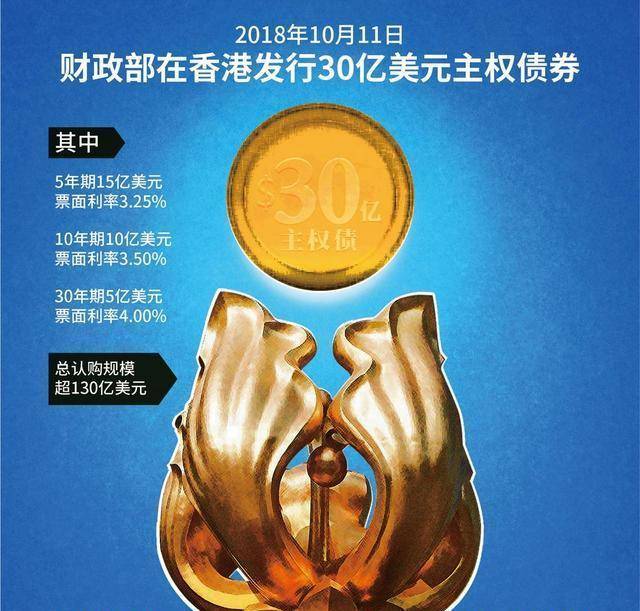
Group 1 - The core point of the article highlights China's successful issuance of $4 billion in sovereign dollar bonds in Hong Kong, which saw a subscription rate exceeding 30 times, contrasting sharply with the U.S. Treasury's recent bond issuance that had a subscription rate of less than 2.5 times [1][3][9] - The issuance consisted of two tranches: $2 billion for 3 years and $2 billion for 5 years, indicating strong market demand for Chinese dollar bonds [3][5] - China's ability to issue dollar bonds is supported by its substantial foreign exchange reserves, which instill confidence in international investors regarding China's debt repayment capabilities [5][11] Group 2 - The high demand for Chinese dollar bonds suggests that investors perceive these bonds as having good liquidity, making them more attractive compared to U.S. Treasury bonds, which are currently facing liquidity concerns [5][7] - The recent trend shows a shift in international capital flows, with funds moving towards Chinese dollar bonds instead of U.S. Treasuries, indicating a competitive relationship between the two [7][11] - The contrasting subscription rates between Chinese and U.S. bonds reflect a broader trend of declining confidence in U.S. dollar assets, as many central banks and large investors are diversifying their portfolios away from U.S. Treasuries [9][11]