
农产品

Search documents
农产品期权:农产品期权策略早报-20251231
Wu Kuang Qi Huo· 2025-12-31 01:44
1. Report Industry Investment Rating No relevant information provided. 2. Core Viewpoints of the Report - The agricultural product options market shows different trends. Oilseeds and oils are weakly volatile, oils and by - products maintain a volatile market, soft commodity sugar has a slight fluctuation, cotton is strongly consolidating, and grains such as corn and starch are narrowly consolidating with a bullish bias. [2] - The strategy is to construct an option portfolio strategy mainly based on sellers, as well as spot hedging or covered strategies to enhance returns. [2] 3. Summary According to Relevant Catalogs 3.1 Futures Market Overview - The report provides the latest prices, price changes, price change rates, trading volumes, volume changes, open interests, and open interest changes of various agricultural product futures contracts, including soybeans, soybean meal, palm oil, etc. [3] 3.2 Option Factors 3.2.1 Volume - to - Open - Interest PCR - The report presents the trading volume, volume change, open interest, open interest change, volume PCR, volume PCR change, open interest PCR, and open interest PCR change of various agricultural product options, which are used to describe the strength of the option underlying market and the turning point of the underlying market. [4] 3.2.2 Pressure and Support Levels - It shows the pressure points, pressure point offsets, support points, support point offsets, maximum call option positions, and maximum put option positions of various agricultural product options, which are used to analyze the pressure and support levels of the option underlying from the perspective of option positions. [5] 3.2.3 Implied Volatility - The report provides the at - the - money implied volatility, weighted implied volatility, weighted implied volatility change, annual average implied volatility, call option implied volatility, put option implied volatility, 20 - day historical volatility, and the difference between implied and historical volatility of various agricultural product options. [6] 3.3 Strategy and Recommendations 3.3.1 Oilseeds and Oils Options - **Soybeans**: The fundamentals are affected by Chinese soybean purchases and the decline in Brazilian soybean import costs. The market shows a weak rebound. The implied volatility is around the historical average, the open interest PCR indicates a volatile market, and the pressure and support levels are 4200 and 4000 respectively. Strategies include constructing a neutral call + put option selling strategy and a long collar strategy for spot hedging. [7] - **Soybean Meal**: The fundamentals show an increase in trading volume,提货 volume, and basis. The market has an oversold rebound. The implied volatility is below the historical average, the open interest PCR indicates a volatile market, and the pressure and support levels are 3100 and 2900 respectively. Strategies include constructing a neutral call + put option selling strategy and a long collar strategy for spot hedging. [9] - **Palm Oil**: The fundamentals show a decline in production and an increase in exports. The market has a rebound. The implied volatility is below the historical average, the open interest PCR indicates a volatile market, and the pressure and support levels are 9000 and 8200 respectively. Strategies include constructing a short - biased call + put option selling strategy and a long collar strategy for spot hedging. [9] - **Peanuts**: The fundamentals show weak downstream consumption. The market has a short - term bullish rise followed by a rapid decline. The implied volatility is at a relatively high historical level, the open interest PCR indicates pressure above, and the pressure and support levels are 9000 and 7700 respectively. The strategy is a long collar strategy for spot hedging. [10] 3.3.2 By - product Options - **Pigs**: The fundamentals show a reduction in supply and a decrease in demand after reaching a peak. The market has a weak bearish decline. The implied volatility is at the historical average, the open interest PCR indicates a weak market, and the pressure and support levels are 13000 and 11000 respectively. Strategies include constructing a short - biased call + put option selling strategy and a covered call strategy for spot. [10] - **Eggs**: The fundamentals show sufficient supply and weak demand. The market has a rebound with pressure above. The implied volatility is at a relatively high level, the open interest PCR indicates a weak market, and the pressure and support levels are 3150 and 3100 respectively. Strategies include constructing a short - biased call + put option selling strategy. [11] - **Apples**: The fundamentals show a slow inventory reduction. The market has a continuous upward trend with high - level fluctuations. The implied volatility is above the historical average, the open interest PCR indicates a bullish market with support below, and the pressure and support levels are 10600 and 8500 respectively. Strategies include constructing a long - biased call + put option selling strategy and a long collar strategy for spot hedging. [11] - **Red Dates**: The fundamentals show a decrease in inventory. The market has a weak bearish trend. The implied volatility is above the historical average, the open interest PCR indicates a weak market, and the pressure and support levels are 9800 and 9000 respectively. Strategies include constructing a short - biased wide - straddle option selling strategy and a covered call strategy for spot hedging. [12] 3.3.3 Soft Commodity Options - **Sugar**: The fundamentals show a decline in sugar production in Thailand and an increase in domestic industrial inventory. The market has a weak bearish oversold rebound. The implied volatility is at a relatively low historical level, the open interest PCR indicates a weak market, and the pressure and support levels are 5500 and 5000 respectively. Strategies include constructing a short - biased call + put option selling strategy and a long collar strategy for spot hedging. [12] - **Cotton**: The fundamentals show an increase in cotton production in Xinjiang. The market has a short - term bullish rise. The implied volatility is at a low level, the open interest PCR indicates a weak market, and the pressure and support levels are 15200 and 13800 respectively. Strategies include constructing a bull call spread strategy, a neutral call + put option selling strategy, and a long collar strategy for spot. [13] 3.3.4 Grain Options - **Corn**: The fundamentals show a weak price of corn germ oil and cautious downstream procurement. The market has a rebound with support below. The implied volatility is at a relatively low historical level, the open interest PCR indicates a strengthening market, and the pressure and support levels are 2140 and 2000 respectively. Strategies include constructing a neutral call + put option selling strategy. [13]
招商期货-期货研究报告:商品期货早班车-20251231
Zhao Shang Qi Huo· 2025-12-31 01:12
Report Industry Investment Rating There is no information regarding the industry investment rating in the provided content. Core Viewpoints The report presents market analyses and trading strategies for various commodity futures, including basic metals, black industries, agricultural products, and energy chemicals. It assesses the supply and demand, market performance, and price trends of each commodity, and provides corresponding trading suggestions based on these factors. Summary by Categories Basic Metals - **Copper**: Market rebounded sharply; influenced by silver's decline and Fed's rate - cut decision; supply remains tight. Suggest waiting for volatility to decline [2]. - **Aluminum**: Price closed slightly lower; supply increased, demand decreased. Expected to oscillate in the short - term [2]. - **Alumina**: Price unchanged; supply decreased due to environmental control, demand remained high. Price to stay weak [2]. - **Industrial Silicon**: Price rose; supply increased, demand from some industries decreased. Expected to oscillate between 8400 - 9200 [2]. - **Lithium Carbonate**: Price dropped; supply increased, demand from some sectors decreased, inventory decreased in December. Expected to oscillate at a high level [2][3]. - **Polycrystalline Silicon**: Price rose; supply stable, demand from downstream sectors decreased. Suggest waiting for price to decline to enter the market [3]. - **Tin**: Price rebounded; supply tight, influenced by silver and Fed's decision. Suggest waiting for buying opportunities [3]. Black Industry - **Rebar**: Price dropped; inventory decreased, demand weak, supply decreased. Suggest waiting and trying to short the 2605 contract [4]. - **Iron Ore**: Price dropped; supply increased, demand may decrease. Suggest waiting, reference range 765 - 795 [4][5]. - **Coking Coal**: Price rose; supply and demand weak, futures overvalued. Suggest waiting and trying to short the 09 contract [5]. Agricultural Products - **Soybean Meal**: US soybeans oscillate weakly; domestic market is near - strong and far - weak. Core depends on South American output [5]. - **Corn**: Price oscillated; supply - demand contradiction is small. Futures price expected to oscillate [5]. - **Edible Oils**: Market is in oscillation and differentiation. Pay attention to production and bio - diesel policies [5]. - **Cotton**: Suggest buying at low prices, reference range 14300 - 14800 yuan/ton [5]. - **Eggs**: Price oscillated weakly; supply - demand contradiction is small. Futures price expected to oscillate [6]. - **Pigs**: Price rebounded; supply - demand pressure eased. Futures price expected to oscillate strongly [6]. Energy Chemicals - **LLDPE**: Price oscillated; supply pressure increased but slowed, demand decreased. Suggest buying far - month contracts at low prices in the long - term [7]. - **PVC**: Price dropped; supply - demand is weak, macro situation improved. Suggest reverse arbitrage [7]. - **PTA**: PX supply is balanced and loose, PTA supply is balanced and tight. Suggest mid - term long - position for PX and focus on 05 contract for PTA [7][8]. - **Glass**: Price rose; supply - demand expected to improve, undervalued. Suggest waiting [8]. - **PP**: Price oscillated; supply increased, demand decreased. Suggest buying far - month contracts at low prices in the long - term [8]. - **MEG**: Price situation; supply is high, inventory increased. Suggest short - position at high prices [8]. - **Crude Oil**: Price oscillated; supply pressure is large, demand is in the off - season. Suggest short - position at high prices [8]. - **Styrene**: Price oscillated; supply - demand is weak in the short - term. Suggest long - position for styrene or reverse arbitrage for pure benzene in the second quarter [9]. - **Soda Ash**: Price rose; supply is large, demand is weak. Suggest short - position [9].
农产品早报-20251231
Yong An Qi Huo· 2025-12-31 01:12
Group 1: Report Information - Report Title: Agricultural Products Morning Report [1] - Report Date: December 31, 2025 [2] - Report Team: Research Center Agricultural Products Team [2] Group 2: Corn/Starch Analysis Price Data - Corn prices in Changchun remained stable at 2160, while prices in other regions fluctuated slightly, with a 10 increase in Shekou. The basis increased by 19, and trade profit and import profit increased by 10 and 33 respectively. [3] - Starch prices in Heilongjiang and Weifang remained stable at 2750 and 2800 respectively. The basis increased by 9, and processing profit remained unchanged. [3] Market Analysis - Corn: In the short term, the market sentiment is affected by the targeted auction policy, and the price in the southern port has回调. However, due to the strong price - holding intention of farmers in the producing areas, the supply of circulating grain is limited, and the spot price in the producing areas is firm. After the New Year's Day, the downstream may enter the seasonal restocking stage, which may drive up the corn price. In the long term, attention should be paid to the import policy and domestic auction policy. [4] - Starch: In the short term, due to the decline in downstream restocking enthusiasm, the de - stocking speed of deep - processing enterprises has slowed down, and the starch price is still weak. After the New Year's Day, supported by the year - end stocking season, the starch price is expected to rise slightly. In the long term, attention should be paid to the downstream consumption rhythm. [4] Group 3: Sugar Analysis Price Data - Sugar prices in Liuzhou and Nanning remained stable, while the price in Kunming increased slightly. The basis decreased by 5, and the Zhengzhou futures price increased by 170. [5][6] Market Analysis - In the short term, the supply pressure of raw sugar has decreased, and the futures price can be determined by domestic sugar production cost and spot price. In the long term, if the global sugar market surplus intensifies, the futures price will decline to the cost of duty - paid imports. Weather risks and policy changes should be monitored. [6] Group 4: Cotton/Cotton Yarn Analysis Price Data - Cotton prices showed an upward trend, with a 40 increase in the 3128 variety. Import profit and other indicators also changed slightly. [21] Market Analysis - The initial inventory of cotton is relatively low year - on - year, offsetting most of the increase in production. With the expansion of domestic textile production, good recent profits, and the positive result of the Sino - US Fusan talk, the demand for cotton is expected to improve next year, making it suitable for long - term long positions. [9] Group 5: Egg Analysis Price Data - Egg prices in most regions fluctuated slightly, with a 0.06 decrease in Hubei. The basis decreased by 34. The price of white - feather broilers decreased by 0.10, while the prices of yellow - feather broilers and pigs increased slightly. [13] Market Analysis - The inflection point of egg inventory has appeared, but the base is still high. The key to the decline in inventory lies in the culling rhythm. If farmers cull chickens more quickly, it will accelerate the de - stocking process. If the spot price remains low before Laba Festival, farmers may cull a batch of 400 - day - old chickens, which is beneficial to the egg price in the second quarter. [13] Group 6: Apple Analysis Price Data - Apple prices in Shandong 80 first - and second - grade remained stable at 8900.00. The national inventory decreased by 71.00, Shandong inventory decreased by 37.00, and Shaanxi inventory decreased by 67.00. [19][20] Market Analysis - The trading atmosphere in the late - Fuji apple producing areas is still light. The price of high - quality apples is stable, while the price of ordinary and lower - quality apples has weakened. The sales in the consumer market are slow, and the de - stocking speed is lower than that of last year. Affected by competing fruits, the futures market is expected to show a pattern of near - strong and far - weak. [20] Group 7: Pig Analysis Price Data - Pig prices in most regions increased, with a 0.05 increase in Henan Kaifeng, a 0.20 increase in Shandong Linyi, etc. The basis decreased by 25.00. [20] Market Analysis - The spot price of pigs increased significantly over the weekend. Before the Spring Festival, both supply and demand are expected to increase, and there may be a short - term mismatch between supply and demand. The improvement of capacity de - stocking has improved the long - term sentiment, but the market reaction is cautious. Attention should be paid to factors such as the slaughter rhythm, epidemics, and policies. [20]
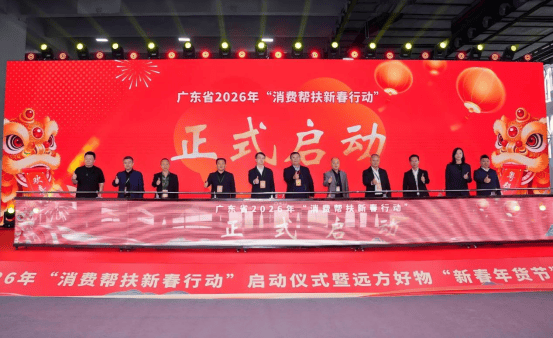
广东省2026年消费帮扶新春行动启动 赋能乡村振兴
Sou Hu Cai Jing· 2025-12-30 18:57
Core Insights - The "Consumption Assistance New Year Action" was launched in Guangdong, focusing on innovative practices and achievements in consumption assistance, with over 300 participating enterprises from supported regions [1][3] - The initiative aims to transform consumption assistance from a "blood transfusion" model to a "blood-making" model, enhancing local industries and generating income for rural areas [3][4] Group 1: Industry Development - The program has developed a replicable market-oriented assistance model, integrating customized agriculture, industry, and educational support, exemplified by the success of birch sap sales exceeding 100 million [3] - The initiative has extended its successful practices to the Xinjiang camel milk industry, achieving cumulative sales of 180 million through quality control and brand empowerment [3] Group 2: Collaborative Mechanisms - A dual-platform collaboration mechanism has been established, creating a comprehensive assistance system that includes incubation and promotion of products, enhancing the market circulation of specialty agricultural products [3][4] - The initiative integrates digital welfare management capabilities to provide a one-stop solution for procurement, facilitating the market access of local agricultural products [4] Group 3: Community Engagement - The offline community service network, comprising over 7,000 community stores, has effectively connected consumers with assistance products, achieving over 900 million views in live broadcasts and selling more than 250 product types [4] - The initiative aims to strengthen collaboration between key production and sales areas, focusing on improving product quality and upgrading industries to promote rural revitalization [4]

甘肃五年进出口总值平均增速近15% 百余种产品实现首次出口
Zhong Guo Xin Wen Wang· 2025-12-30 13:37
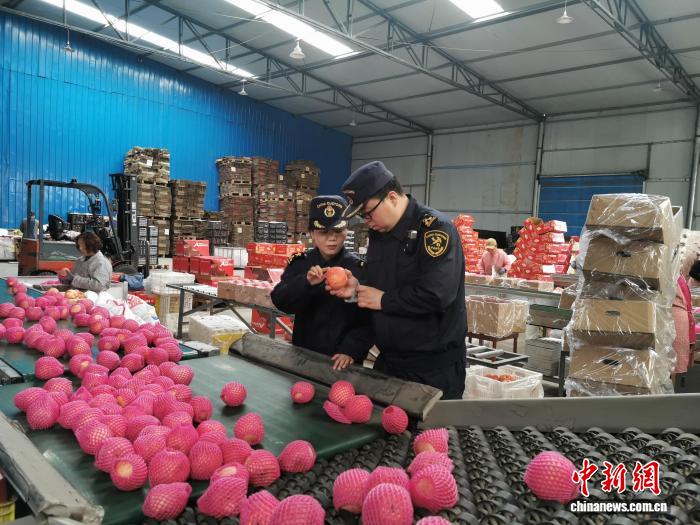
Core Insights - Gansu Province has achieved an average import and export growth rate of nearly 15% during the 14th Five-Year Plan period, with a total import and export value reaching 629.7 billion yuan in the first 11 months of this year, marking an 18.5% year-on-year increase, ranking third nationwide [1][2] - The province's total import and export value is projected to exceed 700 billion yuan by 2025, setting a new historical high [1] Group 1: Trade Growth - Gansu's import and export value has consistently surpassed 500 billion yuan in 2023 and 600 billion yuan in 2024 [1] - The number of AEO (Authorized Economic Operator) certified enterprises in Gansu increased from 7 to 11 over the past five years, with AEO enterprises accounting for 59.7% of the province's total import and export value in the first 11 months of 2025 [3] Group 2: Investment Environment - The province has implemented a national treatment and negative list management system for foreign investment, enhancing the internal motivation for attracting foreign capital [2] - Gansu has established 14 overseas business representative offices in countries such as Kazakhstan, Saudi Arabia, and South Korea, along with 11 investment cooperation bases and 23 liaison centers in Jiangsu, Zhejiang, and Hong Kong [2] Group 3: Logistics and Trade Facilitation - Gansu has strengthened international logistics channel construction, stabilizing operations of various international freight trains covering over 30 countries and regions in Asia and Europe [2] - The province has conducted over a hundred activities to facilitate trade, helping numerous products achieve their first exports, including fresh-cut flowers, peppers, and wines [3]
2025年粤桂协作消费帮扶对接活动在深圳举办
Zhong Guo Xin Wen Wang· 2025-12-30 12:34
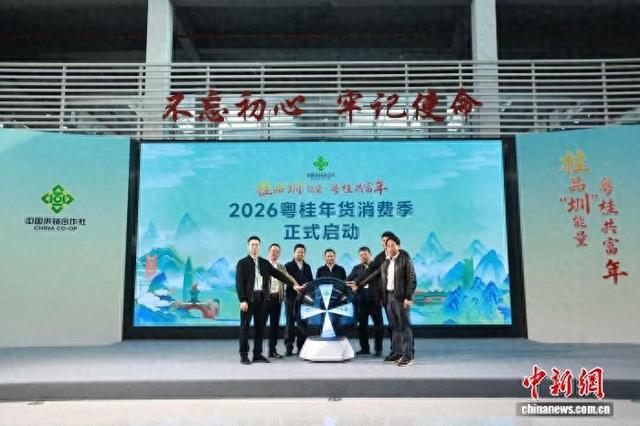
Core Viewpoint - The event aims to enhance collaboration between Guangxi and Guangdong, promoting rural revitalization and increasing farmers' income through various activities and product showcases [1][3]. Group 1: Event Overview - The event titled "Guangxi Supply and Marketing Big Collection into the Bay Area and 2025 Guangdong-Guangxi Cooperation Consumption Assistance Connection" was held in Shenzhen [1]. - The theme of the event is "Guangxi Products, Shenzhen Energy: Guangdong-Guangxi Shared Prosperity Year" [1]. - Activities included product promotion, supply-demand matching, product tasting, and online live streaming to facilitate Guangxi products entering the Bay Area market [1]. Group 2: Participation and Products - The event featured over 400 high-quality products from 60 enterprises across 22 counties in four cities of Guangxi, including categories like fresh fruits, grains, ecological ingredients, tea drinks, and intangible cultural heritage gifts [3]. - More than 40 large supermarkets, convenience stores, procurement teams, e-commerce platforms, and agricultural product wholesale markets participated in the procurement matching [3]. Group 3: Financial Outcomes - The event resulted in multiple cooperation agreements between Guangxi and Guangdong enterprises, with a total transaction amount of 51.8 million yuan [3]. - In 2025, Guangxi is expected to host over 3,700 assistance activities, achieving a transaction volume of 430 million yuan [3]. - The sales on the "832 platform" are projected to reach nearly 800 million yuan in 2025, with cumulative sales of agricultural products from impoverished areas exceeding 3 billion yuan [3].
养殖产业链日报:震荡偏强-20251230
Guan Tong Qi Huo· 2025-12-30 11:08
1. Report's Investment Rating for the Industry - The investment rating for the breeding industry chain in the report is "Oscillating with an upward bias" [1] 2. Core Views of the Report - The new soybean purchase price released on Wednesday has increased significantly compared to November, providing bottom - support for the spot price. Although state - reserve soybean auctions have increased supply, the strong demand before the Spring Festival has led to a strong trend in the spot and futures markets. However, attention should be paid to the market reaction after consecutive auctions of imported soybeans after New Year's Day, and the market will maintain a wide - range oscillation in the medium term [1] - The domestic corn market is in a consolidation and oscillation pattern with regional differences. In the Northeast market, growers are reluctant to sell due to lower storage difficulty, but the continuous auction of imported corn, sufficient downstream inventory, and weak purchasing enthusiasm have led to cautious trading. The far - month contracts may have a slight upward shift in the center of gravity and a rebound expectation after the supply pressure eases [1] - The low egg price and continuous losses have led to an inflection point in the decline of laying - hen inventory. Although the inventory is still at a high level historically and the supply is abundant, which suppresses the egg price, and the far - month price has no obvious driving force [2] - The inventory of breeding sows decreased in October 2025, and the speed and intensity of subsequent capacity reduction will determine the supply contraction. The current supply pressure of live pigs is still large, but the decline in the near - month inventory makes the far - month contracts in 2026 have the possibility of rising, which may be reflected in the futures market after the Spring Festival [2][3] 3. Summary by Related Categories Soybeans - The 2022 state - reserve soybean auction has increased market supply. The new soybean purchase price released on Wednesday is significantly higher than that in November, supporting the spot price. The high auction transaction rates before the Spring Festival indicate strong demand, keeping the spot and futures markets strong. Attention should be paid to the market reaction after consecutive auctions of imported soybeans after New Year's Day, with a medium - term wide - range oscillation [1] Corn - The domestic corn market is oscillating and consolidating, with regional differences. In the Northeast, growers are reluctant to sell due to lower storage difficulty, especially for high - quality corn. However, continuous imported corn auctions, sufficient downstream inventory, and weak purchasing enthusiasm in the breeding industry have led to cautious trading. Although the auction volume has increased, the market demand still exists, but the willingness to accept high prices is weak. The far - month contracts may have a slight upward shift and a rebound expectation after the supply pressure eases [1] Eggs - Low prices and continuous losses have led to a decline in laying - hen inventory. As of the end of November, the quarterly average of laying - hen inventory was about 1.356 billion, a 0.51% month - on - month decrease. However, the current inventory is still at a historically high level, with a high proportion of medium - and large - sized eggs, resulting in oversupply and suppressing the egg price. The far - month price has no obvious driving force [2] Pigs - In October 2025, the inventory of breeding sows decreased to 39.9 million, still higher than the industry's reasonable regulatory target of 39 million but showing a clear downward trend. The speed and intensity of subsequent capacity reduction will determine the supply contraction. The current supply pressure of live pigs is still large, but the decline in the near - month inventory, especially of breeding sows, makes the far - month contracts in 2026 have the possibility of rising, which may be reflected in the futures market after the Spring Festival [2][3]
非遗珍品实力圈粉!张宝山领衔河南温县铁棍山药入湾推介
Nan Fang Nong Cun Bao· 2025-12-30 10:33
Core Viewpoint - The event in Guangdong Province aims to promote consumption assistance and enhance the market presence of traditional agricultural products, particularly focusing on the unique qualities of the "Wenxian Tiekun Yam" from Henan Province [8][10][60]. Group 1: Event Overview - The "Consumption Assistance New Spring Action" was launched in Guangdong on December 29-30, 2026, featuring a promotional event for agricultural products [2][8]. - The event attracted over 300 enterprises and showcased thousands of New Year goods, with a special emphasis on the Wenxian Tiekun Yam [14][15]. Group 2: Product Promotion - The Zhang Baoshan brand showcased its Tiekun Yam at the event, highlighting its unique taste and historical significance, which dates back over 3,000 years [19][20]. - The brand emphasizes the integration of traditional techniques and modern technology, producing a range of products including the world's first additive-free yam beverage [41][43]. Group 3: Industry Support and Development - The Wenxian government supports the yam industry through initiatives that focus on quality improvement, brand strengthening, and geographical indication protection [32][33]. - Technological innovations have led to increased yields, with the yam's production per acre surpassing 4,000 pounds, and e-commerce sales reaching 1.267 billion yuan [37][39]. Group 4: Market Strategy - The Zhang Baoshan brand plans to deepen strategic partnerships with key platforms and expand its market presence in the Greater Bay Area [57][60]. - Future initiatives include establishing a production and sales coordination center and exploring a "contract agriculture + digital traceability" model to enhance consumer trust [63][65].

11月经济数据解读:延续稳中有进发展态势
East Money Securities· 2025-12-30 09:54
Consumption - In November 2025, the total retail sales of consumer goods reached 43,898 billion yuan, with a year-on-year growth of 1.3%, down 1.6 percentage points from the previous value of 2.9%[12] - Sales of "two new" products and real estate-related consumption continued to decline, with automotive consumption down 8.3% and home appliances down 19.4% year-on-year[12] - Service retail sales grew by 5.4% year-on-year from January to November, indicating a gradual release of service consumption potential[14] Investment - Fixed asset investment continued to decline, with a year-on-year decrease of 2.6% in November, marking three consecutive months of negative growth[23] - Real estate development investment fell by 31.4% year-on-year in November, a significant increase in the decline compared to the previous month's 23.2%[23] - Equipment purchase investment showed a year-on-year growth of 6.3%, contributing 1.8 percentage points to overall investment growth[24] Trade - In November, exports increased by 5.9% year-on-year, rebounding from a previous decline of 1.1%[32] - Exports to the EU saw a significant recovery with a growth rate of 14.8%, while exports to the US decreased by 28.6%[32] - Imports rose slightly by 1.9% year-on-year, with notable increases in the import of integrated circuits and automatic data processing equipment[34]
标准铸品质,品牌开新局 | 汕尾“圳品”走俏湾区市场
Xin Lang Cai Jing· 2025-12-30 08:48
Core Insights - The "Zhenpin" brand from Shanwei has significantly integrated high-quality agricultural products into the Greater Bay Area market, with 68 products expected to be recognized by December 2025, ranking third in the province and first in the eastern and northern Guangdong regions [1][3] Group 1: Development and Growth - Since the establishment of the cooperation model between Shenzhen and Shanwei, the brand value of "Zhenpin" has rapidly increased, leading to a surge in local enterprises' enthusiasm for product applications [1] - In 2023, Shanwei entered a rapid expansion phase for "Zhenpin," adding 14 new products, which laid the groundwork for future large-scale development [2] - By 2024, Shanwei's "Zhenpin" cultivation entered a fast track, with 18 new products added, marking the highest growth rate in the province [3] Group 2: Policy and Support - Shenzhen has invested over 3 million yuan in support funds and implemented a reward system for "Zhenpin" products, providing 50,000 yuan for each qualifying product [3] - The collaboration has included training for enterprises on "Zhenpin" applications and the establishment of production and sales platforms to enhance product quality and brand management [3] Group 3: Market Integration and Promotion - The opening of the Shenzhen Boutique (Shanwei) Exhibition Center in January 2024 marked a new display window for "Zhenpin" products [2] - A promotional event for Shanwei seafood in August 2024 significantly increased consumer awareness and trust in Shanwei seafood products [2] - The "Zhenpin" product showcase at the RCEP Agricultural Trade Cooperation Center in December 2025 aimed to connect Shanwei products with major retail and online platforms, enhancing market access [4]