
石化

Search documents
涨价预期或降温
Haitong Securities International· 2025-08-04 07:23
Consumption Trends - Consumer spending shows a divergence with weak goods consumption and strong service consumption, particularly in travel and cinema during the summer[1] - Automotive retail sales have slightly declined, while wholesale volumes have increased, indicating seasonal and promotional impacts on consumption[9] - Food prices continue to drop, with agricultural products seeing an expanding year-on-year decline, particularly affecting premium products like Moutai liquor[9] Investment Insights - As of August 2, 2025, the cumulative issuance of new special bonds reached CNY 2.8 trillion, marking the second-highest issuance pace since 2022, with July alone contributing CNY 616.94 billion[17] - New housing transactions in 30 cities have shown a seasonal rebound, but the year-on-year decline in average transaction area has widened from 14.8% to 15.4%[17] Price and Production Dynamics - Consumer prices are on a downward trend, with industrial prices also showing marginal declines, leading to a cooling of price increase expectations[36] - The Producer Price Index (PPI) has seen a slight decrease, with the South China price index dropping by 1.1% week-on-week, reflecting a shift in market supply and demand expectations[36] Import and Export Activity - Port operations have slowed due to typhoon impacts, with a year-on-year decline in the number of ships docking at ports[21] - Domestic export freight rates have decreased by 2.3% compared to the previous week, while import rates have slightly increased by 1.1%[21] Liquidity Conditions - Funding rates have decreased, with R007 down by 20.7 basis points and DR007 down by 22.8 basis points, indicating a trend towards a more accommodative liquidity environment[39] - The 10-year government bond yield has fallen by 2.7 basis points to 1.71%, reflecting easing pressures in the funding market[39]
从ESG角度看“反内卷”政策 石化行业绿色转型与可持续发展新路径
Quan Jing Wang· 2025-08-04 02:07
践行ESG理念、推动可持续发展已经成为中国企业的"时代命题"和"价值共识"。近年来,中国在ESG的 政策体系、企业和地方实践领域持续创新,取得了积极的成效,以ESG实践助力中国企业高质量发展。 2024年2月,证监会指导上海、深圳、北京三大交易所发布上市公司可持续发展报告指引,规范上市公 司的可持续发展信息披露内容和深度要求。 近期,中央财经委员会第六次会议释放重大信号,首次将"依法依规治理企业低价无序竞争"置于全国统 一大市场建设的核心位置,同时提出"引导企业提升产品品质"和"推动落后产能有序退出",标志着国家 治理"内卷式竞争"的决心已转化为系统性行动。 申万宏源《从ESG角度看"反内卷"政策》研报认为:"反内卷"政策与可持续发展目标高度契合,不仅可 以优化我国能源结构,有效避免生态透支,助力我国低碳转型发展和"双碳"战略,还可以规范市场秩 序,遏制不良竞争,推动行业高质量发展,从而实现可持续发展的长期目标。 以石化行业为例,化解结构性、阶段性供需不匹配,淘汰落后低效产能并迈向全球价值链中高端成为全 行业面临的挑战,绿色发展已成为石化企业高质量发展的必由之路。 在企业实践方面,公开信息显示,2024年,荣 ...

光大证券晨会速递-20250804
EBSCN· 2025-08-04 00:49
Group 1 - The report highlights a significant downward revision in the US non-farm employment data for June, with a total adjustment of 90,000 jobs, primarily affecting government, leisure, and construction sectors, indicating potential economic instability due to tariffs [2] - The Federal Reserve is expected to maintain a hawkish stance on inflation, with a possibility of 1-2 rate cuts in the second half of the year as trade negotiations progress [3] - The market is anticipated to enter a new upward phase in the second half of the year, with a focus on cyclical sectors and emerging industries [4][5] Group 2 - The FDCA industry is projected to grow significantly due to increasing demand for PEF as a superior alternative to PET, with recommended investments in companies like Tongkun Co., New Fengming, and Zhenhai Refining [13] - The "anti-involution" policy is expected to continue, benefiting sectors like photovoltaic materials, with a focus on price elasticity in the supply chain [14][16] - The coal industry is seeing improved price expectations due to recent policy measures, with recommendations for investments in major coal companies [18] Group 3 - Qingdao Bank reported a 7.5% year-on-year increase in revenue for the first half of 2025, with a net profit growth of 16%, indicating strong performance and asset quality [20] - China Petroleum & Chemical Corporation (Sinopec) anticipates a significant decline in net profit for the first half of 2025, but maintains a "buy" rating based on long-term competitive advantages [23] - Huaneng International's second-quarter net profit increased by 50% year-on-year, driven by lower fuel costs and expansion in renewable energy [24] Group 4 - Ningde Times reported a 33.73% year-on-year increase in net profit for the second quarter of 2025, with strong market positioning in lithium batteries and new product developments [25] - Tencent is expected to see strong growth in core gaming and advertising revenues, with an upward revision of profit forecasts for 2025-2027 [26] - Meta Platforms exceeded revenue expectations in Q2 2025, with plans for increased investment in AI infrastructure [27]
国内高频指标跟踪(2025年第30期):涨价预期或降温
GUOTAI HAITONG SECURITIES· 2025-08-03 07:57
Consumption Trends - Consumer spending shows a divergence with weak goods consumption and strong service consumption, particularly in travel and cinema during the summer[7] - Retail sales of automobiles have slightly declined, with wholesale volumes increasing marginally, indicating seasonal and promotional impacts[16] - Food prices continue to drop, with agricultural products seeing an expanding year-on-year decline[16] Investment Insights - As of August 2, 2025, the cumulative issuance of special bonds reached CNY 2.8 trillion, marking the highest issuance for the same period since 2020[22] - New housing transactions in 30 cities have shown a seasonal rebound, but the year-on-year decline in transaction area has widened from 14.8% to 15.4%[22] Import and Export Dynamics - Port operations have slowed due to typhoon impacts, with a year-on-year decline in the number of ships docking at ports[32] - Domestic export freight rates have decreased by 2.3%, while import rates have slightly increased by 1.1%[32] Production and Inventory - Overall production has shown marginal weakening, with coal consumption rising seasonally but still reflecting a year-on-year decline[36] - Inventory levels for coal at ports have slightly decreased, while cement and steel inventories have shown seasonal increases[39] Price Movements - Consumer prices continue to decline, with the iCPI showing a slight decrease in year-on-year growth, particularly in transportation and healthcare sectors[42] - Industrial prices are also experiencing a marginal decline, with the South China price index dropping by 1.1%[42] Liquidity Conditions - Funding rates have decreased, with R007 down by 20.7 basis points, indicating a trend towards a more accommodative liquidity environment[46] - The 10-year government bond yield has fallen to 1.71%, reflecting easing pressure in the funding market[46]
A股,接下来还有三道坎
Ge Long Hui· 2025-08-02 11:30
Group 1 - In July 2023, China's capital market experienced extreme volatility, particularly in the commodity market, with the Wenhua Commodity Index rising by 7.2% in the first 19 trading days, followed by a significant pullback [1][4] - Key commodities such as polysilicon surged by 64%, coking coal by 50%, and glass by 34%, but subsequently, many of these commodities saw declines of around 20% [1][6] - The market's initial rally was triggered by the sixth Central Financial Committee meeting, which emphasized the need for legal and regulatory governance of low-price competition and the orderly exit of backward production capacity [5][6] Group 2 - The market's focus on terms like "low price" and "backward capacity exit" led to comparisons with the supply-side reforms initiated in late 2015, particularly affecting polysilicon, which saw significant price increases [6][7] - Following the announcement of a new round of policies aimed at stabilizing growth in key industries, the commodity market entered a phase of aggressive price increases, with coking coal hitting five consecutive daily price limits [6][7] - However, subsequent policy shifts indicated a more targeted approach to capacity governance, leading to a sharp decline in commodity prices, particularly for previously high-flying products [7][8] Group 3 - The A-share market also experienced a strong upward trend in July, with steel stocks rising over 25% and basic chemicals and construction materials increasing by more than 18% [8][9] - The political bureau meeting's adjustments to the anti-involution narrative may pose downward pressure on cyclical sectors, as evidenced by market corrections in early August [9][10] - Potential risks for the A-share market include uncertainties surrounding U.S.-China tariff negotiations and a weakening expectation for macroeconomic policy support [10][11] Group 4 - The U.S. labor market data showed significant downward revisions, raising concerns about the overall economic outlook and potentially impacting global markets [12][13][14] - The credibility of U.S. economic data has come under scrutiny, which could affect global financial markets, including A-shares, especially given their current high valuations [14] - Despite these challenges, the "national team" has historically intervened to stabilize the market, suggesting that while large declines may be mitigated, volatility remains a concern [14][16]

A股,接下来还有三道坎
格隆汇APP· 2025-08-02 11:16
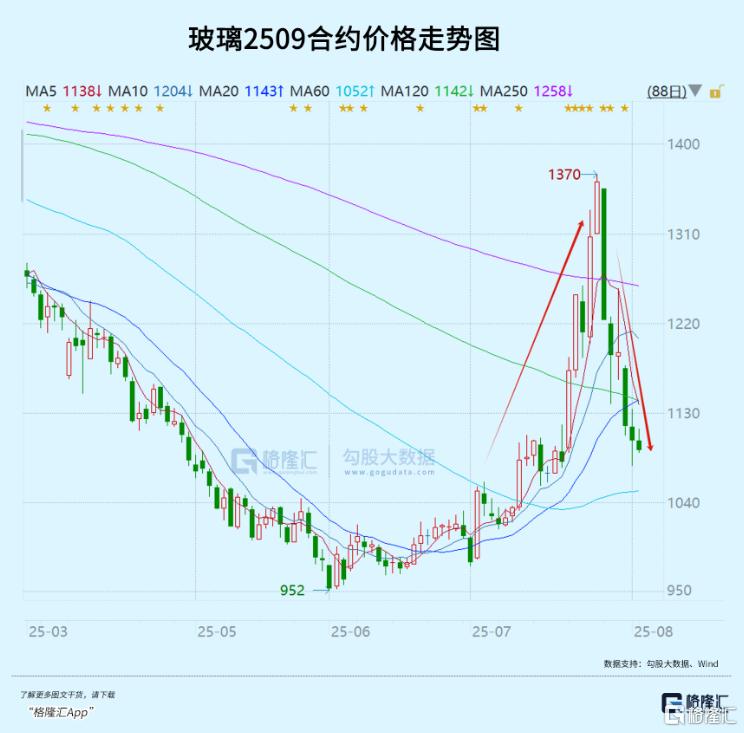
作者 | 独行侠 数据支持 | 勾股大数 据(www.gogudata.com) 今年 7月,是中国资本市场史诗级的一个月。尤其是大宗商品市场,极致的过山车行情,实属历 史罕见。 前 19个交易日,文华商品指数累计大涨7.2%。其中多晶硅大涨64%,焦煤大涨50%,玻璃大涨 34%。而后短短6个交易日,大盘回吐了一半涨幅,焦煤、玻璃又纷纷重挫20%左右。要知道, 商品往往有10倍或以上的杠杆,赚钱、亏钱都是成比例大幅扩大。 一念天堂,一念地狱。为什么商品市场会如此极端?商品对应的 A股周期股行情又会如何演绎? 01 从 7月1日开始,不管是大宗商品市场,还是A股市场,均迎来了一波酣畅淋漓的大涨行情。 导火索无它,即 第六次中央财经委员会召开。它的前身是中央财经领导小组, 2018年3月改名 而来,职责是 针对经济领域的顶层设计、总体布局、统筹协调、整体推进、督促落实。 因此,资本市场对此次重磅会议给予了高度关注,并积极定价。尤其是会议中有一句重磅定调: 依法依规治理企业低价无序竞争,引导企业提升产品品质,推动落后产能有序退出。 彼时,市场更在意 "低价"、"落后产能""退出"等关键词,开始与2015年底启动的 ...

广东:隐性债务连续四年清零,腾出空间,轻装上阵
21世纪经济报道· 2025-08-02 03:14
Core Viewpoint - Guangdong's economy is showing signs of recovery with a GDP growth of 4.2% in the first half of 2025, indicating a rebound after three consecutive quarters of improvement, despite being lower than the national growth rate [1][5][10]. Economic Performance - Guangdong's general public budget revenue increased by 2.5%, outperforming the national average by 2.8 percentage points [1]. - The urban survey unemployment rate is 0.1 percentage points lower than the national average, with over 1 million recent graduates employed in the province within six months [1]. - The manufacturing PMI for Guangdong reached 50.4 in June, indicating a return to expansion, surpassing the national level of 49.7 [1]. Debt Management - Guangdong has maintained a zero balance of hidden debt for four consecutive years since 2021, showcasing effective risk management and fiscal health [2][3][33]. - The province's proactive approach to dismantling the old "real estate-finance-local government infrastructure" cycle has facilitated a stable economic recovery [2][8]. Economic Structure and Growth Drivers - The economic growth in Guangdong is supported by a structural optimization of the "three drivers" (consumption, investment, and exports) [13]. - Consumption has become a key stabilizing factor, with retail sales growing by 3.5% in the first half of 2025, driven by policies promoting consumer spending [13][14]. - Exports showed resilience, with a 4% increase in foreign trade, contributing significantly to national trade growth [14][15]. Investment Trends - Real estate investment has declined significantly, from 1.75 trillion yuan in 2021 to 1.12 trillion yuan in 2024, while industrial investment has increased, becoming the mainstay of provincial investment [15][17]. - The focus on optimizing investment structure rather than merely expanding investment scale is evident, with industrial investment reaching a record high [17][19]. Industrial and Technological Advancements - The automotive industry in Guangdong has seen a significant shift towards new energy vehicles, with production increasing dramatically [21][24]. - The electronics sector is thriving, with major companies like Huawei and ZTE innovating despite external pressures, leading to substantial growth in high-tech product output [24][31]. - Guangdong's R&D expenditure has reached approximately 510 billion yuan, reflecting a strong commitment to innovation [29][31]. Regional Development and Coordination - The economic growth in Guangdong is increasingly balanced across urban and rural areas, with rural income growth outpacing urban income growth [27]. - The province is focusing on coordinated regional development, enhancing the economic structure and promoting high-quality growth [26][27]. Conclusion - Guangdong's economic recovery is characterized by a shift towards high-quality development, driven by innovation, structural optimization, and effective debt management, positioning the province for sustainable growth in the coming years [28][35].

省人大常委会组成人员对关于<br>辽宁省2025年上半年经济社会发展情况及下半年工作安排的报告的审议意见
Liao Ning Ri Bao· 2025-08-02 00:12
Core Viewpoint - The report highlights the overall stable economic performance of Liaoning Province in the first half of 2023, while acknowledging challenges such as external adverse impacts, insufficient domestic demand, and increased operational pressures on enterprises [2][3]. Economic Performance - The economic operation shows a generally stable and improving trend, with enhanced industrial resilience, continuous release of effective demand, and accelerated development of emerging industries [2]. - Fiscal revenue has shown stable growth, and the employment situation remains stable [2]. Challenges - The province faces challenges including pressure on industrial economy, significant growth pressure on fixed asset investment, insufficient market vitality, and prominent fiscal revenue-expenditure contradictions [2][3]. Policy Implementation - The government is urged to accelerate the release of policy effects by accurately grasping national policy orientations and enhancing project planning and maturity [3][4]. - Emphasis on utilizing various policy tools such as fiscal subsidies and government bonds to maximize the impact of central policies [3]. Investment and Project Development - Focus on attracting significant projects and enhancing the construction of major projects to ensure timely implementation and increased operational efficiency [4][5]. - Strengthening cooperation with central enterprises and improving the quality of project reserves to align with national requirements [4]. Industrial Development - The report calls for structural adjustments in industries, promoting traditional industries to upgrade and transition towards strategic emerging industries [5][6]. - Emphasis on enhancing the role of technology in industrial development and fostering innovation platforms [6]. Consumer Market - Strategies to boost consumption include upgrading major consumer goods and promoting the silver economy, particularly in health management and wellness services for the elderly [7]. - Development of cultural and tourism industries is also highlighted, with a focus on enhancing infrastructure and service quality [7]. Service Industry Growth - Support for the modern service industry, particularly in finance, logistics, and transportation, to improve efficiency and reduce costs [8]. Foreign Trade and Investment - The report emphasizes stabilizing foreign trade and expanding domestic sales, encouraging enterprises to utilize cross-border e-commerce platforms [9]. - Efforts to attract foreign investment and enhance the province's role in international trade are also outlined [9]. Market Vitality - Initiatives to support the development of the private economy and reduce operational costs for private enterprises are emphasized [10]. - Encouragement for entrepreneurship and the establishment of a supportive environment for startups is also highlighted [10]. Employment Stability - Measures to promote employment among key groups, including university graduates, and to support flexible employment opportunities are outlined [11]. - The report stresses the importance of addressing structural employment issues and aligning educational resources with market demands [11]. Additional Recommendations - Suggestions include strengthening county economies, advancing marine economy, and promoting ecological protection and green transformation [12].
恒逸石化: 关于回购公司股份(第五期)事项的进展公告
Zheng Quan Zhi Xing· 2025-08-01 16:46
Core Viewpoint - Hengyi Petrochemical Co., Ltd. has approved a share repurchase plan, aiming to enhance shareholder value and stabilize stock prices through the buyback of shares within a specified range and timeframe [1][2]. Share Repurchase Basic Information - The company plans to repurchase shares using its own funds and a special loan for stock repurchase, with a total repurchase amount between RMB 125 million and RMB 250 million [1]. - The maximum repurchase price is set at RMB 9.00 per share, which has been adjusted to RMB 8.94 per share following the completion of share cancellations [1]. Progress of Share Repurchase - As of July 31, 2025, the company has repurchased a total of 29,240,840 shares, representing 0.81% of the total share capital, with the highest transaction price recorded [2]. - The company has complied with relevant laws and regulations regarding the share repurchase process [2]. Other Matters - The company has adhered to the trading regulations set by the Shenzhen Stock Exchange regarding the timing and pricing of share repurchases [3]. - Future repurchases will continue based on market conditions, with timely disclosures to be made in accordance with legal and regulatory requirements [3].

LyondellBasell(LYB) - 2025 Q2 - Earnings Call Transcript
2025-08-01 16:02
Financial Data and Key Metrics Changes - Earnings per share were reported at $0.62 with EBITDA of $715 million, showing sequential improvement due to less downtime and lower feedstock costs [18] - Cash returns to shareholders exceeded $500 million, with an increase in ordinary dividends and continued share repurchases [18][24] - The company is targeting approximately $200 million in reductions in working capital for 2025, alongside fixed cost reductions of $200 million [14][16] Business Line Data and Key Metrics Changes - The Olefins and Polyolefins Americas segment generated EBITDA of $318 million, a more than 25% improvement from the previous quarter, driven by higher integrated polyethylene margins [26] - The Intermediates and Derivatives segment reported EBITDA of $290 million, an increase of $79 million, primarily due to improved margins for styrene and propylene oxide [32] - The Advanced Polymer Solutions segment maintained EBITDA at $40 million, despite challenges in automotive markets [35] Market Data and Key Metrics Changes - North American polyethylene industry saw domestic sales volumes rebound to the highest levels since 2022, with a decline in producer inventories by three days of sales during the second quarter [27][40] - In Europe, lower naphtha and LPG feedstock costs improved margins, while capacity rationalizations helped balance supply and demand [29][41] - In Asia, near-term capacity additions continue to pressure regional supply and demand balances, but there is cautious optimism regarding China's stimulus programs [42] Company Strategy and Development Direction - The company is focusing on growing and upgrading core businesses, with a strategic emphasis on low-cost feedstocks in North America and the Middle East, while increasing access to circular and renewable feedstocks in Europe [9][10] - The planned sale of European assets is expected to enhance cash flow and reduce recurring capital expenditures [20][46] - The company is prioritizing sustaining capital investments to ensure operational reliability while deferring certain growth investments until market conditions improve [17][22] Management's Comments on Operating Environment and Future Outlook - Management expressed confidence in navigating the current cycle and emphasized the importance of cash conversion and disciplined investments to secure dividends [56][59] - The company anticipates improved olefins margins and strong demand in the packaging business, driven by changing consumer behavior [78] - There is cautious optimism regarding the potential for price increases in polyethylene due to improved domestic demand and low global inventories [53][70] Other Important Information - The company is on track to achieve a run rate of $600 million in incremental cash flow for 2025, exceeding the previous target of $500 million [16][44] - The company is closely monitoring evolving tariffs and global trade flows, which could present both risks and opportunities [44] Q&A Session Summary Question: Sequential lift in O and P Americas due to downtime and price increases - Management expects an improvement of $85 million in Q3 due to less downtime and improved operating rates [49] Question: Safety of dividends amid cash flow challenges - The company confirmed the Q3 dividend of $1.37 per share, emphasizing strong liquidity and a focus on maintaining investment-grade ratings [56][58] Question: Clarification on 2026 CapEx forecast and precious metals opportunity - The 2026 CapEx forecast does not include the potential benefit from the European asset sale, and precious metal sales contributed $35 million in Q2 [62][67] Question: Cash flow generation expectations for 2025 - Management anticipates strong cash flow generation in the second half of the year, with a target of 80% cash conversion [72] Question: Third quarter dynamics in Intermediates and Derivatives segment - Expectations for the third quarter are relatively flat, with no material improvements anticipated [86] Question: Impact of China's new program on joint ventures - Management noted that restructuring in China's chemical industry is expected, but the company will focus on controllable factors [90] Question: Delay of Mooritech II project - The decision to delay was influenced by market dynamics and the need for prudent capital allocation [92][95] Question: Current state of pyrolysis market - Pyrolysis margins remain high due to demand exceeding supply, with positive regulatory momentum expected [98]
