
通信

Search documents
李立峰、张海燕:再论当前“春季行情”下的三条投资主线
Sou Hu Cai Jing· 2026-01-18 14:18
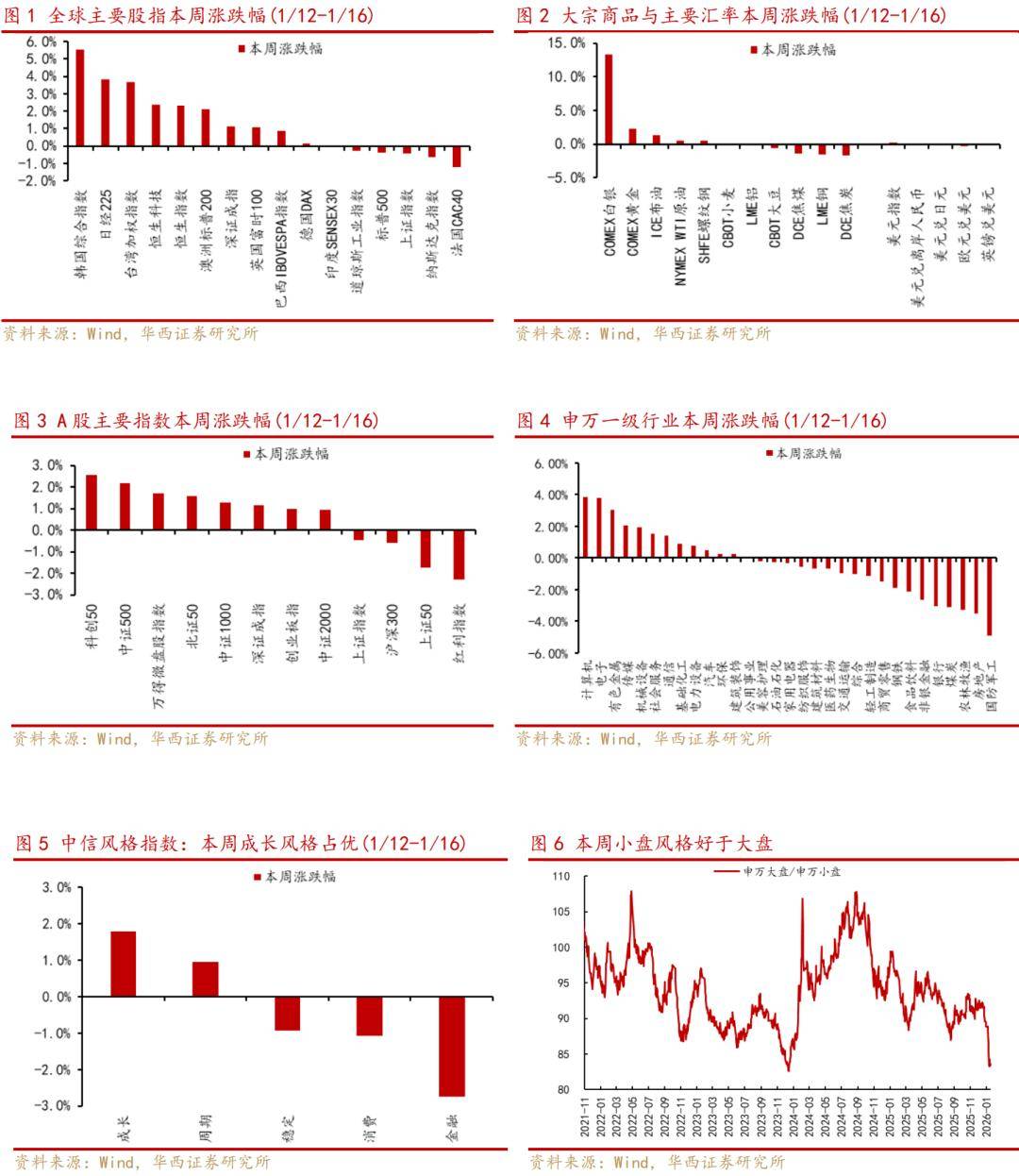
Market Review - The A-share market experienced a significant increase followed by a period of volatility, driven by a rapid rise in risk appetite among investors, particularly in small-cap and growth sectors. On January 14, the total trading volume across all A-shares reached a historic high of 3.99 trillion yuan, with margin financing balances hitting new records. However, regulatory adjustments to margin requirements led to a cooling off in trading activity, and the previously strong momentum in technology indices began to slow down. Commodities such as precious metals and crude oil saw price increases, while copper prices fluctuated at high levels and domestic coking coal prices declined. The US dollar index rose, and the offshore yuan appreciated against the dollar [1][2]. Market Outlook - Regulatory measures aimed at "counter-cyclical adjustment" are expected to support a "slow bull" market for A-shares. Following a surge in trading activity and margin financing, regulators signaled a need to mitigate risks by increasing the minimum margin requirement from 80% to 100%. This is part of a broader strategy to maintain market stability and prevent excessive volatility. Despite these measures, the overall valuation of A-shares remains reasonable, supported by macroeconomic policies, long-term capital inflows, and a moderate recovery in corporate earnings. As the end of January approaches, the focus will shift to earnings forecasts, particularly in technology sectors and areas experiencing price increases [2][3]. Key Focus Areas - The spring market rally has seen a rapid increase in trading activity, but regulatory signals have shifted the Shanghai Composite Index from a one-sided rise to high-level fluctuations. Since the rally began on December 17, various sources of capital have entered the market, including institutional funds and foreign investments, leading to a peak trading volume of nearly 4 trillion yuan. The margin financing balance surpassed 2.7 trillion yuan, indicating potential overheating risks. Regulatory interventions have prompted a transition to a more stable trading environment, while the overall trading volume remains high, reflecting sustained investor confidence [1][2]. Risk Premium and Valuation - As of January 16, the equity risk premium (ERP) for the CSI 300 index stood at 5.2%, close to the median level over the past decade. Compared to previous peaks in January 2018 and February 2021, the current ERP suggests that A-share valuations are relatively reasonable, although some sectors may be experiencing overheating. The sectors with the highest margin buying activity include electronics, power equipment, computers, military, and communications. Attention should be paid to the potential impact of reduced financing in high-volatility sectors [3][4]. Earnings Forecasts - The trend of a slow bull market for A-shares is expected to continue, with a focus on earnings forecasts as companies prepare to disclose their annual results. Macroeconomic policies are expected to support risk appetite, with the central bank implementing targeted monetary policies. The anticipated recovery in corporate earnings, particularly as the Producer Price Index (PPI) declines, will be crucial for market support. Key sectors to watch include technology, chemicals, and healthcare, especially those with high growth or turnaround potential in their earnings forecasts [4].

行情结束还是结构转向?
Huaan Securities· 2026-01-18 13:56
Market Insights - The report indicates that the increase in financing margin ratios is gradually being digested by the market, with the impact nearing its end. The central bank's structural interest rate cuts are expected to boost policy expectations, and additional policies may be introduced following the release of macroeconomic data for 2025, which could enhance market risk appetite [3][4] - The upcoming release of 2025 macroeconomic data on January 19 is anticipated to show a significant decline in GDP growth for Q4 compared to Q3. This, combined with various policy measures, suggests an increased probability of a "good start" for Q1, which is likely to uplift market risk appetite [4][11] Industry Allocation - The report asserts that the acceleration in market trends has not ended, but the structure of the upward trend is shifting towards computing power. The previous leading sectors, such as military and AI applications, have seen declines, raising investor concerns about the end of the current market phase. However, the report suggests that the current market phase may still extend with potential acceleration in sectors related to computing power [5][20] - As of January 12, 2026, the electric equipment sector has not yet reached new highs, indicating that the growth style and six major growth industries have not simultaneously achieved new highs. The report highlights that the electric equipment index has room for approximately 3% growth to meet this condition [20][23] - The report identifies that the communication and electronic sectors, which were previously strong, may experience a rapid rebound, with potential upward space of no less than 10%. The report emphasizes that the current market conditions do not satisfy the "stronger gets stronger" characteristic, as the leading sectors have not maintained their strength [20][24] - The report also notes that the turnover rates for the growth style and the communication sector are approaching their respective highs, but the communication sector still has a significant gap to close. This suggests that the current market phase has not yet concluded, and a rapid increase in turnover rates may accompany a rebound in the communication sector [27][31] Key Investment Themes - The report suggests two main investment themes: 1. The AI industry chain, particularly in computing power (CPO/PCB), supporting components (fiber optics/liquid cooling/power equipment), and applications (robots/games/software), is expected to continue its upward trend. The report anticipates that applications may experience high volatility, while computing power is likely to see accelerated growth [32][33] 2. Areas supported by favorable market conditions or significant events, such as storage and energy storage chains, military industry, and machinery, are also highlighted. The storage sector is expected to benefit from supply disruptions and increased AI demand, while the military sector may gain from commercial aerospace and geopolitical events [33]
策马逐牛5:中国优势资产春水长流
CAITONG SECURITIES· 2026-01-18 13:51
Core Insights - The report emphasizes long-term opportunities with the strategy "蓄力新高" suggesting that the Shanghai Composite Index briefly broke 4000, while the 2026 strategy "奔马资产, 策马逐牛" focuses on embracing "奔马资产" (globally competitive leaders) leading to a revaluation of value [3][10] - The mid-term analysis indicates a potential for market fluctuations towards the end of the year, with a strong market rally observed in the first week of January, confirming previous predictions [3][10] Industry and Sector Analysis - Leading sectors such as telecommunications, electronics, and non-ferrous metals remain core themes, with internal shifts observed, such as a transition from rare earths and precious metals to industrial metals and lithium-cobalt-nickel within non-ferrous metals, and from consumer electronics to storage and semiconductor equipment in electronics [4][14] - The report identifies three key investment directions: 1. Core growth assets, particularly in the Hang Seng Internet sector, benefiting from platform economy support and potential AI catalysts, alongside improvements in US-China relations and passive foreign capital inflow due to RMB appreciation [5][13] 2. Globally competitive assets (奔马 50), which are expected to benefit from global economic recovery, strong policy support, and institutional capital inflow, with a high cost-performance ratio due to trends in AI, high-end manufacturing, and resource supply-side adjustments [5][13] 3. Emerging growth sectors, particularly those related to the "Musk chain," focusing on AI applications and underground transportation, with a bottom-up investment approach in areas like computing power and humanoid robots [5][13] Market Dynamics - The report notes that despite recent volatility, the fundamentals of a long-term bull market remain intact, with market sentiment high and financing balances nearing a ten-year high, indicating a healthy market environment [7][11] - Historical patterns suggest that after a major rally, the market may enter a consolidation phase, but the underlying growth logic remains strong, particularly in technology and cyclical sectors [12][14]
量化择时和拥挤度预警周报(20260116):市场下周有望震荡上行-20260118
GUOTAI HAITONG SECURITIES· 2026-01-18 12:37
Quantitative Models and Construction 1. Model Name: Liquidity Shock Indicator - **Model Construction Idea**: The model measures market liquidity by assessing deviations from the average liquidity level over the past year[4][8] - **Model Construction Process**: The liquidity shock indicator is calculated based on the standard deviation of the current market liquidity relative to the average liquidity over the past year. For the CSI 300 Index, the indicator value on Friday was 3.32, which is 3.32 standard deviations above the average liquidity level of the past year[4][8] - **Model Evaluation**: Indicates that the current market liquidity is significantly higher than the historical average, suggesting a favorable environment for trading[4][8] 2. Model Name: Sentiment Model - **Model Construction Idea**: The model evaluates market sentiment using factors such as limit-up and limit-down board data to assess the strength of market sentiment[4][14] - **Model Construction Process**: The sentiment model score is derived from various sub-factors, including: - Net limit-up ratio - Next-day return after limit-down events - Proportion of limit-up boards - Proportion of limit-down boards - High-frequency board-hitting returns The overall sentiment score is 2 out of 5, indicating a moderate sentiment level[4][14][19] - **Model Evaluation**: The model reflects a weakening in market sentiment but still indicates a positive trend[4][14] 3. Model Name: High-Frequency Capital Flow Model - **Model Construction Idea**: This model uses high-frequency capital flow data to generate buy/sell signals for major broad-based indices[4][14] - **Model Construction Process**: The model tracks the capital flow trends for indices such as CSI 300, CSI 500, and CSI 1000. Based on the data, the model generates signals for aggressive long, aggressive short, conservative long, and conservative short positions. For all three indices, the signals are consistently positive, indicating a "buy" recommendation[4][14][19] - **Model Evaluation**: The model suggests that the major indices are in a "buy" cycle, supporting a positive market outlook[4][14] --- Model Backtesting Results 1. Liquidity Shock Indicator - CSI 300 Index: Indicator value = 3.32 (3.32 standard deviations above the historical average)[4][8] 2. Sentiment Model - Overall sentiment score: 2/5 - Sub-factor signals: - Net limit-up ratio: 1 - Next-day return after limit-down events: 0 - Proportion of limit-up boards: 1 - Proportion of limit-down boards: 0 - High-frequency board-hitting returns: 0[4][14][19] 3. High-Frequency Capital Flow Model - CSI 300 Index: All signals (aggressive long, aggressive short, conservative long, conservative short) = 1 - CSI 500 Index: All signals = 1 - CSI 1000 Index: All signals = 1[4][14][19] --- Quantitative Factors and Construction 1. Factor Name: Small-Cap Factor - **Factor Construction Idea**: Measures the performance of small-cap stocks relative to the market[20][21] - **Factor Construction Process**: The factor's crowding level is calculated using four metrics: - Valuation spread - Pairwise correlation - Market volatility - Return reversal The composite score for the small-cap factor is 0.20[20][21] - **Factor Evaluation**: The factor's crowding level is stable, indicating no significant risk of factor failure[20][21] 2. Factor Name: Low-Valuation Factor - **Factor Construction Idea**: Tracks the performance of low-valuation stocks[20][21] - **Factor Construction Process**: Similar to the small-cap factor, the crowding level is calculated using the same four metrics. The composite score for the low-valuation factor is -0.75[20][21] - **Factor Evaluation**: The negative score suggests a potential risk of underperformance due to crowding[20][21] 3. Factor Name: High-Profitability Factor - **Factor Construction Idea**: Focuses on stocks with high profitability metrics[20][21] - **Factor Construction Process**: The factor's crowding level is calculated using the same four metrics. The composite score for the high-profitability factor is 0.35[20][21] - **Factor Evaluation**: Indicates moderate crowding but still within acceptable levels[20][21] 4. Factor Name: High-Growth Factor - **Factor Construction Idea**: Targets stocks with high growth potential[20][21] - **Factor Construction Process**: The factor's crowding level is calculated using the same four metrics. The composite score for the high-growth factor is 0.55[20][21] - **Factor Evaluation**: Suggests a favorable environment for high-growth stocks[20][21] --- Factor Backtesting Results 1. Small-Cap Factor - Valuation spread: 0.43 - Pairwise correlation: 0.22 - Market volatility: -0.28 - Return reversal: 0.41 - Composite score: 0.20[20][21] 2. Low-Valuation Factor - Valuation spread: -1.22 - Pairwise correlation: -0.05 - Market volatility: 0.26 - Return reversal: -2.01 - Composite score: -0.75[20][21] 3. High-Profitability Factor - Valuation spread: -0.55 - Pairwise correlation: 0.31 - Market volatility: -0.01 - Return reversal: 1.65 - Composite score: 0.35[20][21] 4. High-Growth Factor - Valuation spread: 1.09 - Pairwise correlation: 0.46 - Market volatility: -0.29 - Return reversal: 0.95 - Composite score: 0.55[20][21]
再论当前“春季行情”下的三条投资主线
HUAXI Securities· 2026-01-18 12:29
Market Review - The A-share market experienced a significant increase followed by a period of volatility, with a notable rise in trading volume driven by a strong profit-making effect, particularly in small-cap and growth styles. On January 14, the total trading volume reached a historical high of 3.99 trillion yuan, with margin financing balances hitting new records. However, following regulatory adjustments to margin requirements, market activity showed signs of cooling, and the previously strong technology index began to stabilize [1][2]. Market Outlook - Regulatory measures aimed at "counter-cyclical adjustment" are expected to support a "slow bull" market for A-shares. The recent surge in trading activity has prompted regulators to signal a need for cooling, leading to a shift from a one-sided increase to high-level fluctuations in the Shanghai Composite Index. Despite this, the overall valuation of A-shares remains reasonable, supported by macro policies, medium to long-term capital inflows, and a mild recovery in corporate earnings. The upcoming earnings announcements in late January are likely to refocus investor attention on performance-driven sectors, particularly in technology and industries benefiting from price increases [2][3]. Counter-Cyclical Adjustment Policies - The recent increase in the minimum margin requirement for financing from 80% to 100% is part of a broader strategy to prevent systemic risks in the market. The regulatory emphasis on maintaining market stability and preventing extreme fluctuations is evident, as seen in the significant net outflow of 142.3 billion yuan from equity ETFs in January, marking the largest monthly outflow since 2021. This counter-cyclical adjustment is viewed as a necessary measure to sustain the bull market trend while mitigating overheating risks [3][4]. Risk Premium and Sector Focus - As of January 16, the equity risk premium (ERP) for the CSI 300 index stands at 5.2%, which is near the median level for the past decade. Compared to previous peaks in January 2018 and February 2021, the current risk premium indicates that A-share valuations are relatively reasonable, although some sectors may experience capital withdrawal due to overheating. Key sectors attracting financing include electronics, power equipment, computers, military, and communications, with a need to monitor the impact of reduced financing on high-volatility stocks in these areas [4][5]. Investment Strategy - The slow bull trend in A-shares is expected to continue, with a focus on sectors showing high growth or improving conditions as companies prepare to announce their 2025 earnings. Key factors supporting this outlook include proactive macro policies, the influx of medium to long-term capital, and a narrowing decline in the Producer Price Index (PPI), which suggests a mild recovery in corporate earnings. Investors should pay attention to sectors such as technology (AI applications, robotics), commodities benefiting from price increases, and industries with anticipated high earnings growth [5].
震荡蓄势,等待时机
Guotou Securities· 2026-01-18 11:49
- The report discusses the market's potential to stabilize and the possibility of a rebound after a period of consolidation, aligning with previous predictions[1][8] - From a wave theory perspective, the market's recent surge can be seen as a major wave, with the current adjustment potentially being a fourth wave correction[8] - The 20-day moving average has historically provided support during similar adjustments since April of the previous year[8] - Volume analysis indicates that significant volume reduction during a bull market correction can signal the end of the adjustment phase, with historical data suggesting that a reduction to 55% of the recent peak volume may indicate a nearing end to the correction[8] - The report includes an industry four-wheel drive model, highlighting recent trading opportunities in sectors such as technology and healthcare, with specific signals and corresponding ETFs listed for each opportunity[16]
站上2.7万亿元,杠杆资金最新动向曝光!下周这些板块获投资者看好
Xin Lang Cai Jing· 2026-01-18 10:09
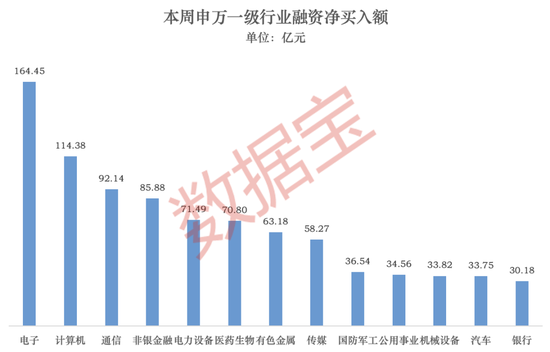
Group 1 - A-shares financing balance has reached a new high of 27,012.4 billion yuan, with a net buy of 1,006.51 billion yuan this week [2][20] - The electronics and computer sectors saw net purchases exceeding 10 billion yuan, with amounts of 16.445 billion yuan and 11.438 billion yuan respectively [2][20] - The power equipment sector is expected to benefit from increased fixed asset investments by the State Grid Corporation, projected to reach 400 billion yuan during the 14th Five-Year Plan, a 40% increase from the previous plan [4][21] Group 2 - Notable stocks with significant net purchases include China Ping An (3.343 billion yuan), TBEA (2.279 billion yuan), and Zhongji Xuchuang (1.979 billion yuan) [4][24] - The storage chip sector is experiencing a "super bull market," with DDR5 memory prices rising over 300% since September 2025, and DDR4 prices increasing over 150% [23] - Investors are optimistic about the power sector, with 9% of surveyed investors expressing confidence in this area, driven by the anticipated investments in the power grid [15][33]






兴证策略张启尧团队:春季行情仍会有新高
Xin Lang Cai Jing· 2026-01-18 09:58
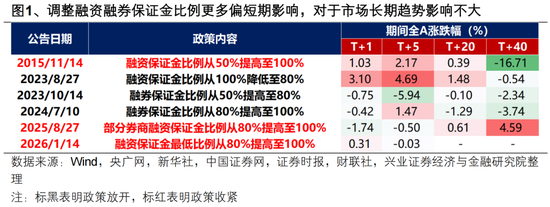
Group 1 - The current spring market is expected to reach new highs despite recent short-term cooling, driven by liquidity and risk appetite, with a focus on structural opportunities rather than systemic risks [1][11][33] - Historical adjustments to margin ratios have shown that their impact is typically short-term, with long-term trends being influenced more by fundamentals, policy, and market sentiment [2][34] - The ongoing spring market has seen significant gains, with the Shanghai Composite Index, CSI All A, and ChiNext Index rising by 7.24%, 10.33%, and 9.24% respectively since December 17, indicating that the market is still in its early stages [3][34] Group 2 - The fundamental support for the spring market remains intact, with a low base for earnings forecasts and structural highlights expected to boost market sentiment [6][12] - Recent earnings forecasts show significant growth potential in sectors such as electronics, new energy, and healthcare, with companies like SAIC Motor and Baidu Storage projecting net profit growth rates exceeding 500% [8][15] - The market is currently undergoing a structural rebalancing, with a shift towards sectors with confirmed earnings, while previously overheated areas like media and aerospace are experiencing corrections [9][11] Group 3 - February is anticipated to be a key period for market activity, with a focus on earnings disclosures and a potential return to risk appetite as liquidity increases ahead of the Spring Festival [19][22] - The upcoming earnings season is expected to drive market adjustments, with a focus on sectors that have shown resilience and growth potential [12][19] - Historical patterns suggest that February is one of the strongest months for market performance, particularly for small-cap and growth stocks [19][22]
——策略周专题(2026年1月第2期):节前坚守稳健布局,静待节后新动能释放
EBSCN· 2026-01-18 09:27
Group 1 - The report suggests that investors should maintain a steady allocation strategy before the Spring Festival, anticipating the release of new momentum after the holiday [3][21] - The report highlights that the A-share market experienced a narrow fluctuation, with the Shanghai Composite Index slightly declining while the ChiNext and other indices showed gains [1][11] - The report indicates that the current valuation levels of the Sci-Tech 50 and the Wind All A indices are relatively high, with their PE(TTM) percentile ranks exceeding 90% as of January 16, 2026 [1][12] Group 2 - The report emphasizes the importance of monitoring the electronic, power equipment, and non-ferrous metals industries, which are expected to perform well in the upcoming market conditions [3][32] - The report notes that if the market style leans towards growth, the top-scoring industries in the five-dimensional industry comparison framework include electronics, power equipment, and communication [3][32] - In a defensive market style scenario, the top industries include non-bank financials, electronics, and power equipment, indicating a similarity in high-scoring industries across both growth and defensive styles [3][32] Group 3 - The report continues to focus on the commercial aerospace sector, which has shown signs of adjustment after a strong performance, suggesting that the sector may transition to a phase of consolidation [4][33] - The report warns of potential short-term profit-taking pressures in the commercial aerospace sector due to its previous high cumulative gains, but it remains optimistic about long-term growth driven by favorable industry policies [4][33]
负债行为跟踪:预防式降温:两融、北向和股指期货的分歧
ZHONGTAI SECURITIES· 2026-01-18 07:26
1. Report Industry Investment Rating - Not provided in the content 2. Core Viewpoints of the Report - The market cooled slightly in the second week of the new year. The margin trading and short - selling (MTS) new rules achieved a "preventive" cooling effect before the market overheated, and the slow - bull trend was established. MTS funds showed differentiation rather than a retreat, and northbound funds had a strong willingness to flow in, although the net outflow of broad - based ETFs accelerated [5][11]. - Institutions took a left - hand approach, while MTS and northbound funds served as accelerators for the incremental funds since the beginning of the year. Northbound funds became an incremental force for short - term market activity [9]. - The performance of broad - based indexes was differentiated. Large - cap and dividend indexes declined, while technology stocks and micro - cap stocks performed well [10][13]. 3. Summary by Relevant Catalogs Market Performance - This week, broad - based indexes showed differentiated performance. Large - cap indexes such as the CSI 300 and the Shanghai Composite Index fell by 0.6% and 0.4% respectively, and the dividend index dropped by 1.8%. Technology stocks and micro - cap stocks performed well, with the ChiNext and the STAR 50 rising by 1.0% and 2.6% respectively, and micro - cap stocks increasing by 1.7% [10][13]. Leveraged Funds - Since the spring rally, the MTS balance has rapidly recovered. As of January 15, the MTS balance reached 2.69 trillion yuan, exceeding the highs in 2015 and 2021. The proportion of MTS balance to the market value of tradable shares reached 2.59%, slightly exceeding the high in March 2022 [21]. - The proportion of MTS trading volume to A - share trading volume rose in the first week of the new year and touched the "mean + 2 standard deviations". This week, it rebounded slightly, with the average rising from 11.27% to 11.33%, slightly lower than the "mean + 2 standard deviations" [21]. - Since the beginning of the year, leveraged funds have flowed into major broad - based indexes significantly. In the first week, the average daily net purchase of margin trading in the Shanghai Composite Index, the CSI 500, and the CSI 1000 exceeded 3 billion yuan. This week, the net inflow of MTS in the CSI 500 and the CSI 1000 decreased significantly on Wednesday and Thursday, while the MTS funds in the STAR 50 continued to flow in at an accelerated pace [26]. - From Monday to Tuesday this week, industries such as household appliances, non - banking, media, pharmaceutical biology, computers, and non - ferrous metals had a relatively large proportion of MTS net purchases to trading volume. From Wednesday to Thursday, industries such as national defense and military industry, agriculture, forestry, animal husbandry, coal, and building materials shifted from adding leverage to de - leveraging. The proportion of MTS net purchases to trading volume in industries such as media, household appliances, pharmaceuticals, computers, and non - ferrous metals decreased significantly. After January 13, the proportion of MTS net purchases to trading volume in industries such as banks, public utilities, food and beverages, non - banking, and electronics increased [6][27]. - This week, stocks of all market - value gradients added leverage. After the MTS new rules, stocks of different market values showed differentiation. Since Wednesday, the proportion of MTS net purchases to trading volume of stocks with a market value of over 100 billion yuan increased, while that of stocks with a market value of less than 100 billion yuan decreased [35]. - The proportion of MTS net purchases to trading volume of popular stocks increased. The average proportion of leveraged funds in the trading volume of the top 35 popular stocks rose to 6.30% this week, still lower than the 9.42% in the last week of August. On Wednesday, popular stocks such as Cambricon, Goldwind Science & Technology, and Kunlun Tech de - leveraged. From Thursday to Friday, popular stocks such as Zhongji Innolight, Kweichow Moutai, and Luxshare Precision added leverage [42][44]. ETF Funds - From Wednesday to Friday, the net outflow of broad - based ETFs was relatively large. The average daily net outflow of the CSI 300 ETF reached 14.7 billion yuan, and the average daily net outflow of the SSE 50, ChiNext, and CSI 500 ETFs exceeded 5 billion yuan [48]. Quantitative Funds - This week, the premium of the near - term stock index futures basis widened, and the discount of the far - term futures narrowed. The discount deepened only on Wednesday and then recovered. Overall, the demand for hedging decreased [52]. Northbound Funds - Since Q4 2025, due to the relaxation of US monetary policy, the increasing expectation of US dollar depreciation, and the narrowing of the Sino - US interest rate spread, net foreign exchange settlement has increased, leading to the passive release of RMB and the return of RMB [59]. - Foreign capital actively participated as a right - hand force in the market rally at the beginning of the year, with a higher degree of participation than MTS funds. Comparing the trading volume proportions in the nine trading days before and after New Year's Day, the trading volume proportion of northbound funds increased from 10.2% to 11.6%, a rise of 1.4 percentage points, while that of MTS funds only increased from 11.0% to 11.4%, a rise of 0.4 percentage points [61]. - This week, the total trading volume of northbound funds rebounded. The average daily trading volume increased from 327.2 billion yuan to 401.1 billion yuan, and the proportion in A - share trading volume rose from 11.47% to 11.61%. Since late December 2025, the trading volume of northbound funds has rebounded significantly [67].