
原油

Search documents
黄金,还在涨!再创历史→
Sou Hu Cai Jing· 2025-09-17 02:38
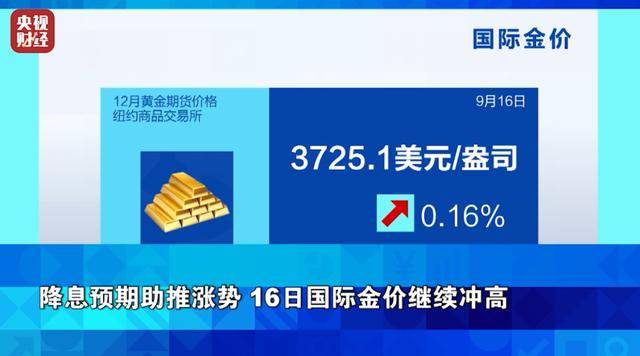
Group 1 - The Federal Reserve's monetary policy meeting is underway, with concerns about the impact of recent personnel changes on interest rate decisions, leading to a cautious market sentiment [1] - Major U.S. stock indices experienced declines, with the Dow Jones down 0.27%, S&P 500 down 0.13%, and Nasdaq down 0.07%, while Chinese concept stocks rose, with the Nasdaq Golden Dragon China Index up nearly 1.8% [1] Group 2 - Following the Federal Reserve meeting, there is a high probability (96%) of a 25 basis point rate cut, with further cuts in October and December also likely (over 70%) [4] - International gold prices surged, with London spot gold prices surpassing $3,700 per ounce, and New York December gold futures closing at $3,725.1 per ounce, up 0.16% [4] Group 3 - U.S. retail sales for August increased by 0.6% month-on-month, exceeding expectations, driven by strong online retail, clothing, and sports goods sales, likely influenced by back-to-school shopping [10] - The robust consumer spending may provide new considerations for the Federal Reserve's rate cut decisions amid economic challenges [10] Group 4 - European stock indices fell as investors awaited the Federal Reserve's interest rate decision, with notable declines in bank stocks [12] - The UK's unemployment rate remained high, and average wage growth has slowed, raising concerns among investors and contributing to the downward pressure on European indices [12]

《能源化工》日报-20250917
Guang Fa Qi Huo· 2025-09-17 02:01
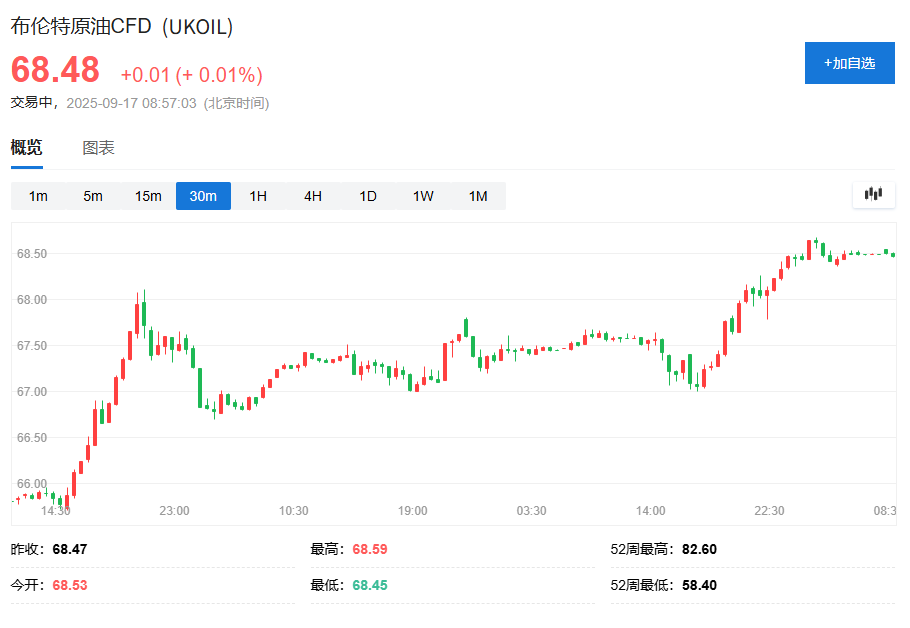
Report Industry Investment Rating No relevant content provided. Core Views Chlor - Alkali Industry - The caustic soda futures market is stabilizing, with overall commodity sentiment positive. Supply may decline due to planned maintenance, and demand from the alumina industry is weakening, while non - alumina demand is improving but with limited price support. Spot prices may stabilize, and the downside of futures prices is limited [27]. - The PVC futures market is rebounding, driven by macro - sentiment. Supply is expected to decrease due to more maintenance this week, and demand from downstream products is slightly increasing. The cost side is providing bottom support, and it is expected to stop falling in the peak season from September to October [27]. Polyester Industry Chain - For PX, supply is increasing to a relatively high level, and short - term demand has some support, but the upside is limited. It is expected to fluctuate between 6600 - 6900 in the short term [30]. - PTA's spot market liquidity is good, and the medium - term supply - demand is weak. It is expected to fluctuate between 4600 - 4800 in the short term, and TA1 - 5 should be rolled in a reverse spread [30]. - Ethylene glycol's supply - demand pattern is strong in the near - term and weak in the long - term. It is expected to reduce inventory in September but increase inventory in the fourth quarter. It is recommended to wait and see on the single - side and use EG1 - 5 reverse spread [30]. - Short - fiber's short - term supply - demand is weak, and it mainly follows raw material fluctuations. The single - side strategy is the same as PTA, and the processing fee is expected to fluctuate between 800 - 1100 [30]. - Bottle - chip's supply increases slightly, and demand may decline. It mainly follows cost fluctuations, and the processing fee is expected to fluctuate between 350 - 500 yuan/ton [30]. Pure Benzene - Styrene Industry - Pure benzene's supply is at a relatively high level, and demand is weak. It is expected to be supported by the strong oil price and good macro - atmosphere, and BZ2603 should follow styrene to fluctuate strongly [35]. - Styrene's price is strongly supported but the upside is limited by high port inventory. EB10 should be bought at low prices, and the EB11 - BZ11 spread should be widened at low levels [35]. Urea Industry - Urea futures have rebounded in the past two days, driven by supply - side maintenance expectations. Demand is mainly supported by export and industrial needs, and the futures increase is mainly due to short - covering and expectation differences [39][40]. Methanol Industry - Methanol's supply in the inland is at a high level, and demand is weak due to the traditional off - season. The inventory pattern is relatively healthy, and the overall valuation is neutral. The market is swinging between high - inventory reality and overseas gas - restriction expectations, and the inventory inflection point should be monitored [42]. LLDPE - PP Industry - PP's PDH and propylene - purchasing profits are suppressed, with more unplanned maintenance and falling inventory, but the basis is still weak. PE's maintenance is at a relatively high level, with short - term low supply pressure, rising basis, and inventory reduction. Demand for new orders is poor, and the market is in a state of "decreasing supply and increasing demand" [45]. Crude Oil Industry - Overnight oil prices rose due to geopolitical conflicts, which increased concerns about supply disruptions of Russian refined oil and crude oil. The market's focus has shifted to immediate supply risks, and the oil price is likely to run along the upper edge of the shock range in the short term. It is recommended to wait and see on the single - side, and look for opportunities to widen spreads on the options side after volatility increases [48] Summary by Directory Chlor - Alkali Industry - **PVC, Caustic Soda Spot & Futures**: On September 16, Shandong 32% liquid caustic soda's price decreased by 3.0%, and Shandong 50% liquid caustic soda's price decreased by 4.4%. The prices of East - China PVC increased, and the prices of related futures contracts also changed slightly [27]. - **Supply**: The overall PVC start - up rate increased by 4.2% to 79.4%, while the profit of externally - purchased calcium carbide PVC decreased by 12.8% [27]. - **Demand**: The start - up rates of alumina, viscose staple fiber, and printing and dyeing industries all increased slightly, and the start - up rates of downstream PVC products also increased [27]. - **Inventory**: The inventory of liquid caustic soda in Shandong increased by 17.0%, and the total social inventory of PVC decreased slightly by 0.3% [27]. Polyester Industry Chain - **Downstream Polyester Product Prices and Cash Flows**: On September 16, the prices of most downstream polyester products increased slightly, and the cash flows of some products changed [30]. - **PX - Related Prices and Spreads**: CFR China PX price decreased by 0.2%, and PX - naphtha spread increased by 0.9% [30]. - **PTA - Related Prices and Spreads**: PTA's spot price increased by 0.2%, and the processing fee of PTA's spot increased by 19.6% [30]. - **MEG - Related Prices and Spreads**: MEG's spot price increased by 0.2%, and the basis of EG01 increased [30]. - **Polyester Industry Chain Start - up Rate Changes**: The start - up rates of Asian PX, Chinese PX, and PTA all increased, while the start - up rate of pure - polyester yarn decreased [30]. Pure Benzene - Styrene Industry - **Upstream Prices and Spreads**: On September 16, the prices of Brent and WTI crude oil increased, and the price of CFR China pure benzene increased by 0.3% [35]. - **Styrene - Related Prices and Spreads**: The price of styrene's East - China spot increased by 0.8%, and the cash flows of non - integrated and integrated styrene improved [35]. - **Pure Benzene and Styrene Downstream Cash Flows**: The cash flows of some downstream products of pure benzene and styrene changed, with some increasing and some decreasing [35]. - **Pure Benzene and Styrene Inventory**: The inventories of pure benzene and styrene in Jiangsu ports decreased [35]. - **Pure Benzene and Styrene Industry Chain Start - up Rate Changes**: The start - up rates of some products in the pure benzene and styrene industry chain decreased, while the start - up rates of downstream PS and EPS increased [35]. Urea Industry - **Futures Closing Prices**: On September 16, the prices of urea futures contracts increased slightly, and the price of methanol futures decreased [39]. - **Upstream Raw Materials**: The prices of most upstream raw materials of urea remained stable, and the estimated production costs of fixed - bed and water - coal - slurry remained unchanged [40]. - **Spot Market Prices**: The prices of urea in different regions changed slightly, with some increasing and some decreasing [40]. - **Supply - Demand Overview**: The daily and weekly production of domestic urea increased slightly, and the factory inventory increased by 3.44%, while the port inventory decreased by 11.52% [40]. Methanol Industry - **Methanol Prices and Spreads**: On September 16, the prices of methanol futures contracts decreased, and the basis and regional spreads changed [42]. - **Methanol Inventory**: The enterprise, port, and social inventories of methanol increased [42]. - **Methanol Upstream - Downstream Start - up Rates**: The start - up rates of upstream domestic enterprises and overseas exchanges decreased, while the start - up rates of some downstream products increased [42]. LLDPE - PP Industry - **Product Prices and Spreads**: On September 16, the prices of LLDPE and PP futures contracts increased slightly, and the spreads between different contracts and the basis changed [45]. - **Inventory**: The enterprise and social inventories of PE and PP increased [45]. - **Upstream - Downstream Start - up Rates**: The start - up rates of PE and PP devices decreased, while the start - up rates of some downstream products increased [45]. Crude Oil Industry - **Crude Oil Prices and Spreads**: On September 17, the prices of Brent, WTI, and SC crude oil increased, and the spreads between different contracts and different types of crude oil changed [48]. - **Refined Oil Prices and Spreads**: The prices of NYM RBOB, NYM ULSD, and ICE Gasoil increased, and the spreads between different contracts of refined oil changed [48]. - **Refined Oil Crack Spreads**: The crack spreads of gasoline, diesel, and jet fuel in different regions changed, with some increasing and some decreasing [48].
贵金属早报-20250917
Yong An Qi Huo· 2025-09-17 01:23
Group 1: Price Performance - The latest prices of London Gold, London Silver, London Platinum, London Palladium, WTI Crude Oil, and LME Copper are 3651.10, 42.26, 1399.00, 1218.00, 63.30, and 10119.50 respectively, with changes of 0.00, 0.00, 0.00, 0.00, 0.00, and 38.00 [2] - The latest values of the US Dollar Index, Euro to US Dollar, British Pound to US Dollar, US Dollar to Japanese Yen, and US 10 - year TIPS are 97.36, 1.18, 1.36, 147.42, and 1.68 respectively, with changes of 0.00, 0.00, 0.00, 0.00, 0.00 [2] Group 2: Trading Data - The latest inventories of COMEX Silver, SHFE Silver, and SGE Silver are 16411.68, 1231.26, and 1283.61 respectively, with changes of 0.00, - 12.22, and 0.00 [3] - The latest holdings of Gold ETF and Silver ETF are 976.81 and 15059.74 respectively, with changes of 0.00 and 0.00 [3] - The latest deferred - fee payment directions of SGE Silver and SGE Gold are 2 and 1 respectively, with changes of 1.00 and 0.00 [3]
刚刚,有人在期权市场下“大注”:油价在圣诞节前跌破50美元
Hua Er Jie Jian Wen· 2025-09-17 01:16
Core Viewpoint - A trader has made a significant bearish bet on Brent crude oil, predicting prices will fall below $50 per barrel by the end of the year due to concerns over supply surplus outweighing geopolitical risks [1][6]. Group 1: Bearish Bet on Oil Prices - A notable trade involving $10 million worth of put options was executed, betting that Brent crude oil futures will drop below $50 per barrel before the options expire on December 23 [1][5]. - The trader employed a put spread strategy, buying puts with a strike price of $50 and selling puts with a strike price of $49, potentially turning an initial investment of approximately $350,000 into $10 million if prices fall as predicted [5]. Group 2: Supply Surplus Expectations - The core logic supporting this bearish bet is the expectation of a supply surplus in the global energy market, with analysts predicting a surplus of about 3 million barrels per day in Q4 2023 and Q1 2026 [6]. - Supply growth is anticipated from both OPEC and non-OPEC producers, compounded by potential economic growth suppression from tariffs proposed by former President Trump [6]. Group 3: Market Dynamics - Despite the bearish sentiment, recent oil price increases challenge the pessimistic outlook, driven by heightened attacks on Russian energy infrastructure by Ukraine, leading to reassessment of supply disruptions from Moscow [8][10]. - Market sentiment has shifted to a "moderately optimistic" stance, with data indicating that call option premiums have surpassed put option premiums for the first time since July, suggesting increased short-term expectations for price rises [10].
山海:美联储利率决议来袭,黄金将何去何从?
Sou Hu Cai Jing· 2025-09-17 01:03
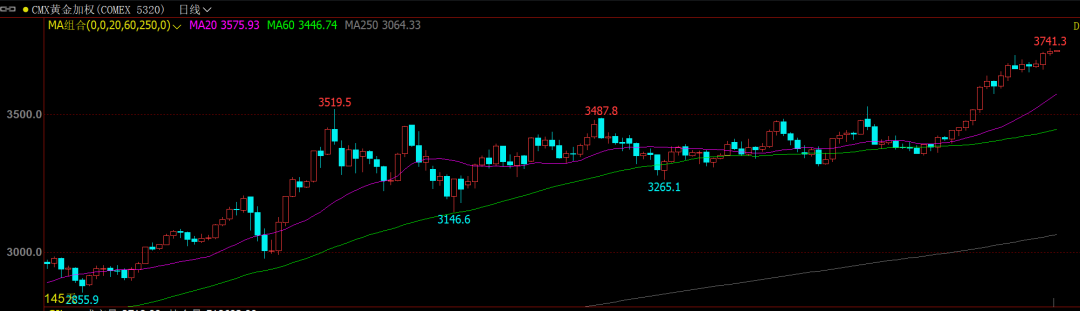
Group 1 - The current gold market is influenced by geopolitical factors and the upcoming Federal Reserve interest rate decision, leading to a bullish trend in gold prices, with significant increases observed on Monday and Tuesday [2][4] - Gold prices have recently surpassed the 3700 mark for the first time, indicating a strong upward trend, although the market is expected to experience fluctuations and pullbacks, providing opportunities for buying [2][4] - The Federal Reserve is anticipated to announce a 25 basis point rate cut, which is expected to have a substantial impact on both gold and silver markets, necessitating careful risk management [2][4] Group 2 - The trading strategy for the Asian and European sessions is to focus on buying during pullbacks, with key support levels identified at 3685 and 3675, while aiming for targets around 3710 and potentially 3750 [4][5] - The market sentiment suggests that after the Federal Reserve's decision, there may be a significant downward adjustment in gold prices, with a critical support level at 3620 to watch for potential changes in the current bullish trend [5][6] - In the silver market, a bullish outlook is maintained, with a focus on buying near the 42 support level, while caution is advised against chasing prices higher due to potential volatility [6][7] Group 3 - The oil market has shown positive momentum, with recent price increases reaching around 64.5, and further upward potential is anticipated, with key resistance levels at 66 [7] - Domestic fuel prices have also risen, with targets set at 2850 and 3000, indicating a continued bullish trend, although caution against chasing prices is advised [7]

五矿期货能源化工日报-20250917
Wu Kuang Qi Huo· 2025-09-17 01:01
1. Report Industry Investment Rating No relevant content provided. 2. Core Viewpoints of the Report - Maintain the view of overweighting crude oil as the current oil price is relatively undervalued, and the fundamental factors will support the current price. If the geopolitical premium re - emerges, the oil price will have more upside potential [2] - For methanol, expect the fundamental situation to gradually improve, and suggest paying attention to long - position opportunities at low prices and 1 - 5 positive spread opportunities [4] - For urea, due to weak demand and high inventory, the price is expected to move within a range, and it is recommended to consider long - position opportunities at low prices [6] - For rubber, maintain a long - term bullish view, and suggest waiting and seeing in the short term as it follows the trend of industrial products [11] - For PVC, due to strong supply, weak demand, and high valuation, it is recommended to consider short - position opportunities at high prices, but beware of short - covering rallies [13] - For pure benzene and styrene, it is recommended to go long on the pure benzene US - South Korea spread at low prices, and the styrene price may rebound when the inventory drawdown inflection point appears [16] - For polyethylene, expect the price to oscillate upwards in the long term, and suggest waiting and seeing in the short term [18] - For polypropylene, due to high inventory pressure and no prominent short - term contradictions, it is recommended to wait and see [19] - For PX, due to lack of upward drivers, it is recommended to wait and see in the short term and pay attention to the subsequent improvement in the terminal market [22] - For PTA, due to high unexpected maintenance and weak long - term outlook, it is recommended to wait and see [23] - For ethylene glycol, due to high supply and expected inventory build - up in the fourth quarter, it is recommended to go short at high prices, but beware of the risk of the weak expectation not being realized [24] 3. Summary by Related Catalogs Crude Oil - **Market Quotes**: INE's main crude oil futures rose 5.60 yuan/barrel, or 1.15%, to 493.60 yuan/barrel; high - sulfur fuel oil rose 8.00 yuan/ton, or 0.29%, to 2795.00 yuan/ton; low - sulfur fuel oil rose 42.00 yuan/ton, or 1.25%, to 3395.00 yuan/ton [1] - **Data**: In the weekly data of Fujeirah Port's oil products, gasoline inventory decreased by 1.94 million barrels to 6.07 million barrels, a 24.26% decrease; diesel inventory decreased by 0.18 million barrels to 1.82 million barrels, an 8.79% decrease; fuel oil inventory decreased by 0.67 million barrels to 6.32 million barrels, a 9.58% decrease; total refined oil inventory decreased by 2.79 million barrels to 14.21 million barrels, a 16.41% decrease [1] Methanol - **Market Quotes**: On September 16, the 01 contract fell 21 yuan/ton to 2375 yuan/ton, and the spot price fell 3 yuan/ton, with a basis of - 83 [4] - **Fundamentals**: The high - inventory pattern at ports remains unchanged, and the market structure is still weak, but most of the negative factors have been priced in. Supply is sufficient, and demand is expected to improve marginally. The inventory at ports has reached a new high, while the inventory of inland enterprises is relatively low [4] - **Strategy**: Consider long - position opportunities at low prices and 1 - 5 positive spread opportunities [4] Urea - **Market Quotes**: On September 16, the 01 contract rose 3 yuan/ton to 1686 yuan/ton, and the spot price rose 10 yuan/ton, with a basis of - 46 [6] - **Fundamentals**: Domestic enterprise inventory is slowly rising, and the overall inventory level is high. Agricultural demand is in the off - season, and compound fertilizer production has rebounded but is still in the seasonal decline stage. Demand is weak, and exports provide limited support [6] - **Strategy**: Consider long - position opportunities at low prices [6] Rubber - **Supply**: The expected rainfall in Thailand in the next 7 days is decreasing, reducing the positive supply factors [8] - **Market Sentiment**: Bulls believe in limited rubber production growth, seasonal price increases, and improved demand in China; bears are concerned about uncertain macro - expectations, seasonal weak demand, and less - than - expected supply benefits [9] - **Industry Conditions**: As of September 11, 2025, the operating rate of all - steel tires in Shandong increased both week - on - week and year - on - year, while the operating rate of semi - steel tires increased week - on - week but decreased year - on - year. The export expectation has declined. As of September 7, 2025, China's natural rubber social inventory decreased [10] - **Spot Prices**: Thai standard mixed rubber was at 15100 (0) yuan, STR20 was at 1865 (+10) dollars, and STR20 mixed was at 1865 (0) dollars [11] - **Strategy**: Adopt a long - term bullish view and wait and see in the short term [11] PVC - **Market Quotes**: The PVC01 contract rose 39 yuan to 4960 yuan, the spot price of Changzhou SG - 5 was 4790 (+50) yuan/ton, the basis was - 170 (+11) yuan/ton, and the 1 - 5 spread was - 301 (+2) yuan/ton [13] - **Cost**: The price of calcium carbide in Wuhai increased, the price of semi - coke remained unchanged, the price of ethylene remained unchanged, and the price of caustic soda decreased [13] - **Supply and Demand**: The overall operating rate increased, and the downstream operating rate also increased. Factory inventory decreased, while social inventory increased. Enterprises' comprehensive profits are at a high level for the year, and the valuation pressure is large [13] - **Strategy**: Consider short - position opportunities at high prices, but beware of short - covering rallies [13] Pure Benzene and Styrene - **Market Quotes**: Spot and futures prices rose, and the basis strengthened. The BZN spread is at a relatively low level for the same period, with significant upward correction potential [15][16] - **Fundamentals**: The cost - side pure benzene production is fluctuating moderately, and the supply is still abundant. The supply - side ethylbenzene dehydrogenation profit has increased, and the benzene - ethylene production has been continuously increasing. The port inventory of benzene - ethylene has been significantly decreasing, and the demand - side three - S overall operating rate is fluctuating downward [16] - **Strategy**: Go long on the pure benzene US - South Korea spread at low prices [16] Polyethylene - **Market Quotes**: The futures price rose. The market is expecting favorable policies from the Chinese Ministry of Finance in the third quarter, and cost support remains [18] - **Supply and Demand**: There are only 400,000 tons of planned production capacity left. The overall inventory is decreasing from a high level, and the demand - side agricultural film raw material procurement has started. The long - term contradiction has shifted from cost - driven price decline to South Korean ethylene clearance policy [18] - **Strategy**: Wait and see in the short term [18] Polypropylene - **Market Quotes**: The futures price rose. The supply - side still has 1.45 million tons of planned production capacity, and the pressure is high [19] - **Supply and Demand**: The demand - side downstream operating rate has rebounded from a seasonal low. The overall inventory pressure is high, and there are no prominent short - term contradictions [19] - **Strategy**: Wait and see [19] PX - **Market Quotes**: The PX11 contract rose 10 yuan to 6762 yuan, and the PX CFR price fell 2 dollars to 834 dollars. The basis was 66 yuan (- 29), and the 11 - 1 spread was 42 yuan (- 4) [21] - **Supply**: The operating rate in China and Asia has increased. Some domestic and overseas plants have increased production or restarted [21] - **Demand**: The PTA operating rate has increased, and some plants have restarted [21] - **Inventory**: The inventory decreased month - on - month at the end of July [21] - **Valuation**: The PXN is 228 dollars (- 6), and the naphtha cracking spread is 114 dollars (+6) [21] - **Strategy**: Wait and see in the short term and pay attention to the subsequent improvement in the terminal market [22] PTA - **Market Quotes**: The PTA01 contract rose 16 yuan to 4688 yuan, the East China spot price rose 10 yuan to 4610 yuan, the basis was - 80 yuan (0), and the 1 - 5 spread was - 46 yuan (- 2) [23] - **Supply**: The operating rate increased, and some plants restarted. Unexpected maintenance is still high, and the de - stocking pattern continues [23] - **Demand**: The downstream operating rate increased slightly, and the terminal draw - texturing and weaving operating rates remained unchanged [23] - **Inventory**: Social inventory decreased in early September [23] - **Valuation**: The spot processing fee and the futures processing fee both increased [23] - **Strategy**: Wait and see [23] Ethylene Glycol - **Market Quotes**: The EG01 contract fell 16 yuan to 4272 yuan, the East China spot price rose 7 yuan to 4385 yuan, the basis was 91 yuan (- 11), and the 1 - 5 spread was - 50 yuan (- 5) [24] - **Supply**: The overall operating rate increased, with the synthetic gas - based operating rate increasing significantly. Some domestic and overseas plants had production changes [24] - **Demand**: The downstream operating rate increased slightly, and the terminal draw - texturing and weaving operating rates remained unchanged [24] - **Inventory**: The port inventory increased, and the import arrival forecast is 94,000 tons [24] - **Valuation**: The profit of naphtha - based production is - 645 yuan, the profit of domestic ethylene - based production is - 792 yuan, and the profit of coal - based production is 812 yuan [24] - **Strategy**: Go short at high prices, but beware of the risk of the weak expectation not being realized [24]
黄金刷新历史高位-20250917
申银万国期货研究· 2025-09-17 00:47
Core Viewpoint - The article highlights the strong performance of the U.S. retail sales in August, which increased by 0.6% month-on-month, marking the 11th consecutive month of growth, suggesting robust consumer spending despite economic challenges. This may influence the Federal Reserve's decision on interest rate cuts [1][2][15]. Group 1: Key Economic Indicators - U.S. retail sales showed a month-on-month increase of 0.6% in August, surpassing the expected 0.2%, and a year-on-year growth of 2.1% [2][15]. - The Consumer Price Index (CPI) for August rose by 2.9% year-on-year, while the core inflation rate was at 3.1% [2][15]. - The Producer Price Index (PPI) unexpectedly decreased by 0.1% month-on-month, with a year-on-year increase of 2.6%, which was below the market expectation of 3.3% [2][15]. Group 2: Commodity Insights - Gold prices are expected to remain strong due to the anticipation of multiple interest rate cuts by the Federal Reserve, with a neutral expectation of three cuts within the year [2][16]. - Copper prices are likely to fluctuate within a range due to mixed factors, including tight supply and varying demand from sectors like electricity and automotive [3][17]. - Oil prices increased by 1.56% as OPEC+ countries decided to adjust their production levels, indicating a stable outlook for global economic growth [3][10]. Group 3: Policy and Regulatory Developments - The Chinese government, through the Ministry of Commerce and other departments, announced measures to expand service consumption, including optimizing student holiday arrangements and enhancing service supply [1][4]. - The ongoing trade negotiations between the U.S. and China are expected to influence market conditions, particularly regarding tariffs and inflation [2][15]. Group 4: Market Performance - The U.S. stock market showed volatility, with major indices experiencing fluctuations, indicating a period of consolidation after a prolonged uptrend [8][9]. - The bond market saw a decrease in yields, with the 10-year Treasury yield falling to 1.784%, reflecting increased expectations for interest rate cuts [9]. Group 5: Industry-Specific Developments - The real estate sector in China is facing challenges, with the launch of a direct sales platform by the China Real Estate Association aimed at improving market efficiency [6]. - The agricultural sector is experiencing mixed signals, with soybean planting area adjustments and expectations for supply improvements affecting market dynamics [20][24].

再创纪录,黄金突破3700美元/盎司!美联储降息25个基点的概率高达96.1%!原油迎来修复性行情
Qi Huo Ri Bao· 2025-09-16 23:56
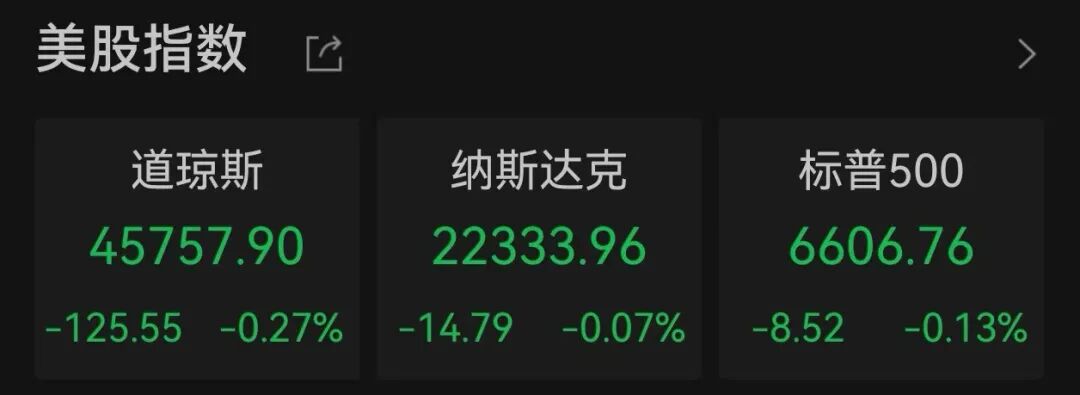
周二,美国三大股指在震荡交投中收低,投资者在美联储公布利率决议前保持谨慎。 截至收盘,道指跌125.18点,跌幅为0.27%,报45758.27点;纳指跌14.79点,跌幅为0.07%,报22333.96点;标普500指数跌8.49点,跌幅为0.13%,报 6606.79点。 热门中概股多数上涨,纳斯达克中国金龙指数收涨1.76%。蔚来涨超8%,百度涨超7%,京东、爱奇艺涨超3%,阿里巴巴涨超2%。 据CME"美联储观察":美联储本周降息25个基点的概率为96.1%,降息50个基点的概率为3.9%。美联储10月累计降息25个基点的概率为20.1%,累计降息 50个基点的概率为76.8%,累计降息75个基点的概率为3.1%。 泽连斯基:愿与特朗普和普京会面 但不去莫斯科 截至收盘,纽约商品交易所10月交货的轻质原油期货价格上涨1.22美元,收于64.52美元/桶,涨幅为1.93%;11月交货的伦敦布伦特原油期货价格上涨1.03 美元,收于68.47美元/桶,涨幅为1.53%。 COMEX黄金期货涨0.31%,报3730.50美元/盎司,盘中涨至3739.90美元/盎司,创历史新高。COMEX白银期货跌0.13% ...


中国资产重要指数,创阶段新高
Zhong Guo Zheng Quan Bao· 2025-09-16 23:53
美联储9月利率决议公布在即,美股小幅震荡,等待可能的降息落地。当地时间9月16日,美股三大股指小幅下跌;热门中概股多数上涨,纳斯达克中国金 龙指数大涨1.76%,续创阶段新高。 当前市场认为,美联储本月降息或已"板上钉钉",因此伴随着最新利率决议一同公布的"点阵图"更加值得关注。机构研判,2025年全年降息次数的指引将 在2次和3次之间。 大宗商品方面,隔夜伦敦金现货价格盘中首次突破每盎司3700美元关口。机构认为,当下黄金阶段性具备适中的风险回报比与战术性配置价值。 最新非农就业数据大幅下修叠加通胀数据整体保持稳定,市场研判美联储9月降息或"板上钉钉",因此相较于是否降息,即将公布的"点阵图"是当下市场 关注的重中之重。 德邦证券研判,"点阵图"会否按照全年降息3次来排列存在未知数。如果美联储过于"鸽派",会给独立性带来伤害,进而冲击美元信用;如果美联储对后 续降息展望弱于预期,当前市场运行的降息交易主线将受到显著冲击,市场波动将明显放大。 东吴证券认为,往后看,由于美联储理事斯蒂芬·米兰将参加本次议息会议,因此2025年全年降息次数的指引将在2次和3次之间。此外,由于明年3月所有 地方联储主席都将经过美联 ...
美股异动 | 原油板块走高 西方石油(OXY.US)涨超3.6%
智通财经网· 2025-09-16 15:41
Core Viewpoint - The oil sector experienced a rise on Tuesday, with several major companies showing significant stock price increases [1] Company Performance - Houston Energy (HUSA.US) rose over 1.8% [1] - ExxonMobil (XOM.US) increased by more than 1.7% [1] - Total (TTE.US) saw a slight increase of 0.17% [1] - Occidental Petroleum (OXY.US) surged over 3.6% [1] - ConocoPhillips (COP.US) climbed more than 2.3% [1] - Schlumberger (SLB.US) experienced a modest rise of 0.37% [1] - Marathon Oil (MRO.US) increased by over 2.4% [1]
