
债券

Search documents
十五五规划建议全文发布,资金面整体均衡平稳,债市震荡偏弱,10年期国债收益率小幅上行
Dong Fang Jin Cheng· 2025-11-02 03:04
1. Report Industry Investment Rating - No relevant content provided 2. Core Viewpoints - On October 28, the central bank increased net open - market injections, improving the capital situation to an overall balanced and stable state. After the positive news of the central bank's bond - buying restart was realized, the bond market was generally weak with a slight upward movement in the 10 - year treasury bond yield. The convertible bond market declined following the stock market, and most individual bonds fell. Overseas, yields of US Treasury bonds across various tenors generally decreased, while the 10 - year treasury bond yields of major European economies remained unchanged from the previous day [1] 3. Summary by Sections 3.1 Bond Market News 3.1.1 Domestic News - The full text of the "Proposal of the Central Committee of the Communist Party of China on Formulating the 15th Five - Year Plan for National Economic and Social Development" was released on October 28, setting major goals for economic and social development during the "15th Five - Year Plan" period, such as maintaining economic growth within a reasonable range, promoting the development of strategic emerging industries, and achieving breakthroughs in key core technologies in key areas. It also proposed measures for fiscal and monetary policies [3] - The "15th Five - Year Plan" proposal emphasizes the role of active fiscal policies, enhancing fiscal sustainability, and promoting a more domestic - demand - led and consumption - driven economic development model [5] - China and ASEAN signed the 3.0 - version upgrade protocol of the free - trade area on October 28, expanding cooperation in emerging fields and promoting regional trade facilitation [7] 3.1.2 International News - ADP will start releasing weekly preliminary estimates of private - sector employment data on a weekly basis, providing a four - week moving average of private - sector employment changes. The existing monthly report will still be released as usual [8][9] 3.1.3 Commodities - On October 28, international crude oil futures prices continued to fall, with WTI December crude futures down 1.89% and Brent December crude futures down 1.86%. COMEX gold futures fell 1.25%, and NYMEX natural gas prices dropped 4.30% [10] 3.2 Capital Situation 3.2.1 Open - Market Operations - On October 28, the central bank conducted 475.3 billion yuan of 7 - day reverse repurchase operations, with an operating rate of 1.40%. With 159.5 billion yuan of reverse repurchases maturing on the same day, the net injection was 315.8 billion yuan [12] 3.2.2 Capital Interest Rates - On October 28, the central bank's increased net open - market injections improved the capital situation. DR001 rose 1.58bp to 1.469%, and DR007 fell 2.38bp to 1.558% [13] 3.3 Bond Market Dynamics 3.3.1 Interest - Rate Bonds - After the news of the central bank's bond - buying restart was confirmed on October 28, the bond market was generally weak. The yield of the 10 - year treasury bond active bond 250016 rose 1.80bp to 1.813%, and the yield of the 10 - year CDB active bond 250215 rose 1.75bp to 1.8805% [16] - There were several bond - issuing tenders on October 28, with details such as issuance scale, winning bid yields, and multiples provided [18] 3.3.2 Credit Bonds - On October 28, the trading price of "H0 Baolong 04" deviated by over 10%, rising over 37% [18] - Credit - related events include the suspension of trading of 6 corporate bonds of Rongxin Group, the ineffective convening of the "20 Xingfu 01" bondholder meeting of Huaxia Holdings, and the disclosure of overdue debts of Sunshine City [19] 3.3.3 Convertible Bonds - On October 28, the A - share market declined, with the Shanghai Composite Index, Shenzhen Component Index, and ChiNext Index down 0.22%, 0.44%, and 0.15% respectively. The convertible bond market also declined, with the CSI Convertible Bond, Shanghai Convertible Bond, and Shenzhen Convertible Bond indices down 0.24%, 0.30%, and 0.16% respectively [20] - There were rating - related events such as the withdrawal of Jiangsu Zhongxing's "BBB+" international long - term issuer rating and financial - strength rating events of other companies. Some companies also announced losses, overdue reports, and other events [22] - Upcoming events include the listing of Funeng Convertible Bonds, the possible trigger of the conversion - price downward - adjustment condition for Juxing Convertible Bonds, and announcements regarding early redemption of some convertible bonds [28] 3.3.4 Overseas Bond Markets - On October 28, except for the 3 - year US Treasury bond yield remaining unchanged, yields of US Treasury bonds across other tenors generally decreased. The 2 - year yield dropped 1bp to 3.47%, and the 10 - year yield dropped 2bp to 3.99% [24] - The 10 - year treasury bond yields of major European economies remained unchanged on October 28 [27] - The daily price changes of Chinese - funded US - dollar bonds as of the close on October 28 are presented, including the top 10 daily gainers and losers [30]
基金研究周报:高位科技股向低位成长股切换,北证50涨超7%(10.27-10.31)
Wind万得· 2025-11-01 22:17
Market Overview - The A-share market exhibited a structurally differentiated pattern last week (October 27 to October 31), with broad indices showing stability but significant variance in sector performance. The Shanghai Composite Index closed at 3954.79 points, up 0.11% for the week, while the Shenzhen Component Index and ChiNext Index rose by 0.67% and 0.50%, respectively. High-valued tech stocks faced notable corrections, with the STAR 50 Index dropping 3.19%, indicating increased risk aversion towards overvalued tech sectors. In contrast, mid and small-cap indices like the CSI 500 and CSI 1000 performed strongly, gaining 1.00% and 1.18%, respectively, while the Northern Stock Exchange 50 surged by 7.52%, reflecting a shift in funds from high-valued tech stocks to lower-valued growth stocks [2][4]. Sector Performance - The average weekly gain for Wind's primary sectors was 0.31%, with materials, industrials, and healthcare leading the performance. Conversely, financials, information technology, and real estate faced significant pressure. Following the release of Q3 reports, the market may return to focusing on earnings, with some high-valuation sectors under adjustment pressure [2][13]. Fund Issuance - A total of 53 funds were issued last week, including 23 equity funds, 15 mixed funds, 9 bond funds, 1 QDII fund, and 5 FOF funds, with a total issuance volume of 45.509 billion units [2][17]. Fund Performance - The Wind All Fund Index rose by 0.16% last week. The ordinary equity fund index increased by 0.30%, while the mixed fund index saw a slight rise of 0.06%. The bond fund index also gained 0.25% [2][8]. Global Market Insights - In the global asset class review, Japanese and Korean stock markets saw significant gains, with the Nikkei 225 soaring by 6.31% and the Korean Composite Index rising by 4.21%. In contrast, the Hang Seng Index fell by 0.97%, and European markets faced pressure, with the French CAC40 and German DAX declining by 1.27% and 1.16%, respectively. Commodity markets showed mixed results, with iron ore and coking coal prices rising by 3.69% and 2.76%, while crude oil and industrial metals generally declined [4][5].


中国绿色债券市场发展质量评价白皮书(2025)
Xin Hua Cai Jing· 2025-10-31 22:21
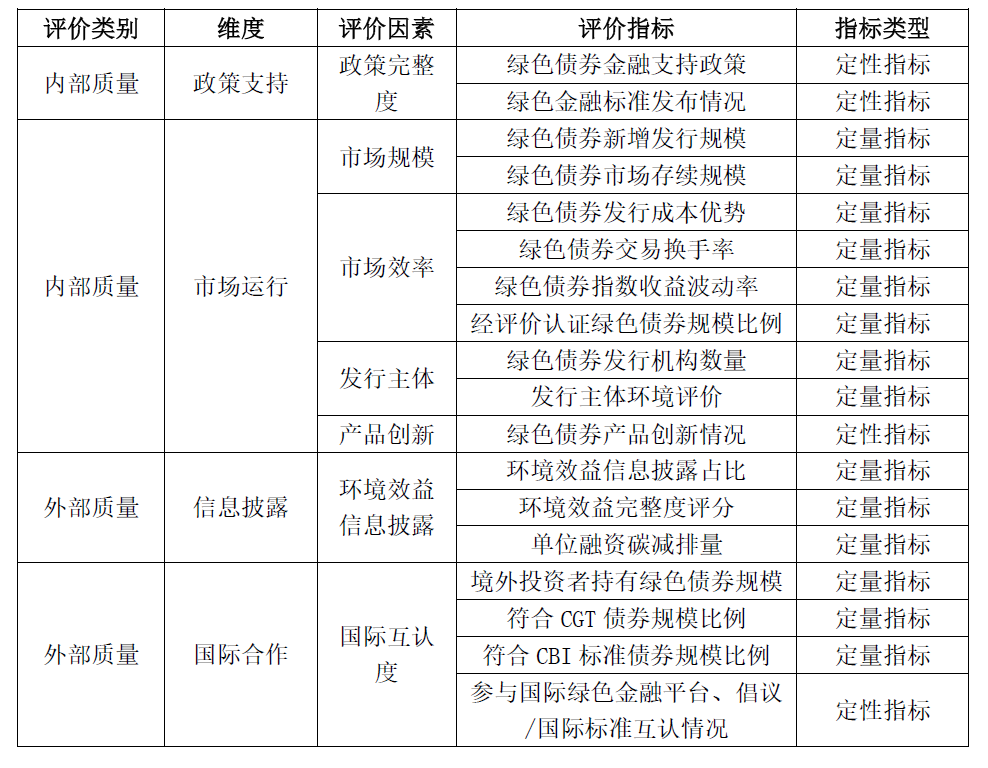
Core Viewpoint - The development focus of China's green bond market is shifting from "quantity" to "quality," emphasizing the need for a quality evaluation system to enhance the effectiveness of green finance and support the transition to a low-carbon economy [1][2]. Group 1: Market Development and Quality Evaluation - The green bond market in China is transitioning from scale expansion to quality enhancement, focusing on whether raised funds effectively support key industries' green development [3]. - A systematic and multidimensional evaluation of the green bond market's development quality is essential to guide funds towards low-carbon transitions and ecological improvements [3][4]. - The establishment of a scientific quality evaluation framework is crucial for identifying achievements and challenges in the green bond market, promoting high standards in its development [4]. Group 2: Policy and Regulatory Framework - The implementation of the "High-Quality Development Implementation Plan for Green Finance in the Banking and Insurance Sectors" in early 2025 sets new requirements for the standardized development of green bond business [4]. - Continuous improvement of green bond support policies and standards since 2015 has laid a solid foundation for the market's growth, with significant milestones in policy development noted in 2016, 2021, and 2024 [14]. Group 3: Market Efficiency and Transparency - From 2016 to 2024, the issuance scale of green bonds in China increased from 201.8 billion to 683.3 billion, with an average annual growth rate of 16.5% [18]. - The market's operational efficiency is improving, with the number of green bond issuers rising from 35 to 249 during the same period, reflecting a diverse market participant landscape [18]. - Information disclosure regarding environmental benefits has improved, with the average completeness score for environmental benefit disclosures rising from 50% to 67% between 2021 and 2024 [20]. Group 4: International Cooperation and Influence - The international influence of China's green bond market is growing, with foreign holdings of green bonds increasing from 0.2 billion to 3.188 billion from 2016 to 2024, reflecting a 40% annual growth rate [21]. - Participation in international green finance platforms and initiatives has been enhanced, with significant developments in international cooperation noted since 2016 [21][27]. Group 5: Future Development Recommendations - Recommendations include improving the sustainable bond standard system, enhancing information disclosure standards, and encouraging diverse market ecosystems to support the growth of green bonds [22][23]. - The establishment of a unified green bond database for environmental benefit disclosures is suggested to enhance the standardization of information [26].
10-year Treasury yield holds above 4%
Youtube· 2025-10-31 19:22
Group 1 - The bond market is asserting its influence over interest rates, indicating a preference for higher rates despite the Federal Reserve's actions [1][2] - The current administration is focusing on stimulating the housing market, which is not responding positively, highlighting a disconnect between policy intentions and market realities [2] - Recent data shows that both 2-year and 10-year Treasury yields have increased, with a notable rise of 10 basis points this week [3] Group 2 - The dollar index has risen significantly, moving from close to 97 towards 100, reflecting the limitations of the Federal Reserve's ability to influence the market without resorting to quantitative easing [4] - The Federal Reserve's balance sheet has decreased from $9 trillion to $6.6 trillion, indicating progress but still remaining above pre-crisis levels [5]

Treasury Is About to Reveal Its Borrowing Plans. Why That's Important.
Barrons· 2025-10-31 16:49
Group 1 - The Treasury's plans are generally less scrutinized compared to Federal Reserve announcements, but they hold significant implications for bond markets and other asset prices [1]

人民银行:9月债券市场共发行各类债券81027.8亿元
Bei Jing Shang Bao· 2025-10-31 13:57
Core Insights - The People's Bank of China reported on the financial market operations for September 2025, highlighting significant bond issuance and market balances [1] Bond Market Issuance - In September 2025, the total bond issuance reached 81,027.8 billion yuan, with government bonds accounting for 14,904.9 billion yuan, local government bonds at 8,519.1 billion yuan, financial bonds at 11,741.0 billion yuan, corporate credit bonds at 13,407.3 billion yuan, credit asset-backed securities at 365.7 billion yuan, and interbank certificates of deposit at 31,627.8 billion yuan [1] Bond Market Custody Balances - As of the end of September, the total custody balance of the bond market was 193.1 trillion yuan, with the interbank market holding 170.5 trillion yuan and the exchange market holding 22.6 trillion yuan [1] - By bond type, the custody balances included 39.2 trillion yuan in government bonds, 53.5 trillion yuan in local government bonds, 44.1 trillion yuan in financial bonds, 34.2 trillion yuan in corporate credit bonds, 1.0 trillion yuan in credit asset-backed securities, and 20.0 trillion yuan in interbank certificates of deposit [1] - Additionally, the custody balance of commercial bank counter bonds was 2,335.9 billion yuan [1]
中央结算公司发布《长三角绿色债券发展报告》
Zheng Quan Ri Bao Wang· 2025-10-31 12:06
Core Insights - The Central Securities Depository Company announced the release of the "Yangtze River Delta Green Bond Development Report (2025)" at the Sustainable Finance Development Forum on October 30, 2025 [1] - This marks the third consecutive year the company has published this report, which analyzes the green bond market in the Yangtze River Delta region for the year 2024 [1] Market Analysis - The report consists of four chapters and three case studies, examining market size, variety structure, industry distribution, and term structure of green bonds [1] - It continues to utilize the China Bond Green Bond Environmental Benefit Information Disclosure Index System to systematically review the environmental benefit information disclosure of green bonds in the Yangtze River Delta [1] Data and Trends - The report enhances data completeness and dynamism by providing comparative analysis and trend assessments of the changes in the green bond market over the past three years [1] - It serves as an important reference for long-term tracking and evaluation of the regional green bond market [1] Recommendations - Suggestions are provided in the report regarding policy incentives, standard construction, and international cooperation [1]
流动性跟踪与地方债策略专题:基金地方债投资关键词
Minsheng Securities· 2025-10-31 07:55
Group 1 - The overall liquidity in the third quarter remained loose, with a significant strengthening in equities, leading to an increase in market risk appetite. However, the bond market showed weak performance due to the impact of new fund sales fee regulations and the introduction of the ticket interest value-added tax policy on August 8, which resulted in a higher implied tax rate for newly issued local government bonds [3][12] - In the third quarter of 2025, funds increased their holdings in local bonds with maturities of 1 year or less and 3-5 years, focusing on short-duration high-coupon old bonds and benefiting from a relatively steep yield curve [4][21] - The top 10 holdings of local bonds by funds were primarily general bonds, mainly from Jiangsu and Anhui, with remaining maturities mostly within 1 year [4][33] Group 2 - As of the end of October, the cumulative issuance of replacement bonds reached 19,910 billion, with a progress rate of 99.55%. The cumulative issuance of new general bonds was 6,900 billion, with a progress rate of 86.25%, and the cumulative issuance of new special bonds was 39,646 billion, with a progress rate of 90.10% [5][36] - The supply of local bonds increased in late October, improving secondary market transaction conditions, with insurance companies showing a daily net purchase of around 60 billion [6][37] - The planned issuance scale for November is 7,284 billion, significantly increased from the previous week's estimate of 3,438 billion, indicating a shift in local bond issuance strategies [5][38]
周四(10月30日)纽约尾盘,美国10年期国债收益率涨1.35个基点,报4.0892%,全天呈现出三波V形走势。两年期美债收益
Sou Hu Cai Jing· 2025-10-30 20:17
Core Viewpoint - The U.S. Treasury yields experienced an upward trend on October 30, with notable increases in both 10-year and 2-year yields, indicating market reactions to economic conditions and potential inflation concerns [1] Group 1: Treasury Yields - The 10-year Treasury yield rose by 1.35 basis points, reaching 4.0892%, showing a V-shaped movement throughout the day [1] - The 2-year Treasury yield increased by 1.02 basis points, settling at 3.6082% [1] - The yield spread between the 2-year and 10-year Treasuries widened by 0.146 basis points, now at +47.713 basis points [1] Group 2: TIPS Yields - The 10-year Treasury Inflation-Protected Securities (TIPS) yield increased by 1.84 basis points, reaching 1.7921% [1] - The 2-year TIPS yield rose by 3.12 basis points, now at 0.9982% [1] - The 30-year TIPS yield saw an increase of 2.51 basis points, reaching 2.4213% [1]
英债收益率多数涨超2个基点
Sou Hu Cai Jing· 2025-10-30 17:25
Core Insights - The UK 10-year government bond yield increased by 2.9 basis points to 4.421% following the Federal Reserve's announcement of a 25 basis point rate cut and the end of quantitative tightening (QT) starting December 1 [1] - The 2-year UK bond yield rose by 2.8 basis points to 3.794% [1] - The 30-year UK bond yield increased by 1.6 basis points to 5.179% [1] - The 50-year UK bond yield saw a rise of 2.3 basis points, reaching 4.644% [1] - The yield spread between the 2-year and 10-year UK bonds widened by 0.077 basis points to +62.568 basis points [1]