
制造业

Search documents
张军扩:扩内需的三点思考
Xin Lang Cai Jing· 2025-12-27 14:33
Core Viewpoint - The demand issue has become the most decisive factor affecting the sustained and stable growth of China's economy, with expanding domestic demand ranking first in economic work for two consecutive years [2][3]. Group 1: Demand Issues - The main contradiction in China's economic operation has gradually shifted from the supply side to the demand side, indicating that resolving demand issues is crucial for achieving stable and sustainable economic growth [3]. - Despite various external shocks, China's economy has shown resilience, with major macroeconomic indicators remaining stable, laying a good foundation for achieving the annual growth target of around 5% [2][3]. Group 2: Consumption Demand - The insufficient consumption demand in China is attributed to both short-term market fluctuations and deeper structural issues, necessitating both immediate stimulus policies and long-term solutions [4]. - Structural reasons for low consumption rates include a long-term low consumption rate among residents, estimated to be 10-20% below the international average, indicating significant potential for expanding domestic demand [5][6]. Group 3: Investment Demand - Investment demand remains significant and should be supported through institutional and policy innovations, emphasizing that effective investment is still crucial for economic growth [8]. - The "14th Five-Year Plan" suggests that effective investment should focus on new urban construction models and enhancing rural infrastructure, with a notable emphasis on revitalizing idle rural land and improving the investment environment for private and foreign investments [8].

再进两位!宝安跃居2025中国工业百强区第二名
Nan Fang Du Shi Bao· 2025-12-27 13:36
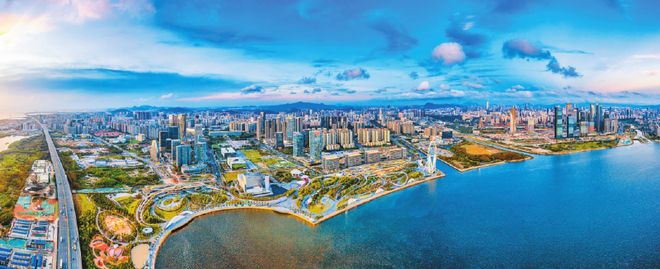
Core Viewpoint - The 2025 China Industrial Top 100 Districts list was released, with Bao'an District in Shenzhen ranking second nationally, reflecting its strong industrial strength and innovation capabilities, and solidifying its role as a leader in China's industrial economy [1]. Group 1: Industrial Strength - Bao'an District has a comprehensive industrial system with nearly 560,000 enterprises, covering all 31 categories of manufacturing as per national statistics, forming a complete industrial ecosystem [3]. - The number of manufacturing enterprises in Bao'an reaches 59,000, accounting for over one-third of Shenzhen's total, while large-scale industrial enterprises number nearly 5,600, representing 40% of the city's total [3]. Group 2: Policy Support and Innovation - Since 2019, Bao'an District has consistently supported high-quality development of the manufacturing sector through its "No. 1 Document," embedding the concept of "manufacturing as the mainstay" into the region's development [5]. - The number of national high-tech enterprises in Bao'an has reached 7,397, maintaining the top position among county-level districts in China for eight consecutive years, showcasing its innovation vitality [5]. Group 3: Emerging Industries and Competitive Edge - Bao'an has strategically positioned itself in emerging and future industries, particularly in the intelligent robotics sector, where it houses nearly 35% of Shenzhen's related enterprises, leading in both output and enterprise count [7]. - The district has cultivated over 380 "specialized, refined, distinctive, and innovative" small giant enterprises, securing the top spot nationally among county-level districts [7]. Group 4: Transition to Advanced Manufacturing - Bao'an is transitioning from an "industrial district" to a "strong industrial district," moving from traditional manufacturing to intelligent manufacturing, supported by a robust manufacturing base and active technological innovation [9].
工信部部署2026年重点工作,这些领域将迎利好
Xin Lang Cai Jing· 2025-12-27 12:40
Core Viewpoint - The national industrial and information technology conference emphasized the need to consolidate the positive momentum of the industrial economy as the primary task for 2026, focusing on ten key areas of work, including increasing the supply of green products, trendy products, and products for the elderly, while promoting the "Artificial Intelligence + Manufacturing" initiative [1][3][16]. Group 1: Industrial Economy - The conference highlighted the shift from "promoting stable growth" to "consolidating a positive momentum" in the industrial economy, indicating a focus on quality improvement rather than just stability [3][19]. - It was noted that the industrial economy has shown resilience and vitality, with expected growth rates of 9% for telecommunications business volume and 12% for software business revenue [3][19]. - The emphasis on "consolidation" suggests a long-term strategy to enhance quality and efficiency, moving away from temporary stimulus measures [20]. Group 2: Supply and Demand - The conference plans to increase the supply of green products, trendy products, and products for the elderly, responding to market demand trends [5][20]. - The focus on domestic demand as a priority reflects a policy shift towards building a strong domestic market [5][20]. Group 3: Traditional and Emerging Industries - The conference outlined plans to enhance traditional industries through "intelligent empowerment" and to develop emerging industries such as integrated circuits, new displays, new materials, aerospace, low-altitude economy, and biomedicine [6][9][24]. - The transition from "digital empowerment" to "intelligent empowerment" indicates a deeper integration of intelligent technologies to drive efficiency and innovation in traditional industries [22]. Group 4: Artificial Intelligence and Manufacturing - The "Artificial Intelligence +" initiative is a key focus, aiming to promote the digital transformation of manufacturing and cultivate key industry intelligent entities and original intelligent enterprises [21][24]. - The conference aims to support new-generation intelligent manufacturing systems and enhance the industrial internet platform ecosystem [21][24]. Group 5: Quality Enterprises and Innovation - The conference emphasized the cultivation of high-quality enterprises, including "little giant" enterprises and manufacturing champions, while addressing issues like overdue payments to businesses [28][29]. - It was reported that by 2025, over 60,000 technology and innovation-oriented SMEs and 50,400 high-tech enterprises are expected to be cultivated [28]. Group 6: Low-altitude Economy and Communication - The conference highlighted the importance of the low-altitude economy, with plans to establish frequency development guidelines to support its growth [29][15]. - The integration of 5G technology into various sectors is expected to enhance the service capabilities of the information and communication industry [28][29].

何建华专栏:工业化与城市化“双轮驱动”的国家奇迹
Xin Lang Cai Jing· 2025-12-27 12:30
Core Viewpoint - The rapid industrialization and urbanization in China since the establishment of the People's Republic and the reform and opening-up policy have created remarkable economic growth and social stability, positioning China as a modern nation with a successful transition from an agrarian society to an industrialized and urbanized one [1][2][15]. Group 1: Industrialization and Urbanization - China's industrialization and urbanization have progressed simultaneously, achieving a scale and speed unprecedented in human history, with urbanization rates increasing significantly from 1949 to 2024 [2][3]. - The urban population in China grew from approximately 5.765 million in 1949 to 943.5 million by the end of 2024, marking an increase of over 88 million people, which is nearly double the total population of the EU [3]. - The urbanization rate increased by 56 percentage points from 1949 to 2024, and by 49.08 percentage points from 1978 to 2024, significantly faster than many developed countries [3]. Group 2: Stages of Urbanization - The urbanization process in China has undergone three stages: individual city development, metropolitan area collaboration, and high-quality integrated development facilitated by high-speed rail and the internet [4]. - The current urbanization phase is characterized by rapid expansion of mega-cities, leading to challenges such as "big city diseases" [4]. Group 3: Global Context and Sustainable Development - The United Nations' 2030 Agenda for Sustainable Development emphasizes inclusive, safe, resilient, and sustainable cities, with cities contributing over 80% of global GDP [5]. - As a rapidly industrializing and urbanizing nation, China's advancements in urban development can serve as a model for global civilization progress [5][15]. Group 4: Cultural Dynamics in Urban Development - Urban culture is shaped by the interaction between individuals and the physical structure of cities, influencing how people experience and contribute to urban life [6]. - The cultural dynamics of cities involve consumption patterns, creative classes, and urban scenes that drive innovation and transformation [10]. Group 5: Future Directions and Challenges - The transition towards a knowledge-based society necessitates a shift in urban development strategies, focusing on creative industries rather than traditional manufacturing [9]. - The integration of urban and rural areas is essential for sustainable development, with a focus on enhancing the quality of life and ecological balance [13][14].
美国圣诞暴露致命裂痕,消费数据暴涨,底层濒临绝境
Sou Hu Cai Jing· 2025-12-27 12:16
Group 1 - The holiday retail sales in the U.S. are projected to grow by 3.7%-4.2% during November-December 2025, with online sales on Black Friday increasing by 10.4% [1][3] - High-income households are driving holiday spending due to stock appreciation and real estate gains, while middle and low-income families are tightening their budgets [3][6] - The average price of popular holiday gifts has risen by 26%, significantly outpacing the overall inflation rate of 2.7% in July, leading to 40% of consumers buying fewer gifts [6][8] Group 2 - The poverty rate in New York City has surged to 25%, more than double the national supplemental poverty rate of 12%, highlighting the economic divide [8][10] - Tax and welfare policies under the Trump administration have disproportionately benefited the wealthy, with the top 1% receiving $975 billion in tax cuts [10][12] - The U.S. economy has shifted towards financial and entertainment sectors, leaving ordinary workers in low-paying jobs, exacerbating income inequality [12][14] Group 3 - Market concentration has increased, with 75% of industries becoming more concentrated since the 1990s, negatively impacting small businesses [14][16] - The disparity in holiday experiences reflects a K-shaped economic recovery, where the wealthy enjoy luxury while lower-income individuals struggle for basic needs [16]

2025年11月工业企业盈利数据点评:盈利承压,分化加剧
EBSCN· 2025-12-27 12:07
Profit Trends - In November 2025, industrial enterprise profits fell by 13.1% year-on-year, worsening from a decline of 5.5% in October 2025[4] - Cumulative profit growth for industrial enterprises from January to November 2025 was 0.1%, down from 1.9% for the first ten months[2] - Cumulative revenue growth for industrial enterprises from January to November 2025 was 1.6%, slightly down from 1.8% for the first ten months[2] Structural Analysis - Only the midstream equipment manufacturing sector showed stable profit growth, while upstream and downstream sectors experienced varying degrees of decline[3] - Cumulative profit growth for the mining sector from January to November 2025 was -27.2%, while manufacturing sector profit growth dropped to 5.0%[13] - The cumulative profit margin for the manufacturing sector was 4.62%, an increase of 0.08 percentage points compared to the previous year[13] Market Dynamics - The profit margin for industrial enterprises in November 2025 was 5.65%, a decrease of 0.73 percentage points year-on-year[5] - The cost per 100 yuan of revenue for large industrial enterprises increased by 0.18 yuan from January to November 2025[5] - The PPI (Producer Price Index) year-on-year growth rate in November 2025 was -2.2%, slightly down from -2.1% in October 2025[5] Future Outlook - Industrial profits are expected to remain under pressure in December 2025 due to high year-on-year comparisons[3] - The implementation of new policies in 2026 is anticipated to stimulate demand and support profit recovery for enterprises[29] - The midstream sector is projected to continue its positive profit trend, benefiting from "anti-involution" policies[3]
1-11 月工业企业利润点评:当出口链回暖遭遇利润率回落
Changjiang Securities· 2025-12-27 12:04
Group 1: Profit Trends - In November, the profit growth rate of industrial enterprises fell to -13.1% year-on-year, marking the weakest level since September 2024[5] - Revenue growth for the same month showed a slight improvement, decreasing by only -0.3% year-on-year[5] - The decline in profit growth is primarily attributed to a significant drop in profit margins, despite a recovery in volume growth[6] Group 2: Export and Industry Performance - While profits in export-related industries showed improvement, they did not offset the overall decline in profits across sectors[6] - The mining industry experienced a profit decline of -21.2%, while the manufacturing sector's profit growth rate fell to -13.5%[6] - The recovery in exports, particularly in electronics, automotive, and pharmaceuticals, contributed to a 5.9% year-on-year increase in exports, boosting overall profits by 4.98 percentage points[6] Group 3: Inventory and Operational Pressure - By the end of November, the nominal year-on-year growth rate of finished goods inventory rose to 4.6%, indicating a passive accumulation of inventory due to weak demand[6] - The turnover days for finished goods increased to 20.5 days, reflecting worsening operational pressures on enterprises[6] - The overall business pressure is expected to continue accumulating, with potential implications for the employment market[6] Group 4: Future Outlook - There is a significant possibility that policy measures will be implemented in early 2026 to stimulate growth and stabilize profits amid weakening external demand[6] - The upcoming national development and reform meeting emphasizes the need for proactive policy measures to ensure a strong start in 2026[6]
明确10项重点工作!2026年工信系统这样干
Xin Lang Cai Jing· 2025-12-27 11:31
Group 1 - The core viewpoint emphasizes the importance of stabilizing the industrial economy to ensure overall economic stability and growth [2] - The implementation of a new round of ten key industry growth plans is highlighted, focusing on supporting major industrial provinces and enhancing the quality and quantity of industrial output [4] - The need to maintain steady development in the tobacco industry is mentioned, along with increasing the supply of green products and products for the elderly [4] Group 2 - Efforts to stabilize effective investment in manufacturing are outlined, including the use of long-term special government bonds and technology innovation loans [6] - The focus on enhancing the resilience and safety of industrial chains is emphasized, with a call for internal strengthening and self-reliance [7] - The implementation of a new round of high-quality development actions for key industrial chains is discussed, targeting major technological equipment and resource optimization [8] Group 3 - The importance of re-establishing industrial foundations through innovation and application plans for key products and processes is stressed [9] - Strengthening core technology research and development through national science and technology projects is highlighted [10] - The promotion of high-quality development in the technology service industry is mentioned [12] Group 4 - The need to optimize and upgrade traditional industries is emphasized, aiming to rejuvenate them as the backbone of the modern industrial system [15] - Support for new industrialization demonstration zones and advanced manufacturing clusters is outlined [16] - The implementation of actions for upgrading traditional industries and promoting technological transformation is discussed [17] Group 5 - The focus on enhancing quality and brand building in manufacturing is highlighted, including the promotion of personalized and shared manufacturing models [20][21] - The importance of fostering emerging and future industries is emphasized, with a focus on new technologies and products [22][23] - The development of new infrastructure for information and communication industries is discussed, including the enhancement of network and data security [38][39] Group 6 - The cultivation of quality enterprises is emphasized, with actions to support small and medium-sized enterprises and reduce their financial burdens [46][48] - The need for improved industry governance and the establishment of a modern governance framework is highlighted [51][56] - The promotion of collaborative innovation and the establishment of a robust policy and regulatory framework is discussed [57]

“斩杀线”下的美国:年薪百万的中产,也怕一次意外
创业邦· 2025-12-27 10:33
Core Viewpoint - The concept of "killing line" has emerged in discussions about the precarious financial situation of many Americans, particularly the middle class, who face severe economic pressures that can lead to financial ruin and homelessness [5][8][30]. Group 1: Economic Conditions - The poverty line for a family of four in the U.S. is set at an annual income of $32,150, but a more realistic figure to maintain basic living standards is approximately $136,500, or about 960,000 RMB [11][12]. - A quarter of American households are living paycheck to paycheck, spending nearly all their income on essential expenses [14]. - 37% of Americans cannot cover an unexpected expense of $400, indicating widespread financial vulnerability [15]. Group 2: Homelessness Crisis - The total number of homeless individuals in the U.S. surged by 18% in 2024 compared to the previous year [19]. - Young people under 25 accounted for 27% of the homeless population, with their numbers increasing by 29% [20]. - The number of homeless children rose by 33%, with at least 148,000 minors living in shelters or on the streets [21]. Group 3: K-shaped Economic Recovery - The U.S. economy is experiencing a "K-shaped" recovery, where the wealthy benefit disproportionately from economic growth, primarily driven by technology and capital returns, while the lower-income groups face stagnation [30][33]. - The contribution of AI-related investments to GDP growth reached 1.57 percentage points in the first half of 2025, surpassing that of private consumption [31]. - The manufacturing sector's value added fell below 10% for the first time in 2024, highlighting a shift away from traditional economic drivers [32]. Group 4: Structural Issues - The labor market is characterized by a "double weakness" in supply and demand, with rising unemployment and job instability for low-income workers due to technological advancements [35]. - The average commercial electricity price in the U.S. has increased by about 30% since 2019, contributing to higher living costs for families [36]. - Economic policies have disproportionately benefited the wealthiest, with the lowest income households potentially losing around $1,600 annually due to tax reforms [38]. Group 5: Policy Challenges - Policymakers face the challenge of balancing capital market prosperity with rising living costs for voters, which could lead to significant economic risks if not managed properly [39]. - The ongoing low-interest-rate environment primarily benefits asset markets, offering limited relief to ordinary families struggling with debt [39]. - The structural imbalance in the economy has led to a situation where a single financial shock can trigger a cascade of negative outcomes for vulnerable households [40].

尚福林、杨伟民、白重恩、高培勇,最新发声!
Sou Hu Cai Jing· 2025-12-27 09:27
最新发声。 12月27日,在中国财富管理50人论坛2025年会上,原银监会主席、证监会原主席尚福林,第十三届全国 政协经济委员会副主任杨伟民,清华大学经济管理学院院长白重恩,中国社会科学院学部委员高培勇等 专家学者就当前多个宏观经济热点发表见解。 4.政策不仅要聚焦扩大需求、优化供给,也要优化分配,形成供给、需求、分配三位一体、方向一致的 系统性政策。 来看会上重要观点: 1. 迈向"十五五",加快建设金融强国,是质的有效提升和量的合理增长有机统一,是综合性、系统性、 引领性的跃升。 2. 保持制造业合理比重包含两层含义:一是我国制造业占GDP的比重保持在合理水平;二是我国制造业 占全球制造业比重能够保持基本稳定。 3. 凝聚新质生产力的新制造,不再是过去烟囱林立、管道密集、劳动密集的产业,而是科技创新与产 业、产品创新"前店后厂"式,研发人员密集,知识产权密集的制造业,新制造恰恰应该布局在中心城市 及其城市群地区,因为研发人员主要在这里。 其中,在金融体制改革层面,要构建与中国式现代化相匹配的"六大支柱"体系。要完善中央银行制度, 构建科学稳健的货币政策体系和覆盖全面的宏观审慎管理体系,畅通货币政策传导机制 ...