Workflow
icon
Search documents
以确定性转型破局 中国重塑全球气候治理新生态
Core Viewpoint - The implementation of the EU Carbon Border Adjustment Mechanism (CBAM) on January 1, 2026, complicates the global climate governance landscape, necessitating China's transition from an "important participant" to an "active leader" in global climate governance [1][2]. Group 1: China's Role in Global Climate Governance - China aims to respond to international climate rules' uncertainties through a systematic transformation towards a green and low-carbon economy, turning external pressures into high-quality development drivers [1]. - The country is positioned as a significant supplier of green production capacity, leveraging its full industrial chain technology advantages in solar, wind, and energy storage sectors [1]. - Projects like the Al Dhafra Solar Power Plant in the UAE, with a capacity of 2.1 GW, exemplify China's commitment to reducing carbon emissions by 2.4 million tons annually and supporting local employment [1]. Group 2: Renewable Energy Cooperation - Through South-South cooperation, China has initiated renewable energy technology transfer projects with countries like Ghana and Zambia, providing clean energy solutions and creating numerous job opportunities [2]. - The De Aar Wind Power Project in South Africa, developed by China National Energy Group, delivers 770 million kWh of clean electricity annually, benefiting 300,000 households and training over 110 local technicians [2]. Group 3: Strategic Responses to CBAM - To address the challenges posed by CBAM, China needs to implement a systematic strategy that includes accelerating the national carbon market's development and establishing a transparent carbon accounting system [3]. - The focus should be on integrating affected industries like steel, aluminum, and cement into carbon market rules and exploring carbon pricing mechanisms to avoid double payments [3]. Group 4: Industry Decarbonization and Competitiveness - The "carbon barrier" represents a competition in green competitiveness, and industries must deeply decarbonize to gain a competitive edge [4]. - Companies like Baosteel and Taiyuan Iron and Steel are leading the way in reducing carbon footprints through innovative processes and clean energy adoption, setting benchmarks for high-energy-consuming industries [4]. - The overall goal is to create a new advantage in green supply chains, making low-carbon practices central to high-quality industrial development [4].
日度策略参考-20260109
Guo Mao Qi Huo· 2026-01-09 05:51
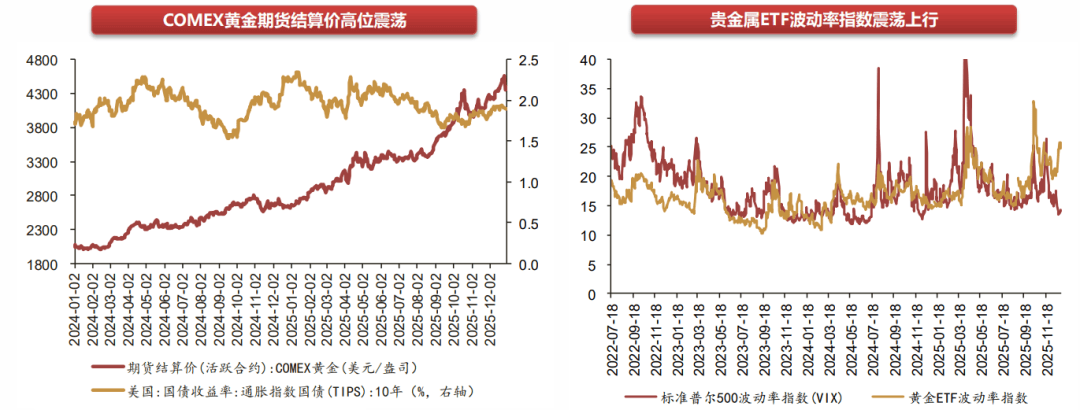
Report Industry Investment Rating No relevant content provided. Core View of the Report - The market sentiment cooled slightly yesterday, with the commodity market weakening significantly and the stock index showing a volatile trend. The trading volume also contracted. After a rapid rise, the stock index has entered a stage of shock consolidation. There are no obvious macro-level negatives at present, and the short-term outlook for the stock index remains bullish. The bond futures are favored by the asset shortage and weak economy, but the central bank has recently warned of interest rate risks. Attention should be paid to the Bank of Japan's interest rate decision. [1] - The prices of various commodities are affected by different factors, such as supply and demand, policy changes, and macro sentiment. The report provides trend judgments and trading suggestions for each commodity, including metals, energy, chemicals, and agricultural products. [1] Summary by Related Catalogs Macro Finance - Stock Index: After a rapid rise, the stock index has entered a stage of shock consolidation. There are no obvious macro-level negatives at present, and the short-term outlook for the stock index remains bullish. Attention should be paid to capital flows and market sentiment changes. [1] - Treasury Bonds: The bond futures are favored by the asset shortage and weak economy, but the central bank has recently warned of interest rate risks. Attention should be paid to the Bank of Japan's interest rate decision. [1] Non-Ferrous Metals - Copper: The copper price has fallen from its recent high, but there are still disruptions in the mining end. The downside space for the copper price is expected to be limited. [1] - Aluminum: There has been an accumulation of domestic electrolytic aluminum stocks recently, and the industrial driving force is limited. The macro anti-involution sentiment has ebbed, and the aluminum price has fallen from its high. [1] - Alumina: The supply side of alumina still has a large release space, and the industrial side exerts downward pressure on the price. However, the current price is basically near the cost line, and the price is expected to fluctuate. [1] - Zinc: The fundamentals of zinc have improved, and the cost center has shifted upward. The recent macro sentiment has been good, and the zinc price has risen. However, considering the still existing pressure on the fundamentals, caution is advised regarding the upside space. [1] - Nickel: The market's concerns about nickel supply have significantly cooled, and the LME nickel inventory has increased significantly recently. The nickel price has corrected from its high. Since Indonesia has not disclosed the specific amount and said that it is still in the process of accounting, there is still uncertainty about the implementation of the subsequent policy. The short-term volatility risk of the nickel price has increased. Attention should be paid to the implementation of Indonesia's policy, changes in macro sentiment, and changes in futures positions, and risk control should be done well. [1] Precious Metals and New Energy - Gold and Silver: The annual weight adjustment of the BCOM index has officially started, and the exchange has introduced multiple risk control measures for silver to suppress speculative enthusiasm. The prices of precious metals have fallen across the board, with a significant decline in silver. In the short term, gold and silver are expected to continue to be weak and volatile. In the medium and long term, attention can be paid to the opportunity to buy on dips after this round of risk release. [1] - Platinum and Palladium: Platinum and palladium have followed the weakening of precious metals. In the short term, they are expected to be in a wide-range volatile pattern. In the medium and long term, with the still existing supply-demand gap for platinum and the tendency of palladium to have a loose supply, platinum can still be bought on dips or a [long platinum, short palladium] arbitrage strategy can be adopted. [1] Industrial Products - Industrial Silicon: There is an increase in production in the northwest and a decrease in production in the southwest. The production schedules for polysilicon and organic silicon in December have decreased. [1] - Polysilicon: It is the traditional peak season for new energy vehicles. The demand for energy storage is strong. The supply side has increased production resumption. There is a short-term rapid increase. [1] - Rebar and Hot Rolled Coil: In the short term, sentiment and capital have a greater influence than industrial contradictions. One can try to follow long positions with a stop-loss; for futures-spot trading, participate in positive spread positions. [1] - Iron Ore: There is sector rotation, but the upside pressure on iron ore is obvious. It is not recommended to chase long positions at this level. [1] - Non-Ferrous Metals: There is a combination of weak reality and strong expectations. The current supply and demand situation remains weak, but in terms of expectations, energy consumption double control and anti-involution may have an impact on supply. [1] - Soda Ash: Soda ash follows the trend of glass. In the medium term, the supply and demand situation will be more relaxed, and the price will be under pressure. [1] - Coking Coal and Coke: If the "capacity reduction" expectation continues to ferment and there is pre-holiday restocking of spot goods, coking coal may still have room to rise. However, since the current market's "capacity reduction" expectation mainly comes from online rumors, it is difficult to judge the actual upside space. After a significant increase, the volatility will intensify, and caution should be exercised. The logic for coke is the same as that for coking coal. [1] Agricultural Products - Palm Oil: The MPOB December data is expected to be bearish for palm oil, but palm oil will reverse under the themes of seasonal production reduction, the B50 policy, and US biodiesel in the future. Short-term rebounds due to macro sentiment should be watched out for. [1] - Soybean Oil: The fundamentals of soybean oil are relatively strong. It is recommended to allocate more in the oil sector and consider a long Y, short P spread. Wait for the January USDA report. [1] - Rapeseed Oil: The trade relationship between China and Canada may improve, and Australian rapeseed will be imported smoothly. After the rapeseed trade flow is opened up, the trading logic of rapeseed oil will gradually shift from the domestic tight supply situation to the global rapeseed production increase expectation. There is still room for the price to fall. Short-term rebounds due to macro sentiment should be watched out for. [1] - Cotton: There is a strong expectation of a good harvest for domestic new crops, and the purchase price of seed cotton supports the cost of lint cotton. The downstream operating rate remains low, but the inventory of yarn mills is not high, and there is a rigid demand for restocking. Considering the growth of spinning capacity, the demand for cotton in the new crop market year is relatively resilient. Currently, the cotton market is in a situation of "having support but no driving force." Future attention should be paid to the tone of the No. 1 Central Document in the first quarter of next year regarding the direct subsidy price and cotton planting area, the intention of cotton planting area next year, the weather during the planting period, and the demand during the "Golden Three and Silver Four" peak season. [1] - Sugar: Currently, there is a global surplus of sugar, and the supply of domestic new crops has increased. The short-selling consensus is relatively strong. If the futures price continues to fall, there will be strong cost support below. However, there is a lack of continuous driving force in the short-term fundamentals. Attention should be paid to changes in the capital side. [1] - Corn: The fundamentals of corn have not changed significantly. The spot price remains firm, and the progress of grain sales at the grassroots level is relatively fast. Most traders have not yet strategically built inventories, and feed enterprises maintain a safe inventory. There is a certain restocking demand before the holiday. The short-term outlook for CO3 is expected to be oscillating and slightly bullish. Attention should be paid to the dynamics of policy grain auctions. [1] - Soybean Meal: The domestic market may restart the auction of imported soybeans; the relationship between China and Canada is expected to ease, and China is expected to suspend the tax on Canadian rapeseed meal; the macro sentiment has cooled, and the domestic market has returned to the fundamentals and shown a significant decline. Recently, it has been greatly affected by policy news. The soybean meal futures price is expected to be mainly oscillating in the short term. Attention should be paid to the adjustment of the January USDA supply and demand report and the trend of the Brazilian premium. [1] - Pulp: Pulp has fallen today due to the decline in the commodity macro market. The overall price has not broken through the oscillating range. The short-term commodity sentiment fluctuates greatly, and it is recommended to observe cautiously. [1] - Logs: The spot price of logs has shown a certain sign of bottoming out and rebounding recently. The further downside space for the futures price is expected to be limited. However, the January overseas quotation has still slightly declined, and the log futures and spot markets lack upward driving factors. It is expected to oscillate in the range of 760 - 790 yuan/m³. [1] - Hogs: Recently, the spot price has gradually stabilized. Supported by demand and with the出栏体重 not yet fully cleared, the production capacity still needs to be further released. [1] Energy and Chemicals - Crude Oil: OPEC+ has suspended production increases until the end of 2026. There is uncertainty about the Russia-Ukraine peace agreement. The United States has imposed sanctions on Venezuela's crude oil exports. [1] - Fuel Oil: In the short term, the supply-demand contradiction is not prominent, and it follows the trend of crude oil. The probability of the 14th Five-Year Plan's rush demand being falsified is high, and the supply of Ma Rui crude oil is not short. The profit of asphalt is relatively high. [1] - BR Rubber: The futures position has declined, and the number of new warehouse receipts has increased. The increase in BR has slowed down temporarily. The spot price has led the rise to repair the basis, and BR continues to focus on the upward momentum above the 12,000 yuan line. The listed prices of BD/BR have been continuously raised, and the processing profit of butadiene rubber has narrowed. The overseas cracking device capacity has been cleared, which is beneficial to the long-term export expectation of domestic butadiene. The tax on naphtha also has a positive impact on the butadiene price. Fundamentally, butadiene rubber maintains high production and high inventory operation, and the trading center is generally average. Styrene-butadiene rubber is relatively better than butadiene rubber. [1] - PX and PTA: The PX market has experienced a rapid rise, but this round of rise is not due to a fundamental change. The fundamentals of PX do have support, and the market is expected to continue to tighten in 2026, driven by the new PTA production capacity in India and the organic growth of demand. Domestic PTA maintains high production. The gasoline spread is still at a high level, which supports aromatics. [1] - Ethylene Glycol: There is news that two sets of MEG plants in Taiwan, China, with a total annual capacity of 720,000 tons, plan to stop production next month due to efficiency reasons. Ethylene glycol has rebounded rapidly during the continuous decline, stimulated by supply-side news. The current operating rate of the polyester downstream remains above 90%, and the demand performance is slightly better than expected. [1] - Short Fiber: The PX market has experienced a rapid rise, but this round of rise is not due to a fundamental change. Domestic PTA maintains high production, and the domestic polyester load has declined. The short fiber price continues to closely follow the cost fluctuations. [1] - Styrene: The Asian styrene market is generally stable. Suppliers are reluctant to lower prices due to continuous losses, while buyers insist on pressing prices due to weak downstream polymer demand and compressed profits. Although the downstream demand is weak, the domestic market has a strong bullish sentiment due to export support. The market is in a weak balance state, and the short-term upward momentum needs to be driven by the overseas market. [1] - Urea: The export sentiment has slightly eased, and there is limited upside space due to insufficient domestic demand. There is support from anti-involution and the cost side below. [1] - PF: Geopolitical conflicts have intensified, and there is a risk of an increase in crude oil prices. There are fewer maintenance activities, the operating load is at a high level, and there are overseas arrivals, so the supply has increased. The downstream demand operating rate has weakened. In 2026, there will be more new production capacity, and the supply-demand surplus will further intensify, and the market expectation is weak. [1] - Propylene: There are fewer maintenance activities, the operating load is relatively high, and the supply pressure is relatively large. The improvement in the downstream is less than expected. The propylene monomer price is at a high level, the crude oil price has risen, and the cost support is strong. Geopolitical conflicts have intensified, and there is a risk of an increase in crude oil prices. [1] - PVC: In 2026, there will be less global new production capacity, and the future expectation is relatively optimistic. Currently, there are fewer maintenance activities, new production capacity is being released, and the supply pressure is increasing. The demand has weakened, and the orders are not good. The differential electricity price in the northwest region is expected to be implemented, which will force the clearance of PVC production capacity. [1] - LPG: The January CP has risen more than expected, and the cost support for imported gas is relatively strong. The geopolitical conflicts between the United States, Venezuela, and the Middle East have escalated, and the short-term risk premium has increased. The trend of inventory accumulation in the EIA weekly C3 inventory has slowed down, and it is expected to gradually turn to inventory reduction. The domestic port inventory has also decreased. Domestic PDH maintains high production and deep losses. There is a rigid demand for global civil combustion, and the demand for MTBE from overseas olefin blending for gasoline has declined temporarily. Since January 1, 2026, naphtha has been re-taxed, and the long-term demand expectation for light cracking raw materials such as LPG has increased, and the performance of downstream olefin products is relatively strong. [1] Shipping - Container Shipping - European Line: It is expected to peak in mid-January. Airlines are still relatively cautious in their trial reflights. The pre-holiday restocking demand still exists. [1]
焦作万方涨2.05%,成交额1.85亿元,主力资金净流入79.64万元
Xin Lang Cai Jing· 2026-01-09 02:26
Core Viewpoint - The stock of Jiaozuo Wanfang has shown significant growth, with a year-to-date increase of 8.26% and a notable rise of 26.24% over the past 60 days, indicating strong market performance and investor interest [1]. Group 1: Stock Performance - As of January 9, Jiaozuo Wanfang's stock price reached 11.93 CNY per share, with a trading volume of 1.85 billion CNY and a market capitalization of 14.223 billion CNY [1]. - The stock has experienced a 21.24% increase over the past 20 days and a 26.24% increase over the past 60 days [1]. Group 2: Financial Performance - For the period from January to September 2025, Jiaozuo Wanfang reported a revenue of 4.982 billion CNY, reflecting a year-on-year growth of 4.03%, while the net profit attributable to shareholders reached 906 million CNY, marking a substantial increase of 71.58% [2]. Group 3: Shareholder Information - As of December 19, the number of shareholders for Jiaozuo Wanfang was 70,200, a decrease of 3.13% from the previous period, while the average number of circulating shares per person increased by 3.23% to 16,960 shares [2]. - The company has distributed a total of 1.759 billion CNY in dividends since its A-share listing, with 405 million CNY distributed over the past three years [3]. - Notable institutional shareholders include Shenwan Hongyuan Securities Co., Ltd., which increased its holdings by 320,700 shares, and new entrants such as Hong Kong Central Clearing Limited and Harvest CSI Rare Earth Industry ETF [3].
“意义重大”,加拿大媒体期待总理卡尼访华修复关系
Huan Qiu Shi Bao· 2026-01-08 22:47
Group 1 - Canadian Prime Minister Mark Carney is set to visit China to discuss trade, energy, and security issues, marking the first visit by a Canadian Prime Minister since 2017, with significant implications for Canada-China relations [1][3] - The visit comes at a time when Canadian agricultural producers are facing challenges due to China's imposition of counter-tariffs on Canadian canola oil, pork, and seafood, as well as an anti-dumping investigation into canola seeds [3][4] - Carney aims to shift Canada's economy from reliance on a single trade partner to a more resilient economy, establishing new partnerships in energy and trade to attract investment and create opportunities for Canadians [3][4] Group 2 - Saskatchewan's Premier Scott Moe expressed optimism about Carney's visit, hoping it will advance discussions on canola issues and diversify Canada's market engagement with China [4][5] - Security expert Wesley Walker noted the complexity of Carney's mission, suggesting that the current geopolitical climate makes this an opportune time for the visit, with expectations for tangible outcomes to address the gap since the last visit in 2017 [4] - The visit is also seen as an effort to reduce Canada's trade dependency on the U.S., which accounts for 75.9% of Canadian exports, significantly more than China, highlighting the need for predictability in Canada-China relations [4]
中国铝业:第九届董事会第九次会议决议公告
Zheng Quan Ri Bao· 2026-01-08 12:46
Core Viewpoint - China Aluminum announced the approval of the proposal for nominating candidates for the ninth board of directors during its ninth board meeting [1] Group 1 - The ninth board meeting of China Aluminum took place on January 8 [1] - The meeting resulted in the approval of the proposal regarding the nomination of candidates for the ninth board of directors [1]
南山铝业跌2.06%,成交额17.95亿元,主力资金净流出6351.74万元
Xin Lang Cai Jing· 2026-01-08 06:13
Core Viewpoint - Nanshan Aluminum's stock price has shown significant growth recently, with a year-to-date increase of 6.13% and a 48.16% rise over the past 60 days, despite a slight decline of 2.06% on January 8 [1]. Group 1: Stock Performance - As of January 8, Nanshan Aluminum's stock price was reported at 5.71 CNY per share, with a trading volume of 17.95 billion CNY and a turnover rate of 2.68%, resulting in a total market capitalization of 655.72 billion CNY [1]. - The stock has experienced a 7.53% increase over the last five trading days and a 21.13% increase over the last 20 trading days [1]. Group 2: Financial Performance - For the period from January to September 2025, Nanshan Aluminum achieved a revenue of 26.325 billion CNY, reflecting a year-on-year growth of 8.66%, while the net profit attributable to shareholders was 3.772 billion CNY, also showing an 8.09% increase year-on-year [2]. Group 3: Shareholder Information - As of September 30, 2025, the number of shareholders for Nanshan Aluminum reached 183,700, an increase of 11.00% from the previous period, while the average number of circulating shares per shareholder decreased by 9.91% to 63,218 shares [2]. - The company has distributed a total of 12.999 billion CNY in dividends since its A-share listing, with 7.278 billion CNY distributed over the last three years [3].
多位知名基金经理“出手”!
中国基金报· 2026-01-08 03:36
Core Viewpoint - The article discusses the recent stock adjustments made by several well-known fund managers, highlighting their changes in holdings in various companies, particularly focusing on Kelong Pharmaceutical and Proya Cosmetics [2]. Group 1: Kelong Pharmaceutical - Fund managers Ge Lan and Tang Xiaobin reduced their holdings in Kelong Pharmaceutical, while Zhao Bei increased her stake [3]. - As of December 31, 2025, Ge Lan's fund held 38.1954 million shares of Kelong Pharmaceutical, a decrease of 1.867 million shares compared to the end of the third quarter [4]. - Tang Xiaobin's fund, Guangfa Multi-Factor Mixed Fund, exited the top ten shareholders of Kelong Pharmaceutical by the end of 2025, having reduced its holdings from 24.2335 million shares to at least 10.2935 million shares [6]. - In contrast, Zhao Bei's fund held 22 million shares of Kelong Pharmaceutical as of December 31, 2025, an increase of 2 million shares from the previous quarter [6]. - The National Social Security Fund's 416 portfolio became the tenth largest shareholder of Kelong Pharmaceutical with 13.9445 million shares by the end of 2025 [7]. Group 2: Proya Cosmetics - Liu Yanchun and Hu Xinwei reduced their holdings in Proya Cosmetics, with Liu's fund holding 2.6 million shares as of December 30, 2025, down from 3.332 million shares [9]. - Hu Xinwei's fund is no longer among the top ten shareholders of Proya Cosmetics [10]. Group 3: Other Companies - Zhou Yun's fund and the National Social Security Fund's 404 portfolio entered the top ten shareholders of Jiazhe New Energy by the end of 2025 [11]. - The National Social Security Fund's 114 portfolio increased its holdings in Nanshan Aluminum by 4.3432 million shares in the fourth quarter of 2025, with five ETF products now included among the top ten shareholders [11]. Group 4: Market Trends - As of early 2026, A-shares stabilized above 4000 points, with over 10,000 institutional research activities focused on sectors like semiconductors and artificial intelligence [13]. - Fund managers express optimism for A-share performance in 2026, anticipating a recovery in earnings growth for non-financial listed companies [13].
焦作万方跌2.16%,成交额3.09亿元,主力资金净流出2316.49万元
Xin Lang Cai Jing· 2026-01-08 02:44
Group 1 - The core viewpoint of the news is that Jiaozuo Wanfang's stock has shown a significant increase in price and profitability, with a notable rise in revenue and net profit year-on-year [2][3] - As of January 8, Jiaozuo Wanfang's stock price decreased by 2.16% to 11.78 CNY per share, with a total market capitalization of 14.044 billion CNY [1] - The company has experienced a stock price increase of 6.90% year-to-date, with a 21.44% increase over the past 20 trading days [1] Group 2 - For the period from January to September 2025, Jiaozuo Wanfang achieved operating revenue of 4.982 billion CNY, representing a year-on-year growth of 4.03%, and a net profit attributable to shareholders of 906 million CNY, which is a 71.58% increase year-on-year [2] - The company has distributed a total of 1.759 billion CNY in dividends since its A-share listing, with 405 million CNY distributed in the last three years [3] - As of September 30, 2025, the top ten circulating shareholders include notable institutions such as Shenwan Hongyuan Securities and Hong Kong Central Clearing Limited, indicating a diverse shareholder base [3]
云铝股份跌2.07%,成交额5.63亿元,主力资金净流入796.48万元
Xin Lang Zheng Quan· 2026-01-08 02:03
Core Viewpoint - Yun Aluminum Co., Ltd. has shown a significant increase in stock performance and financial metrics, indicating a positive trend in the company's operations and market position [1][2]. Group 1: Stock Performance - As of January 8, Yun Aluminum's stock price decreased by 2.07% to 33.08 CNY per share, with a trading volume of 563 million CNY and a turnover rate of 0.49%, resulting in a total market capitalization of 114.72 billion CNY [1]. - Year-to-date, the stock price has increased by 0.73%, with a 4.52% rise over the last five trading days, a 22.11% increase over the last 20 days, and a remarkable 63.52% increase over the last 60 days [1]. Group 2: Financial Performance - For the period from January to September 2025, Yun Aluminum achieved a revenue of 44.072 billion CNY, representing a year-on-year growth of 12.47%, while the net profit attributable to shareholders was 4.398 billion CNY, reflecting a year-on-year increase of 15.14% [2]. - The company has distributed a total of 6.069 billion CNY in dividends since its A-share listing, with 3.884 billion CNY distributed over the last three years [3]. Group 3: Shareholder Structure - As of September 30, 2025, the number of shareholders for Yun Aluminum was 79,100, a decrease of 8.51% from the previous period, while the average number of circulating shares per shareholder increased by 9.30% to 43,857 shares [2]. - Among the top ten circulating shareholders, Hong Kong Central Clearing Limited holds 269 million shares, an increase of 72.0936 million shares compared to the previous period [3].
机构:铜价牛市有望加速 铝价有望迎来上行周期
Group 1: Copper Industry - The Shandong Provincial Industry and Information Technology Department aims for a 5% year-on-year growth in the added value of the copper industry by 2026, with cathode copper production targeted at approximately 1.7 million tons, a 3% increase [1] - The copper processing product output is expected to reach around 600,000 tons, reflecting a 4% year-on-year growth, while the total output value of the copper industry is projected to exceed 200 billion yuan [1] - High copper prices are currently suppressing short-term demand, with weekly operating rates for electrolytic copper rods at 48.83%, down 11.90% month-on-month; however, long-term supply disruptions may lead to a shift from a tight balance to a shortage [1][3] Group 2: Aluminum Industry - The aluminum industry is experiencing upward adjustments in demand expectations, with aluminum prices reaching new highs; the demand for electrolytic aluminum is anticipated to increase due to the "aluminum replacing copper" trend in the home appliance sector [2] - The supply side of alumina is currently in an oversupply situation, with rising inventories leading to weak spot prices; ongoing monitoring of alumina cost profits and operational capacity is necessary [2] - Concerns over supply due to data centers "grabbing electricity" may tighten the global aluminum supply-demand balance by 2026, with domestic supply potentially hitting capacity ceilings [3]