外卖

Search documents
中国消费通缩“日本化”?
日经中文网· 2025-08-25 08:00
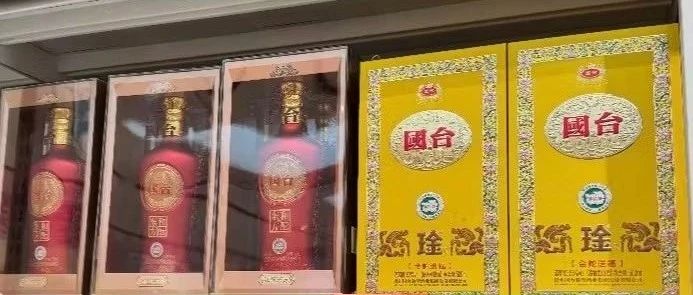
Group 1 - The GDP deflator in China decreased by 1.3% from April to June compared to the same period last year, marking the longest decline in history for nine consecutive quarters, indicating significant deflationary pressure [2][5][7] - The phenomenon of excessive price reductions is becoming increasingly evident, with free products being offered on food delivery apps and luxury goods experiencing price drops [2][4] - The competitive landscape in the food delivery industry is intensifying, with major players like Meituan and Alibaba's Ele.me engaged in aggressive price wars, leading to substantial investments in discounting strategies [4][5] Group 2 - The Chinese government is responding to the crisis by addressing the issue of excessive price competition, with the State Administration for Market Regulation holding discussions with major companies to correct their pricing strategies [4][5] - The overall revenue growth in the restaurant industry was only 1.1% year-on-year in July, reflecting a broader trend of consumer frugality impacting various sectors [5][6] - The decline in demand is also affecting luxury goods, with high-end products being sold at significant discounts, as the government has implemented regulations to promote frugality among officials [5][6]


淘宝闪购饿了么官宣外卖行业首套制服
Zhong Guo Xin Wen Wang· 2025-08-25 07:41
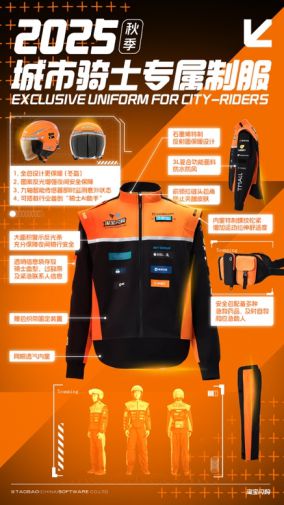
Core Points - The launch of the first uniform for the food delivery industry by Taobao Flash Sale and Ele.me marks a significant upgrade for the industry and a new recognition of the rider profession [1][3] - Approximately one million active riders will receive the new uniform, helmet, and delivery box for free, indicating a substantial investment in rider welfare [1][3] - The new uniform features a racing suit design, emphasizing both functionality and a professional image for urban riders [1][5] Summary by Categories Uniform Design and Features - The new rider uniform incorporates a racing suit style with a streamlined design, showcasing the brand colors and logos of over 20 Alibaba brands [3][5] - The uniform is made from high-performance 3L composite fabric, which is windproof, breathable, and water-resistant, exceeding national standards [5] - Unique features include an information pocket for emergency details and a waist bag that serves as a medical safety kit, enhancing rider safety [5][6] Rider Welfare and Support - Taobao Flash Sale and Ele.me announced an upgraded incentive system for riders, including a 50% or higher social security subsidy and special protections [1][8] - The "Orange Intent Plan" aims to provide comprehensive support for riders, including educational assistance for their children and increased rewards for safe riding [8][9] - The companies have invested over 20 million yuan in support for sick riders and their families, establishing a community incentive system to encourage public service [9] Community Engagement and Recognition - Riders were actively involved in the design process of the new uniform, providing feedback that was incorporated into the final product [6] - The recognition of riders as "urban knights" reflects their growing importance in urban service and community support roles [9] - The increase in rider numbers and their contributions to community safety and assistance highlights their evolving role in modern urban life [9]
京东外卖高管郭庆称行业泡沫过多需回归理性
Xin Lang Ke Ji· 2025-08-25 05:41
我们必须要创新。不创新、沉迷于制造泡沫,外卖行业就干没了。(中国企业家)#京东外卖高管暗讽 淘宝外卖抄袭##京东外卖郭庆回应美团自称被迫反击# 【#京东外卖高管称只造泡沫行业就没了#】京东外卖业务核心负责人郭庆在接受《中国企业家》采访时 表示:最近两月泡沫太多了,其他平台也承认自己的单量里有很多泡沫。这是不正常的,也没有意义。 我们看到,最近在相关部门指导下,行业正在逐渐回归理性。 现在外卖行业最大的问题在于供给侧,因为短期看需求,长期看供给。现在的外卖补贴大战并不改变供 给,只是在短期内通过低价,拉动了一部分需求,一定不可持续。要把注意力和资源投到长期的供给 上,这是我们的内部共识。 ...
首店爆火后,京东美食MALL在10余城加速落地
Guan Cha Zhe Wang· 2025-08-25 04:00
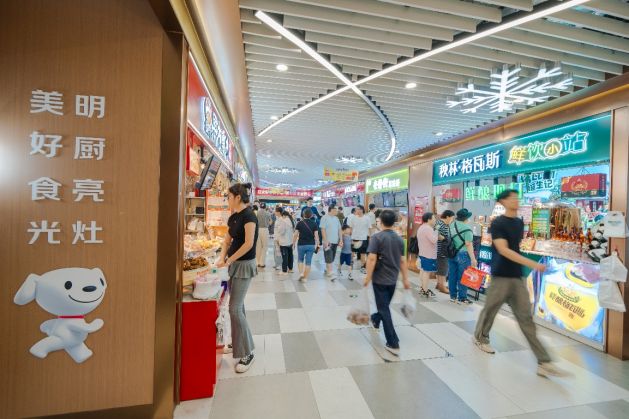
Core Viewpoint - JD's first restaurant infrastructure brand, Qixian Food Mall, is expanding its presence in over 10 cities with a "one city, multiple stores" plan, following the successful opening of its first store in Harbin [1][8]. Group 1: Business Performance - Since its opening two months ago, Qixian Food Mall has seen a threefold increase in customer traffic, with a near 100% purchase rate and a 100% growth in daily takeaway orders compared to the initial phase [3][4]. - The revenue structure indicates that dine-in still dominates, but the share of takeaway is gradually increasing, showcasing the synergy between dine-in and takeaway services [3][4]. Group 2: Competitive Advantages - Qixian Food Mall's core competitiveness lies in its diverse offerings and strict quality control, focusing on a rich variety of food options, including local specialties and popular brands, while ensuring no tolerance for substandard food delivery [3][5]. - The brand emphasizes transparency with "100% kitchen live streaming," allowing consumers to see food preparation processes, which enhances trust and safety [5][6]. Group 3: Supply Chain Innovation - The brand adopts a "front-end does not profit, supply chain does" strategy, focusing on supply chain efficiency to address food safety and merchant growth challenges [7][8]. - By leveraging JD's supply chain capabilities, merchants can operate with reduced inventory pressure and lower operational costs, enhancing overall efficiency [8][9]. Group 4: Expansion Plans - Following the successful pilot in Harbin, Qixian Food Mall plans to accelerate its national expansion, targeting first-tier, new first-tier, and strong second-tier cities, with a focus on high consumer power and traffic [8][9]. - The strategic selection of locations will consider market research, user demographics, and collaboration with established property companies to minimize risks [8][9]. Group 5: Future Developments - Starting from the second phase, Qixian Kitchen will officially join Qixian Food Mall, enhancing the local living ecosystem by integrating dine-in and takeaway services [11]. - The combination of Qixian Food Mall and Qixian Kitchen aims to provide consumers with a wider range of dining options while promoting cost reduction and efficiency for merchants [11].
京东外卖郭庆回应美团被迫反击论:岗位价值靠客户商业社会价值评定
Xin Lang Ke Ji· 2025-08-25 02:18
【#京东外卖郭庆回应美团自称被迫反击#】京东外卖业务核心负责人郭庆在接受《中国企业家》采访 时,回应王莆中(美团核心本地商业CEO)说美团是"被迫反击"称:我们都是商业战役的指挥员,不管 是他还是我,都没有时间、没有必要,也没有资格去委屈。委屈啥?我们的岗位价值不是靠大家的同情 分来评估的,是靠最终创造的客户价值、商业价值和社会价值来评定的。(中国企业家) ...

一周要闻·阿联酋&卡塔尔|美团Keeta在卡塔尔正式上线/Apollo Go在阿联酋启动测试
3 6 Ke· 2025-08-25 01:58
Group 1: Autonomous Vehicles and Logistics - Baidu has launched open road testing for its Apollo Go autonomous vehicles in the UAE, with plans to deploy thousands of self-driving cars in partnership with Uber, marking the first such initiative in Asia and the Middle East [2] - A new international cargo route from Urumqi to Dubai has been established, significantly reducing transportation time from 20-30 hours to approximately 6 hours, enhancing logistics efficiency by over 70% [2] Group 2: Mergers and Acquisitions - In the first half of 2025, the UAE's merger and acquisition transaction volume reached $25.4 billion, accounting for 43% of the total $58.7 billion in the MENA region [3] Group 3: Banking and Financial Performance - As of May 2025, the total assets of UAE banks increased by 2.7% to AED 4.878 trillion, with total credit rising to AED 2.293 trillion, a growth of 1.5% [3] - The UAE Central Bank's gold reserves grew by 25.9% in the first five months of the year, reaching AED 28.933 billion [3] Group 4: Digital Economy and Startups - In the first half of 2025, Dubai's digital economy chamber supported 308 digital startups, a 39% increase from the previous year [3] - The Dubai International Chamber attracted 143 new companies in the first half of 2025, a 138% increase year-on-year, including 31 multinational companies [4] Group 5: Renewable Energy and Infrastructure - Masdar has invested over AED 6.19 billion (approximately $1.685 billion) in renewable energy projects through green bonds, which are expected to reduce CO2 emissions by over 6.28 million tons annually [5] - Masdar has decided to pause its green hydrogen project and shift focus to data centers due to changing market dynamics [5] Group 6: Electric Vehicles and Charging Infrastructure - Parkin has signed a 10-year agreement to deploy 200 "ultra-fast" electric vehicle charging stations in Dubai, aiming to reduce charging time to under 30 minutes [5] - Faraday Future plans to establish a factory in Ras Al Khaimah, UAE, for assembling its FX Super One electric vans, supported by AED 30 million (approximately $8.1 million) in initial funding [6] Group 7: Economic Growth and Trade - Qatar's economy is expected to grow by 4.8% in 2026, with signs of recovery in the non-energy sector [7] - Qatar's total foreign trade reached QAR 476.28 billion in 2024, a 1.3% increase year-on-year, with a trade surplus of QAR 215.64 billion [7] Group 8: Financial Center and Investments - The Qatar Financial Center registered 828 new companies in the first half of 2025, a 64% increase year-on-year, reflecting investor confidence in the Qatari market [8] - Qatar's royal family has committed to invest $31 billion in Botswana and Zambia for infrastructure and development projects [8]

独家对话京东外卖“老K”郭庆:只造泡沫,外卖行业就没了
3 6 Ke· 2025-08-25 01:07
Core Viewpoint - JD.com is entering the food delivery market with a focus on innovation and quality, aiming to disrupt the existing competition and address industry challenges such as "ghost kitchens" and food safety [1][30][42]. Group 1: Market Entry and Strategy - JD.com announced its entry into the food delivery sector by launching the "Seven Fresh Kitchen" platform, which emphasizes quality and compliance in food sourcing and preparation [1][42]. - The company aims to recruit over 10,000 food partners to support its new model, which has already attracted more than 70,000 applicants within three weeks [1][42]. - JD.com is committed to providing a sustainable business model that prioritizes user value over short-term market share gains, distancing itself from the "malicious subsidy" practices prevalent in the industry [2][8][10]. Group 2: Competition and Industry Dynamics - The current food delivery market is characterized by intense competition, with major players like Meituan and Alibaba increasing their investments in instant retail, prompting JD.com to adopt a more measured approach [4][6][22]. - JD.com does not view itself as a disruptor but rather as a participant focused on long-term value creation, emphasizing the importance of healthy competition for the industry's future [19][30]. - The company believes that the ongoing "subsidy war" is unsustainable and detrimental to the industry's long-term health, advocating for a shift towards quality and compliance [30][32]. Group 3: Operational Insights and Future Plans - JD.com has built a team of over 150,000 full-time delivery personnel, ensuring compliance with labor laws and providing social security benefits, which is seen as a competitive advantage [28][32]. - The company plans to expand the "Seven Fresh Kitchen" initiative to combat the prevalence of ghost kitchens, with a target of opening 10,000 locations over the next three years [58][63]. - JD.com aims to leverage technology and supply chain efficiencies to enhance food safety and quality, positioning itself as a leader in the evolving food delivery landscape [56][57]. Group 4: Consumer Focus and Market Positioning - JD.com is focused on addressing consumer needs for affordable, quality meals, particularly for budget-conscious customers who may otherwise resort to lower-quality options [42][49]. - The company emphasizes the importance of user experience and aims to create a transparent and fair profit-sharing model with its food partners [62][63]. - JD.com believes that the future of the food delivery industry hinges on innovation and the ability to provide genuine value to consumers, warning that failure to innovate could lead to the industry's decline [30][63].
新就业群体需更多务实“凉”策
Jing Ji Ri Bao· 2025-08-24 22:08
Core Viewpoint - The revised safety production law emphasizes the need for platform economies and emerging industries to establish and implement comprehensive safety production responsibility systems, ensuring that all workers' rights are protected regardless of formal labor relationships [1][3][4]. Group 1: High Temperature Rights of New Employment Forms - The number of outdoor workers, including over 10 million delivery riders and 4 million express delivery personnel, highlights the growing concern for their rights during high-temperature conditions [1]. - Recent years have seen an improvement in the implementation of high-temperature allowances, expanding coverage to new employment forms [1][2]. - The issuance of high-temperature allowances is complicated by the lack of direct labor contracts between workers and platforms, leading to disputes over entitlement [3][4]. Group 2: Platform Responses and Initiatives - Platforms like Meituan have initiated emergency mechanisms to adjust delivery routes and provide additional compensation during high-temperature periods, distributing "heat prevention insurance" and care funds to over 3 million riders [2]. - Various platforms have adopted different measures to compensate outdoor workers for additional heat-related burdens, reflecting the unique characteristics of their industries [1][2]. Group 3: Legal and Regulatory Framework - The revised safety production law and other regulations clarify the responsibilities of platform enterprises regarding labor protection for new employment forms, particularly in extreme weather conditions [2][3]. - The judicial system has recognized the existence of labor relationships based on actual working conditions, even in the absence of formal contracts, which may impact the rights of new employment form workers [4]. Group 4: Challenges and Recommendations - Many platforms impose unreasonable conditions that limit workers' access to high-temperature allowances, raising questions about the fairness and legality of these practices [5]. - Experts suggest that platforms should develop diverse and transparent methods for distributing high-temperature allowances, ensuring that workers' rights are effectively safeguarded [5][6]. - Some regions, like Guangdong, have implemented specific policies providing monthly high-temperature allowances to eligible workers, demonstrating a proactive approach to labor protection [5].
美团Keeta在卡塔尔上线并计划进入巴西;长城汽车巴西工厂竣工投产丨36氪出海·要闻回顾
36氪· 2025-08-24 13:35
Core Viewpoint - The article highlights the expansion of various Chinese companies into international markets, showcasing their strategic moves and growth in overseas operations. Group 1: Company Expansions - Meituan's international delivery brand Keeta has launched in Doha, Qatar, with plans to expand into Brazil in the coming months [5] - Great Wall Motors has completed the construction of its factory in Brazil, with an annual production capacity of 50,000 vehicles [5][7] - Tea brand Cha Baidao has announced its first store in North America, located in New York, marking its entry into the U.S. market [5] - Lenovo is establishing a regional headquarters in Riyadh, Saudi Arabia, as part of its strategic expansion in the Middle East [6] Group 2: Financial Performance and Growth - Zero Run Auto reported its first half-year profit, with overseas markets becoming a significant growth driver, exporting 24,980 vehicles in the first seven months of 2025 [8] - Pop Mart plans to expand into emerging markets such as the Middle East and South Asia, expecting to exceed 200 overseas stores by the end of the year [8] - Xiaomi's automotive division aims for profitability in the second half of the year, maintaining its 2027 overseas expansion target [9] Group 3: New Business Models and Innovations - AliExpress has launched an "overseas hosting" model in Australia, following its success in other markets [5] - Yimutian, a major agricultural B2B platform, has gone public on NASDAQ, aiming to expand its offline services and international business [10] - Shouqu Technology has secured nearly 100 million yuan in angel funding to enhance its battery management systems and accelerate global market expansion [11] Group 4: Industry Trends - The global photovoltaic industry is witnessing increased competition, prompting Chinese companies to enhance their international presence and supply chain resilience [15] - The user-side energy storage market is recovering, with significant growth expected in commercial storage due to supportive policies and mature business models [14]






下周重磅日程:“全市场最重要的财报”来了
华尔街见闻· 2025-08-24 12:54
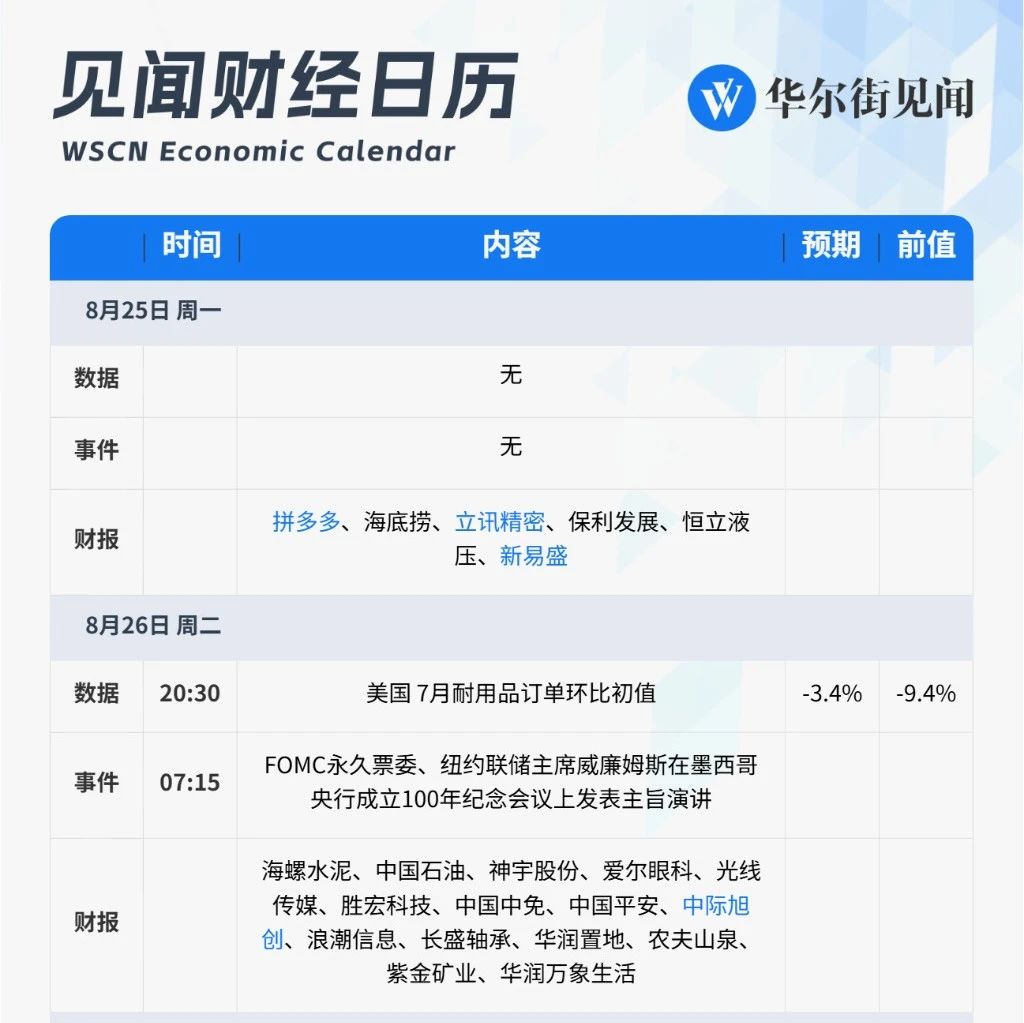
Financial Reports - Nvidia, Alibaba, Meituan, Pinduoduo, Luxshare Precision, and Zhongji Xuchuang are set to release their financial data [3][22][26][27]. - Nvidia is expected to report a revenue of $45.92 billion for Q3, with an EPS of $1.01, despite uncertainties in the Chinese market due to U.S. export restrictions [18][19]. - Alibaba's Q1 revenue for FY2026 is projected to reach 249 billion yuan, a 2% year-on-year increase, but adjusted EBITA is expected to decline by 15% to 38.2 billion yuan due to significant subsidies in its flash purchase business [22][23]. - Meituan's Q2 revenue is anticipated to be between 92.4 billion and 95.67 billion yuan, reflecting a year-on-year growth of 12.3% to 16.3%, but net profit is expected to drop by 29.3% to 50.6% [24]. - Pinduoduo is projected to achieve a revenue of 103.2 billion yuan for Q2, a 6.32% increase year-on-year, with an expected EPS of 12.3 yuan, down 43.08% [26]. Economic Indicators - The U.S. PCE price index for July showed a year-on-year increase of 2.6%, higher than the expected 2.5%, indicating rising service sector inflation [4]. - The U.S. Q2 GDP annualized growth rate was revised to 3.1%, surpassing the market expectation of 2.6%, but the growth is considered misleading due to a significant drop in imports [5][6]. - U.S. July durable goods orders fell by 9.3% in June, with a core data increase of 0.25% month-on-month, indicating a challenging investment environment for businesses [9]. - China's official manufacturing PMI for August dropped to 49.3%, signaling a slowdown in manufacturing activity [10]. - China's industrial profits for July showed a year-on-year decline of 4.3%, although the automotive sector saw a profit increase of 96.8% due to promotional activities [11]. Trade and Tariffs - The U.S. has imposed an additional 25% tariff on Indian imports, raising the total tariff rate to 50%, which is expected to significantly impact India's economic growth [13][14].