
证券业

Search documents
科创债新政实施三月:698只债券发行规模达8806亿,较去年同期大幅增长
Sou Hu Cai Jing· 2025-08-10 14:37
Core Insights - The implementation of the announcement regarding the support for the issuance of technology innovation bonds has led to significant growth in the market, with 698 new public technology innovation bonds issued from May 7 to August 7, totaling a planned issuance scale of 880.659 billion yuan, marking a notable increase compared to the same period last year [1][3] Issuance Structure and Participant Expansion - Financial institutions contributed approximately 35.55% of the total issuance scale of 880.659 billion yuan, amounting to 31.3045 billion yuan, with 34 banks collectively issuing 230.3 billion yuan [3] - The participation of small and medium-sized banks, private enterprises, and equity investment institutions is increasing, indicating a trend towards market diversification [3] - The expansion of issuance participants includes not only national banks but also several city commercial banks and rural commercial banks, enhancing the financing channels for various types of technology innovation enterprises [3] Term Structure and Market Characteristics - The recent issuance of technology innovation bonds has a preference for medium to long-term maturities, with over 75.8% of the issuance scale, or 667.723 billion yuan, being for maturities of more than three years [4] - The majority of newly issued technology innovation bonds have a credit rating of at least AA, with AAA-rated bonds accounting for nearly three-quarters of the total [4] - The differentiation in coupon rates is significant, with the highest reaching 4.68% and the lowest at 0.01%, reflecting pricing variations based on credit ratings and funding needs [4] - The continuous implementation of policies and improvement of market mechanisms are facilitating rapid expansion in the scale of technology innovation bonds, optimizing issuance levels and term structures, and enabling more types of technology innovation entities to access long-term, low-cost financing [4]


中国A股历史上第一次“系统性‘慢’牛”
ZHESHANG SECURITIES· 2025-08-10 10:00
Group 1 - The report identifies that the A-share market is currently experiencing its first "systematic slow bull" since 2005, driven by improved risk appetite and declining risk-free interest rates, alongside China's rise and advantages [1][3][22] - The report outlines that since the initiation of the "924" policy in September 2024, the market has established a long-term bottom, leading to the commencement of the fifth bull market in April 2025 [2][15][19] - The report emphasizes the importance of focusing on "big finance + broad technology" sectors for investment, suggesting a "1+X" allocation strategy to enhance win rates [1][4][22] Group 2 - The report highlights that the historical context of A-share markets includes four previous bull markets, with the first three being "systematic bull markets" characterized by steep upward slopes, while the fourth was a "structural bull market" with a more gradual increase [2][13][14] - It notes that the current "slow bull" market is supported by four key factors: the stable appreciation of the RMB against the USD, positive technical trends, a favorable chip structure, and differentiated sector performance [4][22] - The report suggests that the current market environment is conducive to investments in innovative pharmaceuticals and renewable energy, which are expected to benefit from external advantages and improving market conditions [1][4][22]
喜娜AI速递:昨夜今晨财经热点要闻|2025年8月10日
Sou Hu Cai Jing· 2025-08-09 22:17
来源:喜娜AI 金融市场犹如变幻莫测的海洋,时刻涌动着投资与经济政策的波澜,深刻影响着全球经济的走向。在 此,喜娜AI为您呈上昨夜今晨的财经热点新闻,全方位覆盖股市动态、经济数据、企业财务状况以及 政策更新等关键领域,助您精准洞察金融世界的风云变幻,把握市场脉搏。 美联储官员表态影响降息预期,市场关注政策走向 近日,市场对美联储9月的降息预期从90%下滑至89%。特朗普提名米兰为美联储理事,欲施加更多控 制,但降息预期不升反降,美元逆势上涨。圣路易斯联储主席穆萨莱姆发表讲话,暗示尚未满足降息条 件。高盛金融状况指数显示美国金融环境宽松,美联储、市场和特朗普之间或有对决。投资者关注8月 12日晚间市场走势及美联储后续政策。详情>> 跨境炒股补税引关注,五大关键问题解读 近期,投资港美股的中国居民被催缴2022 - 2024年跨境投资收入个税。政策未变但催缴增多或与CRS推 进有关,税务部门可通过其获取境外金融资产及交易信息。内地投资者炒港美股需交税,税率为20%, 可抵免境外已缴税款。实操中,允许按纳税年度盈亏相抵但不跨年。个人投资者可梳理投资明细,留存 凭证,必要时寻求专业协助。详情>> 北京楼市新政出台,限 ...


A股晚间热点 | 北京再推楼市新政!地产新一轮政策开启?
智通财经网· 2025-08-08 14:34
Group 1 - Xi Jinping and Vladimir Putin discussed the current situation regarding the Ukraine crisis and emphasized the importance of political solutions, with China maintaining its consistent stance on promoting peace talks [1] - Both leaders praised the high level of political trust and strategic cooperation between China and Russia, agreeing to further develop bilateral relations and prepare for the Shanghai Cooperation Organization summit [1] Group 2 - Beijing's new real estate policy allows families to purchase an unlimited number of homes outside the Fifth Ring Road starting from August 9, 2025, indicating a potential shift in housing market regulations [2] - The policy aims to alleviate inventory pressure and stimulate economic growth while addressing population distribution and regional collaboration [2] - The maximum loan amount for second homes has increased from 600,000 yuan to 1 million yuan, with adjustments made to down payment ratios and loan eligibility criteria [2] Group 3 - The China Securities Regulatory Commission (CSRC) plans to enhance the attractiveness and inclusivity of the domestic capital market by fostering long-term and patient capital [3] - The CSRC aims to support the development of a policy framework for long-term investments and promote the entry of medium- to long-term funds into the market [3] Group 4 - The Shenzhen Stock Exchange is increasing support for the biopharmaceutical sector and other new productivity industries to aid in the construction of a modern industrial system [5] - This initiative is part of a broader strategy to align with national goals and promote high-quality development [5] Group 5 - The total cash dividends from A-share listed companies in 2024 are projected to reach 2.4 trillion yuan, reflecting a 9% increase from 2023 [6] - The trend of increasing cash dividends indicates a growing internal drive among companies to provide predictable cash flow returns to investors [6] Group 6 - In July, the penetration rate of new energy vehicles in China's overall passenger car retail market reached 54%, a 2.7 percentage point increase year-on-year [8] - Domestic brands led the market with a penetration rate of 74.9%, while luxury and mainstream joint venture brands showed varying performance in the new energy segment [8] Group 7 - The U.S. stock market saw collective gains, with the Dow Jones up 0.46%, the Nasdaq up 0.6%, and the S&P 500 up 0.59% [9] - Gilead Sciences experienced a significant stock increase of over 7% following a positive earnings report, indicating strong market performance [10] Group 8 - The U.S. government has canceled a major wind power project, reflecting ongoing restrictions on renewable energy initiatives under the Trump administration [11] - This decision has led to a decline in stock prices for several wind energy companies, highlighting the impact of regulatory changes on the sector [11] Group 9 - Morgan Stanley has revised its forecast, now expecting the Federal Reserve to cut interest rates three times in 2025, indicating a potential economic slowdown [12] - Recent employment data suggests a significant deceleration in the U.S. economy, prompting this shift in monetary policy outlook [12]

信用策略备忘录:窄幅波动记录期
SINOLINK SECURITIES· 2025-08-08 14:23
Quantitative Credit Strategy - As of August 1, the secondary capital bond heavy strategy has rapidly recovered, with the weekly average yield of the credit style secondary bond heavy portfolio rising nearly 87 basis points, reaching the highest absolute return since April [2][12] - The secondary bond heavy and long-term industrial strategies showed significant recovery compared to other portfolios, with weekly returns of 0.31% and 0.51%, respectively, compensating for over 65% of the losses from the previous week [2][12] - Financial bond duration strategies generally outperformed, with secondary bonds, perpetual bonds, and brokerage bond duration portfolios beating the mid-to-long-term benchmark by approximately 9.2 basis points, 8.7 basis points, and 10.4 basis points, respectively [2][12] Duration Tracking of Varieties - The transaction duration of secondary capital bonds has risen to 4.8 years as of August 3, with urban investment bonds and industrial bonds weighted at 2.24 years and 3.03 years, respectively, both at over 90% historical percentile levels since March 2021 [3][14] - Among commercial bank bonds, the weighted average transaction durations for secondary capital bonds, bank perpetual bonds, and general commercial bank bonds are 4.79 years, 4.02 years, and 2.91 years, respectively, with bank perpetual bonds at a relatively low historical level [3][14] - For other financial bonds, the durations of securities company bonds, subordinated securities bonds, insurance company bonds, and leasing company bonds are 1.78 years, 2.37 years, 3.00 years, and 1.61 years, respectively, with securities company bonds and subordinated securities bonds at low historical percentiles [3][14] Yield Heat Map of Coupon Assets - As of August 4, the yields of non-financial and non-real estate industrial bonds have generally declined, with yields for 1-year and 2-3 year private enterprise public non-perpetual bonds down by 5.8 basis points and 6.7 basis points, respectively [4][19] - Real estate bonds also saw a decline in yields, with the yield drop for 3-year private enterprise public non-perpetual bonds exceeding 6 basis points [4][19] - In the financial bond sector, bank subordinated bonds are favored, particularly in the short end, with yields for 1-year shares and 1-2 year city commercial bank secondary capital bonds down by 11.5 basis points and 8.8 basis points, respectively [4][19] Long-term Credit Bond Insights - The issuance scale of long-term credit new bonds totaled 13.42 billion, with supply returning to a low level, possibly due to rising issuance costs, as long-term bond issuers await favorable issuance windows [5][21] - Correspondingly, the average issuance rate of long-term credit new bonds continued to rise, with the issuance rate of long-term urban investment bonds reaching over the 50th percentile for the first time in 24 years [5][21] Local Government Bond Supply and Trading Tracking - The average issuance rate of local bonds has marginally increased, with the yield spreads for 30-year, 20-year, and 10-year local bonds widening to 14 basis points, 12 basis points, and 11 basis points, respectively, compared to the same-term government bonds [6][22]
香港证券ETF(513090)本周日均成交额125亿元,居股票型ETF第一
Mei Ri Jing Ji Xin Wen· 2025-08-08 14:23
Market Performance - The Hong Kong Securities Index increased by 2.7% this week, while the China Securities Bank Index rose by 2.3%, the China Securities Company Index increased by 0.8%, and the CSI 300 Non-Bank Financial Index grew by 0.6% [1][3] - The average daily trading volume of the Hong Kong Securities ETF (513090) reached 12.5 billion yuan this week, ranking first among stock ETFs, with the latest scale reaching a historical high of 23.83 billion yuan [1] Index Metrics - The index price-to-book (PB) ratios are as follows: China Securities Company Index at 1.5x, China Bank Index at 0.7x, CSI 300 Non-Bank Financial Index at 1.6x, and the Hong Kong Securities Investment Theme Index at 1.1x [3] - The PB ratio percentiles indicate that the China Securities Company Index is at the 36.6th percentile, the China Bank Index at the 41.6th percentile, the CSI 300 Non-Bank Financial Index at the 29.0th percentile, and the Hong Kong Securities Investment Theme Index at the 68.1st percentile [3] Historical Performance - Over the past month, the cumulative performance of the indices is as follows: China Securities Company Index +4.9%, China Bank Index -4.0%, CSI 300 Non-Bank Financial Index +4.3%, and Hong Kong Securities Investment Theme Index +14.3% [8] - Year-to-date performance shows: China Securities Company Index +1.9%, China Bank Index +13.6%, CSI 300 Non-Bank Financial Index +4.5%, and Hong Kong Securities Investment Theme Index +47.9% [8] - The one-year cumulative performance indicates significant growth, with the Hong Kong Securities Investment Theme Index at +143.3%, while the China Securities Company Index is at +46.0% [8]

股市跑赢GDP:分析框架和中外镜鉴
Minsheng Securities· 2025-08-08 13:12
Group 1: Market Performance - The A-share market has outperformed GDP growth for four consecutive quarters since Q3 2024, marking the first time since the second half of 2021[3] - The probability of the stock market outperforming GDP in China since 2000 is approximately 32%, with an average duration of about 6 quarters[4] - In contrast, the U.S. stock market has outperformed GDP over 60% of the time since 2000, indicating a stronger correlation between stock performance and economic growth in the U.S.[4] Group 2: Economic Context - The report emphasizes the importance of nominal GDP in the context of inflation and debt cycles, suggesting that nominal GDP reflects the economic value created across industries[3] - The analysis introduces a two-dimensional framework of real GDP and inflation, indicating that stock market outperformance is more likely during periods of "volume increase and price decrease" or "simultaneous volume and price increase"[4] - Historical examples show that when real GDP rises and the GDP deflator remains low, the probability and duration of stock market outperformance increase, as seen in the U.S. during the 1990s tech boom[7] Group 3: Factors Influencing Stock Performance - The report identifies two main factors contributing to stock market outperformance: earnings expectations (E) and non-earnings factors (PE) such as market sentiment and liquidity[4] - In the current context, the A-share market's outperformance is notable due to significant re-inflation pressures, which is relatively rare based on historical precedents[5] - The report suggests that future market trends could follow two paths: a technology-driven slow growth route or a cyclical recovery route with rising real GDP and inflation[10]
5月份债券市场共发行各类债券71951.6亿元
Jin Rong Shi Bao· 2025-08-08 07:57
Group 1: Bond Market Overview - In May, the bond market issued a total of 71,951.6 billion yuan in various bonds, including 14,892.9 billion yuan in government bonds, 7,794.4 billion yuan in local government bonds, 12,184.1 billion yuan in financial bonds, 9,022.7 billion yuan in corporate credit bonds, 239.0 billion yuan in credit asset-backed securities, and 27,741.5 billion yuan in interbank certificates of deposit [1] - The interbank bond market saw a total transaction volume of 30.7 trillion yuan in May, with an average daily transaction of 1.6 trillion yuan, reflecting a year-on-year increase of 5.0% and a month-on-month increase of 6.6% [1] - As of the end of May, the custody balance of foreign institutions in the Chinese bond market was 4.4 trillion yuan, accounting for 2.3% of the total custody balance, with 4.3 trillion yuan in the interbank bond market [1] Group 2: Money Market and Interest Rates - In May, the interbank lending market recorded a transaction volume of 6.7 trillion yuan, a year-on-year decrease of 17.3% and a month-on-month decrease of 3.8%; meanwhile, bond repurchase transactions totaled 129.8 trillion yuan, showing a year-on-year increase of 7.8% [2] - The weighted average interest rate for interbank lending was 1.55%, down 18 basis points month-on-month, while the weighted average interest rate for pledged repos was 1.56%, down 16 basis points [2] Group 3: Commercial Paper and Small Enterprises - In May, the acceptance amount of commercial bills was 3.5 trillion yuan, and the discount amount was 2.9 trillion yuan; as of the end of May, the acceptance balance of commercial bills was 20.0 trillion yuan, and the discount balance was 15.2 trillion yuan [2] - Small and micro enterprises accounted for 93.4% of all bill issuers, with 10.7 million small and micro enterprises issuing bills totaling 2.6 trillion yuan, representing 72.7% of the total bill issuance [2] Group 4: Stock Market Performance - By the end of May, the Shanghai Composite Index closed at 3,347.5 points, up 68.5 points or 2.1% month-on-month, while the Shenzhen Component Index closed at 10,040.6 points, up 140.8 points or 1.4% [2] - The average daily trading volume in the Shanghai market was 469.8 billion yuan, down 8.9% month-on-month, while the Shenzhen market saw an average daily trading volume of 714.5 billion yuan, up 3.4% month-on-month [2] Group 5: Holder Structure of Interbank Bond Market - As of the end of May, there were 3,988 institutional members in the interbank bond market, all of which were financial institutions; the top 50 investors in corporate credit bonds held 48.1% of the total bonds, primarily concentrated in public funds, state-owned commercial banks, and insurance financial institutions [3]
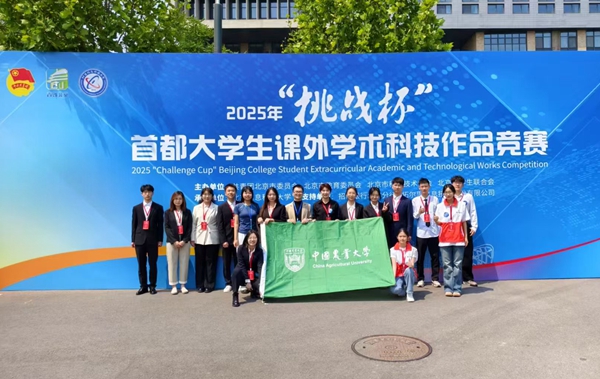
涉农经济金融专业院校如何做好人才培养
Jin Rong Shi Bao· 2025-08-08 07:55
Core Viewpoint - The cultivation of agricultural economic and financial professionals is essential for building a strong agricultural nation, focusing on aligning talent development with the needs of agricultural modernization [1][2]. Employment and Development Directions - Graduates in agricultural economics and finance have diverse employment opportunities closely tied to national strategies, including roles in government agencies, financial institutions, leading agricultural enterprises, and academic or research institutions [2][3]. Educational Recommendations - Students aspiring to further their studies in agricultural economics and finance should have clear professional recognition and career planning, emphasize practical problem-solving skills, and develop an international perspective on agriculture [4][3]. Practical Education and Industry Collaboration - The College of Economics and Management at China Agricultural University has implemented a "practice+" education model, integrating classroom learning with social practice to enhance students' understanding and commitment to agriculture [5][6]. Achievements in Practical Education - The college has seen significant student engagement in practical research and social activities, with numerous teams conducting field research across various provinces, leading to valuable data collection and collaboration with industry partners [9][10].
20年期超长期特别国债招标发行
Zhong Guo Zheng Quan Bao· 2025-08-08 07:31
Core Viewpoint - The issuance of ultra-long-term special government bonds is characterized by a steady pace, aiming to minimize liquidity impact on the market [1][2]. Group 1: Issuance Details - The second ultra-long-term special government bond was issued on May 24, with a total competitive bidding amount of 40 billion yuan and a winning yield of 2.49% [1]. - The issuance schedule for this year includes 7 bonds with a 20-year term, 12 with a 30-year term, and 3 with a 50-year term, indicating a uniform issuance pattern [2]. Group 2: Market Impact - Analysts suggest that the issuance of ultra-long-term special government bonds will have a limited impact on liquidity, with a controlled supply pressure expected [2]. - The issuance arrangement is designed to reduce short-term liquidity shocks, and the likelihood of a reserve requirement ratio cut by the central bank in response to the bond issuance is low [2]. Group 3: Investment Recommendations - Investors are advised to approach investments in ultra-long-term special government bonds with caution, as market prices can fluctuate based on market conditions [3][4]. - The bonds are considered a suitable choice for conservative investors due to the high assurance of principal and interest repayment backed by national sovereign credit [4].