医疗

Search documents
黄仁勋:中国的供应链是个奇迹
Bei Jing Shang Bao· 2025-07-16 05:40
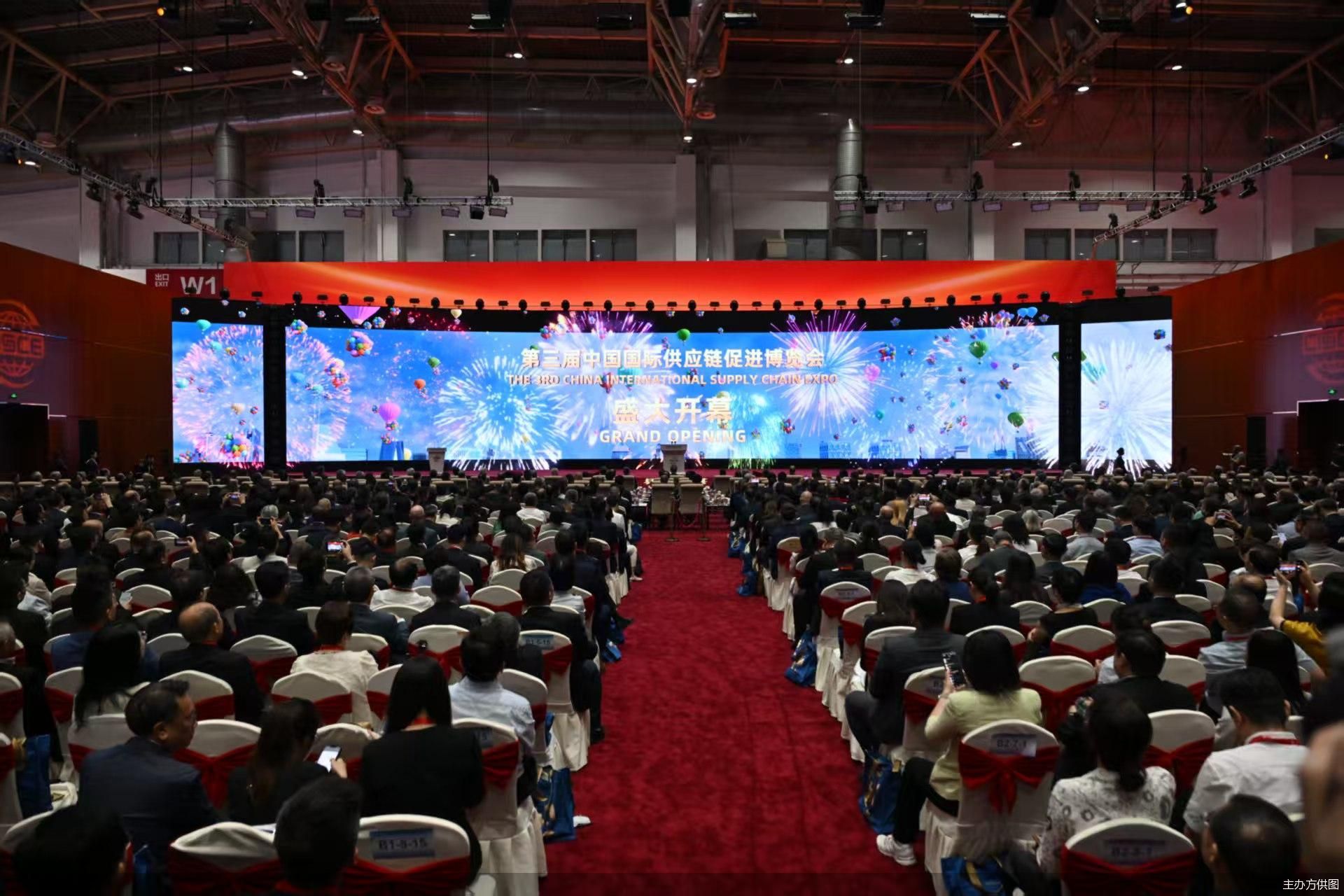
Core Insights - The third China International Supply Chain Promotion Expo (Chain Expo) opened, highlighting China's remarkable supply chain achievements and innovation support [2] - NVIDIA's CEO emphasized the company's journey from a small startup in 1993 to a leader in AI and GPU technology, showcasing its significant contributions to the gaming and AI industries [3][4] Group 1: NVIDIA's Contributions to AI - NVIDIA invented the first programmable graphics processor (GPU) in 1999, which opened doors for accelerated computing [3] - The introduction of CUDA in 2006 transformed GPUs into general-purpose computing engines, marking the beginning of the AI era [3] - Since the launch of AlexNet on NVIDIA GPUs, the company has significantly enhanced AI computing performance by 100,000 times, surpassing Moore's Law by 1,000 times [4] Group 2: AI's Impact on Various Industries - AI is revolutionizing multiple sectors, including scientific research, healthcare, energy development, transportation, and logistics [4] - Major Chinese platforms like Tencent, Alibaba, and ByteDance leverage AI to enhance their services, demonstrating the technology's widespread application [5] - Over 1.5 million developers in China are utilizing NVIDIA's platform to bring their innovations to life, contributing to the global AI landscape [5] Group 3: Future of AI and Supply Chain - AI is becoming a fundamental infrastructure, akin to electricity and the internet, reshaping supply chains and production logistics [6] - Hundreds of projects in China are using NVIDIA Omniverse for digital twin simulations to optimize factory and warehouse designs [6] - The next wave of AI will focus on robotic systems capable of reasoning and executing tasks, leading to AI-driven factories and products [6]


美国6月CPI整体温和,但“关税阴影”已开始显现
Hua Er Jie Jian Wen· 2025-07-16 01:50
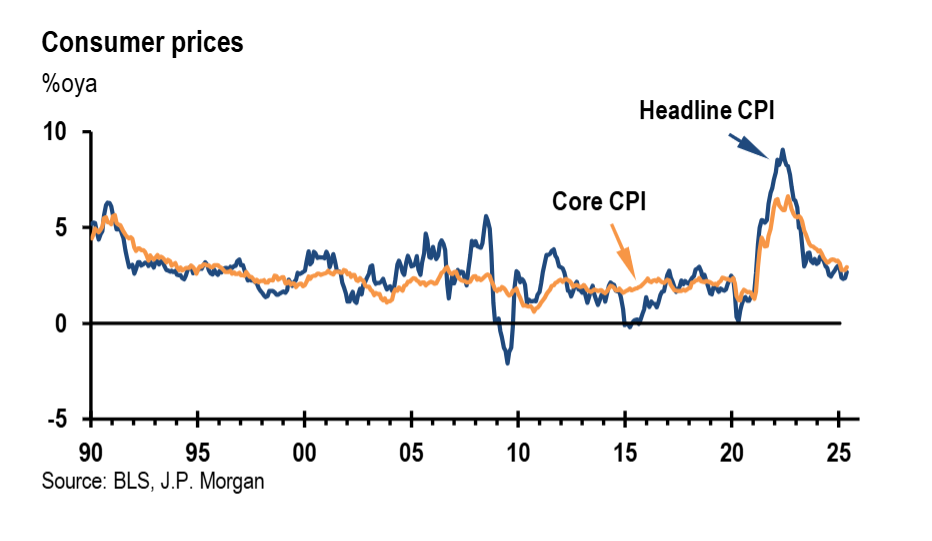
Core Insights - The overall Consumer Price Index (CPI) for June showed a moderate increase, with a month-over-month rise of 0.3% and a year-over-year increase of 2.7%, marking a four-month high [1][4] - Core CPI rose by 0.23% month-over-month and 2.9% year-over-year, slightly below expectations [1][4] Inflation Dynamics - The automotive and travel sectors continue to exhibit weakness, contributing to a drag on inflation, while import prices are showing significant upward pressure attributed to tariffs [4][5] - Various imported goods, including home appliances and sports equipment, have seen price increases approaching or exceeding an annualized rate of 10% over the past three months [5] - The report indicates that as companies deplete their pre-stocked inventories and refrain from further profit margin compression, tariff-related price pressures are expected to intensify in the coming months [5] Sector Performance - Healthcare CPI increased by 0.5% in June, and clothing prices rose by 0.4%, reversing declines from May [5] - The travel industry remains weak, with accommodation prices falling short of expectations and airfares rising less than predicted based on high-frequency travel booking data [8] Federal Reserve Outlook - The Federal Reserve is likely to maintain a cautious stance due to the structural divergence in inflation dynamics, with potential upward risks remaining [9] - The forecast for the core Personal Consumption Expenditures (PCE) price index for June is a month-over-month increase of 0.28%, with a year-over-year rise of 2.7% [9]
摩根士丹利:东盟消费者+医疗保健
摩根· 2025-07-16 00:55
Investment Rating - The report indicates a positive investment outlook for healthcare stocks in Southeast Asia, particularly in countries facing aging populations like Thailand [5][12]. Core Insights - The Asian consumer market is characterized by price sensitivity, with consumers downgrading spending in food but increasing expenditures in travel [1][4]. - The rapid growth of the fast-moving consumer goods (FMCG) market in Southeast Asia, particularly in Indonesia, the Philippines, and Thailand, is noteworthy, with growth rates double that of India [1][7]. - Local brands are gaining market share over global brands due to their ability to offer personalized products at lower prices through e-commerce and social media [6][4]. Summary by Sections Consumer Behavior - Asian consumers prioritize value for money and are highly sensitive to prices, often influenced by macroeconomic cycles [4][1]. - The Z generation plays a significant role in consumer behavior, heavily relying on social media and influencers for purchasing decisions [4][1]. Demographics and Market Impact - Approximately one-third of Asia's population is under 25, but significant demographic differences exist, with countries like Thailand facing rapid aging [5][1]. - The increase in single-person households is driving growth in pet ownership and online entertainment [5][1]. FMCG Market Trends - The combined FMCG market size of Indonesia, the Philippines, and Thailand is comparable to that of India, with a growth rate significantly higher than India's [7][1]. - There is a notable opportunity for growth in the dairy sector, particularly in Indonesia, where per capita spending is significantly lower than in Thailand [7][1]. Grocery Retail Sector - Traditional small stores remain important in Asia, but modern retail channels are growing faster, with convenience stores dominating the market [8][9]. - Thailand's 7-11 is one of the most profitable globally, with substantial room for market share expansion [11][9]. E-commerce Development - The e-commerce market in Southeast Asia is rapidly expanding, with a current market size of $160 billion and a compound annual growth rate exceeding 30% [20][21]. - Despite the growth, e-commerce penetration remains lower than in China and South Korea, indicating further potential for development [21][20]. Healthcare Sector Potential - The healthcare sector in Southeast Asia has significant growth potential, driven by low current spending relative to GDP and an aging population [12][5]. - Thailand's healthcare spending has increased by approximately 7% over the past decade, highlighting a growing demand for healthcare services [12][5]. Key Companies - CPO is a leading grocery retailer in Thailand with a market capitalization of approximately $12 billion, dominating the convenience store segment [24]. - Astro is Indonesia's largest diversified group, holding significant market shares in both the automotive and heavy equipment sectors [24]. - Jollibee, the largest listed fast-food chain in Asia, is expanding internationally while maintaining a strong domestic presence [27]. - BDMS operates the largest private healthcare network in Thailand, catering to both local and international patients [29]. - bh Hospital is a major private hospital in Southeast Asia, known for its high profit margins and focus on international patients [30].
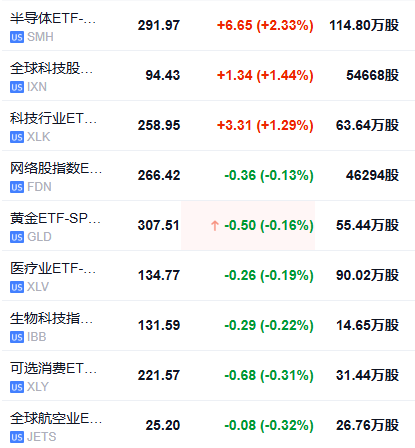
美股盘初,主要行业ETF多数下跌,金融业ETF跌幅居前;半导体ETF涨超2%。
news flash· 2025-07-15 13:50
Core Viewpoint - The major industry ETFs in the U.S. stock market are mostly down, with the financial sector ETF experiencing the largest decline, while the semiconductor ETF has risen over 2% [1]. Group 1: ETF Performance - The semiconductor ETF (SMH) increased by 6.65, or 2.33%, reaching a price of 291.97 with a trading volume of 1.148 million shares [2]. - The global technology stock ETF (IXN) rose by 1.34, or 1.44%, to a price of 94.43 with a trading volume of 54,668 shares [2]. - The technology sector ETF (XLK) gained 3.31, or 1.29%, reaching a price of 258.95 with a trading volume of 636,400 shares [2]. - The network stock index ETF (FDN) decreased by 0.36, or 0.13%, to a price of 266.42 with a trading volume of 46,294 shares [2]. - The gold ETF (GLD) saw a slight decline of 0.50, or 0.16%, to a price of 307.51 with a trading volume of 554,400 shares [2]. - The healthcare ETF (XLV) fell by 0.26, or 0.19%, to a price of 134.77 with a trading volume of 900,200 shares [2]. - The biotechnology index ETF (IBB) decreased by 0.29, or 0.22%, to a price of 131.59 with a trading volume of 146,500 shares [2]. - The consumer discretionary ETF (XLY) dropped by 0.68, or 0.31%, to a price of 221.57 with a trading volume of 314,400 shares [2]. - The global airline industry ETF (JETS) declined by 0.08, or 0.32%, to a price of 25.20 with a trading volume of 267,600 shares [2].
内卷时代,上市公司如何突出重围
Sou Hu Cai Jing· 2025-07-15 08:40
Group 1: Market Trends in China - The era of China's rise is characterized by a shift from East to West, emphasizing the importance of embracing artificial intelligence and improving management efficiency in a stock economy [1] - As of June 25, 2025, there are 5,421 listed companies in A-shares, with 3,803 (70%) having a market capitalization of less than 10 billion RMB, indicating a significant presence of small-cap companies [1] - The number of IPOs has decreased sharply, with only 100 expected in 2024, while delistings have also increased, reflecting a changing regulatory environment [1] Group 2: Characteristics of the US Capital Market - The number of listed companies in the US has decreased from 8,884 in 1997 to 5,437 by the end of 2024, with an average annual decline of about 300 companies due to mergers, bankruptcies, and delistings [2] - The top seven companies in the US account for 30.2% of the total market capitalization, highlighting a trend towards concentration and dominance by leading firms [2] - Traditional venture capital and private equity are nearly extinct, with industrial capital taking the lead in mergers and acquisitions, focusing on post-investment empowerment [2] Group 3: Strategies for Chinese Listed Companies - Companies must reassess their customer-centric approach, as evidenced by the success of Hong Kong-listed consumer brands that have seen significant market capitalization increases [3][6] - Strategic reduction is essential; companies like Shenghong Technology have thrived by focusing on high-value clients and cutting low-margin customers, resulting in increased revenue and profit margins [7] - Companies should concentrate on their core business and avoid diversification pitfalls, as demonstrated by the success of Li Shufu's automotive ventures [9] Group 4: Management and Growth Strategies - Internal growth relies on strategic insight, organizational strength, marketing capabilities, and financial management, which are crucial for enhancing efficiency and profitability [10] - Huawei's impressive growth, with revenues reaching 862.1 billion RMB in 2024, is attributed to its investment in consulting firms to optimize its management practices [11] - Companies like Luxshare Precision have successfully expanded through a series of acquisitions, becoming a major player in the electronics supply chain [14] Group 5: Capital Utilization for Expansion - Aier Eye Hospital has effectively used a merger fund model to accelerate its expansion, leveraging limited capital to achieve significant growth in its network of eye hospitals [18] - The management dividend era emphasizes the need for professional expertise, as companies that fail to evolve will fall behind in a competitive landscape [19] - Companies must adopt a customer-centric approach, focus on strategic reduction, and utilize capital effectively for sustainable growth [20]

国家统计局副局长就2025年上半年国民经济运行情况答记者问
Guo Jia Tong Ji Ju· 2025-07-15 06:35
Economic Overview - The Chinese economy has shown resilience in the face of complex international environments, with GDP growth of 5.3% in the first half of the year, slightly up from 5% in the same period last year [4][6] - Key economic indicators such as unemployment rates and consumer prices have remained stable, with the CPI showing a slight increase in June after several months of decline [4][35] - Domestic demand has been a significant driver of GDP growth, contributing 68.8% to the increase, with final consumption expenditure accounting for 52% [5][8] Investment Trends - Fixed asset investment reached 24.9 trillion yuan, with a nominal growth of 2.8%, while the actual growth, adjusted for price changes, was 5.3% [11] - Investment structure is improving, with manufacturing investment growing by 7.5% and high-tech service investment increasing by 8.6% [11][12] - The investment growth rate has experienced fluctuations due to external pressures and internal structural adjustments, particularly in traditional industries [12][14] Real Estate Market - The real estate market has shown signs of stabilization, with a reduction in the decline of new housing sales and improved market transactions [14][15] - The sales area of new residential properties decreased by 3.5%, but this was a significant improvement compared to previous declines [15] - Funding for real estate development has improved, with a reduction in the decline of funds received by developers [15] New Quality Productivity - The development of new quality productivity is emphasized as a key driver for high-quality growth, with R&D investment reaching 2.7% of GDP [17] - High-tech manufacturing value added increased by 9.5%, indicating robust growth in emerging industries [18] - The digital economy is expanding rapidly, with its core industries contributing approximately 10% to GDP [18] Consumer Market Dynamics - The retail sales of consumer goods reached 24.55 trillion yuan, growing by 5% year-on-year, with service consumption showing a notable increase [21][22] - Key trends include a rise in service consumption, holiday spending, and an increase in the sales of upgraded consumer goods [22][23] - The government is expected to continue implementing policies to stimulate consumption, which is crucial for sustaining economic growth [23][26] Inflation and Price Trends - The CPI showed a slight increase of 0.1% in June, marking a shift from previous months of decline, with core CPI rising to 0.7% [35][36] - Price trends are characterized by structural and transitional factors, with food and energy prices exerting downward pressure [36] - A moderate recovery in prices is anticipated in the second half of the year, supported by stable economic growth and effective demand policies [37]
建信基金:北证50成份指数基金开售,标的指数过去一年涨幅超100%
Sou Hu Cai Jing· 2025-07-15 05:56
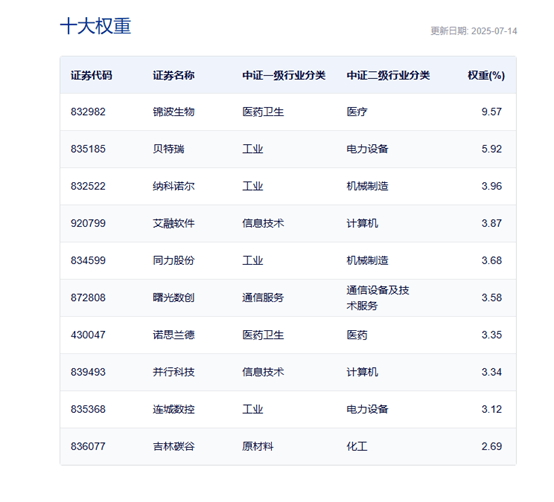
Group 1 - The core viewpoint of the article is the launch of the Jianxin Beizheng 50 Index Fund, which is a passive index fund managed by Liu Minghui, aimed at reflecting the performance of the Beizheng 50 Index [1][2][6]. - The fund will be publicly offered from July 15, 2025, to July 25, 2025, with a minimum fundraising target of 10 million shares and a holding period of at least 3 years for the initial investment [2]. - The fund's management fee is set at an annual rate of 0.5% based on the previous day's net asset value [7]. Group 2 - As of July 14, the Beizheng 50 Index has increased by over 37% year-to-date and has more than doubled in value over the past year, indicating strong market performance [5]. - Liu Minghui, the proposed fund manager, has been with Jianxin Fund since July 2015 and currently manages three index funds with a total scale exceeding 600 million yuan [6][8]. - The Beizheng 50 Index consists of 50 representative companies listed on the Beijiao Exchange, selected for their large scale and good liquidity, reflecting the overall market performance [2].
高质量完成十四五规划|新的开创性进展、突破性变革、历史性成就
Xin Hua She· 2025-07-15 01:01
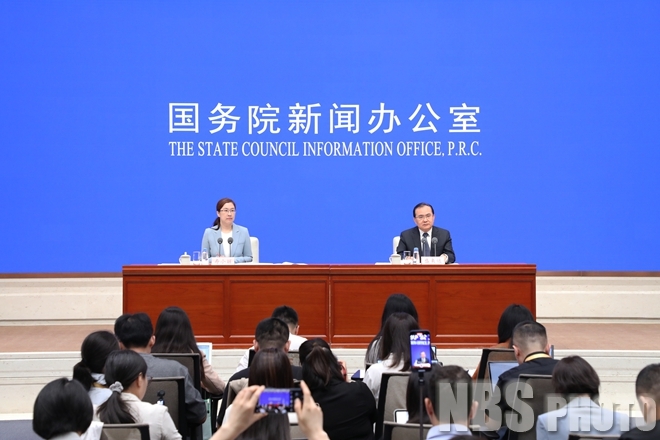
Economic Strength - China's economic strength has significantly increased, with the total economic output expected to reach around 140 trillion yuan this year, marking a growth of over 35 trillion yuan compared to previous years [2][4] - The contribution rate of domestic demand to economic growth averaged 86.4% over the past four years, with final consumption contributing 56.2%, an increase of 8.6 percentage points compared to the previous five-year plan [2] Manufacturing and Innovation - China remains the world's largest manufacturing power, with annual manufacturing value added exceeding 30 trillion yuan, maintaining its position as the global leader for 15 consecutive years [3] - Significant breakthroughs in innovation include the launch of the first domestically produced aircraft carrier and the operation of the first fourth-generation nuclear power plant [5] - R&D investment is projected to grow nearly 50% by 2024, reaching 1.2 trillion yuan, with R&D intensity increasing to 2.68%, approaching the OECD average [5] Green Development - China has made notable progress in green development, with forest coverage exceeding 25%, contributing to a quarter of the world's new greening area [7] - The proportion of days with good air quality has stabilized at around 87%, and the energy generation capacity from renewable sources has surpassed that of coal [7] Social Welfare - The achievements in economic development and technological progress have translated into improved public welfare, with the establishment of the world's largest education and social security systems [8] - The average years of education for new labor force entrants have exceeded 14 years, and the number of practicing physicians per thousand people has increased from 2.9 to 3.6 [8] Reform and Opening Up - The reform goals set during the 13th Five-Year Plan have been largely achieved, with significant improvements in market access and the business environment [9][10] - Foreign direct investment in China reached 4.7 trillion yuan from 2021 to May this year, surpassing the total during the previous five-year period, contributing significantly to exports and job creation [10]
《中共中央关于加强新时代审判工作的意见》发布 要求加强金融审判工作 依法严惩操纵市场、内幕交易等金融领域违法犯罪
Shang Hai Zheng Quan Bao· 2025-07-14 18:29
Group 1: Core Views - The document emphasizes the importance of strict and fair judicial practices to ensure high-quality development and security, focusing on financial and intellectual property trials, as well as improving the legal business environment and safeguarding people's livelihoods [1][2]. Group 2: Financial Judicial Work - The document calls for severe punishment for financial crimes such as market manipulation, insider trading, illegal fundraising, loan fraud, and money laundering, while promoting healthy development in financial markets [1]. - It highlights the need to establish rules for handling disputes in emerging financial areas like digital currency, mobile payments, and cross-border asset transactions [1]. Group 3: Intellectual Property Judicial Work - The document stresses the need for enhanced judicial protection of technological innovation and trade secrets in key frontier areas [1]. - It aims to improve the appellate review mechanism for intellectual property cases and strengthen the connection between administrative enforcement and judicial trials in this field [1]. Group 4: Legal Business Environment - The document outlines the need to punish various economic crimes and corruption to maintain the socialist market economy order [2]. - It emphasizes the importance of protecting property rights and preventing administrative and criminal interference in economic disputes [2]. - The document also calls for the establishment of punitive compensation systems in areas such as food safety, intellectual property, and environmental pollution [2]. Group 5: Livelihood Judicial Protection - The document proposes strengthening judicial protection in areas related to family, healthcare, elderly care, employment, and consumer rights to enhance public welfare [2]. - It aims to address medical malpractice disputes and promote harmonious doctor-patient relationships [2]. - The document also emphasizes the need to protect equal employment rights and timely compensation for migrant workers [2]. Group 6: Professional Judicial Team Building - The document highlights the importance of building a specialized judicial team and improving the training system for judges, particularly in financial, foreign-related, bankruptcy, intellectual property, and environmental resource areas [3].
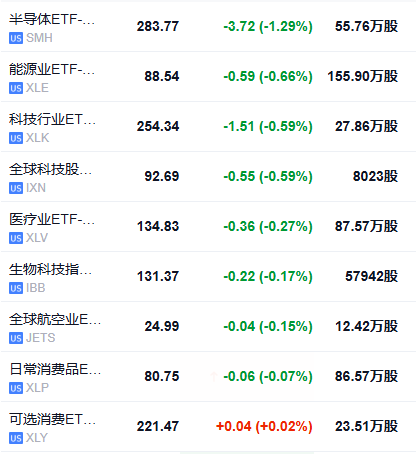
美股盘初,主要行业ETF涨跌不一,半导体ETF跌超1%,网络股指数ETF涨超0.5%。
news flash· 2025-07-14 13:45
Core Insights - Major industry ETFs in the US stock market showed mixed performance, with the semiconductor ETF declining over 1% while the internet stock index ETF rose more than 0.5% [1] Group 1: Semiconductor Sector - The semiconductor ETF (us SMH) closed at 283.77, down by 3.72 points, which is a decrease of 1.29% with a trading volume of 557,600 shares [2] Group 2: Energy Sector - The energy sector ETF (us XLE) ended at 88.54, down by 0.59 points, reflecting a decline of 0.66% with a trading volume of 1,559,000 shares [2] Group 3: Technology Sector - The technology sector ETF (us XLK) closed at 254.34, decreasing by 1.51 points, which is a drop of 0.59% with a trading volume of 278,600 shares [2] - The global technology stock ETF (us IXN) finished at 92.69, down by 0.55 points, also a decline of 0.59% with a trading volume of 8,023 shares [2] Group 4: Healthcare Sector - The healthcare sector ETF (us XLV) closed at 134.83, down by 0.36 points, a decrease of 0.27% with a trading volume of 875,700 shares [2] - The biotechnology index ETF (us IBB) ended at 131.37, down by 0.22 points, which is a decline of 0.17% with a trading volume of 57,942 shares [2] Group 5: Consumer Sector - The consumer staples ETF (us XLP) closed at 80.75, down by 0.06 points, a decrease of 0.07% with a trading volume of 865,700 shares [2] - The consumer discretionary ETF (us XLY) finished at 221.47, slightly up by 0.04 points, reflecting an increase of 0.02% with a trading volume of 235,100 shares [2] Group 6: Airline Sector - The global airline industry ETF (US JETS) closed at 24.99, down by 0.04 points, a decrease of 0.15% with a trading volume of 124,200 shares [2]