
金属

Search documents
大摩闭门会:科技、金属、亚洲,开门普涨能持续么? _纪要
2026-01-20 01:50
Summary of Key Points from Conference Call Industry Overview - The conference call discusses the performance of the **technology and resource materials sectors** in China, particularly in early 2026, driven by innovations in **artificial intelligence, brain-computer interfaces, and new commercial aviation** [1][4][7]. Core Insights and Arguments 1. **Market Performance**: - In early 2026, Chinese technology and resource materials stocks performed strongly due to technological innovations and capital inflows from residents and institutional investors reallocating assets [1][3][4]. - The A-share market sentiment index exceeded 78% on January 6 and peaked at 93 on January 12, indicating overheating in the market [1][10]. 2. **Regulatory Measures**: - Regulatory authorities have implemented measures to cool down the overheated market, such as adjusting margin requirements for margin trading, aiming to maintain healthy market development rather than suppressing the overall bull market [1][6][10]. 3. **Currency Trends**: - The **RMB exchange rate** is relatively stable but under upward pressure, influenced by the depreciation of the USD and the fundamentals of the Chinese economy. It is expected to reach a range of 6.85 to 6.8 against the USD in the first half of the year [1][8]. 4. **Investment Flows**: - New funds entering the bull market primarily come from the bond market, deposits, insurance funds, and foreign capital, rather than from increased leverage in margin trading [12][13]. 5. **Global Economic Context**: - The geopolitical landscape has led to a decline in the attractiveness of USD assets, prompting investors to turn towards Asian markets, including China, which is seen as having increased investment certainty [7][17]. Additional Important Content 1. **Potential Risks**: - The A-share market may experience a "waiting effect" during the Spring Festival, with investors potentially reducing positions due to concerns over international situations [18]. - Geopolitical changes, such as strategic cooperation between China and Canada, could introduce volatility affecting investment decisions [18]. 2. **Monetary Policy**: - The central bank has lowered the rates on structural monetary policy tools to support small and medium-sized enterprises and green transformation, indicating potential for further rate cuts depending on market performance [2][19][20]. 3. **Sector-Specific Developments**: - The resource materials sector is expected to remain hot due to supply constraints in copper and aluminum, alongside strict regulations on solid waste emissions affecting lithium production [28][29]. 4. **Investment Recommendations**: - Four Chinese internet companies are recommended for investment in 2026: **Tencent, Alibaba, Pinduoduo, and Tencent Music**, based on their strong performance and potential for growth [30]. 5. **AI Developments**: - Chinese internet platforms have made significant advancements in AI, with Alibaba leading in the integration of AI agents across its applications, indicating a robust growth trajectory in the AI sector for 2026 [25][26]. This summary encapsulates the key points discussed in the conference call, highlighting the performance of the technology and resource materials sectors, regulatory measures, currency trends, investment flows, potential risks, monetary policy, sector-specific developments, and investment recommendations.
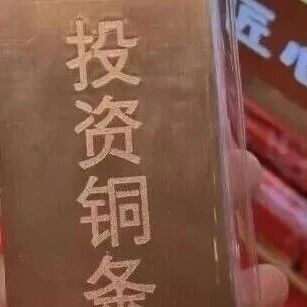
炒完金条银条,投资铜条火了!1公斤约200元,去年价格涨幅超30%,网友:再也不敢说“破铜烂铁”了......
凤凰网财经· 2026-01-19 13:41
Core Viewpoint - The article discusses the rising interest in investing in copper bars, highlighting their price range and market dynamics, while questioning their viability as an investment compared to gold and silver [4][10]. Group 1: Market Dynamics - In Shenzhen's Shui Bei, the largest gold and jewelry distribution center in China, pure copper 999.9 investment bars have been introduced, priced between 180 to 280 yuan for 1 kilogram [4]. - There is a notable disparity between the number of inquiries and actual purchases, with many potential buyers expressing curiosity but few making transactions [6]. - Most merchants currently do not have copper bars in stock and require pre-orders, with delivery times ranging from 3 to 7 days [6]. Group 2: Price Trends - Last year, copper prices surged over 30%, with projections indicating a continued upward trend, reaching 99,180 yuan per ton by the end of 2025, marking a 34.34% increase [7][8]. - As of January 14, 2026, copper prices hit a record high of $13,407 per ton on the London Metal Exchange, with domestic futures exceeding 100,000 yuan per ton [8]. Group 3: Investment Viability - Experts suggest that copper is not suitable for individual investment due to its high premium and the industrial demand driving its price, unlike gold and silver which have intrinsic monetary properties [10][11]. - A calculation indicates that at a purchase price of 200 yuan per kilogram, copper would need to reach 200,000 yuan per ton to break even, excluding costs and potential recovery discounts [10].

关税威胁“对所有商品来说都是双赢组合”
Xin Lang Cai Jing· 2026-01-19 13:04
Core Viewpoint - The escalating tariff threats between the US and Europe regarding Greenland have led to significant market turbulence, resulting in a sharp increase in commodity prices, with gold and silver reaching historical highs [1][3]. Group 1: Commodity Price Movements - Gold and silver have both reached new historical highs, indicating a strong demand for precious metals during turbulent times [1][3]. - Prices of other metals such as copper, platinum, and nickel have also risen, highlighting a trend where investors are turning to metal assets as a safe haven [1][3]. - Copper prices have notably surged, reaching $12,985 per ton, approaching recent historical peaks [1][3]. Group 2: Economic Implications - Analysts suggest that the ongoing escalation of the US-EU tariff conflict may signal a weakening dollar, declining real interest rates, and rising inflation levels [4]. - The situation is viewed as a positive factor for all commodities, according to analysts from Panmure Liberum [2][5].
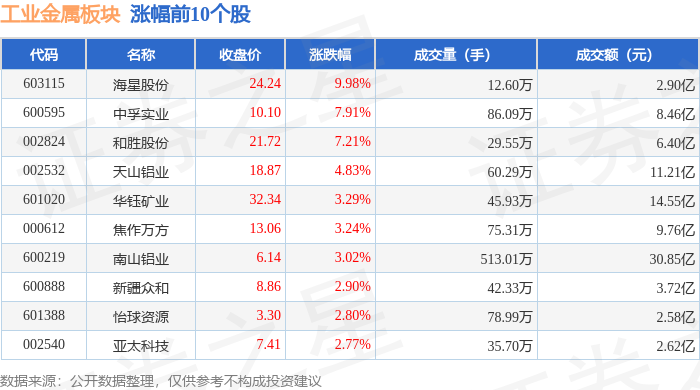
工业金属板块1月19日跌0.64%,江西铜业领跌,主力资金净流出41.31亿元
Zheng Xing Xing Ye Ri Bao· 2026-01-19 08:52
Core Viewpoint - The industrial metals sector experienced a decline of 0.64% on January 19, with Jiangxi Copper leading the losses, while the Shanghai Composite Index rose by 0.29% and the Shenzhen Component Index increased by 0.09% [1] Group 1: Market Performance - Jiangxi Copper's stock closed at 60.50, down 5.63%, with a trading volume of 923,200 shares and a transaction value of 5.56 billion [2] - The industrial metals sector saw a net outflow of 4.131 billion from major funds, while retail investors contributed a net inflow of 3.717 billion [2][3] - Notable gainers included Haixing Co., which rose by 9.98% to 24.24, and Yititiwang, which increased by 7.91% to 10.10 [1] Group 2: Individual Stock Performance - Major stocks in the industrial metals sector showed varied performance, with significant declines in Jiangxi Copper, Yunnan Copper, and Tongling Nonferrous Metals, all experiencing drops between 2.89% and 5.63% [2] - Haixing Co. and Yititiwang led the gains in the sector, with transaction values of 290 million and 846 million respectively [1] - The trading volume for Jiangxi Copper was notably high at 923,200 shares, indicating significant market activity despite the decline [2] Group 3: Fund Flow Analysis - The main funds showed a net inflow into stocks like Nanshan Aluminum and Huayu Mining, with net inflows of 181 million and 104 million respectively [3] - Retail investors showed a strong preference for stocks like Haixing Co. and Yititiwang, with net inflows of 69.93 million and 49.91 million respectively [3] - The overall sentiment in the industrial metals sector appears mixed, with major funds withdrawing while retail investors remain active [2][3]
碳酸锂期货先扬后抑,旺季临近生猪震荡偏强|期货周报
2 1 Shi Ji Jing Ji Bao Dao· 2026-01-18 23:24
Commodity Market Overview - The commodity market showed mixed performance from January 12 to January 16, with the base metals sector leading gains while the black metals sector declined [1] - Energy and chemical sectors saw slight increases, with fuel up 0.32% and crude oil up 1.22% [1] - The black metals sector experienced declines, with coking coal down 2.05%, coke down 1.77%, and iron ore down 0.31% [1] - The base metals sector saw lithium carbonate up 1.94%, zinc up 3.06%, and nickel up 1.62% [1] - Precious metals saw significant gains, with gold up 2.57% and silver up 20.03% [1] - Agricultural products showed mixed results, with eggs up 1.05% and live pigs up 1.78%, while soybean meal fell 2.12% [1] Lithium Market Dynamics - Lithium carbonate futures experienced volatility, initially rising 17% before a sharp decline, closing the week at 146,200 yuan/ton after hitting a limit down [2][3] - Supply remained slightly increased, with domestic lithium carbonate production at 22,605 tons for the week, a 0.3% increase [2] - Demand remained strong despite seasonal trends, with December sales of new energy vehicles reaching 1.71 million units, a 28% year-on-year increase [2] Pig Market Trends - The pig futures market showed a strong upward trend ahead of the Spring Festival, with the main contract up 1.78% to 11,950 yuan/ton [4] - Supply dynamics indicated a slowdown in the outflow of pigs, with the number of breeding sows stable at 39.9 million heads [4] - Demand is expected to increase as the Spring Festival approaches, with slaughter rates showing slight improvements [4][5] Export Growth Insights - December 2025 saw a 6.6% year-on-year increase in exports, driven by strong performance in non-US markets and high-end manufacturing [6][7] - Key drivers included a significant increase in automobile exports and a recovery in consumer electronics demand [6][7] - The overall export growth is expected to remain resilient, supported by ongoing capital expenditure needs in Belt and Road Initiative countries [8] Financial Data and Policy Measures - December 2025 financial data revealed a decrease in new social financing, with a total of 2.21 trillion yuan, reflecting a year-on-year decline [9][10] - The People's Bank of China introduced structural monetary policy tools aimed at supporting targeted sectors, indicating a shift from broad monetary easing [12] - The focus on corporate loans showed a significant increase, while household loans continued to decline, indicating cautious consumer behavior [10][11]
东阳光(600673):致力于推广液冷解决方案,正式进军智能机器人领域
GUOTAI HAITONG SECURITIES· 2026-01-18 05:43
Investment Rating - The report assigns a rating of "Buy" to the company with a target price of 34.77 CNY [4][16]. Core Insights - The company is dedicated to promoting liquid cooling solutions and has officially entered the smart robotics field, establishing a joint venture in Wuhan to leverage its operational experience and data resources [11][28]. - The company is the only producer in South China with a complete fluorochlorinated chemical industry chain, aiming to secure approximately 60,000 tons of quota by 2025, maintaining its position in the domestic first tier [11][23]. - The financial forecast indicates a significant recovery in net profit, with projections of -294 million CNY in 2023, turning to 375 million CNY in 2024, and reaching 1.963 billion CNY by 2027 [3][12]. Financial Summary - Total revenue is projected to grow from 10,854 million CNY in 2023 to 16,106 million CNY by 2027, reflecting a compound annual growth rate (CAGR) of approximately 6.9% [3][12]. - The net profit attributable to the parent company is expected to increase dramatically from -294 million CNY in 2023 to 1,963 million CNY in 2027, indicating a strong turnaround [3][12]. - Earnings per share (EPS) are forecasted to rise from -0.10 CNY in 2023 to 0.65 CNY in 2027 [3][12]. Business Segments - The company's main business includes six segments: electronic components, high-end aluminum foil, new chemical materials, energy materials, liquid cooling technology, and embodied intelligence [18][28]. - In the electronic components segment, the company focuses on aluminum electrolytic capacitors and has established partnerships with major firms like Samsung and TCL [19][28]. - The high-end aluminum foil segment is a key area, with products used in various applications, including air conditioning and automotive heat exchangers [20][21]. - The new chemical materials segment includes environmentally friendly refrigerants and chlor-alkali products, with a strong market position in the third-generation refrigerant sector [22][23]. - The liquid cooling technology segment aims to provide comprehensive cooling solutions, with a focus on data centers and partnerships to enhance market presence [26][28]. - The embodied intelligence segment is developing humanoid robots for various applications, with a production capacity of 300 units per year from its new facility in Hubei [28][29].

金属狂欢退潮,谁在裸泳?商品市场的警钟为谁而鸣?
对冲研投· 2026-01-17 10:06
Group 1 - The core viewpoint of the article discusses the recent volatility in tin prices, suggesting that the surge was primarily driven by speculative capital rather than fundamental supply-demand dynamics [2][3][6] - Historical context is provided, comparing the current tin price surge to a previous bubble from late 2021 to 2022, where prices peaked due to geopolitical tensions and speculative trading, followed by a significant crash [3][5] - Current signals indicate that risks are accumulating in the tin market, with signs of weakening demand and regulatory measures aimed at cooling speculative trading [6][7] Group 2 - The article highlights the recent regulatory changes in trading rules for lithium carbonate, which have led to a significant drop in trading volume and a retreat of speculative funds from the market [9][11] - Internal market pressures are noted, including a rapid price increase of over 30% in a short period, leading to profit-taking among investors and a reassessment of the fundamental supply-demand situation [12] - The article emphasizes the importance of monitoring key technical levels and fundamental indicators to gauge future price movements in lithium carbonate [12] Group 3 - The article warns of emerging risk signals in the silver market, with recent price adjustments linked to increased margin requirements and changes in market sentiment [15][20] - The article discusses the potential impact of the U.S. 232 investigation on silver, platinum, and palladium, highlighting concerns over import tariffs and their implications for market dynamics [57][61] - The article notes that the silver market is currently facing multiple pressures, including index rebalancing and increased trading costs, which could lead to heightened volatility [62]

帮主郑重:油金背离、金属跳水!商品市场的“明牌”与“暗流”
Sou Hu Cai Jing· 2026-01-17 00:58
Group 1: Oil Market - Oil prices experienced a slight recovery, closing above $59 per barrel, primarily driven by a "weekend risk-off" sentiment rather than strong market optimism [3] - The geopolitical risk premium remains, but the underlying fundamentals supporting sustained oil price increases, such as global demand, are being scrutinized [3] - A senior strategist indicated that if the U.S. does not take action soon, market attention will shift back to less optimistic inventory and supply-demand data [3] Group 2: Gold Market - Gold prices fell due to a rebound in the dollar and rising U.S. Treasury yields, with deeper concerns stemming from Trump's statements regarding the Federal Reserve chair selection [4] - Market expectations for significant Fed rate cuts next year, which had previously driven gold prices to new highs, are now in doubt due to Trump's indecision [4] - The future trajectory of gold prices is increasingly tied to U.S. interest rate expectations, shifting from a geopolitical risk narrative to a financial story closely linked to the Fed's actions [4] Group 3: Base Metals Market - Base metals, including copper and tin, saw a significant decline after reaching historical highs, with tin prices dropping nearly 8% [4] - This collective drop is attributed to traders in Shanghai and London synchronously taking profits and closing positions, highlighting the volatility in speculative positions [4] - The market's reaction serves as a reminder that even in favorable long-term trends like global decarbonization, prices can experience significant corrections [4] Group 4: Investment Strategy - Investors are advised to differentiate between "event-driven" and "trend-driven" factors, with geopolitical events impacting oil prices being more volatile and less predictable [5] - Maintaining calm during market exuberance is crucial, as the recent correction in base metals illustrates the risks associated with prices deviating significantly from their fundamentals [5] - The strength of the dollar is emphasized as a key factor influencing all dollar-denominated commodities, with any shifts in Fed policy likely to create significant market impacts [5]

欧美股市多数下跌,芯片股深夜爆发,中概股普跌,白银跳水
2 1 Shi Ji Jing Ji Bao Dao· 2026-01-16 23:38
Group 1 - US stock indices collectively declined, with the Dow Jones down 0.29%, S&P 500 down 0.38%, and Nasdaq down 0.66% [1] - Major technology stocks mostly fell, with the US Tech Giants Index down 0.3%, Apple down over 1%, and Google down nearly 1% [2] - Chinese concept stocks saw a significant drop, with the Nasdaq China Golden Dragon Index down 1.15%, and several companies like Vipshop and Century Interconnect falling over 8% [2] Group 2 - Chip stocks surged, with Micron Technology rising 7.8% and surpassing a market cap of $400 billion, having increased over 27% year-to-date [2] - European stock indices closed lower, with the French CAC40 down 1.23% and the UK FTSE 100 up 1.09% [3] - Precious metals experienced sharp declines, with silver dropping 2.7% and briefly falling below $87 per ounce [3]

波黑2025经济展现韧性,2026年挑战与机遇并存
Shang Wu Bu Wang Zhan· 2026-01-16 13:59
Economic Overview - Bosnia's economy has shown strong adaptability despite global shocks, with many companies shifting towards modernization, digitalization, and market diversification to mitigate the negative impacts of reduced EU orders [1][2] - The GDP growth rate for Bosnia in 2025 is estimated at 2.4%, indicating a positive but moderate economic momentum, while the average inflation rate is projected to be around 4%, primarily influenced by food and logistics prices [1] Industrial Sector Insights - The industrial sector in Bosnia is facing significant pressure from global conditions, including a slowdown in demand from major European markets, fluctuating energy prices, and rising transportation costs [1] - Investment in automation, energy-efficient processes, and data management has significantly increased, indicating efforts within the industrial sector to achieve structural transformation and enhance competitiveness [2] Export Dynamics - The metal and electrical industries remain the backbone of Bosnia's export activities, accounting for over 40% of total exports, demonstrating their critical role as a driver of foreign trade even amid global economic uncertainty [3] - The implementation of the EU Carbon Border Adjustment Mechanism (CBAM) starting January 1, 2026, is expected to have a severe impact on Bosnia's industrial sector, particularly as the EU is a key export market [2][3] Future Outlook - The outlook for Bosnia's economy in 2026 is cautiously optimistic, with expectations of moderate growth, although it will still face a range of complex international and domestic challenges [3] - Strategic investments, targeted reforms, and support for the export sector are essential for Bosnia to accelerate growth, create new jobs, and solidify its position in international markets [3]