
零食

Search documents
食品饮料:2026 年行业投资策略报告:破晓启航-20260115
Huafu Securities· 2026-01-15 09:22
Group 1 - The food and beverage sector is showing signs of recovery after a prolonged adjustment period, with macroeconomic indicators stabilizing and the restaurant industry experiencing a rebound in daily operations [2][14][15] - The report suggests that investment opportunities in 2026 should focus on three main directions: capturing the recovery rhythm, identifying growth opportunities within existing markets, and leveraging emotional consumption trends [2][3][4] - The restaurant industry is expected to lead the recovery, with a projected annual revenue of 5.7 trillion yuan in 2025, reflecting a 3.3% year-on-year growth [20][26] Group 2 - The report highlights the importance of focusing on demand-driven scenarios, channels, and product innovations, particularly in the snack and beverage sectors, which are expected to continue their growth trajectories [3][4][66] - The snack retail sector is experiencing significant growth, with a projected GMV of 600 billion yuan by 2029, driven by the expansion of major players like Wanchen Group and Mingming Hen Mang [68][74] - The beverage and low-alcohol sectors are also identified as areas of growth, with companies like Kuaijishan and Nongfu Spring expected to benefit from ongoing market expansion [4][66] Group 3 - The beer sector is anticipated to benefit directly from the recovery of the restaurant industry, with a notable trend towards premiumization and a shift in consumer preferences towards higher-priced products [40][41] - The white wine industry is undergoing a rebalancing, with demand expected to show weak recovery in 2026, characterized by a concentration of high-priced products and minor innovations in mid-priced segments [48][49][64] - The report emphasizes the need for companies to manage supply effectively in response to weak demand, with a focus on optimizing product offerings and enhancing operational efficiency [49][53][64]
贵州茅台市场化运营方案正式出炉,食品饮料ETF天弘(159736)昨日成交额近4700万元,机构:关注Q1春节备货行情
2 1 Shi Ji Jing Ji Bao Dao· 2026-01-15 01:33
Group 1 - The market experienced a pullback on January 14, with the Shanghai Composite Index turning negative in the afternoon. The total trading volume in the Shanghai and Shenzhen markets reached 3.94 trillion yuan, an increase of 290.4 billion yuan compared to the previous trading day [1] - The China Securities Food and Beverage Index fell by 0.53%. Among its constituent stocks, Ziyan Food rose over 5%, Xin Nuo Wei increased by over 3%, and Lianhua Holdings and Yuegui Shares both rose nearly 3% [1] - The Tianhong Food and Beverage ETF (159736) had a trading volume of 46.8628 million yuan, showing an increase compared to the previous trading day, with a real-time premium rate of 0.13% [1] Group 2 - Guizhou Moutai announced a market-oriented operation plan for 2026, shifting its sales model from "self-sale + distribution" to a multi-dimensional marketing system including "self-sale + distribution + agency + consignment" to better meet consumer demand [1] - Jianghai Securities noted that Moutai's market reform will facilitate direct access to end consumers and compel distributors to transform. They indicated that the liquor industry is at a bottoming phase, with inventory pressure significantly alleviated [2] - Pacific Securities highlighted the importance of capitalizing on the pre-Spring Festival stocking trend, focusing on snacks and beverages, as some companies may see improvements in Q1 due to a relatively low base from the previous year [2]

准备过年的年轻人,快被高端炒货吓哭了
3 6 Ke· 2026-01-14 10:39
Core Viewpoint - The rise of high-end snack brands, particularly in the nut and seed sector, has transformed traditional low-cost snacks into luxury items, significantly impacting consumer spending habits and market dynamics [12][18][41]. Group 1: Market Dynamics - The average transaction price for high-end snack products reached 68.3 yuan, a year-on-year increase of 14.7% [12]. - The market for high-end snacks is rapidly growing, with projections indicating that the overall snack market in China will approach 1.4 trillion yuan by 2024, with high-end snacks capturing an increasing share [18]. - Brands like Xueji and Qiwang have transitioned from street vendors to high-end retail, with Xueji's expansion to over 1,000 stores and Qiwang exceeding 760 stores [6][16]. Group 2: Consumer Behavior - Young consumers, previously believing that a monthly income of over 10,000 yuan would allow for snack freedom, are now finding high-end snacks unaffordable [8][10]. - The perception of snacks has shifted, with traditional items like sunflower seeds and peanuts now viewed as luxury goods, leading to a change in purchasing behavior [8][12]. - Consumers are increasingly sensitive to pricing, with many expressing reluctance to disclose their snack purchases due to high costs [10][12]. Group 3: Brand Strategies - High-end snack brands employ strategies such as upgrading store environments and emphasizing product quality through sourcing claims to justify higher prices [22][25]. - Xueji's marketing focuses on creating an inviting atmosphere and offering product samples to enhance consumer experience and perceived value [22][24]. - Both Xueji and Qiwang have adopted a strategy of sourcing premium ingredients and utilizing unique cooking methods to differentiate their products [25][27]. Group 4: Competitive Landscape - The market features a dichotomy between high-end brands like Xueji and Qiwang and budget-friendly options like Haoxianglai and Zhaoyiming, which cater to different consumer segments [28][39]. - High-end brands rely on high margins from premium products, while budget brands focus on volume sales through low pricing strategies [31][39]. - The contrasting business models highlight the diverse consumer needs in the snack market, with both segments thriving simultaneously [29][33].

有友食品跌2.01%,成交额6687.12万元,主力资金净流出241.48万元
Xin Lang Zheng Quan· 2026-01-14 05:44
Group 1 - The core viewpoint of the news is that Youyou Food's stock has experienced fluctuations, with a recent decline of 2.01% and a current price of 12.68 CNY per share, while the company has shown a year-to-date increase of 3.51% [1] - As of January 14, the company had a market capitalization of 5.423 billion CNY and a trading volume of 66.8712 million CNY, with a turnover rate of 1.21% [1] - The main business of Youyou Food includes the research, production, and sales of flavored snacks, with the revenue composition being 66.36% from flavored chicken feet, 12.90% from other flavored meat products, and smaller contributions from various other snack categories [1] Group 2 - As of September 30, Youyou Food reported a total revenue of 1.245 billion CNY for the first nine months of 2025, representing a year-on-year growth of 40.39%, and a net profit attributable to shareholders of 174 million CNY, up 43.34% year-on-year [2] - The number of shareholders increased by 40.75% to 23,600, while the average circulating shares per person decreased by 28.95% to 18,141 shares [2] - Since its A-share listing, Youyou Food has distributed a total of 9.25 billion CNY in dividends, with 5.47 billion CNY distributed over the past three years [3]

张勇重任海底捞CEO,能否打造第二曲线?丨消费参考
2 1 Shi Ji Jing Ji Bao Dao· 2026-01-14 03:10
Group 1: Company Leadership Changes - Zhang Yong has returned to the CEO position of Haidilao, effective January 13, 2026, following the resignation of Guo Yiqun as CEO [1] - Zhang Yong previously handed over the CEO role to Yang Lijuan in March 2022, and Guo Yiqun took over in June 2024 [1] - The leadership change comes as Haidilao faces performance challenges, with a 3.0% year-on-year revenue decline to 20.703 billion yuan and a 13.7% drop in net profit to 1.755 billion yuan in the first half of 2025 [1] Group 2: Industry Context - The restaurant industry in China is experiencing a slowdown, with the China Cuisine Association noting a trend of "slowing revenue growth, declining profits, and intensified competition" in the first half of 2025 [1] - Competitors like Xiaobing Xiaobing reported an 18.88% revenue decline to 1.942 billion yuan and a net loss of 84 million yuan during the same period [1] Group 3: Strategic Initiatives - Zhang Yong's return is linked to the "Pomegranate Plan," a multi-brand incubation strategy launched in August 2024, aimed at creating a second growth curve for Haidilao [2] - As of June 2025, the "Pomegranate Plan" has incubated 14 restaurant brands, with a total of 126 stores, and the related business saw a 227% year-on-year revenue increase to 600 million yuan in the first half of 2025 [2] - The company is at a critical juncture for transformation, with Zhang Yong becoming more involved in operational details [2]


春节消费回暖,品牌如何制胜?乐事以“产品+营销”撬动增长
Sou Hu Wang· 2026-01-13 11:53
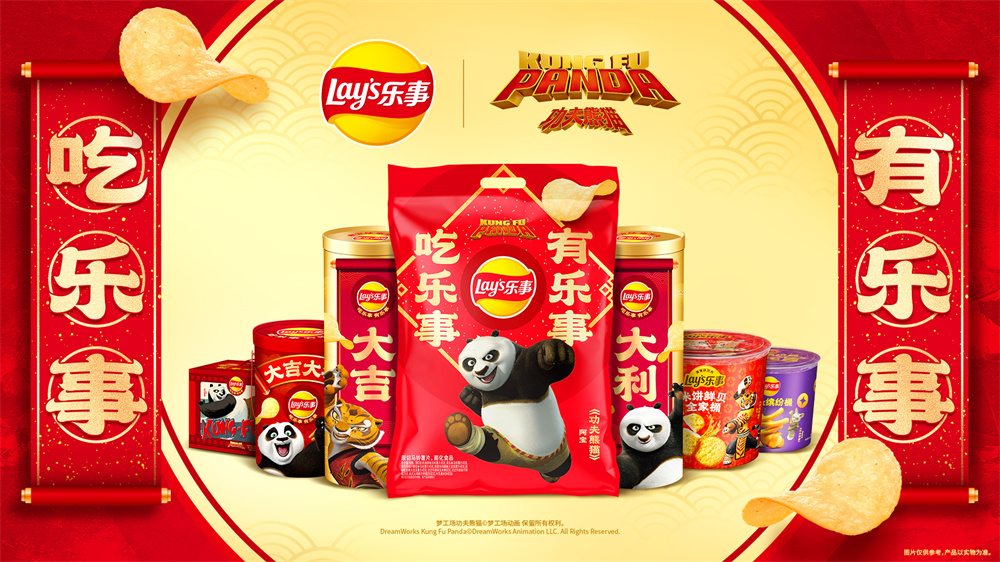
Core Insights - The upcoming 2026 Lunar New Year is expected to trigger a significant consumer spending surge, with a projected 11% increase in holiday spending intentions compared to the previous year, following an 8.7% growth in overall sales during the 2025 Spring Festival [1][2]. Group 1: Consumer Trends - The concept of "emotional consumption" is gaining prominence, with consumers increasingly valuing emotional benefits over cost-effectiveness in their purchasing decisions [2]. - Products featuring popular IP elements are attracting younger consumers and becoming viral on social media, while snack gift boxes are becoming essential for family gatherings and social visits during the holiday season [2]. - The average price of all product categories in offline retail increased by 13.8% during the 2025 Spring Festival, with snacks benefiting from both price increases and volume growth due to the "gift economy" [2]. Group 2: Product Strategy - Lays has launched over ten new Spring Festival limited edition products, including various gift boxes and snack combinations, catering to diverse consumer preferences for gifting and personal use [4]. - Some products are co-branded with the widely recognized IP "Kung Fu Panda," featuring auspicious messages, which are expected to resonate with consumers during the festive season [4]. - New single-pack flavors have been introduced, creatively combining taste with New Year blessings, enhancing their appeal as both gifts and snacks [4]. Group 3: Marketing and Brand Positioning - Lays is positioned as a "New Year happiness amplifier," engaging consumers during the festive season through a variety of new snack combinations that evoke emotional resonance [6]. - The brand has a history of integrating its products with traditional holiday customs and collaborating with celebrities to strengthen its brand identity [7]. - Recently, Lays announced new celebrity ambassadors, Shen Teng and Fan Chengcheng, to enhance its marketing efforts for the Spring Festival [9]. Group 4: Advertising Impact - The launch of the 2026 New Year TV commercial features humor and integrates the product into relatable Chinese New Year scenarios, effectively connecting with consumer sentiments [10]. - The marketing campaign has achieved significant engagement on social media, with over 16.4 million likes on related short videos and 150 million views on the associated Weibo topic [10]. - This marketing strategy not only enhances brand loyalty during peak seasons but also supports offline sales through effective consumer insights and emotional engagement [10]. Group 5: Channel Strategy - The evolving retail landscape shows increased e-commerce penetration and offline membership store coverage, prompting brands to accelerate their omnichannel strategies [11]. - Predictions indicate that omnichannel consumption will continue to recover during the 2026 Spring Festival, presenting growth opportunities for brands and their distribution partners [11]. - Lays is preparing for the terminal market by creating immersive in-store displays to attract consumers and enhance the shopping experience during the festive season [11]. Group 6: Future Outlook - As the 2026 New Year shopping season begins, Lays is poised to capitalize on the emotional high point of the holiday, leveraging limited edition products and innovative channel strategies to meet consumer expectations for a festive atmosphere [12].
盐津铺子跌2.01%,成交额1.71亿元,主力资金净流出108.93万元
Xin Lang Zheng Quan· 2026-01-13 04:18
Core Viewpoint - Salted Fish's stock price has shown fluctuations with a recent decline, while the company has reported significant revenue and profit growth year-on-year, indicating a positive business trajectory despite market volatility [1][2]. Group 1: Stock Performance - On January 13, Salted Fish's stock dropped by 2.01%, trading at 74.18 yuan per share, with a total market capitalization of 20.23 billion yuan [1]. - Year-to-date, the stock price has increased by 8.59%, with a 5-day increase of 5.10%, a 20-day increase of 6.35%, and a 60-day increase of 0.79% [1]. Group 2: Financial Performance - For the period from January to September 2025, Salted Fish achieved a revenue of 4.43 billion yuan, representing a year-on-year growth of 14.67%, and a net profit attributable to shareholders of 605 million yuan, up 22.63% year-on-year [2]. - Since its A-share listing, the company has distributed a total of 1.43 billion yuan in dividends, with 1.03 billion yuan distributed over the past three years [3]. Group 3: Shareholder Information - As of September 30, 2025, the number of shareholders increased to 18,000, a rise of 65.13%, while the average circulating shares per person decreased by 39.44% to 13,663 shares [2]. - Among the top ten circulating shareholders, Hong Kong Central Clearing Limited holds 6.88 million shares, a decrease of 2.18 million shares from the previous period [3].
传统企业AI转型的“黄埔军校”:混沌AI院一模块实战纪实
混沌学园· 2026-01-12 12:06
Core Insights - The article emphasizes the transformation of AI from a mere tool to an "Agent," marking 2025 as the "Agent Year" in the industry, while highlighting the challenges faced by small and medium enterprises in adopting AI [4][5] - It contrasts traditional consulting methods, which often result in theoretical plans, with the practical, executable solutions provided by the Chaos AI Institute's training programs [2][5] Challenges in AI Adoption - High technical barriers exist, with concepts like large models and prompt engineering creating a cognitive gap for non-technical managers [4] - There is a severe shortage of talent that understands both business and AI, with over 70% of companies citing this as the biggest obstacle to transformation according to McKinsey's 2025 report [4] - Traditional training and consulting often fail to align with actual business processes, leading to difficulties in implementing solutions [4] Chaos AI Institute's Approach - The Chaos AI Institute aims to bridge the gap by transforming AI from a technical concept into actionable business solutions [5] - The training program is designed as an intensive two-day workshop, where participants move from theoretical understanding to practical application [7][25] Training Structure and Methodology - The training includes a four-step cycle: problem definition, method learning, solution construction, and iterative optimization with personalized coaching [49][52] - Participants are encouraged to attend as teams, which helps avoid the "AI silo effect" and ensures that solutions are developed with multiple departmental perspectives [51] Practical Applications and Case Studies - The training covers three main areas: AI in marketing growth, operational efficiency, and product innovation, each with specific frameworks and tools [18][20][22] - Case studies demonstrate significant improvements, such as a 16-fold increase in efficiency for a snack brand using AI for user insights and a reduction in product innovation cycles from weeks to half a day [36][42] Conclusion - The Chaos AI Institute's program is positioned as an "accelerator" for enterprise AI transformation, providing a reusable framework for innovation and actionable strategies [54] - The article underscores the urgency for companies to embrace AI, suggesting that the greatest risk lies in failing to adopt AI technologies [54]

食品饮料周报(26年第2周):渠道步入春节旺季备货,多重利好催化餐饮供应链-20260112
Guoxin Securities· 2026-01-12 11:14
Investment Rating - The report maintains an "Outperform" rating for the food and beverage sector, indicating expected performance above the market index by over 10% [4][5][70]. Core Views - The food and beverage sector is entering a peak stocking season ahead of the Spring Festival, with multiple favorable catalysts for the restaurant supply chain [1]. - The report highlights a divergence in the fundamentals of different categories, with beverages outperforming food and alcoholic beverages [2]. - Key investment themes for 2026 include cost advantages from low raw material prices, efficiency improvements through supply chain optimization, innovation-driven growth, and opportunities for recovery in distressed sectors [3][10]. Summary by Relevant Sections Alcoholic Beverages - The report emphasizes the strong dividend characteristics of the liquor sector, particularly with Moutai's market reforms gradually taking effect. It suggests that high-quality companies with pricing power and regional influence are likely to achieve greater growth [2][10]. - Recommendations include Moutai, Shanxi Fenjiu, and Luzhou Laojiao, with a focus on their growth potential and market positioning [2][10]. Beer - The beer industry is currently managing inventory well and is poised for demand recovery. The report recommends Yanjing Beer for its rapid growth and strong internal reforms [11]. Dairy Products - The dairy sector is experiencing orderly stocking for the Spring Festival, with a recommendation for leading companies like Yili, which is expected to benefit from improved margins and demand recovery [14]. Snacks - The report suggests focusing on strong alpha stocks in the snack sector, particularly those innovating in konjac products. Leading companies like Weidong and Yanjinpuzi are highlighted for their competitive advantages and growth potential [12][17]. Restaurant Supply Chain - The restaurant supply chain is entering a busy stocking season, with clear recovery trends. Recommendations include leading companies in the compound seasoning sector and those with national capacity and channel layouts [13][14]. Beverage Sector - The beverage sector is primarily focused on destocking during the off-season, with stable stocking for the Spring Festival. Leading companies like Nongfu Spring and Dongpeng Beverage are recommended for their aggressive growth strategies [15].
食品饮料行业跟踪报告:i茅台抢购热度高,C端触达效果显著
Shanghai Aijian Securities· 2026-01-12 10:43
Investment Rating - The industry investment rating is "Outperform the Market" [1] Core Views - The liquor industry is entering a phase of rapid performance clearing, with demand expected to show weak recovery as policy pressures ease. The industry is currently at a low valuation, and pessimistic expectations are fully priced in. The top liquor companies are stabilizing prices and increasing dividends, making them attractive for investment. Long-term focus should be on high-quality leading companies with strong performance certainty, such as Kweichow Moutai and Shanxi Fenjiu [2] - The consumer goods sector is focusing on high-growth areas, with some segments still benefiting from new products and channels. The market is likely to give valuation premiums to "scarce" growth targets, suggesting attention to companies like Wancheng Group and Dongpeng Beverage, which are showing good growth trends [2] Summary by Sections Industry Performance - The food and beverage industry increased by 2.12% in the week of January 5-9, underperforming the Shanghai Composite Index, which rose by 3.82%. Among 31 sub-industries, it ranked 26th. The sub-sectors with the highest to lowest performance were: pre-processed foods (+6.72%), soft drinks (+5.79%), snacks (+4.47%), beer (+3.16%), seasoning and fermented products (+2.49%), liquor (+2.46%), and others [3][10] - The top five performing stocks in the food and beverage sector were Ziyuan Foods (+33.97%), Qianwei Central Kitchen (+22.52%), Anji Foods (+18.34%), Yangyuan Beverage (+14.78%), and Haoxiangni (+14.75%). The bottom five were *ST Spring (-10.61%), Xianle Health (-4.29%), Yili Group (-3.22%), Ximai Foods (-2.31%), and Shuanghui Development (-2.15%) [3][8] Liquor Sector Insights - The launch of i Moutai has been successful, with significant consumer engagement. Since January 1, the product has sold out quickly, adding over 2.7 million new users and over 400,000 transaction users within nine days. The product has ranked first in the Apple App Store's shopping category for three consecutive days, indicating strong consumer reach [3] - The pricing strategy for Moutai has been adjusted, with the maximum purchase limit per person per day reduced from 12 bottles to 6, aiming to broaden consumer reach rather than short-term sales impact. As of January 9, the price for Moutai was 1540 yuan per bottle, reflecting a weekly increase of 30 yuan [3] - The liquor market is expected to maintain upward momentum during the Spring Festival season, driven by the consumer base expansion from i Moutai and replenishment demand following inventory reduction [3] Snack Sector Developments - The company "Mingming Hen Mang" has successfully passed the Hong Kong Stock Exchange hearing, showing improved profitability. As of September 2025, the company had 19,517 stores, with revenue increasing by 75.2% year-on-year to 46.37 billion yuan and adjusted net profit rising by 240.8% to 1.81 billion yuan. The gross margin improved by 2.5 percentage points to 9.7% [3]