
潮玩

Search documents
自家员工吐槽贵的盲盒,却让创始人成河南首富,身家1820亿?
Sou Hu Cai Jing· 2025-11-07 12:26
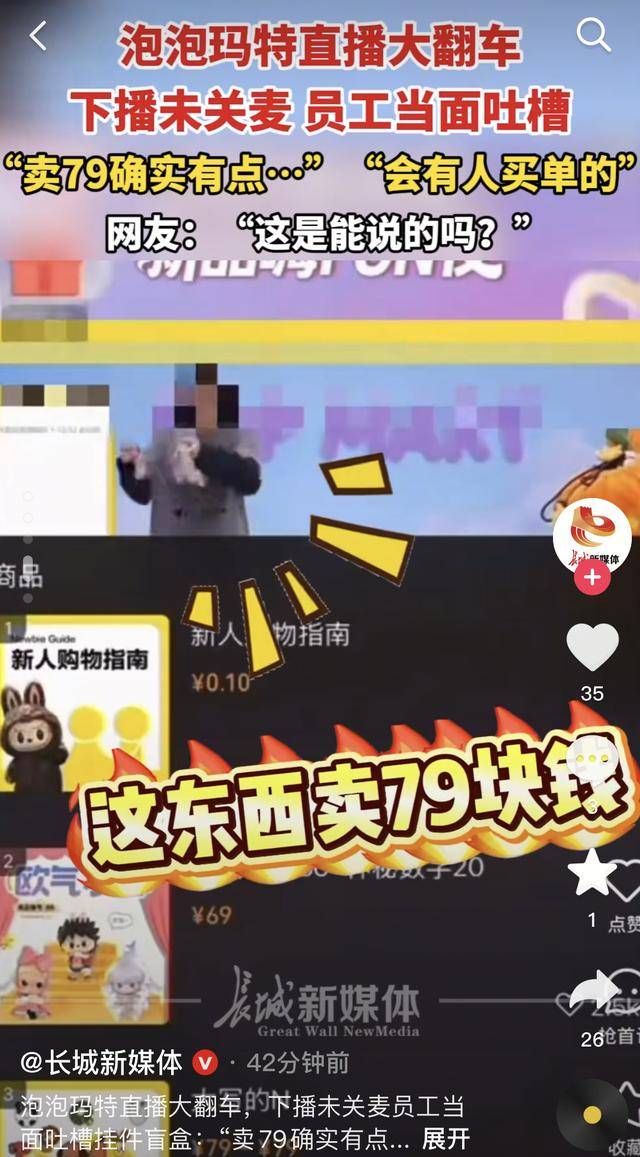
Group 1 - The controversy surrounding the 79 yuan DIMOO blind box chain from Pop Mart has sparked discussions about pricing and consumer perception, with some employees expressing dissatisfaction with the price during a live stream [1][6][11] - The incident has drawn comparisons to a previous controversy involving Li Jiaqi and a 79 yuan eyebrow pencil, highlighting a pattern of consumer backlash against perceived overpriced products [11][13] - Following the incident, Pop Mart's founder, Wang Ning, was named the richest person in Henan with a net worth of 182 billion yuan, raising questions about wealth disparity in the context of consumer pricing [7][24] Group 2 - The DIMOO blind box chain, which includes various materials, has been criticized for its high price relative to the low cost of counterfeit versions, leading to debates about its true value [8][9] - Pop Mart's stock price has seen a significant decline, dropping over 5% following the controversy, and has experienced a cumulative drop of over 35% since reaching a peak in August [28][29] - The company has faced multiple legal disputes related to trademark infringement, indicating ongoing challenges in maintaining its brand integrity [26][27]

【笔记20251107— 4000点的空气】
债券笔记· 2025-11-07 12:18
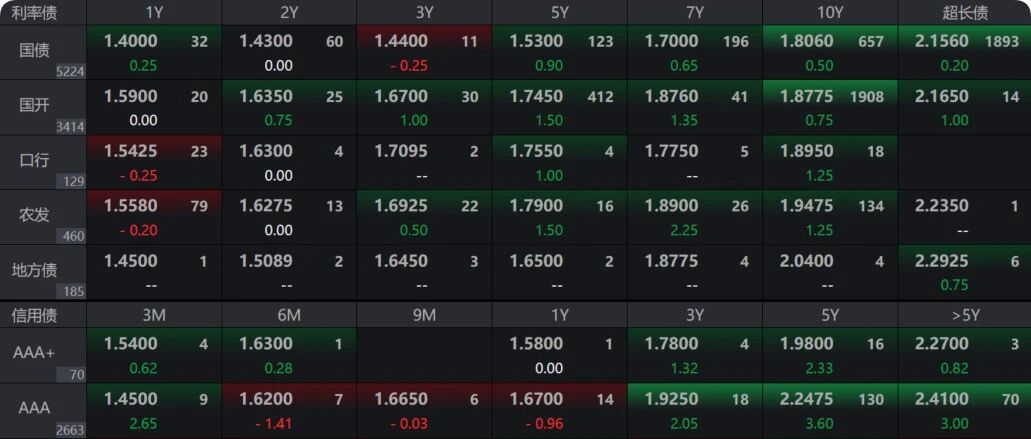
Core Viewpoint - The article emphasizes the importance of establishing a personal investment system and analytical framework to navigate the market, rather than relying solely on historical data or gut feelings [1]. Market Overview - The market experienced slight declines today, influenced by weak import and export data and the announcement of new redemption regulations over the weekend [5]. - The central bank conducted a 7-day reverse repurchase operation of 141.7 billion yuan, with 355.1 billion yuan maturing today, resulting in a net withdrawal of 213.4 billion yuan [3]. - The interbank funding environment showed marginal tightening, with the DR001 rate around 1.33% and DR007 at approximately 1.41% [3]. Interest Rate Trends - The weighted average rates for various repo codes were reported as follows: R001 at 1.39%, R007 at 1.47%, and R014 at 1.49%, with slight changes in rates over the past 30 days [4]. - The 10-year government bond yield fluctuated slightly, starting at 1.7975% and reaching up to 1.806% during the day [5]. Market Sentiment - There is a mixed sentiment in the market regarding the new redemption regulations, with some analysts predicting further market impacts while others believe that the negative effects have already been priced in [6]. - The stock of Pop Mart faced a significant drop of 40% from its recent highs, despite reporting a gross margin of 70% in Q2, indicating a strong performance compared to luxury brands [6].
一句话翻车!泡泡玛特股价跌超5%,79元盲盒戳破高溢价争议
Sou Hu Cai Jing· 2025-11-07 10:46
Core Viewpoint - The recent live-stream incident involving Pop Mart has sparked significant public backlash, highlighting a fracture in the trust between the brand and its consumers, which could jeopardize its high-premium pricing model [3][4]. Group 1: Incident Overview - During a live-stream on November 6, a Pop Mart host made a dismissive comment about the pricing of a DIMOO blind box, which quickly went viral and led to public outrage [3]. - The incident caused Pop Mart's stock to plummet over 5% on November 7, reaching a six-month low of 205.6 HKD, representing a 39% decline from its yearly high and resulting in a market value loss exceeding 10 billion HKD [3]. Group 2: Brand and Quality Issues - Prior to the live-stream incident, Pop Mart faced criticism for a quality issue related to a new series of blind boxes, where the logo was incorrectly printed as "POPMAET," leading to consumer dissatisfaction [3]. - The combination of the live-stream gaffe and ongoing quality concerns has raised doubts about Pop Mart's brand management and quality control capabilities [3]. Group 3: Market Reaction and Future Implications - In response to the crisis, Pop Mart stated it is conducting an urgent investigation but will not dismiss the involved employees, and there is no update on potential price adjustments for the blind boxes [3]. - Investor sentiment remains negative, compounded by concerns over slowing growth in the third quarter, leading to increased stock volatility as investors seek to realize profits [3].

中消协:潮玩经济升温 商品质量和售后服务问题引关注
Zhong Guo Xin Wen Wang· 2025-11-07 10:38
Group 1 - The rapid development of the trendy toy economy has led to increased consumer complaints regarding product quality and after-sales service [1] - In the third quarter of 2025, consumer associations in China received 536,761 complaints, a year-on-year increase of 7.9%, resolving 274,427 cases and recovering economic losses of 236 million RMB [1] - Issues with refund policies on trendy toy platforms have been highlighted, where consumers face refusals for refunds even when products have not been shipped or are defective [1] Group 2 - The rise of smart driving technology has become a competitive focus for automotive manufacturers, but there are concerns about the limitations and risks associated with these features [2] - Complaints regarding exaggerated performance claims by some automotive manufacturers and lack of transparency in driving data have been reported [2] - Other complaint hotspots include deceptive marketing in weight loss products, frequent disputes in pet consumption, ongoing issues with automatic renewals, and a surge in complaints related to power bank returns [2]
最新数据,外资加仓!
Zhong Guo Ji Jin Bao· 2025-11-07 10:28
【导读】来自瑞银的数据显示,三季度外国投资者进一步增持中国股票 11月7日,港股三大指数集体下跌。其中,恒生指数收跌0.92%,报26241.83点;恒生科技指数下跌 1.80%,报5837.36点;恒生中国企业指数下跌0.94%,报9267.56点。 全日大市成交额为2096.44亿港元,较前一交易日的2346.53亿港元有所萎缩,南向资金净买入75.23亿港 元。 行业方面,传媒、医药生物、半导体、汽车行业等跌幅靠前。 部分黄金股逆市上涨 11月7日,部分黄金股逆市上涨。例如,珠峰黄金大涨5.76%、周六福涨5.44%,万国黄金集团涨 2.86%。不过,也有黄金股下挫。例如,大唐黄金大跌7.02%,周生生跌3.51%,周大福跌2.33%,老铺 黄金跌2.94%。 消息面上,美国就业形势严峻引发降息预期升温。芝商所FedWatch工具显示,美联储12月再度降息的 可能性超过70%。 消息面上,近日,泡泡玛特某平台官方直播间在推广产品时,两名现场工作人员的私下对话被直播间收 录,引发讨论。相关词条登上了热搜第一。网传消息称,涉事的两位工作人员已经被开除,连带相关部 门也被追责。 不过,据智通财经报道,11月7 ...
最新数据,外资加仓!
中国基金报· 2025-11-07 10:26
【导读】来自瑞银的数据显示,三季度外国投资者进一步增持中国股票 中国基金报记者 格林 11月7日,港股三大指数集体下跌。其中,恒生指数收跌0.92%,报26241.83点;恒生科技指数下跌1.80%,报5837.36点;恒生中国企 业指数下跌0.94%,报9267.56点。 全日大市成交额为2096.44亿港元,较前一交易日的2346.53亿港元有所萎缩,南向资金净买入75.23亿港元。 | 序号 | 代码 | 名称 | 现价 | 涨跌 | 涨跌幅 | 成交额 | 年初至今 | | --- | --- | --- | --- | --- | --- | --- | --- | | 1 | મટા | 恒生指数 | 26241.83c | -244.07 | -0.92% | 2096亿 | 30.82% | | 2 | HSTECH | 恒生科技 | 5837.36c | -106.86 | -1.80% | 589亿 | 30.64% | | 3 | HSBIO | 恒生生物科技 | 15221.55c | -405.45 | -2.59% | 110亿 | 76.56% | | 4 | HSCEI | 恒 ...

用AI释放IP的乘法效应,讯飞点亮一个小宇宙
36氪· 2025-11-07 10:18
Core Viewpoint - The article discusses the rise of original cultural IPs in China, highlighting the role of AI technology and the new business model of "AIP Universe" by iFlytek to empower creators and enhance the commercial viability of IPs [2][3][6][10]. Group 1: Rise of Original IPs - Original cultural IPs in China are experiencing explosive growth, primarily driven by internet incubation and the creation of high-recognition emotional value images that resonate with young consumers [3][4]. - The trend of emotional consumption is becoming more pronounced, especially among the younger generation, with 68.16% of iFlytek's input method users being under 30 years old [4][11]. - Digital IPs have become an essential part of daily life, allowing users to express themselves through personalized content [6][12]. Group 2: iFlytek's Strategy - iFlytek aims to position itself as an "enabler" in the IP industry through its "AIP Universe," which serves as a connector and accelerator for the IP ecosystem [6][7]. - The company has formed a strategic partnership with Sichuan Fine Arts Institute to enhance its new business layout [7]. - The "AIP Universe" is designed to provide a one-stop service for IP commercialization, from market research to design, production, and sales [23][24]. Group 3: Challenges and Opportunities - New entrants in the IP market face challenges such as difficulty in fan engagement, short lifecycle, and weak monetization capabilities [22]. - iFlytek's "AIP Universe" aims to bridge the gap between creators and users, enhancing IP influence and extending lifecycle through improved operational efficiency [22][23]. - The company leverages AI technology to enhance user demand insights and accelerate creative output, thus addressing the operational challenges faced by individual creators [15][25]. Group 4: Long-term Vision - The "AIP Universe" is in its early stages but is rapidly developing organizational capabilities, including IP operations, business, product design, and channels [30][31]. - iFlytek is focused on recruiting talent that aligns with the IP industry and enhancing collaboration with educational institutions to foster innovation [36][38]. - The initiative aims to democratize high-end creative capabilities through AI, reducing operational costs and enabling broader participation in the original IP era [40][41].


受直播事故影响?泡泡玛特股价大跌!
Sou Hu Cai Jing· 2025-11-07 10:16
Core Viewpoint - The incident involving "Pop Mart live streaming accident" has gained significant attention, leading to a notable drop in the company's stock price, despite strong overall performance in revenue growth [1][3]. Group 1: Incident Details - During a live stream on November 7, a staff member commented on the price of a DIMOO blind box, indicating that selling it at 79 yuan was questionable, while another staff member suggested that customers would still purchase it [1]. - An internal source confirmed that the company is investigating the incident but will not terminate the employees involved [1]. Group 2: Stock Market Impact - Following the incident, Pop Mart's stock price fell by 5.51% to 205.6 HKD per share by midday on November 7 [3]. - The stock has seen a cumulative decline of nearly 40% since reaching a historical peak of 339.8 HKD per share on August 26 [3]. Group 3: Financial Performance - Despite the stock decline, Pop Mart reported strong financial results, with a projected revenue growth of 245% to 250% year-on-year for the third quarter of 2025 [3]. - Revenue from China is expected to grow by 185% to 190%, while overseas revenue is projected to increase by 365% to 370% [3].
“没事,会有人买单的”,泡泡玛特直播事故,员工内涵消费者是韭菜!
新浪财经· 2025-11-07 10:11
Core Viewpoint - The recent live-stream incident involving Pop Mart has raised concerns about the company's high product pricing and consumer perception, particularly after employees were overheard discussing the pricing of a 79 yuan blind box as being "a bit expensive" [7][9][10]. Pricing and Product Issues - Pop Mart's most expensive product is a collaboration with the Van Gogh Museum, priced at 6,999 yuan, which is currently out of stock [4][16]. - The company has multiple products priced at 5,999 yuan, indicating a trend of high pricing across its product range [4][16]. - Despite consumer backlash regarding the 79 yuan blind box, it has sold out on multiple platforms, suggesting strong demand despite complaints about pricing [14]. Financial Performance - Pop Mart reported a 245% to 250% year-on-year revenue growth for Q3 2025, with domestic revenue increasing by 185% to 190% and overseas revenue by 365% to 370% [20]. - The company's gross margin reached 70.3% in the first half of 2025, a 6.3 percentage point increase year-on-year, significantly higher than major companies like Apple (47.18%) and luxury brands such as LVMH (66.84%) [4][20]. Consumer Complaints and Quality Control - Pop Mart has received over 20,000 complaints, primarily related to product quality and after-sales service, highlighting a disconnect between high pricing and consumer satisfaction [22]. - Recent incidents, including misprints on products, have further fueled consumer dissatisfaction and allegations of the company treating customers as "韭菜" (a term implying exploitation) [22].
泡泡玛特最新回应:正在调查中 不会开除涉事员工
Zhong Guo Jing Ying Bao· 2025-11-07 10:00
Core Points - The incident involving a live broadcast by Pop Mart has sparked significant discussion, with the term "Pop Mart live broadcast incident" trending at the top of social media [1] - Pop Mart confirmed the occurrence of a live broadcast accident and is conducting an urgent investigation, but stated that no employees involved in the incident would be dismissed [1] Product Launch - On November 6, Pop Mart launched the new DIMOO series "New Diary," which includes the DIMOO new series blind box keychain priced at 79 yuan [1] - The DIMOO "New Diary" series is the second rubber blind box product and the first non-collaborative rubber blind box product, featuring 6 basic styles and 1 hidden style, representing 7 emotions such as "stranger" and "dependence" [1] - According to data from the Dewu App, the DIMOO "New Diary" series sold out immediately after its release [1]