
能源

Search documents
Goldman says these 20 overlooked stocks are poised to spike this coming earnings season
Yahoo Finance· 2025-10-10 17:30
Core Insights - Analysts at Goldman Sachs have identified 20 stocks with strong upside potential for the upcoming earnings season, suggesting these represent significant opportunities for options traders [1][2] Earnings Season Volatility - The last quarter saw the highest level of earnings-related volatility in US stocks since 2009, with expectations for similar swings in the upcoming season [2] - Goldman Sachs recommends buying call options to capitalize on anticipated volatility and positive earnings results, indicating above-average returns from stocks during this period [2] Highlighted Stocks - **Wynn Resorts (WYNN)**: Year-to-date performance of +46.6%, earnings date on November 6, with an implied stock move of 9.6% [3] - **Suncor Energy (SU)**: Year-to-date performance of +12.8%, earnings date on October 30, with an implied stock move of 1.7% [4] - **StepStone Group (STEP)**: Year-to-date performance of +7.0%, earnings date on November 7, with an implied stock move of 5.2% [5] - **eToro Group (ETOR)**: Year-to-date performance of -40.7%, earnings date on November 10, with an implied stock move of 9.3% [6] - **Citigroup (C)**: Year-to-date performance of +37.5%, earnings date on October 14, with an implied stock move of 5.3% [7] - **Neurocrine Biosciences (NBIX)**: Year-to-date performance of +0.6%, earnings date on October 28, with an implied stock move of 6.1% [8] - **Boston Scientific Corp. (BSX)**: Year-to-date performance of +9.1%, earnings date on October 22, with an implied stock move of 5.1% [9] - **Exelixis (EXEL)**: Year-to-date performance of +13.0%, earnings date on October 29, with an implied stock move of 15.4% [10] - **Huntington Ingalls Industries (HII)**: Year-to-date performance of +53.4%, earnings date on October 31, with an implied stock move of 7.6% [11] - **Johnson Controls (JCI)**: Year-to-date performance of +36.7%, earnings date on November 5, with an implied stock move of 7.3% [12] - **Cameco Corp. (CCJ)**: Year-to-date performance of +65.4%, earnings date on November 5, with an implied stock move of 3.8% [13] - **Air Products & Chemicals Inc. (APD)**: Year-to-date performance of -6.8% [14]

信义能源(03868)发行6647.65万股代息股份
智通财经网· 2025-10-10 08:43
Core Viewpoint - Xinyi Energy (03868) announced a plan to issue 66.4765 million shares as a scrip dividend on October 10, 2025, based on the interim dividend for the six months ending June 30, 2025 [1] Group 1 - The scrip dividend plan allows shareholders to receive shares instead of cash for the interim dividend [1] - The issuance of shares is part of the company's strategy to manage cash flow while rewarding shareholders [1]
宏观日报:关注有色上游价格波动-20251010
Hua Tai Qi Huo· 2025-10-10 07:20
Group 1: Industry Overview Upstream - Black: Glass prices are rising [2] - Agriculture: Egg prices have significantly declined [2] - Non - ferrous: Copper prices are rising [2] Midstream - Chemical: PX operating rate has declined, while urea operating rate is rising; PX operating rate was at a high level [2] - Energy: Power plant coal consumption is at a low level [2] Downstream - Real estate: The sales of commercial housing in first - and second - tier cities have slightly recovered [2] - Service: The number of domestic flights is at a three - year high due to holidays [2] Group 2: Industry Events Production Industry - On October 9, 2025, the Ministry of Commerce and the General Administration of Customs issued 4 announcements to implement export controls on items such as super - hard materials, some rare - earth equipment and raw materials, some medium - heavy rare earths, lithium batteries, and artificial graphite anode materials [1] - On October 9, three departments including the Ministry of Industry and Information Technology issued an announcement on the technical requirements for new energy vehicles eligible for vehicle purchase tax exemption from 2026 - 2027, adjusting the technical requirements for pure - electric passenger cars and plug - in (including extended - range) hybrid passenger cars [1] Service Industry - China and India will resume direct flights by the end of October this year [1] Group 3: Key Data - On October 9, the spot price of corn was 2237.1 yuan/ton, down 2.12% year - on - year; the spot price of eggs was 6.3 yuan/kg, down 12.93%; the spot price of palm oil was 9598.0 yuan/ton, up 4.03%; the spot price of cotton was 14764.2 yuan/ton, down 0.84%; the average wholesale price of pork was 18.6 yuan/kg, down 3.47%; the spot price of copper was 85823.3 yuan/ton, up 7.20%; the spot price of zinc was 22140.0 yuan/ton, up 1.45% [33] - For non - ferrous metals, on October 9, the spot price of aluminum was 20970.0 yuan/ton, up 1.34%; the spot price of nickel was 124000.0 yuan/ton, down 0.32%; another spot price of aluminum was 16868.8 yuan/ton, down 0.95%; the spot price of rebar was 3174.5 yuan/ton, down 0.64% [33] - For other metals, on October 9, the spot price of iron ore was 792.2 yuan/ton, down 1.94%; the spot price of wire rod was 3357.5 yuan/ton, down 0.52%; the spot price of glass was 15.6 yuan/square meter, up 3.45% [33] - For non - metals, on October 9, the spot price of natural rubber was 14758.3 yuan/ton, down 1.34%; the China Plastic City price index was 788.5, down 0.21% [33] - For energy, on October 9, the spot price of WTI crude oil was 62.6 dollars/barrel, down 1.42%; the spot price of Brent crude oil was 66.3 dollars/barrel, down 1.25%; the spot price of liquefied natural gas was 3762.0 yuan/ton, down 2.39%; the coal price was 791.0 yuan/ton, down 0.25% [33] - For chemicals, on October 9, the spot price of PTA was 4564.5 yuan/ton, down 0.18%; the spot price of polyethylene was 7348.3 yuan/ton, up 0.02%; the spot price of urea was 1583.8 yuan/ton, down 4.31%; the spot price of soda ash was 1262.5 yuan/ton, unchanged; the national cement price index was 135.4, up 0.44% [33] - For real estate, on October 9, the building materials composite index was 113.0 points, down 1.22%; the national concrete price index was 91.7 points, down 0.02% [33]
粤港澳大湾区内地9市高新技术企业超7.1万家
Zhong Guo Xin Wen Wang· 2025-10-10 06:23
Core Insights - The Guangdong-Hong Kong-Macao Greater Bay Area (GBA) is projected to have over 71,000 high-tech enterprises by the end of 2024, with 190 national manufacturing champions and 2,089 "specialized, refined, and innovative" small giants [1][2] - The GBA's economic output is approximately $1.89 trillion in 2023, ranking second among the world's four major bay areas, closely following the Tokyo Bay Area [2] - The GBA's nine inland cities have seen their GDP grow from 8.04 trillion RMB in 2018 to 11.5 trillion RMB in 2024, representing a significant economic concentration with only 0.58% of the country's land and 5.6% of its population [2][3] Economic Development - The GBA's central cities, Shenzhen and Guangzhou, are expected to rank 3rd and 5th in GDP among Chinese cities in 2024, maintaining over 5% of the national GDP share in recent years [2] - By 2025, 18 companies from the GBA's nine inland cities are projected to be listed in the Fortune Global 500, with Shenzhen contributing 9 and Guangzhou 6, accounting for 83% of Guangdong's total [2] Industry Clusters - Guangdong has established nine trillion-yuan-level industrial clusters, including new-generation electronic information, green petrochemicals, smart home appliances, automotive, and new energy sectors [3] - The GBA's nine inland cities host eight national advanced manufacturing clusters, representing 10% of the national total, and six national strategic emerging industry clusters, accounting for 9.1% of the national total [3] - Emerging industries in the GBA, such as new energy and artificial intelligence, are on par or leading compared to developed countries, with one in three industrial robots globally being produced in Guangdong [3]

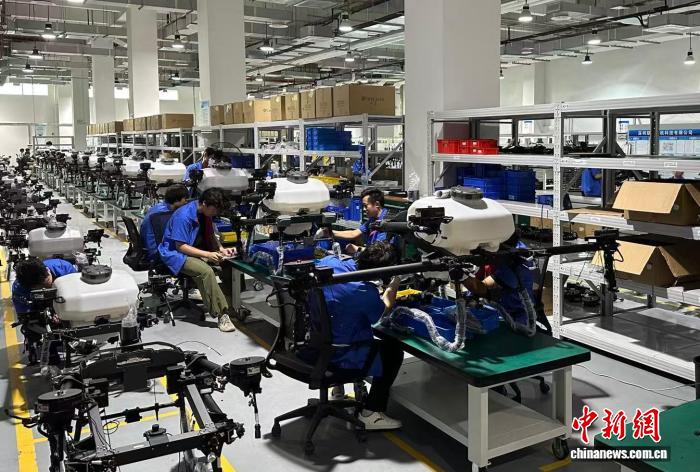
国家发改委:中国中化、中国华能、中国矿产、中国大唐、中国华电、国家电网等,已取得重要进展
中国能源报· 2025-10-10 06:06
Group 1 - The National Development and Reform Commission has made significant progress in the relocation of non-capital functions from Beijing, with key projects being implemented in Xiong'an New Area [1] - Four universities, including Beijing Jiaotong University and Beijing University of Science and Technology, are accelerating the construction of their campuses in Xiong'an, while five other universities have confirmed their site selections and are preparing overall planning [1] - Major hospitals, such as Peking University People's Hospital and Peking Union Medical College Hospital, are advancing their construction in Xiong'an, with several hospitals having confirmed their site selections and are working on preliminary research reports [1] Group 2 - Several central enterprises, including China Star Network and China National Chemical Corporation, have established their headquarters in Xiong'an, with operations stabilizing [2] - China Huaneng and China National Chemical Corporation officially moved to Xiong'an on October 9, 2023, while the main structure of the China Mineral headquarters project has been capped [2] - The National Development and Reform Commission will continue to promote the implementation of subsequent relocation projects and improve municipal and public service facilities in Xiong'an, ensuring that relocated personnel can settle and thrive in the area [2]




红利板块逆势走强,红利ETF易方达(515180)、红利低波动ETF(563020)连续“吸金”
Mei Ri Jing Ji Xin Wen· 2025-10-10 05:19
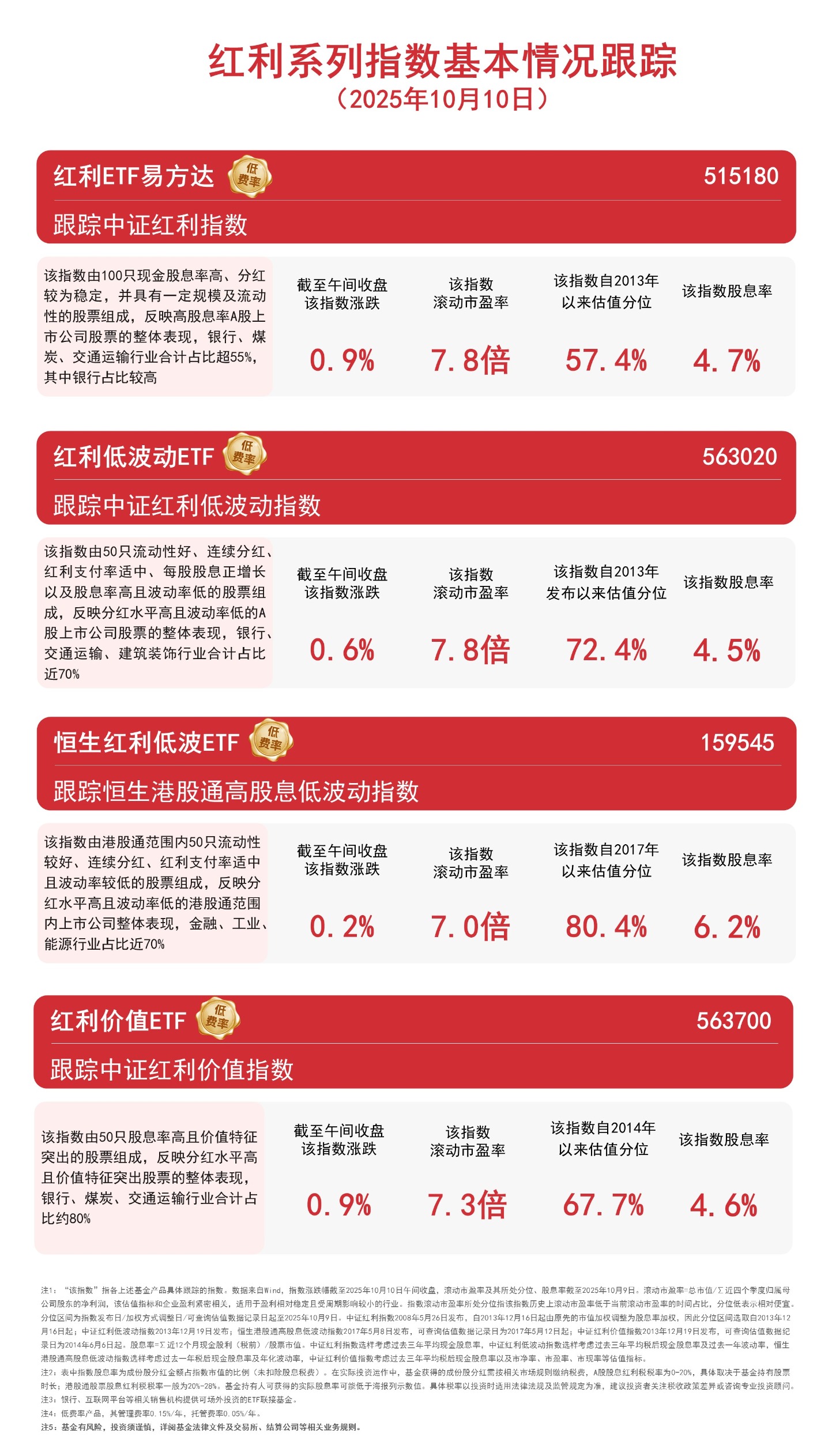
Core Viewpoint - The article discusses the performance of Hong Kong stocks under the Stock Connect program, highlighting the high dividend yield and low volatility of certain indices, particularly focusing on the financial, industrial, and energy sectors which account for nearly 70% of the overall performance [4]. Group 1: Index Performance - The Hong Kong Stock Connect high dividend low volatility index has a rolling price-to-earnings (P/E) ratio of 7.0 times, with a slight change of 0.2% [4]. - The China Securities Dividend Value Index, which tracks 50 stocks with high dividend yields and value characteristics, has a rolling P/E ratio of 7.3 times and a change of 0.9% [4]. - The index reflects the overall performance of stocks with high dividend levels and value characteristics, with the banking, coal, and transportation sectors collectively accounting for about 80% of the index [4]. Group 2: Historical Context and Methodology - The China Securities Dividend Index was launched on May 26, 2008, and was adjusted from a market capitalization-weighted index to a different weighting method starting December 16, 2013 [4]. - The China Securities Dividend Low Volatility Index was introduced on December 19, 2013, while the Hang Seng Stock Connect High Dividend Low Volatility Index was launched on May 8, 2017 [4]. - The dividend yield is calculated as the sum of the last 12 months of cash dividends (pre-tax) divided by the market value of the stock [4].
巴西与美直接对话,40%关税或将取消,背后竟然是这个国家唆使?
Sou Hu Cai Jing· 2025-10-10 04:08
Core Points - The trade relationship between Brazil and the United States has become strained due to the U.S. imposing additional tariffs on Brazilian goods, raising the total tariff to 50% [1][3] - In response to these challenges, China has stepped in to support Brazil by establishing a $1 billion fund aimed at enhancing cooperation and providing financial assistance [1][4] - The U.S. government's justification for the tariffs has been criticized as politically motivated, with Brazil asserting that it undermines its political independence [3][6] Trade Impact - Brazilian businesses, particularly in sectors like fishing and coffee, have faced significant market losses due to the increased tariffs, disrupting entire supply chains [4] - The orange juice industry, while not directly affected by tariffs, has seen related agricultural products hit by tariffs, leading to price declines [4] Strategic Cooperation - The establishment of the $1 billion fund by China and Brazil is intended to alleviate Brazil's economic pressures and foster collaboration in various sectors, including energy and agriculture [4][5] - A long-term strategic project, the "Transoceanic Railway," aims to connect Brazil's east coast to Peru's Pacific ports, significantly reducing transportation costs and dependency on other nations [5] Diversification of Trade - Brazil is increasingly diversifying its trade partnerships, reducing reliance on the U.S. market, and seeking new opportunities in China [6][10] - The cooperation with China has empowered Brazil to adopt a firmer stance in negotiations with the U.S., demanding the removal of unreasonable tariffs [6][7] Global Trade Dynamics - The U.S. pressure on Brazil has inadvertently strengthened Brazil's resolve to pursue a diversified trade strategy, showcasing a potential model for other nations facing similar pressures [8][10] - Brazil's approach to enhancing cooperation with China not only aids its own economic transformation but also positions China as a key player in the evolving global trade landscape [10]

5000亿新型工具有望拉动超5万亿投资 多地项目资金已投放
Sou Hu Cai Jing· 2025-10-10 02:31
Core Insights - The National Development and Reform Commission announced a new policy financial tool with a total scale of 500 billion yuan, aimed at supplementing project capital [1] - The funds are being rapidly deployed across various regions, targeting urban renewal, transportation, water management, logistics, energy, agriculture, heating networks, and environmental protection projects [1][6] - The financing terms for these new tools are relatively long, with some projects approved for financing periods of 15 to 20 years, addressing capital shortages in key areas [1][9] Group 1: Project Deployment - The first batch of funds has been allocated to projects such as the Wuxi to Yixing intercity rail project, which received 3.199 billion yuan, marking it as the largest project approved in Jiangsu province [3] - In Suzhou, a project received 384 million yuan, making it the largest single project approved among the first batch in the city [3] - The Yongjia County project in Zhejiang received 256 million yuan for urban renewal, with a total investment of 4.8 billion yuan [4] Group 2: Sector Focus - The new financial tools are primarily directed towards traditional infrastructure sectors such as transportation, energy, and urban renewal, with a significant portion of projects already in the pipeline [7] - Emerging industries like digital economy, artificial intelligence, and low-altitude economy are also key focus areas for the new financial tools, aiming to support economic transformation [8][9] - The tools are designed to ensure that at least 20% of the funding goes to private enterprises, promoting a balanced investment approach [9] Group 3: Investment Impact - The 500 billion yuan in new policy financial tools is expected to leverage approximately 2.5 to 3.3 trillion yuan in total investment, significantly boosting fixed asset investment growth [10] - It is estimated that the deployment of these tools could increase fixed asset investment growth by at least 4.9 percentage points if all projects are completed [10] - The tools are projected to drive infrastructure investment growth by 3 to 4 percentage points annually over the next three years, with a notable impact expected in the fourth quarter of this year [10]
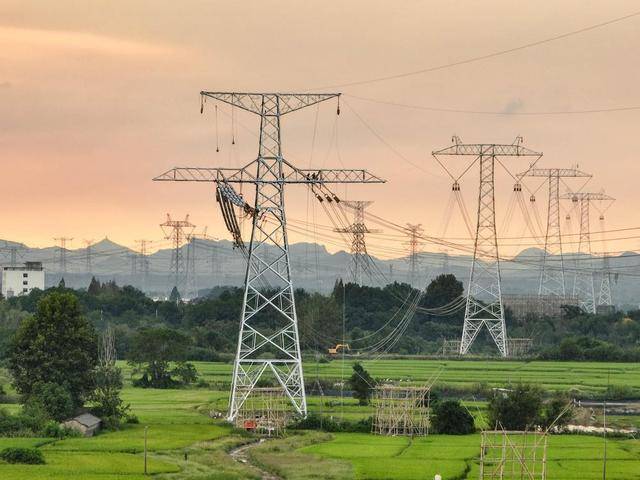
5000亿新型工具落地,有望拉动超5万亿投资
2 1 Shi Ji Jing Ji Bao Dao· 2025-10-10 02:10
Core Insights - The National Development and Reform Commission announced a new policy financial tool with a total scale of 500 billion yuan, aimed at supplementing project capital [1][9] - The new financial tool is being rapidly deployed across various regions, with initial funding directed towards urban renewal, transportation, water management, logistics, energy, agriculture, heating networks, and environmental protection projects [1][3] Financial Tool Deployment - The new policy financial tool has a long financing term, with some projects approved for financing periods of 15 to 20 years, addressing capital shortages in key areas [1][11] - Initial funding allocations include 3.199 billion yuan for the Wuxi to Yixing intercity rail project, making it the largest project approved in Jiangsu province [3] - In Guangdong, the first city renewal project received 49 million yuan, aimed at improving urban infrastructure and living conditions [4] Investment Impact - The new financial tool is expected to leverage approximately 2 to 3.3 trillion yuan in total investment, significantly boosting fixed asset investment growth [11][12] - It is projected that the 500 billion yuan tool could stimulate around 6 trillion yuan in investments, equating to 24.4% of the anticipated total infrastructure investment for 2024 [12] - The tool is designed to support both traditional infrastructure and emerging industries, including digital economy and green transition projects [10][12] Sector Focus - The financial tool will prioritize investments in eight key areas: digital economy, artificial intelligence, low-altitude economy, consumer infrastructure, green transition, agriculture, transportation and logistics, and municipal and industrial parks [10][11] - A minimum of 20% of the funding must be directed towards private enterprises, reflecting a commitment to diversify investment sources [10]
研究所晨会观点精萃-20251010
Dong Hai Qi Huo· 2025-10-10 01:28
Report Industry Investment Ratings No specific industry investment ratings are provided in the content. Core Views of the Report - Overseas, the federal government shutdown has disrupted official economic data, leading to average market demand and rising US bond yields. The weakening yen has strengthened the US dollar, cooling global risk appetite. The first - stage cease - fire in Gaza has reduced global risk - aversion. Domestically, poor US economic data during the National Day holiday has increased expectations of a Fed rate cut, causing global stock markets to rise. The central bank's large - scale MLF renewal has ensured market liquidity, and the introduction of multiple industry growth - stabilizing plans has increased policy support, potentially boosting domestic risk appetite. The short - term macro - upward drive has strengthened, and future focus should be on Sino - US trade negotiations and domestic incremental policies [3][4]. - Different asset classes have different trends: stocks are expected to oscillate strongly at a high level in the short term; bonds will oscillate; among commodities, black metals will oscillate, non - ferrous metals will oscillate strongly, energy and chemicals will oscillate, and precious metals will oscillate strongly at a high level [3]. Summary by Related Catalogs Macro - Overseas: The federal government shutdown has disrupted economic data, resulting in average demand and rising US bond yields. The weakening yen has strengthened the US dollar, cooling global risk appetite. The Gaza cease - fire has reduced risk - aversion [3]. - Domestic: Poor US economic data during the National Day holiday has increased Fed rate - cut expectations, leading to a rise in global stock markets. The central bank's MLF renewal has ensured liquidity, and industry growth - stabilizing plans have increased policy support, potentially boosting domestic risk appetite [3][4]. Stock Index - Driven by sectors such as precious metals, industrial metals, and rare earths, the domestic stock market has risen significantly. Supported by factors like US economic data and domestic policies, the short - term macro - upward drive has strengthened. Short - term cautious buying is recommended [4]. Black Metals Steel - On Thursday, the domestic steel futures and spot markets rebounded slightly, with low trading volumes. The rise of overseas non - ferrous and precious metals during the holiday has boosted market risk appetite. However, real demand is weak, with a 127 - million - ton increase in the inventory of five major steel products during the holiday, exceeding the five - year average. After late October, demand may further weaken. Supply is expected to remain high as steel mills' profits are still acceptable, and the logic of compressing steel mill profits will continue. The steel market is likely to oscillate within a range [5]. Iron Ore - On Thursday, iron ore futures and spot prices continued to strengthen. The news of long - term contract negotiations has increased expectations of supply contraction. Ore demand remains strong as the daily average pig iron output is above 2.4 million tons. During the holiday, global iron ore shipments decreased by 1.96 million tons, while arrivals increased by 2.482 million tons, and port inventories increased by 1.69 million tons. Although the market's expectation of negative feedback in the industrial chain has increased, the short - term probability of actual negative feedback is low as the proportion of profitable steel mills is over 56%. Iron ore prices will oscillate within a range after the holiday, with negative feedback risks from late October to November [6][7]. Non - ferrous Metals and New Energy Copper - LME copper has broken through and risen due to concerns about tight global copper supply. An accident at the Grasberg mine has affected production by 270,000 tons, with a plan to resume production in mid - 2026 and fully recover in 2027. Domestic electrolytic copper production remains high, with a 11.62% year - on - year increase in September, but demand is facing challenges as previous demand - boosting factors weaken. Copper de - stocking has not met expectations, and the US economic situation needs to be monitored [8]. Aluminum - It was previously expected that SHFE aluminum would stabilize and oscillate within a 200 - 300 - point range, which has basically come true. During the holiday, the rise in copper prices has boosted aluminum prices, but on Thursday, SHFE aluminum underperformed, and the domestic - foreign price difference has decreased significantly. Domestic aluminum social inventories have accumulated during the holiday, exceeding expectations. With rigid supply and weakening demand, it is difficult for prices to rise significantly [8][9]. Tin - LME tin has soared due to the rise in copper prices and Indonesia's crackdown on illegal tin mining, but the upward space is limited. The price is supported by tight ore supply and low smelting operating rates due to maintenance at a large Yunnan smelter. However, smelters are expected to resume production in October, and ore supply will increase after November. Prices are expected to remain high in the short term but face upward pressure [9]. Carbonate Lithium - On Thursday, the main carbonate lithium 2511 contract rose 0.27%, with a settlement price of 73,700 yuan/ton. The weighted contract increased positions by 1,559 lots, with a total position of 677,900 lots. The supply and demand of carbonate lithium are both increasing, with strong seasonal demand, a slight reduction in social inventory, and a transfer of smelter inventory to downstream. The market is expected to oscillate, and the upper pressure range should be monitored [10]. Industrial Silicon - On Thursday, the main industrial silicon 2511 contract fell 0.29%, with a settlement price of 8,645 yuan/ton. The weighted contract increased positions by 8,057 lots, with a total position of 407,800 lots. The 2511 contract faces the pressure of digesting warehouse receipts at the end of November. The market is expected to oscillate, and the cash - flow cost support of large enterprises should be monitored [10]. Polysilicon - On Thursday, the main polysilicon 2511 contract had a 0% increase, with a settlement price of 50,185 yuan/ton. The weighted contract increased positions by 7,663 lots, with a total position of 234,000 lots. The number of warehouse receipts is increasing, and there will be concentrated cancellations in November. With high supply and low demand, the market is waiting for the implementation of state - reserve purchase news, and the support of spot prices should be monitored [11]. Energy and Chemicals Crude Oil - After Israel reached an agreement with Hamas on hostage release and implemented a cease - fire, crude oil prices have declined as OPEC+ increases supply and demand lacks new positive signals. The strengthening of the US dollar has also reduced the attractiveness of dollar - denominated commodities [12]. Asphalt - As crude oil prices decline again, asphalt shows signs of breaking through the lower limit. The peak - season demand is almost over, and the pressure of over - supply remains. The basis is still falling, and there is some pressure for social inventory accumulation, while factory inventory is slightly increasing. The profit has recovered recently, and the operating rate has increased significantly. The impact of OPEC+ production increase on crude oil prices and the support of crude oil prices should be monitored [12][13]. PX - The change in PX is limited. The previous changes in Xinjiang's facilities have little impact on the market. The cost support from crude oil remains, but the small positive impact of increased maintenance plans has been mostly priced in. The PXN spread has decreased to $218, and the external PX price has fallen to $804. PTA's short - term processing fee has been squeezed, and PX remains in a tight supply situation. With the decline of the polyester market, PX may oscillate weakly but has some support at the bottom [13]. PTA - The peak - season demand is lower than expected, with low terminal orders and low operating rates of looms. The rumor of production cuts by leading PTA manufacturers has been disproven, and there is a risk of inventory accumulation. There is also a possibility that the restart of maintenance facilities will be postponed. The market has some support at the previous low but faces long - term downward pressure [13]. Ethylene Glycol - The price of ethylene glycol continues to decline and oscillates at a low level. Similar to PTA, it faces challenges in downstream demand, with high short - term operating rates and new production capacity pressure. Although the current inventory is low, there is a risk of inventory accumulation, and the upward space for price rebound is limited in the medium term [13]. LLDPE - The polyethylene market price has adjusted. The LLDPE transaction price is 7,050 - 7,600 yuan/ton, with prices in the North and East regions falling. Supply is increasing, and the demand is in the peak season, but the post - holiday inventory accumulation suppresses prices. With new capacity coming on - line, the transition to the off - season, and the decline of crude oil prices, the price of PE is expected to decline [14]. Urea - The urea market is weakly declining. The supply - demand situation is under pressure. During the National Day holiday, most factories maintained stable prices, fulfilling previous orders. After the holiday, production is expected to remain above 190,000 tons per day. The agricultural demand recovery is slow due to rainfall, and industrial demand is weak. Although there is potential support from reserve demand and Indian tenders, the overall support is limited. The price may decline slightly in the short term, and the export policy after the holiday should be monitored [14][15]. Methanol - The methanol market in Shaanxi and Inner Mongolia has acceptable trading. The price in Inner Mongolia's northern line has decreased by 10 - 15 yuan/ton, and the southern line is stable. In Jiangsu, the methanol market has declined, and the basis has strengthened. After the holiday, methanol inventory has accumulated, and the high port inventory suppresses prices. There is no effective way to reduce inventory in the short term, but it is expected to oscillate weakly with support from domestic and foreign gas - restriction expectations. Opportunities for long - term long positions should be awaited [14]. PP - The market trading atmosphere is good, with the mainstream price of East China's drawn wire at 6,650 - 6,750 yuan/ton. The inventory of Sinopec and PetroChina's polyolefins has increased by 270,000 tons. With increasing supply pressure, average downstream demand, and increasing inventory pressure, combined with the weakening of crude oil prices, the price of PP is expected to decline [14]. Agricultural Products US Soybeans - The prospects of Sino - US soybean trade and the MFP program will be the main focus of the oil - and - oilseed market. After the holiday, the market may re - evaluate the possibility of China resuming US soybean imports. If a phased arrangement is reached in the coming weeks, the possibility of resuming trade will increase. The implementation of the MFP program will reduce farmers' holding costs and relieve the pressure of grain sales and storage, which is positive for CBOT soybeans [16]. Hogs - After the holiday, the demand for hogs will weaken, and the supply - demand pressure remains high. Attention should be paid to farmers' reluctance to sell at low prices, local pork purchase - and - storage dynamics, and the rhythm of passive production reduction [17]. Soybean and Rapeseed Meal - The expected supply - demand gap of domestic soybeans in the first quarter of next year will shrink, which is negative for soybean meal. In the short term, the phased replenishment of soybean meal may increase, and the cost support for near - month soybean meal will strengthen as the pressure of concentrated US soybean listing eases. The spread between near - and far - month contracts may widen. For rapeseed meal, the seasonal impact on imported rapeseed meal has significantly shrunk, and domestic rapeseed inventory is running out. Before the arrival of Australian rapeseed, the supply - demand of rapeseed meal is weak, and its market is mainly led by soybean meal [18]. Oils - Oils may oscillate strongly, with the order of strength being rapeseed oil > palm oil > soybean oil. Rapeseed oil inventory will be depleted rapidly before the arrival of Australian rapeseed, providing support. Palm oil is mainly driven by cost, with low inventory in the producing areas, stable crude oil prices, and strong related oils providing additional support. Soybean oil may experience seasonal inventory accumulation after the holiday and may perform relatively weakly [18]. Corn - The room for the price decline of new corn in the Northeast after the holiday may be limited. The increase in corn prices in Shandong provides support, as deep - processing enterprises unexpectedly raised prices during the holiday, and the demand for acquisition has increased. More acquisition entities will enter the market after the holiday. In addition, the rapid rebound of wheat prices in October will also support the corn market [18].