
金融

Search documents
每日投资策略-20251215
Zhao Yin Guo Ji· 2025-12-15 06:18
Macro Economic Overview - The credit recovery in China remains uneven, with the total social financing (TSF) in November exceeding market expectations due to a rebound in off-balance-sheet financing and corporate bond issuance, while government bond issuance stabilized [2] - The growth rate of RMB loans to the real sector continues to decline, indicating weak credit demand, with household loans shrinking for the first time in history, reflecting low housing demand and consumer sentiment [2] - Corporate loan financing has improved, driven mainly by bill financing and short-term loans, but new long-term loans remain weak, indicating that corporate financing is more reflective of short-term liquidity needs rather than capital expenditure [2] Market Performance - The Hang Seng Index closed at 25,977, up 1.75% for the day and 29.50% year-to-date, while the Hang Seng Tech Index rose 1.87% [3] - The Shanghai Composite Index increased by 0.41% to close at 3,889, with the Shenzhen Composite Index up 0.66% [3] - The US markets saw declines, with the Dow Jones down 0.51% and the S&P 500 down 1.07%, while the Nasdaq fell by 1.69% [3] Company Analysis - Zhongji Xuchuang (300308 CH) is identified as a direct beneficiary of global AI infrastructure capital expenditures, with a strong performance in 2025 expected for AI-related optical module suppliers [6] - The company reported a significant increase in revenue and net profit for the first nine months of 2025, with revenue up 44% and net profit up 90% year-on-year, and a gross margin increase of 9 percentage points to 43% in Q3 2025 [6] - The stock price of Zhongji Xuchuang has risen over 380% year-to-date, and the target price has been raised to 707 RMB, reflecting continued optimism in the AI sector and infrastructure investment cycles [6]

天青色等烟雨,而我在等你...
Ge Long Hui· 2025-12-15 04:46
Group 1: Oracle's Financial Performance - Oracle's earnings report showed strong earnings per share, but the stock price fell sharply by 10% after hours, resulting in a market cap loss of $68.8 billion [1] - The company's debt levels are concerning, with a debt-to-equity ratio of 500% and total liabilities nearing $150 billion, leading to a downgrade to junk status by Barclays [1] - The market sentiment was negatively impacted by Oracle's performance, affecting other tech stocks like Nvidia, AMD, Microsoft, and Google, despite their strong fundamentals [1] Group 2: Hong Kong Stock Market Insights - The Hang Seng Index and Hang Seng Tech Index have been stagnant for nearly three months, with a focus on the influx of new listings and liquidity concerns [2] - The Hong Kong market is characterized as an incremental market, where the quality of new listings, particularly core assets, is more critical than the quantity [2] - Recent new listings have included core assets such as CATL and Hengrui Medicine, indicating a potential for future growth despite current market stagnation [2] Group 3: Investment Strategies in Hong Kong - The Hang Seng Biotech sector has seen a 20% correction from its highs, with a focus on commercialized innovative drugs providing stable revenue [7] - The sector's growth is supported by increasing demand for overseas CRO/CDMO services, with a projected annual growth rate of 50% for licensing revenues [7] - Investing in the Hang Seng Biotech sector is viewed as a safer strategy, focusing on broad exposure rather than individual stock picking [7] Group 4: A-Share and U.S. Market Strategies - The investment strategy involves a barbell approach, balancing between growth stocks and low-volatility dividend ETFs [8] - Pinduoduo's cash reserves are projected to grow significantly, indicating a strong financial position despite recent negative news [8] - The strategy emphasizes a long-term perspective, with a focus on building a solid financial foundation before aggressive investment [8] Group 5: External Perspectives in Investment - The importance of external perspectives in investment decision-making is highlighted, referencing insights from Nobel laureate Daniel Kahneman [10] - Historical data suggests that only a small percentage of investors outperform the market, emphasizing the need for realistic expectations [10] - The investment approach should focus on long-term stability rather than short-term gains, with a recognition of the inherent uncertainties in the market [11]

权威数读丨11月国民经济:延续总体平稳、稳中有进态势
Xin Hua Wang· 2025-12-15 04:40
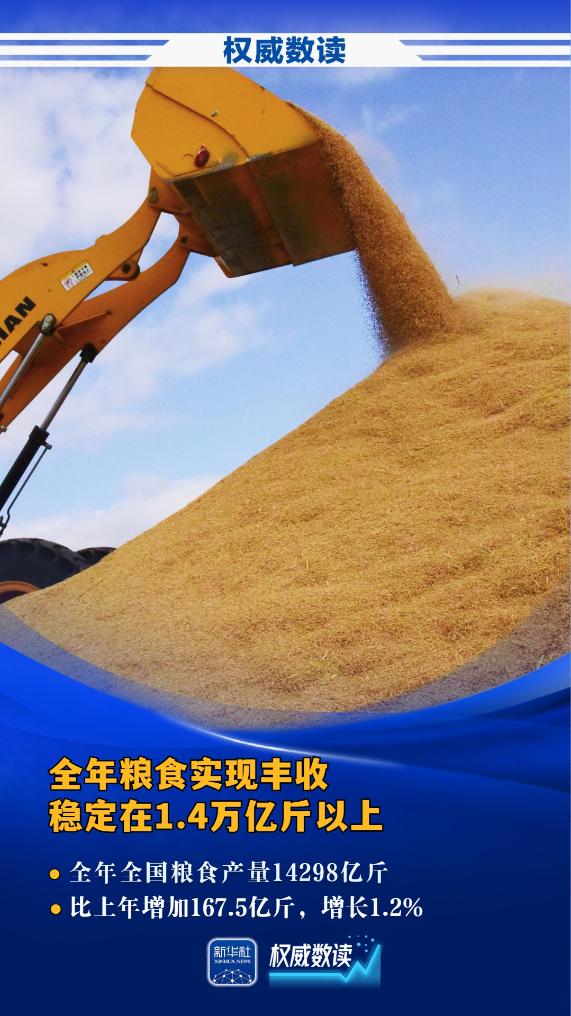
Core Insights - The national economy is showing overall stability and gradual improvement, with production supply remaining stable and market prices continuing to improve [1] Agricultural Sector - The total grain production for the year reached 14.298 billion jin, an increase of 1.2% or 167.5 million jin compared to the previous year [3] Industrial Sector - In November, the industrial added value for large-scale enterprises grew by 4.8% year-on-year and 0.44% month-on-month [6] - The equipment manufacturing sector saw a year-on-year increase of 7.7%, while high-tech manufacturing increased by 8.4% [6] Service Sector - The service production index increased by 4.2% year-on-year in November [9] - Specific sectors such as information transmission, software and IT services, leasing and business services, and finance saw production index growth of 12.9%, 8.4%, and 5.1% respectively [9] Retail Sector - The total retail sales of consumer goods reached 43.898 billion yuan in November, marking a year-on-year growth of 1.3% [14] - From January to November, service retail sales grew by 5.4%, with an acceleration of 0.1 percentage points compared to the previous ten months [14] Investment Sector - From January to November, fixed asset investment excluding real estate development increased by 0.8%, while manufacturing investment rose by 1.9% [16] Trade Sector - In November, the total value of goods imports and exports reached 38.987 billion yuan, reflecting a year-on-year increase of 4.1%, which is an acceleration of 4.0 percentage points compared to the previous month [19] - Exports and imports with countries involved in the "Belt and Road" initiative grew by 6.0%, and private enterprises' imports and exports increased by 7.1% [21]
鸿利智汇:大股东泸州老窖集团力求成为全球影响力的世界一流产融控股集团
Sou Hu Cai Jing· 2025-12-15 03:58
Group 1 - The core viewpoint of the article is that Hongli Zhihui's major shareholder, Luzhou Laojiao Group, aims to become a globally influential first-class financial holding group, focusing on building an ecosystem-driven industrial chain [1] - The company plans to develop six key industries: liquor, finance, trade, technology, food, and construction, with a goal of achieving revenue exceeding 100 billion yuan [1] - The strategy emphasizes a dual-driven approach combining both real economy and finance to create a modern industrial ecosystem and world-class industrial clusters [1]


以改革创新为根本动力 加快建设金融强国
Jin Rong Shi Bao· 2025-12-15 03:37
Core Viewpoint - The "15th Five-Year Plan" emphasizes high-quality development, economic reform, and the construction of a financial powerhouse as key components for China's socio-economic advancement [1][2][4]. Group 1: Economic Reform and Development - The integration of reform and development is crucial for high-quality growth, with reform acting as a driving force for addressing various developmental challenges [2][3]. - The Chinese Communist Party has recognized the need for deeper reforms to enhance the efficiency of resource allocation and improve development quality [3][4]. Group 2: Financial Sector Development - The financial sector is seen as the lifeblood of the real economy, with a focus on enhancing financial services to support high-quality development [7][8]. - The transition from a large financial system to a strong one requires significant reforms and innovations in financial practices, theories, and regulations [8][9]. Group 3: Modernization of Financial Systems - The establishment of a modern financial system is essential, with an emphasis on integrating technology, green finance, and inclusive finance to support economic growth [10][11]. - Financial reforms must align with the broader goals of national modernization and the promotion of a robust economic framework [12][13]. Group 4: Regulatory and Legal Framework - Strengthening the legal framework for finance is critical, including the development of comprehensive financial laws and regulations to ensure stability and security [14][15]. - The regulatory system must adapt to the evolving financial landscape, ensuring that all financial activities are effectively monitored and managed [14][15].
“打通全国统一大市场堵点卡点”热点问题探析:破局“内卷” 开拓蓝海
Jing Ji Ri Bao· 2025-12-15 03:27
Core Viewpoint - The article discusses the challenges of "involution" in various industries, highlighting the detrimental effects of irrational competition and price wars on quality, innovation, and market stability. It emphasizes the need for a unified national market to promote high-quality development and break free from this cycle of competition [1][2][3]. Group 1: Industry Challenges - The washing powder industry is facing severe issues due to low-quality products with less than 5% active ingredient content capturing market share through low prices, putting quality products at a disadvantage [1]. - Industries from steel to solar energy are experiencing intensified price wars, leading to compressed profit margins and reduced innovation investments, which in turn increases quality and safety risks [1][2]. - Over 20 national and local industry associations have publicly called for a "反内卷" (anti-involution) movement, indicating a widespread recognition of the problem across sectors such as steel, automotive, solar, catering, finance, and logistics [3]. Group 2: Solutions and Strategies - To address the structural issues of involution, a collaborative approach between government and market forces is necessary, focusing on supply-side structural reforms [3]. - Companies like China Resources Beer have closed 40 factories and reduced over 5 million tons of redundant capacity, demonstrating a shift from a "scale-first" mentality to prioritizing quality and brand development [3]. - Innovation is crucial for traditional manufacturing to break free from path dependence and scale limitations, with companies encouraged to collaborate with research institutions and invest in new technologies [4][5]. Group 3: Brand and Market Positioning - The article highlights the importance of rebuilding trust in quality and value, as low-quality products often mislead consumers in an information-asymmetric market [6]. - Companies are urged to focus on user experience and brand value, shifting from a transactional approach to one that emphasizes emotional and meaningful connections with consumers [6]. - The narrative of "Chinese manufacturing" is evolving, with domestic brands gaining recognition and demand both locally and internationally, reflecting a shift in consumer perception [6]. Group 4: Global Expansion - The construction of a unified national market is seen as a means to create a fairer and more efficient competitive environment, encouraging companies to expand globally to alleviate domestic competition pressures [7]. - Companies like Jack Technology are establishing production bases in various regions to cater to local markets, while Miniso emphasizes cultural integration in its global strategy [7]. - The article concludes that companies must focus on innovation, brand strength, and global outreach to escape internal competition and contribute to high-quality economic development [8].
沈阳“十五五”规划建议:构建以先进制造业为骨干的现代化产业体系,推进区域性金融中心建设
Zheng Quan Shi Bao Wang· 2025-12-15 03:26
Core Insights - The proposal outlines the development strategy for Shenyang during the 15th Five-Year Plan period, emphasizing the enhancement of the real economy and the promotion of intelligent, green, and integrated manufacturing [1][2] Group 1: Economic Development and Industry Upgrades - Shenyang aims to optimize and elevate traditional industries by advancing intelligent, green, and service-oriented manufacturing, and promoting the "smart transformation and digital upgrade" of manufacturing [2] - The city plans to cultivate emerging and future industries, focusing on innovative infrastructure, technology research and development, and large-scale application of new technologies and products [2] - Key industrial chains and advanced manufacturing clusters will be developed, with a focus on the automotive and parts industry, equipment manufacturing, aerospace, information technology, and renewable energy sectors [3] Group 2: Financial and Systemic Reforms - The proposal emphasizes the need for comprehensive economic system reforms, particularly in the financial sector, to enhance financial supply and support the development of various financial services [4] - It includes plans to optimize the financial institution system, expand financing scales in credit, bonds, and capital markets, and establish a multi-level investment fund system [4] - The initiative aims to improve the financial ecosystem by establishing a bad asset trading center and enhancing financial arbitration and mediation mechanisms [4]
刚刚,重要经济数据公布
第一财经· 2025-12-15 02:24
Economic Overview - The national economy is operating steadily, with a focus on high-quality development and stable employment [3][14] - The overall economic performance shows a trend of stability and progress [14] Agricultural Production - The total grain production for the year reached 14.298 trillion jin, an increase of 167.5 billion jin or 1.2% from the previous year [4] - The autumn grain production was 10.732 trillion jin, up by 163.6 billion jin or 1.5% [4] Industrial Production - In November, the industrial added value for large-scale enterprises grew by 4.8% year-on-year [5] - The equipment manufacturing and high-tech manufacturing sectors saw significant growth, with increases of 7.7% and 8.4% respectively [5] - The profit of large-scale industrial enterprises from January to October was 59.503 billion yuan, a year-on-year increase of 1.9% [6] Service Sector - The service sector production index increased by 4.2% year-on-year in November [7] - Key industries such as information transmission and financial services showed growth rates of 12.9% and 5.1% respectively [7] Retail Sales - The total retail sales of consumer goods in November reached 43.898 billion yuan, a year-on-year increase of 1.3% [8] - Online retail sales grew by 9.1% year-on-year, with physical goods accounting for 25.9% of total retail sales [8] Fixed Asset Investment - From January to November, fixed asset investment (excluding rural households) was 444.035 billion yuan, a decrease of 2.6% year-on-year [9] - Manufacturing investment increased by 1.9%, while real estate development investment fell by 15.9% [9] Trade and Exports - In November, the total value of goods imports and exports was 38.987 billion yuan, a year-on-year increase of 4.1% [10] - Exports grew by 5.7%, while imports increased by 1.7% [10] Employment - The urban survey unemployment rate was 5.1% in November, remaining stable compared to the previous month [12] Price Trends - The Consumer Price Index (CPI) rose by 0.7% year-on-year in November, with food prices increasing by 0.3% [13] - The Producer Price Index (PPI) for industrial producers decreased by 2.2% year-on-year [13]
策略:黄金和美股是冰火之歌还是星辉互映?
2025-12-15 01:55
Summary of Key Points from Conference Call Industry Overview - The discussion revolves around the performance and driving factors of gold and U.S. equities in the context of monetary policy and technological advancements, particularly AI technology Core Insights and Arguments - **Monetary Policy Impact**: The expectation of continued interest rate cuts by the Federal Reserve is anticipated to benefit both U.S. equities and gold in the first half of 2026, while the second half will require monitoring of AI's impact on productivity and economic models [1][3] - **Historical Trends**: Historical data indicates a pattern where gold and U.S. equities tend to rise together during periods of monetary easing, but diverge during economic downturns, with gold typically showing more resilience [4][5] - **Driving Factors for Gold**: Key drivers for gold include real interest rates, U.S. dollar credibility, and geopolitical tensions. For U.S. equities, the main drivers are corporate earnings, risk appetite, and interest rate changes [2] - **AI Technology's Role**: Breakthroughs in AI technology could negatively impact gold by enhancing confidence in U.S. fiscal and dollar credibility, thus affecting its demand [2][3] Additional Important Content - **Investment Strategy**: Investors are advised to focus on liquidity conditions resulting from the Fed's rate cuts, the development of AI technology, and its commercialization, as these factors will influence the competition between tech stocks and traditional safe-haven assets like gold [6][7] - **Market Volatility**: Increased global macroeconomic uncertainty may lead to significant market fluctuations, prompting investors to seize opportunities for asset accumulation and optimize their asset allocation strategies [1][7]
西部证券晨会纪要-20251215
Western Securities· 2025-12-15 01:46
Group 1: Restaurant Industry Insights - The report emphasizes the resilience of the restaurant industry, highlighting key companies such as Yum China, Xiaocaiyuan, Haidilao, and Dashishi as potential investment opportunities due to their operational capabilities and market positioning [2][10] - The restaurant sector is expected to benefit from government policies aimed at boosting service consumption, with specific measures outlined to enhance the sector's growth [7] - Restaurant revenue is projected to account for 12% of total retail sales in 2024, with growth rates of 20% and 5% for 2023 and 2024 respectively, indicating a stronger performance compared to overall retail sales [8] Group 2: Computer Industry Outlook - The computer industry is anticipated to see significant advancements in AI applications, with a focus on increasing computational power and model sophistication [3][12] - The report highlights the emergence of large AI models and their commercial applications, indicating a strong growth trajectory for AI-related technologies [12][14] - The demand for AI capabilities is expected to drive investments in domestic AI chip development, with a focus on enhancing performance and establishing a robust software ecosystem [13] Group 3: Aerospace and Defense Sector - Hangya Technology is positioned as a key player in the aerospace engine components market, leveraging its expertise in precision forging technology to meet rising international demand [4][16] - The company reported a revenue of 530 million yuan and a net profit of 78 million yuan for the first three quarters of 2025, reflecting a year-on-year growth of 1.95% in revenue but a decline of 16.04% in net profit [16][17] - The report forecasts significant revenue growth for Hangya Technology, projecting revenues of 817 million yuan, 1.09 billion yuan, and 1.51 billion yuan for 2025 to 2027, with corresponding net profits increasing substantially [17] Group 4: Macro Economic Context - The macroeconomic environment is characterized by a stable growth outlook, with a projected GDP growth target of around 5% for 2026, supported by proactive fiscal and monetary policies [30] - The report notes a focus on domestic demand as a primary driver of economic growth, with specific measures aimed at stabilizing the real estate market and enhancing employment [30][31] - Financial data indicates a slight decline in loan growth, with a notable drop in household loans, while overall social financing growth is stabilizing [18][19]
