食品

Search documents
石家庄枣福鲜食品有限公司成立 注册资本10万人民币
Sou Hu Cai Jing· 2025-09-10 21:49
天眼查App显示,近日,石家庄枣福鲜食品有限公司成立,法定代表人为卢学龙,注册资本10万人民 币,经营范围为许可项目:食品生产;食品销售;餐饮服务(依法须经批准的项目,经相关部门批准后方 可开展经营活动,具体经营项目以批准文件或许可证件为准)一般项目:互联网销售(除销售需要许可 的商品);外卖递送服务(除依法须经批准的项目外,凭营业执照依法自主开展经营活动)。 ...
数据点评 | 为何大宗涨价拉不起PPI?(申万宏观·赵伟团队)
赵伟宏观探索· 2025-09-10 16:04
Core Viewpoints - The transmission effect of upstream price increases to downstream is weakening, with PPI showing marginal improvement in August due to significant recovery in commodity prices [2][10][70] - The overall PPI remained at 0% month-on-month, primarily due to low capacity utilization in downstream sectors, which hindered the reflection of upstream price increases [2][10][70] PPI Analysis - In August, PPI year-on-year decreased by 2.9%, an improvement of 0.7 percentage points from the previous month, aligning with market expectations [2][10][70] - Major commodities like coal and steel continued to rise, contributing positively to PPI, while international oil price declines negatively impacted domestic oil prices [2][10][70] - Downstream sectors are experiencing significant price reductions, with PPI declines in industries such as food and automobiles, which saw respective month-on-month decreases of 0.3% [2][10][70] CPI Analysis - CPI year-on-year fell to -0.4% in August, influenced by a high base from the previous year and weak food prices, with food CPI dropping by 4.3% [3][23][50] - The core CPI is expanding, with core goods CPI rising by 0.1 percentage points to 0.9%, driven by high gold prices and demand from the third batch of national subsidies [3][29][71] - Service CPI showed slight growth, supported by summer travel and healthcare service reforms, while rental prices remained weak due to high youth unemployment [4][33][62] Future Outlook - Commodity prices are expected to continue rising, but excess supply in downstream sectors may limit the transmission of price increases from upstream [4][72] - Year-end PPI is projected to recover to a maximum of -2.1%, while CPI may remain negative in Q3 but could turn positive in Q4 due to policy support for service consumption [4][72]


肯8月通胀率升至4.5%,食品与交通成主因
Shang Wu Bu Wang Zhan· 2025-09-10 15:24
Core Insights - Kenya's inflation rate rose to 4.5% in August, up from 4.1% in July, primarily driven by increases in food, transportation, and alcoholic beverage prices [1] Inflation Details - Food and non-alcoholic beverages increased by 8.3% year-on-year [1] - Transportation costs rose by 4.4% [1] - Housing and utilities saw a modest increase of 0.8% [1] Economic Implications - Overall inflation remains within the central bank's target range [1] - Persistent pressure from food and transportation costs may increase the burden on middle and low-income households [1] - These inflationary pressures could pose challenges to consumer recovery [1]
2025年服贸会首日:多彩服务,沟通世界
Zhong Guo Xin Wen Wang· 2025-09-10 14:27
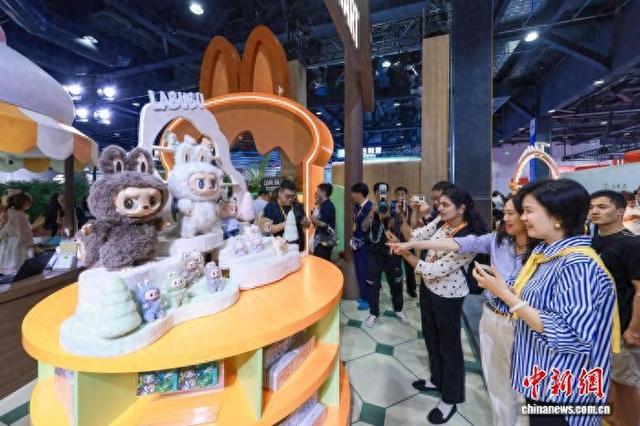
Group 1 - The 2025 China International Service Trade Fair (CIFT) opened in Beijing, focusing on the theme "Digital Intelligence Leading, Service Trade Renewing" [3] - The fair features six types of activities including global service trade summits, exhibitions, forums, and promotional events, with participation from 85 countries and international organizations [3] - The Philippines has the largest exhibition scale at the CIFT this year, showcasing local specialties and promoting tourism infrastructure investment opportunities [5] Group 2 - The Philippine national pavilion is designed with an island theme, featuring tropical elements and local products, aiming to create a unique atmosphere in Beijing [3][5] - The fair is held at Shougang Park for the first time, with over 40 supporting activities to create new service consumption models [5] - The event includes interactive experiences and exhibitions to meet audience needs, enhancing cultural exchange and business opportunities between participating countries [5]
经济提质 绿色转型 甘肃产业向“新”行
Xin Hua Cai Jing· 2025-09-10 13:30
Core Viewpoint - Gansu Province is actively promoting high-quality development through the enhancement of new productive forces, focusing on industrial upgrading and green transformation, which lays a solid foundation for building a modern industrial system [1][3]. Economic Performance - In the first half of this year, Gansu's GDP grew by 6.3% year-on-year, maintaining a growth rate above the national average for 14 consecutive quarters [3]. - Gansu Investment Group has invested a total of 39 billion yuan in sectors such as new energy, new materials, biomedicine, and equipment manufacturing since the start of the 14th Five-Year Plan [3]. Corporate Developments - Jinchuan Group has invested over 33.8 billion yuan in emerging industries during the 14th Five-Year Plan, marking a 149% increase [4]. - Gansu Technology Group has completed 20 investment projects with a total investment of 1.451 billion yuan, enhancing its development momentum [4]. Green Development Initiatives - Jiu Steel Group is advancing its steel and non-ferrous industries towards high-end, intelligent, and green development, achieving a green electricity ratio of 26.4% [5]. - Gansu Xukang Food Co., Ltd. has established a 5,000-ton organic fertilizer production line, achieving zero emissions and resource recycling [6].

通胀数据点评:为何大宗涨价拉不起PPI?
Shenwan Hongyuan Securities· 2025-09-10 13:13
Group 1: Inflation Data Overview - In August, the CPI decreased by 0.4% year-on-year, compared to a previous value of 0% and an expectation of -0.2%[7] - The PPI recorded a year-on-year decline of 2.9%, improving from -3.6% previously, aligning with market expectations[7] - The overall PPI month-on-month remained at 0%, primarily due to low capacity utilization in downstream sectors, which hindered price transmission from upstream[2] Group 2: Price Transmission and Sector Analysis - Upstream price increases contributed positively to PPI month-on-month, with a calculated impact of 0.3% from commodity prices[1] - Downstream sectors, particularly in food and automotive industries, saw PPI declines of 0.3% each, reflecting significant price drops[2] - The core CPI for core goods rose by 0.1 percentage points to 0.9%, driven by high gold prices and demand from trade-in programs[3] Group 3: Future Outlook - Commodity prices are expected to continue rising, but excess supply in downstream sectors may limit the transmission of upstream price increases, keeping inflation weak throughout the year[4] - By year-end, PPI is projected to recover to a maximum of -2.1% year-on-year, while CPI may remain negative in Q3 but could turn positive in Q4[4] - Risks include potential tightening in food and energy supplies, which could further impact CPI dynamics[5]
服贸会平谷展区每日发放800枚“桃醉平谷”文创冰箱贴
Xin Jing Bao· 2025-09-10 12:13
Group 1 - The 2025 Service Trade Fair is showcasing the "Peach Blossom Source of the Capital" theme in the Pinggu exhibition area, highlighting the integration of culture, commerce, and tourism [1] - The exhibition features four functional zones: exhibition and sales, tourism experience, intangible cultural heritage performances, and investment promotion, aimed at presenting Pinggu's urban image and its deep integration with cultural and commercial tourism [1] - The exhibition is divided into four segments: Enjoy Pinggu, Leisure Pinggu, Active Pinggu, and Smart Pinggu, showcasing ten consumption scenarios, ten leisure scenarios, ten sports scenarios, and ten educational scenarios respectively [2] Group 2 - The Enjoy Pinggu segment focuses on the integration of agriculture and tourism, featuring attractions like Agricultural Disneyland and flower gardens, allowing visitors to experience the charm of rural life and modern trends [2] - The Leisure Pinggu segment emphasizes the integration of cultural tourism and forest tourism, promoting high-quality rural leisure experiences and showcasing scenic spots like Jin Hai Lake and Yaji Mountain [2] - The Active Pinggu segment promotes the concept of "traveling with sports events," featuring various sports activities such as aviation sports and triathlons, encouraging visitors to enjoy the excitement of outdoor adventures [2] - The Smart Pinggu segment integrates education, technology, and tourism, showcasing educational experiences and cultural heritage through various interactive scenarios [2] Group 3 - The event includes various unique activities, such as performances that blend traditional crafts like paper-cutting with modern aesthetics, showcasing Pinggu's rich historical culture [3] - Pinggu district is promoting its food safety initiatives by displaying products from the capital's shared central kitchen, contributing to Beijing's goal of becoming a leading food safety city [3] - To enhance audience engagement, the exhibition distributes 800 themed creative refrigerator magnets daily, encouraging participation in related activities [3]
2025年8月价格数据点评:PPI迎来上行拐点
EBSCN· 2025-09-10 09:54
CPI Insights - In August 2025, the CPI decreased by 0.4% year-on-year, down from 0% in the previous month, and below the market expectation of -0.2%[2] - The core CPI rose by 0.9% year-on-year, slightly up from 0.8% in the previous month, indicating a continuous recovery over four months[2] - Food prices significantly impacted the CPI, with a year-on-year decline of 4.3% in August, compared to -1.6% in July[4] PPI Insights - The PPI year-on-year decline narrowed to 2.9% in August from 3.6% in July, aligning with market expectations[2] - The PPI month-on-month change was stable at 0%, improving from a decline of 0.2% in the previous month[2] - The "anti-involution" policy has led to a stabilization in prices for coal, steel, and new energy vehicles, contributing to the PPI's upward trend[8] Future Outlook - The CPI is expected to return to positive growth in Q4 2025 as high base effects diminish and pig production capacity management continues[3] - The PPI is anticipated to gradually recover, although the process may be slow due to a weaker demand environment compared to 2015-2016[11] - The overall supply-demand balance in industries is expected to improve, indicating that the worst phase for PPI has likely passed[11]
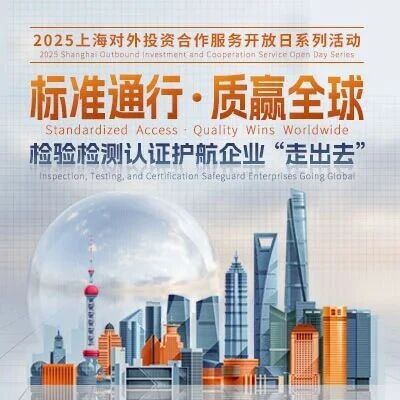
活动预告|2025上海对外投资合作服务开放日系列活动 —— 检验检测认证护航企业“走出去”
第一财经· 2025-09-10 09:43
Core Viewpoint - The event aims to enhance enterprises' adaptability to international inspection, testing, and certification standards, thereby strengthening their core competitiveness in international development [1]. Group 1: Event Overview - The event titled "2025 Shanghai Foreign Investment Cooperation Service Open Day Series - Inspection, Testing, and Certification to Support Enterprises Going Global" will focus on the core needs of enterprises venturing abroad [1]. - It will feature discussions on the facilitation policies for inspection, testing, and certification, along with professional consulting services from international testing institutions and compliance consultants [1][2]. Group 2: Agenda Highlights - The agenda includes sessions on global product traceability and supply chain compliance management, quality management, and supply chain control [5]. - Technical standards and testing certification will be discussed, along with specific industry solutions and trends [6]. - A report titled "Crossing Mountains and Seas | Observations on Emerging Forces Going Global - Green Enterprises" will be released during the event [7]. Group 3: Key Topics of Discussion - Detailed explanations of international standards for specific products such as electronics, textiles, toys, and food contact materials will be provided [9]. - Solutions for "one test, multiple certifications" will be presented to help enterprises reduce costs and improve efficiency [9]. - The event will cover certification processes for emerging markets like Saudi Arabia (SASO) and the UAE (ECAS) [9]. Group 4: Challenges and Solutions - Common certification "invisible barriers" faced by enterprises going abroad and their countermeasures will be discussed [11]. - The application of digital tools in cross-border certification will be explored [11]. - The importance of third-party inspections and audits, as well as strategies for managing supplier risks, will be highlighted [9][11].
解锁“公务机 +”模式 华龙航空携手卡露伽拓展高端服务新体验
Zhong Guo Min Hang Wang· 2025-09-10 08:46
Core Insights - The strategic partnership between Hualong Aviation and Kaluga Caviar aims to enhance the "Business Jet +" ecosystem, extending collaboration from product offerings to service experiences, thereby creating a seamless high-end service experience for customers [1][4]. Group 1: Partnership Details - Hualong Aviation and Kaluga Caviar will jointly launch the "Sturgeon Flavor Sky" themed cabin in 2024, which has received positive feedback in the industry [4]. - Hualong Aviation will introduce a "Cloud Tasting" theme experience in its business jet cabins, integrating Kaluga Caviar into in-flight dining to elevate the culinary experience [4]. - Hualong Aviation Academy will offer specialized training courses on caviar for clients' service teams, ensuring a consistent and high-quality dining experience both in-flight and at home [4]. Group 2: Company Background - Hualong Aviation, established in 2011, promotes a "Heaven and Earth Integration" service concept, extending premium services from the air to the ground [5]. - The "Business Jet +" concept emphasizes meticulous service details and the organic integration of resource consolidation and scenario expansion, transforming business aviation into a high-quality lifestyle platform [5]. - Hualong Aviation has built a comprehensive service matrix that includes business jet transactions, management, chartering, operations, ground services, high-end travel customization, and professional talent development [5]. Group 3: Kaluga Caviar Overview - Kaluga Caviar is recognized as the national industry standard setter for caviar, leading global production and sales for ten consecutive years [7]. - The company pioneered artificial sturgeon farming in China in 1998, providing premium experiences to 46 countries and regions, and is a key supplier to 23 Michelin three-star restaurants in France and four in New York [7]. - The collaboration is expected to enrich both brands' service offerings and market appeal, creating new service opportunities and connecting with high-end clientele [7].