
化工

Search documents
看涨率跌破5成
第一财经· 2026-02-02 11:27
Market Overview - The A-share market has experienced a significant adjustment, with the Shanghai Composite Index falling below the 4100-point mark, primarily due to the decline of resource cyclical stocks [3] - The Shenzhen Component Index has seen a substantial drop influenced by both technology and cyclical sectors, while the ChiNext Index is under pressure from high-valuation stocks [3] Sector Performance - The market is characterized by a broad decline, although some sectors remain active, such as the strong performance of ultra-high voltage concept stocks and the resilience of liquor stocks [3] - Other sectors like cultural media AI applications and film industry themes are also showing activity, while gold, non-ferrous metals, oil and gas, coal, steel, and chemical sectors are experiencing significant downturns [3] Trading Volume and Sentiment - The total trading volume in the two markets has decreased by 8.8%, indicating a reduction in trading activity as the Spring Festival approaches, leading to increased risk aversion and a strong wait-and-see sentiment among investors [5] - There is an adjustment demand within the market, with previously popular sectors facing profit-taking pressure, prompting a shift in funds from high-risk, cyclical sectors to more defensive and stable sectors [5] Fund Flow Dynamics - There has been a net outflow of 19.98 billion from institutional funds, while retail investors have seen a net inflow [6] - Institutions are reallocating funds away from sectors like electronics, semiconductors, and non-ferrous metals, directing them towards defensive sectors such as electric grid equipment, liquor, and food and beverage [7] Retail Investor Behavior - Retail investor sentiment is reported at 75.85%, indicating a relatively high level of engagement despite market volatility [8] - The current positioning shows 28.19% of retail investors increasing their holdings, while 19.85% are reducing their positions, with 51.96% choosing to hold their positions steady [10]


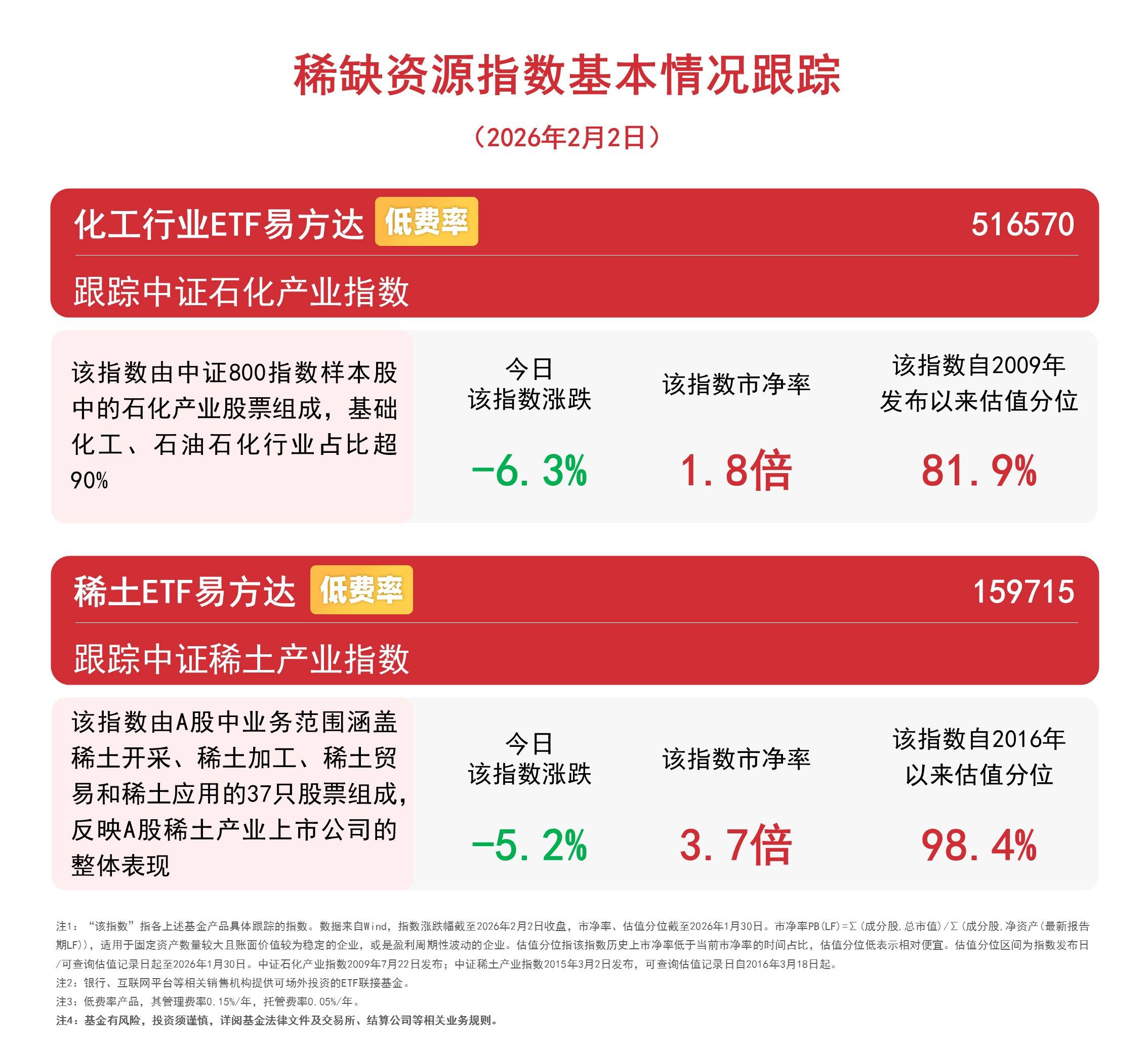
石化产业指数延续调整,化工行业ETF易方达(516570)等产品持续受资金关注
Sou Hu Cai Jing· 2026-02-02 11:10
Group 1 - The core viewpoint of the article highlights a significant decline in the performance of the rare earth and petrochemical sectors, with the China Rare Earth Industry Index dropping by 5.2% and the China Petrochemical Industry Index falling by 6.3% [1] - Recent data indicates that capital has been continuously flowing into related ETFs, with the E Fund Chemical Industry ETF (516570) attracting over 1.1 billion yuan in funds over the past 11 trading days [1] - Looking ahead, Everbright Securities suggests focusing on three main lines: upstream oil services, leading chemical companies, and domestic production, driven by the recovery trend in chemical industry prosperity and favorable policy directions [1] Group 2 - The chemical industry is experiencing a shift characterized by "east rising and west falling," indicating that Chinese chemical companies are enhancing their global competitiveness [1] - A slowdown in capital expenditure is expected, which may lead to increased profit elasticity as production capacity is released [1]
为什么这次散户的共识,会形成的如此之快
虎嗅APP· 2026-02-02 10:49
Core Viewpoint - The article discusses the rapid rotation of sectors in the Chinese capital market, highlighting the shift from traditional commodities to chemical and agricultural sectors, and explores the underlying forces that enable retail investors to quickly form consensus on investment opportunities [4][10]. Group 1: Market Dynamics - The recent sector rotation in the Chinese market has been unprecedented in speed, with traditional commodities like gold and silver giving way to chemicals and agriculture [4]. - This rapid rotation is attributed to a global market thirst for commodities and a compressed investment cycle [4]. Group 2: Attention Economy vs. Intent Economy - The past two decades have been characterized by an attention economy, where the focus is on capturing user attention to generate value [5]. - The emergence of AI marks a shift to an intent economy, where the goal is to understand and fulfill user intentions rather than merely capturing attention [5][6]. Group 3: Information Dynamics - In the intent economy, information access has become democratized, allowing retail investors to obtain insights previously available only to institutional investors, leading to "information equality" [6]. - However, this information equality results in an overwhelming amount of similar information, diluting its unique value and predictive power [6][7]. Group 4: Market Behavior and Investor Psychology - The compression of information processing time leads to a phenomenon where investors feel they possess all necessary information but struggle to ascertain its true value, creating a state of "omniscient anxiety" [7]. - The article introduces the concept of "information appearing as lagging," where rapid dissemination of information can lead to misjudgments about market opportunities [7][8]. Group 5: Consensus Formation - The speed of consensus formation among retail investors has accelerated dramatically, with significant shifts occurring in mere days, contrasting with the months or years required in the past [9]. - New influencers in the market leverage simplified narratives to rapidly implant ideas in the minds of retail investors, creating a self-reinforcing cycle of consensus [9][10].

四个方面发力,德州海关2025年助力企业进出口扩能升级
Qi Lu Wan Bao· 2026-02-02 10:34
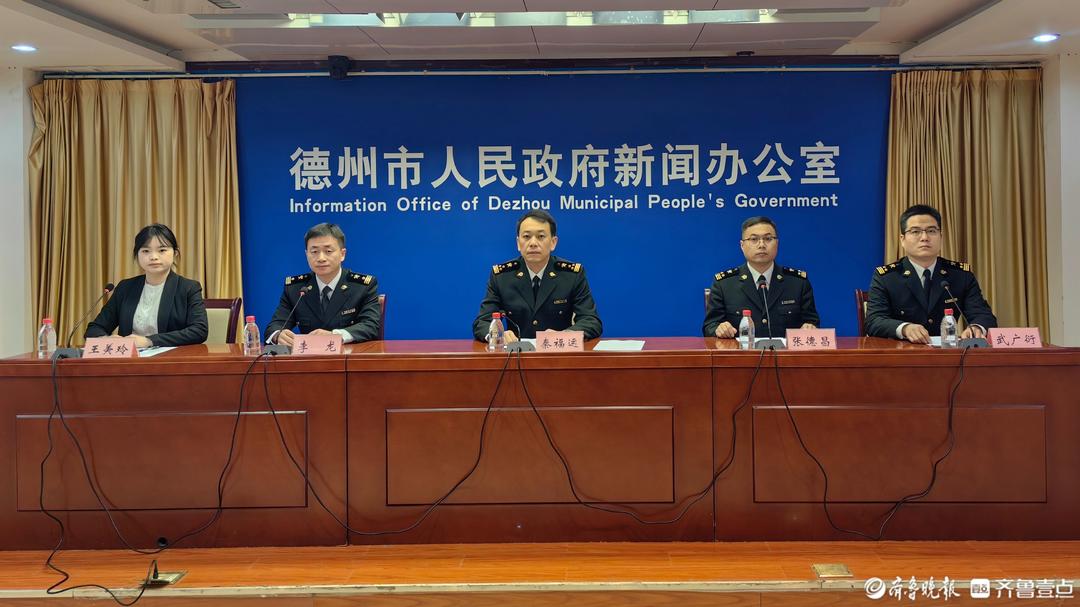
Core Insights - The press conference highlighted the achievements of Dezhou's foreign trade development in 2025, focusing on optimizing the business environment and supporting enterprises in expanding imports and exports [1] Group 1: Policy and Service Enhancements - Dezhou Customs has integrated regulatory responsibilities with service efficiency, implementing a series of initiatives to enhance policy services and improve enterprise satisfaction [3] - The "Enterprise Policy Delivery" initiative has reached over 510 companies, resolving more than 30 issues on-site and providing tax relief of 17.403 million yuan to 10 entities [3] - The number of AEO (Authorized Economic Operator) enterprises has increased to 11, with 4 new additions, and 1,270 batches of hazardous materials underwent expedited inspections, reducing inspection time by 98% [3][5] Group 2: Technological Advancements - The introduction of the "Self-Reporting Benefits" tax exemption model has achieved an 80% fast review rate, leading the Jinan Customs area [5] - The cloud-based issuance of inspection and quarantine certificates has reached a self-printing rate of 52%, ranking among the top three in the customs area [5] - Remote inspection trials for 31 enterprises have reduced average inspection time to 0.5 days, saving logistics costs exceeding 5 million yuan for companies [5][6] Group 3: Logistics and Infrastructure Development - The establishment of the "International Land Port Efficient Operation" project has been prioritized, with six meetings held to enhance competitive advantages [6] - The first Dezhou-Moscow international road transport line has been launched, facilitating multimodal transport and import/export operations [6] - Support for the establishment of the Leling Bonded Logistics Center has included policy delivery and infrastructure improvements [6] Group 4: Targeted Support and Market Diversification - A mechanism for customs policies, enterprise demands, and support measures has been established to implement targeted strategies [6] - The proportion of trade with the U.S. has decreased by 4 percentage points, reflecting efforts to diversify markets [6] - The processing trade has seen a significant increase, with an import and export value of 7.45 billion yuan, marking a 14.5% year-on-year growth [6]
第一创业晨会纪要-20260202
First Capital Securities· 2026-02-02 10:32
Macroeconomic Group - In 2025, the national general public fiscal revenue decreased by 1.7% year-on-year, a decline of 2.5 percentage points compared to the previous month, with central revenue dropping by 6.5% and local revenue increasing by 2.4% [4] - The government fund income also showed poor performance, with a year-on-year decrease of 7% and land use rights income falling by 14.7% [4] - The January PMI for China's manufacturing sector was 49.3, indicating a contraction, with new orders at 49.2 and new export orders at 47.8, reflecting weak demand [7][9] Industry Comprehensive Group - SpaceX is applying to launch a satellite constellation of up to 1 million satellites, which is expected to boost the commercial application market in the aerospace industry [12] - Jerry Holdings announced a contract worth $182 million (approximately 1.26 billion RMB) for gas turbine generator sets, indicating strong demand in the data center power supply sector [13] Advanced Manufacturing Group - Nanfang Energy expects a net profit of 1.67 to 1.73 billion RMB in 2025, a year-on-year increase of 48% to 53%, driven by improved hydropower generation [15] - SANY Heavy Energy forecasts a significant decrease in net profit for 2025, attributed to intensified competition in the onshore wind turbine market [16] Consumer Group - Denghai Seed Industry anticipates a net profit of 92 to 102 million RMB for 2025, a substantial increase of 62% to 80%, due to reduced seed production costs [20] - Sanfu Outdoor expects to turn a profit in 2025, with a projected net profit of 45 to 67.5 million RMB, driven by the success of its proprietary and exclusive brands [21] - Lichen Industrial forecasts a net profit of 153 to 173 million RMB for 2025, a year-on-year growth of 40% to 59%, supported by effective cost management and market expansion [22] Bond Research Group - The bond market showed mixed performance, with short-term bonds under pressure while long-term bonds experienced a decline due to profit-taking and supply concerns [25]

懒人财知道:2月2日交易复盘笔记 非理性恐慌下的机会
Xin Lang Cai Jing· 2026-02-02 09:47
Group 1 - The overall market sentiment is cautious due to high volatility, with a focus on avoiding risky trades and maintaining discipline in trading strategies [3][4][21] - The commodity market is experiencing a significant downturn, with a broad decline observed in various sectors, particularly in precious metals and energy [5][21][22] - The strongest sector identified is the chemical sector, specifically in caustic soda and PVC, while the weakest sectors include precious metals, non-ferrous metals, and crude oil [6][22] Group 2 - The core strategy involves going long on the strongest sectors and shorting the weakest ones, with a focus on maintaining a light position in weak commodities to avoid potential losses [7][24] - Specific strategies executed include automatic exit from PVC positions upon market decline and avoiding deep losses in precious metals and crude oil [9][10][25][26] - Risk management has been emphasized through systematic market analysis and strict stop-loss measures, successfully avoiding significant losses in weak sectors [11][27][28] Group 3 - Market drivers include geopolitical tensions and changes in U.S. monetary policy expectations, which have led to a bearish sentiment in the market [13][29] - The analysis framework used has effectively captured signals of market weakness, although there is a need for improved strategies for strong sectors to adapt to sudden market changes [14][30] - Continuous monitoring of U.S. Federal Reserve policies and global geopolitical developments is necessary for dynamic adjustment of trading strategies [15][31]

从货币反面到产业叙事
Ge Long Hui· 2026-02-02 09:44
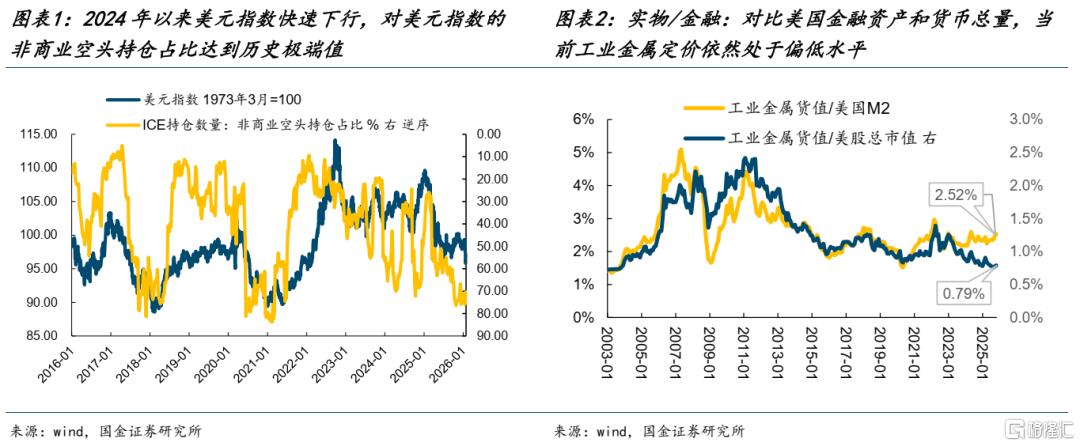
Group 1 - The current volatility in non-ferrous metals does not indicate the end of the physical asset market, as it remains in a rate-cutting cycle and industrial demand recovery is yet to be validated [28][18] - The narrative of "declining dollar credit" since 2020 is experiencing a phase reversal, leading to differentiation among metal varieties, with copper and aluminum performing better than gold, which is merely a counter to the dollar [28][20] - The rise in commodity prices has not yet shown evidence of suppressing traditional demand, and the incremental demand from emerging industries continues [28][21] Group 2 - The current market dynamics are driven by a combination of loosening dollar credit, expectations of liquidity easing, and new industrial demand narratives, prompting financial capital to flow into physical assets [5][1] - The recent adjustment in non-ferrous metals and stocks was influenced by the confirmation of the Federal Reserve chair nominee, which reversed the narrative of liquidity easing [10][5] - Historical data shows that after reaching new highs, copper and gold have a greater than 50% chance of recovering in the following trading days, indicating potential resilience in these metals [18][19] Group 3 - The manufacturing sector in China is expected to gain market share due to scale effects, technological advancements, and energy cost advantages, particularly in the chemical industry [23][27] - The valuation of Chinese chemical companies remains lower compared to their Korean and Japanese counterparts, despite their market share expanding [23][27] - The focus on demand and competitive landscape changes will be crucial for pricing in the next phase, as the narrative shifts from liquidity and dollar credit to industrial low inventory and demand stabilization [4][28]
市场快讯:原油跌停,化工大面积飘绿
Ge Lin Qi Huo· 2026-02-02 09:40
Report Summary 1. Report Industry Investment Rating - Not provided 2. Core Viewpoints - As of the time of publication, the chemical sector has weakened significantly. The main contracts of crude oil and fuel oil have hit the daily limit down. Asphalt and LPG have both fallen by more than 4%, and the aromatics series including PTA, PX, pure benzene, and styrene have all declined by over 4%. The olefin series such as plastics and PP have dropped by more than 2%. The varieties with supply - demand mismatches due to Middle - East geopolitical factors in the early stage have larger declines [7]. - The decline is mainly affected by three factors: the nomination of Kevin Warsh as the Fed Chairman, which strengthens the expectation of a supportive dollar and weakens gold; the decline of China's manufacturing PMI in January 2026, indicating a slowdown in manufacturing market demand; and the cooling of geopolitical risks as the US and Iran show signs of peace talks and the cancellation of a planned military exercise [7]. - For the later trend, attention should be paid to the uncertainty of the geopolitical situation, the overseas economic downturn and the Fed's interest - rate cut rhythm, and the demand verification of chemical products from March to April after the Spring Festival [7]. - Short - term investors are advised to control positions and avoid risks, and chemical industry chain enterprises are advised to use futures or options to hedge risks [7]. 3. Summary by Related Content Current Market Situation - The chemical sector has weakened significantly. Crude oil and fuel oil main contracts have hit the daily limit down. Asphalt, LPG, aromatics series, and olefin series have all declined to varying degrees [7]. Reasons for the Decline - The nomination of Kevin Warsh as the Fed Chairman affects market sentiment and weakens gold [7]. - China's manufacturing PMI in January 2026 has declined, indicating a slowdown in market demand, and the chemical industry's peak - season expectation needs to be verified after the Spring Festival [7]. - Geopolitical risks have cooled, and the geopolitical premium of crude oil and methanol has been squeezed out [7]. Later Trend Focus - Pay attention to the uncertainty of the geopolitical situation [7]. - Overseas economic downturn and the Fed's interest - rate cut rhythm [7]. - Demand verification of chemical products from March to April after the Spring Festival [7]. Operation Suggestions - Short - term investors should control positions and avoid risks [7]. - Chemical industry chain enterprises should use futures or options to hedge risks [7].
市场回调,ETF投资如何应对?基金经理火速支招:要做简单题,不做难题,看好四大方向
Xin Lang Cai Jing· 2026-02-02 09:19
Core Viewpoint - The article emphasizes the importance of focusing on simple investment themes in ETFs due to the current state of extreme liquidity in global markets, which is likely to lead to valuation premiums for assets with industrial trends, potentially increasing over time [1][10]. Group 1: Simple vs. Difficult Investment Themes - Simple investment themes are defined as those with clear industrial trends, where performance and valuation are on an upward trajectory, benefiting from ongoing liquidity expansion [2][12]. - Difficult investment themes involve high uncertainty regarding product realization and future performance, often relying on speculative investments in volatile market conditions [3][13]. Group 2: Market Summary and Trends - The market has shown significant price increases in commodities and basic components, driven by expectations of price hikes regardless of demand [3][13]. - The article notes that midstream companies are currently undervalued despite the strong demand attributed to AI computing, as evidenced by the stagnation of stocks like Nvidia and optical modules [3][14]. Group 3: Future Market Expectations - The outlook for the first half of 2026 remains optimistic, with the Shanghai Composite Index expected to find strong support at 3990 points, followed by a period of consolidation [4][14]. - Key sectors identified for potential investment include non-ferrous metals, optical modules, gaming, Hong Kong internet, and batteries, with optical modules and Hong Kong internet expected to lead the market [4][14]. Group 4: Market Pricing Status of Key Sectors - Non-ferrous metals and chemicals are in a strong expectation and reality phase with low valuations, while gold is anticipated to remain in a price increase channel [5][15]. - The overseas computing sector (ChiNext AI) is characterized by strong expectations and realities with low valuations, suggesting potential strength during market fluctuations [5][15]. - The semiconductor sector is experiencing high valuations due to strong demand for storage chips, with future opportunities likely tied to domestic computing logic [5][15]. Group 5: Investment Opportunities in ETFs - The article suggests focusing on ETFs with significant exposure to optical modules, particularly the ChiNext AI ETF [7][16]. - Attention is also recommended for Hong Kong-focused products, including the Hong Kong Internet ETF, which is expected to perform well in the short term [7][16]. - The domestic AI sector, particularly in big data, is highlighted as having strong potential, with ETFs like the Big Data ETF likely to perform well alongside semiconductor and AI sectors [7][17]. - The acceleration of the digital RMB process positions the Financial Technology ETF as a promising investment opportunity [7][18].
收评:沪指跌2.48% 电网设备板块逆势活跃
Jing Ji Wang· 2026-02-02 09:16
Market Overview - The Shanghai Composite Index closed at 4015.75 points, down 2.48%, with a trading volume of 11635.33 billion yuan [1] - The Shenzhen Component Index closed at 13824.35 points, down 2.69%, with a trading volume of 14212.32 billion yuan [1] - The ChiNext Index closed at 3264.11 points, down 2.46%, with a trading volume of 6768.91 billion yuan [1] Sector Performance - The power grid equipment sector showed resilience, with Tongguang Cable hitting a 20% limit up, and companies like Senyuan Electric, Baobian Electric, and Sanbian Technology also reaching the limit up [1] - The liquor sector was active again, with Huangtai Liquor and Jinhui Liquor hitting the limit up [1] - Resource cyclical sectors, including metals, oil and gas, chemicals, coal, and steel, experienced significant declines [1] - The semiconductor sector also saw a substantial downturn [1]


