
科技

Search documents
不必自己吓自己!明天A股的应对思路就在这里
Mei Ri Jing Ji Xin Wen· 2025-10-12 04:34
Core Viewpoint - The recent market fluctuations are described as a "predictable black swan," suggesting that while volatility is concerning, it is also an opportunity for investors to refine their strategies and approach the market with a clearer perspective [2]. Market Performance Analysis - The A-share market has shown significant divergence in performance, with some indices like the Shanghai Composite and CSI 1000 recently breaking through resistance levels, while others are facing critical support tests [2]. - The overall market sentiment is mixed, with the average stock price in the A-share market positioned between a slight decline and a stable trend [5][6]. Impact of External Factors - The recent downturn in global risk assets has led to a notable decrease in risk appetite, but the current A-share index level is higher compared to previous downturns, indicating a different market resilience [15]. - Analysts suggest that the impact of U.S.-China trade tensions is less severe now than in April, as the market has adapted and learned from past experiences [15][17]. Investment Strategy Recommendations - Investors are advised to remain cautious and consider waiting for a more favorable entry point, especially in high-quality sectors, rather than reacting impulsively to market fluctuations [23]. - The banking and power sectors are highlighted as potential stabilizers for the index, while technology stocks are expected to maintain their volatility and growth potential despite short-term adjustments [24][26]. Future Outlook - The upcoming APEC meeting and the evolving trade landscape may influence market sentiment, with expectations of a more stable environment post-adjustment [17][20]. - The technology sector is anticipated to receive further policy support, which could drive future market interest and investment opportunities [27].

香港发展局:未来数年北部都会区可提供土地及房屋将以倍数上升
智通财经网· 2025-10-12 01:59
Core Viewpoint - The Hong Kong Development Bureau has reported significant progress in the Northern Metropolis development over the past two years, with four new development zones currently under construction, covering nearly 900 hectares of land [1] Group 1: Development Progress - The Northern Metropolis is expected to see a multiple increase in land and housing output in the coming years [1] - The planning for the Northern Metropolis has been largely finalized, with projects commencing to accelerate development and attract corporate investment [1] Group 2: Policy Initiatives - The government plans to introduce a "package of incentives" to promote industry and investment in the Northern Metropolis, aiming to facilitate business establishment in Hong Kong [1] - The Chief Executive's Policy Address includes proposals to simplify administrative procedures and establish dedicated legislation for the Northern Metropolis to expedite its development and attract industries [1] Group 3: Strategic Focus - The Northern Metropolis will provide over 3,000 hectares of new development land, leveraging its geographical proximity to Guangdong Province [1] - The focus will be on developing innovation technology, education, and high-end industries, positioning the Northern Metropolis as a platform for deepening cooperation with other cities in the Guangdong-Hong Kong-Macao Greater Bay Area [1]
【科创之声】工业生产线带动旅游消费线
Jing Ji Ri Bao· 2025-10-11 23:13
Core Insights - The recent surge in industrial tourism in China reflects the country's manufacturing technological strength and vast consumer market demand, indicating significant potential for this emerging sector [2] Group 1: Strong Industrial Foundation - China's industrial system comprises 41 major categories, 207 subcategories, and 666 minor categories, making it the only country with all industrial categories listed by the United Nations [4] - This comprehensive industrial system provides diverse tourism resources, including smart manufacturing workshops and historical factories, which enhance the appeal of industrial tourism [4] Group 2: Supply and Demand Dynamics - On the supply side, industrial tourism serves as a natural platform for brand promotion, exemplified by the Qingdao Beer Museum, which generates revenue through ticket sales and product consumption [5] - On the demand side, high-tech industries attract significant consumer interest, transforming previously restricted factory spaces into popular destinations for younger audiences [5] Group 3: Supportive Policy Environment - The "National Industrial Tourism Development Outline (2016-2025)" aims to establish 1,000 national industrial tourism demonstration sites by 2025, with ongoing supportive policies since 2021 [6] - As of the end of 2024, China has announced 122 national industrial tourism demonstration bases and over 1,200 industrial tourism enterprises, with the market expected to exceed 100 billion yuan by 2030 [6] Group 4: Future Development Strategies - To enhance industrial tourism, it is essential to create a national-level industrial tourism plan, establish experience design standards, and encourage cross-regional tourism corridors [7] - The transformation of industrial production lines into engaging experiences can elevate the visibility of Chinese manufacturing brands and their cultural significance on a global scale [7]

特朗普恐吓中国,华尔街果然慌了:晴天霹雳!
Guan Cha Zhe Wang· 2025-10-11 14:43
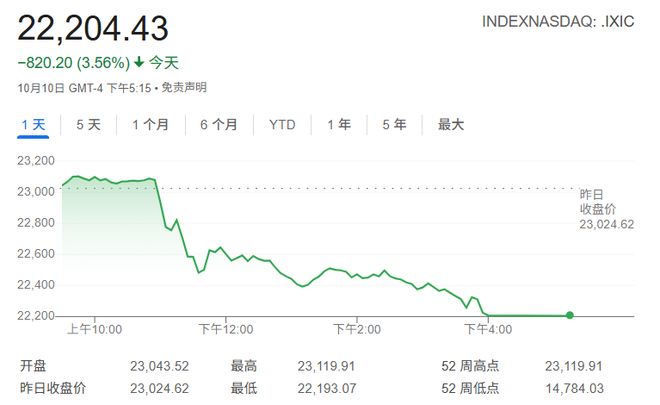
【文/观察者网 阮佳琪】 "真的是晴天霹雳(a bolt from the blue)……"派石金融集团(Pepperstone Group)的高级研究策略师迈 克·布朗(Michael Brown)向美媒哀嚎道。 一切要拜特朗普所赐。当地时间10月10日,这位黔驴技穷的美国总统,情绪化威胁重启关税大棒。然 而,一番关税讹诈先把美国股市"吓出心脏病"。 当天,美股再遇"黑色星期五",遭遇六个月来最严重的抛售。美股三大指数集体收跌,道指下跌878.82 点,跌幅1.9%;纳指下跌820.20点,跌幅3.56%;标普500指数下跌182.60点,跌幅2.71%。纳指、标普 500指数创4月以来最大单日跌幅。 美国七大科技巨头市值一夜蒸发约7700亿美元,特斯拉跌超5%;亚马逊跌近5%;苹果、Meta跌超 3%;微软、谷歌跌超2%;英伟达跌4.89%。 经济担忧同时拖累铜价与油价走低,原油价格暴跌逾4%,从大豆到小麦、棉花等大宗商品价格均大幅 下跌。被视为华尔街"恐慌指标"的芝加哥期权交易所波动率指数(CBOE)飙升约32%,至6月以来最高 水平。 据《华尔街日报》11日报道,特朗普的关税威胁还波及各类贸易敏感型企 ...





杨德龙:受美股暴跌影响,下周科技股调整可能会继续 | 立方大家谈
Sou Hu Cai Jing· 2025-10-11 13:09
对于投资者来说,一方面,如果是做短期避险的操作,可以适当进行减仓。另一方面,如果是布局中长 期的机会,不愿意做短期波动方面的操作,也可以做中长期的持有。短期市场的冲击难以避免,而中长 期的表现更取决于这些科技股能否兑现业绩、能否实现投资者的预期。短期市场受到外部因素影响出现 调整,通过减仓避险能够防止市场出现较大幅度回落,而市场大的趋势并没有改变。这轮慢牛长牛行情 背后有深刻的逻辑,在居民储蓄大转移的背景之下,这轮牛市仍然有望延续较长时间。即使从去年924 行情启动算起,这轮行情也可能只是在上半场。 建议对于前期涨幅较大的科技股,可以适当获利了结,降低仓位,同时对中长期的走势保持信心和耐 心。十五五规划政策支持的这些科技领域,未来有望继续出现表现,真正能够实现技术突破的好公司仍 然有望走出向上的走势。目前美股处于历史高位,而A股和港股虽然涨了一波,但估值上仍然处于历史 平均估值之下,市场整体泡沫程度相对可控。特别是传统的白马股,这一轮上涨过程中并没有表现,只 是出现一些局部的泡沫,而部分股票短期涨幅较大。建议投资者保持信心和耐心,同时密切关注贸易和 关税方面的进展。 杨德龙 | 立方大家谈专栏作者 在利空消息 ...
本以为昨天的大A已经够惨了,一夜醒来,却不知道该喜该悲
Ge Long Hui· 2025-10-11 10:45
本以为昨天的大A已经够惨了,一夜醒来,却不知道该喜该悲。三大指数高开低走后全天震荡下行,截 至收盘道指下跌1.9%,纳指下跌3.56%,标指下跌2.71%。盘面上,银行、科技集体转弱,中概股大跳 水,黄金再创新高。 银行股集体转弱,其中齐昂银行大跌6.23%,阿莱恩斯西部银行下跌5.78%,联合银行下跌4%,摩根士 丹利、美国银行、花旗集团、高盛等多股跌幅均在2%上方。 中概股低开低走后全天弱势,截至收盘中国金龙大跌6.1%。其中蔚来大跌10.05%,哔哩哔哩下跌 9.37%,阿里巴巴下跌8.45%,小鹏汽车下跌8.25%,百度下跌8.09%,腾讯控股下跌6.33%,京东下跌 6.24%,爱奇艺、理想汽车、网易、贝壳等多股跌幅均在3%上方。 COMEX黄金高开高走后全天震荡上行,盘中虽有波折但整体强势,截至收盘上涨1.58%报4035.5美元/ 盎司,盘中最低报3961.2美元/盎司,最高报4038.6美元/盎司。对于黄金,目前是矛盾的,一方面是对 高价的恐惧,一方面是趋势。 理财就是一场修行,有人修有人度,结果就是看谁踩准了点,把握住了机会。 科技股暴跌,其中超威公司大跌7.72%,高通下跌7.29%,特斯 ...
杨德龙:受美股暴跌影响,下周科技股或继续调整
和讯· 2025-10-11 09:06
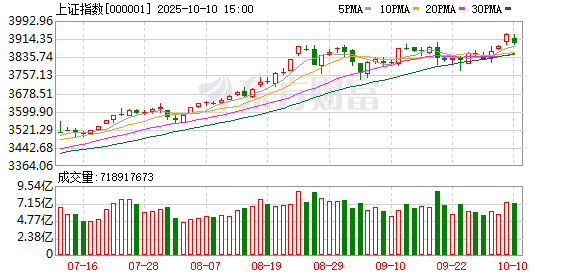
Group 1 - The U.S. stock market experienced a significant decline on October 10, with the Dow Jones falling by 1.9%, the S&P 500 by 2.71%, and the Nasdaq by 3.56% [2] - Major technology stocks in the U.S. saw widespread losses, with Broadcom down nearly 6%, Tesla over 5%, Amazon close to 5%, and Nvidia down 4.89% [2] - Concerns over deteriorating trade relations between the U.S. and China, particularly due to Trump's threats to raise tariffs in response to China's stricter rare earth export controls, contributed to investor anxiety [2] Group 2 - The U.S. government has been in a shutdown for 10 days, with no signs of resolution, raising fears of a recession [3] - The Senate has failed to pass a budget proposal for the seventh consecutive time, indicating a lack of progress in bipartisan negotiations [3] - The market now anticipates a 98% probability of the Federal Reserve lowering interest rates in October, with a focus on boosting employment over controlling inflation [3] Group 3 - The decline in U.S. stocks is expected to negatively impact the A-share and Hong Kong markets, particularly on the following Monday [3] - Despite the short-term market shocks, the A-share and Hong Kong markets have shown signs of a bull market, with the Shanghai Composite Index nearing the 4000-point mark after the National Day holiday [3][4] - The current bull market is supported by economic transformation, policy backing, and a significant shift in household savings [4] Group 4 - Short-term market adjustments are likely due to external factors, but the overall trend remains unchanged [4] - The ongoing bull market is expected to continue for an extended period, with the current phase possibly just being the first half of the rally since last year's September [5] - Investors are advised to take profits on previously high-performing technology stocks and reduce positions while maintaining confidence in the long-term outlook [5]

美股暴跌,其实不是黑天鹅
Hu Xiu· 2025-10-11 08:15
Group 1 - The core viewpoint of the article is that the recent escalation of global trade tensions is not a "black swan" event but rather a "gray rhino" event, indicating a high probability risk that has been underestimated [2][6] - The U.S. economy has shown signs of weakness recently, and a resurgence of trade disputes could exacerbate inflation and impact the Federal Reserve's monetary policy [2][6] - The current political landscape in the U.S. suggests that trade tensions are likely to reignite, especially as the midterm elections approach [1][4] Group 2 - The article highlights that the U.S. administration's economic policies have primarily focused on tax cuts and fiscal subsidies, with limited success in reversing trade deficits or boosting manufacturing jobs [3][4] - The dynamics of global trade are shifting, with major trading partners, including China, taking more initiative in setting agendas, leading to a more complex economic landscape [5][6] - The article emphasizes that the previous perception of resolved trade issues was misleading, and the market may not easily dismiss the current tensions as it did in the past [6][4]
AH股市场周度观察(10月第1周)-20251011
ZHONGTAI SECURITIES· 2025-10-11 04:09
A-Share Market - The A-share market showed a mixed performance with the Shanghai Composite Index slightly up by 0.37%, while the ChiNext Index fell significantly by 3.86, indicating notable internal market differences [5][6] - Value stocks generally rose, particularly mid-cap value stocks, while growth stocks experienced a broad pullback. The average daily trading volume for the week was 2.6 trillion yuan, showing a slight increase compared to the previous period [5][6] - The market volatility increased post-National Day, influenced by rising prices of industrial and precious metals, with gold surpassing 4000 USD per ounce. The non-ferrous metals sector saw a cumulative increase of 4.35% during the week [5][6] Hong Kong Market - The Hong Kong market faced downward pressure, with the Hang Seng Index declining by 3.13% and the Hang Seng Tech Index dropping by 5.48%. Traditional value sectors showed relative resilience, while technology, consumer, and healthcare sectors experienced significant declines, with non-essential consumer and healthcare sectors falling over 6% [7] - The adjustment in the Hong Kong market was primarily driven by external uncertainties and internal sector rotations, particularly due to the tightening of US-China relations. The announcement of a 100% tariff on all brand or patented drug imports by the US significantly impacted the healthcare sector [7] - Looking ahead, the Hong Kong market is expected to be heavily influenced by US-China relations, with potential risks from increased tariffs on Chinese goods. Focus should be on dividend-paying sectors less affected by these relations, especially cyclical sectors benefiting from anti-involution policies [7]
“黑色星期五”!美国股债汇三杀,英伟达一夜蒸发超1.6万亿元,比特币暴跌超150万人爆仓
Xin Lang Cai Jing· 2025-10-11 03:29
Core Viewpoint - The U.S. stock market experienced a significant decline on October 10, with major indices suffering their largest single-day drops since April, leading to substantial losses in both equity and cryptocurrency markets [1] Group 1: Stock Market Performance - The three major U.S. stock indices all fell sharply, with the Dow Jones Industrial Average down 1.9%, the Nasdaq down 3.56%, and the S&P 500 down 2.71% [1] - The Nasdaq and S&P 500 recorded their largest single-day declines since April, indicating heightened market volatility [1] - Major technology stocks also faced significant losses, with the "Big Seven" tech index dropping 3.65% [1] Group 2: Individual Stock Movements - Tesla shares fell over 5%, while Amazon and Nvidia dropped more than 4% [1] - Other notable declines included META and Apple, both down over 3%, and Microsoft down over 2% [1] - Google-C shares experienced a decline of over 1% [1] Group 3: Bond Market and Currency Impact - U.S. Treasury yields collectively decreased, with the 2-year yield down 1.63 basis points and the 10-year yield down 1.95 basis points [1] - The U.S. dollar index fell by 0.56%, closing at 98.977, reflecting a weaker dollar against six major currencies [1]