
能源

Search documents
宏观日报:8月财政稳中有进-20250918
Hua Tai Qi Huo· 2025-09-18 03:07
Industry Overview Upstream - Glass prices have declined [1] - Egg prices have significantly rebounded [1] Midstream - PX and PTA operating rates have remained stable at a medium level [2] - Coal consumption by power plants has increased [2] Downstream - The sales of commercial housing in first, second, and third-tier cities have rebounded [2] - The number of domestic flights has increased [2] Key Events Production Industry - On the 17th, the Ministry of Industry and Information Technology publicly solicited opinions from the society on the mandatory national standard "Safety Requirements for Intelligent Connected Vehicle Combined Driving Assistance Systems". The draft for comments has established a safety baseline for intelligent connected vehicle products, requiring the system to be activated only under its designed operating conditions. For different functions such as single-lane, multi-lane, and pilot assistance, comprehensive safety technical requirements such as human-machine interaction, functional safety and expected functional safety, information safety, and data recording have been set, constructing a "triple safety guarantee" [1] Service Industry - The Ministry of Finance released the fiscal revenue and expenditure situation from January to August 2025, showing that the stamp duty revenue was 284.4 billion yuan, a year-on-year increase of 27.4%. Among them, the securities transaction stamp duty revenue was 118.7 billion yuan, a year-on-year increase of 81.7%. According to the data previously released by the Ministry of Finance, the securities transaction stamp duty revenue from January to July 2025 was 93.6 billion yuan, a year-on-year increase of 62.5%. This means that the securities transaction stamp duty in August this year was 25.1 billion yuan, a month-on-month increase of 66.23% compared to 15.1 billion yuan in July and a year-on-year increase of 225.97% compared to August 2024 [1] Key Data Price Index | Industry Name | Index Name | Frequency | Unit | Update Time | Price | YoY | | --- | --- | --- | --- | --- | --- | --- | | Agriculture | Spot price: Corn | H | Yuan/ton | 9/16 | 2294.3 | -0.68% | | Agriculture | Spot price: Egg | H | Yuan/kg | 9/16 | 7.9 | 11.63% | | Agriculture | Spot price: Palm oil | H | Yuan/ton | 9/16 | 9516.0 | -0.04% | | Agriculture | Spot price: Cotton | Daily | Yuan/ton | 9/16 | 15299.8 | -0.23% | | Agriculture | Average wholesale price: Pork | Daily | Yuan/kg | 9/16 | 19.9 | 0.10% | | Non-ferrous metals | Spot price: Copper | H | Yuan/ton | 9/16 | 81196.7 | 1.64% | | Non-ferrous metals | Spot price: Zinc | H | Yuan/ton | 9/16 | 22218.0 | 0.22% | | Non-ferrous metals | Spot price: Aluminum | Daily | Yuan/ton | 9/16 | 20960.0 | 1.29% | | Non-ferrous metals | Spot price: Nickel | Daily | Yuan/ton | 9/16 | 123750.0 | 1.63% | | Non-ferrous metals | Spot price: Aluminum | H | Yuan/ton | 9/16 | 17031.3 | 1.49% | | Ferrous metals | Spot price: Rebar | H | Yuan/ton | 9/16 | 3148.0 | -0.17% | | Ferrous metals | Spot price: Iron ore | Daily | Yuan/ton | 9/16 | 807.9 | 0.97% | | Ferrous metals | Spot price: Wire rod | Daily | Yuan/ton | 9/16 | 3352.5 | 1.06% | | Others | Spot price: Glass | H | Yuan/square meter | 9/16 | 14.0 | -1.75% | | Others | Spot price: Natural rubber | Daily | Yuan/ton | 9/16 | 15166.7 | -0.05% | | Others | China Plastic City Price Index | H | Point | 9/16 | 793.6 | -0.54% | | Energy | Spot price: WTI crude oil | H | US dollars/barrel | 9/16 | 63.3 | 1.67% | | Energy | Spot price: Brent crude oil | H | US dollars/barrel | 9/16 | 67.4 | 2.15% | | Energy | Spot price: Liquefied natural gas | H | Yuan/ton | 9/16 | 3876.0 | -0.56% | | Energy | Coal price: Coal | Daily | Yuan/ton | 9/16 | 776.0 | -0.26% | | Chemical | Spot price: PTA | H | Yuan/ton | 9/16 | 4633.8 | -0.21% | | Chemical | Spot price: Polyethylene | H | Yuan/ton | 9/16 | 7378.3 | -0.18% | | Chemical | Spot price: Urea | Daily | Yuan/ton | 9/16 | 1665.0 | -1.55% | | Chemical | Spot price: Soda ash | Daily | Yuan/ton | 9/16 | 1262.5 | 0.00% | | Real estate | Cement price index: National | H | Point | 9/16 | 131.5 | 0.72% | | Real estate | Building materials composite index | H | Point | 9/16 | | 0.84% | | Real estate | Concrete price index: National index | H | Point | 9/16 | 92.0 | -0.72% | [33]
宝城期货资讯早班车-20250918
Bao Cheng Qi Huo· 2025-09-18 02:04
1. Report Industry Investment Rating No relevant content provided. 2. Core Views of the Report - The Fed cut interest rates by 25 basis points to 4.00%-4.25%, and the market expects further rate cuts. The Fed noted rising employment risks, slower economic growth, and increased inflation [3][14]. - China will expand service consumption through measures such as selecting pilot cities, introducing policies, promoting AI application, and increasing financial support. During the consumption month, over 25,000 cultural and tourism activities will be held, and over 330 million yuan in consumption subsidies will be issued [2][15]. - The resource cycle sector is expected to benefit from the Fed's rate - cut cycle and the approaching PPI inflection point in China. Some resource - themed funds have seen significant growth [5]. - The real estate market shows signs of stabilizing, including the completion of the "guaranteed delivery of buildings" task, narrowing price declines, debt - restructuring efforts by troubled developers, and a decrease in the unsold area of new commercial housing [20]. 3. Summary by Relevant Catalogs 3.1 Macro Data速览 - GDP growth in Q2 2025 was 5.2% year - on - year, slightly lower than the previous quarter [1]. - In August 2025, the manufacturing PMI was 49.4%, up from the previous month; the non - manufacturing PMI was 50.3%, also slightly up [1]. - Social financing scale in August 2025 was not provided, but the previous month was 256.68 billion yuan, and the same period last year was 303.23 billion yuan [1]. - M0, M1, and M2 growth rates in August 2025 were 11.7%, 6.0%, and 8.8% respectively, with M1 showing a significant increase from the previous year [1]. - CPI in August 2025 was - 0.4% year - on - year, and PPI was - 2.9% year - on - year [1]. - Fixed - asset investment in August 2025 had a cumulative year - on - year growth of 0.5%, down from previous levels [1]. - Social consumer goods retail sales in August 2025 had a cumulative year - on - year growth of 4.64% [1]. - Exports and imports in August 2025 had year - on - year growth of 4.4% and 1.3% respectively, both showing a slowdown [1]. 3.2 Commodity Investment Reference 3.2.1 Comprehensive - China will select about 50 pilot cities for new consumption models, introduce policies, and promote AI in service consumption. Over 25,000 cultural and tourism activities will be held, and over 330 million yuan in consumption subsidies will be issued [2][15]. - Hong Kong will take five measures to establish an international gold trading market, including expanding gold storage and building a central clearing system [2]. - The Fed cut interest rates by 25 basis points, and the market expects more rate cuts [3][14]. - The Hong Kong Monetary Authority cut the base rate by 25 basis points to 4.50% [4]. 3.2.2 Metals - International precious metal futures generally fell, but the expected easing of monetary policy may support the market. Base metals were also affected by the weakening dollar [5]. - The resource cycle sector has shown good performance, and some resource - themed funds have reached new net - value highs. The Fed's rate - cut cycle and the approaching PPI inflection point are favorable factors [5]. - The price of cobalt has risen by 61.25% since the beginning of 2025, reaching 272,500 yuan/ton as of September 16 [5]. - The position and capital flow in the lithium carbonate futures market have changed, and the price of battery - grade lithium carbonate has declined [6]. - Lead, copper, and other metal inventories have changed, with lead and copper inventories hitting new lows [6]. 3.2.3 Coal, Coke, Steel, and Minerals - The direct impact of US tariffs on the Indian steel industry is small, but the European carbon tax will affect exports. The continued use of the blast - furnace route for new capacity is a concern [8]. 3.2.4 Energy and Chemicals - International oil prices fell slightly, with multiple factors affecting the market [9]. - China aims to increase new energy storage capacity to over 180 million kilowatts by 2027, over 240 million kilowatts by 2030, and over 300 million kilowatts by 2035 [9]. - Two wells in the Ziyang shale gas field in Sichuan set a new shale gas production record [9]. - Diesel fuel inventories in the Gulf Coast of the US reached the highest level since January 2024 [9]. - US crude exports increased, domestic production decreased, and strategic petroleum reserve inventory increased [10]. - Ukraine's natural gas reserves can meet 80% - 90% of its winter demand [10]. 3.2.5 Agricultural Products - A meeting on pig production capacity regulation focused on controlling the capacity of breeding sows to regulate next year's supply [11]. - Canada is expected to produce 36.6 million tons of wheat in 2025, a 1.9% increase from 2024 [12]. 3.3 Financial News Compilation 3.3.1 Open Market - The central bank conducted 418.5 billion yuan of 7 - day reverse repurchase operations on September 17 at an interest rate of 1.40% [13]. - The Ministry of Finance and the central bank conducted a 150 - billion - yuan central treasury cash management commercial bank time - deposit auction on September 17, with an interest rate of 1.78% [13]. 3.3.2 Key News - The Fed cut interest rates by 25 basis points, and the market expects more rate cuts [3][14]. - China will expand service consumption through various measures [2][15]. - In the first eight months of 2025, national general public budget revenue was 14.82 trillion yuan, a 0.3% increase year - on - year, and tax revenue growth turned positive for the first time [16]. - The central bank supports financial institutions in issuing bonds and asset - backed securities to increase consumer credit supply [16]. - Financial institutions have applied for nearly 60 billion yuan in service consumption and elderly - care re - loans, involving nearly 4,000 business entities and over 570 billion yuan in loans [16]. - Since the 14th Five - Year Plan, central enterprises' assets have increased from less than 70 trillion yuan to over 90 trillion yuan, and their profits have increased from 1.9 trillion yuan to 2.6 trillion yuan [17]. - Hong Kong will discuss with mainland institutions to launch offshore treasury bond futures, expand interest - rate derivatives, and promote cross - border RMB repurchase business [17]. - The floating - rate bond market has expanded rapidly this year, with commercial banks restarting issuance [17]. - The real estate market shows signs of stabilizing [20]. - Some companies have had major bond - related events, and some overseas credit ratings have changed [20]. 3.3.3 Bond Market Summary - Yields of major interest - rate bonds in the inter - bank market generally declined, and treasury bond futures rose [21]. - In the exchange - traded bond market, some bonds rose while others fell [22]. - The CSI Convertible Bond Index rose, and some convertible bonds had significant price changes [22]. - Money market interest rates generally increased [23]. - The winning yields of some financial bonds and treasury bonds were announced [24]. - Repurchase fixed - rate bonds in the inter - bank and silver - silver markets rose [24][25]. - European bond yields fell, and US bond yields rose [25]. 3.3.4 Foreign Exchange Market - The on - shore RMB against the US dollar rose, and the central parity rate was adjusted up [26]. - The US dollar index rose, and most non - US currencies fell [26]. 3.3.5 Research Report Highlights - Some public bond funds may change their redemption fee policies, and bond ETFs may attract more investors [27]. - The central bank's segmented operations help maintain liquidity, but the money market may still face fluctuations [27][28]. - The convertible bond market showed signs of recovery, with a stable primary - market supply and opportunities for event - driven investments [28]. 3.3.6 Today's Reminders - On September 18, 222 bonds will be listed, 177 bonds will be issued, 150 bonds will be paid, and 236 bonds will have principal and interest repaid [29]. 3.4 Stock Market Key News - A - shares rose, with the auto - parts sector having a strong performance. The Shanghai Composite Index rose 0.37%, the Shenzhen Component Index rose 1.16%, and the ChiNext Index rose 1.95% [30]. - The Hong Kong Hang Seng Index rose 1.78%, and the Hang Seng Tech Index rose 4.22%. South - bound funds had net purchases of 9.44 billion Hong Kong dollars [30][31].
权威发布·高质量完成“十四五”规划丨国资央企加快塑造新动能新优势
Ren Min Ri Bao· 2025-09-18 01:40
Core Insights - The "14th Five-Year Plan" period has seen significant growth in state-owned enterprises (SOEs), with total assets exceeding 90 trillion yuan and total profits reaching 2.6 trillion yuan, reflecting enhanced strategic support and value elevation [1][3]. Group 1: Stability - The total assets of SOEs increased from 68.8 trillion yuan to 91 trillion yuan, with state-owned capital equity rising from 14.2 trillion yuan to 18.3 trillion yuan, achieving annual growth rates of 7.3% and 6.5% respectively [3]. - Total profits of SOEs rose from 1.9 trillion yuan to 2.6 trillion yuan, with the operating profit margin increasing from 6.2% to 6.7% [3]. - Labor productivity improved significantly, with output per employee increasing from 594,000 yuan to 817,000 yuan [3]. Group 2: Progress - Investment in strategic emerging industries by SOEs has seen an annual growth rate exceeding 20%, with projections indicating that by 2024, such investments will account for over 40% of total investments [5]. - The transformation of traditional industries is accelerating, with over 800 application scenarios developed under the "Artificial Intelligence+" initiative and the establishment of 1,854 smart factories [5]. - Energy consumption per unit of output and carbon emissions per unit of output decreased by 12.8% and 13.9% respectively [5]. Group 3: Quality - The brand value of SOEs has experienced a compound annual growth rate of over 15% over the past three years [6]. - SOEs have contributed approximately 80% of crude oil, 70% of natural gas, and 60% of electricity supply in the country [7]. - SOEs have paid over 10 trillion yuan in taxes and transferred 1.2 trillion yuan of state-owned equity to social security funds during the "14th Five-Year Plan" [7]. Group 4: Innovation - R&D investment by SOEs has consistently exceeded 1 trillion yuan annually for three consecutive years, with an average annual growth rate of 6.5% [8]. - SOEs employ 1.44 million R&D personnel, accounting for one-fifth of the national total, and have established 474 national-level R&D platforms [8][9]. - SOEs have led or participated in 22 major national technology projects, contributing to 60% of key product R&D in the manufacturing sector [8][9]. Group 5: Reform - The restructuring of 10 enterprises into 6 groups and the establishment of 9 new SOEs have optimized the layout of state-owned enterprises [10]. - The management and operational mechanisms of SOEs have been improved, with over 60% of management personnel's variable pay linked to performance [10]. - The State-owned Assets Supervision and Administration Commission (SASAC) has implemented personalized assessments for SOEs, with over 76% of assessment indicators being customized [10].
中国山东—新加坡经贸合作交流会暨2025新加坡山东周开幕式举行
Da Zhong Ri Bao· 2025-09-18 00:57
Core Viewpoint - The Shandong-Singapore Economic and Trade Cooperation Exchange Conference and the 2025 Shandong Week in Singapore opened on September 17, focusing on enhancing cooperation and mutual understanding between Shandong and Singapore for high-quality development [1] Group 1: Event Overview - The event was themed "Moving Forward Together, Creating the Future" and aimed to discuss new measures and visions for cooperation between Shandong and Singapore [1] - Key representatives from Shandong's provincial departments, cities, and Singaporean government and business sectors participated in the event [1] Group 2: Focus Areas - The conference highlighted several key areas including green low-carbon development, artificial intelligence, future industrial cities, shipping and trade cooperation, and clean energy [1] - Specialized presentations were made on these topics by various provincial and municipal representatives [1] Group 3: Project Signings - A total of 18 key cooperation projects were signed during the event, with a total investment amounting to approximately $820 million, covering sectors such as new energy, cultural tourism, modern finance, education, healthcare, high-end equipment, and new materials [1]
中保商务论坛在保加利亚举办 百余家企业共商合作
Xin Hua She· 2025-09-18 00:31
作为中保政府间经济联委会新一届例会重要配套活动,本次论坛吸引了中保两国百余家企业参与,涵盖 农业、能源、物流、汽车制造、信息技术、金融等多个领域。 论坛还包括专题推介和企业对接会等环节,为两国企业提供了高效的交流平台。与会企业代表表示,通 过本次论坛不仅了解了对方市场需求和政策环境,还建立了直接联系,为后续合作奠定了良好基础。 新华社索非亚9月17日电 "中国—保加利亚商务论坛"日前在保加利亚首都索非亚举行,来自中保两国的 100多家企业参加了本次论坛并进行对接交流。 保加利亚经济和工业部长迪洛夫在开幕致辞中表示,保加利亚高度重视发展对华经贸关系,愿为中国企 业到保投资提供更多便利和支持。他说,保加利亚拥有良好的投资环境和区位优势,正在积极推进基础 设施建设,期待更多中国企业参与保加利亚经济发展。 中国商务部副部长凌激在致辞中说,中保两国传统友谊深厚,经贸合作成果显著。2020年至2024年,双 边贸易额从29亿美元增至41亿美元;中国对保投资累计达1.7亿美元,涵盖农业、制造业、新能源等多 个领域。 ...
帮主郑重:大宗商品集体“歇脚”?油价黄金伦铜齐回调,门道藏在美联储里
Sou Hu Cai Jing· 2025-09-17 23:42
Group 1 - The recent fluctuations in commodity prices, including oil, gold, and copper, are primarily influenced by the Federal Reserve's monetary policy and economic outlook [1][3]. - Oil prices experienced a three-day increase followed by a sudden drop due to concerns over a weakening labor market and rising inventory levels, despite a decrease in crude oil stocks [3][4]. - Gold prices surged to a new high of $3,707 per ounce after the Fed's rate cut announcement but fell back due to a stronger dollar and a more cautious tone from Fed Chair Powell regarding long-term rate cuts [4][5]. Group 2 - The decline in copper and other base metals was seen as a precautionary measure ahead of the Fed's decision, with traders taking profits after a significant price increase since April [4][5]. - The overall pullback in commodities is viewed as a "digesting of expectations," where previous gains from anticipated Fed actions are being corrected, rather than indicating a trend reversal [5]. - For long-term investors, current price corrections in commodities like gold and copper may present buying opportunities as the underlying demand and monetary policy remain supportive [5].


制度创新激活港股新生态 “A+H”扩容,中概股回归趋势强化
2 1 Shi Ji Jing Ji Bao Dao· 2025-09-17 23:21
Group 1: Hong Kong Capital Market Developments - Hong Kong Chief Executive John Lee announced measures to support technology companies from mainland China in raising funds in Hong Kong, enhancing financial support for national technological development [1] - The Hong Kong IPO market has seen a resurgence, with 62 new listings raising a total of HKD 144.16 billion this year, surpassing the total fundraising of the past two years [1][2] - The "A+H" listing trend is accelerating, with 11 A-share companies achieving dual listings, covering sectors like hard technology, new consumption, and biomedicine [1][2] Group 2: A+H Listing Expansion - A-share companies accounted for the top five fundraising amounts in the Hong Kong IPO market this year, with a total of HKD 916.89 million raised [2] - CATL's IPO raised HKD 410.06 million, marking the largest IPO in Hong Kong in nearly four years, with significant oversubscription [2] - As of September 17, 2025, there are 161 A+H listed companies, with over 51 A-share companies in the pipeline for Hong Kong listings [2][3] Group 3: Innovative Listing Methods - New listing methods such as share swap mergers and privatization followed by introduction listings are becoming popular, simplifying the process and reducing costs [3][4] - Zhejiang Huhangzhou announced a share swap merger with Zhenyang Development, aiming for A+H dual listing [3] - New Hope Group plans to privatize New Hope Energy and list on the Hong Kong Stock Exchange through an introduction method [3] Group 4: Support for Technology Companies - The Hong Kong Stock Exchange launched the "Tech Company Fast Track" to facilitate the listing process for technology and biotech companies [6] - The recent listing of Hesai Technology marked the largest IPO in the global lidar industry and the largest return of a Chinese concept stock to Hong Kong in four years [6] - The Chief Executive's commitment to optimizing the "dual-class share" listing regulations is expected to further facilitate the return of Chinese concept stocks [6][7] Group 5: Regulatory Considerations - Current regulations for companies with different voting rights structures are seen as stringent, with calls for further relaxation to attract high-growth tech companies [7][8] - Recommendations include easing requirements for companies with a market cap over HKD 100 billion and allowing for more flexible voting rights structures [8][9] - Experts suggest that relaxing dual-class share restrictions could enhance Hong Kong's international competitiveness and alleviate delisting pressures on Chinese concept stocks [8][9]





央企资产总额超90万亿元 现代新国企加速成长
2 1 Shi Ji Jing Ji Bao Dao· 2025-09-17 23:20
Core Insights - The central enterprises in China have shown significant growth during the "14th Five-Year Plan," with total assets increasing from less than 70 trillion yuan to over 90 trillion yuan, and total profits rising from 1.9 trillion yuan to 2.6 trillion yuan, achieving average annual growth rates of 7.3% and 8.3% respectively [1][3][5] - Central enterprises have played a crucial role in technological innovation, with R&D expenditures exceeding 1 trillion yuan for three consecutive years, and the establishment of 97 original technology sources and 23 innovation alliances [1][6] - The reform and restructuring of state-owned enterprises (SOEs) are set to conclude in 2025, with significant strategic mergers and the establishment of new central enterprises aimed at enhancing operational efficiency and resource allocation [1][9] Financial Performance - The operating income profit margin of central enterprises improved from 6.2% to 6.7%, and labor productivity increased from 594,000 yuan to 817,000 yuan per employee per year [3][4] - From 2021 to 2024, central enterprises are expected to complete a total fixed asset investment of 19 trillion yuan, with an average annual growth rate of 6.3% [3][4] Contribution to Economy - Central enterprises are responsible for approximately 80% of crude oil, 70% of natural gas, and 60% of electricity supply in China, playing an irreplaceable role in energy security and logistics [4][5] - They have contributed over 10 trillion yuan in taxes and transferred 1.2 trillion yuan of state-owned equity to social security funds during the "14th Five-Year Plan" [4][5] Technological Innovation - Central enterprises have significantly enhanced their innovation capabilities, with R&D intensity rising from 2.6% to 2.8%, and investments in strategic emerging industries growing at an annual rate exceeding 20% [6][8] - The "AI+" initiative has led to the establishment of over 800 application scenarios, promoting the intelligent transformation of traditional industries [7][8] Structural Reforms - The restructuring of central enterprises has focused on optimizing resource allocation and enhancing core competitiveness, with 10 enterprises undergoing strategic mergers and 9 new central enterprises being established [9][10] - The concentration of state-owned capital in key industries and public services has increased, with over 70% of revenue from central enterprises coming from sectors critical to national security and public welfare [9][10]
自信亮出央企家底,持续提振服务消费,国新办一天两场发布会吸睛
Huan Qiu Shi Bao· 2025-09-17 22:49
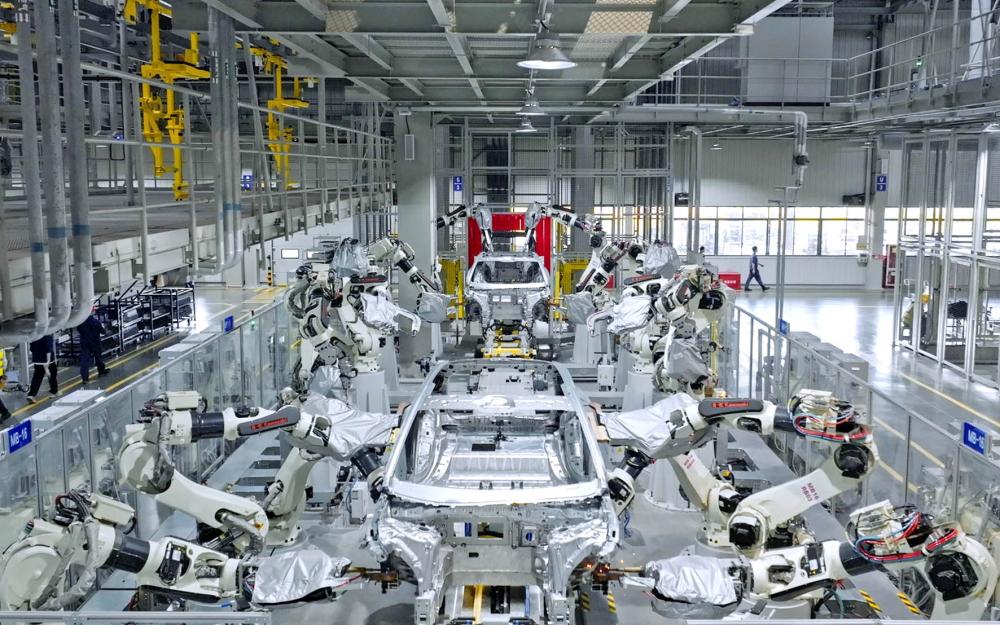
Group 1: Central Enterprises' Development - During the "14th Five-Year Plan" period, central enterprises' total assets increased from less than 70 trillion yuan to over 90 trillion yuan, with total profits rising from 1.9 trillion yuan to 2.6 trillion yuan, achieving annual growth rates of 7.3% and 8.3% respectively [2] - The operating income profit margin improved from 6.2% to 6.7%, and labor productivity per employee increased from 594,000 yuan to 817,000 yuan, indicating significant enhancements in quality and efficiency [2] - Central enterprises have played a crucial role in national economic growth and technological innovation, successfully tackling key technologies in fields such as integrated circuits and industrial software [2] Group 2: Contribution to National Goals - Central enterprises contributed over 10 trillion yuan in taxes and transferred 1.2 trillion yuan of state-owned equity to social security funds during the "14th Five-Year Plan" [3] - They are responsible for approximately 80% of crude oil, 70% of natural gas, and 60% of electricity supply, playing an irreplaceable role in energy security and logistics [3] - Central enterprises have engaged in over 6,000 overseas investment cooperation projects related to the Belt and Road Initiative, supporting major national strategies [3] Group 3: Expansion of Service Consumption - The Ministry of Commerce and other departments introduced 19 measures to boost service consumption, highlighting the importance of service consumption in driving economic growth [4] - Service consumption accounted for 46.1% of per capita consumption expenditure last year, contributing 63% to overall consumption growth [4][5] - There is a notable shift in consumer spending towards services such as dining and tourism, indicating a transition to a service-oriented consumption structure [5]
资产总额超90万亿元 研发经费年均增长6.5% 国资央企加快塑造新动能新优势(权威发布·高质量完成“十四五”规划)
Ren Min Ri Bao· 2025-09-17 21:54
Core Insights - The "14th Five-Year Plan" period has seen significant growth in the assets and profits of central enterprises, with total assets exceeding 90 trillion yuan and total profits reaching 2.6 trillion yuan, indicating a strong performance in quality development and strategic support [1][3]. Group 1: Stability - The total assets of central enterprises increased from 68.8 trillion yuan to 91 trillion yuan, with an average annual growth rate of 7.3%. State-owned capital equity rose from 14.2 trillion yuan to 18.3 trillion yuan, with an average annual growth rate of 6.5% [3]. - Total profits of central enterprises grew from 1.9 trillion yuan to 2.6 trillion yuan, while the operating profit margin increased from 6.2% to 6.7%. Labor productivity also improved, rising from 594,000 yuan to 817,000 yuan per employee per year [3]. Group 2: Progress - Investment in strategic emerging industries by central enterprises has an average annual growth rate exceeding 20%. By 2024, investment in these industries is expected to account for over 40% of total investment, with revenue share approaching 30% [5]. - The transformation of traditional industries is accelerating, with over 800 application scenarios developed under the "Artificial Intelligence+" initiative and the establishment of 1,854 smart factories as part of the digital transformation efforts [5]. Group 3: Improvement - The brand value of central enterprises has seen an average annual compound growth rate of over 15% in the past three years [6]. - Central enterprises are responsible for approximately 80% of crude oil, 70% of natural gas, and 60% of electricity supply in the country, significantly contributing to the supply of basic products [7]. Group 4: Innovation - Central enterprises have invested over 1 trillion yuan annually in R&D for three consecutive years, with a 6.5% average annual growth in R&D funding. They employ 1.44 million R&D personnel, accounting for one-fifth of the national total [9]. - The establishment of 474 national-level R&D platforms and 8 national technology innovation centers has facilitated significant advancements in technology innovation [9]. Group 5: Reform - The restructuring of 10 enterprises into 6 groups and the establishment of 9 new central enterprises have optimized the layout and structure of state-owned enterprises, focusing on strategic security and public service [11]. - The implementation of a modern corporate governance structure and market-oriented management mechanisms has improved operational efficiency, with over 60% of management compensation linked to performance [11].