债券

Search documents
宝城期货资讯早班车-20250904
Bao Cheng Qi Huo· 2025-09-04 01:30
1. Report Industry Investment Rating No relevant content provided. 2. Core Views of the Report - The economy shows mixed trends with some indicators improving and others weakening. Gold prices reach new highs, while oil prices decline due to potential supply increases. The bond market has complex dynamics, and the stock market is segmented. [1][4][9] - The paper industry's prices are rising due to raw material cost increases, and the coal - coking - steel - mining market is expected to have a positive trend in September. [2][7] 3. Summary by Relevant Catalogs Macro Data - GDP in Q2 2025 had a year - on - year growth of 5.2%, slightly lower than the previous quarter's 5.4% but higher than the same period last year's 4.7%. [1] - In August 2025, the manufacturing PMI was 49.4%, up from 49.3% in the previous month and 49.1% last year. The non - manufacturing PMI was 50.3%, up from 50.1% in the previous month and the same as last year. [1] - In July 2025, social financing scale increment was 11320 billion yuan, down from 42251 billion yuan in the previous month but higher than 7707 billion yuan last year. [1] - In July 2025, M0, M1, and M2 year - on - year growth rates were 11.8%, 5.6%, and 8.8% respectively. M1 and M2 growth accelerated compared to the previous month and last year, while M0 growth slowed slightly. [1] - In July 2025, CPI year - on - year was 0.0%, down from 0.1% in the previous month and 0.5% last year. PPI year - on - year was - 3.6%, the same as the previous month but lower than - 0.8% last year. [1] - In July 2025, fixed - asset investment (excluding rural households) cumulative year - on - year growth was 1.6%, down from 2.8% in the previous month and 3.6% last year. Social consumer goods retail cumulative year - on - year growth was 4.8%, down from 5.0% in the previous month but higher than 3.5% last year. [1] - In July 2025, export and import year - on - year growth were 7.2% and 4.1% respectively, both showing an upward trend compared to the previous month. [1] Commodity Investment Comprehensive - From September 5, 2025, the Shanghai Gold Exchange will adjust the margin levels and price limit ranges for multiple gold and silver contracts. [2] - The London Metal Exchange postponed its Asian opening on a Wednesday by 90 minutes without stating a reason. [2] - Major paper mills announced price increases in early September due to rising raw material costs, and the industry's supply - demand situation is expected to improve in the second half of the year. [2] - China imposed anti - dumping duties on certain optical fibers imported from the US, with different tax rates for different companies. [3] - China's August S&P Global services PMI was 53, and the composite PMI was 51.9, both higher than the previous month. [3] Metals - Gold prices reached new highs on September 3, 2025, with London Gold Spot and COMEX Gold hitting record levels, and domestic gold prices also rising. [4] - The World Gold Council is seeking to introduce digital gold, which may transform the London gold market. [5] - Nickel and tin inventories increased on September 2, 2025, while lead and zinc inventories decreased. [6] - Citi adjusted its price forecasts for silver, aluminum, and copper, expressing optimism about copper prices. [6] Coal - Coking - Steel - Mining - Since July 2025, steel prices have recovered, and upstream coking coal and coke prices have risen significantly. The steel market in September may see an upward trend. [7] - Shaanxi has made achievements in mineral exploration during the "14th Five - Year Plan" period, exceeding the national targets. [8] - The EU is working on new steel and aluminum safeguard measures after 2026. [8] Energy and Chemicals - On September 3, 2025, international oil prices declined due to potential OPEC+ production increases, an unexpected increase in US API crude inventories, and reduced geopolitical concerns. [9] - OPEC's August oil production increased by 400,000 barrels per day. [10] - Russia's September oil exports from western ports are expected to decline by 6% compared to August. [10] - Colombia's July oil production decreased by 4.8% year - on - year. [10] - Citi slightly lowered its 2026 Brent crude oil price forecast. [10] Agricultural Products - India's August soybean oil imports decreased by 28% month - on - month, while palm oil imports increased by 16%. [11] - Argentina's August agricultural product export revenue decreased by 25% year - on - year. [11] - Malaysia's August palm oil exports increased by 10.22% month - on - month. [12] Financial News Open Market - On September 3, 2025, the central bank conducted 229.1 billion yuan of 7 - day reverse repurchase operations, resulting in a net withdrawal of 150.8 billion yuan. [13] Key News - The joint working group of the Ministry of Finance and the central bank discussed issues related to the bond market and aims to promote its stable development. [14] - Since the implementation of the "science and technology board" policy in the bond market, the issuance of science and technology innovation bonds has accelerated, with a total issuance scale exceeding 1.02 trillion yuan since May. [14] - Tianjin's first private technology enterprise science and technology innovation bond was successfully issued. [14] - The China - SCO Digital Economy Cooperation Platform was inaugurated in Tianjin. [15] - 12 provinces have raised their minimum wage standards this year, and all 31 provinces' highest - grade monthly minimum wage standards exceed 2000 yuan. [16] - Shanghai's "Six Measures" for the property market have had a positive initial impact, and the market is expected to recover. [16] - In 2024, the total issuance of green and sustainable debt in Hong Kong reached 84.4 billion US dollars, and the HKMA is researching the application of tokenization technology in sustainable finance. [17] - The global long - term treasury bond sell - off intensifies, with yields rising in many countries. [17] - There were corporate events such as leadership changes, name changes, and bond redemptions in the corporate bond market. [18] - Some companies' credit ratings were confirmed or adjusted by international rating agencies. [18] Bond Market Review - The bond market was positive on September 3, 2025, with yields of major interest - rate bonds in the inter - bank market falling, and treasury bond futures rising. [19] - The currency market interest rates showed mixed trends, and some short - term Shibor rates reached new lows. [20] - The winning bid yields and multiples of some financial bonds and treasury bonds were announced. [21] - Repurchase fixed - rate and inter - bank repurchase fixed - rate showed different trends, and European and US bond yields generally declined. [22] Foreign Exchange Market - The on - shore RMB against the US dollar rose on September 3, 2025, while the RMB central parity rate was depreciated. The US dollar index declined, and most non - US currencies rose. [23] Research Report Highlights - Xingzheng Fixed Income believes that the yields and credit spreads of bank secondary and perpetual bonds are at relatively high levels since 2021, and the long - end US bond yields may rise. [24] - Huatai Fixed Income reports that "fixed income +" products have experienced large - scale redemptions, affecting the stock - bond relationship. [25] - Xingzheng Fixed Income also points out that the PMI in August shows some improvements, but the bond market may be affected by the equity market. [25] Stock Market - The A - share market was segmented on September 3, 2025, with the ChiNext Index rising, and the Shanghai Composite Index and Shenzhen Component Index falling. The market turnover decreased. [27] - The Hong Kong stock market declined, with financial and consumer sectors falling and pharmaceutical stocks rising. Southbound funds had a large - scale net inflow, and Alibaba was significantly added. [28] - Southbound funds' net inflow to the Hong Kong stock market reached a record high this year, and most Hong Kong - Stock Connect stocks' shareholdings increased. [28] - 41 brokerages have completed their September golden stock recommendations, and they are generally optimistic about the A - share market. [28] - Since August, institutions have actively investigated North Exchange listed companies. [29]
两年期美债收益率一度跌至3.6%,投资者关注美联储青睐的职位空缺数据
Sou Hu Cai Jing· 2025-09-03 22:40
Core Viewpoint - The U.S. 10-year Treasury yield decreased by 4.46 basis points, closing at 4.2168%, following the release of U.S. job vacancies data, indicating a significant market reaction to economic indicators [1] Group 1 - The 10-year Treasury yield traded within a range of 4.2984% to 4.1993% during the day [1] - The 2-year Treasury yield fell by 2.26 basis points, ending at 3.6166%, with a trading range of 3.6597% to 3.6002% [1]
欧债收益率普遍下跌,英国10年期国债收益率跌5.2个基点
Mei Ri Jing Ji Xin Wen· 2025-09-03 22:13
Core Viewpoint - European bond yields have generally declined, indicating a potential shift in market sentiment towards lower interest rates and possibly reflecting economic concerns [1] Group 1: Bond Yield Changes - The UK 10-year government bond yield decreased by 5.2 basis points to 4.746% [1] - The French 10-year government bond yield fell by 4.2 basis points to 3.538% [1] - The German 10-year government bond yield dropped by 4.6 basis points to 2.737% [1] - The Italian 10-year government bond yield declined by 6.2 basis points to 3.611% [1] - The Spanish 10-year government bond yield decreased by 5.2 basis points to 3.344% [1]
年内双贴标债券发行规模同比增长175%
Zheng Quan Ri Bao· 2025-09-03 16:26
本报记者 田鹏 近日,山东鲁泰控股集团有限公司顺利完成2025年科技创新公司债券(高成长产业债)发行工作。值得关注的是,本期债 券不仅聚焦科技创新领域,还叠加了"高成长产业"属性,成为济宁市首单同时具备"科技创新+高成长产业"双贴标公司债券。 所谓双贴标公司债券,是指同时符合两种不同类型债券标准和要求的债券产品。其诞生的本质在于破解单一主题债券"聚 焦性强但协同性弱"的痛点,精准匹配国家战略需求与实体企业多元化融资诉求。 正是凭借这种"精准匹配、协同赋能"的核心价值,近年来我国双贴标债券市场逐步进入发展快车道——发行规模持续扩 大,从早期的零星发行逐步走向稳定供给,市场参与度不断提升;品种组合不断丰富,除"科技创新+高成长产业"外,"绿色 +科创""乡村振兴+区域协调"等契合国家多维度战略的组合类型相继涌现,覆盖领域持续拓宽。 在当前国家多项长期战略进入协同推进的关键阶段、实体经济融资需求日益多元化和债券市场向精细化发展的背景下,双 贴标公司债券应运而生。Wind资讯数据显示,今年以来截至9月3日,共有85只双贴标公司债券顺利发行,发行规模合计达 692.76亿元,相较去年同期发行数量及规模分别增长174.1 ...
风暴再起!全球国债抛售潮,发生了什么?
Sou Hu Cai Jing· 2025-09-03 15:39
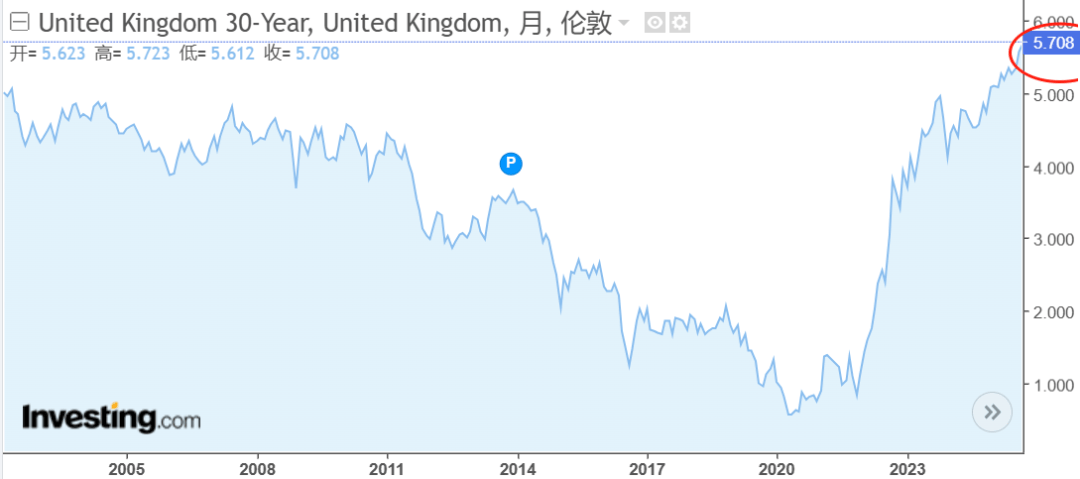
Group 1 - A global government bond sell-off is occurring, pushing the 30-year U.S. Treasury yield towards the psychological 5% mark [2] - The sell-off has affected bond markets across the Atlantic, with yields rising in the U.S., U.K., Italy, and France, reaching new highs since the financial crisis [2][4] - The U.S. 30-year Treasury yield has risen to 5%, marking the first time since July, while the 10-year yield has climbed to 4.291% [2] Group 2 - The U.K. 30-year Treasury yield has reached 5.72%, the highest since 1998, while Germany and France's yields have also hit their highest levels since 2011 and 2009, respectively [4] - Japan's 30-year Treasury yield has surged to 3.28%, the highest on record, with the 20-year yield reaching 2.69%, a new high since 1999 [7] Group 3 - The sell-off is attributed to a combination of massive corporate bond supply, concerns over government fiscal conditions, and seasonal liquidity tightening [8] - September is traditionally unfavorable for long bond holders, with significant corporate bond issuance expected, estimated at $150 billion to $180 billion in the U.S. alone this month [10][11] - The market is currently focused on the upcoming U.S. employment report, which will influence the Federal Reserve's interest rate decisions [8][14] Group 4 - The bond market's turmoil reflects deep concerns about the fiscal health of developed economies, exacerbated by pandemic-related spending [12] - Historical trends indicate that September is typically a poor month for long-duration bonds, with a median decline of 2% over the past decade [13] - Technical liquidity factors are also contributing to the market's challenges, with significant cash withdrawals expected in September [13]


全球国债遭遇抛售潮,黄金创历史新高
Sou Hu Cai Jing· 2025-09-03 15:27
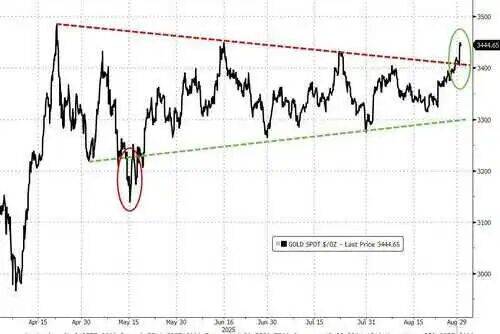
Core Viewpoint - A global sell-off of government bonds is occurring, leading to a unique bull market for gold, driven by a collective distrust in sovereign currencies like the US dollar [1][12]. Group 1: Gold and Silver Market - On September 2, spot gold surpassed $3,500 per ounce, reaching a historical high, while silver rose to $40.85 per ounce, marking a 14-year high [1]. - The surge in gold prices is not merely a traditional safe-haven response but reflects a broader skepticism towards government-issued currencies [1][14]. Group 2: Government Bond Market - The global bond market is experiencing a significant downturn, with the UK 30-year bond yield rising to 5.69%, the highest in over 20 years, and the US 30-year bond yield nearing 5%, a level not seen since 2006 [1][2]. - Other countries are also witnessing similar trends, with Japan's 30-year bond yield reaching its highest since 2006, and France's at 4.49%, the highest since 2009 [2][4]. - The rise in bond yields indicates a loss of confidence in government bonds, as investors sell off long-term bonds, reflecting concerns over rising government fiscal deficits [1][4]. Group 3: Fiscal Concerns - Many countries are seeing their fiscal spending as a percentage of GDP increase, with the UK projected to spend 60% of its GDP, while the US is expected to have a fiscal spending ratio of 40.5% in FY 2024 [8][9]. - The debt burden is escalating, with the US government leverage ratio at 114% and Japan exceeding 212%, both significantly above the internationally recognized warning threshold of 60% [9][11]. - Interest payments on government debt are consuming a growing portion of national budgets, with the US spending over $1 trillion annually on interest alone, surpassing defense and Medicare expenditures combined [12]. Group 4: Inflation and Economic Implications - Inflation is re-emerging as a significant concern, with the US core PCE exceeding 3% and the UK CPI rising to 3.8%, expected to breach 4% [12][13]. - The situation presents a dilemma for central banks: either allow inflation to rise, impacting living costs, or increase interest rates, which could stifle fragile economic recovery [12][13]. - The current environment has led to a paradox where central banks are cutting rates while bond yields are rising, indicating a deeper trust crisis in government bonds [13]. Group 5: Shift in Investment Sentiment - The ongoing crisis in government bonds and persistent inflation pressures are driving investors to seek alternative safe-haven assets, with gold and other precious metals experiencing significant price increases [12][14]. - The traditional role of bonds as a safe asset appears to be diminishing, prompting a systemic reassessment of the value of precious metals as a hedge against economic instability [13][14].
超长信用债探微跟踪:超长信用债交易情绪如何?
SINOLINK SECURITIES· 2025-09-03 14:29
Report Industry Investment Rating No information provided on the industry investment rating in the given report. Core Viewpoint The bond market sentiment remains in a wait - and - see period, and it is still recommended to participate in ultra - long credit bonds cautiously [5][42]. Summary by Directory 1. Super - long Credit Bond Trading Sentiment 1.1 Stock Market Characteristics - Ultra - long credit bond prices continued to decline this week. Although the bond market recovered during the week, the market sentiment towards ultra - long bonds remained cautious, and the yields of ultra - long credit bonds further increased. The number of outstanding ultra - long credit bonds with yields of 2.4% - 2.5% increased significantly compared with last week [2][12][13]. 1.2 Primary Issuance Situation - The supply of new ultra - long credit bonds maintained low growth. The total issuance scale of new ultra - long credit bonds this week was 6.25 billion, remaining at a low level. This might be because the issuance cost of long - term bonds was still relatively high, and bond - issuing entities were waiting for a better opportunity. Although the coupon rate of new ultra - long credit bonds decreased significantly in the latest week, the absolute value was still at a relatively high level within the year. Driven by the recovery sentiment and the reduction of available bond assets, the subscription enthusiasm for new ultra - long credit bonds rebounded this week [3][22]. 1.3 Secondary Transaction Performance - The index price of ultra - long credit bonds did not recover. In the first half of the week, the bond market showed a slight recovery, and the weekly change rate of the over - 10 - year treasury bond index returned to positive, but the index of ultra - long credit bonds continued to fall. The over - 10 - year AA+ credit bond index decreased by 0.43% month - on - month [29]. - The trading sentiment of ultra - long credit bonds was weak. The liquidity of ultra - long credit bonds further dried up this week. The number of transactions of the most active 7 - 10 - year industrial bonds dropped to 160, and the total number of transactions of over - 10 - year credit bonds was less than 30. In terms of transaction yields, the yield of over - 7 - year urban investment bonds recovered by more than 7bp, but the yield of ultra - long industrial bonds showed no obvious downward trend. The spread between 7 - 10 - year varieties and 20 - 30 - year treasury bonds widened to 24.6bp [30]. - Corresponding to the rational return of selling sentiment, the amplitude of high - valuation transactions of ultra - long credit bonds began to narrow this week, and urban investment bonds over 20 years old shifted to low - valuation transactions. In terms of buying sentiment, the proportion of TKN transactions of ultra - long credit bonds rebounded, but the reading of over - 10 - year bonds was still at a low point within the year [35]. - In terms of investor structure, the selling behavior of trading desks for ultra - long credit bonds continued. This week, funds still reduced their holdings of over - 7 - year credit bonds by 2 billion. For allocation desks such as insurance companies, although the承接 behavior continued, the intensity weakened. This week, the increase in holdings was concentrated in 7 - 10 - year varieties [40].
信用周报:9月,信用的机会在哪里?-20250903
China Post Securities· 2025-09-03 12:13
Group 1: Report Overview - The report is a fixed - income research report released on September 3, 2025, written by analysts Liang Weichao and Li Shukai [1][2][6] Group 2: August Credit Bond Market Review - In August, the credit bond market was mainly in adjustment, with overall larger declines than interest rates, showing differentiation in duration and variety liquidity. The market can be divided into two stages: a sharp decline from late July to early August followed by a recovery, but continuous adjustment from the second week of August due to the stock - bond seesaw effect [2][11] - Ultra - long - term credit bonds performed the weakest in August, with most declines exceeding those of the same - term interest - rate bonds. Among them, ultra - long secondary and perpetual bonds with better liquidity had the lowest declines, while ultra - long urban investment bonds with the worst liquidity had larger declines [2][12] - From the perspective of curve shape, the steepness of the 1 - 2 - year and 2 - 3 - year periods for all ratings is high. After the major adjustment in August, the yield curve is steeper, with room to flatten the curve. For example, for AA+ medium - term notes, the slopes of the 1 - 2 - year, 2 - 3 - year, and 3 - 5 - year intervals are 0.1302, 0.099, and 0.0900 respectively; for AA urban investment bonds, they are 0.1497, 0.1313, and 0.1205 respectively [3][15] - The performance of different credit strategies in August varied. Only the short - duration weak - asset sinking strategy was relatively successful, while the ultra - long - term credit strategy performed the worst [14] - The secondary and perpetual bond market also weakened in August, but the decline was not significantly higher than that of general credit bonds, and the characteristic of being a volatility amplifier was not prominent. The 2 - 4 - year part of the curve is steeper, and the yields of 4 - year and above parts have exceeded the previous high in late July [3][20][21] Group 3: Institutional Behavior in August - In August, the overall buying of credit bonds by major buyers was weaker than last year. Bank wealth management and insurance had relatively larger allocation efforts. Bank wealth management and other products had a net secondary purchase of about 180 billion yuan of credit bonds, and insurance had a net purchase of 56.2 billion yuan. Public funds were net sellers [4][23] Group 4: Credit Bond ETF Performance in August - Since August, credit bond ETF products have not performed well, with weak scale growth and net - value performance. The second batch of science and technology innovation ETFs may bring marginal benefits to the market [4][25] Group 5: Outlook for September - In September, credit bonds have certain investment value after continuous market adjustments. The sinking strategy has opened up bond - selection space, with about 43% of public credit bonds having a valuation above 2.0%. Representative issuers include Xi'an High - tech, Tianjin Urban Construction, and Hebei Iron and Steel Group [4][26] - From the riding strategy perspective, 2 - 3 - year general credit bonds and 3 - 4 - year secondary and perpetual bonds have good opportunities. For the ultra - long - term strategy, caution is still recommended as the ultra - long - term bonds have had high declines since August and it is hard to say they have stabilized. Allocation investors with matched liability ends can consider entering the market, while it is not a good time for trading investors due to high liquidity risks [4][26]
发车!回调,买入
Sou Hu Cai Jing· 2025-09-03 11:40
Group 1 - The core viewpoint of the articles highlights significant movements in the commodity and bond markets, particularly the surge in gold and silver prices, driven by factors such as the weakening independence of the Federal Reserve, expectations of interest rate cuts, rising inflation pressures in the U.S., and the diminishing hedging function of long-term government bonds [1][3][5]. - Gold has recently broken the $3,500 mark, reaching a historical high, while silver has surpassed $40, marking a 14-year peak [3]. - The bond market is experiencing a sell-off, with long-term government bond yields in developed markets, including the U.S., U.K., and France, reaching multi-year highs, indicating a loss of investor confidence in the existing financial system [4][5]. Group 2 - The U.S. inflation rate is approaching 3%, and the potential for a significant economic impact from this inflation may not be fully realized until the fourth quarter [3]. - The U.K.'s current deficit as a percentage of GDP is comparable to historical periods of significant upheaval, such as the French Revolution [6]. - The article suggests that as governments accumulate excessive debt and lose the trust of major debt buyers, investors are increasingly turning to gold as a reliable asset that does not depend on government promises [8]. Group 3 - The articles indicate that September is historically a poor month for stock and bond markets, with global government bonds over ten years showing a median decline of 2% in September over the past decade [10]. - Despite short-term volatility, the long-term investment value of European stocks remains strong, supported by sectors such as luxury goods, pharmaceuticals, and green energy, which possess significant pricing power and competitive advantages [19][20]. - The New Zealand Superannuation Fund is strategically reallocating its investments, betting on European stocks outperforming U.S. stocks over the next decade based on valuation assessments [21].
欧美长期国债再遇抛售潮,财政可持续问题或是罪魁祸首
Sou Hu Cai Jing· 2025-09-03 11:08
Core Viewpoint - The recent sell-off in long-term government bonds in the US and Europe is driven by investor concerns over fiscal sustainability and central bank's ability to control inflation, compounded by seasonal liquidity tightening and term premium effects [1][2][5]. Group 1: Market Reactions - Long-term bond yields in the US, UK, Italy, and France have risen significantly, with the US 30-year bond yield increasing by 5.3 basis points to 4.97%, marking a multi-year high [1]. - The negative sentiment in the bond market has spilled over into the stock market, with major indices such as the S&P 500, Dow Jones, and Nasdaq experiencing declines of 0.69%, 0.55%, and 0.82% respectively [1]. - The sell-off in bonds has been linked to a historical context where previous fiscal policies and trade tensions have led to significant fluctuations in bond yields [1][4]. Group 2: Economic Factors - OECD projects that sovereign debt issuance among its 38 member countries will reach a record $17 trillion by 2025, with the debt servicing cost as a percentage of GDP rising to 3.3% in 2024, up from 2.4% in 2021 [4]. - The US is particularly affected, with debt interest costs projected to reach 4.7% of GDP, raising concerns about fiscal sustainability [4]. - Political instability in countries like France and the UK is causing investor anxiety, with discussions around potential IMF assistance emerging [5]. Group 3: Market Dynamics - Seasonal liquidity tightening is identified as a contributing factor to the recent bond market downturn, as September typically sees increased bond issuance from governments and corporations, leading to supply-demand imbalances [6]. - The expectation of a strong US non-farm payroll report could influence market sentiment, with potential implications for Federal Reserve interest rate policies [6]. - Analysts suggest that the current rise in long-term bond yields may not be easily reversed, even with anticipated slight reductions in policy rates [7].