投资银行

Search documents
特朗普“大漂亮”法案中埋着“资本税地雷”,大摩:参议院若不澄清,市场将面临冲击
华尔街见闻· 2025-06-03 02:57
Core Viewpoint - The article discusses the potential impact of the tax provision 899 in the "Big Beautiful Act," warning that it could lead to the largest capital tax shock in history for Wall Street, particularly affecting foreign investors in U.S. assets [1][3][12]. Group 1: Tax Provision 899 - Provision 899 introduces a punitive tax structure for investors from countries deemed to have "discriminatory" tax policies, starting with a 5% increase in tax rates, escalating by 5% annually, up to a maximum of 20% [3][4]. - The provision's scope is broad, potentially affecting various forms of income, including passive income, real estate investments, and business profits, which could impact previously exempt entities like foreign central banks and sovereign wealth funds [3][4]. Group 2: Market Implications - If the provision applies to U.S. Treasury bonds, it could lead to a steepening of the yield curve, a weakening of the dollar, and an expansion of credit spreads, as foreign investors may react quickly to tax changes [2][8][12]. - The report indicates that foreign investors hold a significant portion of U.S. debt, with total liabilities to foreign entities reaching $39.8 trillion, of which 83% are securities [4][6]. Group 3: Sector-Specific Effects - The tax changes could disproportionately affect corporate bonds, where foreign investors hold about 25% of the market, potentially leading to liquidity pressures and increased volatility [12][13]. - Commercial real estate (CRE) could see greater valuation impacts due to the higher foreign buyer percentage compared to residential real estate [15]. Group 4: Hedge Fund Risks - Hedge funds may face significant challenges as the tax rate increase could eliminate arbitrage opportunities, fundamentally disrupting the business models of those relying on cross-border arbitrage in U.S. markets [17]. Group 5: Legislative Outlook - The Senate is viewed as a critical player in clarifying the applicability of provision 899, with potential adjustments to the scope and implementation timeline [20][21]. - There is uncertainty regarding the worst-case scenario of the provision's implementation, with estimates of revenue generation potentially being significantly underestimated if all foreign-held assets are taxed [18][19].



瑞银朱正芹最新发声
Zhong Guo Ji Jin Bao· 2025-06-03 02:46
Group 1: Hong Kong IPO Market - The total scale of Hong Kong IPOs in 2025 has reached $9.8 billion, nearing the total of $11.3 billion for the entire year of 2024 [3] - New stock placement financing has totaled $14.9 billion, approaching the combined total for the years 2022 to 2024, indicating high activity in the Hong Kong market [3] - The trend of "A+H" listings is on the rise, with 23 A-share companies planning to list in Hong Kong, covering various industries including new energy and biomedicine [3][4] Group 2: Market Dynamics and Regulatory Changes - Since 2019, the Hong Kong Stock Exchange has continuously optimized trading rules, enhancing market vitality and facilitating faster new stock issuances [5] - The simplification of the refinancing process for overseas-listed companies has significantly improved the convenience of refinancing in Hong Kong [5][6] - The flexibility of the Hong Kong market has increased, allowing companies to manage their market value and capital planning more effectively [6] Group 3: Return of Chinese Companies - The return of Chinese companies to Hong Kong is driven by geopolitical uncertainties, with many choosing to issue stocks solely in Hong Kong for refinancing [8][9] - The liquidity in the Hong Kong market has surpassed that of the U.S. market, making it a more attractive option for companies listed in both regions [9][10] - The valuation of companies in the Hong Kong market is becoming increasingly competitive, especially for those seeking financing [11] Group 4: M&A Activity - UBS's Asia-Pacific M&A business has ranked first globally, with a significant increase in M&A activity driven by geopolitical factors and policy support [12][13] - The "six guidelines for mergers and acquisitions" introduced at the end of 2024 have simplified processes and accelerated approval speeds, aligning with the needs of the Chinese economy [13] - As the number of quality companies that have completed IPOs increases, the demand for refinancing is expected to rise, potentially surpassing IPO volumes in some years [14]




特朗普“大漂亮”法案中埋着“资本税地雷”,大摩:参议院若不澄清,市场将面临冲击
Hua Er Jie Jian Wen· 2025-06-03 01:20
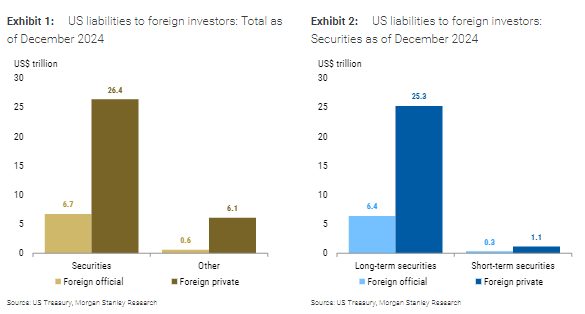
Core Viewpoint - The introduction of Section 899 of the "Big Beautiful Act" poses a significant threat to Wall Street, potentially leading to the largest capital tax impact in history, particularly affecting foreign investors in the U.S. market [1][2]. Tax Implications - Section 899 introduces a "progressive penalty tax" for investors from countries deemed to have "discriminatory" tax policies, starting with a 5% increase in tax rates, escalating by 5% annually, with a maximum additional burden of 20% [2]. - The scope of this tax is extensive, potentially impacting passive income, real estate investments, business profits, and even foreign central banks and sovereign wealth funds that previously enjoyed tax exemptions [2]. Market Impact - The ambiguity surrounding whether financial assets will be included in the tax scope raises concerns among experts, despite current indications suggesting fixed income assets may be excluded [3]. - As of December 2024, U.S. liabilities to foreign entities are projected to reach $39.8 trillion, accounting for 134% of nominal GDP, with securities holdings comprising 83% and long-term securities at 96% [3]. Foreign Investment Dynamics - Foreign official investors hold a significantly larger share of U.S. fixed income markets compared to equities, meaning any tax policy changes could directly affect U.S. Treasury yield curves [6]. - The report indicates that foreign private investors tend to hold longer-term Treasuries, while official investors prefer shorter maturities, suggesting that rising tax costs could lead to greater selling pressure on long-term bonds [8]. Regional Effects - Europe is likely to be the biggest "victim" of these tax changes, with $3.5 trillion of the $5.39 trillion in foreign direct investment in the U.S. coming from Europe, making Eurozone countries the largest holders of U.S. fixed income and equity securities [11]. Currency and Credit Market Effects - The tax implications signal a negative outlook for the U.S. dollar, as the 4% current account deficit heavily relies on foreign capital inflows, and the new tax could deter foreign investment, leading to a weaker dollar against G10 currencies [14]. - In the corporate bond market, liquidity pressures and credit spreads may widen, with foreign investors holding about 25% of U.S. corporate debt, which could face volatility if additional tax burdens are imposed [14]. Securitized Products and Real Estate - Foreign investors show a stronger demand for agency bonds compared to securitized credit; unfavorable tax policies on non-government-backed assets could benefit GNMA mortgage-backed securities (MBS) [15]. - In commercial real estate (CRE), where foreign buyers account for 5-10% of transactions, tax changes could have a more pronounced impact on valuations compared to residential real estate [15]. Hedge Fund Risks - The definition of "applicable persons" in the tax clause could significantly affect hedge funds, as a 20% tax rate increase could eliminate arbitrage opportunities, fundamentally disrupting the business models of quantitative hedge funds reliant on U.S. markets [17]. Legislative Outlook - The likelihood of the worst-case scenario materializing from Section 899 remains uncertain, with the primary aim of the clause being to provide leverage in tax and trade negotiations [18][21]. - The Senate is seen as a potential "lifeline" to clarify the applicability of Section 899, with expectations that it may review the details, including income scope and applicable entities [22].
今日!港股、A50为何跳水下跌?原因是什么?明天,A股会补跌?
Sou Hu Cai Jing· 2025-06-03 00:29
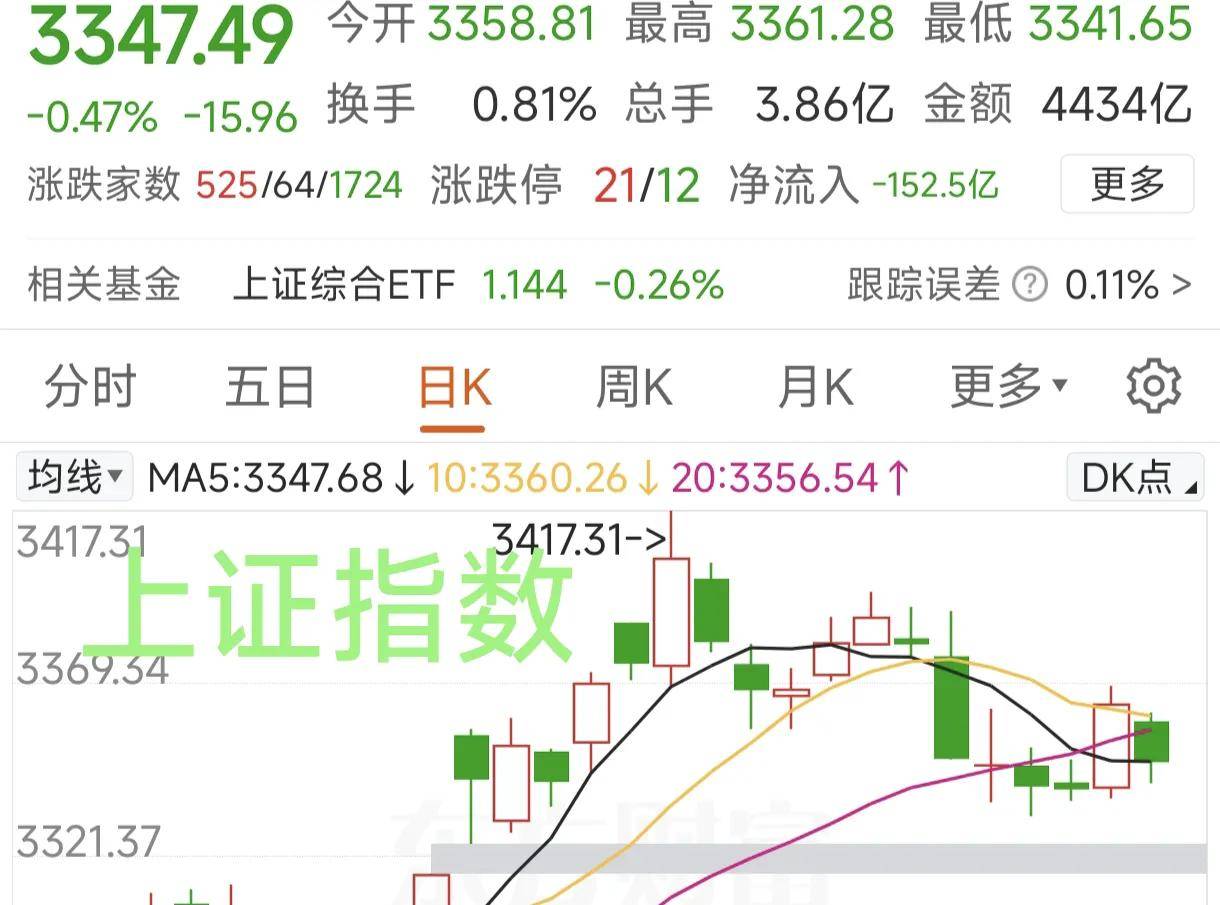
Core Viewpoint - The sudden drop in Hong Kong and A50 indices is attributed to multiple factors, including the reintroduction of U.S. steel tariffs, a general decline in the Asia-Pacific stock market, and warnings from Morgan Stanley regarding the U.S. dollar and economic conditions [1][2][5]. Group 1: Market Reactions - The Hong Kong stock market and A50 index experienced significant declines, with Hong Kong's drop exceeding 2.5% [1]. - The overall sentiment in the Asia-Pacific region was negative, with major indices like the Hang Seng Tech Index and the National Enterprises Index falling nearly 3% [2]. Group 2: Influencing Factors - The reintroduction of U.S. tariffs on steel has raised concerns about global trade dynamics, contributing to market volatility [1]. - Morgan Stanley's report indicated potential weakness in the U.S. dollar due to interest rate cuts and sluggish economic growth, adding to market uncertainty [5]. - The presence of short-selling activities intensified the market's downward trend, as there were no substantial positive developments during the holiday period [5]. Group 3: Outlook for A-shares - A-shares are expected to open lower due to the negative sentiment from the Hong Kong and A50 declines, but a significant drop is not anticipated [7]. - Despite the expected weak performance, there may be support from mysterious funds aimed at stabilizing the market and preventing excessive declines [7]. - Positive influences from the Dragon Boat Festival holiday, such as the central bank's 700 billion yuan reverse repurchase operations, could provide support for A-shares [7].
多位行业人士接连警告“美债面临崩溃”,美财长回应
Huan Qiu Shi Bao· 2025-06-02 23:04
Group 1 - US Treasury Secretary Janet Yellen stated that US government bonds "will never default," despite warnings from industry leaders about a potential collapse in the bond market [1][3] - Jamie Dimon, CEO of JPMorgan Chase, expressed concerns at the Reagan National Economic Forum, indicating that excessive fiscal spending and quantitative easing could lead to cracks in the bond market, although he is uncertain when a crisis might occur [3] - Goldman Sachs President John Waldron highlighted that the focus is shifting from tariff disputes to the rising government debt, identifying the budget debate and fiscal condition as the biggest macroeconomic risks [3] Group 2 - The US government debt ceiling is set at $36.1 trillion, which was reached in early January, leading the Treasury to rely on "extraordinary measures" to avoid default [4] - Analysts predict that the fiscal deficit for the 2026 fiscal year could reach $2.2 trillion, with a deficit rate of 7%, exceeding market expectations, which may increase supply pressure on US bonds [4] - The rising deficit is expected to push up US bond yields and exacerbate the fiscal burden, potentially becoming a source of ongoing volatility for dollar assets [4]

高盛交易台:宏观五⼤要点解读
Goldman Sachs· 2025-06-02 15:44
市场洞察 - 重点报道 --- Market Insights - Marque e Market Insights | Markets | Asia 市场洞察 | 市场 | 亚洲 GS Macro: Five things you need to know ⾼盛宏观:五⼤要点解读 Five things you need to know: 4/ As tari concerns fade, equity investor focus shifts to the 'one big beautiful bill' (US equity analysis) 4/ 随着关税担忧消退,股市投资者关注点转向"那⼀项宏伟法案(" 美国股市分析) 5/ RBI meeting preview (6 June) – 25bps cut expected; and another in Q3. 5/ 印度储备银⾏会议预览(6 ⽉ 6 ⽇)——预计降息 25 个基点;第三季度再降⼀次。 五件你需要知道的事: 1/ GS Weekend – thought leader views and weekend macro call 1 ...

盈信量化(首源投资)热推“超配黄金、低配石油” 建议背后:黄金的时代机遇与美股危机隐现
Sou Hu Cai Jing· 2025-06-02 14:56
Group 1 - Goldman Sachs suggests long-term investors should overweight gold and underweight oil over the next five years due to shifts in the global economic and financial landscape [1] - The recommendation to overweight gold is driven by concerns over the credibility of U.S. institutions and increasing global central bank demand for gold, reflecting worries about the reliability of the U.S. dollar [1][3] - The expansion of U.S. fiscal policy, rising debt levels, and the Federal Reserve's struggle to balance inflation and economic growth contribute to skepticism regarding U.S. institutional credibility [1][3] Group 2 - The importance of gold as a hedge against risk is emphasized, especially in the context of a weakening global economy and the potential for further dollar devaluation [3][4] - Historical data shows that gold tends to perform better than oil during periods of negative real returns in stocks and bonds, reinforcing its status as a safe-haven asset [4] - The actions of prominent investors, such as Jim Rogers, who have moved away from U.S. equities in favor of cash and gold, signal a growing concern about the risks in the U.S. stock market [4][5]
高盛改变对OPEC+的产油预测 现预计8月将第四次增产
news flash· 2025-06-02 10:03
高盛集团表示,预计石油输出国组织及其盟友(OPEC+)将在8月连续第四个月增加石油产量,改变了该 机构早前认为的OPEC+在周末会议后将暂停增产的观点。"相对吃紧的现货原油基本面、强于预期的全 球经济活动数据,以及夏季对原油需求的季节性支撑"均构成利好,包括Daan Struyven在内的分析师在 报告中指出。"预计需求放缓的幅度不足以在7月6日决定8月产量水平时阻止增产。" ...
“四连增”之后,大摩预计OPEC+还要增产三次,高盛:只能再来一次
Hua Er Jie Jian Wen· 2025-06-02 08:59
高盛的逻辑关键在于时间节点。该行预计OPEC+在7月6日决定8月产量水平时,"预期的需求放缓不太 可能急剧到足以阻止增产"。但从9月开始情况将发生变化。届时,OPEC+将保持供应配额稳定, OPEC+以外的产量将增加,全球经济增长将在第三季度放缓。 摩根士丹利预见"三重打击":连续增产将压低油价 与高盛的谨慎乐观形成对比,摩根士丹利描绘了一幅更为悲观的图景。 OPEC+在周末意外宣布第四轮连续增产后,华尔街两大投行对后市增产展望产生了严重分歧。 摩根士丹利分析师团队认为,OPEC+将在未来三个月内继续推进每月41.1万桶/日的增产步伐,其认为 配额增长与实际产量增长之间存在显著"脱节"。高盛则押注"一次性收官",认为OPEC+只会在8月份再 进行一轮增产,随后便会暂停。 上周六,OPEC+决定自7月起日均增产41.1万桶,规模持平前两次增产。这也是OPEC+连续第四个月宣 布增产,该组织从今年4月起每月宣布增产,以回撤2023年宣布的自愿减产措施。 高盛押注"一次性收官" 高盛分析师Daan Struyven等人在最新研报中指出了增产的三个支撑因素:相对紧张的现货石油基本面、 强劲的全球经济活动数据,以及夏季 ...
大摩预测美元指数明年或下跌9%,欧元、日元等迎来机遇?
智通财经网· 2025-06-02 03:43
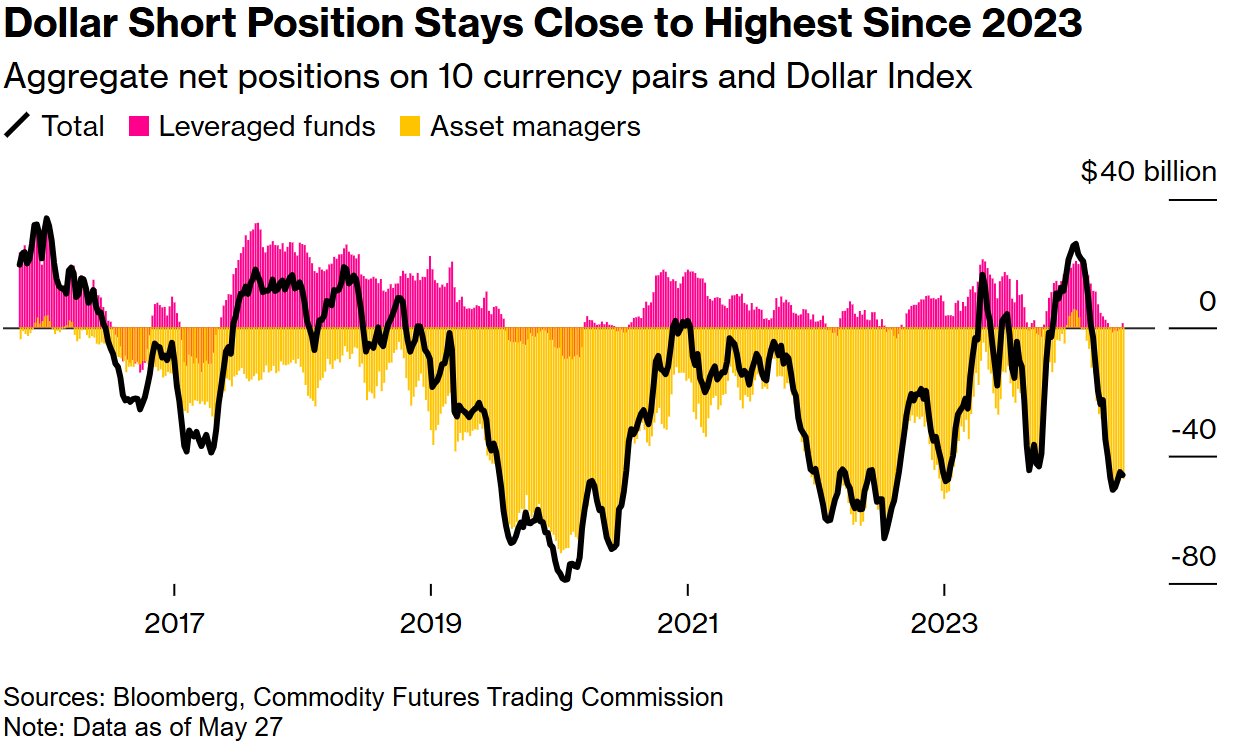
Core Viewpoint - Morgan Stanley's latest report indicates that the US Dollar Index (DXY) is expected to undergo a significant adjustment due to the dual pressures of the Federal Reserve's interest rate cuts and a slowdown in global economic growth, predicting a decline of approximately 9% by mid-2026, reaching a low of 91 points, the lowest since the onset of the COVID-19 pandemic in 2020 [1][4]. Group 1: Key Drivers - The first key driver is the shift in Federal Reserve policy, which is anticipated to push real interest rates down. Morgan Stanley forecasts that the 10-year US Treasury yield will drop to 4.0% by the end of 2025, with the Federal Reserve expected to cut rates by a cumulative 175 basis points, leading to a more significant decline in the benchmark rate range by 2026, thereby diminishing the attractiveness of dollar-denominated assets [4]. - The second driver is the restructuring of global trade patterns, which is reshaping the currency landscape. Policies such as tariffs imposed by the Trump administration have not only impacted market confidence but have also prompted a reassessment of the dollar's status as a reserve currency. Current data from the Commodity Futures Trading Commission (CFTC) indicates that bearish sentiment towards the dollar has not yet reached historical extremes, suggesting further potential weakness for the dollar [4]. Group 2: Currency Market Outlook - Morgan Stanley is optimistic about three non-USD currencies: the euro is expected to rise from the current exchange rate of 1.13 to 1.25, benefiting from the European Central Bank's cautious rate cuts and improved trade conditions due to falling energy prices; the Japanese yen, a traditional safe-haven asset, may appreciate from 143 yen to 130 yen, particularly as the uncertainty from Trump’s trade policies continues to support its value; and the British pound is projected to increase from 1.35 to 1.45, driven by a relatively mild trade environment in the UK and the interest rate advantage from the current 5.25% policy rate [4]. - Additionally, JPMorgan's strategist team has also issued a bearish signal for the dollar, advising investors to short the dollar and favor currencies such as the yen, euro, and Australian dollar. During the Asian trading session, the dollar index continued its downward trend, with the Bloomberg Dollar Spot Index falling by 0.2%, indicating potential for further selling pressure if key support levels are breached [5].