金属冶炼

Search documents
10月29日LME金属库存及注销仓单数据
Wen Hua Cai Jing· 2025-10-30 10:12
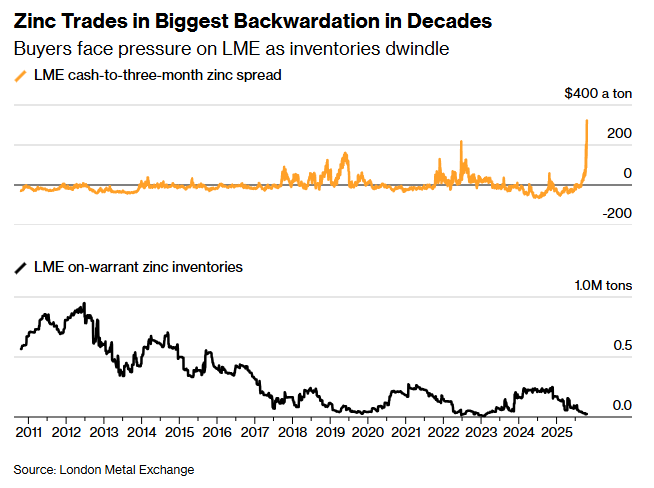
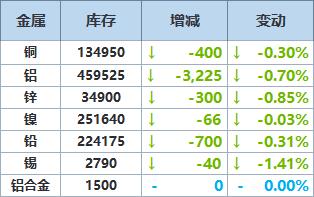
Group 1: Inventory Changes - Copper inventory decreased by 400 tons to 134,950 tons, a change of -0.30% [1] - Aluminum inventory decreased by 700 tons to 224,175 tons, a change of -0.31% [1] - Zinc inventory decreased by 300 tons to 34,900 tons, a change of -0.85% [1] - Tin inventory decreased by 40 tons to 2,790 tons, a change of -1.41% [1] - Aluminum alloy inventory remained unchanged at 1,500 tons [1] Group 2: Registered and Cancelled Warehouse Receipts - Registered copper warehouse receipts increased by 100 tons to 120,725 tons, while cancelled receipts decreased by 3.07% to 14,225 tons [2] - Registered aluminum warehouse receipts decreased by 3,225 tons to 404,675 tons, with cancelled receipts at 54,850 tons, a decrease of 5.55% [2] - Registered zinc warehouse receipts increased by 150 tons to 28,775 tons, while cancelled receipts decreased by 6.84% to 6,125 tons [2] - Registered tin warehouse receipts decreased by 0 tons to 2,665 tons, with cancelled receipts at 125 tons, a decrease of 24.24% [2] Group 3: Location-Specific Inventory Changes - In Kaohsiung, copper inventory decreased by 400 tons to 53,475 tons, with registered receipts at 49,575 tons [4] - In Rotterdam, aluminum inventory remained unchanged at 3,575 tons, with registered receipts at 2,450 tons [5] - In Singapore, zinc inventory decreased by 450 tons to 31,900 tons, with registered receipts at 25,800 tons [9] - In various locations, tin inventory changes were noted, with the highest cancellation rate in Kaohsiung at 0% [11]

日度策略参考-20251030
Guo Mao Qi Huo· 2025-10-30 05:43
Report Industry Investment Ratings - Not provided in the content Core Views of the Report - With the gradual alleviation of unfavorable factors from trade frictions, stock indices may return to an upward channel. Even if short - term macro uncertainties increase, the adjustment space of stock indices is expected to be limited due to policy support and abundant macro - liquidity. It is advisable to go long on stock indices when opportunities arise [1] - Asset shortage and weak economy are beneficial to bond futures, but the central bank's short - term warning on interest - rate risks suppresses the upward space [1] - The initial consensus between China and the US has improved market risk appetite, suppressing precious - metal prices. However, the upcoming Fed rate cut and the ongoing US government shutdown will still support the gold price. Short - term gold prices are expected to fluctuate [1] - The significant decline in the London lease rate has led to the shock adjustment of silver [1] - The recent improvement in macro sentiment and the limited industrial - side drive have led to the slightly stronger and volatile operation of aluminum prices [1] - In the context of continued production profits, domestic alumina production capacity is continuously released, with both production and inventory increasing. The weak fundamentals are pressuring the spot price, and recent attention should be paid to cost support [1] - The recent strengthening of the LME zinc 0 - 3 spread has increased the risk of a short squeeze, strengthening the expectation of zinc exports and driving up the domestic zinc price. Short - term Shanghai zinc is expected to maintain high - level volatility [1] - The alleviation of Sino - US trade frictions has lifted market risk appetite. Attention should be paid to the progress of the Sino - US high - level meeting in South Korea at the end of the month. The Fed rate cut will boost the non - ferrous sector. The implementation of Indonesia's RKAB new policy requires attention to the quota approval in 2026 in the fourth quarter, and be vigilant against mine - end disturbances [1] - The alleviation of Sino - US trade frictions has increased market risk appetite. Attention should be paid to the progress of the Sino - US high - level meeting in South Korea at the end of the month. The stainless - steel futures are expected to rebound in the short term, and short - term operations are recommended, waiting for opportunities to sell on rallies in the medium and long term [1] - The improvement in macro sentiment and the rebound of the semiconductor sector have led to the short - term strong and volatile operation of tin prices under the influence of macro sentiment. Medium - and long - term, opportunities to go long on dips are recommended [1] - The Southwest's industrial - silicon production is weaker than in previous years, and the impact of the dry season is weakened. Polysilicon production is expected to decline in November, and the market sentiment has faded due to the long - term non - implementation of the anti - involution policy [1] - The traditional peak season for new energy vehicles is approaching, and the energy - storage demand is strong. Although the supply - side production schedule has increased, the overall demand is large [1] - The industrial drive of rebar and hot - rolled coils is unclear, and their futures valuations are low. Directional trading is not recommended [1] - Near - month iron ore is restricted by production cuts, but the commodity sentiment is good, and there is still an upward opportunity for far - month contracts [1] - The direct demand for ferromanganese - silicon is good, but the supply is high, and the inventory is at a high level, so the price is under pressure and fluctuating [1] - The supply and demand of glass are supported, and short - term sentiment is dominant. The price decline is limited, and the price fluctuation is strengthening [1] - Following glass, the supply of soda - ash is in excess, and the price is under pressure [1] - Supported by supply - side positive news and strong fundamentals, coking coal is challenging the previous high of the "anti - involution" trade, but the inconsistency of supply and demand among black - sector varieties may not have changed, and there are signs of stagflation in thermal coal in recent days. Whether coking - coal futures can break through successfully is highly uncertain, and it is advisable to wait and see [1] - Similar to coking coal, the coke futures are at a premium. Industrial customers can consider selling some spot on rallies [1] - Indonesia's expected implementation of B50 next year provides support. Currently, the high inventory in Malaysia in September and the expected inventory accumulation in October are pressuring the palm - oil futures. It is advisable to wait and see for the production - area's production cut and inventory reduction cycle [1] - With the upcoming Sino - US leaders' meeting, the negotiation result may bring new guidance. Currently, with the expected reduction of raw - material supply in the fourth quarter and the oil mills' expected reduction of operating rates to support prices, the expected inventory reduction of soybean oil supports the futures. With multiple factors intertwined and a lack of new drivers, it is advisable to wait and see [1] - The expected improvement in Sino - Canadian relations is pressuring the rapeseed - oil futures. Domestic rapeseed is still in short supply, and the rapeseed - oil inventory is continuously decreasing from a high level. It is advisable to wait and see for unilateral trading [1] - The expansion of Xinjiang's cotton - spinning capacity and the reduction of spinning profits have led to great uncertainty in the new - year's cotton demand. The current futures price has fully priced in the selling pressure of new crops, and the downside space is limited, but the new - crop basis and futures price may continue to be under pressure due to the record - high production [1] - Typhoons around the National Day have had an adverse impact on sugar - cane harvesting and production in South China. There is seasonal upward momentum for sugar prices in the short term, but the expected supply increase after the new - sugar listing will limit the rebound space [1] - The corn inventory in the north and south ports is low, and the short - term supply from production areas has decreased, so the price in the north port is firm. The futures and spot prices are expected to face selling pressure later, and the futures price is expected to fluctuate and bottom out, but the expected high enthusiasm of traders to build inventories will limit the downside space [1] - Under the expectation of Sino - US negotiations, the US futures market has risen strongly. With high policy uncertainty, domestic short - selling funds have reduced positions to avoid risks. The domestic purchase - ship profit is still poor, and the domestic futures valuation is low. The futures price is expected to continue to rebound in the short term, and attention should be paid to Sino - US policies and South American weather [1] - The trading logic of pulp is related to the old - warehouse receipts of the November contract. With weak downstream demand, the futures price is under pressure, and a November - January reverse spread is recommended [1] - The fundamentals of logs have declined, but the spot price is firm. After a sharp decline in the futures price, the risk - return ratio of short - selling is low, and it is advisable to wait and see [1] - The live - hog spot price has stabilized recently due to secondary fattening and increased slaughter volume with the cooling weather. Although the futures price is at a premium to the spot price, changes in the slaughter volume and weight need to be awaited, and the short - term price is expected to fluctuate [1] - OPEC+ may continue to maintain a small - scale production increase in November, short - term geopolitical speculation has cooled down, and the US attitude towards tariffs on China has softened [1] - The short - term supply - demand contradiction of fuel oil is not prominent and follows crude oil. The expected "14th Five - Year Plan" rush - work demand is likely to be falsified, and the supply of Marey crude oil is sufficient [1] - The raw - material cost of natural rubber provides strong support, the mid - stream inventory is continuously decreasing, and the commodity - market atmosphere is positive [1] - The decline in crude oil prices has weakened the cost support of butadiene for synthetic rubber. The supply of synthetic rubber is abundant, and the high - level production and inventory have not been the main constraints, and the mainstream supply price has been continuously reduced [1] - The news of the PTA industry's planned "anti - involution" policy has pushed up the PTA price. Overseas device failures and the decline in the operating rate of some domestic reforming devices, as well as the rotation inspection of large domestic PTA devices, have led to a decline in PTA production [1] - The decline in crude oil prices has led to a decline in ethylene - glycol prices, while the rise in coal prices has slightly strengthened the cost support of domestic ethylene - glycol. The "Golden September and Silver October" of the polyester industry is coming to an end, and there has been no significant decline in domestic demand [1] - The news of the PTA industry's planned "anti - involution" policy has pushed up the PTA price, and the basis of short - fiber has strengthened. The short - fiber price continues to closely follow the cost [1] - The Asian benzene price remains weak, the operating rates of STDP and reforming devices have declined, the arbitrage window from Northeast Asia to the US remains closed, the profit of domestic styrene has decreased, the styrene device maintenance has gradually increased, and the crude - oil price has continued to decline [1] - The export sentiment of urea has eased, and the domestic demand is insufficient, so the upside space is limited, but there is support from the anti - involution policy and the cost side [1] - The center of the crude - oil market price has slightly declined, the maintenance intensity has weakened, the downstream demand has slowly increased, and the PE price is fluctuating slightly stronger [1] - The maintenance support for PP is limited, the downstream improvement is less than expected, and the futures price is returning to fundamentals and fluctuating weakly [1] - The PVC futures price is returning to fundamentals, the maintenance has decreased compared with the previous period, the supply pressure is large, and there are many near - month warehouse receipts, so the futures price is fluctuating weakly [1] - There are many planned alumina projects in Guangxi, the subsequent maintenance concentration will decline, and the warehouse - receipt digestion is difficult, with the high - concentration caustic - soda price in an inverted state [1] - The international oil and gas fundamentals are continuously loose, the CP/FEI prices are weakening, the PG futures price has repaired its valuation, but the C3/C4 spot prices are still under pressure, and the domestic fundamentals are continuously loose [1] - The container - shipping European line is gradually entering the contract - changing rhythm. The freight rate is approaching the full - cost line, and it is expected to stop falling and stabilize [1] Summaries by Relevant Catalogs Stock Indices - With the alleviation of trade - friction factors and policy support, stock indices may rise, and it is advisable to go long on dips [1] Bonds - Asset shortage and weak economy are beneficial to bond futures, but short - term interest - rate risks suppress the upward space [1] Precious Metals - Gold is affected by both market - sentiment suppression and fundamental support, and short - term gold prices are expected to fluctuate. Silver is adjusting due to the decline in the London lease rate [1] Non - Ferrous Metals - Copper prices are expected to remain strong, aluminum prices are fluctuating slightly stronger, alumina fundamentals are weak, zinc prices are expected to remain high and volatile, and nickel prices are affected by supply and macro factors. The industry is also affected by Sino - US relations and Indonesian policies [1] Black Metals - Rebar and hot - rolled coils lack clear industrial drive, iron - ore near - month contracts are restricted by production cuts, ferromanganese - silicon is under supply - side pressure, glass is supported by supply and demand, soda - ash follows glass, coking coal and coke face uncertainties in supply - demand consistency [1] Agricultural Products - Palm oil, soybean oil, and rapeseed oil are affected by international policies, inventory, and Sino - foreign relations. Cotton demand is uncertain, sugar has short - term seasonal support, and corn prices are affected by inventory and supply - demand expectations [1] Energy and Chemicals - Crude oil, fuel oil, natural rubber, synthetic rubber, PTA, ethylene - glycol, short - fiber, benzene, urea, PE, PP, PVC, alumina, and SLPG are affected by factors such as supply - demand, policies, and raw - material prices [1] Others - Container - shipping European - line freight rates are expected to stop falling and stabilize, pulp trading is related to old warehouse receipts, logs' spot price is firm, live - hog prices are expected to fluctuate, and the market sentiment of various commodities is affected by Sino - US relations and international policies [1]
CuNi1铜镍电阻合金熔炼工艺
Sou Hu Cai Jing· 2025-10-29 14:48
Core Viewpoint - The CuNi1 copper-nickel resistance alloy is crucial in various industries due to its high-temperature oxidation resistance, good conductivity, and stable resistance characteristics. The focus is on establishing a reasonable smelting process to ensure the precision and consistency of the alloy's resistance [2]. Group 1: Technical Parameter Analysis - The optimal smelting temperature for CuNi1 is set between 1300 and 1350°C, following the ASTMB170 standard to ensure adequate fusion of liquid copper and nickel [3]. - The flux content should be controlled within 2%, and the aluminum high-tin concentration should avoid inclusions. The smelting time is recommended to be between 45 and 60 minutes to eliminate pores and inclusions, enhancing material uniformity [3]. - The finished product's resistance value must meet industry standards, specifically within the range of 1.1Ω/mm² ± 0.05Ω/mm², reflecting its conductive properties. The material density should be around 8.9g/cm³, as density variations directly impact resistance stability and conductivity [3]. Group 2: Misconceptions in Material Selection - A common misconception is the blind pursuit of low prices, which can lead to neglecting material purity and impurity control, potentially resulting in unstable resistance and reduced corrosion resistance [4]. - Sole reliance on LME or Shanghai Nonferrous Metals data without considering the supplier's material source and certification can be misleading [4]. - Strict control of nickel content is often overlooked; even minor differences in nickel content (e.g., 98% vs. 99%) can significantly affect resistance values and thermal stability, particularly in high-precision applications [4]. Group 3: Challenges and Controversies in Smelting Process - A key controversy in the smelting process is the duration of the holding time. Some factories prefer to extend the holding time to ensure complete alloy uniformity, but excessive smelting time can lead to grain coarsening, reducing thermal stability [5]. - Maintaining an optimal operation window of around 45 minutes is essential to ensure sufficient fusion without causing grain growth, which has become a focal point of industry discussions [5]. - Adhering to international standards (e.g., ASTMB170) and domestic standards (e.g., GB/T25189) in setting process parameters can effectively mitigate production variations. Each step of the process should consider LME copper prices (currently around $7000 per ton) and market dynamics from Shanghai Nonferrous Metals to adjust input quantities and avoid raw material waste or supply risks [5].
中原期货晨会纪要-20251029
Zhong Yuan Qi Huo· 2025-10-29 01:22
Report Summary 1. Industry Investment Rating No industry investment rating is provided in the report. 2. Core Viewpoints - The report presents the price changes of various commodities on October 29, 2025, compared to October 28, 2025, including chemicals, agricultural products, and more. It also covers macro - economic news and provides trading strategies for different commodities and financial products based on their fundamentals and market trends [4]. - Macroeconomic news shows positive developments in China - ASEAN cooperation, potential progress in Sino - EU trade talks, and China's stance on financial opening - up and economic policies. The performance of the A - share market and international stock markets is also analyzed [7][8][20][21]. 3. Summary by Category 3.1 Commodity Price Changes - **Chemicals**: On October 29, 2025, among chemicals, glass had the highest increase rate of 1.348% (from 1,113.00 to 1,128.00), while crude oil had the largest decline rate of - 0.994% (from 462.70 to 458.10) [4]. - **Agricultural Products**: Among agricultural products, soybean meal had the highest increase rate of 0.538% (from 2,975.00 to 2,991.00), and palm oil had the largest decline rate of - 1.496% (from 8,958.00 to 8,824.00) [4]. 3.2 Macroeconomic News - China and ASEAN signed the FTA 3.0 upgrade protocol, expanding cooperation in emerging fields [7]. - There will be a Sino - EU talk on rare earths, and China hopes for dialogue to solve trade differences [7]. - China is committed to financial opening - up, and the central bank will implement a moderately loose monetary policy [7]. - The revised Network Security Law will take effect on January 1, 2026, and the Environmental Protection Tax Law will include volatile organic compounds in the tax scope [8]. - The number of overseas travelers for tax - free shopping and the tax - free amount in China have increased significantly this year [8]. - The 8th China International Import Expo will be held from November 5th to 10th, with an expanded scale [8]. - China's soybean area and output are expected to remain high, and the number of breeding sows has decreased [8]. - China's wholesale and retail industries have shown growth in the first three quarters [8]. - The 2025 Hurun Rich List was announced, with Zhong Shanshan becoming the richest man in China [9]. 3.3 Commodity Trading Strategies - **Agricultural Products** - **Peanuts**: The price is expected to fluctuate between 7700 - 7900, and it is recommended to wait and see [13]. - **Sugar**: Consider selling call options at high prices, with a support level at 5450 yuan/ton [13]. - **Corn**: Observe the support in the 2100 - 2120 range [14]. - **Pigs**: The near - term futures are expected to be strong, and the long - term futures will remain weak [14]. - **Eggs**: Short - sell on the futures and conduct inter - month reverse arbitrage [16]. - **Cotton**: Wait and see, and consider going long if it breaks through 13600 yuan/ton [16]. - **Energy and Chemicals** - **Urea**: The UR2601 contract is expected to operate in the 1580 - 1670 yuan/ton range [16]. - **Caustic Soda**: The 2601 contract is under pressure [16]. - **Coking Coal and Coke**: They are expected to remain strong, with coking coal facing pressure around 1300 and coke around 1800 [16]. - **Industrial Metals** - **Copper and Aluminum**: Prices are expected to remain high, but beware of macro - risks [17]. - **Alumina**: The 2601 contract is operating at a low level [17]. - **Steel Products**: Steel prices are expected to fluctuate strongly, with rebar facing pressure around 3200 and hot - rolled coils around 3400 [17]. - **Ferroalloys**: They will maintain a wide - range fluctuating follow - up trend, and the industrial rebound hedging idea remains unchanged [19]. - **Lithium Carbonate**: Adopt a bullish strategy, with a support level at 80000 and a pressure level at 84000 [19]. - **Options and Finance** - **Stock Index Futures**: Trend investors can focus on inter - variety spread arbitrage opportunities, and volatility investors can consider buying straddles or wide straddles after the HO volatility decline [19]. - **Stock Index**: Although the Shanghai Composite Index broke through 4000 points, there is still a need for consolidation. Pay attention to the performance of the third - quarter reports of listed companies [20][21].
央行重启公开市场国债买卖操作:申万期货早间评论-20251028
申银万国期货研究· 2025-10-28 00:53
Core Viewpoint - The People's Bank of China (PBOC) has announced the resumption of government bond trading operations in the open market, indicating a shift in monetary policy to ensure smooth transmission and stability in the financial market [1] Group 1: Monetary Policy and Market Operations - The PBOC had previously suspended government bond trading due to imbalances in market supply and demand, but is now resuming operations as the bond market is performing well [1] - The PBOC will conduct flexible operations based on the needs for base currency issuance, considering market conditions and yield curve changes [1] Group 2: Precious Metals and Geopolitical Risks - Precious metals, particularly gold and silver, have seen a decline as geopolitical risks, such as the Russia-Ukraine conflict, have eased [2][19] - Central banks globally continue to increase gold reserves, reflecting a growing recognition of gold as a safe-haven asset amid rising distrust in the financial system [2][19] Group 3: Oil Market Dynamics - The oil market is influenced by new sanctions imposed by the U.S. on major Russian oil companies, which may impact supply but the overall trend remains downward [3][14] - The geopolitical situation has led to fluctuations in oil prices, but the market is currently facing uncertainty regarding the future direction of prices [3][14] Group 4: Stock Market Trends - U.S. stock indices have continued to rise, driven by positive developments in U.S.-China trade negotiations, with significant trading volumes reported [4][12] - The domestic liquidity environment in China is expected to remain loose, potentially leading to increased investment in equity assets [4][12] Group 5: Economic Indicators - China's industrial profits have shown a year-on-year increase of 21.6% in September, indicating robust growth in high-tech and equipment manufacturing sectors [7] - The PBOC's monetary policy stance remains supportive, with expectations of continued liquidity in the market [13]

福泉鸾航:开足马力忙生产 项目谋划扩投资
Sou Hu Cai Jing· 2025-10-27 07:37
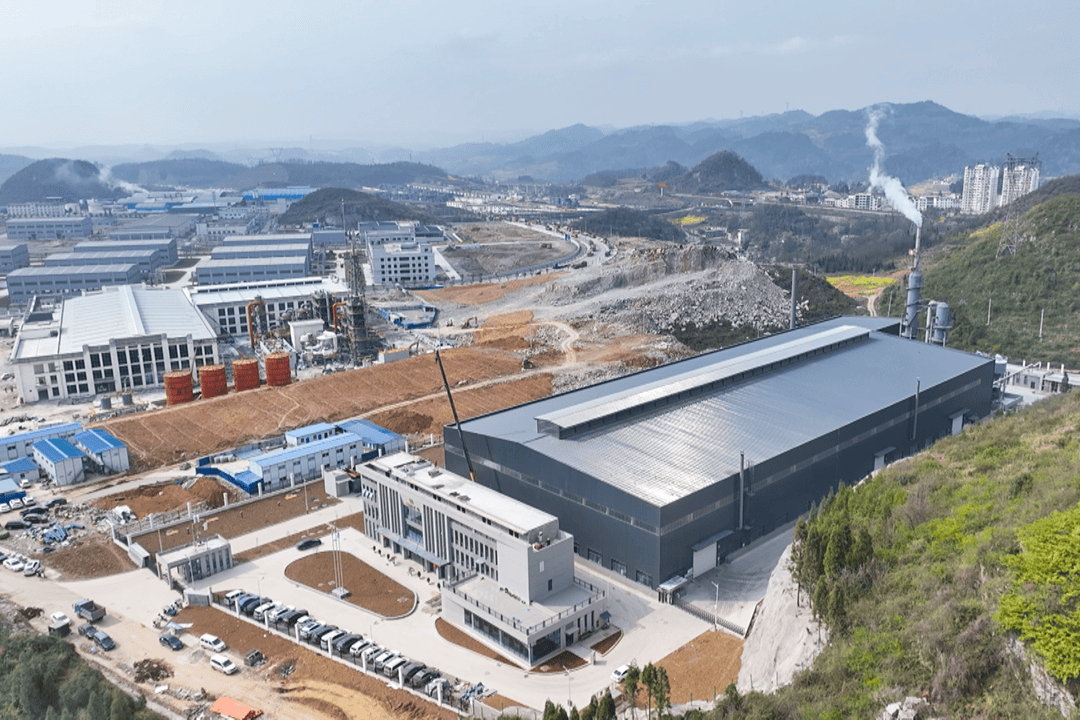
Core Insights - Fuquan Luanhang New Materials Co., Ltd. is rapidly expanding its production capacity and investment in the molybdenum industry, contributing to high-quality industrial economic development [1][4]. Group 1: Company Overview - Fuquan Luanhang New Materials Co., Ltd. is engaged in the production, processing, and trading of molybdenum metal materials, including molybdenum concentrate roasting and molybdenum iron smelting [4]. - The company has established a stable sales network, with products primarily sold to large steel mills in Fujian, Henan, and Shaanxi provinces [4]. Group 2: Production Capacity - The company currently operates three rotary kiln production lines dedicated to molybdenum oxide production and one production line for molybdenum iron [6]. - In December 2023, the company invested 150 million yuan to build a production line with an annual capacity of 20,000 tons of molybdenum concentrate roasting and a 10,000-ton molybdenum iron smelting processing line [4]. Group 3: Employment and Community Impact - The establishment and expansion of Fuquan Luanhang have created numerous job opportunities for local residents, enabling many to achieve stable employment close to home [6]. Group 4: Future Plans - The company plans to implement new projects to further extend its industrial chain, enhance resource utilization efficiency, and improve overall competitiveness [8]. - Future plans include acquiring over 30 acres of land for an additional molybdenum oxide production line, as well as facilities for material recovery and auxiliary processing [8].
每日核心期货品种分析-20251024
Guan Tong Qi Huo· 2025-10-24 09:57
Report Summary 1) Report Industry Investment Rating No information provided. 2) Core Viewpoints of the Report - On October 24, 2025, most domestic futures main contracts rose. Some commodities like fuel oil, container shipping European routes, and eggs had significant increases, while others like red dates and polysilicon declined. Stock index futures generally rose, and treasury bond futures mostly fell. Different commodities have different market trends and influencing factors, with some showing upward trends but facing pressure, some in a state of supply - demand balance, and others with uncertain outlooks due to various factors such as macro - economic data, supply - demand fundamentals, and geopolitical events [7]. 3) Summary According to Relevant Catalogs Commodity Performance - Futures Market Overview - As of the close on October 24, domestic futures main contracts showed more gains than losses. Fuel oil, container shipping European routes, and eggs rose over 3%, international copper nearly 3%, and Shanghai copper and SC crude oil over 2%. Red dates fell over 4%, polysilicon over 1%, and rebar nearly 1%. Stock index futures rose, with CSI 1000 rising 2.41% leading the way, while treasury bond futures mostly fell, with the 30 - year treasury bond futures falling 0.24% the most. In terms of capital flow, Shanghai copper 2512 had an inflow of 2.504 billion yuan, while CSI 1000 2512 had an outflow of 5.183 billion yuan [7]. Market Analysis - **Shanghai Copper**: Opened high and went high, rising during the day. September 2025 refined copper production was 1.266 million tons, up 10.1% year - on - year and down 2.7% month - on - month. 1 - 9 months cumulative production was 11.125 million tons, up 10.0% year - on - year. Copper price is supported by rigid demand and expected tight supply, but the high price is hard for downstream to accept. The price trend is still upward but with pressure, so be cautious about chasing the rise [9][10]. - **Lithium Carbonate**: Opened high and went high, oscillating strongly. Battery - grade and industrial - grade prices both rose 600 yuan/ton. Supply is growing steadily, and demand from the downstream battery industry is strong. The inventory in September was significantly reduced, and the price is supported by fundamentals [11]. - **Crude Oil**: OPEC + will increase production in November, increasing supply pressure. The demand peak season is over, but US refinery operations rebounded, and inventories decreased. The price is expected to rebound at a low level, and attention should be paid to Sino - US trade negotiations and the Russia - Ukraine peace talks [12][13]. - **Asphalt**: Supply decreased slightly in October. Downstream industry operations mostly rose, and national shipments increased. The inventory - to - sales ratio decreased slightly. With the rebound of crude oil prices, the basis in Shandong has dropped significantly. It is recommended to observe the asphalt futures price cautiously [14]. - **PP**: Downstream operations rebounded slightly, and the enterprise operation rate was around 80%. New production capacity was put into operation, and recent maintenance increased. Cost rose due to the rebound of crude oil prices. The demand in the peak season was less than expected, and it is expected to oscillate weakly [15][16]. - **Plastic**: The operation rate was around 86.5%, and downstream operations rose. New production capacity was put into operation. The demand in the peak season was less than expected, and it is expected to oscillate weakly [17]. - **PVC**: The upstream calcium carbide price rose. Supply decreased slightly, and downstream operations continued to rise. Export expectations weakened in the fourth quarter, and social inventory was high. New production capacity was put into operation. It is expected to oscillate in the near future [19]. - **Coking Coal**: Opened high and went high, oscillating strongly. Mongolian coal imports decreased, and domestic supply was short. Demand from coke enterprises supported the price, but downstream steel mills' profits shrank. Pay attention to major conferences and Mongolian coal imports [20][21]. - **Urea**: The futures price rose, and the spot market followed. Daily production decreased slightly, and the cost increased. Demand from compound fertilizer factories increased, and inventory accumulation was slow. The market is expected to be strong, and attention should be paid to policy changes [22].
美国的“缺镓”困境
Sou Hu Cai Jing· 2025-10-22 03:12
Core Insights - The Atlantic Council report highlights the "gallium shortage" faced by the U.S. following China's export controls on gallium and related materials, emphasizing the need for the U.S. to explore "waste-to-gallium" recovery methods [2][3][4] Global Gallium Supply Dependence - China is the largest holder of gallium reserves, with approximately 190,000 tons, accounting for about 68% of global reserves, while the U.S. holds only 4,500 tons [3] - China's production of gallium exceeds 90% of global output, significantly impacting the global tech industry due to recent export controls [4] Strategic Importance and Supply Challenges - Gallium is critical for advanced electronic systems, including military applications, yet the U.S. lacks domestic production and government stockpiles to mitigate the impact of China's export restrictions [4][5] - The U.S. consumes about 20 tons of gallium annually for defense, but its reliance on imports has created vulnerabilities in its supply chain [5][6] Waste-to-Gallium Recovery Solutions - The report suggests that the U.S. should focus on recovering gallium from existing industrial processes rather than seeking new mining opportunities [7] - Potential recovery methods include extracting gallium from aluminum refining, zinc smelting, and semiconductor waste, which could help diversify and stabilize the supply chain [8][10] Recommendations for Increasing Domestic Gallium Supply - The U.S. can enhance gallium supply through various strategies, such as improving recovery processes at aluminum and zinc plants, and collaborating with allies for gallium recycling [9][10] - Establishing more facilities for recycling semiconductor waste could provide high-purity gallium, essential for defense applications [10]

资讯早间报-20251022
Guan Tong Qi Huo· 2025-10-22 01:40
1. Report Industry Investment Rating No relevant content provided. 2. Core Viewpoints of the Report - The overnight night - market showed mixed trends in various commodity futures and financial markets. Positive factors in supply and demand drove up oil prices, while the LME zinc market faced a severe squeeze. In the financial market, A - shares and some international stock markets had positive performances, and different industries had their own development trends and news [4][30]. 3. Summary by Relevant Catalogs Overnight Night - Market Trends - **Energy Futures**: The US crude oil main contract rose 0.98% to $57.58 per barrel, and Brent crude oil main contract rose 1.07% to $61.66 per barrel. The decrease in API crude oil inventory and the US energy department's procurement tender for strategic reserves were positive factors [4]. - **London Base Metals**: Most London base metals rose, with LME zinc up 0.50% at $2993.50 per ton, LME tin up 0.48% at $35475.00 per ton, etc. However, LME nickel and copper declined [4]. - **Domestic Futures**: Domestic futures main contracts were mixed. SC crude oil, etc. rose slightly, while precious metals like gold and silver, and some agricultural products futures declined [6]. Important News Macroeconomic News - There was speculation about Trump's possible visit to China next year, but the Chinese foreign ministry had no information to provide. Economists expected the Fed to cut interest rates in the coming weeks and December, with disagreements on the end - of - next - year rate. A possible trade agreement between Canada and the US might be signed during the APEC summit, and Trump mentioned military actions against Hamas [8]. Energy Futures News - The 2026 fertilizer import tariff quota was set at 13.65 million tons, with 3.3 million tons for urea. The natural gas market had a stable supply and slowing consumption growth. Goldman Sachs predicted a decline in Brent crude oil prices next year [11][12]. Metal Futures News - In September 2025, China's primary aluminum production was 3.6804 million tons, with a 2.67% year - on - year increase. The LME zinc market faced a severe supply squeeze, with a high spot premium [14]. Black - Series Futures News - South Africa's UMK raised the price of manganese ore for China in November. The inventory of imported iron ore in 47 Chinese ports increased, while the inventory in Australian and Brazilian ports decreased. BHP's iron ore production declined in Q3 2025, and Rio Tinto planned to ship high - grade iron ore from Guinea [17][18]. Agricultural Futures News - As of October 17, 2025, the US soybean crushing profit decreased. The national soybean oil port inventory decreased. Malaysian palm oil production and exports increased in October 1 - 20, and the price was expected to remain above a certain level. Indonesia aimed to increase sugar production in 2026, and Brazil was expected to increase exports of soybeans, etc. [20][23][27]. Financial Markets Financial - A - shares rose significantly, with technology and some concept sectors leading. The Hong Kong stock market also had positive performances. Many A - share companies had mid - term dividend plans. Some companies had important news, such as possible IPOs and expected revenue growth [30][34]. Industry - The state drug administration promoted the development of the medical device industry. The trust industry's asset management scale exceeded 30 trillion yuan. Some cities announced future industry plans, and a large - scale AIC mother fund was launched in Shenzhen [35][36]. Overseas - European leaders supported a cease - fire in the Russia - Ukraine conflict. Japan had a new prime minister, and the Japanese central bank considered interest rate hikes. Argentina's loan plan faced problems, and the EU's financial situation deteriorated [38]. International Stock Markets - US, Japanese, and European stock markets had different performances. Some companies' financial reports were released, and an option exchange planned to extend trading hours [41][42]. Commodities - Oil prices rose, and most London base metals showed mixed trends. The LME zinc market was severely squeezed [45]. Bonds - The domestic bond market was strong, and the real - estate bond financing showed growth. US and Japanese bond yields had different trends [46][47]. Foreign Exchange - The on - shore and offshore RMB had different trends against the US dollar, and the US dollar index rose. The Japanese new finance minister hoped for stable exchange rates [48][49]. Upcoming Events - There were various economic data releases and important events such as press conferences, product launches, and interest - rate decisions in different regions [52][54].
LME锌库存告急致严重挤仓!现货溢价飙升至近30年来新高
智通财经网· 2025-10-21 13:36
Core Insights - The zinc market on the London Metal Exchange (LME) is experiencing one of the most severe squeezes in decades, with traders scrambling to purchase increasingly scarce zinc inventories to fulfill contracts on the exchange [1] - The current spot zinc price has a premium of $323 per ton over the three-month contract, marking the highest price differential since 1997, indicating strong spot demand exceeding supply [1] - Zinc inventories in the LME's storage network have plummeted to near historical lows, with only 24,425 tons available for buyers, which is insufficient to meet even one day's demand in a global market of 14 million tons [1] Group 1 - The pressure from buyers has been mounting as several Western smelters have cut production due to collapsing processing profits [1] - Six institutions hold long positions in LME inventories and contracts expiring in the next two days, amounting to at least 300% of the immediately available inventory [1] Group 2 - The spot premium may lead to significant losses for sellers who do not hold physical metal, with the Tom/next zinc price spread rising to $30 per ton, the highest level since the historic squeeze in 2022 [4] - The LME's backwardation has not attracted substantial inventory inflows, as noted by a senior strategist at Marex [4] - Chinese smelters continue production, creating a significant price gap between LME zinc prices and those on the Shanghai Futures Exchange (SHFE), with some Chinese companies planning to export zinc to exploit the arbitrage opportunity [4]