茶饮

Search documents
茶咖日报|蓝瓶咖啡全球CEO担任中国法人,有望进一步深耕中国精品咖啡市场
Guan Cha Zhe Wang· 2025-03-25 12:04
Group 1: Blue Bottle Coffee's Strategic Moves in China - Blue Bottle Coffee's global CEO, Karl William Strovink, has taken on the role of legal representative for Blue Bottle Coffee (China) Co., Ltd, indicating the company's strong commitment to the Chinese market [1][2] - The company has faced challenges in entering the Chinese market, including trademark disputes that delayed its operations until this year, when it finally established its management team [2] - The change in legal representation is seen as a significant signal of Blue Bottle Coffee's intent to intensify its efforts in the Chinese specialty coffee market, with plans for future store expansions [2][3] Group 2: Investment and Expansion in the Coffee Industry - Xi Dian Cha Yun, a tea supply chain brand, has completed a 30 million yuan Series A financing round, which will be used for supply chain upgrades, product innovation, and market expansion [4] - Bo Wen Technology plans to invest 16 million yuan in a coffee plantation project in Yunnan, marking a strategic move to develop a full coffee industry chain from planting to sales [5][6] - The establishment of a fully-owned subsidiary in Yunnan for coffee cultivation is part of Bo Wen Technology's broader strategy to enhance its competitiveness in the agricultural processing sector [6] Group 3: Technological Innovations in Coffee Service - COFE+, the world's first 5.5 generation fully intelligent robot coffee kiosk, has been launched in Lushan, offering a unique coffee experience with zero human labor and minimal waste [7] - The robot barista can prepare over 50 different beverage flavors and customize drinks based on individual preferences, catering to a wide range of consumer tastes [7][8] - COFE+ utilizes high-quality ingredients and aims for near-zero waste in its operations, showcasing a significant advancement in the coffee service industry [8]

流量营销翻车、加盟弊端显现!茶百道如何应对扩张后遗症?
Sou Hu Cai Jing· 2025-03-25 09:52
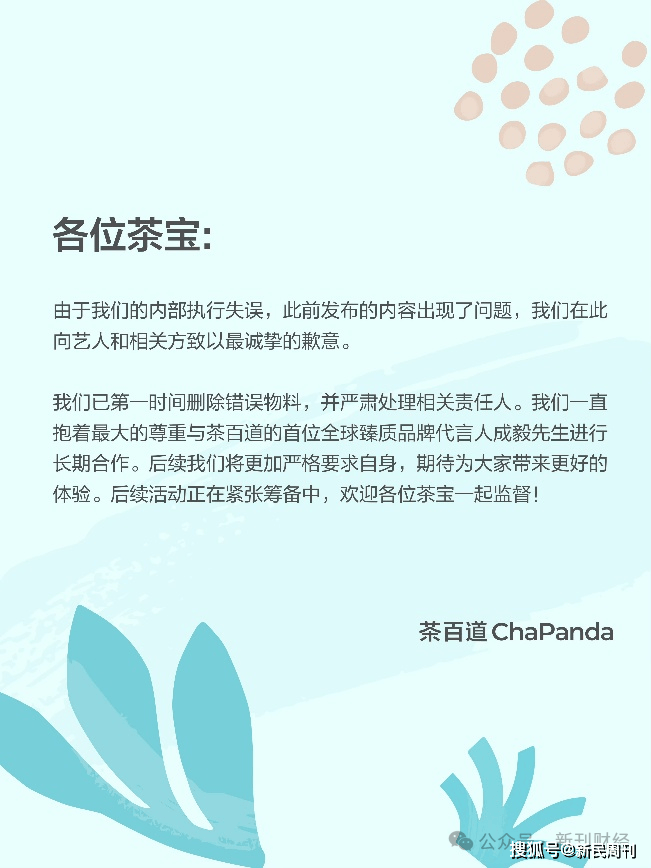
Core Viewpoint - The article discusses the challenges faced by the tea brand Cha Bai Dao due to aggressive expansion and marketing strategies, highlighting the need for better management and response to public relations crises [1][5][10]. Marketing and Public Relations - Cha Bai Dao's recent public relations crisis stemmed from a marketing blunder involving its celebrity spokesperson, leading to significant backlash from fans [1][5]. - The brand's reliance on celebrity endorsements and aggressive marketing strategies has resulted in increased distribution and sales expenses, with growth rates of 193%, 134%, and 140% from 2022 to the first half of 2024 [9]. - The company has faced criticism for its handling of promotional materials and the management of its franchisees, which has led to consumer dissatisfaction [10][11]. Franchise Management Issues - Cha Bai Dao's rapid expansion through a franchise model has revealed significant management shortcomings, particularly in supply chain control and franchisee oversight [11][15]. - The number of franchise stores has increased dramatically, reaching 8,376 by the first half of 2024, but this growth has not translated into revenue increases, with a reported 9.4% decline in revenue to 24.22 billion yuan in the first half of 2024 [12][17]. - The company has implemented various incentives to attract new franchisees, including significant fee reductions, but this has not alleviated the operational challenges faced [14][15]. Financial Performance - Cha Bai Dao's net profit for the first half of 2024 dropped by 59.7% to 2.37 billion yuan, with projections indicating a potential annual decline of up to 60% [17]. - The rapid increase in franchise locations has led to a higher closure rate, with the closure rate rising from 0.2% in 2021 to 2.9% in the first half of 2024 [17]. - The brand's focus on quantity over quality in its franchise model has raised concerns about sustainability and long-term profitability [17].

两年开出千家门店 茉莉奶白狂奔背后的食安隐患
Bei Jing Shang Bao· 2025-03-24 13:28
Core Viewpoint - The rapid expansion of the tea brand Jasmine Milk White has raised food safety concerns, highlighting management vulnerabilities that need to be addressed to maintain consumer trust and brand integrity [1][5][6]. Expansion and Management Issues - Jasmine Milk White has opened over 1,000 stores nationwide and more than 10 overseas since its first store in Shenzhen in 2021, indicating a significant growth trajectory [5][6]. - The brand's expansion strategy includes a shift to a franchise model, which has contributed to its rapid growth [6]. - Recent food safety incidents, including a consumer finding a plastic bag in their drink, have prompted the brand to close the affected store for rectification and to enhance operational oversight across all locations [5][7]. Consumer Trust and Brand Image - The food safety issue has sparked discussions on social media, with mixed consumer reactions regarding the brand's response and the need for thorough quality control [5][8]. - Experts suggest that Jasmine Milk White must implement strict internal reforms, improve employee training on food safety, and enhance communication with consumers to rebuild trust [7][9]. Market Context and Future Strategies - The tea beverage market in China is becoming increasingly competitive, with brands needing to differentiate themselves to survive in a saturated market [8]. - Industry forecasts predict that the new-style tea market will maintain stable growth, potentially exceeding 400 billion yuan by 2028 [8]. - To thrive amidst competition, Jasmine Milk White should focus on quality control, product innovation, and establishing a robust brand reputation [9].
茶咖日报|茉莉奶白被曝喝出完整塑料袋,官方回应:已闭店
Guan Cha Zhe Wang· 2025-03-24 13:16
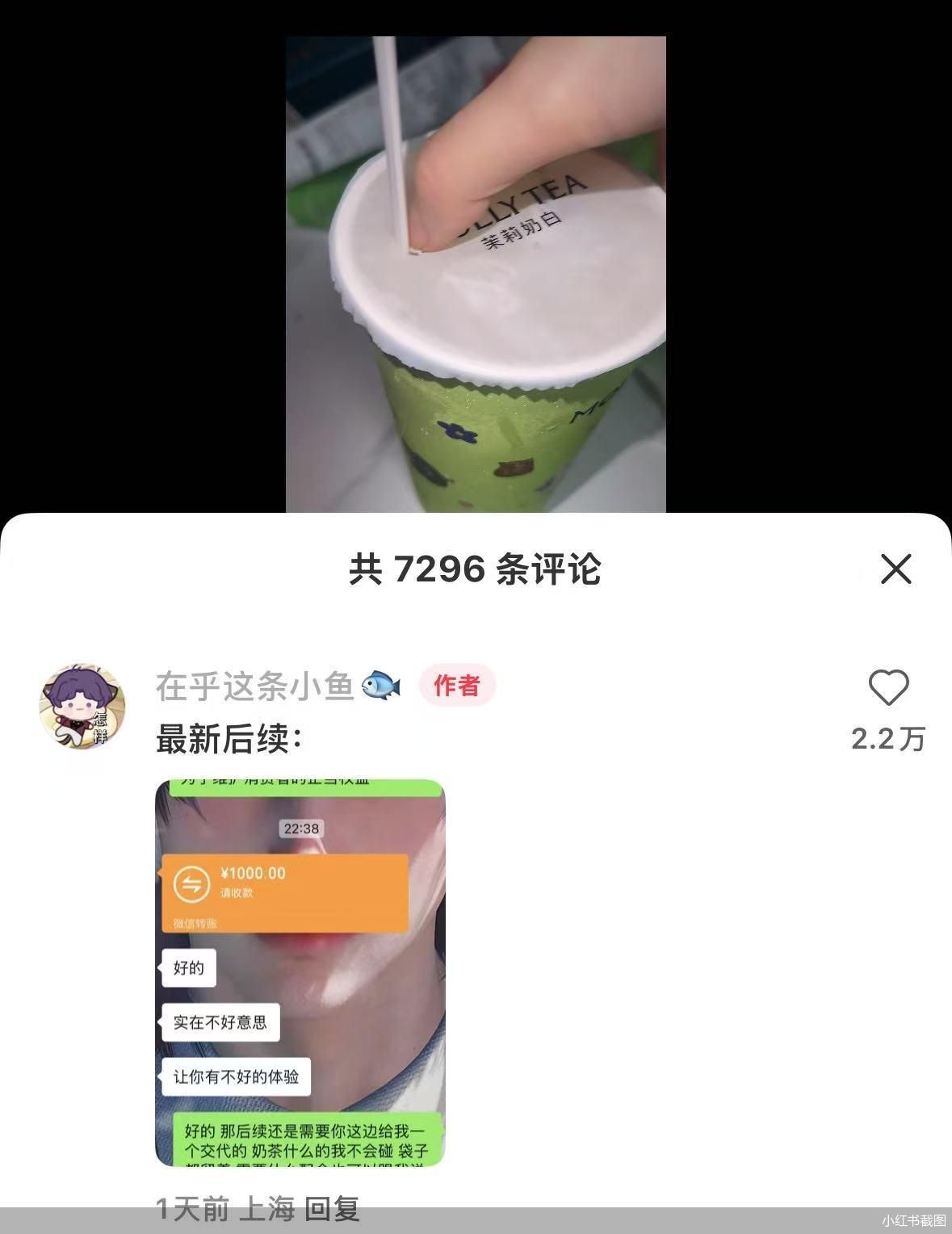
Group 1: Company Issues - The incident involving a customer finding a complete plastic bag in a drink from Jasmine Milk Tea has led to the closure of the affected store and an official apology from the company, which acknowledged operational negligence [1] - Jasmine Milk Tea, established in May 2020, has received multiple rounds of investment from notable investors including Alibaba Local Life and Waterdrop Capital [2] Group 2: Industry Developments - The third White Tea Trading Conference and Fuding White Tea Industry Promotion Week has commenced, highlighting Fuding as a key production area for white tea in China, with a projected industry output value of 15.518 billion yuan in 2024 [4][5] - Fuding's white tea brand value is estimated at 7.066 billion yuan, ranking fourth among regional public tea brands in China, and the region has over 3,100 tea processing enterprises providing more than 100,000 jobs [5] Group 3: Market Trends - China Tea Co. has withdrawn its IPO application, marking the end of its five-year journey to go public, which reflects a broader trend of companies in the food and beverage sector retracting IPOs amid tightened regulations [6][7] - The company reported revenues of 1.634 billion yuan in 2019, increasing to 2.434 billion yuan in 2022, with a net profit of approximately 201 million yuan in the first half of 2022 [7] Group 4: Coffee Market Expansion - Sinopec's Easy Joy coffee has opened its 500th store, indicating significant growth in its market presence and a strategic focus on convenience for consumers [8] - Easy Joy coffee aims to enhance consumer experience by providing freshly brewed coffee at gas stations, targeting the fast coffee market and expanding its national network [8]

损失1亿后,疯狂小杨哥要复出了;王健林遇大麻烦!80亿股权冻结;奔驰大裁员,中层遣散费或超400万;奶茶喝出塑料袋|| 大件事
Sou Hu Cai Jing· 2025-03-24 08:56
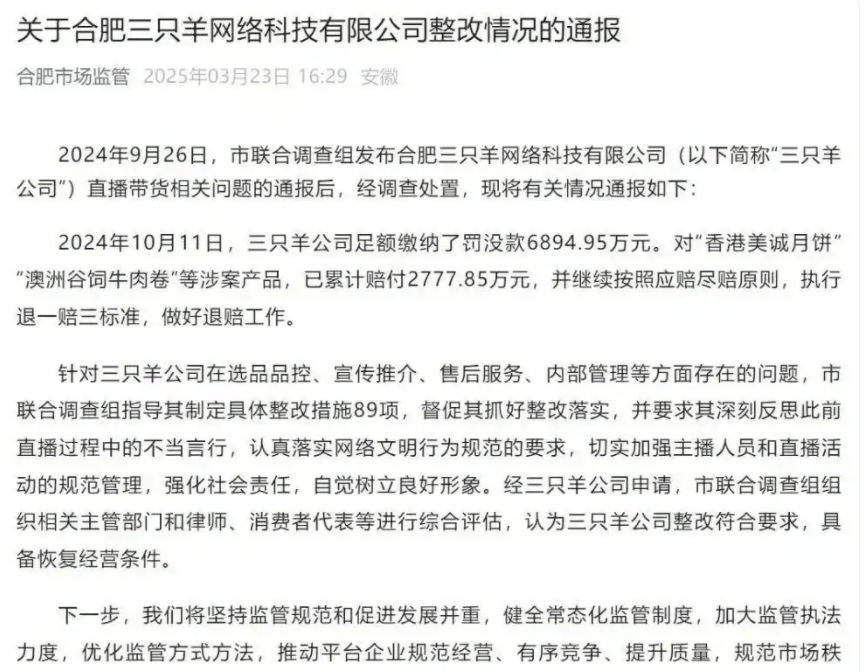
Group 1: Wanda Group - Wanda Group's equity worth 8 billion yuan has been frozen, with the freeze lasting from March 18, 2025, to March 17, 2028 [2] - The entire equity of Beijing Wanda Cultural Industry Group, which is 100% owned by Dalian Wanda Group, has been frozen [4] - Dalian Wanda Group has faced multiple equity freezes and execution orders this year, indicating a worsening financial situation [5] Group 2: Crazy Little Yang Brother - Crazy Little Yang Brother's company, Hefei Sanziyang Network Technology Co., has been allowed to resume operations after rectifying issues related to live-streaming sales [6][9] - The account of Crazy Little Yang Brother on Douyin has seen a drop in followers from 120 million to 108 million during the suspension period [11] - Despite the challenges, the company has continued operations in overseas markets and short video content during the suspension [10] Group 3: Mercedes-Benz - Mercedes-Benz plans to offer substantial severance packages to encourage around 30,000 employees to voluntarily leave the company [20] - The company aims to cut costs by 5 billion euros globally by 2027, including reducing production capacity in Germany [22] - In 2024, Mercedes-Benz reported a revenue of 145.59 billion euros, a 4.5% decline year-on-year, with a significant drop in net profit by 28.4% [22] Group 4: Jasmine Milk Tea - Jasmine Milk Tea faced backlash after a customer found a complete plastic bag in their drink, leading to an official apology and store closure for rectification [24][25] - The company has committed to addressing the issue and has already compensated affected customers [25] - Jasmine Milk Tea has seen significant growth, with a reported 400% increase in annual revenue in 2023 [26]
名创优品海外门店破3000家;安踏去年净赚156亿;耐克连续三季度营收净利双降|品牌周报
36氪未来消费· 2025-03-23 11:02
Group 1: Miniso's Global Expansion - Miniso has surpassed 3,000 overseas stores, marking a significant milestone in its global expansion strategy [2] - The company reported a total revenue of 17 billion RMB for 2024, a year-on-year increase of 23%, with a gross margin of 44.9% [2] - Overseas revenue grew by 42% to 6.7 billion RMB, contributing nearly 40% to the total revenue [2] Group 2: Anta's Financial Performance - Anta Sports achieved a record revenue of 70.8 billion RMB in 2024, a 13.6% increase year-on-year, with a net profit of 15.6 billion RMB, up 52% [4] - The company has over 10,000 stores operating under the Direct-to-Consumer (DTC) model, with DTC accounting for over 80% of its operations [5] - Anta's overseas expansion focuses on Southeast Asia, with partnerships in Singapore and Malaysia [5] Group 3: Nike's Declining Performance - Nike reported a revenue decline of 9% to 11.3 billion USD in Q3 of FY2025, with net profit down 32% to 800 million USD [6] - The Greater China market saw a significant revenue drop of 17% to 1.7 billion USD, indicating a slowdown compared to competitors like Adidas [7] - Nike's new CEO is implementing a revitalization strategy focused on sports rather than fashion, aiming to improve inventory management and customer engagement [6][7] Group 4: Pop Mart's Artist IP Revenue Growth - Pop Mart's artist IP revenue increased by 70.4% from 2.16 billion RMB in H1 2023 to 3.69 billion RMB in H1 2024, with artist IP accounting for 81% of total revenue [9] - The Labubu series, a popular IP, was featured in a pop-up store at Harrods, highlighting the brand's international marketing efforts [9] Group 5: Starbucks' Collaboration with Snoopy - Starbucks China launched its first collaboration with Snoopy, introducing limited edition drinks and merchandise [12] - The collaboration includes exclusive products like plush toys and themed merchandise, enhancing customer engagement [12] Group 6: Three Squirrels' Entry into Beverage Market - Three Squirrels announced its entry into the beverage sector, launching 60 products with a focus on low pricing to disrupt traditional pricing models [20] Group 7: Shanghai Jahwa's Financial Struggles - Shanghai Jahwa reported a net loss of 800 million RMB for 2024, with total revenue declining by 13.93% to 5.68 billion RMB [21] - The significant loss was attributed to goodwill impairment and increased competition in the baby and child care segment [21] Group 8: Xtep's Leadership Change - Xtep International appointed a new CFO, Ding Lizhi, who is the daughter of the company's founder, indicating a potential shift in leadership strategy [22]




夫妻店年入33亿,上市前夕遇麻烦
盐财经· 2025-03-21 09:10
文| 张婉莹、陈慧(实习生) 编辑| 何子维 视觉 | 顾芗 正值冲刺港股上市的紧要关头,茶饮品牌沪上阿姨却因3·15期间曝光的食品安全问题,陷入消费者对其 的信任危机。 据湖北经视《3·15特别报道》披露,其武汉汉口城市广场门店员工在制作杨枝甘露时,使用过期的西柚 粒,并撕毁原保质期标签后重新打印虚假效期。武汉市市场监管局已依据《食品安全法》对涉事门店立 案调查,最高面临货值金额20倍罚款。 湖北经视曝光了沪上阿姨食品安全问题 这一事件将沪上阿姨推向舆论风口,也为其港股上市前夕蒙上一层阴影。 从2013年上海人民广场一间25平米的档口奶茶店,到坐拥8500家门店的现制茶饮巨头, 由"75后"夫妻单 卫钧和周蓉蓉创办的沪上阿姨,用超过十年时间,在茶饮江湖中撕开一条"血路"。 然而,如今来看,过期食材重复使用的"标签门",或成为这家"夫妻店"IPO路上的拦路虎。 就在今年年初, 沪上阿姨带着年营收超33亿的成绩单冲刺港交所 ,试图成为继奈雪的茶、茶百道、古 茗、蜜雪冰城之后,第5家登陆资本市场的茶饮品牌。 可资本市场从来不缺故事,缺的是"确定性"。当蜜雪冰城以2.6万家门店在下沉市场筑起铜墙铁壁时,当 古茗、茶 ...

英伟达因DeepSeek已经少了4200亿美元市值;吉利更务实转型;拼多多年收入接近4000亿元丨百亿美元公司动向
晚点LatePost· 2025-03-21 02:21
自 DeepSeek 发布以来,英伟达市值已蒸发 4200 亿美元。 自 2025 年 1 月 DeepSeek R1 发布以来,英伟达市值从 3.297 万亿美元降至 2.917 万亿美元,投资者 财富缩水 4200 亿美元。 原因是,DeepSeek R1 的成功让市场认为,未来 AI 模型的训练和推理可能不再高度依赖英伟达的 高端 GPU。DeepSeek R1 模型具有 "低成本训练" 和 "高性价比" 的特点,其训练成本仅为 550 万至 560 万美元,远低于传统大模型的数十亿美元投入;DeepSeek R1 在推理能力上表现出色,其 API 调用成本低至英伟达的 10% 甚至更低。 在刚结束的 GTC 大会上,黄仁勋说 "推理" 带来的潜在需求让人感到兴奋。然后这并没有提振股 价,交易中下跌超 3%。 吉利营收首超 2400 亿元,更务实地降本节流。 吉利控股集团总裁、极氪科技集团 CEO 安聪慧用 "史上最强" 形容 2024 年业绩:营收 2401.9 亿 元,同比增加 34%,是目前年营收最高值。净利润同比增长 213% 至 166.3 亿元。不过,其中包括 出售合资公司 10% 股权换回 ...

呼和浩特发布育儿补贴细则,金价再创新高
HUAXI Securities· 2025-03-16 06:16
证券研究报告|行业研究周报 [Table_Date] 2025 年 03 月 16 日 [Table_Title] 呼和浩特发布育儿补贴细则,金价再创新高 [Table_Title2] 社服零售行业周报 [Table_Summary] ► 呼和浩特发布育儿补贴细则,利好母婴消费品 3 月 13 日,内蒙古呼和浩特卫健委发布落实《关于促进人口 集聚推动人口高质量发展的实施意见》育儿补贴项目实施细 则及服务流程。发放育儿补贴实施细则如下:生育一孩一次 性发放育儿补贴 10000 元;生育二孩发放育儿补贴 50000 元, 按照每年 10000 元发放,直至孩子 5 周岁;生育三孩及以上发 放育儿补贴 100000 元,按照每年 10000 元发放,直至孩子 10 周岁。 据中国政府网、财联社,2025 年政府工作报告中明确提出, 制定促进生育政策,发放育儿补贴;3 月 7 日,国家卫健委主 任雷海潮指出,今年将发放育儿补贴,国家卫健委正在会同 有关部门,起草相关的育儿补贴的操作方案。育儿补贴政策 的出台是提振生育率的重要举措,我们认为未来地方育儿补 贴政策有望持续出台,利好母婴消费品,相关受益标的包括 孩子王、爱 ...


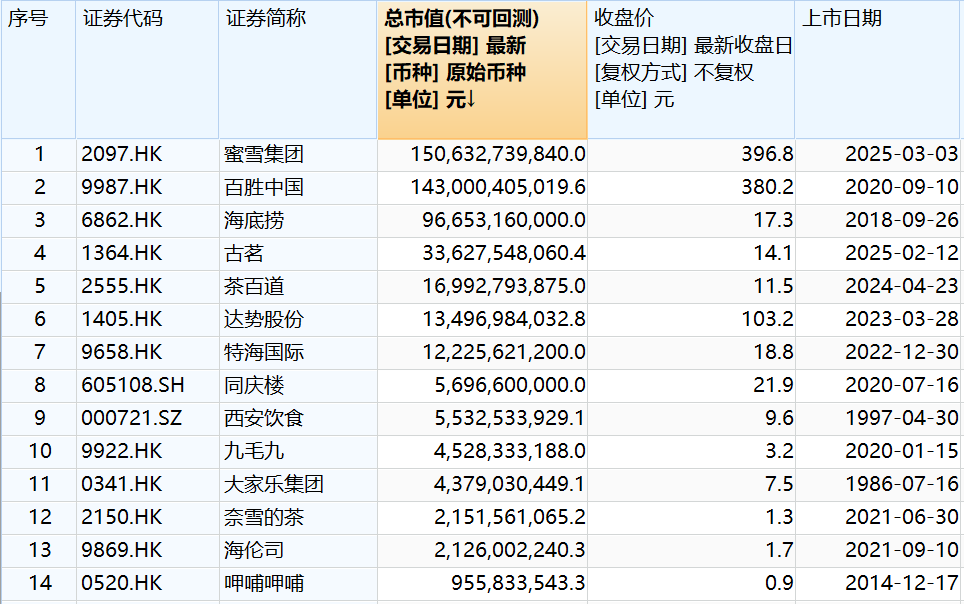
市值达“茶饮三巨头”3倍,蜜雪冰城低价策略还能维持多久
Zheng Quan Shi Bao Wang· 2025-03-13 05:25
Core Viewpoint - The company, Mixue Group, has achieved the highest market capitalization among Chinese restaurant companies, surpassing Yum China and the combined market value of other tea beverage companies, despite recent stock price fluctuations [1][2]. Group 1: Market Performance - On March 3, Mixue Group debuted on the Hong Kong Stock Exchange, breaking the trend of tea beverage companies experiencing a drop in share price on their first day, with an opening increase of 30% and a closing price of 290 HKD, up 43% from the issue price [2]. - As of March 13, the stock price was reported at 399.8 HKD, with a total market capitalization of 151.8 billion HKD, leading the Chinese restaurant sector [1][6]. Group 2: Capital Attraction - Prior to its listing, Mixue Group was dubbed the "Frozen Capital King" due to its record-breaking subscription figures, achieving a subscription multiple of 5324 times and raising 32.91 billion HKD [3][6]. - The company attracted significant investment from well-known institutions, including M&G Investments and Sequoia Capital, with total subscriptions reaching approximately 15.58 billion HKD [3]. Group 3: Financial Performance - For the first nine months of 2024, Mixue Group reported revenues of 18.66 billion HKD and a net profit of 3.49 billion HKD, resulting in a net profit margin of 18.7%, which is significantly higher than its competitors [4]. - Competitors such as Gu Ming and Cha Bai Dao reported lower revenues and profit margins, highlighting Mixue's superior financial performance [4]. Group 4: Business Strategy - Mixue Group employs a low-price strategy, with an average drink price of approximately 6 RMB, which is significantly lower than industry averages, allowing it to capture a large market share in lower-tier cities [5][6]. - The company has built a robust supply chain to minimize costs and relies heavily on a franchise model, with over 90% of its revenue coming from supplying materials and equipment to franchisees [6]. Group 5: Challenges Ahead - The sustainability of Mixue's low-price strategy is under scrutiny due to rising costs, market saturation, and competition from other low-cost brands [7]. - The company has begun adjusting prices in certain regions, indicating potential challenges in maintaining its pricing strategy [7]. Group 6: International Expansion - As of September 2024, Mixue Group has opened approximately 4,800 stores outside mainland China, with a significant portion of overseas revenue coming from Indonesia and Vietnam [8]. - The company faces challenges in expanding into developed markets, where brand recognition is lower, as evidenced by its limited store openings in countries like Australia, Japan, and South Korea [8].