
农业

Search documents
继续聚焦高端制造
Orient Securities· 2025-09-28 15:22
Group 1 - The index is expected to experience sideways fluctuations with a slight upward trend, closing at 3828 points this week, aligning with previous expectations [3][14]. - High-end manufacturing remains a focus, with sectors such as electric equipment (3.9%), non-ferrous metals (3.5%), and electronics (3.5%) leading the gains this week, indicating continued optimism in this area despite potential risks of chasing high prices [4][15]. - The report emphasizes the importance of low-position cyclical stocks with dividend appeal, highlighting a significant improvement in industrial profits, which shifted from a decline of 1.5% last month to a growth of 20.4% this month [7][18]. Group 2 - High-end manufacturing is projected to maintain relative advantages, with particular attention on segments like robotics and deep-sea economy, which are expected to benefit from future policy developments [5][16]. - The robotics sector is anticipated to see growth with the upcoming release of Optimus V3, although there are existing market discrepancies regarding its valuation and progress [5][16]. - The semiconductor sector continues to lead, with the domestic semiconductor index rising by 13.06% and semiconductor equipment index increasing by 11.22%, although a transition to a consolidation phase is expected after the short-term uptrend [5][16]. Group 3 - The deep-sea economy is viewed as a critical national strategy, with expectations for its performance to improve as policies are introduced, despite current market skepticism regarding its commercial value [6][17]. - The report identifies specific sectors such as power, coal, steel, chemicals, and agriculture as having potential for profit recovery, particularly in the context of low PPI and improving market conditions [7][18][19]. - The chemical industry is expected to see an improvement in supply-side dynamics, leading to enhanced profitability and dividend appeal for certain companies [19].
廖市无双:如何应对指数“明显分化”?
2025-09-28 14:57
Summary of Key Points from Conference Call Industry or Company Involved - The discussion primarily revolves around the performance of the stock market, particularly focusing on the dual innovation indices (创业板 and 科创 50) and their impact on the overall market dynamics [1][3][4]. Core Insights and Arguments 1. **Market Performance and Divergence** - The dual innovation indices have shown strong performance, particularly the 科创 50, which indicates a strong upward momentum despite the pressure on weight indices like 上证 50 and 沪深 300 [1][3][4]. 2. **Challenges and Uncertainties** - The market faces significant challenges, including the divergence of indices, unclear direction of the 上证 index, and the upcoming long holiday which adds to market uncertainty [4][5]. 3. **Investment Strategy in Complex Market** - Investors are advised to focus on systemic market characteristics, avoiding concentrated strategies and instead monitoring overall market rotation. Attention should be given to the sustainability of the dual innovation indices to prevent larger adjustment pressures [6][7]. 4. **Future Market Predictions** - The market is expected to continue in a range-bound consolidation phase, with the 上证 index lacking momentum. The performance of the financial sector, particularly brokerages, is crucial for any potential upward movement in the broader market [11][14]. 5. **Sector Performance** - Notable sectors this week include electronics, non-ferrous metals, and battery industries, which have seen significant gains. Conversely, consumer-related sectors have underperformed, likely due to profit-taking ahead of the National Day holiday [10][11]. 6. **Asset Relationships and Impact** - There is a notable interrelationship among various asset classes, with systemic market characteristics leading to simultaneous rises and falls. A balanced allocation between cyclical and technology sectors is recommended to mitigate risks [7][24]. 7. **Investment Recommendations** - Investors should consider a diversified approach, focusing on sectors with strong fundamentals such as non-bank financials and real estate, which may have significant upside potential if profit expectations improve [29][30]. 8. **Market Sentiment and Wealth Effect** - The improvement in industrial profits and consumer spending in Shanghai is attributed to the wealth effect, which has begun to manifest after two years of market growth [2][28]. Other Important but Possibly Overlooked Content 1. **Technical Analysis of Indices** - The 上证 index's daily and weekly analysis indicates it is currently in an adjustment phase, with the need for careful monitoring of key moving averages to assess potential risks [8][12]. 2. **Brokerage Sector's Role** - The brokerage sector's performance is critical for the overall market's ability to reach higher levels, emphasizing the need for a healthy rotation within this sector [14][31]. 3. **Real Estate Sector Dynamics** - The real estate sector, while currently lacking in momentum, shows potential for significant upside if profit recovery occurs, making it a sector to watch closely [30]. 4. **Future Focus on Research and Service** - The team acknowledges the need to enhance service quality and better align research outputs with investor needs, indicating a shift towards more investor-centric approaches in the future [32].
十五五系列报告:畅想十五五,生活文娱软消费全球崭露头角
Yin He Zheng Quan· 2025-09-28 13:10
Investment Rating - The report suggests a positive investment outlook for the consumer sector, particularly in food and beverage, social services, agriculture, apparel, light industry, and home appliances [6]. Core Insights - The "15th Five-Year Plan" is expected to shift focus from production to a balanced emphasis on production and consumption, enhancing the international competitiveness of China's soft consumption sectors, particularly in lifestyle and entertainment [5][9]. - The report highlights the rapid internationalization of China's hard consumption sectors, such as home appliances and automotive, while soft consumption sectors like internet services and cultural products are beginning to gain global traction [5][9]. - The report emphasizes the potential for Chinese brands in the ready-to-drink beverage market to emerge as global leaders, similar to Starbucks, due to the rapid growth and expansion of the industry [29][32]. Summary by Sections Encouraging Consumption Industry to Go Global - The report discusses the need for innovation-driven development to enhance China's position in the global value chain, focusing on high-end manufacturing and cultural exports [9][11]. - It outlines the importance of building a comprehensive technological innovation system to support the transition to high-value production [11][12]. Globalization of Chinese Dining and Ready-to-Drink Beverages - The report notes that the ready-to-drink beverage market has reached a size of $779.1 billion in 2023, with a projected CAGR of 7.2% from 2023 to 2028 [29][30]. - It highlights the potential for Chinese brands to establish a significant presence in the global market, particularly in Southeast Asia, where cultural similarities and low brand saturation provide ample opportunities [40]. Global Retail and Chinese Models - The report indicates that Chinese retail models, such as Miniso, are successfully internationalizing, demonstrating the adaptability and competitiveness of Chinese brands in the global market [5][9]. Cultural Content Going Global - The report emphasizes the increasing international competitiveness of Chinese cultural products, particularly in the fields of gaming and internet content, with notable successes in global markets [5][9][22]. - It discusses the supportive policies from the Chinese government aimed at promoting cultural exports and enhancing the global presence of Chinese brands [22][23]. Consumer Sector Valuation and Allocation - The report provides insights into the market performance and institutional allocation within the consumer sector, indicating a favorable outlook for various segments [6][8].
轮到中国反制了,订单直接清零,加税100%,加拿大高层要访华道歉
Sou Hu Cai Jing· 2025-09-28 11:36
Group 1 - Canada has shifted its diplomatic stance towards China, seeking dialogue and reconciliation after experiencing economic repercussions from its previous hardline policies [1][15] - The Canadian government, under Prime Minister Carney, intensified trade sanctions against China, including imposing punitive tariffs of up to 100% on electric vehicles and 25% on steel and aluminum products [4][5] - The true motivation behind Canada's tariffs was to leverage its position for better access to the U.S. agricultural market, sacrificing its trade relationship with China [7] Group 2 - China's response to Canada's tariffs was swift and targeted, imposing 100% tariffs on Canadian canola oil and peas, and 25% on seafood and pork, significantly impacting Canadian exports [8][9] - The second round of Chinese countermeasures included a ruling on dumping, requiring Canadian companies to pay a deposit of 75.8% to continue exporting canola to China, leading to a complete halt in orders [9][11] - The agricultural sector in Canada faced severe consequences, with farmers in Saskatchewan suffering losses exceeding $30,000 each, and many processing companies going bankrupt due to the loss of orders [11][13] Group 3 - The political fallout from the economic crisis led to pressure on the Canadian federal government from provincial leaders and businesses to change its trade policies towards China [13] - The U.S. maintained high tariffs on Canadian steel and aluminum while threatening additional tariffs on Canadian lumber and dairy products, exacerbating Canada's economic challenges [13] - The Canadian government's recent overtures to China are seen as a desperate attempt to find a way out of the economic turmoil caused by its previous policies [15]

中牧股份:9月28日召开董事会会议
Mei Ri Jing Ji Xin Wen· 2025-09-28 07:46
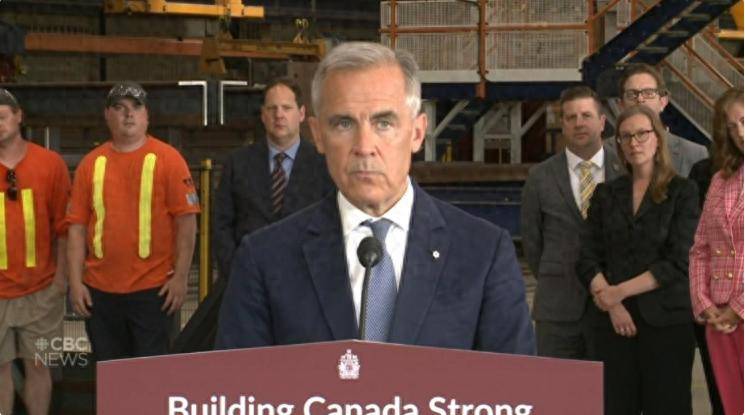
Group 1 - Company Zhongmu Co., Ltd. (SH 600195) held its 12th temporary board meeting on September 28, 2025, to discuss the proposal regarding the government's expropriation of some idle assets of the company and its wholly-owned subsidiaries [1] - For the fiscal year 2024, Zhongmu's revenue composition is 99.56% from agriculture and 0.44% from other businesses [1] - As of the report date, Zhongmu's market capitalization is 7.2 billion yuan [2]

以“鱼”为媒 融文兴旅
Bei Jing Ri Bao Ke Hu Duan· 2025-09-28 02:46
Core Insights - The article highlights the integration of ecological, cultural, and tourism development in Miyun District, Beijing, emphasizing the importance of the Miyun Reservoir as a vital water source and its role in promoting local agriculture and fisheries [1][4][6]. Group 1: Ecological and Agricultural Development - Miyun Reservoir is a crucial drinking water source for Beijing, maintaining a water quality standard of Class II for surface water, which supports a thriving fishery industry [4][6]. - The district has successfully branded its agricultural products, with items like "Miyun Fish" and "Chinese Honey" recognized as national ecological product certification examples [1][4]. Group 2: Cultural and Tourism Initiatives - The annual Beijing Miyun Fish King Food Culture Festival has evolved into a significant cultural event, integrating ecological, cultural, and tourism elements, and is now one of the most influential cultural festivals in North China [3][4]. - The festival features over 150 local tourism and dining businesses, offering various promotional activities, including a "Fish Feast" and a "Miyun Food Map" to enhance visitor experiences [4][6]. Group 3: Policy and Strategic Development - Miyun District plans to allocate nearly 10 million yuan annually to support the high-quality development of the tourism industry, including scenic spots, hotels, and rural tourism [6]. - The district's strategic approach to tourism development is exemplified by the Fish King Food Culture Festival, which serves as a platform for resource aggregation and distribution, showcasing innovations in ecological protection and cultural heritage [6][7]. Group 4: Thematic Tourism Routes - The article outlines several themed tourism routes for the autumn season, promoting diverse experiences such as cultural exploration, family-friendly activities, and culinary adventures [7][8][9].

消费行业十五五系列报告:畅想十五五,生活文娱软消费全球崭露头角-银河证券
Sou Hu Cai Jing· 2025-09-28 02:28
Group 1 - The report by Galaxy Securities focuses on the development of the consumption industry during the "14th Five-Year Plan" period, highlighting the global competitiveness of the soft consumption sector in lifestyle and entertainment [1][2] - In the global retail landscape, leading companies are primarily from the US, Europe, and Japan, with Walmart topping the list at $676 billion in revenue and 10,692 stores by 2025 [1][2] - Chinese retail brands are rapidly expanding, with notable examples including Mixue Ice City with over 41,000 stores and Luckin Coffee with over 21,000 stores, indicating strong market penetration of local brands [1][2] Group 2 - The soft consumption sector, particularly in entertainment, has shown significant international expansion, with Chinese productions like "Ne Zha" being featured on platforms like Netflix and Disney+ [2][11] - The domestic consumption-related sectors have experienced varied performance since 2025, with indices like the CSI 300 and Hang Seng showing different trends in non-essential and essential consumption [2][11] - Valuation disparities exist across different consumption segments, with sectors like food and beverage, home appliances, and social services showing fluctuations around industry averages [2][11] Group 3 - The report anticipates continued growth in the lifestyle and entertainment soft consumption sector during the "14th Five-Year Plan," driven by domestic consumption upgrades and globalization efforts [2][11] - Digitalization and localized operations are identified as key strategies for enhancing competitiveness among domestic brands in the global market [2][11] - The report emphasizes the importance of cultural exports in enhancing China's cultural influence globally, with policies supporting the internationalization of cultural products and services [31][32]

“美国最大雇主”未来三年“不加人”!沃尔玛CEO“坦言”:AI将改变所有岗位
Hua Er Jie Jian Wen· 2025-09-28 01:44
Core Insights - Walmart is facing challenges from AI-driven workforce transformation, with executives acknowledging that AI will eliminate certain jobs and reshape the employee structure [1] - CEO Doug McMillon provided a direct assessment of AI's impact on employment, stating that AI will change every job [1] - Walmart plans to maintain its global workforce of approximately 2.1 million employees over the next three years, but the composition of jobs will significantly change [1][2] Group 1: Company Strategy - Walmart executives are actively assessing the impact of AI on the workforce in high-level planning meetings, tracking job types that may decrease, increase, or remain stable [2] - The company aims to create opportunities for all employees to transition successfully into the new era [2] - Walmart has developed chatbots for customers, suppliers, and employees, and is utilizing AI to track supply chain and product trends [2] Group 2: Job Creation and Automation - AI has already led to automation in many warehouses, resulting in some job reductions, while new positions like "agent builders" have been created to develop AI tools [2] - The company expects to increase staffing in delivery and high-contact customer service roles, as well as in-store maintenance technicians and truck drivers [2] - The pace of change across the industry is expected to be gradual, with customer service tasks becoming more reliant on AI [2] Group 3: Industry Trends - Other companies are also embracing AI, with executives creating internal "heat maps" to identify roles or tasks that may be automated [4] - Concerns about AI-related layoffs have been rising, with some companies indicating they will eliminate employees who cannot be retrained for the AI era [4] - The CEO of Ford stated that AI could replace half of the white-collar jobs in the U.S., while OpenAI's chief economist noted that AI's impact on the job market is just beginning [5]

以金融“活水”滋润“三农”沃土 浇灌出乡村振兴新气象
Yang Shi Wang· 2025-09-27 01:48
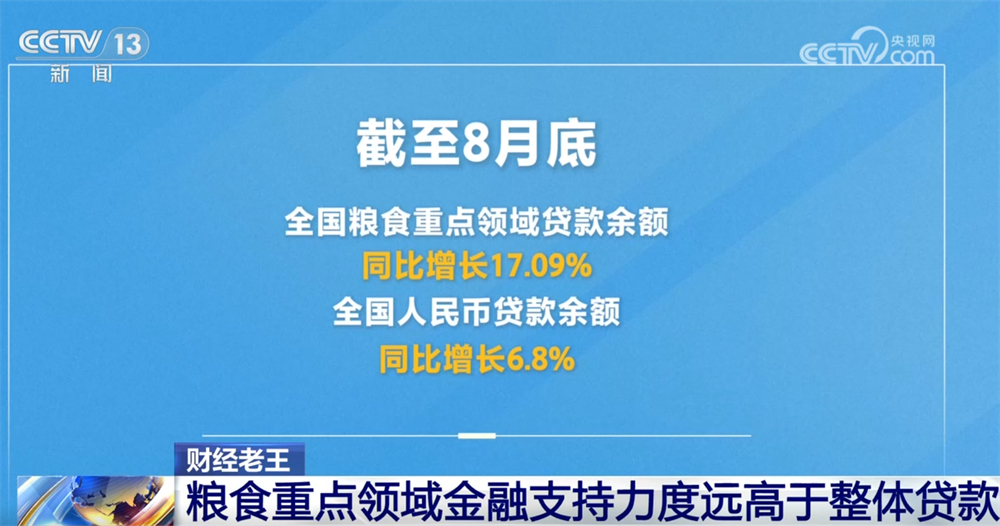
Financial Support for Agriculture - As of the end of August, the loan balance in key agricultural sectors increased by 17.09% year-on-year, significantly higher than the overall growth of 6.8% in RMB loans [1] - Financial support for agriculture includes various tailored loan products such as "Smart Grain Warehouse Loan," "Marine Ranch Loan," and "Fruit Farmer Loan," with over half of the agricultural loans requiring no collateral or guarantees [3][5] Insurance Developments - Comprehensive insurance products for major crops like rice, wheat, and corn are now available nationwide, providing better coverage compared to previous years [5] - The cost of insurance has decreased, with farmers able to secure around 1000 yuan in coverage for a premium of just over 10 yuan, thanks to substantial government subsidies [5][7] Impact on Farmers - Farmers have reported easier access to loans with lower interest rates and better disaster protection, leading to increased confidence in agricultural activities [9]
我省大力推进琼台经济文化交流合作,深化两岸融合发展
Hai Nan Ri Bao· 2025-09-27 00:46
Core Points - The upcoming 2025 Qiong-Tai Economic and Trade Cooperation Exchange Conference in Haikou will attract over 200 participants from Taiwan's business community and youth representatives, highlighting the importance of Qiong-Tai cooperation in deepening cross-strait integration and supporting Hainan's free trade port development [2][4] - Hainan's policies, such as value-added tax and personal income tax incentives, are seen as significant advantages for Taiwanese businesses, enhancing their competitiveness and operational efficiency [3][4] - The Qiong-Tai Exchange Cooperation Base has become a key platform for economic collaboration, attracting over 60 Taiwanese enterprises across various sectors, including agriculture, manufacturing, and logistics, with more than 20,000 acres of land leased [3][4] Economic Cooperation - Hainan's trade with Taiwan saw a year-on-year increase of 20.4% from January to July 2025, with over 2,808 registered Taiwanese enterprises and actual utilized Taiwanese capital exceeding $5.9 billion as of August 2025 [4] - The establishment of the Hainan Taiwan Youth Innovation and Entrepreneurship Service Center aims to provide comprehensive support for Taiwanese youth in entrepreneurship, including guidance, policy consultation, and market expansion [7][8] Cultural Exchange - The second Qiong-Tai "Treasure Island Cup" youth cultural and sports exchange event in August 2025 involved over 200 participants, fostering mutual learning and friendship between youth from both regions [5][6] - Various cultural exchange activities, such as the annual Qiong-Tai Seven Fairy Water Festival, have been organized to deepen cultural ties and enhance understanding between the two regions [6] Policy Support - Hainan has introduced a series of supportive policies for Qiong-Tai exchanges, covering economic, employment, and educational aspects, with plans for more initiatives to facilitate Taiwanese youth's development in Hainan [8]