
新消费

Search documents
消费反弹,商社继续看哪些?
2025-11-11 01:01
Summary of Key Points from Conference Call Records Industry Overview Consumer Sector - The consumer sector has shown a strong rebound after a previous correction, primarily due to a low base effect [2][20] - Companies like Jinjiang, Shou Tour, and others have been recommended as key investment targets [2] Duty-Free Industry - China Duty Free Group (CDFG) has reached a two-year high in stock price, benefiting from favorable policies and a low base effect, with customs data showing a year-on-year growth of 20%-30% in early November [1][4] - The expected valuation for CDFG in 2026 is around 4.8 billion, indicating potential for further growth despite high valuations [4] Hotel Sector - The hotel sector is experiencing a slowdown in supply expansion while demand is increasing, with expectations of a year-on-year positive change by 2026 [5] - Jinjiang and Shou Tour have shown improved performance, with Jinjiang's decline narrowing to just over 2% in Q3 [5] New Consumption in Hong Kong - Companies like Pop Mart and Lao Pu Gold are highlighted as having relatively low valuations, making them attractive investment opportunities [6] - Despite potential deviations in expected growth for 2026, the new consumption sector in Hong Kong remains under 20 times valuation, suggesting room for growth [6] Restaurant and Tea Beverage Sector - The restaurant sector is currently facing low expectations and stock prices, but October saw improvements in same-store sales [7] - The tea beverage sector has shown resilience, with leading companies achieving single to double-digit growth, making them worthy of attention [8] Key Company Insights Recommended Companies - **Gu Ming**: Achieved over 20% same-store GMV growth in Q3, plans to open over 3,000 new stores next year [3][8] - **Mi Xue Ice City**: Rapid growth in domestic and credit card stores, with plans to open around 4,000 new stores next year [3][8] - **Xiao Tai Yang**: Plans to open 2,000 new stores next year, focusing on cost optimization for profit growth [3][8] - **Guo Quan**: Exceeded same-store growth expectations in Q3, with plans to open at least 2,000 new stores next year [3][8] Healthcare and Hygiene Products - Recommended companies in the hygiene sector include Lu Shushi and Stable Medical, both of which have strong market positions and reasonable valuations [9] - Stable Medical is expected to achieve around 1.05 billion in revenue this year, with a projected 20% growth next year [12] Beauty and Personal Care - Recommended companies include La Fang Jia Hua and Juzi Biological, focusing on collagen-related products [13][14] - La Fang Jia Hua is expected to achieve over 1.2 billion in revenue this year, with a growth rate exceeding 30% [14] Additional Insights - The overall sentiment in the consumer sector is currently low, but many companies still have upward valuation potential [19][20] - The duty-free and hotel sectors are showing signs of recovery, with potential for further growth driven by favorable policies and improved consumer sentiment [1][5][4]
中金:产业趋势与流动性助推牛市 港股市场长期受益
智通财经网· 2025-11-11 00:17
Core Viewpoint - The Chinese market in 2025 is expected to exceed expectations, characterized as a bull market driven by industry trends (AI), fundamental improvements, and liquidity narratives [1][2] Macroeconomic Environment - The concept of "excess liquidity" is driving the pursuit of "scarce assets," with liquidity remaining abundant but the credit cycle shifting to oscillation or even slowdown [2] - The recognition of "scarce assets" changes with the credit cycle, impacting the types of assets that attract investment [2][3] Liquidity and Scarcity - The current situation in China is characterized by a coexistence of deflation and localized inflation, with excess liquidity leading to significant asset price differentiation [3][4] - The key questions for future market judgments are whether the liquidity environment has been damaged and if scarce assets can expand to a broader range [3][4] Credit Cycle and Asset Expansion - The credit cycle is expected to oscillate and slow down, making it difficult for scarce return assets to expand significantly [5][6] - The government’s role in stimulating credit expansion is limited, and structural issues remain a challenge for long-term growth [6][7] Market Trends - The Hang Seng Index's dynamic valuation is currently at 11.4 times, indicating that the market is not "cheap" and future index space will require earnings recovery rather than relying solely on valuation expansion [8][9] - The overall earnings growth is projected to be modest, with a baseline scenario estimating a 3% growth in 2026 [9] Investment Strategy - The company suggests maintaining a moderate allocation to dividend assets to counterbalance the weak credit cycle expansion [10] - Focus on sectors that can still expand credit, such as AI technology, new energy, and innovative pharmaceuticals, while underweighting real estate and consumer goods [10][11]
中金2026年展望 | 港股:“牛市”的下一步
中金点睛· 2025-11-10 23:38
Core Viewpoint - The Chinese market in 2025 is characterized as a bull market driven by industry trends (AI), fundamental improvements, and liquidity narratives, with significant contributions from risk premiums and structural performance [2][17]. Group 1: Market Dynamics - The market's performance is influenced by excess liquidity chasing scarce return assets, leading to significant structural changes and asset rotation [25][26]. - The Hang Seng Index and Hang Seng Tech Index saw a 30% increase, primarily driven by risk premiums rather than earnings growth [17][18]. - Structural characteristics include significant contributions from a small number of stocks, with 15 stocks accounting for 70% of index gains, while many others underperformed [2][19]. Group 2: Liquidity Environment - The liquidity environment remains abundant, with macro, micro, and external liquidity factors contributing to the current state [28][30]. - Macro liquidity is characterized by low interest rates and a loose monetary policy, while micro liquidity reflects a lack of effective demand leading to capital stagnation [28][30]. - External liquidity is expected to remain loose in the first half of 2026, influenced by the Federal Reserve's interest rate policies and the ongoing "de-dollarization" narrative [34][35]. Group 3: Scarce Assets and Credit Cycle - The concept of "scarce assets" is determined by the credit cycle, with different phases affecting asset preferences, such as fixed-return assets during credit contraction and growth assets during recovery [3][36]. - The current credit cycle is expected to experience fluctuations, making it challenging for scarce return assets to expand broadly across the market [40][41]. - The government’s fiscal policies are limited in scope, with structural preferences affecting the ability to stimulate traditional demand sectors [45][46]. Group 4: Sector Outlook - Emerging demand sectors, particularly in technology and AI, are projected to maintain high growth, although expectations may be overly optimistic [41][42]. - Traditional demand sectors, such as real estate and consumer goods, are likely to weaken again after a brief recovery, primarily due to low income expectations and cost-return mismatches [43][44]. - Fiscal spending is expected to be limited but may shift structurally to support sectors with higher growth potential, such as technology and innovation [45][46].


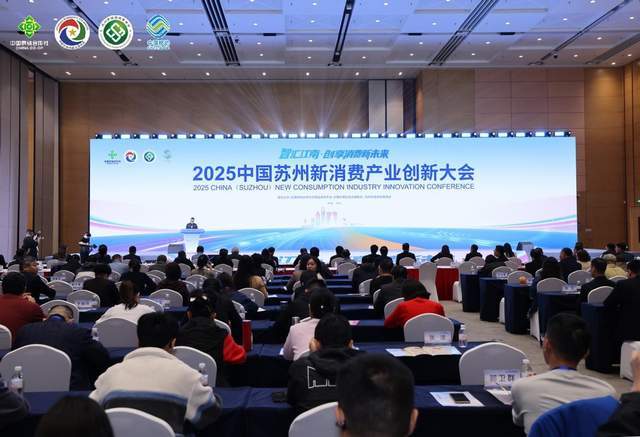
聚势赋能新消费!2025中国苏州新消费产业创新大会成功举办
Sou Hu Cai Jing· 2025-11-10 16:54
Core Insights - The "2025 China Suzhou New Consumption Industry Innovation Conference and New Consumption Quality Goods Supply and Marketing Franchise Exhibition" was successfully held from November 8 to 9, focusing on the theme "Intelligent Integration of Jiangnan: Creating a New Future for Consumption" [1] - The event featured three parallel forums discussing key topics such as "Digitalization of Consumption and Supply Chain Upgrades," "Brand Innovation and Sustainable Development," and "Green Supply Chains and Healthy Consumption," with insights from industry experts [1] Group 1 - The exhibition area covered 6,000 square meters, showcasing hundreds of quality brands including China Mobile, Supply and Marketing Cooperatives, and New World Chain Supermarket, highlighting the innovative strength and industrial vitality of "Suzhou Products" [3] - The event attracted hundreds of professional buyers and facilitated over a hundred preliminary cooperation intentions, effectively promoting resource integration and business collaboration across the industry chain [3] - Interactive activities and consumer vouchers in the public consumption area engaged tens of thousands of citizens, achieving a perfect blend of professional exchange and consumer engagement [3] Group 2 - The conference awarded outstanding enterprises and brands in the new consumption sector and included a signing ceremony for the wine brand "Feihong," showcasing the vibrancy and appeal of the new consumption industry [5] - The event was co-hosted by the National Supply and Marketing Cooperative Daily Goods Procurement Platform, the China Daily Goods Circulation Association, and the Suzhou Chain Operation Chamber of Commerce, promoting deep industry exchanges and the integration of local brands with the national supply chain [7] - Suzhou aims to continue deepening innovation practices in the new consumption sector, collaborating with various sectors to explore new consumption scenarios and build a new industrial ecosystem [9]
新纪录诞生,南向资金净买入突破5万亿港元
Zheng Quan Shi Bao· 2025-11-10 14:20
Core Insights - The Hong Kong stock market has reached a new milestone with a net inflow of 66.54 billion HKD from southbound funds on November 10, pushing the total net buying amount for the year to over 1.3 trillion HKD and cumulative net inflow since the launch of the Stock Connect to over 5 trillion HKD, setting a new record since the mechanism's inception [1] Group 1: Market Performance - The Hong Kong stock market has shown significant activity this year, with major indices such as the Hang Seng Index, Hang Seng Tech Index, and Hang Seng China Enterprises Index each rising approximately 30%, ranking among the top in global markets [1] - The influx of southbound funds has been particularly strong in the first half of the year, with 57 trading days recording net inflows exceeding 10 billion HKD, 30 of which occurred in the first half [2] Group 2: Factors Driving Inflows - Five key factors are driving the continuous inflow of southbound funds into the Hong Kong stock market: valuation discount compared to A-shares, ongoing demand for technology leaders and high-dividend assets in a declining domestic interest rate environment, optimized connectivity mechanisms, long-term investment needs from domestic insurance and public funds, and enhanced global liquidity expectations due to anticipated interest rate cuts [3] - The presence of unique assets in the Hong Kong market, such as Tencent, Meituan, and Alibaba, along with new consumer companies like Pop Mart and Mixue Ice City, has diversified investment options and attracted more southbound capital [3] Group 3: Asset Scarcity - The influx of southbound funds is also indicative of an "asset scarcity" phenomenon, where ample liquidity exists but quality assets are limited, prompting domestic funds to seek effective allocation opportunities in the Hong Kong market, which offers both stable dividend returns and growth potential in new economic sectors [4]
股市面面观丨10月物价指数回升 大消费板块集体反弹但AI主题分歧加大
Xin Hua Cai Jing· 2025-11-10 13:47
Group 1: Market Performance - The A-share consumer sector experienced a collective rebound, with leading companies such as China Duty Free Group hitting the daily limit, and other major players like Jinlongyu, Yili, and Kweichow Moutai also showing significant gains [2] - The rebound in the consumer sector is attributed to the improved October price data released over the weekend, indicating a potential stabilization of domestic prices [2][3] Group 2: Economic Indicators - In October, the Consumer Price Index (CPI) rose by 0.2% month-on-month and year-on-year, marking a shift from negative to positive growth [3] - The core CPI, excluding food and energy, increased by 1.2% year-on-year, continuing its upward trend for six consecutive months [3] - The Producer Price Index (PPI) saw a month-on-month increase of 0.1%, the first rise this year, while the year-on-year decline narrowed to 2.1% [3] Group 3: Future Outlook - Analysts expect the CPI to continue rebounding in November and December due to a lower base for pork prices, suggesting a positive trend for consumer prices [4] - Investment opportunities are highlighted in sectors such as coal, cement, photovoltaic equipment, and lithium batteries, which showed significant improvement in October data [4] - The ongoing "anti-involution" policies are anticipated to further stabilize prices in the domestic market [4] Group 4: AI Market Dynamics - The A-share market is showing signs of a "high-low cut" phenomenon, with consumer stocks rebounding while AI-related sectors like optical modules and PCBs are experiencing corrections [5] - Discussions around AI market bubbles are intensifying, particularly in the U.S., affecting related stocks in the A-share market [5][6] - Concerns about the sustainability of AI infrastructure investments are growing, with credit default swap spreads for major North American tech companies increasing significantly [7]

新纪录诞生!南向资金净买入突破5万亿港元!
Zheng Quan Shi Bao· 2025-11-10 13:32
Core Insights - The Hong Kong stock market has reached a new milestone with a net inflow of 66.54 billion HKD from southbound funds on November 10, pushing the total net buying amount for the year to over 1.3 trillion HKD and the cumulative net inflow since the launch of the Stock Connect to over 5 trillion HKD, setting a new record since the mechanism's inception [1] Group 1 - The continuous net buying of Hong Kong stocks by southbound funds indicates a significant transformation in market liquidity and activity, highlighting the strategic allocation demand from mainland investors for undervalued assets and scarce resources in the Hong Kong market [1][3] - The Hong Kong stock market is expected to maintain a "valuation repair + growth premium" slow bull market trend, becoming a key window for global investors to allocate Chinese assets, supported by favorable policies, industrial upgrades, and global liquidity easing [1][3] - Major indices in the Hong Kong stock market, including the Hang Seng Index, Hang Seng Tech Index, and Hang Seng China Enterprises Index, have seen year-to-date increases of around 30%, ranking among the top in global markets [1] Group 2 - In the first half of the year, there was a notable acceleration in the inflow of southbound funds, with 57 trading days recording net inflows exceeding 10 billion HKD, 30 of which occurred in the first half, indicating a strong inflow trend [2] - From 2020 to 2024, the net buying amounts of southbound funds were 672.13 billion HKD, 454.40 billion HKD, 386.28 billion HKD, 318.84 billion HKD, and 807.87 billion HKD, with a significant increase in net inflows starting in 2024, surpassing the total for the entire year within just seven months [2] Group 3 - The influx of southbound funds into the Hong Kong market is driven by five main factors: the valuation discount of Hong Kong stocks compared to A-shares, ongoing demand for technology leaders and high-dividend assets in a declining domestic interest rate environment, optimized connectivity mechanisms, inherent demand from long-term mainland funds, and enhanced liquidity expectations due to global interest rate cuts [3] - The presence of unique assets in the Hong Kong market, such as Tencent, Meituan, and Alibaba, along with newly listed companies like Pop Mart and Mixue Ice City, has enriched investment options and further attracted southbound fund inflows [3][4] Group 4 - Some institutions view the increased inflow of southbound funds as a reflection of an "asset shortage," where abundant funds are seeking quality assets amid limited growth opportunities, making Hong Kong stocks attractive for both stable dividend returns and growth-oriented new economy sectors [4]
新纪录诞生!南向资金净买入突破5万亿港元!
证券时报· 2025-11-10 12:56
Core Insights - The Hong Kong stock market has reached a new milestone with a net inflow of 66.54 billion HKD from southbound funds on November 10, pushing the total net buying amount for the year to over 1.3 trillion HKD, and the cumulative net inflow since the launch of the Stock Connect program has surpassed 5 trillion HKD, setting a new record since the program's inception [1][2]. Group 1: Market Performance - The Hong Kong stock market has shown significant activity this year, with major indices such as the Hang Seng Index, Hang Seng Tech Index, and Hang Seng China Enterprises Index all experiencing approximately 30% growth year-to-date, ranking among the top global markets [3]. - In the first half of the year, there was a notable acceleration in net inflows from southbound funds, with 57 trading days recording net inflows exceeding 10 billion HKD, indicating a strong influx during this period [3]. Group 2: Factors Driving Inflows - Five key factors are driving the continuous inflow of southbound funds into the Hong Kong stock market: 1. Valuation discount of Hong Kong stocks compared to A-shares, providing a higher safety margin 2. Ongoing demand for technology leaders and high-dividend assets in a declining domestic interest rate environment 3. Continuous optimization of the Stock Connect mechanism facilitating smoother capital flow 4. Long-term domestic funds, such as insurance and public funds, have inherent needs to allocate to Hong Kong stocks 5. Global expectations of interest rate cuts enhancing liquidity, benefiting the Hong Kong market [4]. - The presence of unique assets in the Hong Kong market, such as Tencent, Meituan, and Alibaba, along with new consumer companies like Pop Mart and Mixue Ice City, has enriched investment options and attracted more capital inflow [4]. Group 3: Asset Scarcity - Some institutions view the inflow of southbound funds as a reflection of "asset scarcity," where abundant capital is seeking quality assets. In the context of limited growth points and reliable returns, domestic funds are looking for effective allocation opportunities in the Hong Kong market, which offers both stable dividend assets and growth-oriented new economy sectors [5].

港股新消费概念股,集体大涨
Di Yi Cai Jing Zi Xun· 2025-11-10 08:48
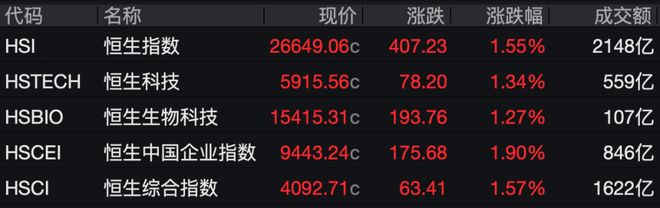
| 沪上阿姨 | 93.600 | 13.18% | | --- | --- | --- | | HK 2589 | | | | 蜜雪集团 | 420.000 | 8.98% | | HK 2097 | | | | 卫龙美味 | 11.860 | 8.11% | | HK 9985 | | | | 泡泡玛特 | 221.400 | 8.11% | | HK 9992 | | | 此外,石油化工、黄金行业涨幅居前;内房股震荡走高,绿城中国涨超7%,世茂集团涨超7%。 编辑丨钉钉 11月10日,香港恒生指数收涨1.55%,恒生科技指数涨1.34%。 | 代码 | 名称 | 现价 | 涨跌 | 涨跌幅 | 成交额 | | --- | --- | --- | --- | --- | --- | | HSI | 恒生指数 | 26649.06c | 407.23 | 1.55% | 2148亿 | | HSTECH | 恒生科技 | 5915.56c | 78.20 | 1.34% | 559亿 | | HSBIO | 恒生生物科技 | 15415.31c | 193.76 | 1.27% | 107亿 | | HSC ...
机构称当前消费情绪处于低点,或可聚焦具备长期成长逻辑的新消费主线
Mei Ri Jing Ji Xin Wen· 2025-11-10 06:25
Group 1 - The Hong Kong stock market's new consumption sector is showing strength, with Pop Mart leading gains of over 8%, followed by companies like Mixue Group, Gu Ming, and others [1] - The Hong Kong Consumption ETF (513230) is up 2.79% during midday trading, reflecting positive market sentiment [1] - The Ministry of Finance's report on the execution of China's fiscal policy for the first half of 2025 indicates continued efforts to boost consumption, including financial subsidies for personal consumption loans [1] Group 2 - Guojin Securities highlights that current low consumer sentiment presents an opportunity for long-term growth in the new consumption sector, focusing on four key areas: brand expansion into emerging markets, emotional value sectors, functional value fields driven by AI, and instant retail under channel transformation [1] - The report emphasizes the importance of AI products, particularly AI glasses, as a focus for major tech companies in Q4, suggesting a potential growth window in high-interaction segments [1] - The Hong Kong Consumption ETF tracks the CSI Hong Kong Stock Connect Consumption Theme Index, encompassing leading companies in both new consumption and internet e-commerce sectors, such as Pop Mart and Alibaba [2]