
高技术制造

Search documents
21评论丨经济新动能加速成长 向好态势仍需巩固
2 1 Shi Ji Jing Ji Bao Dao· 2025-09-17 22:42
Economic Performance - The national economy of China continues to show a stable and progressive development trend, with a focus on implementing proactive macro policies to enhance flexibility and predictability [1] - The industrial added value of large-scale enterprises increased by 5.2% year-on-year, with notable growth in equipment manufacturing and high-tech manufacturing, which grew by 8.1% and 9.3% respectively [1] New Growth Drivers - High-tech product output is experiencing rapid growth, with significant increases in 3D printing equipment and new energy vehicles, indicating the effectiveness of new growth drivers [2] - The production of industrial robots has also been growing steadily, with civilian drone production increasing by over 50% year-on-year from January to August [2] Consumption Trends - Retail sales of consumer goods in August showed double-digit growth in categories such as home appliances, furniture, and cultural office supplies, reflecting the effectiveness of consumption-boosting policies [2] - Service retail sales increased by 5.1% year-on-year, outpacing goods retail sales, with strong growth in tourism, transportation, and leisure services [3] Investment Dynamics - Investment in equipment and tools increased by 14.4% year-on-year from January to August, significantly contributing to fixed asset investment growth [3] - High-tech industry investment remains robust, with double-digit growth in sectors such as information services and aerospace equipment manufacturing [3] Policy Recommendations - To maintain stable economic growth, it is essential to accelerate the implementation of existing policies and consider new incremental policies [4] - Active fiscal policies should be intensified to provide immediate support for growth, with a focus on rapid expenditure of fiscal funds [4]
图说经济 | 如何展望未来经济走势?
中汽协会数据· 2025-09-17 03:22
Core Viewpoint - The article emphasizes that China's economy is expected to continue its stable and progressive development, supported by effective macro policies, deepening reforms, and a smooth domestic and international dual circulation system [3][19]. Group 1: Consumption Trends - Consumer potential is being released, with market sales steadily recovering due to various measures aimed at boosting consumption. Notably, sales of products related to trade-in programs are performing well, and new consumption models like live-streaming sales and instant retail are rapidly growing [3][7]. - Service consumption is expanding, with increased holiday travel and a resurgence in cultural and tourism consumption, as well as active markets for sports events and film performances [5]. - Upcoming holidays such as the Mid-Autumn Festival and National Day are expected to further stimulate consumer spending, enhancing both the volume and quality of consumption [7]. Group 2: Emerging Industry Dynamics - The high-tech manufacturing sector is showing positive growth, with a year-on-year increase of 9.5% in value added from January to August [8]. - The transition towards intelligent and green manufacturing is progressing steadily, with significant production increases in industrial robots (29.9%), civilian drones (53.7%), and new energy vehicles (31.4%) during the same period [10]. - The development potential in emerging fields is continuously being released, which will help expand economic growth space and facilitate the transition from old to new growth drivers [14]. Group 3: Market Vitality - Market vitality is gradually improving, driven by the deepening of the national unified market and the strengthening of domestic circulation. The integration of domestic and foreign trade is accelerating, promoting enhanced market activity [15]. - From January to July, profits of large-scale manufacturing enterprises increased by 4.8% year-on-year, indicating a positive trend in the manufacturing sector [16]. - The import and export volume of private enterprises grew by 7.4% from January to August, reflecting a robust performance in trade [17]. Group 4: Macroeconomic Policies - Macroeconomic policies are being effectively implemented across various regions and departments, contributing to stable economic development. The "two重" construction and "two新" policies have shown significant effects [20]. - The business activity expectation indices for manufacturing and service sectors in August were 53.7% and 57%, respectively, both showing an increase from the previous month, indicating positive business sentiment [18].


8月份多项指标显示 我国经济发展新动能进一步增强
Ren Min Wang· 2025-09-16 05:30
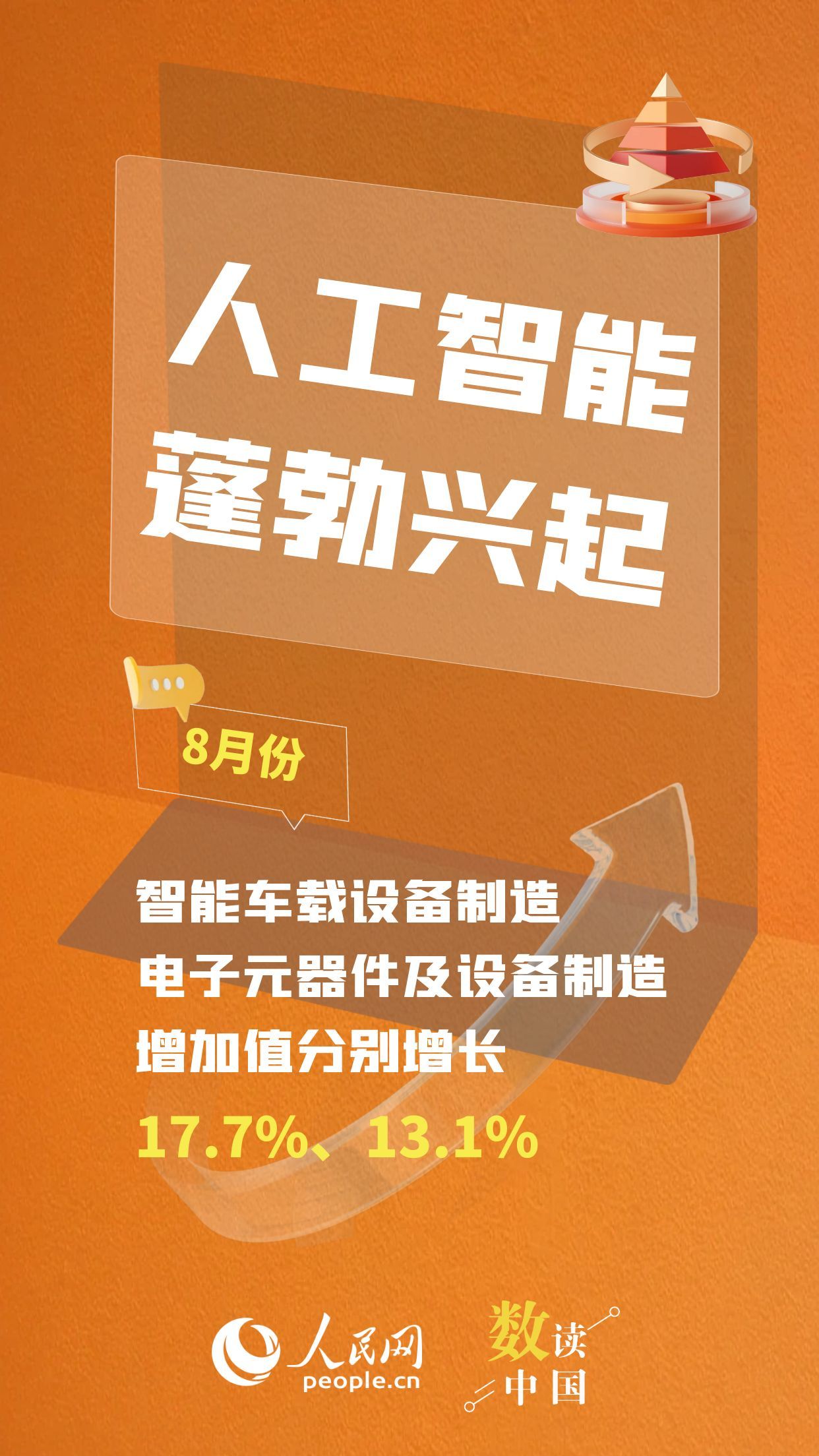
Group 1 - The core viewpoint of the article highlights the steady progress in China's economic structural adjustment, driven by continuous innovation policies, leading to enhanced new economic momentum [1]. Group 2 - In August, the value-added of the equipment manufacturing industry and high-tech manufacturing industry increased by 8.1% and 9.3% year-on-year, respectively [7]. - The production index of the information transmission, software, and information technology services industry grew by 12.1%, while the leasing and business services industry increased by 7.4% [9]. - The production of new energy vehicles and lithium-ion power batteries for vehicles saw significant growth, with increases of 22.7% and 44.2%, respectively [18]. Group 3 - From January to August, the import and export volume with countries involved in the Belt and Road Initiative increased by 5.4% [22].
从一系列关键数据看国民经济运行的“稳”与“进” 多领域发展“强信心”
Yang Shi Wang· 2025-09-15 04:50
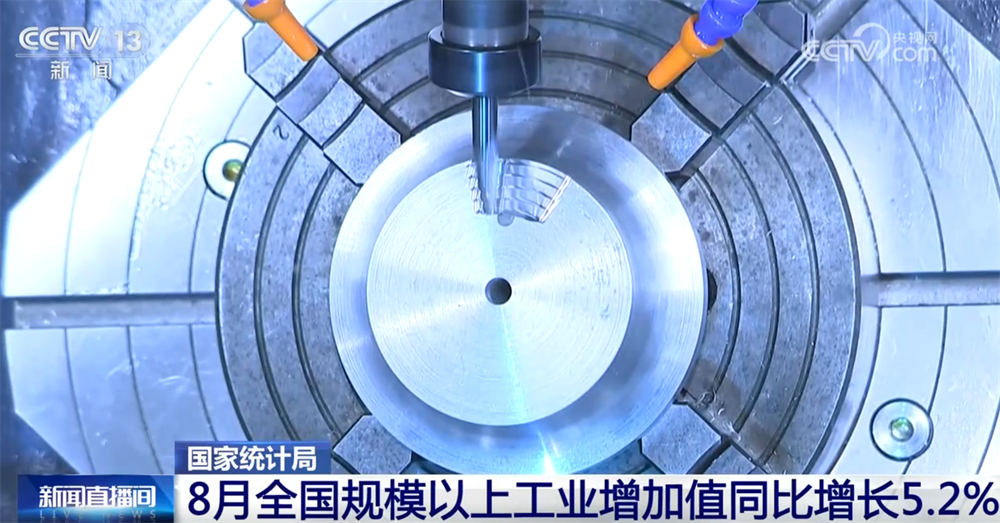
Economic Overview - In August, the national economy operated smoothly with macro policies working in coordination, and high-quality development achieved new results [1] - The industrial added value of large-scale industries increased by 5.2% year-on-year in August [1] Industrial Performance - The added value of the equipment manufacturing industry grew by 8.1%, and the high-tech manufacturing industry increased by 9.3%, both exceeding the overall industrial growth by 2.9 and 4.1 percentage points respectively [3] Service Sector Growth - The service production index rose by 5.6% year-on-year in August, with positive developments in modern service sectors such as information transmission, software, IT services, and finance [5] Consumer Market - The total retail sales of consumer goods reached 39,668 billion yuan in August, marking a year-on-year growth of 3.4% [7] - Retail sales in cultural, sports, leisure services, tourism consulting, and transportation services experienced rapid growth [7] Real Estate Market - The year-on-year decline in commodity housing sales prices across various city tiers continued to narrow in August, with first, second, and third-tier cities seeing reductions of 0.2, 0.4, and 0.5 percentage points respectively [8] Fixed Asset Investment - In the first eight months, fixed asset investment totaled 326,111 billion yuan, with a year-on-year growth of 0.5%, particularly in the manufacturing sector [9] - National railway fixed asset investment exceeded 504.1 billion yuan, reflecting a year-on-year increase of 5.6% [11] Agricultural Sector - Over 100 million tons of summer grain have been purchased, with the market expected to become more active as traditional consumption peaks approach [15] Service Trade Conference - The 2025 China International Service Trade Fair concluded with over 900 outcomes achieved across various sectors, including construction, IT, and finance [16][18] - The event featured 13 thematic forums and 81 specialized forums, attracting 11.6 million professional attendees, a 12% increase from the previous year [16]
“十五五”前瞻初探
2025-09-07 16:19
Summary of Key Points from Conference Call Records Industry Overview - The conference call discusses the "14th Five-Year Plan" (2021-2025) and its implications for China's economic development and various sectors, including technology, environment, and social welfare [1][3][11]. Core Insights and Arguments - **Economic Growth**: China's GDP is projected to reach 140 trillion yuan by 2025, with final consumption contributing significantly, averaging 56.2% to economic growth, an increase of 8.6 percentage points from the previous five-year period [1][5][11]. - **Income Levels**: Per capita national income is nearing the threshold for high-income countries, with a current per capita GDP of over $13,300, although it remains slightly below the world average of $13,700 [1][5]. - **Social Welfare**: The average disposable income has grown at an annual rate of 5.5%, with the middle-income group expanding to 400 million people, representing 30% of the population [6][7]. - **Environmental Progress**: The number of new energy vehicles has significantly increased, reaching 31.4 million by the end of 2024, marking a growth of over five times since the previous five-year period [8]. - **R&D Investment**: China ranks second globally in R&D spending, with an investment of 3.6 trillion yuan, accounting for 2.68% of GDP, and a 72.6% increase in integrated circuit production [9][10]. Challenges Identified - **Technological Barriers**: Key core technology issues remain unresolved, impacting innovation and competitiveness [4]. - **Consumer Mechanisms**: Long-term consumer spending mechanisms have yet to be established, affecting economic stability [4]. - **Environmental Concerns**: Pollution and carbon emissions remain high, necessitating further action to meet future targets [4]. Additional Important Content - **Capital Market Developments**: The Chinese capital market is seeing increased participation from long-term funds, with ETF assets reaching a historical high of over 4 trillion yuan and a notable rise in insurance capital entering the market [2][19][20]. - **State-Owned Enterprise Reforms**: Significant measures have been introduced to reform state-owned enterprises, focusing on optimizing structures and enhancing mixed ownership [16][17]. - **Unified Market Construction**: The construction of a unified national market is progressing, with an emphasis on improving the business environment and regulatory efficiency [15]. This summary encapsulates the key points discussed in the conference call, highlighting the current state and future outlook of China's economy, social welfare, environmental initiatives, and capital market developments.
8月制造业采购量指数回到扩张区间,建筑业投入品价格连续两个月走高 | 高频看宏观
Sou Hu Cai Jing· 2025-09-06 01:31
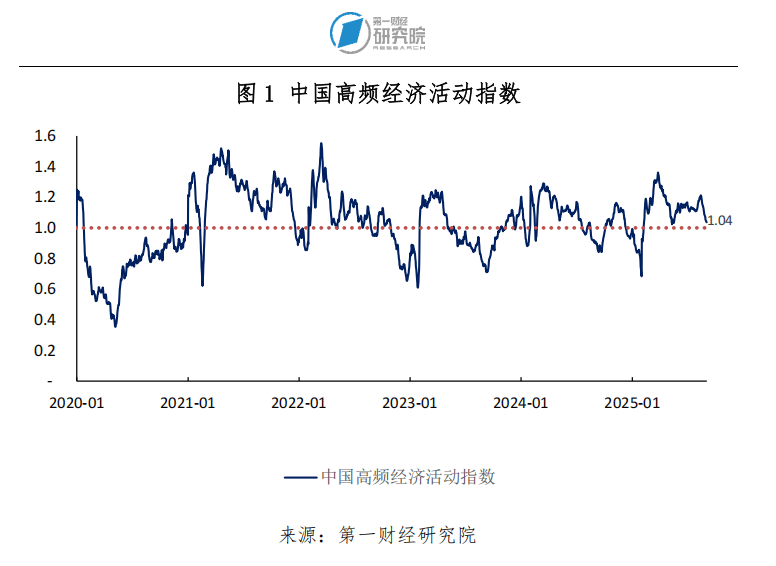
Economic Activity Index - The China High-Frequency Economic Activity Index (YHEI) as of September 2, 2025, is 1.04, a decrease of 0.04 from August 26 [1][3] - The coastal coal freight index fell by 0.11 to 0.87, and the 30-city commodity housing sales index dropped by 0.05 to 0.48, contributing to the decline in YHEI [1][3] Manufacturing Sector - The manufacturing PMI for August is 49.4%, up 0.1 percentage points from the previous month, indicating continued contraction for five consecutive months [23] - Large and small enterprises' PMIs increased by 0.5 and 0.2 percentage points to 50.8% and 46.6%, respectively, while the medium-sized enterprises' PMI decreased by 0.6 percentage points to 48.9% [23] - The consumer goods sector's PMI fell by 0.3 percentage points to 49.2%, while high-tech manufacturing and equipment manufacturing PMIs rose to 51.9% and 50.5%, respectively, indicating expansion [23] Demand and Supply Indicators - New orders and new export orders indices are at 49.5% and 47.2%, respectively, both in contraction territory [2][23] - The production index increased from 50.5% to 50.8%, indicating a rise in production activity [2][23] - The purchasing price index for major raw materials rose to 53.3%, while the ex-factory price index increased to 49.1% [2][23] Non-Manufacturing Sector - The non-manufacturing business activity index is at 50.3%, up 0.2 percentage points from the previous month [24] - The construction PMI fell to 49.1%, marking its first contraction since February, with the new orders index dropping to 40.6% [24] - The service sector PMI increased by 0.5 percentage points to 50.5%, indicating renewed expansion [24] Monetary Policy - The central bank's net fund injection was 92.9 billion yuan, with a reverse repurchase operation of 201.73 billion yuan and 19.244 billion yuan maturing [5][6] - The overnight interbank rate decreased by 2 basis points to 1.36%, while the seven-day repo rate fell by 7 basis points to 1.46% [10][11] Real Estate Market - New home transaction volumes in first and third-tier cities increased by 22.84% and 6.65%, respectively, while second-tier cities saw a decline of 11.03% [37] - Second-hand home transaction volumes decreased across all city tiers, with first, second, and third-tier cities down by 5.09%, 9.65%, and 20.21%, respectively [40]
1—7月山东规上工业增加值同比增长7.8%,高于全国1.5个百分点
Zhong Guo Fa Zhan Wang· 2025-09-05 09:09
Core Insights - Shandong Province's industrial value-added output increased by 7.8% year-on-year from January to July, surpassing the national average by 1.5 percentage points, with 35 out of 41 industrial sectors showing growth, resulting in a growth rate of 85.4% [1] - The equipment manufacturing sector saw a significant increase of 12.5%, with major industries such as electronics, automotive, and electrical machinery growing by 19.7%, 16.1%, and 12.1% respectively [1] - High-tech manufacturing also demonstrated robust growth, with a year-on-year increase of 10.5%, indicating a strengthening of new growth drivers [1] Policy Measures - The Shandong Provincial Industrial and Information Technology Department has implemented 18 supportive measures for enterprises and a 2025 action plan for industrial economy, focusing on resolving issues, providing services, and promoting development [2] - The third batch of policy measures includes targeted support for struggling industrial enterprises, promoting green transformation, enhancing AI applications, and expanding financial service channels [2] - A work plan for stabilizing industrial growth has been developed, emphasizing three key lists: a "billion-yuan incremental project list," a "billion-yuan production enterprise list," and a "standardization cultivation list" for small and micro enterprises [2] Industry Focus - The strategy to curb decline focuses on four major industries: refining, steel, electrolytic aluminum, and coking, with tailored strategies for each to enhance production efficiency and support transformation projects [3] - Additionally, six sectors experiencing a decline in value-added output, including paper, furniture, and cultural products, will receive intensified monitoring and support to facilitate recovery [3] - The approach to address external trade pressures includes initiatives to expand international markets and stabilize supply chains, alongside efforts to enhance enterprise expectations through improved service platforms [3]
8月份中国大宗商品价格指数公布 连续4个月环比上升
Yang Shi Xin Wen· 2025-09-05 03:26
Core Viewpoint - The China Logistics and Purchasing Federation reported that the commodity price index for August shows a continuous month-on-month increase for four consecutive months, indicating a stable growth trend in the commodity market and enhanced internal economic growth momentum [1][2]. Group 1: Commodity Price Index - The commodity price index for August is 111.7 points, reflecting a month-on-month increase of 0.3% [1]. - Among the 50 monitored commodities, 25 saw price increases in August, with notable rises in coke (20.1%), neodymium oxide (19.1%), and lithium carbonate (16.6%) [1]. - The black metal price index rose by 2.2%, while the non-ferrous metal price index increased by 0.2% [1]. Group 2: Sector Performance - The equipment manufacturing and high-tech manufacturing sectors continue to experience rapid growth, contributing to price recoveries in certain industries [1]. - The energy price index rebounded with a month-on-month increase of 2%, driven by peak summer energy demand and anti-involution policies [1]. - Conversely, the agricultural product price index decreased by 0.8%, and the chemical price index continued to decline by 1% [1]. Group 3: Market Outlook - According to industry experts, the ongoing effects of policies aimed at expanding domestic demand and countering involution are gradually enhancing corporate confidence and accelerating the transition of new and old growth drivers [2]. - The market demand is expected to continue expanding with the arrival of the traditional production peak in September and October, suggesting a stable and progressive development trend for the commodity market [2].
【广发宏观王丹】8月中观面的四个景气线索
郭磊宏观茶座· 2025-09-01 11:42
Core Viewpoint - The manufacturing PMI for August slightly increased by 0.1 points to 49.4, with 7 out of 15 sub-sectors remaining in the expansion zone, consistent with previous values [1][5][6]. Group 1: Industry Performance - Industries showing improvement in August primarily include high-tech manufacturing (computers, pharmaceuticals), equipment manufacturing (specialized, automotive), and some raw material sectors (non-ferrous, non-metallic, petrochemical, chemical), along with the textile and apparel industry. This improvement is driven by macroeconomic factors such as policy benefits, strong export orders, and price recovery due to "anti-involution" [1][9][10]. - The sectors with significant declines in August include general equipment, electrical machinery, metals, chemical fibers and plastics, and food. This decline is attributed to high capital usage for "equipment renewal" in the first half of the year, a decrease in export orders, and self-imposed constraints on capital expenditure by companies [2][13]. - The absolute prosperity index shows that specialized and general equipment sectors are relatively leading, with specialized equipment reaching over 95% in the past four years, driven by "dual heavy" projects and "AI+" initiatives [2][14]. Group 2: Emerging Industries - In emerging industries, both new energy and energy-saving environmental protection sectors are in the expansion zone, likely due to accelerated fiscal funding and project bidding since the end of the second quarter. The sales prices in these sectors increased by 4.6% and 2.6% respectively [3][17][18]. - The construction industry saw a notable decline in prosperity, dropping 1.5 points to 49.1, with infrastructure construction experiencing a downturn but new orders improving, indicating a potential acceleration in project funding and signing [3][19][21]. Group 3: Service Sector Performance - The service sector PMI rose by 0.5 points to 50.5, reaching a new high for the year. Key drivers include increased activity in travel-related sectors during the summer, high capital market service activity, and continued strength in information technology services [4][22][23]. - The service sector's performance indicates a recovery in consumer spending related to summer travel and robust capital market activities, with various service industries showing improvements in their respective PMIs [4][24]. Group 4: Summary Insights - The short-term indicators of prosperity in August highlight four key areas: raw materials related to "anti-involution," large projects and "AI+" related industries, summer travel-related service consumption, and capital market services. These indicators exhibit structural characteristics, while the overall economic momentum is still adjusting [4][25].

深圳上半年高技术制造业贷款余额超万亿 同比增6.73%
Di Yi Cai Jing· 2025-08-21 15:12
Group 1 - The overall performance of the banking and insurance sectors in Shenzhen is stable, with notable highlights such as a more than 5% year-on-year increase in loans to small and micro foreign trade enterprises and high-tech manufacturing loans exceeding 1 trillion yuan [1][2] - As of June 30, the total assets of the banking sector under the Shenzhen Financial Regulatory Bureau reached 13.98 trillion yuan, a year-on-year increase of 3.64%, while total liabilities were 13.61 trillion yuan, up 3.70% [1] - The insurance sector achieved original premium income of 121.31 billion yuan in the first half of the year, representing a year-on-year growth of 7.96%, the highest growth rate among first-tier cities [1] Group 2 - Shenzhen is recognized as a "cross-border e-commerce capital," with financial support playing a crucial role in achieving high-quality growth. The Shenzhen Financial Regulatory Bureau has introduced measures to promote foreign trade development, including innovative financial products for cross-border e-commerce [2] - As of June 30, loans to foreign trade enterprises in Shenzhen amounted to 1.12 trillion yuan, with loans to small and micro foreign trade enterprises reaching 124.53 billion yuan, a year-on-year increase of 5.43% [2] - The manufacturing sector in Shenzhen saw a loan balance of 1.61 trillion yuan, with high-tech manufacturing loans at 1.03 trillion yuan, reflecting a year-on-year growth of 6.73% [3] Group 3 - Shenzhen is enhancing financial support for key areas, including real estate financing, with 403 projects approved under a "white list" mechanism, amounting to 549.30 billion yuan [3] - The city is also advancing pension finance innovation, with 5.57 million personal pension accounts opened and total contributions of 7.11 billion yuan as of June 30 [3] - Four pilot pension companies in Shenzhen have opened 116,200 commercial pension accounts, with sales amounting to 18.34 billion yuan [3]