信息服务

Search documents
RELX(RELX) - 2025 Q2 - Earnings Call Transcript
2025-07-24 08:30
Financial Data and Key Metrics Changes - Underlying revenue growth was 7% and underlying adjusted operating profit growth was 9% in the first half of 2025 [1][11] - Adjusted earnings per share grew by 10% at constant currency, with a 7% increase in the GBP interim dividend [2][12] - The adjusted operating margin improved to 34.8% [11][17] - Cash conversion was strong at 100%, with leverage at 2.2 times [12][20] Business Line Data and Key Metrics Changes - In Risk, underlying revenue growth was 8%, with adjusted operating profit growth of 9% driven by AI-enabled analytics [3][4] - SCM, excluding print, saw 5% underlying revenue growth and 7% adjusted operating profit growth [4][5] - Legal experienced a 9% growth in underlying revenue, with adjusted operating profit growth of 11% [5][6] - Exhibitions delivered 8% underlying revenue growth and 9% adjusted operating profit growth, with margins significantly above pre-pandemic levels [7][8] Market Data and Key Metrics Changes - Total group revenue growth at constant currency was 4%, impacted by portfolio effects and print exposure reduction [14][15] - In Sterling, total revenue growth was 2% due to the strength of Sterling against the U.S. Dollar [14] Company Strategy and Development Direction - The strategic focus remains on the transition from print to electronic formats, with print revenue declining from 64% to 4% over 25 years [8] - The company aims to sustain strong long-term growth in Risk, STM, Legal, and Exhibitions, with a focus on higher growth analytics and decision tools [9][12] - Continuous process innovation is emphasized to manage cost growth below revenue growth, resulting in a higher growth profile with improving returns [9] Management Comments on Operating Environment and Future Outlook - Management expressed confidence in continued strong underlying revenue growth and adjusted operating profit growth for the full year [21] - Positive momentum is noted across the group, with expectations for strong growth in adjusted earnings per share on a constant currency basis [21] Other Important Information - The company completed three acquisitions totaling £262 million in the first half and deployed £1 billion for share buybacks [12][19] - The focus on print-related activities has been reduced, with expectations for profit from print to decline in the high single digits annually [15][16] Q&A Session Summary Question: Impact of NIH's open access policy on revenues - Management noted that while they are aware of the NIH's policy change, it is not expected to significantly impact the overall revenue trajectory, which remains strong [23][25] Question: Rationale for partnership with Harvey - The partnership aims to enhance customer value through collaboration on legal tools, focusing on seamless integration with existing services [26][27] Question: Connection between cash conversion and print segmentation - Management clarified that the strong cash conversion was due to timing of receipts and payments, not directly related to changes in print segmentation [29] Question: Future growth in Legal and STM - Management indicated that while Legal has shown positive momentum, it is unlikely to reach a 10% growth rate this year, with a focus on long-term growth objectives [42][48] Question: Exhibitions margin guidance - Management expects full-year margins to be lower than the first half due to seasonality but still anticipates decent improvement [39][57] Question: Changes in demand from U.S. universities - Management stated that there have been no significant changes in demand patterns from U.S. universities, maintaining a consistent outlook [68][69]

从“稳”到“进”再向“新” 四川亮出半年经济答卷
Zhong Guo Chan Ye Jing Ji Xin Xi Wang· 2025-07-22 22:19
Economic Overview - In the first half of 2025, Sichuan's GDP reached 31,918.2 billion yuan, with a year-on-year growth of 5.6% [1] - Major economic indicators showed a continuous recovery, with the growth rate accelerating compared to the first quarter [2][3] Key Economic Characteristics - Four key characteristics define Sichuan's economic foundation: steady growth, strong support, accumulated momentum, and released vitality [2] - The first industry, industrial output, and service sector all experienced accelerated growth compared to the first quarter [2] - High-tech manufacturing investment increased by 10.2%, and its output value grew by 13.1%, leading the industrial sector [2] Consumer Trends - The retail sales of consumer goods reached 1.42 trillion yuan, with a year-on-year growth of 5.6% [4] - Consumption is shifting from "can buy" to "willing to buy and dare to buy," with significant growth in various categories such as home appliances and communication devices [5][6] - The retail sales of household appliances and audio-visual equipment grew by 20.2%, while communication devices saw a 50.8% increase [5] Industrial Dynamics - Sichuan is focusing on developing emerging industries, with high-tech manufacturing and green industries becoming new growth engines [7][8] - The output value of the high-tech manufacturing sector increased by 13.1%, accounting for over 15% of the total industrial output [8] - The clean energy sector is rapidly growing, with the power battery industry increasing by 36.5% and the new energy vehicle industry by 11.0% [8]
花旗集团余向荣:下半年中国出口有望继续超预期
2 1 Shi Ji Jing Ji Bao Dao· 2025-07-22 07:22
Group 1 - Citi Group projects that China's GDP growth target for the year is achievable, with a revised forecast of 5% growth for 2023 [1] - The bank emphasizes the need for nominal growth recovery in the second half of the year while maintaining actual growth momentum [1] - Export performance is identified as the biggest surprise factor for growth this year, with expectations of moderate growth despite a slowdown in the second half due to higher base effects [1][2] Group 2 - Three main factors are driving the continued outperformance of exports: the peak of US tariff policies, overestimation of "export grabbing" effects, and the resilience of China's export sector [2][3] - The potential reduction of tariffs on fentanyl and other goods following US-China negotiations could further benefit Chinese exports [2] - The competitiveness of Chinese products remains strong, with a shift towards intermediate goods and capital goods in export composition [3] Group 3 - The "Artificial Intelligence +" sector is expected to generate an additional investment of approximately 500 billion yuan, contributing about 0.4 percentage points to GDP growth [4] - New consumption trends, particularly in service sectors, are emerging, with inbound tourism expected to contribute 0.2 percentage points to GDP growth [4] - Investment in new sectors is thriving, despite uncertainties in traditional sectors like real estate and exports [4] Group 4 - The bank anticipates that domestic demand growth will face marginal weakening, leading to accelerated implementation of incremental policies [5] - Fiscal policies will focus on enhancing existing measures rather than increasing budget or bond issuance, with a projected scale of 100 billion yuan for childcare subsidies [6] - Monetary policy is expected to maintain a "light total, heavy structure" approach, with anticipated rate cuts and liquidity support for key projects [6] Group 5 - The focus on "supply-side structural reform" and measures to combat low-price competition are highlighted as essential for improving supply-demand dynamics [7] - Proposed measures include stricter regulations on production standards and financial oversight to ensure orderly market conditions [7] - Successful implementation of these reforms, combined with demand-side stimulus, could lead to a moderate rebound in Producer Price Index (PPI) data [7]

史上引用量第一的论文,是哪篇?
Hu Xiu· 2025-07-20 11:55
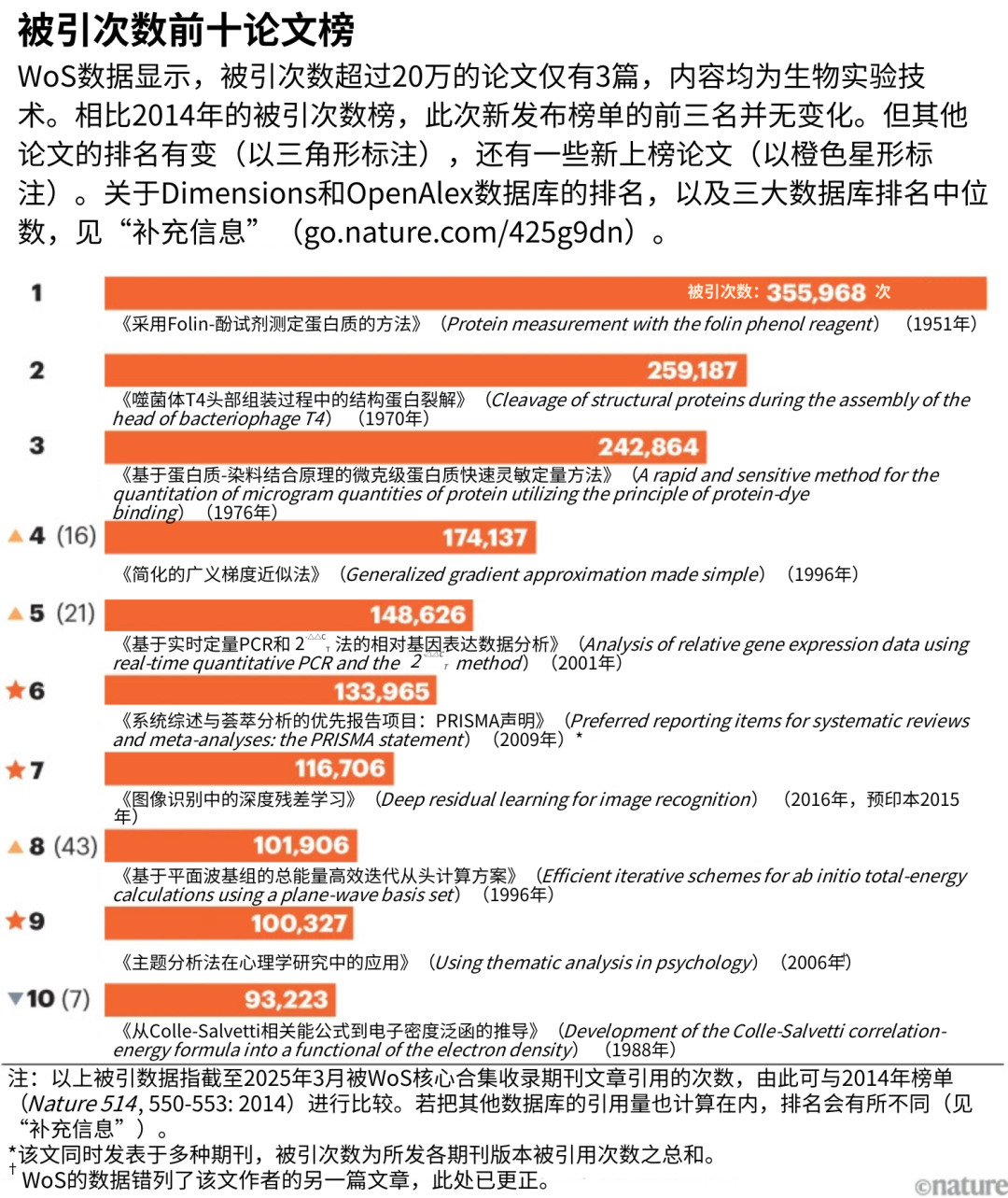
Core Insights - The most cited research paper of all time is a 1951 paper published in the Journal of Biological Chemistry, detailing a method for determining protein content in solutions, with over 350,000 citations as of the latest statistics [1][4][10] - The owner of the Web of Science (WoS) database, Clarivate, reported that a significant portion of highly cited papers are related to biological experimental techniques, with the threshold for entering the top 100 citations rising from approximately 12,000 in 2014 to over 30,000 now [2][7] - An analysis of other databases, Dimensions and OpenAlex, shows slight variations in rankings, but the 1951 paper remains at the top across all platforms [3][4] Citation Trends - There are only three papers with over 200,000 citations, all related to biological experimental techniques, and the top three papers in the new ranking remain unchanged from 2014 [7] - Sixteen papers published in the 21st century have entered the historical top 50, indicating a significant rise in citations for software descriptions and computer-aided research results [8] - The increase in annual publication rates and the rise of online research and social media exposure are contributing factors to the rapid citation growth of newer papers [9] Future Projections - If the current citation growth rates continue, certain recent papers, such as those on AI and density functional theory (DFT), may surpass the 1951 paper by 2030 [10]

精准施策扩内需:释放服务消费潜能,扩大服务业有效投资
Zhong Guo Xin Wen Wang· 2025-07-20 03:02
Group 1 - Domestic demand is the main driver of economic growth in the first half of the year, contributing 68.8% to economic growth, with a significant increase to 77% in the second quarter [1][3] - Final consumption expenditure contributed 52% to economic growth, with retail sales of home appliances and cultural office supplies increasing over 25% year-on-year [1][2] - The service consumption growth rate was 4.9% year-on-year, with strong demand in cultural entertainment and tourism sectors [1][3] Group 2 - Capital formation contributed 16.8% to economic growth, with equipment investment increasing by 17.3% and infrastructure investment by 4.6% [2][4] - Investment in high-tech sectors such as aerospace and computer manufacturing grew by 26.3% and 21.5% respectively, indicating a shift towards new economic drivers [2][4] - High-tech service industry investment increased by 8.6%, with information services growing by 37.4% [2][4] Group 3 - The domestic market's size and potential for consumption and investment are highlighted as unique advantages for the economy, with a population of over 1.4 billion and a per capita GDP exceeding $13,000 [3][4] - There is significant potential for growth in service consumption and investment, with a focus on improving income and leisure time for consumers [4][5] - Strategies to enhance service quality and support innovation in consumption scenarios are emphasized to stimulate further growth [4][5]
半年报出炉,“消费第三城”再承压
Mei Ri Jing Ji Xin Wen· 2025-07-17 23:03
Economic Overview - In the first half of the year, Beijing's GDP reached 25,029.2 billion yuan, showing a year-on-year growth of 5.5% at constant prices [1] - The total retail sales of consumer goods in Beijing amounted to 6,734.2 billion yuan, reflecting a year-on-year decline of 3.8% [1] Sector Performance - Retail sales in the fashion and entertainment categories, such as gold and jewelry, sports and entertainment products, and cosmetics, grew by 36.1%, 9.3%, and 7.6% respectively [1] - Green and smart consumption categories, including home appliances and cultural office supplies, saw retail sales increase by 4.6% and 3.1% respectively due to the old-for-new consumption policy [1] - Basic living goods, such as grain and oil, and daily necessities, experienced year-on-year growth of 13.9% and 2.7% respectively [1] Consumption Trends - The decline in retail sales is attributed to insufficient effective demand, intense market competition, and changes in business models of some enterprises [2] - The automotive sector, particularly the fuel vehicle market, has seen a decrease in demand, leading to a decline in retail sales of automotive products and related petroleum products [2] Future Outlook - Beijing aims for an average annual growth of around 5% in total market consumption by 2030, with plans to establish 2-3 new consumption landmarks worth over 100 billion yuan [2] - The total market consumption, which includes both goods and services, is increasingly recognized as a more comprehensive measure of consumption vitality compared to traditional retail sales figures [3] - Service consumption in Beijing grew by 4.7% year-on-year in the first half of the year, driven by a strong demand for experiential consumption [3] - The overall growth rate of total market consumption in Beijing was modest at 0.9% year-on-year, prompting the release of 24 measures to stimulate consumption [3]
GDP增长5.5% 上半年北京经济稳中向好
Bei Jing Shang Bao· 2025-07-17 16:33
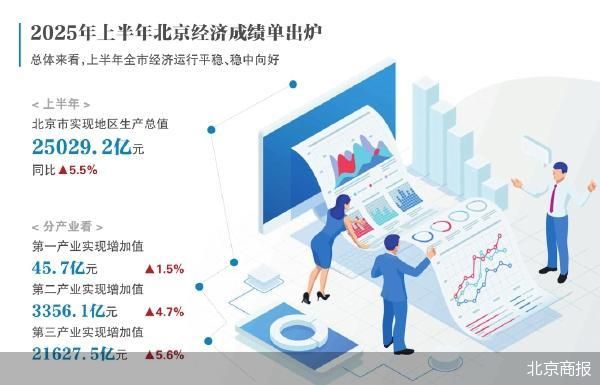
Economic Overview - Beijing's GDP for the first half of the year reached 25,029.2 billion yuan, with a year-on-year growth of 5.5% at constant prices [1][3] - The economic performance is described as stable and improving, with high-quality development achieving new results [1][3] Sector Contributions - Nearly 90% of the growth in Beijing's economy came from three sectors: information services, finance, and industry [3] - The industrial sector showed accelerated growth, particularly in electronics and automotive industries, with significant contributions from high-end manufacturing [3][5] - The first sector's value added was 45.7 billion yuan (1.5% growth), the second sector's was 3,356.1 billion yuan (4.7% growth), and the third sector's was 21,627.5 billion yuan (5.6% growth) [3] Investment and Consumption - Fixed asset investment in Beijing grew by 14.1% year-on-year, maintaining a double-digit growth rate, with manufacturing investment increasing by 8.9% [3] - Service consumption accounted for nearly 60% of residents' consumption expenditure, with new consumption trends emerging [4] Emerging Industries - Strategic emerging industries and high-tech manufacturing in Beijing saw value added growth of 16.8% and 9.9%, respectively, with artificial intelligence and new energy vehicles being standout sectors [5][6] - New energy vehicle production exceeded 260,000 units, marking a 1.5-fold increase, and accounted for 36.7% of the city's total automotive production [6] Real Estate and Tourism - The sales area of newly built commercial housing increased by 5.4%, with pure commercial residential sales rising by 33.8% [6] - The number of inbound tourists reached 2.467 million, a year-on-year increase of 48.8% [6] Future Outlook - The economic growth of 5.5% in the first half is 0.2 percentage points higher than the national average, laying a solid foundation for the second half of the year [7] - Policies aimed at boosting consumption, supporting innovation, and assisting enterprises are expected to further stimulate economic vitality [7]
处罚与监管函不断,五年亏近15亿,“跨界王”皇氏集团何时安守本分?
Sou Hu Cai Jing· 2025-07-16 11:23
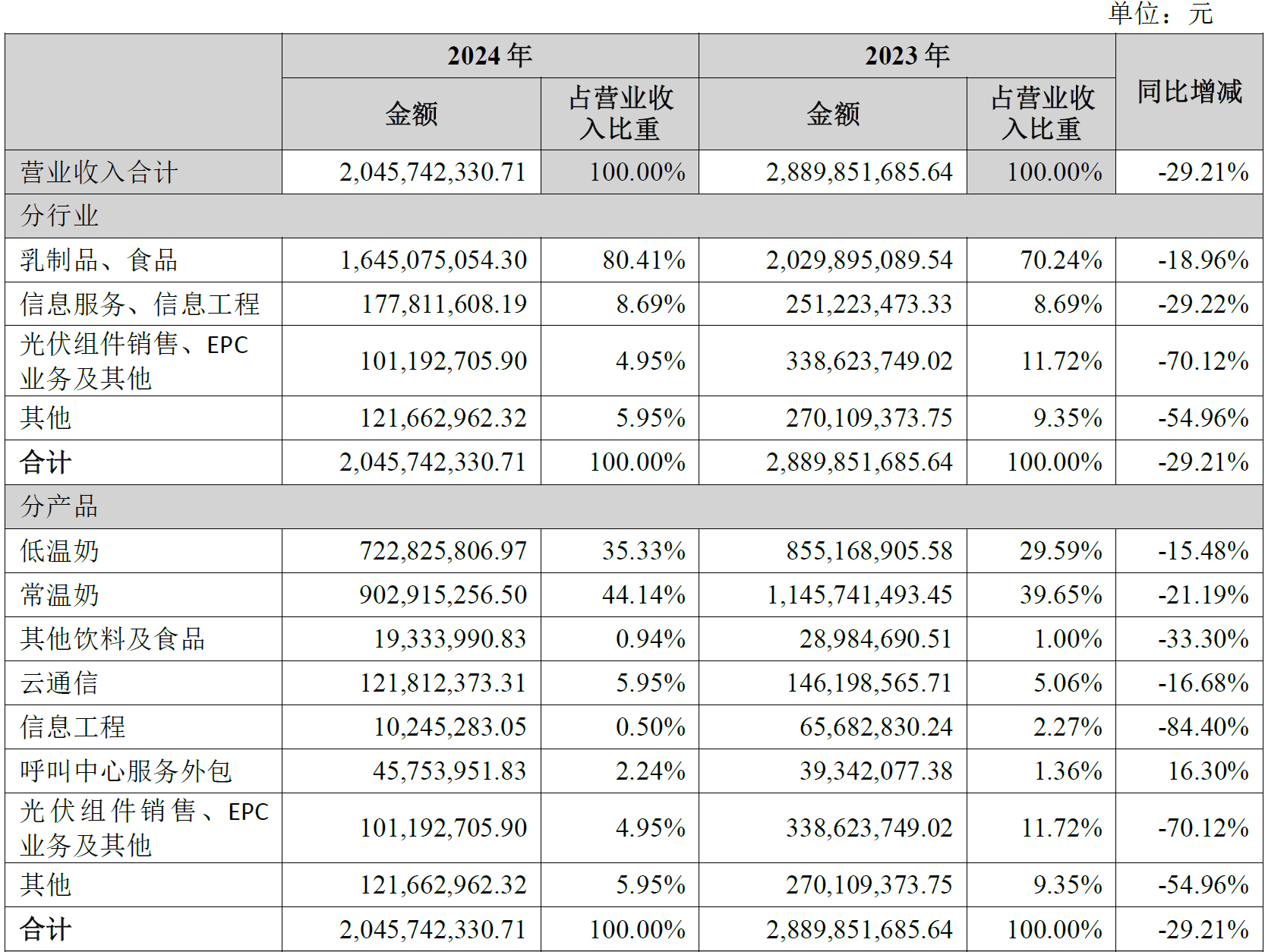
Core Viewpoint - The company, Huangshi Group, has been penalized by the China Securities Regulatory Commission (CSRC) for serious violations of information disclosure regulations, particularly for failing to disclose a significant supplementary agreement in its annual reports from 2019 to 2022 [1][2][3]. Group 1: Regulatory Issues - The core reason for the penalty is the omission of a crucial supplementary agreement signed in November 2019, which included obligations for the company to ensure a minimum investment return and a potential buyback of fund shares [2]. - The CSRC has issued a warning and imposed fines totaling 4 million yuan on the company, along with individual penalties on key executives for their roles in the non-disclosure [3]. - The company has faced multiple regulatory warnings in recent years for various information disclosure violations, indicating a significant lack of internal control mechanisms [4][5]. Group 2: Financial Performance - In 2024, the company's total revenue was 2.05 billion yuan, a decline of 29.21% year-on-year, with all major business segments experiencing significant revenue drops [8]. - The company reported a net loss of 681 million yuan in 2024, marking a shift from profitability in the previous year, with cumulative losses of 1.475 billion yuan over the past five years [8][9]. - The company's debt ratio has risen to 77%, an increase of 10.65 percentage points from the previous year, indicating deteriorating financial health [9]. Group 3: Business Strategy and Structure - Huangshi Group has diversified into various sectors, including cloud communication and photovoltaic components, but this strategy has not yielded positive results, leading to a mismatch between ambition and capability [7]. - The company has over 70 subsidiaries, reflecting its ambition to expand, yet this complexity has contributed to operational inefficiencies [7]. - The company's historical attempts at diversification, particularly into the film and television industry, have resulted in significant financial losses and impairments, undermining its core dairy business [10][11]. Group 4: Market Position - The company's stock price has fallen to 3.7 yuan, with a total market capitalization of 3 billion yuan, which is lower than its initial public offering level, indicating a significant decline in market confidence [12]. - The company's previous ambitions to become a "100 billion dairy enterprise" by 2028 now appear unrealistic given its current financial and operational challenges [8][12].

国安股份: 2025年半年度业绩预告
Zheng Quan Zhi Xing· 2025-07-11 10:11
Performance Forecast - The company expects a net loss of between 25.9 million yuan and 36.7 million yuan for the current reporting period, compared to a profit of 157.1 million yuan in the same period last year [1] - The loss attributable to shareholders is projected to be between 0.0066 yuan per share and 0.0094 yuan per share, while the previous year's earnings per share were 0.0401 yuan [1] Reasons for Performance Change - The primary reason for the expected loss is intensified market competition and diversified user choices in the cable television sector, leading to an equity method loss of 51 million yuan from joint ventures [1]

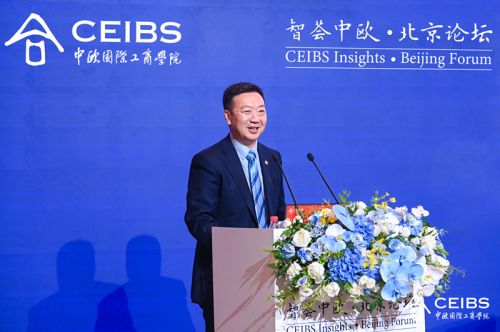
第五届智荟中欧·北京论坛|全球经贸格局重构下的企业策略解读
Cai Jing Wang· 2025-07-11 08:25
Core Insights - The global economic and trade landscape is undergoing significant structural adjustments, with challenges arising from geopolitical tensions, trade barriers, financial volatility, and technological changes [1][3] - Companies need to develop resilience, innovate, and create safer global supply chains while leveraging regional cooperation and exploring emerging markets to secure value and influence in uncertain international markets [3][4] Group 1: Globalization Challenges and Strategies - The future of globalization is characterized by resilience, integration, innovation, and rules, necessitating companies to move beyond traditional thinking [3] - The systemic decline in investment returns globally, particularly in the U.S., raises questions about the sustainability of growth policies and their impact on efficiency [4][6] - The U.S. trade deficit is exacerbated by debt reliance, and tariffs may not effectively address trade imbalances, highlighting the importance of adapting supply chains [6] Group 2: Digital Currency and Regulatory Insights - The rise of stablecoins is reshaping the monetary landscape, with regulatory frameworks emerging to ensure their stability and utility as payment tools [7][8] - China is encouraged to accelerate the development of its digital currency to compete with stablecoins, emphasizing the need for effective legislation and international coordination [8] Group 3: Localization and Global Operations - Companies like GE Aviation emphasize the importance of localization in their success in China, with significant investments in local talent and infrastructure [11] - Ganfeng Lithium's global expansion reflects the necessity for Chinese firms to respect local cultures and regulations while leveraging their competitive advantages [11] - Lenovo's strategy combines Chinese manufacturing strengths with digital management to navigate global market uncertainties [12] Group 4: Internationalization and Corporate Strategies - China National Petroleum Corporation's internationalization strategy involves a three-phase approach, focusing on global standardization while maintaining local responsiveness [13] - The need for Chinese enterprises to innovate beyond mere product exports to achieve sustainable growth is highlighted, with examples of successful international strategies [17] Group 5: Economic Outlook and Future Growth - Despite challenges, global trade has maintained a stable share of GDP, with China showing strong performance in exports, although structural issues remain [16] - The future of China's economy relies on both macroeconomic policy adjustments and the ability of enterprises to find differentiated paths in the new phase of globalization [17]