有色金属冶炼

Search documents
五矿期货早报有色金属日报-20260119
Wu Kuang Qi Huo· 2026-01-19 01:02
Group 1: Investment Ratings - There is no information about the industry investment rating in the report. Group 2: Core Views - The copper market is affected by factors such as the weakening expectation of Trump's tariff on key minerals, the plan of the US to impose tariffs on 8 European countries, and the loose liquidity expectation in the US financial market. The short - term copper price is expected to fluctuate to balance supply and demand [3]. - The aluminum price has fallen due to the continuous accumulation of domestic aluminum ingot inventory and the cooling of the precious metal and copper markets. However, the high spot premium in the US and the low LME global aluminum inventory limit the downward space of the aluminum price. The short - term aluminum price may be relatively firm [5][6]. - The casting aluminum alloy has strong price support due to the strong cost and continuous supply - side disturbances, but the demand is relatively average, and the short - term price is expected to fluctuate and consolidate [9]. - For lead, the supply of lead ingots is increasing marginally, the downstream battery enterprises' operating rate is improving marginally, and the social inventory is accumulating. The short - term price needs to observe the trends of leading varieties in the sector and the Shanghai - London ratio [13]. - Zinc has a large room for price compensation compared with copper and aluminum. Although the zinc price has given back some gains, the non - ferrous sector is still regarded as bullish in the double - wide cycle, and the subsequent trends need to be observed [15]. - The tin market has weak demand and an expected improvement in supply. The short - term price is expected to fluctuate with market risk appetite, and it is recommended to wait and see [17]. - Nickel has a large surplus pressure, and the short - term price is expected to fluctuate widely. It is recommended to wait and see [19]. - The lithium carbonate price has fluctuated greatly. The current price has certain emotional premiums, and it is recommended to wait and see or try with a light position [23]. - For alumina, the ore price is expected to decline, the over - capacity pattern of the smelting end is difficult to change in the short term, and it is recommended to wait and see and consider short - selling opportunities [26][27]. - Stainless steel is expected to maintain a relatively strong trend in the short term, with prices in a high - level volatile pattern due to supply shortages, falling inventories, and significant cost support [29]. Group 3: Summary by Related Catalogs Copper Market Information - On Friday, the domestic equity market adjusted, the precious metal price and copper price declined. LME copper 3M closed down 2.48% to $12,822/ton, and the Shanghai copper main contract closed at 100,280 yuan/ton. LME copper inventory increased by 2,450 to 143,575 tons, and the domestic SHFE weekly inventory increased by 33,000 to 214,000 tons [2]. Strategy Views - The short - term copper price is expected to fluctuate to balance supply and demand. The reference range for the Shanghai copper main contract is 98,000 - 102,000 yuan/ton, and for LME copper 3M is $12,500 - $13,000/ton [3]. Aluminum Market Information - On Friday, the aluminum price continued to fall. LME aluminum closed down 1.29% to $3,130/ton, and the Shanghai aluminum main contract closed at 23,945 yuan/ton. The domestic aluminum ingot three - place inventory decreased, and the aluminum rod inventory increased slightly [4]. Strategy Views - The short - term aluminum price may be relatively firm. The reference range for the Shanghai aluminum main contract is 23,800 - 24,200 yuan/ton, and for LME aluminum 3M is $3,090 - $3,160/ton [6]. Casting Aluminum Alloy Market Information - On Friday, the casting aluminum alloy price continued to fall. The main AD2603 contract closed down 1.81% to 22,735 yuan/ton. The weighted contract positions decreased, and the trading volume remained at a relatively high level [8]. Strategy Views - The short - term price is expected to fluctuate and consolidate due to strong cost support and average demand [9]. Lead Market Information - On Friday, the Shanghai lead index closed down 0.37% to 17,473 yuan/ton. The LME lead 3S fell to $2,075/ton. The social inventory of lead ingots increased [11]. Strategy Views - The supply of lead ingots is increasing marginally, and the short - term price needs to observe the trends of leading varieties in the sector and the Shanghai - London ratio [13]. Zinc Market Information - On Friday, the Shanghai zinc index closed down 1.38% to 24,746 yuan/ton. The LME zinc 3S fell to $3,264/ton. The zinc ingot social inventory decreased slightly [14]. Strategy Views - Zinc has a large room for price compensation compared with copper and aluminum. The short - term price needs to observe the trends of leading varieties in the sector and the Shanghai - London ratio [15]. Tin Market Information - On Friday, the tin price dropped significantly. The Shanghai tin main contract closed at 405,240 yuan/ton, down 6.38%. The supply is expected to improve, and the demand is mainly rigid [16]. Strategy Views - The short - term price is expected to fluctuate with market risk appetite, and it is recommended to wait and see. The reference range for the domestic main contract is 360,000 - 430,000 yuan/ton, and for overseas LME tin is $45,000 - $53,000/ton [17]. Nickel Market Information - On January 16th, the nickel price dropped significantly. The Shanghai nickel main contract closed at 139,890 yuan/ton, down 1.03%. The spot premium decreased [18]. Strategy Views - The short - term price is expected to fluctuate widely, and it is recommended to wait and see. The reference range for the Shanghai nickel price is 130,000 - 160,000 yuan/ton, and for LME nickel 3M is $16,000 - $19,000/ton [19]. Lithium Carbonate Market Information - On Friday, the Five - Mineral Steel Union lithium carbonate spot index (MMLC) decreased. The prices of battery - grade and industrial - grade lithium carbonate declined [22]. Strategy Views - The current price has certain emotional premiums, and it is recommended to wait and see or try with a light position. The reference range for the Guangzhou Futures Exchange lithium carbonate main contract is 139,500 - 149,000 yuan/ton [23]. Alumina Market Information - On January 16th, the alumina index fell 1.26% to 2,745 yuan/ton. The futures inventory increased, and the ore price decreased [25]. Strategy Views - The ore price is expected to decline, and the over - capacity pattern of the smelting end is difficult to change in the short term. It is recommended to wait and see and consider short - selling opportunities. The reference range for the domestic main contract AO2605 is 2,650 - 2,800 yuan/ton [26][27]. Stainless Steel Market Information - On Friday, the stainless - steel main contract closed at 14,275 yuan/ton, down 0.97%. The social inventory decreased [29]. Strategy Views - The short - term market is expected to maintain a relatively strong trend, with prices in a high - level volatile pattern. The reference range for the main contract is 13,900 - 14,650 yuan/ton [29].
中金:电解铝重估风鹏正举
Ge Long Hui· 2026-01-19 00:59
中金公司研报指出,供给端弹性下降且脆弱性上升。一是国内产能触顶,二是欧美受制于电力紧张难以 恢复且脆弱性提升,三是印尼受制于电力供应产能难以快速释放,我们预计2025-2030年全球供应增速 将系统性下滑,供应CAGR为1.4%。需求侧受益于财政货币双宽松且新兴需求方兴未艾。我们认为,一 是传统需求有望在宽松下获得提振,二是储能、IDC叠加新三样正在成为铝需求的新引擎,三是海外新 兴经济体支撑铝需求进入新周期,我们预计2025-2030年需求CAGR为2.3%。成本端,我们认为,一是 氧化铝受反内卷和几内亚政策风险有望驱动价格否极泰来,二是能源绿色转型有望降低电解铝绿电成 本,三是煤炭需求拖累价格维持低位。中国铝产业加速出海布局,具有出海潜力的公司具备更强的成长 性。受制于国内铝土矿短缺和2017年以来电解铝产能天花板限制,中国铝企出海东南亚、非洲、中东等 地的进程正全面加速。率先出海的企业将构建先发优势,卡位资源和能源丰富区域。看涨铝价和吨铝利 润扩张,迎接电解铝板块重估机遇。我们认为,电解铝供需缺口持续扩大,叠加全球积极的财政和货币 政策共振,铝价有望持续创出新高;考虑成本侧有望维持低位,吨铝利润有望随着 ...
沪铜:库存季节性累积,警惕回调风险
Xin Lang Cai Jing· 2026-01-18 23:47
Core Viewpoint - The ongoing labor strike at Chile's Manto Verde mine has resulted in a significant reduction in copper production, maintaining only 30% of normal output during the strike, with no progress in negotiations [3][9] - High copper prices have led to a seasonal accumulation of copper inventories, with total stocks reaching elevated levels, while demand has been delayed due to the high prices and the onset of the off-season [4][10] Short-term Fundamental Changes - Recent increases in copper prices and rising sulfuric acid prices have helped to offset smelter profits, leading to an unexpected rise in domestic copper production [4][10] - The high copper prices have caused a significant decline in the operating rates of copper rod enterprises, resulting in a rapid accumulation of social copper inventories [4][10] - It is anticipated that the high copper prices will lead to delayed demand rather than a complete disappearance, with long-term consumption remaining robust [4][10] Medium to Long-term Core Logic - The macroeconomic narrative is improving, with potential downward risks in U.S. employment and manageable inflation, allowing for speculation on future interest rate cuts by the Federal Reserve [4][10] - The U.S. continues to stockpile copper as a strategic metal, exacerbating the supply-demand balance globally, while domestic copper production is being stimulated through profit incentives for smelters [5][10] - Copper mine supply remains tight, with several mining companies lowering their mid-term production forecasts, indicating that supply constraints will persist into next year [5][10] - A consensus among Chinese copper smelting enterprises to reduce production by over 10% by 2026 is seen as a strategic move to ensure the industry's healthy development [5][10] Market Outlook - The arrival of the off-season and delayed demand have led to a rapid accumulation of copper inventories, posing a risk of short-term price declines [6][11] - The medium to long-term supply-demand outlook remains positive, with recommendations to observe the market until copper prices decline and inventories are consumed before re-entering long positions [6][11]


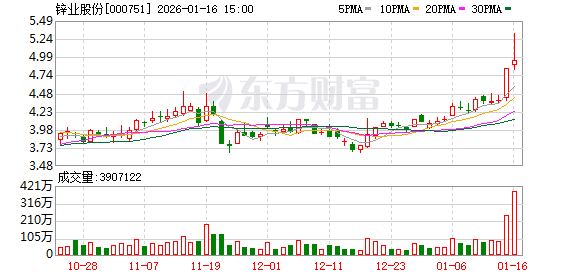
锌业股份:关于第十一届董事会第十九次会议决议公告
Zheng Quan Ri Bao· 2026-01-16 16:35
(文章来源:证券日报) 证券日报网讯 1月16日,锌业股份发布公告称,公司第十一届董事会第十九次会议审议通过《关于会计 政策变更的议案》。 ...

有色金属日报-20260116
Guo Tou Qi Huo· 2026-01-16 13:01
Report Industry Investment Ratings - Copper: Not provided - Aluminum: Not provided - Alumina: Not provided - Cast Aluminum Alloy: Not provided - Zinc: ★★★ [1] - Nickel and Stainless Steel: Not provided - Tin: Not provided - Lithium Carbonate: Not provided - Industrial Silicon: Not provided - Polysilicon: Not provided Core Views - The market for various non - ferrous metals shows different trends and investment opportunities, with factors such as supply - demand, cost, and policy influencing prices [1][2][3] Summary by Related Catalogs Copper - Friday saw Shanghai copper warehouse receipts oscillate and decline, with spot copper at 101,855 tons, Shanghai copper at a discount of 125 yuan, and Yangshan copper premium shrinking to $32. The domestic copper social inventory exceeded 320,000 tons. The average annual compound growth rate of the State Grid's "15th Five - Year" investment is 7%, down from 8% in the past five years. Continue the previous strategy of selling call options at high levels [1] Aluminum & Alumina & Aluminum Alloy - Shanghai aluminum declined today, with spot premiums and discounts in East China, Central China, and Foshan dropping to - 180 yuan, - 330 yuan, and 150 yuan respectively. Aluminum rod processing fees remained negative, and inventory continued to accumulate. Wait for volatility to decline before participating. Aluminum smelters can consider selling for hedging. Cast aluminum alloy follows Shanghai aluminum's fluctuations, and the market is not very active. Domestic alumina operating capacity remains around 95 million tons, in significant surplus. When the basis weakens, go short on alumina at high levels [2] Zinc - The US not imposing Section 232 tariffs on key minerals and LME's suspension of warehousing for 2 zinc ingot brands have led to short - term market fluctuations. The market is expected to gradually return to fundamental trading, and the short - term correction target for Shanghai zinc is seen at 24,000 yuan/ton [3] Nickel and Stainless Steel - Shanghai nickel declined, and the market trading was active. Stainless steel market inquiries and transactions were relatively active, but fear of high prices is rising. The expected production of stainless steel plants in January still has an increase. Short - term trading can follow the strategy of low - buying [6] Tin - Shanghai tin decreased with reduced positions, and the warehouse receipts of the Shanghai Futures Exchange increased significantly this week. The overall boost to tin consumption in the first quarter is expected to be around 1200 tons. Continue the strategy of selling call options with high strike prices near expiration [7] Lithium Carbonate - Lithium carbonate hit the daily limit down. The sales strategy of upstream lithium salt plants is changing, with an increased willingness to sell spot orders. The overall demand remains resilient. The market has seen its first week of inventory increase, but downstream destocking is fast. The short - term uncertainty is extremely high [8] Industrial Silicon - The industrial silicon futures price slightly declined, giving up intraday gains. The supply is affected by the dry season in the southwest, while the demand is dragged down by the production cut plan of leading enterprises. The social inventory has increased, and the price is expected to have limited downside space, with attention on the support at 8400 yuan/ton [9] Polysilicon - The polysilicon futures price got support at 48,000 yuan/ton and then rebounded due to short - covering. The short - term demand is boosted by the cancellation of export tax rebates, but the industry is facing stricter supervision and high inventory. The price is expected to fluctuate around the support level [10]
长江有色:16日锌价暴跌 交投氛围一般
Xin Lang Cai Jing· 2026-01-16 08:48
Group 1 - The core viewpoint of the articles indicates a significant decline in domestic zinc prices, driven by macroeconomic factors and market dynamics [1][2][3] Group 2 - On the Shanghai Futures Exchange, the main zinc contract (2603) opened at 25,120 CNY/ton, reached a high of 25,255 CNY/ton, and closed at 24,750 CNY/ton, down 275 CNY, or 1.10% [1] - The trading volume for the main zinc contract decreased by 133,743 hands to 368,615 hands, while open interest fell by 698 hands to 142,274 hands [1] - The latest price for London zinc was reported at 3,257 USD, down 56.5 USD [1] Group 3 - The ccmn comprehensive zinc price reported a decline, with 0 zinc averaging 24,850 CNY/ton, down 610 CNY, and 1 zinc averaging 24,760 CNY/ton, down 620 CNY [1] - In Guangdong, the 0 zinc price ranged from 24,500 to 24,800 CNY/ton, averaging 24,650 CNY, also down 610 CNY [1] Group 4 - The macroeconomic context includes a decrease in initial jobless claims in the U.S. to 198,000, below market expectations, indicating a resilient labor market [2] - The Federal Reserve's likelihood of maintaining interest rates during the upcoming meeting has risen to approximately 95%, with expectations for the next rate cut pushed to June [2] Group 5 - The domestic central bank has lowered various structural monetary policy tool rates by 0.25 percentage points, while the State Grid's investment for the 14th Five-Year Plan reached a record high of 4 trillion CNY, a 40% increase from the previous plan [2] - The non-ferrous metals market has seen a broad decline, with tin and nickel leading the drop, which has negatively impacted zinc prices [2][3] Group 6 - The LME's decision to not accept certain brand warehouse receipts has sparked speculative trading, leading to a temporary increase in zinc prices [3] - However, the actual impact on the market is limited due to low inventory levels of high-purity zinc in LME warehouses [3] - The overall trading atmosphere remains subdued, with only essential purchases occurring, indicating a lack of strong demand [3]
广发早知道:汇总版-20260116
Guang Fa Qi Huo· 2026-01-16 02:29
Report Industry Investment Rating No relevant content provided. Core Viewpoints of the Report The report comprehensively analyzes various sectors including financial derivatives, commodities, and energy chemicals. It presents the current market conditions, supply - demand relationships, and price trends of different products, and provides corresponding investment suggestions based on these analyses. For example, in the metals sector, it points out that copper's long - term fundamentals are good but short - term prices are affected by inventory structure and geopolitical risks; in the agricultural products sector, it mentions that factors such as supply and demand, policies, and seasonal patterns influence the prices of various products. Summary by Catalog Daily Selections - Alumina: The market maintains a wide - range shock. The core contradiction lies in the tug - of - war between policy expectations and the weak fundamentals. The short - term price is expected to oscillate around the industry's cash cost line, with the main contract reference range of 2600 - 2950 yuan/ton [2]. - Caustic Soda: The supply - demand weakness persists, and the spot price is under pressure. It is expected to operate stably with a downward trend [3]. - Coking Coal: The coal trading in Shanxi has warmed up, and the Mongolian coal price fluctuates with the futures. Before the Spring Festival, driven by the replenishment demand, it is recommended to go long on dips and pay attention to the arbitrage of long coking coal and short coke [4]. - Eggs: The egg price has stabilized and increased, and the supply - demand pressure is not significant. The futures price is expected to be in a range - bound and slightly stronger state in the short term [5]. Financial Futures Stock Index Futures - Market Conditions: On Thursday, the A - share market showed a mixed trend. The main stock index futures contracts had different trends, with IH2603 falling and the other three rising. The basis of the main contracts also showed different states [6][7]. - News: Domestically, the central bank adjusted interest rates and increased the quota of some re - loans. Overseas, the US imposed tariffs on some semiconductors [7][8]. - Capital: The trading volume of the A - share market decreased slightly, and the central bank carried out reverse repurchase operations with a net investment [8]. - Operation Suggestions: It is recommended to control portfolio risks, avoid heavy - position chasing, and allocate IH on dips. For small - and medium - cap indexes, use bull spreads and control risks [9]. Treasury Bond Futures - Market Performance: The treasury bond futures closed with mixed results, and the yields of major interest - rate bonds in the inter - bank market mostly declined [11]. - Policy: The central bank cut interest rates on re - loans and rediscounts, and mentioned that there is still room for reserve requirement ratio and interest rate cuts [12]. - Operation Suggestions: Unilateral strategies suggest continued waiting, and curve strategies tend to steepen the curve in the medium - term perspective [13]. Precious Metals - Market Review: US economic data, such as the decline in the number of initial jobless claims and the increase in overseas holdings of US Treasury bonds, affected market expectations. The US government's decision on tariffs and geopolitical tensions also influenced precious metal prices [14][17]. - Future Outlook: Gold is expected to maintain a strong - side shock in the short term, and it is recommended to hold long positions above the 20 - day moving average. Silver is expected to operate strongly, and platinum and palladium are expected to rise in the medium - to - long term [17][18]. Container Shipping Index (European Line) - Index: As of January 12, the SCFIS European line index and the US West route index showed different trends [19]. - Fundamentals: The global container shipping capacity increased, and the demand in the eurozone and the US showed different performances [19]. - Logic: The futures market oscillated, and the spot price entering the downward cycle pressured the futures [19]. - Operation Suggestions: It is expected to oscillate in the short term [19]. Commodity Futures Non - ferrous Metals - Copper: The price is at a high level, and the inventory has increased. The long - term fundamentals are good, but the short - term price is affected by factors such as inventory structure and geopolitical risks. It is recommended to hold long positions lightly and cautiously [20][24]. - Alumina: The spot inventory continues to accumulate, and the price oscillates widely. It is recommended to short on rallies [25][27]. - Aluminum: The price is at a high level and oscillates. The market is driven by macro and policy expectations, but the fundamentals are under pressure. It is recommended to wait for dips to go long [27][30]. - Aluminum Alloy: The inventory is decreasing, and the price oscillates at a high level. It is expected to oscillate in a high - level range [31][33]. - Zinc: The LME's suspension of zinc delivery from South Korea Zinc boosted the price. The fundamentals show that the supply is tight at the mine end, and the demand is suppressed. It is recommended to go long on dips in the long - term [34][37]. - Tin: The market sentiment has declined, and the price is at a high - level shock. It is recommended to wait and see [37][42]. - Nickel: The price is strong, affected by Indonesia's policy on nickel ore. The supply is relatively sufficient, and the demand varies in different sectors. It is recommended to operate within a range [42][44]. - Stainless Steel: The price oscillates strongly, mainly driven by the raw material nickel. The supply pressure eases slightly, and the demand is weak in the off - season. It is expected to oscillate strongly [45][48]. - Lithium Carbonate: The price oscillates and adjusts. The supply is increasing slightly, and the demand has certain resilience. It is recommended to wait and see on the long side and consider positive spreads between months [49][53]. - Polysilicon: The spot price stabilizes, and the futures oscillate weakly. It is recommended to wait and see, paying attention to production cuts and demand recovery [53][55]. - Industrial Silicon: The price is at a low - level shock. It is expected to maintain a supply - demand dual - weak pattern in January, and it is necessary to pay attention to polysilicon production changes [56][58]. Ferrous Metals - Steel: The market is in a weak supply - demand state during the off - season, and the price oscillates. It is expected that the steel price will move within a range [58][59]. - Iron Ore: The supply is facing the off - season, and the port inventory continues to accumulate. The price is expected to oscillate at a high level [60][62]. - Coking Coal: The price in Shanxi has risen more than it has fallen, and the trading has warmed up. It is recommended to go long on dips before the Spring Festival and pay attention to arbitrage [63][67]. - Coke: After the fourth round of price cuts, the market is stable. It is recommended to go long on dips and pay attention to arbitrage [68][69]. - Ferrosilicon: The cost provides support, and the supply - demand situation improves marginally. It is recommended to try to go long on dips [70][72]. - Manganese Silicon: The price of manganese ore has risen, and the supply - demand situation has improved. It is recommended to try to go long on dips [73][76]. Agricultural Products - Meal: The market lacks drivers, and the soybean meal oscillates. The domestic supply is relatively loose, and the price is expected to oscillate [77][78]. - Live Pigs: The price returns to the oscillating pattern. The supply is relatively abundant in January, and it is recommended to short on rallies after stabilization [79][80]. - Corn: The supply is tight, and the price oscillates at a high level. It is recommended to pay attention to farmers' selling sentiment and policy releases [81][83]. - Sugar: The international raw sugar price falls, and the domestic market focuses on stocking. It is recommended to wait and see in the short term [84][85]. - Cotton: The US cotton price is stable, and the domestic price stops falling and stabilizes. The short - term price may be adjusted [88]. - Eggs: The price is stable and rising, and the supply - demand pressure is not large. The futures price is expected to oscillate within a range [92]. - Oils: Palm oil leads the decline in the vegetable oil market. Different oils have different price trends and influencing factors [93][95]. - Red Dates: The market trading is weak, and the futures price is weak. It is recommended to take a short - side view [96]. - Apples: The market sentiment cools down, and the futures price oscillates at a high level. It is recommended to use put options to protect long positions [97]. Energy Chemicals - PX: The high valuation and downstream production cuts put short - term pressure on PX. It is recommended to pay attention to the support at around 7000 yuan and consider low - long positions in the medium - term [98][99]. - PTA: Similar to PX, it is under short - term pressure. It is recommended to try to go long when the price is below 5000 yuan and consider positive spreads [100][101]. - Short - fiber: The supply - demand pattern is weak, and the price follows the raw materials to oscillate. It is recommended to operate similarly to PTA and reduce the processing margin when it is high [102][103]. - Bottle - grade Chips: The supply and demand both decrease in January, and the price follows the cost. It is recommended to operate similarly to PTA and pay attention to the processing margin range [104][105]. - Ethylene Glycol: The price is under pressure due to seasonal inventory accumulation. It is recommended to pay attention to the pressure at around 4000 yuan for EG2605 and consider reverse spreads [106][107]. - Pure Benzene: The supply - demand situation improves slightly, but the high inventory suppresses the price. It is recommended to short BR2603 on rallies and pay attention to the narrowing spread between EB and BZ [108]. - Styrene: The price is short - term strong, but the upside space is limited. It is recommended to short EB03 on rallies and reduce the processing margin [109][110]. - LLDPE: The basis remains stable, and the short - covering sentiment weakens. It is recommended to partially take profits on long positions [111][112]. - PP: The number of maintenance increases, and the price is strong. It is recommended to hold the position when the PDH profit expands [113]. - Methanol: The price oscillates due to geopolitical disturbances. It is recommended to wait and see [113]. - Caustic Soda: The supply - demand weakness persists, and the price is expected to operate stably with a downward trend. It is necessary to pay attention to downstream procurement and chlorine price fluctuations [114][115]. - PVC: The price fluctuates due to export policies. It is recommended to wait and see on short positions [116][117]. - Urea: The price center moves up due to agricultural demand and inventory reduction. It is expected to be strong in the short term [118][119]. - Soda Ash: The production capacity recovers, and the demand is weak. It is recommended to take a short - side view [120][123]. - Glass: The sentiment declines, and the sales rate continues to fall. It is recommended to short on rallies in the short - term [120][124]. - Natural Rubber: The short - term driving force is limited, and it oscillates within a range. It is recommended to wait and see [124][126]. - Synthetic Rubber: The cost is strong, and the demand is expected to improve. It is expected to oscillate strongly in the short term. It is recommended to pay attention to the support range and consider long - short arbitrage [127][130].
金融期货早评-20260116
Nan Hua Qi Huo· 2026-01-16 02:19
1. Report's Industry Investment Ratings No investment ratings were provided in the report. 2. Core Views - **Financial Futures**: China's central bank has introduced eight structural optimization policies, signaling a shift from chasing liquidity to focusing on economic fundamentals and corporate earnings. The RMB exchange rate maintains two - way flexibility, and the central bank has room for RRR cuts and interest rate cuts. China's exports are expected to remain resilient, and the monetary policy will stay moderately loose. For RMB exchange rates, the willingness of enterprises to settle foreign exchange has increased significantly, and the RMB is expected to appreciate moderately against the US dollar before the Spring Festival [1][3]. - **Stock Index Futures**: The previous regulatory actions mainly caused short - term fluctuations without changing the medium - to - long - term trends. After the release of multiple favorable policies by the central bank, the stock index is more likely to strengthen again [4]. - **Treasury Bonds**: The central bank's use of structural tools to support the real economy has a certain boosting effect on the bond market, but the scope of the market may be limited. It is recommended to hold medium - term long positions and not chase short - term highs [6]. - **Container Shipping to Europe**: The market logic has shifted from trading geopolitical risk premiums to trading pre - Spring Festival spot price cuts. The futures are expected to be in a weakly oscillating pattern in the short term, and it is recommended to short on rallies [6][8][9]. - **Commodities** - **New Energy**: For lithium carbonate, it is recommended to gradually realize profits in the short term and wait for opportunities to go long on dips. For industrial silicon and polysilicon, pay attention to polysilicon production resumption and shutdown dynamics in the short term, and consider long positions on dips for industrial silicon in the medium - to - long term [12][15]. - **Non - ferrous Metals**: For copper, do not build new positions above 100,000 yuan; for aluminum, it is expected to be oscillating and strengthening; for alumina, it is expected to be oscillating and weakening; for zinc, it is expected to be oscillating strongly; for nickel and stainless steel, they are expected to be oscillating and adjusting; for tin, it is recommended to go long on dips; for lead, it is expected to be oscillating strongly [17][19][22]. - **Oils and Fats and Feeds**: For oilseeds, the external soybean market will be weakly oscillating, and the domestic soybean meal will be strong in the near term and weak in the far term. For oils, the short - term market will continue to rebound in a wide - range oscillation. It is recommended to reduce positions in the M3 - 5 long spread and short positions in rapeseed meal [24][25][27]. - **Energy and Oil and Gas**: For fuel oil, beware of geopolitical fluctuations and consider the 5 - 9 long spread after a correction. For asphalt, pay attention to long spread opportunities. The short - term price is expected to oscillate with limited upside and downside [29][30][33]. - **Precious Metals**: Platinum and palladium are expected to continue their bull market in the medium - to - long term. Gold and silver are in an upward - biased pattern, and it is recommended to add long positions on dips while controlling positions [35][36][38]. - **Chemicals**: For pulp and offset paper, it is recommended to wait and consider long positions on dips. For LPG, follow geopolitical changes and domestic device maintenance. For PTA - PX, do not chase long positions at high valuations. For MEG - bottle chips, it is in a weak pattern, and it is recommended to wait for macro - policy changes. For methanol, do not short. For PE, it is expected to decline. For pure benzene - styrene, styrene is running strongly. For rubber, it is recommended to wait and see, and consider long positions in the RU - BR spread on dips [39][42][55]. - **Glass and Soda Ash**: Soda ash is in an over - supply situation, and glass is facing high inventory pressure. Caustic soda is expected to be weakly oscillating [57][58][59]. - **Propylene**: It fluctuates with costs, and pay attention to geopolitical impacts on costs and PDH device changes [59][60]. - **Black Metals**: For steel products, the downside is limited, but the upside lacks drivers, and the price will oscillate. For iron ore, the price is expected to decline in the short term. For coking coal and coke, the supply - demand structure is still in surplus, but the inventory may improve [61][62][64]. - **Agricultural and Soft Commodities**: For live pigs, the market is oscillating, and it is recommended to sell call options on the 03 contract around 13,000. For cotton, there is a short - term callback risk, but the decline may be limited. For sugar, the short - term price is oscillating strongly with increasing pressure. For rubber, it oscillates and it is recommended to wait and see. For apples, it may continue to strengthen after a short - term adjustment. For red dates, the price will oscillate at a low level in the short term and be under pressure in the medium - to - long term. For logs, the price will oscillate strongly, and it is recommended to consider short positions around 800 [65][67][75]. 3. Summaries by Relevant Categories Financial Futures - **Macro**: The central bank has introduced eight measures, including a 0.25 - percentage - point cut in the interest rates of various structural monetary policy tools and a reduction of the minimum down - payment ratio for commercial housing loans to 30%. The US initial jobless claims were lower than expected, and the Fed's stance on interest rates is divided. The US is facing multiple issues such as stagflation, institutional disputes, and geopolitical conflicts. China's exports in 2025 maintained medium - to - high - speed growth, and the full - year social financing increment exceeded 35 trillion yuan [1]. - **RMB Exchange Rate**: The willingness of enterprises to settle foreign exchange has increased significantly. The RMB is expected to appreciate moderately against the US dollar before the Spring Festival, and its appreciation is affected by the US dollar index and the central bank's regulation [1][3]. - **Stock Index Futures**: The previous regulatory actions mainly caused short - term fluctuations. After the release of multiple favorable policies by the central bank, the stock index is more likely to strengthen again. The impact of external factors on A - shares is limited [4]. - **Treasury Bonds**: The central bank's use of structural tools to support the real economy has a certain boosting effect on the bond market, but the scope of the market may be limited. It is recommended to hold medium - term long positions and not chase short - term highs [6]. Container Shipping to Europe - **Market Logic**: The market logic has shifted from trading geopolitical risk premiums to trading pre - Spring Festival spot price cuts. The futures are expected to be in a weakly oscillating pattern in the short term, and it is recommended to short on rallies [6][8][9]. - **Risk Factors**: Pay attention to the rhythm and amplitude of pre - Spring Festival price cuts by shipping companies, geopolitical fluctuations, and the guidance of shipping companies' February opening prices and actual shipment volume data in late January [14]. Commodities New Energy - **Lithium Carbonate**: The spot market is in a "not - so - off - season" state. The futures volatility is at a historical high. It is recommended to gradually realize profits in the short term and wait for opportunities to go long on dips [12]. - **Industrial Silicon and Polysilicon**: In the short term, pay attention to polysilicon production resumption and shutdown dynamics. In the medium - to - long term, consider long positions on dips for industrial silicon [13][15]. Non - ferrous Metals - **Copper**: The decline in copper prices is limited due to the small amount of available goods. Do not build new positions above 100,000 yuan. Enterprises in need of spot procurement can consider constructing option strategies [16][17]. - **Aluminum and Its Industry Chain**: Aluminum is expected to be oscillating and strengthening; alumina is expected to be oscillating and weakening; casting aluminum alloy is expected to be oscillating and strengthening. Pay attention to the impact of policies such as tariffs and export tax rebates [18][19]. - **Zinc**: It is expected to be oscillating strongly. Although the fundamentals have the potential to go long, there is significant hedging pressure above [19]. - **Nickel and Stainless Steel**: They are expected to be oscillating and adjusting. The quota issuance rhythm is the core factor, and the new energy demand may be favorable [20][21]. - **Tin**: It may still have upward momentum after a short - term callback. It is recommended to go long on dips [22]. - **Lead**: It is expected to be oscillating strongly. The price is expected to be range - bound in 2026 [23]. Oils and Fats and Feeds - **Oilseeds**: The external soybean market will be weakly oscillating, and the domestic soybean meal will be strong in the near term and weak in the far term. Pay attention to the progress of Chinese soybean purchases and the supply situation of Brazilian soybeans [24][25]. - **Oils**: The short - term market will continue to rebound in a wide - range oscillation. Pay attention to origin information and international relations. It is recommended to reduce positions in the M3 - 5 long spread and short positions in rapeseed meal [25][26][27]. Energy and Oil and Gas - **Fuel Oil**: Supply is affected by sanctions, and high - sulfur fuel oil is supported by geopolitical factors at the bottom. Consider the 5 - 9 long spread after a correction [29][30]. - **Asphalt**: The cost is affected by geopolitical factors, and the spot price has a certain bottom support. Pay attention to long spread opportunities. The short - term price is expected to oscillate with limited upside and downside [31][33][34]. Precious Metals - **Platinum and Palladium**: The US tariff policy has changed, and geopolitical conflicts have increased the risk premium. The medium - to - long - term bull market foundation remains. Pay attention to international market prices [35][36]. - **Gold and Silver**: The price fluctuates greatly. The medium - to - long - term trend is upward. It is recommended to add long positions on dips while controlling positions [36][37][38]. Chemicals - **Pulp and Offset Paper**: The pulp market is bearish, but there is a possibility of a rebound at a low level. The offset paper market is neutral - bearish. It is recommended to wait and consider long positions on dips [39][40][41]. - **LPG**: The market is affected by geopolitical factors and domestic device maintenance. Pay attention to supply and demand changes [42]. - **PTA - PX**: PTA's over - supply situation has been alleviated, but the upside of processing fees is limited. PX is in a tight supply - demand situation in the first half of 2026. Do not chase long positions at high valuations [43][44][45]. - **MEG - Bottle Chips**: The demand - side negative feedback is intensifying, and the market is in a weak pattern. Wait for macro - policy changes [45][46]. - **Methanol**: The geopolitical logic continues. Although the MTO side's shutdown weakens the fundamentals of the 05 contract, do not short [47]. - **PE**: The market is turning to a pattern of increasing supply and decreasing demand. It is expected to decline [48][49]. - **Pure Benzene - Styrene**: Pure benzene is in an over - supply situation and follows cost fluctuations. Styrene is running strongly due to export news and downstream buying [50]. - **Rubber**: The market is affected by macro and geopolitical factors. It is recommended to wait and see, and consider long positions in the RU - BR spread on dips [50][54][55]. Glass and Soda Ash - **Soda Ash**: The new production capacity is being released, and the market is in an over - supply situation. The price is restricted by high inventory [57]. - **Glass**: There are still some production line cold - repairs to be realized before the Spring Festival. The market is facing high inventory pressure [58]. - **Caustic Soda**: It is in a weak state, and the demand side is expected to weaken further. It is expected to be weakly oscillating [59]. Propylene - It fluctuates with costs. Pay attention to geopolitical impacts on costs and PDH device changes. The supply - demand situation is still relatively loose, but the pressure has improved [59][60]. Black Metals - **Steel Products**: The downside is limited, but the upside lacks drivers. The price will oscillate. The short - term price range of the rebar 2605 contract is expected to be between 3050 - 3200 yuan, and that of the hot - rolled coil 2605 contract is expected to be between 3200 - 3350 yuan [61]. - **Iron Ore**: The fundamentals are weakening. The price is expected to decline in the short term, but the downside is limited [61][62]. - **Coking Coal and Coke**: The supply - demand structure is still in surplus, but the inventory may improve. Pay attention to changes in macro - sentiment [63][64]. Agricultural and Soft Commodities - **Live Pigs**: The market is oscillating. It is recommended to sell call options on the 03 contract around 13,000 [65][66]. - **Cotton**: There is a short - term callback risk, but the decline may be limited. Pay attention to downstream imports and orders [66][67]. - **Sugar**: The short - term price is oscillating strongly with increasing pressure. Pay attention to the trend of raw sugar [67][69]. - **Rubber**: It oscillates and it is recommended to wait and see, and consider long positions in the RU - BR spread on dips [70][74][75]. - **Apples**: It may continue to strengthen after a short - term adjustment. Pay attention to the Spring Festival stocking situation [75][76]. - **Red Dates**: The price will oscillate at a low level in the short term and be under pressure in the medium - to - long term. Pay attention to downstream procurement [77][78]. - **Logs**: The price will oscillate strongly. The upside is limited by the lowest warehouse - receipt cost in Shandong. Consider short positions around 800 and option double - selling strategies [78][79][80].
银河期货每日早盘观察-20260116
Yin He Qi Huo· 2026-01-16 02:09
1. Report Industry Investment Rating No relevant information provided. 2. Core Views of the Report - The overall market shows a mixed trend, with different sectors having their own characteristics and influencing factors. For financial derivatives, the stock index futures need short - term shock consolidation and are expected to rise in the medium - term; the bond market may maintain a shock situation. In the agricultural products sector, the overall supply and demand situation varies, and prices are affected by factors such as international market supply, domestic demand, and weather. The black metal market is affected by factors such as macro - policies, supply and demand, and cost support, with steel prices continuing to fluctuate. The non - ferrous metal market is affected by factors such as geopolitics, tariffs, and inventory, and price trends vary. The shipping sector is affected by factors such as geopolitics, supply and demand, and seasonality. The energy and chemical sector is greatly affected by geopolitical risks and supply - demand relationships [21][25][59]. 3. Summary by Relevant Catalogs Financial Derivatives Stock Index Futures - Thursday's stock index showed a sideways shock. The stock index futures were differentiated with the spot, and the basis of each variety rose again. The market is expected to have short - term shock consolidation and medium - term upward potential. The trading strategies include short - term shock and grid operation, IM\IC long 2606 + short ETF cash - and - carry arbitrage, and double - buy option strategy [20][21][22]. Bond Futures - On Thursday, most bond futures closed higher. The central bank's structural interest rate cut was implemented, and the enterprise sector's credit expansion rebounded. The bond market may maintain a shock situation in the short - term. The trading strategies include temporary wait - and - see for unilateral trading and shorting the 30Y active bond basis trading [22][24][25]. Agricultural Products Protein Meal - The demand has improved stage by stage, and the disk has rebounded slightly. The international market is generally in a loose situation, and the domestic cost side still faces certain pressure. The trading strategy is mainly based on a bearish idea for unilateral trading, wait - and - see for arbitrage, and selling the wide - straddle strategy for options [29][30][31]. Sugar - International sugar prices are falling, and domestic sugar prices are fluctuating. The international sugar price is expected to bottom - out and fluctuate in the short - term, and the domestic sugar price will fluctuate within a range. The trading strategies include considering low - buying and high - selling within the range for unilateral trading, wait - and - see for arbitrage, and selling put options for options [33][35][36]. Oil and Fat Sector - The US biodiesel quota plan has an impact on the market, and the US soybean oil rose sharply overnight. The Malaysian palm oil is in the production - reduction period, and the domestic soybean oil is gradually destocking. The short - term trading strategy is to wait and see due to the shock operation and increased fluctuations [38]. Corn/Corn Starch - The US corn is weak in the short - term, and the domestic corn spot is stable in the short - term but has pressure in the later stage. The 03 corn is in a high - level shock. The trading strategies include a bullish idea for the 03 corn after stabilization and short - buying on dips for the 07 corn for unilateral trading, widening the spread between 05 corn and starch on dips for arbitrage, and wait - and - see for options [39][40][41]. Live Pigs - The supply pressure still exists, and the disk has a slight adjustment. The trading strategy is mainly based on a short - selling idea for unilateral trading, wait - and - see for arbitrage, and selling the wide - straddle strategy for options [42][43]. Peanuts - The peanut spot is stable, and the disk is bottom - out and fluctuating. The trading strategies include buying on dips for the 05 peanut for unilateral trading, wait - and - see for arbitrage, and selling the pk603 - C - 8200 option for options [44][45]. Eggs - The demand has improved, and the egg price has risen steadily. The trading strategy is to consider building long positions on dips for the 5 - month far - month contract for unilateral trading, wait - and - see for arbitrage, and options [47][48]. Apples - The cold - storage inventory is low, and the apple price is firm. The trading strategies include partial profit - taking for the 5 - month contract long positions and short - selling on rallies for the 10 - month contract for unilateral trading, long 5 and short 10 for arbitrage, and wait - and - see for options [50][51][52]. Cotton - Cotton Yarn - The sales progress is fast, and the cotton price fluctuates strongly. The trading strategies include considering building long positions on dips for Zheng cotton for unilateral trading, wait - and - see for arbitrage, and options [55][56]. Black Metals Steel - Demand provides support, and steel prices continue to fluctuate. The market sentiment may cause the steel price to fluctuate under pressure. The trading strategies include short - selling the spread between hot - rolled coil and coking coal on rallies and holding the short - position of the spread between hot - rolled coil and rebar for arbitrage, and wait - and - see for options [59][60]. Coking Coal and Coke - There is insufficient upward momentum and a risk of decline. The trading strategies include being bearish for unilateral trading, wait - and - see for arbitrage, and selling out - of - the - money call options for options [62][63][64]. Iron Ore - Market expectations are volatile, and the iron ore price should be treated bearishly at a high level. The trading strategy is to be bearish with a light position at a high level for unilateral trading, wait - and - see for arbitrage, and options [65][66]. Ferroalloys - Cost support is strong, and prices fluctuate strongly. The trading strategies include a bullish short - term shock for unilateral trading, wait - and - see for arbitrage, and selling out - of - the - money straddle options for options [67][68]. Non - Ferrous Metals Gold and Silver - Gold and silver fluctuate at a high level, and short - term high volatility continues. The trading strategies include holding long positions cautiously based on the support near the 5 - day moving average for unilateral trading, wait - and - see for arbitrage, and using the bull call spread strategy for options [70][71][72]. Platinum and Palladium - The tariff expectation has temporarily failed, and the disk has fallen from a high level. The trading strategies include waiting for the price to stabilize after the callback due to the failed tariff expectation and then going long for platinum for unilateral trading, and wait - and - see for palladium, wait - and - see for arbitrage, and options [73][74]. Copper - Short - term fluctuations intensify, but the long - term upward trend remains. The trading strategies include paying attention to profit protection and position control for unilateral trading, wait - and - see for arbitrage, and options [77][78][79]. Alumina - It is still weak in the short - term, and be vigilant against policy risks in Guinea. The trading strategies include being bearish in the shock, preventing Guinea's policy risks, and protecting profits for unilateral trading, wait - and - see for arbitrage, and options [80][81][83]. Electrolytic Aluminum - Market sentiment has cooled down, and the aluminum price has corrected. The trading strategies include being vigilant against the callback risk caused by capital outflows in the short - term and being bullish in the medium - term for unilateral trading, wait - and - see for arbitrage, and options [84][85][86]. Cast Aluminum Alloy - Market sentiment has cooled down, and the price has corrected with the sector. The trading strategies include being bearish in the short - term and bullish in the medium - term for unilateral trading, wait - and - see for arbitrage, and options [87][88][89]. Zinc - Pay attention to the impact of the capital side. The trading strategy is to wait and see and pay attention to capital flow for unilateral trading, wait - and - see for arbitrage, and options [90][91][93]. Lead - Pay attention to capital sentiment. The trading strategies include partial profit - taking for profitable long positions and partial holding for unilateral trading, wait - and - see for arbitrage, and appropriate profit - taking for out - of - the - money call options for options [94][95][96]. Nickel - The nickel price adjusts with non - ferrous metals. The trading strategy is to pay attention to the overall atmosphere of the non - ferrous metal sector for unilateral trading, wait - and - see for arbitrage, and options [97][98]. Stainless Steel - It follows the nickel price. The trading strategy is to follow the nickel price for unilateral trading, wait - and - see for arbitrage [99][100][101]. Industrial Silicon - Sell short at the upper edge of the range. The trading strategy is to sell short at the upper edge of the range for unilateral trading [102]. Polysilicon - Wait and see in the short - term. The trading strategy is to be cautious in participating and pay attention to risk control for unilateral trading [104]. Lithium Carbonate - It is running at a high level, and operate cautiously. The trading strategies include partial profit - taking for long positions and paying attention to the support of the 5 - day line and the atmosphere of the non - ferrous metal market for unilateral trading, wait - and - see for arbitrage, and using a protective strategy with futures long positions for options [106][108][110]. Tin - The tin price has fallen, and pay attention to capital flow. The trading strategies include partial long - position exit due to the digestion of long sentiment for unilateral trading, wait - and - see for options [111][112][113]. Shipping Sector Container Shipping - The MSK's India - US East MECL route's return plan to pass through the Suez Canal strengthens the resumption of navigation expectation. The trading strategies include waiting and seeing and paying attention to the long - term resumption of navigation risk for unilateral trading, and maintaining a long - position idea for the 6 - 10 calendar spread arbitrage [115][116]. Energy and Chemicals Crude Oil - It gives back part of the geopolitical premium. The trading strategy is to pay attention to the follow - up of the Iranian event and expect wide - range fluctuations for unilateral trading, wait - and - see for arbitrage, and options [117][118]. Asphalt - The cost fluctuation of crude oil expands, and the supply and demand run weakly. The trading strategies include high - level shock and wide - range geopolitical risk for unilateral trading, paying attention to the BU4 - 6 calendar spread arbitrage, wait - and - see for options [120][121][122]. Fuel Oil - Geopolitical risks fluctuate widely. The trading strategies include being vigilant against geopolitical risks, wide - range fluctuations, and waiting and seeing for unilateral trading, paying attention to the FU59 calendar spread arbitrage, wait - and - see for options [123][124][125]. Natural Gas - TTF/JKM rebounds, and HH's downward trend continues. The trading strategies include continuing to hold short positions in the third - quarter TTF and JKM contracts and adding more positions for the aggressive for unilateral trading, wait - and - see for arbitrage, and long - term rolling selling of out - of - the - money call options of TTF or JKM for options [126][127][128]. LPG - It gives back the geopolitical gains. The trading strategy is to pay attention to the follow - up of the Iranian event and expect wide - range fluctuations for unilateral trading, wait - and - see for arbitrage, and options [129][130]. PX&PTA - Cost support weakens. The trading strategy is wide - range fluctuations for unilateral trading, wait - and - see for arbitrage, and options [131][132][133]. BZ&EB - Pure benzene has a reduction expectation, and the short - stop of the styrene device boosts the price increase. The trading strategies include short - term shock and a bullish trend for unilateral trading, shorting pure benzene and going long on styrene for arbitrage, wait - and - see for options [133][134][135]. Ethylene Glycol - Seasonal inventory accumulation is obvious. The trading strategies include being bearish in the shock due to weak supply - demand structure and large inventory pressure for unilateral trading, wait - and - see for arbitrage, and selling call options for options [137][138][139]. Short - Fiber - Supply is sufficient, and terminal demand weakens. The trading strategy is wide - range fluctuations for unilateral trading, wait - and - see for arbitrage, and options [140]. Bottle Chips - Wide - range fluctuations. The trading strategy is wide - range fluctuations for unilateral trading, wait - and - see for arbitrage, and options [142][143]. Propylene - Supply pressure eases. The trading strategy is a bullish shock for unilateral trading, wait - and - see for arbitrage, and options [144][146]. Plastic PP - The PPI of plastic products declines. The trading strategies include waiting and seeing for the L 2605 contract and paying attention to the support at the recent low of 6500 points for the PP 2605 contract for unilateral trading, wait - and - see for arbitrage, and reducing the position and waiting and seeing for the PP2605 put 6100 contract for options [147][148]. Caustic Soda - The caustic soda price weakens. The trading strategies include a bearish trend for unilateral trading, wait - and - see for arbitrage, and options [150][151][152]. PVC - Mainly fluctuates. The trading strategy is to wait and see for unilateral trading, wait - and - see for arbitrage, and options [155][156]. Soda Ash - The futures price falls. The trading strategies include short - selling on rallies in the next week for unilateral trading, shorting glass and going long on soda ash for arbitrage, and selling out - of - the - money call options on rallies for options [157][158][159]. Glass - The futures price falls. The trading strategies include short - selling on rallies before the Spring Festival for unilateral trading, shorting glass and going long on soda ash for arbitrage, and selling call options for options [160][161][162]. Methanol - It rises strongly. The trading strategies include waiting and seeing and paying attention to the Middle - East situation for unilateral trading, paying attention to the 59 calendar spread arbitrage, and selling put options on dips for options [163]. Urea - It cools down slightly. The trading strategy is to wait and see for unilateral trading, wait - and - see for arbitrage, and options [165][166]. Pulp - The pulp price falls from a high level. The trading strategy is to continue to hold short positions for unilateral trading, wait - and - see for arbitrage, and options [167][169][170]. Logs - The spot is stable and strong. The trading strategies include building a small number of long positions for unilateral trading, paying attention to the LG03 - 05 reverse calendar spread arbitrage, wait - and - see for options [172][173][174]. Offset Printing Paper - The cultural paper rebounds weakly. The trading strategies include waiting and seeing for unilateral trading, wait - and - see for arbitrage, and selling the OP2602 - C - 4200 option for options [176][177]. Natural Rubber - The output growth rate of ANRPC slows down. The trading strategies include short - selling a small amount of the RU 05 contract and setting a stop - loss at the recent high of 16275 points, waiting and seeing for the NR 03 contract for unilateral trading, reducing the position and waiting and seeing for the RU2605 - NR2605 spread for arbitrage, wait - and - see for options [178][180][181]. Butadiene Rubber - The tire production increases significantly month - on - month. The trading strategies include waiting and seeing and paying attention to the pressure at the recent high of 12425 points for the BR 03 contract for unilateral trading, holding the BR2603 - NR2603 spread with a stop - loss at the recent low of - 790 points for arbitrage, wait - and - see for options [182][183][184].
光大期货:1月16日有色金属日报
Xin Lang Cai Jing· 2026-01-16 01:13
Copper - Copper prices fluctuated overnight, with domestic refined copper imports remaining unprofitable. The macroeconomic context shows that initial jobless claims in the U.S. fell to 198,000, significantly below the market expectation of 215,000 and the previous value of 208,000, indicating a resilient labor market [2][12] - The U.S. Kansas City Fed President stated there is currently no reason to cut interest rates, as doing so could hinder progress in controlling inflation and would not benefit the labor market [2][12] - The People's Bank of China announced a 0.25 percentage point reduction in various structural monetary policy tool rates. Inventory levels showed a decrease in LME copper stocks by 500 tons to 141,125 tons, while Comex stocks increased by 4,653 tons to 488,720 tons [2][12] - Domestic copper prices rose again, but downstream enterprises are cautious in purchasing, focusing on essential needs. Additionally, import losses have widened, and the export window is gradually opening, which may benefit first-quarter export demand [2][12] - Trump indicated that there would be no temporary tariffs on key minerals like copper. The geopolitical situation between the U.S. and Iran, along with volatility in precious metals, has spilled over, causing instability in high copper prices [2][12] Nickel & Stainless Steel - LME nickel prices fell by 1.04% to $18,590 per ton, while SHFE nickel prices decreased by 0.24% to 146,880 yuan per ton. LME nickel inventory increased by 624 tons to 285,282 tons, and SHFE warehouse receipts rose by 1,700 tons to 41,972 tons [3][13] - The Indonesian Ministry of Energy and Mineral Resources announced a reduction in the nickel ore production target for 2026 from 364 million tons to approximately 250-260 million tons, which may create a global primary nickel supply-demand gap, potentially driving nickel prices higher [3][13][14] - The production of primary nickel increased significantly by 18.5% to 37,200 tons, indicating strong demand for hedging in the market [3][13] Aluminum & Aluminum Alloys - Aluminum oxide prices showed a weak trend, with AO2605 settling at 2,749 yuan per ton, down 1.33%. SHFE aluminum prices also declined, with AL2603 at 24,320 yuan per ton, down 0.59% [6][15] - The SMM aluminum oxide price fell to 2,650 yuan per ton, and aluminum ingot spot premiums expanded to 130 yuan per ton. The market is experiencing high inventory levels, leading to low premium purchasing sentiment and continued cost pressure [6][15] - The end of environmental controls and the cancellation of export tax rebates are expected to impact the market, with aluminum prices maintaining a high rhythm and spot premiums continuing to narrow [6][15] Industrial Silicon & Polysilicon - Industrial silicon prices showed a slight increase, with the main contract at 8,730 yuan per ton, up 0.46%. The inventory of industrial silicon is gradually shifting towards intermediate links, with hidden inventory increasing [7][16] - Polysilicon prices experienced a slight decline, with the main contract at 48,670 yuan per ton, down 0.38%. The market is facing pressures from logistics disruptions and speculative trading sentiment is cooling down [7][16] Lithium Carbonate - Lithium carbonate futures fell by 1.31% to 163,220 yuan per ton, with average prices for battery-grade lithium carbonate dropping by 4,000 yuan to 159,000 yuan per ton [8][17] - Supply-side production increased by 70 tons to 22,605 tons, while demand for lithium materials is expected to decline in January 2026, with a projected decrease in production for various battery types [8][17] - Despite current raw material price increases potentially suppressing terminal demand, the overall market sentiment remains bullish on lithium prices due to low inventory levels and speculative demand [8][17]