
纺织

Search documents
多部门:在汽车制造等多领域应用推广再生材料
Jing Ji Guan Cha Wang· 2025-12-31 10:37
Core Viewpoint - The article discusses the implementation of the "Recycled Materials Application Promotion Action Plan" by multiple departments in China, aiming to enhance the supply capacity of recycled materials and promote their application across various industries by 2030 [1] Group 1: Policy Objectives - The plan aims to improve the supply assurance capability of recycled materials [1] - It encourages the automotive manufacturing sector to utilize more recycled materials [1] - The initiative seeks to increase the application level of recycled materials in the electrical and electronic products sector [1] Group 2: Industry Applications - There is a focus on enhancing the use of recycled materials in battery production [1] - The plan promotes the application of recycled materials in textile and packaging industries [1] Group 3: Future Goals - By 2030, China aims to have a more robust waste recycling system in place [1] - The establishment of standards and certification systems for the promotion and application of recycled materials is also a key goal [1]
威海高新区系统性规模化推进智能工厂培育——流水线上装上数字手
Qi Lu Wan Bao· 2025-12-31 02:10
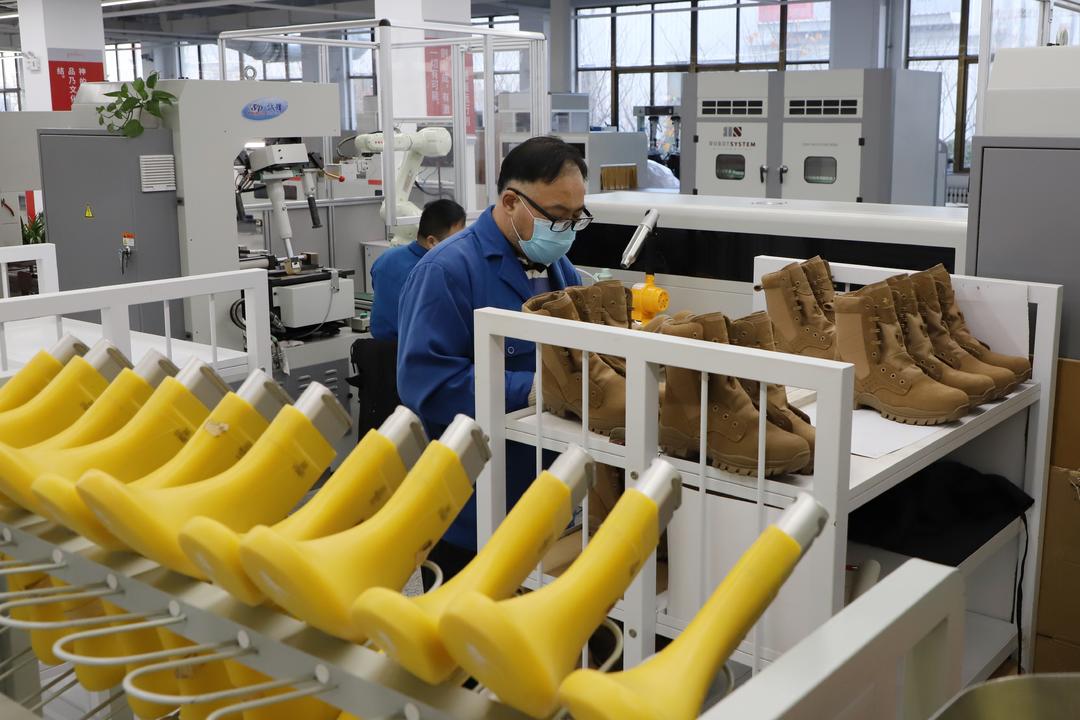
Group 1 - The core viewpoint of the article highlights the transformation of traditional manufacturing through digitalization and automation, exemplified by the advancements in the shoe manufacturing and electrical industries in Weihai [1][5]. - Jinmon Group's digital intelligent shoe factory has successfully completed trial production, utilizing advanced robotic systems to enhance efficiency and reduce labor costs by over 30% while increasing production efficiency by 30% [1][4]. - The integration of intelligent robots with the MES system addresses long-standing issues in order scheduling, task tracking, and data aggregation, leading to a fully traceable production process and quality assurance [4]. Group 2 - Weihai High-tech Zone is accelerating the resolution of traditional manufacturing bottlenecks through intelligent transformation, with several companies recognized for their advanced manufacturing capabilities [5]. - The region has created a supportive environment for smart manufacturing, establishing four provincial-level excellent intelligent manufacturing scenarios and eight digital workshops [5]. - Policies such as technical transformation subsidies and demonstration rewards are encouraging companies to invest in intelligent upgrades, fostering a comprehensive ecosystem for smart transformation [5].


2025年12月31日:期货市场交易指引-20251231
Chang Jiang Qi Huo· 2025-12-31 02:02
期货市场交易指引 2025 年 12 月 31 日 | | 宏观金融 | | --- | --- | | ◆股指: | 中长期看好,逢低做多 | | ◆国债: | 震荡运行 | | | 黑色建材 | | ◆焦煤: | 短线交易 | | ◆螺纹钢: | 区间交易 | | ◆玻璃: | 震荡偏强 | | | 有色金属 | | ◆铜: | 谨慎持多,轻仓过节 | | ◆铝: | 建议加强观望 | | ◆镍: | 建议观望或逢高做空 | | ◆锡: | 区间交易 | | ◆黄金: | 区间交易 | | ◆白银: | 区间交易 | | ◆碳酸锂: | 区间震荡 | | | 能源化工 | | ◆PVC: | 区间交易 | | ◆烧碱: | 暂时观望 | | ◆纯碱: | 暂时观望 | | ◆苯乙烯: | 区间交易 | | ◆橡胶: | 区间交易 | | ◆尿素: | 区间交易 | | ◆甲醇: | 区间交易 | | ◆聚烯烃: | 偏弱震荡 | | | 棉纺产业链 | | ◆棉花棉纱: | 震荡偏强 | | ◆苹果: | 震荡运行 | | ◆红枣: | 触底返弹 | | | 农业畜牧 | | ◆生猪: | 近月逢高滚动空 ...
把握未来五年中国经济蕴藏的新机遇
Jing Ji Ri Bao· 2025-12-30 23:58
Core Viewpoint - The "14th Five-Year Plan" outlines strategic opportunities and challenges for China's economic and social development, emphasizing high-quality growth and a focus on various key sectors [2][3]. Economic Opportunities - The plan identifies numerous new opportunities, including the development of a modern industrial system and the strengthening of the real economy, with specific mentions of sectors such as mining, metallurgy, chemicals, and advanced technologies [3]. - The goal is to achieve significant results in high-quality development, with economic growth maintained within a reasonable range and an increase in domestic consumption driving economic growth [2][3]. Economic Challenges - Challenges include unbalanced development, insufficient effective demand, and pressures on employment and income growth, which need to be addressed to convert challenges into opportunities [4]. - The plan sets a target for per capita GDP to reach the level of moderately developed countries by 2035, requiring an average annual GDP growth of approximately 4.17% from 2025 to 2035 [4]. Consumer Income and Spending - The plan aims to increase residents' income through various channels, including wage, operational, property, and transfer income, with a focus on enhancing the share of labor remuneration in national income distribution [7][11]. - There is an emphasis on improving the structure of income distribution to promote a more reasonable allocation of income among residents [7]. Investment and Consumption - The plan suggests that increasing government spending on social welfare and implementing direct consumer support policies will enhance residents' consumption capacity [8][11]. - The importance of stabilizing the stock market to increase residents' property income and subsequently boost consumption is highlighted [14]. Capital Market Development - The stability of the capital market is crucial for enhancing investor confidence and ensuring sustainable income growth, which in turn affects consumer behavior [14][15]. - Encouraging long-term funding sources for technological innovation is essential for fostering a robust capital market and supporting economic growth [15][18]. Technological Innovation and Global Competitiveness - The plan emphasizes the need for China to cultivate high-quality listed companies with international competitiveness, particularly in the technology sector, to participate in global competition [18]. - The focus is on creating a favorable investment environment for companies to grow and attract long-term capital into the market [18].
AGOA动荡或使非洲贸易格局重构
Shang Wu Bu Wang Zhan· 2025-12-30 17:25
Group 1 - The U.S. has initiated a process to extend the African Growth and Opportunity Act (AGOA) for three years, which is set to expire on September 30, 2025, amid warnings from the House Appropriations Committee about potential strategic vacuums if it lapses [1] - If AGOA expires, African exporters will lose duty-free treatment, with tariffs on some Kenyan textiles potentially rising from 10% to 43%, and certain Ghanaian goods facing tariffs up to 15% [1] - Ghana's non-oil exports under AGOA were approximately $86 million in 2022, but have seen a 45% year-over-year decline in the first half of this year [1] Group 2 - The uncertainty surrounding AGOA is undermining U.S. strategic interests in Africa, which is rich in cobalt and platinum group metals essential for U.S. renewable energy and defense industries [2] - The situation highlights the necessity to accelerate the African Continental Free Trade Area (AfCFTA), which covers 1.4 billion people and has a market size of $3.4 trillion, as a key pathway for Africa's trade autonomy and long-term growth [2] - AfCFTA has reached agreements on over 92% of tariff items and has operationalized a cross-border payment system (PAPSS) in several countries, but experts suggest that its full effectiveness may take 5 to 10 years to materialize [2]
来年工作有何新部署?——政策周观察第61期
一瑜中的· 2025-12-30 13:55
Core Viewpoint - The article outlines key policy directions and developments in China's economic and financial landscape as the year comes to a close, focusing on fiscal, monetary, and industrial strategies for 2026. Fiscal Policy - The National Fiscal Work Conference emphasized expanding fiscal spending to ensure necessary expenditure levels, optimizing government bond tools, and enhancing fiscal-financial collaboration to amplify policy effectiveness [3][27]. - The report on the 2025 fiscal budget indicated a focus on directing new special bond quotas towards regions with well-prepared projects and high investment efficiency, while also addressing local government hidden debt issues [3][11]. - The Ministry of Finance and other regulatory bodies are committed to strict measures against the creation of new hidden debts, reinforcing accountability for local governments [3][15]. Monetary and Capital Markets - The People's Bank of China (PBOC) highlighted the importance of integrating incremental and stock policies to support key sectors such as domestic demand, technological innovation, and small and medium enterprises [4][15]. - The PBOC's Financial Stability Report for 2025 aims to create a favorable environment for long-term investments in the A-share market, enhancing the scale and proportion of various long-term funds [4][29]. Industrial Development - The National Development and Reform Commission (NDRC) called for optimizing traditional industries, particularly in steel and petrochemicals, by balancing supply and demand and promoting structural reforms [5][26]. - The NDRC's recent initiatives include fostering innovation in emerging sectors like new energy vehicles and lithium batteries, while addressing issues of "involution" in competition to maintain a fair market environment [5][26]. - The Industrial and Information Technology Conference outlined strategies to stabilize manufacturing investments, enhance industrial chain resilience, and promote technological innovation [5][22]. Encouragement of Foreign Investment - The updated Encouragement Directory for Foreign Investment aims to attract more foreign capital into advanced manufacturing, modern services, and high-tech sectors, particularly in central and western regions of China [17][19]. - The 2025 version of the directory includes 1,679 entries, with a net increase of 205 entries compared to the previous version, reflecting a strategic focus on sectors like smart manufacturing and modern service industries [18][19]. Infrastructure Development - The NDRC's article on modern infrastructure emphasizes the need for high-quality construction of strategic transport corridors and energy networks, as well as enhancing safety measures for critical infrastructure [21][26]. - The focus on developing a comprehensive infrastructure system includes promoting low-altitude and hub economies, as well as ensuring robust safety protocols for major energy projects [21][26].

重返“6时代”:人民币升值的全球变量与家庭账单
Sou Hu Cai Jing· 2025-12-30 13:04
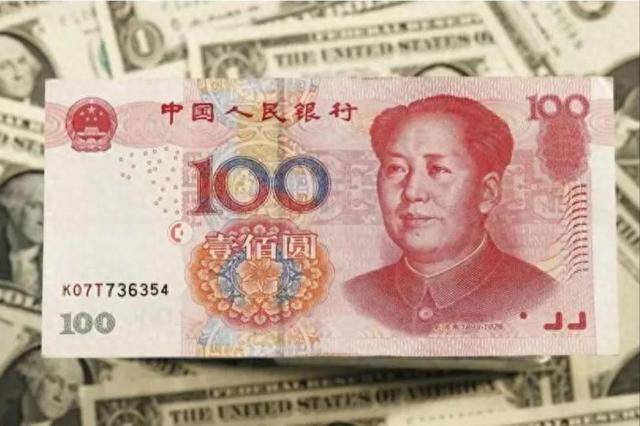
Core Insights - The offshore RMB has officially broken the "7" mark against the USD for the first time since October 2024, indicating a significant shift in the currency's trend [1][2] - The recent appreciation of the RMB is attributed to both external factors, such as the Federal Reserve's monetary policy shift, and strong internal economic fundamentals [3] External Factors - The Federal Reserve's recent interest rate cuts have led to a weakening of the USD, contributing to the RMB's rise [3] - The RMB's appreciation is also supported by China's economic resilience, with a notable trade surplus exceeding $1 trillion in the first eleven months of the year [4] Corporate Impact - Importing companies benefit from the RMB's appreciation, as it reduces procurement costs. For instance, a large manufacturing firm estimates saving 10 million RMB monthly due to favorable exchange rates [5] - Conversely, export-oriented companies face pressure on profit margins due to the stronger RMB, necessitating a reassessment of order feasibility [5] - Over 30 A-share companies have announced plans to engage in foreign exchange hedging to mitigate risks associated with currency fluctuations [5] Consumer Impact - The appreciation of the RMB has tangible benefits for consumers, particularly for families planning to study abroad, as it reduces the cost of tuition significantly [6] - Travel and shopping costs for overseas consumers are also decreasing, enhancing the affordability of international experiences [7] Policy Stance - Financial regulatory bodies emphasize maintaining the RMB's stability at a reasonable level, with recent meetings reinforcing the need for market resilience and preventing excessive fluctuations [8] Future Outlook - Market analysts express cautious optimism regarding the RMB's future, with expectations of continued strength in the short term [9] - Predictions for 2026 suggest a moderate appreciation trend, with estimates indicating the RMB could approach the 6.9 mark by year-end [9]
长三角绘就美丽中国先行区新画卷
Guo Ji Jin Rong Bao· 2025-12-30 12:02
Core Viewpoint - The "Action Plan" for the Yangtze River Delta aims to establish a model for ecological protection and green development, marking a significant step towards building a "Beautiful China" [1] Group 1: Green Development - The plan emphasizes the deep integration of digitalization, intelligence, and greening in traditional industries such as petrochemicals, steel, and textiles to enhance production efficiency and reduce emissions [2] - Achieving standardized shore power facilities at regional docks will help reduce fuel emissions from ships during port stays, improving air quality [2] - The overall elimination of National III diesel trucks in the region is expected to significantly lower exhaust emissions in the transportation sector, contributing to better air quality [2] Group 2: Ecological Protection - The Yangtze River Delta faces challenges like water pollution despite its rich water resources; enhancing water ecological protection and restoration is crucial for sustainable development [3] - The plan sets targets for improving water ecological environments, with the construction rate of beautiful rivers and lakes reaching 44% and beautiful bays over 40% [3] Group 3: Reform and Innovation - The expansion of pollutant trading pilot programs is aimed at incentivizing companies to reduce emissions through market mechanisms, enhancing resource allocation efficiency [3] - Exploring financial support models for beautiful city construction will provide funding for ecological protection and green development projects, addressing funding shortages [3] Group 4: Challenges and Opportunities - The plan acknowledges challenges in regional collaborative governance, particularly in breaking down administrative barriers for deeper cooperation [3] - Traditional enterprises may face pressures related to technological upgrades and funding during the green transition, necessitating supportive government policies [3] Group 5: Overall Impact - The implementation of the "Action Plan" is expected to yield significant results in ecological protection and green development, positioning the Yangtze River Delta as a pioneering and exemplary region for "Beautiful China" initiatives, offering replicable experiences for other areas [4]

顺差破1万亿美元,工业利润却在下滑:中国经济正在发生什么?
Sou Hu Cai Jing· 2025-12-30 10:01
Group 1 - The core viewpoint is that while the Chinese yuan has stabilized against the US dollar and trade surplus has exceeded $1 trillion, there are underlying issues such as declining industrial profits and pressure on traditional export sectors, indicating a structural transition in the economy [1][15][31] - The importance of the US as an export destination is decreasing, with ASEAN, the EU, Africa, and Latin America emerging as new growth sources for Chinese exports [7][8] - The current trade surplus is not a distortion but reflects a shift from low-cost goods to high-tech products and critical intermediate goods in the global supply chain [18][20] Group 2 - The decline in industrial profits, particularly in traditional export industries like textiles and footwear, contrasts sharply with the record trade surplus, highlighting the challenges faced by companies during this transition [17][21] - The structural changes in the economy are leading to a focus on profitability and upgrading rather than merely expanding through low prices, which is a significant shift from previous business models [24][27] - The profitability in high-tech sectors such as electronics and semiconductors is increasing, indicating a concentration of resources towards areas with long-term competitive advantages [26][29] Group 3 - The simultaneous occurrence of the yuan breaking 7, the trade surplus surpassing $1 trillion, and profit pressures reflects different facets of the same transformation, emphasizing China's critical position in global competition while acknowledging the exit of old growth models [31][33] - The focus should be on whether new growth drivers can develop quickly enough to fill the gap left by the decline of old drivers, as this transition is expected to be accompanied by discomfort and challenges [33]
新年献词丨装点此江山
Xin Lang Cai Jing· 2025-12-30 08:48
Group 1 - The core message emphasizes the importance of a strong industrial base for national prosperity and the confidence in China's industrial capabilities as it approaches the end of the 14th Five-Year Plan and the beginning of the 15th [1][2] - China's manufacturing value added is expected to increase by 8 trillion yuan during the 14th Five-Year Plan, contributing over 30% to global manufacturing growth [3] - China maintains the world's largest manufacturing scale for 15 consecutive years, with most of the 504 major industrial products ranking first in global production [3] Group 2 - Traditional industries are undergoing transformation, with advancements in energy efficiency and the emergence of smart factories and industrial robots, which account for over 50% of global installations [4] - Emerging industries such as new energy vehicles, photovoltaics, and artificial intelligence are rapidly developing, with over 60 advanced manufacturing clusters leading the way [4] - Future industries are focusing on quantum computing, laser manufacturing, and bio-manufacturing technologies, showcasing China's capability to overcome technological challenges [5] Group 3 - The Chinese government emphasizes the importance of prioritizing people's livelihoods in economic planning, as highlighted in the recent Central Economic Work Conference [6] - The 15th Five-Year Plan aims to establish a modern industrial system centered on advanced manufacturing, reinforcing the momentum of high-quality industrial development [6] - The ultimate mission of China's industrial sector is to create a better life for the people, aligning with the aspirations for improved living standards [6]