
公共事业

Search documents
科普向!硬核解读美联储降息
Sou Hu Cai Jing· 2025-09-18 18:03
Group 1: Federal Reserve Rate Cut - The Federal Reserve announced a 25 basis point rate cut, lowering the target range for the federal funds rate to 4%-4.25%, marking the first rate cut since December 2024 [2] - The market reaction showed a mixed performance, with the Dow Jones rising by 0.57%, while the S&P 500 slightly declined by 0.1%, and the Nasdaq fell by 0.33%, indicating varied responses to the rate cut [2] - Traditional sectors like utilities and consumer staples performed better due to lower financing costs and defensive attributes, while high-valuation tech stocks showed signs of profit-taking [2] Group 2: Market Reactions and Currency Movements - The Nasdaq China Golden Dragon Index surged by 2.85%, with notable gains in Chinese companies like Baidu, which rose by 11.3% [2] - The US dollar index experienced significant volatility, dropping to 96.22 before rebounding to around 97, while the onshore RMB closed at 7.1056 against the dollar, reaching a new high since November of the previous year [3] - Gold prices reached a historical high, surpassing $3700 per ounce, with a year-to-date increase exceeding 40% [3] Group 3: Economic Context and Implications - The Fed's rate cut is seen as a preventive measure amid slowing economic growth, with employment risks rising and non-farm payrolls increasing by only 22,000 in August, far below the expected 75,000 [3] - The current economic situation reflects a combination of economic slowdown and persistent inflation, complicating the Fed's decision-making process [5] - The rate cut is expected to stimulate economic activity through lower funding costs, impacting exchange rates, capital flows, and asset pricing [4] Group 4: Impact on China and Global Markets - The Fed's rate cut creates favorable conditions for China's central bank to consider rate cuts or reserve requirement ratio reductions to support the economy [7] - Chinese sectors such as metals, energy, and financials are likely to benefit from increased global liquidity and demand recovery, while export-oriented companies may face pressure from RMB appreciation [7] - The capital flow dynamics are influenced by the interest rate differential between the US and China, with a significant gap attracting capital towards US assets [6] Group 5: Implications for Individuals - The rate cut is expected to lower mortgage rates, easing monthly payment burdens for individuals [8] - Investment strategies may shift towards equities and gold, with recommendations for conservative investors to consider gold ETFs and high-grade bonds [8] - The Fed may implement additional rate cuts in the coming months, with the terminal rate projected between 3.5%-4.0%, balancing employment pressures and inflation control [9]


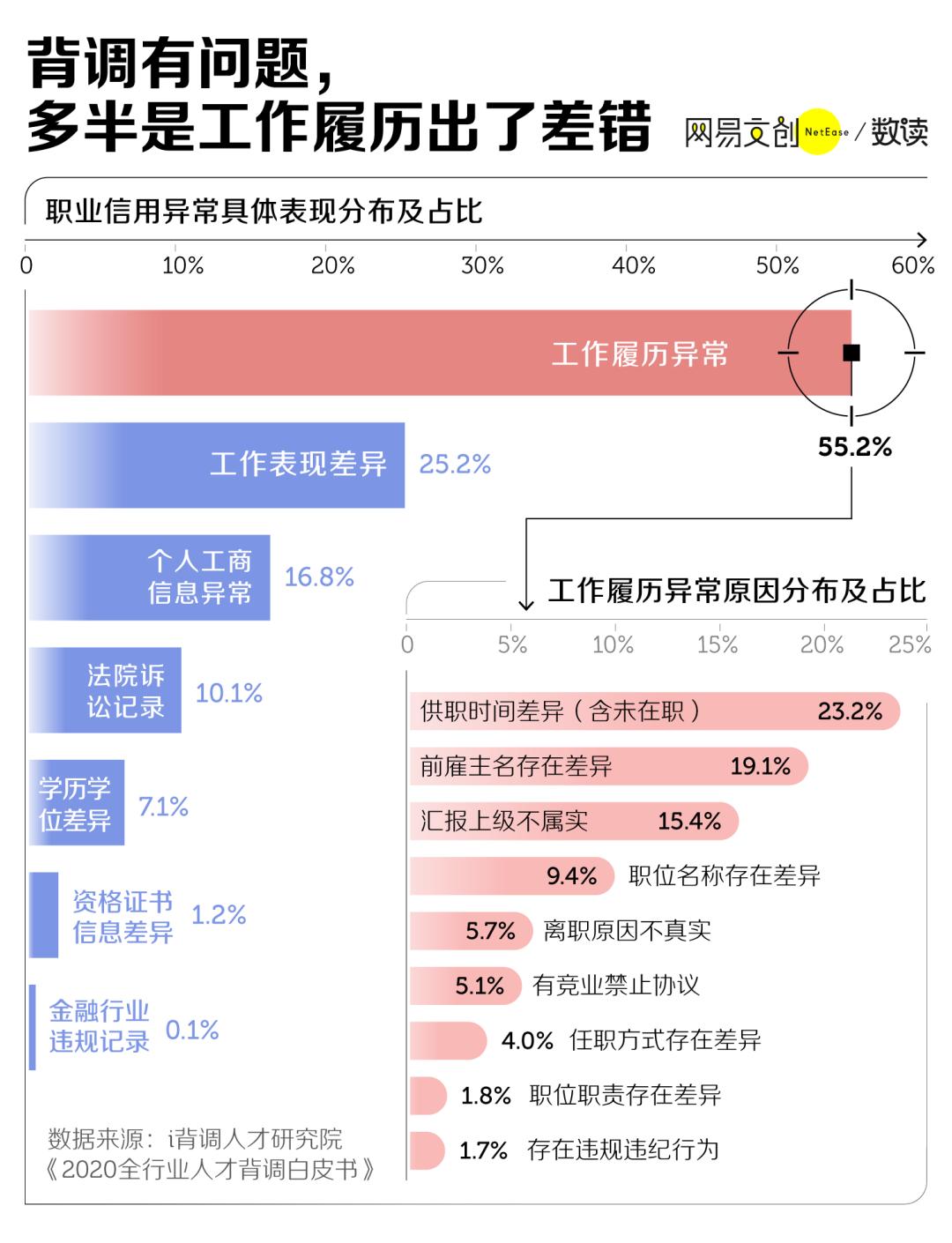
最离谱的入职背调,坑惨打工人
3 6 Ke· 2025-09-12 07:35
Group 1 - Background checks are increasingly common in the job market, initially targeting executives but now extending to regular employees [11][3] - Over half of background check issues are related to discrepancies in work history, with common problems including inflated or shortened employment durations and fabricated job experiences [3][6] - The real estate industry has a high incidence of background check issues, with 49.3% of candidates having some form of problem, while the education and training sector shows a high rate of false qualifications [10][7] Group 2 - Background checks utilize a color-coded system to indicate the severity of discrepancies, with red indicating serious mismatches and green indicating all information is accurate [6][3] - Many candidates have faced issues due to subjective evaluations from previous employers, which can lead to unexpected failures in background checks [17][14] - The lack of transparency in the background check process often leaves candidates unaware of the specific reasons for their rejection [14][11] Group 3 - Candidates are advised to choose trustworthy contacts for background checks and to communicate clearly with potential employers about the scope and timing of the checks [23][28] - Legal disputes have arisen from background check failures, with many candidates seeking compensation for lost job offers due to issues that were often unrelated to their actual job performance [19][22] - The increasing scrutiny of background checks has led to a culture of sharing experiences among job seekers, highlighting the challenges faced during the process [22][28]
杨东、赵军、董承非、冯柳……持仓揭秘!
天天基金网· 2025-08-26 06:11
Core Viewpoint - The article highlights the recent adjustments made by well-known private equity fund managers, indicating a strong interest in sectors such as electronics, pharmaceuticals, and public utilities, suggesting a potential upward trend in the market driven by both liquidity and fundamental factors [3][11][14]. Summary by Sections Private Equity Fund Movements - As of August 22, over 60 listed companies have seen investments from billion-level private equity funds, with a total holding value exceeding 26 billion yuan, including 13 new investments and 13 increased holdings [3][11]. - Notable fund managers have shown interest in electronic and pharmaceutical sectors, with specific examples including Ningquan Asset increasing its stake in Zhouming Technology and Zhao Jun's firm maintaining its position in Shengyi Technology [3][5][7]. Performance of Specific Companies - Zhouming Technology reported a revenue of 3.658 billion yuan for the first half of the year, a year-on-year increase of 7.38%, and a net profit of 121 million yuan, up 20.61% [7]. - Yang Dong's Ningquan Asset held 8.113 million shares of Zhouming Technology by the end of Q2, with a market value close to 60 million yuan [5][7]. - Yang Dong's firm also entered the top ten shareholders of Tianhao Energy, holding 14.557 million shares valued at 73.657 million yuan [9]. Sector Preferences - The article notes that the electronics and pharmaceuticals sectors are favored by private equity funds, with 21 funds appearing in the top ten shareholders of 61 A-share companies, holding a total value of 26.068 billion yuan [11]. - High-profile funds have made significant moves in the pharmaceutical sector, with examples including the acquisition of shares in Taiji Group and Mengke Pharmaceutical, indicating a strong belief in the growth potential of these companies [11][12]. Market Outlook - The market is perceived to be in the early stages of a trend-driven upward movement, with expectations that fundamental factors will take over from liquidity-driven growth [14]. - Investment strategies are focusing on technology growth areas such as robotics and AI applications, as well as sectors benefiting from domestic demand recovery and structural opportunities [14].

险资大力加仓股票:上半年净买入6400亿元 环比增长78%
智通财经网· 2025-08-17 08:52
Core Viewpoint - Current valuations of A-shares and Hong Kong stocks are relatively low, while dividend yields are high, suggesting that long-term capital allocation to equities may yield substantial returns and promote stable capital market operations [1] Group 1: Insurance Capital Allocation Trends - Insurance capital utilization has surpassed 36 trillion yuan, with a strong push towards equity investments due to low interest rates and asset scarcity [1][3] - As of the end of Q2, funds allocated to stocks reached 3.07 trillion yuan, an 8.9% increase from Q1, representing a net purchase of approximately 640 billion yuan in the first half of the year [3] - The proportion of insurance funds allocated to equities has risen from 7.3% at the end of 2024 to 8.47% [3] Group 2: Investment Strategy Shifts - Insurance funds are transitioning from a "position control" strategy to a "track selection" approach, adapting to market volatility and structural changes [2][5] - The preference for large-cap, high-dividend, and low-volatility assets is evident, with banks being the most favored sector, followed by public utilities and transportation [6] Group 3: Long-term Investment Reforms - Recent approvals for private fund management companies signal progress in long-term investment reforms for insurance capital, with the number of pilot funds increasing to seven [8] - Notable private equity funds have been established, including a 50 billion yuan fund initiated by China Life and New China Life, which has already invested in several A-share companies [8]
险资大力加仓股票:上半年净买入环比增长78%
财联社· 2025-08-17 08:36
Core Viewpoint - Current valuations of A-shares and Hong Kong stocks are relatively low, while dividend yields are high, suggesting that long-term capital allocation to equities may yield substantial returns and promote stable capital market operations [1][3]. Group 1: Insurance Capital Allocation Trends - Insurance capital utilization has surpassed 36 trillion yuan, with a strong push towards equity investments due to low interest rates and asset scarcity [1][3]. - As of the end of Q2, the balance of funds directed towards stocks reached 3.07 trillion yuan, reflecting an 8.9% increase from Q1, equating to a net purchase of approximately 640 billion yuan in the first half of the year [3][4]. - The proportion of insurance funds allocated to equities has risen from 7.3% at the end of 2024 to 8.47% [3][4]. Group 2: Investment Strategy Shifts - The insurance sector is transitioning from a focus on "controlling positions" to "selecting sectors," adapting to increased market volatility during the economic transition [2][5]. - Insurance companies have made 28 equity stakes in 23 listed companies this year, marking a four-year high in both the number of actions and companies involved [6]. - The preference for large-cap, high-dividend, and low-volatility stocks is evident, with banks being the most favored sector, followed by public utilities, transportation, and energy [6]. Group 3: Long-term Investment Reforms - Recent developments in long-term investment reforms for insurance capital include the establishment of several private fund management companies, with a total of seven pilot funds now in operation [8]. - Notable initiatives include the launch of the 500 billion yuan private equity fund by China Life and New China Life, which has already invested in several A-share companies [8].

险资大力加仓股票:上半年净买入6400亿元,环比增长78%丨36万亿险资重构资产底仓②
Xin Lang Cai Jing· 2025-08-17 08:17
Group 1 - The current valuation of A-shares and Hong Kong stocks is relatively low, while dividend yields are high, suggesting that long-term capital allocation to equities may yield substantial returns [1][2] - Insurance funds have significantly increased their stock allocations, with the proportion reaching a recent high, driven by low interest rates and asset scarcity [1][2] - As of the end of Q2, the balance of insurance funds allocated to stocks was 3.07 trillion yuan, an 8.9% increase from the previous quarter, equating to a net purchase of approximately 640 billion yuan in the first half of the year [2][3] Group 2 - The shift in insurance funds' investment strategy from "controlling positions" to "selecting sectors" is necessary due to increased market volatility during the economic transition [2][4] - Insurance funds have shown a preference for large-cap, high-dividend, and low-volatility assets, with banks being the most favored sector, followed by public utilities, transportation, and energy [4][5] - The investment in long-term equity has increased to 2.75 trillion yuan, representing 7.6% of the overall asset allocation, while the allocation to securities investment funds stands at 4.6% [3][4] Group 3 - Recent regulatory changes have facilitated insurance funds' entry into the capital market, allowing for increased investments through private equity funds and shareholding [4][7] - The number of equity stakes taken by insurance companies has reached a four-year high, with 28 stakes in 23 listed companies this year [4][7] - The establishment of new private fund management companies by major insurance firms indicates a growing trend towards long-term investment strategies [7]
红利国企ETF(510720)盘中飘红,稳定型红利资产防御属性受关注
Sou Hu Cai Jing· 2025-08-06 05:25
Group 1 - The core viewpoint emphasizes the importance of high dividend stocks in the current uncertain market environment, suggesting that stable dividend assets, such as banks and public utilities, are preferable to cyclical dividend assets [1] - The report indicates that the global demand and the domestic "real estate + infrastructure" upturn have not yet reached a turning point, highlighting the need for caution in investment strategies [1] - The dividend-focused strategy recommends paying attention to stable dividend assets due to their defensive attributes, which provide greater allocation value in the current market context [1] Group 2 - The Hongguo Dividend ETF (510720) tracks the Hongguo Dividend Index (000151), which selects stocks with high dividend characteristics from the market, covering multiple industries [1] - The index components are primarily inclined to include companies that can consistently provide stable cash dividends and possess good financial health, focusing on value investment to reflect the overall performance of high-dividend listed companies [1] - For investors without stock accounts, alternatives such as the Guotai Shanghai Stock Exchange State-Owned Enterprise Dividend ETF Initiated Link A (021701) and Link C (021702) are suggested [1]
量化大势研判:预期成长优势差继续扩大
Minsheng Securities· 2025-08-04 06:40
Quantitative Models and Construction Methods 1. Model Name: Quantitative Market Trend Judgment Framework - **Model Construction Idea**: The framework identifies the dominant market style by comparing the intrinsic attributes of assets, which are tied to their industry lifecycle stages. It prioritizes assets based on the sequence of growth rate (g) > return on equity (ROE) > dividend yield (D) to determine the most advantageous assets and focuses on the most promising sectors[5][6][9] - **Model Construction Process**: 1. Define five style stages for equity assets: external growth, quality growth, quality dividend, value dividend, and distressed value[5] 2. Compare assets globally to identify advantageous ones based on their intrinsic characteristics[5] 3. Use the priority sequence g > ROE > D to evaluate whether good assets exist and whether they are overvalued[5][6] 4. Focus on sectors with the most advantageous characteristics in the current market[5][6] - **Model Evaluation**: The framework has demonstrated strong explanatory power for A-share market style rotations since 2009, achieving an annualized return of 26.70%[16] 2. Model Name: Asset Comparison Strategy - **Model Construction Idea**: This model categorizes assets into primary and secondary groups. Primary assets include actual growth, expected growth, and profitability assets. Secondary assets are prioritized based on crowding levels and fundamental factors[9] - **Model Construction Process**: 1. Classify assets into primary (expected growth, actual growth, profitability) and secondary (quality dividend, value dividend, distressed value) categories[9] 2. Allocate market funds to primary assets when any of them show an advantage; otherwise, shift to secondary assets[9] 3. Rank secondary assets by crowding levels and fundamental factors, with the order: quality dividend > value dividend > distressed value[9] --- Model Backtesting Results 1. Quantitative Market Trend Judgment Framework - Annualized return: 26.70% since 2009[16] - Historical performance: Positive excess returns in most years, with limited effectiveness in 2011, 2012, 2014, and 2016[16][19] - Excess returns by year: - 2009: 51% - 2010: 14% - 2013: 36% - 2017: 27% - 2020: 44% - 2022: 62%[19] --- Quantitative Factors and Construction Methods 1. Factor Name: Expected Growth (gf) - **Factor Construction Idea**: Measures the expected growth rate based on analysts' forecasts, regardless of the industry lifecycle stage[6] - **Factor Construction Process**: 1. Use analysts' forecasted growth rates as the primary input[6] 2. Calculate the spread (Δgf) between top and bottom groups to assess the trend of expected growth[21] - **Factor Evaluation**: The factor has shown consistent expansion, with top groups driving the increase, indicating analysts' optimism about high-growth sectors[21] 2. Factor Name: Actual Growth (g) - **Factor Construction Idea**: Focuses on performance momentum (Δg) during transition and growth phases[6] - **Factor Construction Process**: 1. Calculate the spread (Δg) between top and bottom groups based on actual growth rates[25] 2. Monitor the trend of Δg to identify growth opportunities in the market[25] - **Factor Evaluation**: The factor has shown gradual expansion, with opportunities in sectors maintaining strong momentum despite a slowdown in top-tier growth[25] 3. Factor Name: Profitability (ROE) - **Factor Construction Idea**: Evaluates valuation levels using the PB-ROE framework, focusing on mature industries[6] - **Factor Construction Process**: 1. Calculate the PB-ROE residuals for each industry[40] 2. Rank industries based on residuals to identify undervalued high-ROE sectors[40] - **Factor Evaluation**: The factor's advantage has declined, and its crowding level remains low, suggesting limited opportunities in the current market[28] 4. Factor Name: Quality Dividend (DP+ROE) - **Factor Construction Idea**: Combines dividend yield (DP) and ROE to identify high-quality dividend-paying industries[6] - **Factor Construction Process**: 1. Calculate DP and ROE scores for each industry[43] 2. Combine the scores to rank industries and select the top-performing ones[43] - **Factor Evaluation**: The factor has shown significant excess returns in specific years, such as 2016, 2017, and 2023[43] 5. Factor Name: Value Dividend (DP+BP) - **Factor Construction Idea**: Combines dividend yield (DP) and book-to-price ratio (BP) to identify undervalued dividend-paying industries[6] - **Factor Construction Process**: 1. Calculate DP and BP scores for each industry[47] 2. Combine the scores to rank industries and select the top-performing ones[47] - **Factor Evaluation**: The factor has demonstrated strong excess returns in years like 2009, 2017, and 2021-2023[47] 6. Factor Name: Distressed Value (PB+SIZE) - **Factor Construction Idea**: Identifies industries with low price-to-book ratios (PB) and small market capitalization (SIZE), focusing on stagnation and recession phases[6] - **Factor Construction Process**: 1. Calculate PB and SIZE scores for each industry[51] 2. Combine the scores to rank industries and select the lowest-scoring ones[51] - **Factor Evaluation**: The factor has shown significant excess returns during periods like 2015-2016 and 2021-2023[51] --- Factor Backtesting Results 1. Expected Growth (gf) - Δgf continues to expand, driven by top-tier groups, indicating analysts' optimism about high-growth sectors[21] 2. Actual Growth (g) - Δg shows gradual expansion, with opportunities in sectors maintaining strong momentum despite a slowdown in top-tier growth[25] 3. Profitability (ROE) - ROE advantage continues to decline, with low crowding levels and limited opportunities in the current market[28] 4. Quality Dividend (DP+ROE) - Significant excess returns in 2016, 2017, and 2023[43] 5. Value Dividend (DP+BP) - Strong excess returns in 2009, 2017, and 2021-2023[47] 6. Distressed Value (PB+SIZE) - Significant excess returns during 2015-2016 and 2021-2023[51]
政府就业被高估——7月美国非农数据解读【陈兴团队•财通宏观】
陈兴宏观研究· 2025-08-02 05:56
Core Viewpoint - The July non-farm employment data shows a significant downward revision in previous months, indicating an overestimation of employment levels, particularly in government sectors. The overall labor market is cooling down, with rising unemployment rates and declining labor participation rates [2][3][5]. Employment Data Revision - The July non-farm employment recorded an increase of 73,000 jobs, but previous months' data were heavily revised downwards. June's employment was adjusted from 147,000 to 14,000, and May's from 144,000 to 19,000, totaling a downward revision of 258,000 jobs [3][2]. Unemployment Rate Trends - The unemployment rate rose slightly by 0.1 percentage points to 4.2% in July, while the U6 unemployment rate increased by 0.2 percentage points to 7.9%. This indicates a broad cooling of the job market, with a decrease in labor participation rate to 62.2%, the lowest since the beginning of 2023 [5][6]. Sector-Specific Employment Changes - Job growth in July was concentrated in the education and healthcare sectors, with retail, education, and financial activities seeing the most significant increases. However, government employment decreased by 10,000 jobs, marking the third negative month this year, with substantial downward revisions in previous months [6][2]. Labor Market Supply and Demand - As of June, job vacancies in the U.S. fell to 7.44 million, with a vacancy rate of 4.4%. The labor supply-demand gap recorded 422,000, indicating a return to pre-pandemic levels and suggesting a balance in the labor market [8]. Wage Growth Trends - Average hourly earnings in July increased by 0.3% month-over-month, with a year-over-year growth of 3.9%. However, long-term trends show a slowdown in wage growth since November 2024 [9][10]. Real Wage Growth - The real wage growth, adjusted for inflation, showed a year-over-year increase of 1% in June, down by 0.4 percentage points from the previous month. This indicates stable wage income growth [10]. Sectoral Wage Changes - In July, the highest year-over-year wage growth was observed in the retail and business services sectors, at 5.2% and 5.1%, respectively. Conversely, the slowest growth was in public utilities and construction, with declines of approximately 0.7 and 0.2 percentage points [12]. Interest Rate Expectations - Following the release of weak employment data, expectations for interest rate cuts in September have increased, with the probability rising from 40% to 80%. The anticipated number of rate cuts for the year has also increased from 1.3 to 2.2 [16].

关注红利国企ETF(510720)投资机会,市场关注防御属性与稳定回报潜力
Sou Hu Cai Jing· 2025-08-01 05:37
Group 1 - The core viewpoint emphasizes the importance of high dividend strategies amidst rising uncertainty, suggesting a focus on stable dividend stocks over cyclical ones due to their defensive attributes and ability to provide predictable returns [1] - The report highlights that the global demand and the turning point for domestic "real estate + infrastructure" have not yet arrived, indicating a cautious outlook for these sectors [1] - It recommends stable dividend stocks, such as those in banking and public utilities, as a primary investment strategy during the current market phase, especially in a low interest rate environment [1] Group 2 - The Hong Kong Dividend ETF (510720) tracks the Shangguo Dividend Index (000151), which selects listed companies with strong dividend records, covering traditional industries that focus on stable returns and value investment [1] - For investors without stock accounts, it suggests considering the Guotai Shanghai Stock Exchange State-Owned Enterprise Dividend ETF Initiated Link A (021701) and Link C (021702) as alternative investment options [1]