
公用事业

Search documents
A股尾盘,多股逆势拉升封板,6股获巨额资金抢筹
Zheng Quan Shi Bao· 2026-01-20 09:39
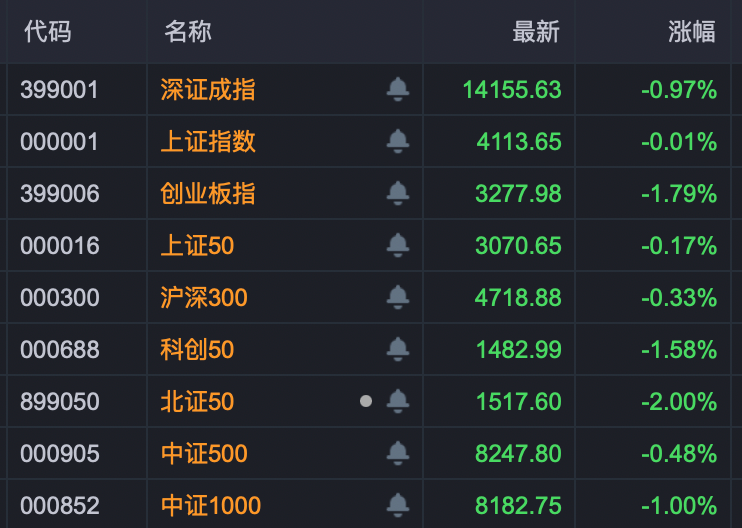
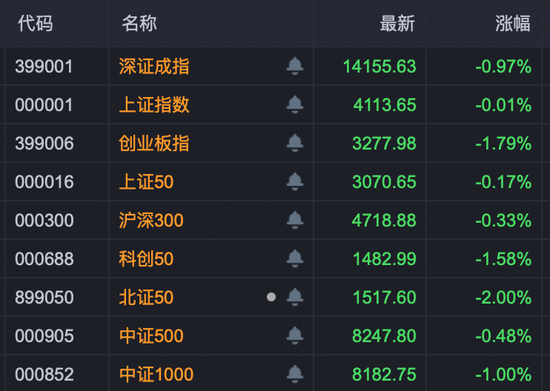
Market Overview - On January 20, the A-share market experienced fluctuations, with the Shanghai Composite Index barely holding above 4100 points and the ChiNext Index falling below 3300 points, while the Shenzhen Component, CSI 300, and CSI 500 all closed with small bearish candles. The market turnover reached 2.8 trillion yuan [1]. Index Performance - The Shenzhen Component Index closed at 14155.63, down 0.97% - The Shanghai Composite Index closed at 4113.65, down 0.01% - The ChiNext Index closed at 3277.98, down 1.79% - The CSI 300 Index closed at 4718.88, down 0.33% - The CSI 500 Index closed at 8247.80, down 0.48% [2]. Sector Performance - Chemical, precious metals, real estate, and aviation sectors showed the highest gains, while aerospace equipment, photovoltaic equipment, communication devices, and glass fiber sectors experienced the largest declines [2]. Fund Flow Analysis - The public utilities sector saw a net inflow of over 3.7 billion yuan, while the construction and decoration sector received over 3.6 billion yuan. Real estate, banking, basic chemicals, and building materials sectors each gained over 2 billion yuan in net inflows. Transportation and retail sectors also saw net inflows exceeding 1 billion yuan. Conversely, electronics, power equipment, communications, defense, and computer sectors experienced net outflows exceeding 10 billion yuan [3]. Notable Stocks - China XD Electric (601179) saw a net inflow of 1.561 billion yuan, with a price increase of 8.84% - Shanzhi High-Tech (000981) had a net inflow of 1.423 billion yuan, with a price increase of 6.69% - Zhejiang Wenhu (600986) had a net inflow of 1.318 billion yuan, with a price increase of 10.04% - China Power Construction (601669) had a net inflow of 1.305 billion yuan, with a price increase of 7.02% [4]. Market Outlook - According to Yingda Securities, the Shanghai Composite Index is expected to oscillate around the 4100-point mark, indicating a market cooling period. This does not suggest a deep correction but rather a healthy consolidation after rapid gains. Investors are advised to take profits on short-term high-flying stocks while looking for value opportunities in underperforming sectors with solid fundamentals [4]. Future Predictions - Zhongyin International predicts that by 2026, the core broad-based indices of the Chinese stock market may see an overall increase of over 40%, driven by nearly 20% profit growth and 20% valuation improvement. Key sectors expected to lead include technology manufacturing, biomedicine, national defense, and non-ferrous metals, while sectors like communications, internet, brokerage insurance, new consumption, and real estate may have potential for catch-up gains [5]. Commodity Trends - Precious metals stocks surged in the afternoon, with the sector index reversing from an early drop of over 3% to a gain of 3.5%, reaching a historical high. Notable stocks include Hunan Silver and Zhaojin Gold, which quickly hit the daily limit [5][6]. - International gold and silver prices continued to rise, with London spot gold surpassing $4700 per ounce, marking a historical high. The trend of central banks purchasing gold is expected to support gold prices amid ongoing geopolitical tensions [6]. Chemical Industry Insights - The chemical sector showed strong performance, with various sub-sectors like daily chemicals and petrochemicals experiencing significant gains. The recent global price surge in chemicals has been noted, with major companies like BASF and Dow increasing prices across multiple regions [7][9]. - Recent data indicates that chemical product prices have generally increased, with synthetic rubber seeing the highest rise of 11.7% [9].

如何从一二级市场联动寻找产业债交易信号?(行业篇)
Soochow Securities· 2026-01-20 09:28
Report Industry Investment Rating No information provided in the content. Core Viewpoints - The secondary - market trends of industrial bond sub - industries show a divergence in the correlation between primary and secondary markets. This divergence may be due to differences in supply among industries and differences in bond liquidity and trading popularity within each industry. If an industry has many issuing entities with strong willingness and ability to issue bonds and is in a good development trend, the probability of a synchronous resonance relationship between primary - market supply and secondary - market demand is relatively high, which can improve the accuracy of judging trading signals of narrowing spreads from daily net financing [1][14]. - Most industries have trading signals transmitted from primary - market supply to secondary - market demand, including comprehensive, non - ferrous metals, and others. Some industries show a stronger negative correlation between primary - market supply and secondary - market demand, such as comprehensive and non - ferrous metals. Some industries have a weak correlation between daily net financing and daily spreads, including communication and food and beverage [2][4]. Summary by Directory 1. Industrial Bond Sub - industries Show Divergence in Primary - Secondary Market Trend Correlation - **Research Method**: Classify industrial bond issuers by Shenwan primary industries, calculate the daily net financing and daily credit spreads of each sub - industry from January 1, 2025, to December 19, 2025, to observe the correlation between primary - market supply and secondary - market demand [12]. - **Divergence Performance**: Most industries have trading signals transmitted from primary - market supply to secondary - market demand, while some do not show this feature significantly [13]. - **Reasons for Divergence**: Differences in supply among industries are related to the number, size, and life - cycle stage of issuing entities. Differences in bond liquidity and trading popularity within industries are related to the scale of outstanding bonds, valuation levels, and event catalysts [14]. 1.1. Industries with Obvious Correlation - **Comprehensive Industry**: From January to March 2025, daily net financing decreased and daily spreads increased; from March to June, daily net financing increased and daily spreads decreased; from June to December, both were in a low - level oscillation [21]. - **Non - ferrous Metals Industry**: From January to July 2025, daily net financing increased and daily spreads decreased; from July to September, daily net financing decreased and daily spreads increased; from October to December, both were in a low - level oscillation [25]. - **Other Industries**: Similar analysis is conducted for industries such as pharmaceutical biology, social services, and others, with different trends in different time intervals [27][30][32]. - **Common Features**: These industries generally have a large scale of outstanding bonds and high institutional investor attention, which is conducive to the transmission of primary - market supply changes to secondary - market spread changes [3][87]. 1.2. Industries with General Correlation - **Industries Included**: Communication, food and beverage, and other industries have a weak correlation between daily net financing and daily spreads, and the linkage and transmission between primary - and secondary - market indicators are relatively weak [4][13]. - **Reasons**: These industries have low participation in the bond market, and their secondary - market trading demand is more affected by overall bond - market trends, industry risk premiums, and liquidity premiums. Different types of industries have specific reasons for the weak correlation [4][90][91].
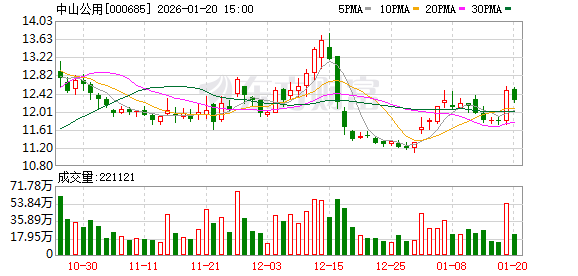
中山公用最新股东户数环比下降8.43%
Zheng Quan Shi Bao Wang· 2026-01-20 08:47
中山公用1月20日披露,截至2026年1月10日公司股东户数为43817户,较上期(2025年12月31日)减少 4032户,环比降幅为8.43%。 公司发布的三季报数据显示,前三季公司共实现营业收入31.43亿元,同比下降7.04%,实现净利润 12.11亿元,同比增长18.11%,基本每股收益为0.8300元,加权平均净资产收益率6.90%。(数据宝) (文章来源:证券时报网) 证券时报·数据宝统计,截至发稿,中山公用收盘价为12.27元,下跌1.76%,本期筹码集中以来股价累 计上涨5.32%。具体到各交易日,5次上涨,7次下跌。 融资融券数据显示,该股最新(1月19日)两融余额为6.83亿元,其中,融资余额为6.82亿元,本期筹码 集中以来融资余额合计减少4401.27万元,降幅为6.06%。 ...

A股尾盘,多股逆势拉升封板!6股获巨额资金抢筹!
Xin Lang Cai Jing· 2026-01-20 08:47
Market Overview - The A-share market experienced fluctuations with the Shanghai Composite Index barely holding above 4100 points, while the ChiNext Index fell below 3300 points. Major indices like the Shenzhen Component, CSI 300, and CSI 500 closed with small bearish candles, and the market turnover reached 2.8 trillion yuan [1][11]. Index Performance - The latest index performances are as follows: - Shenzhen Component: 14155.63 (-0.97%) - Shanghai Composite: 4113.65 (-0.01%) - ChiNext Index: 3277.98 (-1.79%) - CSI 300: 4718.88 (-0.33%) - CSI 500: 8247.80 (-0.48%) [2][12]. Sector Performance - The chemical, precious metals, real estate, and aviation sectors showed the highest gains, while aerospace equipment, photovoltaic equipment, communication devices, and glass fiber sectors faced the largest declines [2][12]. Fund Flow Analysis - The public utilities sector saw a net inflow of over 3.7 billion yuan, while the construction and decoration sector received over 3.6 billion yuan. Real estate, banking, basic chemicals, and building materials also attracted over 2 billion yuan each. In contrast, sectors like electronics, power equipment, and defense saw net outflows exceeding 10 billion yuan [3][13]. Notable Stocks - Key stocks with significant net inflows include: - China Xidian: 15.63 yuan (+8.84%) with a net inflow of 1.56 billion yuan - Shanzhi High-Tech: 5.42 yuan (+6.69%) with a net inflow of 1.42 billion yuan - Zhejiang Wenhu: 9.97 yuan (+10.04%) with a net inflow of 1.32 billion yuan [4][14]. Future Market Outlook - Yingda Securities suggests that the market is in a cooling phase, with the Shanghai Composite Index fluctuating around the 4100-point mark. This does not indicate a deep correction but rather a healthy consolidation after rapid gains. Investors are advised to take profits on overbought stocks while looking for value opportunities in underperforming sectors [5][15]. Long-term Projections - Zhongyin International forecasts that by 2026, the core broad-based index of the Chinese stock market could see an overall increase of over 40%, driven by nearly 20% profit growth and 20% valuation expansion. Key sectors expected to lead include technology manufacturing, biomedicine, and defense, while sectors like telecommunications and real estate may have potential for catch-up gains [5][15]. Precious Metals Market - The precious metals sector saw significant activity, with gold prices reaching a historical high of over 4700 USD per ounce. Domestic gold futures also surged, reflecting strong demand amid ongoing global economic uncertainties [6][16]. Chemical Industry Trends - The chemical sector is experiencing a global price surge, with major companies like BASF and Dow Chemical implementing price increases across various regions. Recent data indicates that 11 out of 16 monitored chemical products have seen price increases, with synthetic rubber rising by 11.7% [8][19]. Structural Investment Opportunities - Galaxy Securities highlights that new demand drivers are expected to accelerate a cyclical reversal in the chemical industry, suggesting a focus on structural investment opportunities as supply constraints emerge [20].
减持中信证券增持北京控股 越秀资本回应大手笔调仓
2 1 Shi Ji Jing Ji Bao Dao· 2026-01-20 04:49
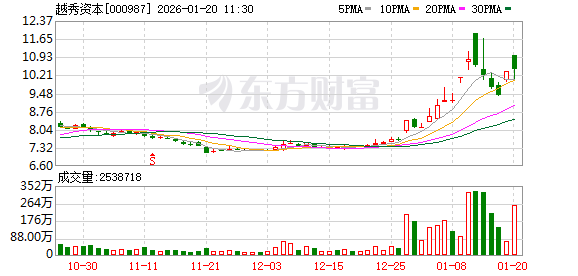
Core Viewpoint - Yuexiu Capital is undergoing significant asset restructuring, involving the sale of a portion of its stake in CITIC Securities and an increase in its holdings in Beijing Enterprises Holdings [2][3] Group 1: Asset Sale and Purchase - Yuexiu Capital plans to sell up to 1% of its total shares in CITIC Securities, with the net profit from this sale not exceeding 50% of the company's audited net profit for 2024 [2] - The company intends to use up to 1 billion RMB to increase its stake in Beijing Enterprises Holdings, potentially raising its ownership above 5%, which triggers the mandatory disclosure threshold in the Hong Kong market [2][3] - The estimated transaction value for the CITIC Securities sale, based on the closing price of 28.08 RMB per share, could reach approximately 4.162 billion RMB if the maximum stake is sold [3] Group 2: Financial Implications - The proceeds from the CITIC Securities sale could cover the maximum investment required for the increase in holdings in Beijing Enterprises, as the previous reduction in stake was 0.40%, which would yield sufficient cash for the new investment [3] - As of January 16, 2026, Yuexiu Capital already holds 55.913 million shares of Beijing Enterprises, representing 4.44% of its total shares, and if the maximum investment is made, the ownership could rise to 7.19% [3] Group 3: Governance and Strategic Intent - The company clarified that the increase in stake in Beijing Enterprises is not aimed at gaining control but rather to enhance investment returns, and it will account for the investment using the equity method [4][5] - The governance structure has seen changes, with the new chairman of Yuexiu Capital, Li Feng, taking over just days before the announcements, indicating a strategic shift in management [6] - Beijing Enterprises is recognized as the largest overseas financing platform under the Beijing government, focusing on urban public utilities, which aligns with Yuexiu Capital's investment strategy [6]


【盘中播报】沪指跌0.73% 国防军工行业跌幅最大
Zheng Quan Shi Bao Wang· 2026-01-20 03:37
Market Overview - The Shanghai Composite Index fell by 0.73% as of 10:27 AM, with a trading volume of 783.95 million shares and a transaction value of 1,378.36 billion yuan, an increase of 0.13% compared to the previous trading day [1] Industry Performance - Real estate, oil and petrochemicals, and beauty care sectors showed the highest gains, with increases of 0.86%, 0.72%, and 0.70% respectively [1] - The defense and military, comprehensive, and communication sectors experienced the largest declines, with decreases of 3.41%, 3.19%, and 3.06% respectively [1][2] Leading Stocks - In the real estate sector, Chengdu Investment Holdings led with a gain of 10.11% [1] - In the oil and petrochemical sector, Blue Flame Holdings increased by 2.86% [1] - In the beauty care sector, Yanjiang Co. rose by 9.34% [1] Detailed Industry Data - Real Estate: 0.86% increase, transaction value of 189.40 billion yuan, up 20.93% from the previous day [1] - Oil and Petrochemicals: 0.72% increase, transaction value of 80.28 billion yuan, up 26.01% from the previous day [1] - Beauty Care: 0.70% increase, transaction value of 35.84 billion yuan, up 11.01% from the previous day [1] - Defense and Military: 3.41% decrease, transaction value of 883.06 million yuan, up 45.81% from the previous day [2] - Communication: 3.06% decrease, transaction value of 754.04 million yuan, up 0.40% from the previous day [2]
红利资产逆市活跃,红利低波50ETF(515450)红盘上涨1.15%,高股息红利板块高性价比防御价值凸显
Sou Hu Cai Jing· 2026-01-20 03:35
Group 1 - The core viewpoint is that the market has experienced a cooling period despite previous strong performance, with significant net outflows from major ETFs and a need for attention on fund movements in the short term, while the long-term outlook for dividend stocks remains favorable due to their relative value and stability [1] - The recent market conditions have led to a rise in margin financing ratios and a notable net outflow exceeding 120 billion from the market, impacting large-cap stocks such as major telecom operators and oil companies [1] - The macroeconomic indicators, including inflation and social financing, are currently favorable for dividend stocks, and the divergence in market styles indicates a potential for recovery in the dividend sector [1] Group 2 - Zhejiang Securities analysis indicates that the valuation of dividend stocks remains at historically low levels, reflecting the asset revaluation potential due to the appreciation of the RMB and their defensive value during economic structural transitions [2] - The Dividend Low Volatility 50 ETF (515450) closely tracks the performance of the S&P China A-Share Large Cap Dividend Low Volatility 50 Index, which measures the performance of the 50 least volatile high dividend yield large-cap stocks in the Chinese A-share market [2]
147家公司2025年业绩预增
Zheng Quan Shi Bao Wang· 2026-01-20 01:48
Core Insights - A total of 500 companies have released their performance forecasts for 2025, with 147 companies expecting profit increases, representing 29.40% of the total [1] - The overall proportion of companies reporting positive forecasts (profit increases and profit warnings) stands at 34.80%, while 197 companies anticipate losses and 58 expect profit declines [1] - Among the companies forecasting profit increases, 77 expect a net profit growth of over 100%, and 64 expect growth between 50% and 100% [1] Company Performance - The company with the highest expected net profit growth is Huisheng Biological, forecasting a median increase of 1355.24% [3] - Other notable companies include Zhongtai Co., expecting a 677.22% increase, and Nanguang Energy, with a forecast of 667.73% [3] - The average increase in stock prices for companies expecting profit growth this year is 11.62%, outperforming the Shanghai Composite Index [2] - Jin Haitong has seen the largest stock price increase this year, with a rise of 73.83% [2] Industry Insights - Companies expecting profit growth are primarily concentrated in the basic chemical, electronics, and machinery equipment sectors, with 10, 10, and 8 companies respectively [1] - The main board has the highest number of companies forecasting profit increases, with 41 companies, followed by the ChiNext board with 26 companies, the Sci-Tech Innovation Board with 8, and the Beijing Stock Exchange with 2 [1]






创业板公司2025年业绩抢先看 43家预增
Zheng Quan Shi Bao Wang· 2026-01-20 01:48
Core Insights - 86 companies listed on the ChiNext board have released their performance forecasts for 2025, with 43 companies expecting profit increases, representing 50.00% of the total [1] - The overall proportion of companies forecasting positive performance is 59.30%, with 8 companies expecting to turn a profit, while 11, 17, and 6 companies anticipate profit declines, losses, and reduced losses respectively [1] Performance Forecasts - Among the companies expecting profit increases, 26 anticipate a net profit growth exceeding 100%, while 9 expect growth between 50% and 100% [1] - The company with the highest expected net profit growth is Huisheng Biological, forecasting a median increase of 1355.24% for 2025 [1] - Other notable companies include Zhongtai Co., with a forecasted growth of 677.22%, and Changxin Bochuang, expecting a growth of 378.70% [1] Industry Analysis - The sectors with companies expecting significant profit increases include basic chemicals, telecommunications, and power equipment, with 5, 3, and 3 companies respectively [1] - The average increase in stock prices for companies expecting profit doubling this year is 11.31%, with Zhongtai Co., Huisheng Biological, and Wankai New Materials leading with increases of 36.36%, 35.84%, and 35.17% respectively [2] - Companies with the largest declines include Hongyuan Pharmaceutical, Shenghong Technology, and Hunan Yunen, with decreases of 9.16%, 4.21%, and 2.75% respectively [2]


5 Years from Now, This Sector Will Be the Biggest Winner From the AI Revolution
Yahoo Finance· 2026-01-19 15:07
Core Insights - The rise of artificial intelligence (AI) is creating a new investment paradigm, with significant implications for various sectors, particularly utilities [1][2]. Group 1: AI Demand and Sector Implications - Companies like Nvidia are central to the AI revolution due to their high-performance chips, which are essential for AI applications [2][5]. - The utility sector may present a more impactful investment opportunity over the next five years compared to high-flying tech stocks like Nvidia, which already have substantial growth priced into their valuations [3][6]. Group 2: Power as a Constraint - The growth of AI applications is fundamentally constrained by power availability, as chips and data centers require electricity to function [6][8]. - U.S. electricity demand is projected to increase by approximately 25% from 2023 levels within the next year, with some estimates suggesting that AI-related power demand could increase tenfold by the end of the decade [7][8]. - Utility stocks are currently trading at lower valuation multiples compared to semiconductor companies, despite the anticipated growth in electricity demand driven by AI [8].