餐饮

Search documents
2026“苏超”小店摇号出炉,32家小微企业成功入选
Xin Hua Ri Bao· 2026-02-27 07:17
Group 1 - The 2026 Jiangsu Province Urban Football League ("Su Super") has launched a selection process for small and micro enterprises, with a public lottery held on February 27 to determine the participating companies [1][2] - A total of 3,582 eligible market entities registered for the selection, showcasing the vitality and resilience of Jiangsu's small micro economy [1] - 32 companies were selected, including Suzhou Zhengcheng Safety Technology Co., Ltd., and Yangzhou Wenlin Aquatic Products Co., Ltd., representing various sectors such as catering, retail, and cultural innovation [1] Group 2 - The "Su Super" has introduced a unique cooperation mechanism for small micro enterprises, utilizing a model of "open registration, qualification review, and public lottery" to lower traditional barriers to business collaboration [2] - This initiative aims to invigorate local market entities and enhance the event's connection to the community, promoting deeper integration of sports with culture, commerce, and public life [2]
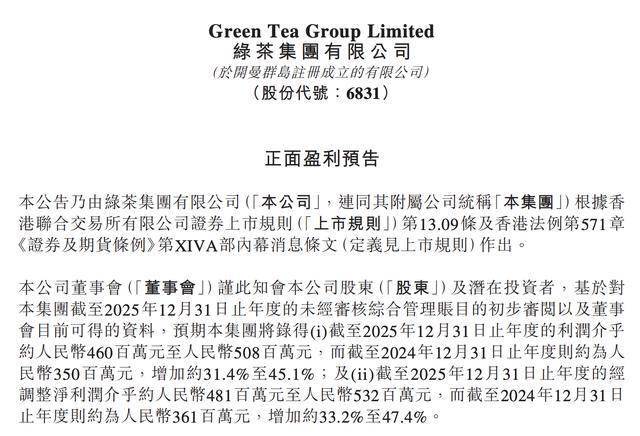
绿茶集团预计2025年利润增超三成,70后董事长王勤松曾创办青年旅舍
Sou Hu Cai Jing· 2026-02-27 07:12
Core Viewpoint - Green Tea Group (06831) anticipates a profit of approximately 460 million to 508 million yuan for 2025, representing an increase of about 31.4% to 45.1% compared to 350 million yuan in 2024 [2] Financial Performance - The adjusted net profit for 2025 is expected to be between 481 million and 532 million yuan, up from 361 million yuan in 2024, indicating an increase of approximately 33.2% to 47.4% [2] - Revenue is projected to rise by approximately 696 million to 1.174 billion yuan, reaching around 3.838 billion yuan in 2024 [2] Operational Efficiency - The increase in profit is primarily attributed to the continuous expansion of the store network and improved operational efficiency, which enhances profitability at the store level [2] - The anticipated listing expenses of approximately 18 million yuan in 2025 will partially offset the profit increase [2]

把“家的味道”带给中国客人
Xin Lang Cai Jing· 2026-02-27 07:05
Core Insights - The article highlights the story of two Argentine brothers, Javier and Diego, who opened the El Bodegon restaurant in Shanghai, emphasizing their connection to Argentine culture and cuisine [2][3]. Company Overview - El Bodegon is an Argentine-Peruvian restaurant located in Shanghai's Changning District, known for its family-style dining atmosphere and traditional Argentine dishes [2]. - The restaurant's name, "El Bodegon," translates to "home-style restaurant" in Spanish, reflecting its casual and family-oriented dining experience [2]. Founders' Background - Diego, with over 20 years of culinary experience, insists on using only imported Argentine beef, adhering to traditional preparation methods to deliver an authentic taste of home [3]. - Javier and Diego's journey in Shanghai began during the 2010 World Expo, which inspired them to establish their restaurant business in China [3]. Business Development - The first El Bodegon restaurant opened in 2014, capitalizing on the growing demand for Argentine beef in China [3]. - The brothers have benefited from a favorable business environment in China, citing ease of operations and a curious local population eager to learn about different cultures [3]. Supply Chain and Growth - Initially facing challenges with the supply of Argentine beef, the brothers established stable partnerships with suppliers during the China International Import Expo in 2018, significantly improving their supply chain [3][4]. - The restaurant has gained a positive reputation, attracting both local patrons and Argentine tourists, including notable athletes [4]. Personal Insights - The brothers enjoy living in Shanghai, appreciating the city's safety and vibrancy, which allows them to explore the local nightlife [4].

年味浓、人气旺、活力足!2026年春节消费市场交出亮眼答卷
Yang Shi Wang· 2026-02-27 06:51
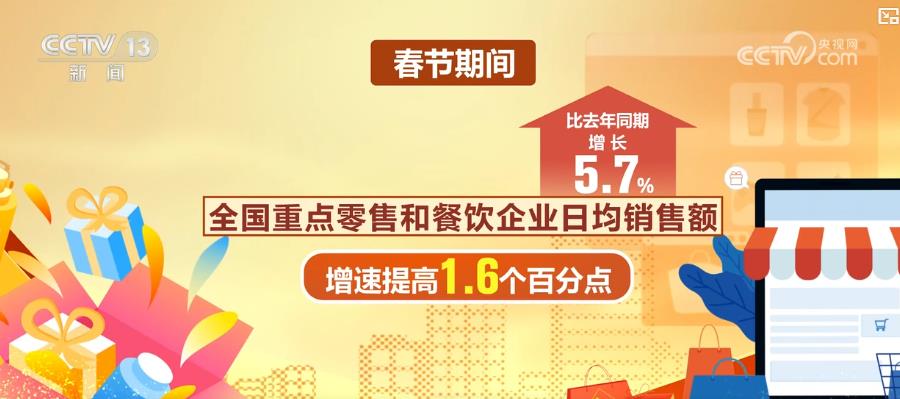
Group 1 - The core viewpoint of the article highlights the vibrant consumer market during the Spring Festival, driven by various promotional activities and policies [1] - During the Spring Festival, the average daily sales of key retail and catering enterprises increased by 5.7% compared to the same period last year, with a growth rate improvement of 1.6 percentage points [3] - The foot traffic and sales in 78 monitored pedestrian streets (business districts) grew by 6.7% and 7.5% respectively [3] Group 2 - Unique local events such as temple fairs, lantern exhibitions, and intangible cultural heritage activities contributed to the festive atmosphere, with ice and snow consumption and winter escape consumption increasing by 12.1% and 29.8% respectively [5] - Car rental platform orders surged by 51% compared to last year's Spring Festival [5] - The popularity of green and smart products, as well as AI shopping and dining, has risen, with sales of smart glasses and embodied intelligent robots increasing by 47.3% and 32.7% respectively [7] Group 3 - Inbound consumption saw a significant rise, with a year-on-year increase of 18.4% in orders for inbound travel products on key platforms [9]
黑猫投诉2026年春节消费投诉数据报告:春节档电影带动娱乐票务投诉环比增长2.4倍
Xin Lang Cai Jing· 2026-02-27 06:12
Core Insights - The report by Black Cat Data Center and Black Cat Complaints highlights consumer complaint trends during the 2026 Spring Festival, reflecting industry trends and consumer behavior [1][11]. Group 1: Travel and Transportation Complaints - During the 2026 Spring Festival, the average daily complaint volume in the travel and transportation sector reached 1,275, marking a 12.05% increase compared to the 2025 Spring Festival [2][12]. - Complaints in the travel sector were primarily concentrated in Online Travel Agencies (OTAs) and ride-hailing services, which together accounted for over 81% of total complaints. OTAs represented 47.26% of complaints, with common issues including high ticket change fees and non-cancellable hotel bookings [3][13]. - Ride-hailing complaints made up 34.29% of the total, with issues such as discrepancies in fare estimates and misrepresentation of ride types being prevalent [3][13]. Group 2: Entertainment Ticketing Complaints - The entertainment ticketing sector saw a significant increase in complaints, with an average daily volume of 173 complaints, which is a 2.4 times increase compared to the pre-festival period [4][14]. - Complaints related to movie tickets constituted nearly 70% of ticketing complaints, reaching 69.89%. Common issues included refusal of refunds for wrong bookings or last-minute cancellations, often accompanied by unreasonable fees [5][15]. Group 3: Dining Complaints - The demand for dining during the Spring Festival led to an increase in complaints in the offline dining sector, with an average daily complaint volume of 82, reflecting a 9.33% increase from the previous year [6][16]. - The lowest complaint volume occurred on New Year's Eve, indicating that family gatherings at home were predominant, while complaints rose as social dining increased throughout the holiday [6][16].
武城农商银行:金融赋能点燃餐饮“烟火气”
Qi Lu Wan Bao· 2026-02-27 06:08
Core Viewpoint - Wucheng Rural Commercial Bank focuses on serving the real economy and supporting the livelihood industry through optimized services, product innovation, and scenario integration, particularly in the restaurant sector [1][2] Group 1: Financial Support for the Restaurant Industry - The bank has provided loans to 189 restaurant clients, with a total loan balance of 48 million yuan, contributing to the local economy [1] - Financial support is crucial for the restaurant industry, especially for aspects like ingredient procurement, equipment upgrades, and store renovations, which require substantial cash flow [2] - The bank has introduced specialized loan products such as "Stock Preparation Loan" and "Entrepreneurial Boost Loan" to meet the specific financial needs of local businesses [2] Group 2: Case Study of Local Business - Li, the owner of Luwei Xiaozhu restaurant, attributes the success of his business to the precise support and funding from Wucheng Rural Commercial Bank [1] - The bank's proactive approach in understanding and addressing the financial needs of local businesses has enabled Li to overcome initial funding challenges and establish his restaurant in the market [2] - The bank's efforts in regular outreach and tailored financial solutions have strengthened the local business landscape, enhancing the vibrancy of Wucheng's economy [2]
21评论|春节“钱花在哪儿”:中国人消费结构发生哪些变化?
2 1 Shi Ji Jing Ji Bao Dao· 2026-02-27 05:48
Core Insights - The 2026 Spring Festival in China showcased a robust consumer market, driven by a long holiday and various consumption-promoting policies, leading to a significant increase in consumer willingness and an optimized consumption structure [1][7] Group 1: Consumer Spending Trends - Payment data indicates a strong surge in consumer activity, with 4.931 billion transactions processed on the eve of the Spring Festival, marking a 21.64% increase compared to 2025 [1] - Shanghai's total online and offline consumption during the festival reached 60.35 billion yuan, a 12.8% year-on-year growth, with offline consumption growing by 15.4% [2] - National key retail and catering enterprises reported an average daily sales increase of 5.7% during the festival, with foot traffic and sales in monitored pedestrian streets growing by 6.7% and 7.5% respectively [3] Group 2: Consumption Structure and Quality - There was a notable increase in service consumption, with domestic tourism seeing significant growth, particularly in high-tier cities and county-level tourist spots [2] - Health-conscious products saw a surge, with sales of smart wearable devices increasing by 130%, and organic food sales rising by 52% [4] - The trend towards convenience in consumption was evident, with 65.8% of consumers purchasing pre-prepared meals during the festival [4] Group 3: Digital Integration and Local Products - Digital payment and innovative consumption scenarios were prevalent, with significant increases in transaction volumes for travel and entertainment [5] - Local specialty products gained traction through e-commerce platforms, with notable sales increases for regional delicacies [5] Group 4: Policy Impact - The strong performance of consumer spending during the Spring Festival was supported by targeted government policies, including a 20.5 billion yuan fund for consumer vouchers and subsidies [6] - The "old-for-new" subsidy program, with an initial allocation of 62.5 billion yuan, effectively stimulated large-scale consumption [6]
受外卖大战影响,瑞幸在去年末净利润下滑丨消费参考
2 1 Shi Ji Jing Ji Bao Dao· 2026-02-27 05:08
Group 1 - The core point of the article is that the fierce competition in the food delivery market is significantly transforming the coffee industry, particularly affecting companies like Luckin Coffee and Kudi Coffee [1][3]. Group 2 - Luckin Coffee reported a revenue increase of 32.9% year-on-year to 12.777 billion yuan in Q4 2025, but its net profit fell by 39% to 518 million yuan [2]. - The decline in net profit for Luckin Coffee is attributed to the impact of the food delivery war, with delivery costs rising significantly due to increased order volumes [3]. - In Q4 2025, delivery expenses for Luckin reached 6.8787 billion yuan, a 143.8% increase compared to the same period in 2024 [3]. - Despite the challenges, Luckin Coffee continues to expand, with a total of 31,048 stores by the end of Q4 2025, and self-operated store revenue growing by 32% year-on-year [4]. Group 3 - Kudi Coffee has also been affected by the food delivery competition, leading to a reduction in its pricing power as it relies heavily on delivery channels [5][6]. - Luckin Coffee's CEO emphasized that in the long term, in-store pickup will remain the primary consumption method, with delivery serving as a supplementary channel [7].


春节“钱花在哪儿”:中国人消费结构发生哪些变化?
2 1 Shi Ji Jing Ji Bao Dao· 2026-02-27 04:01
Core Insights - The 2026 Spring Festival consumption data illustrates a vibrant picture where technology revitalizes tradition, environmental consciousness refreshes the festive spirit, and experiential elements enhance family reunions [7] Group 1: Consumption Trends - The Chinese consumption market during the 2026 Spring Festival showed a robust performance, driven by a long holiday period and various consumption-promoting policies, leading to a notable increase in consumer willingness and an optimized consumption structure [1] - Payment data indicates a significant increase in consumption activity, with a total of 4.931 billion payment transactions processed on New Year's Eve, marking a 21.64% year-on-year growth compared to 2025 [1] Group 2: Regional Performance - Shanghai's consumption during the Spring Festival reached 60.35 billion yuan, a 12.8% increase year-on-year, with offline consumption growing by 15.4% and online consumption by 8.9% [2] - Hunan Province welcomed 22.7068 million tourists on New Year's Eve, with transaction amounts reaching 8.797 billion yuan, reflecting a 37.75% year-on-year increase [2] Group 3: Consumption Structure - Service consumption saw significant growth, with domestic tourism experiencing a dual surge, particularly in high-tier cities and county-level tourist spots [3] - National average daily sales for key retail and catering enterprises increased by 5.7% during the holiday, with foot traffic and sales in monitored pedestrian streets rising by 6.7% and 7.5%, respectively [3] Group 4: Quality of Consumption - The 2026 Spring Festival consumption exhibited three prominent trends in quality upgrades: a surge in health-related consumption, a rise in smart product popularity, and a shift towards convenient consumption options [4] - Sales of smart wearable devices increased by 130%, with organic food sales up by 52%, indicating a strong demand for health-conscious products [4] Group 5: Digital Integration - Digital payment and innovative consumption scenarios were prevalent, with significant increases in transaction volumes for travel and entertainment during the festival [5] - Local specialty products gained traction through digital platforms, showcasing a successful integration of regional characteristics with e-commerce [5] Group 6: Inbound Consumption - Inbound tourism consumption saw remarkable growth, with overseas visitors utilizing international bank cards for transactions, leading to a doubling of medical and beauty-related spending [6] Group 7: Policy Impact - The strong performance of consumption during the 2026 Spring Festival was supported by targeted policy measures, including a 2.05 billion yuan fund for consumer vouchers and subsidies, which effectively stimulated demand [7] - The "old-for-new" subsidy program, with an initial allocation of 62.5 billion yuan, directly boosted large-scale consumption [7]
食之无味,弃之可惜?印度裔CEO的终点站:美企大清洗背后小九九
Sou Hu Cai Jing· 2026-02-27 03:10
Group 1 - The trend of Indian-origin executives becoming CEOs in American tech and consumer sectors has been disrupted since 2022, with several high-profile changes raising questions about underlying complexities [1][9] - Parag Agrawal's tenure at Twitter saw attempts to enhance user engagement through algorithmic improvements, but ultimately led to his dismissal alongside other Indian executives due to perceived management inefficiencies and high costs [1][12] - Starbucks' new CEO, Lakshman Narasimhan, aimed to revitalize the brand with healthier menu options and improved app functionality, but faced backlash from employees over outsourcing practices, leading to his eventual replacement [3][11] Group 2 - Sandeep Mathrani at WeWork initiated cost-cutting measures and promoted a hybrid work model, but failed to meet revenue expectations, resulting in his resignation and the company's subsequent bankruptcy filing [5][12] - Vishal Garg of Better.com faced severe criticism for his handling of layoffs and company culture, leading to a significant drop in company valuation and ongoing layoffs [7][12] - The rise of Indian-origin executives is attributed to their strong educational backgrounds and problem-solving skills, but recent criticisms highlight issues of cultural cohesion and management effectiveness within companies [9][11] Group 3 - Following leadership changes, companies like Starbucks and Twitter have seen improvements in stock performance and operational efficiency, indicating a shift towards more effective management structures [12] - The trend of replacing Indian-origin executives reflects a growing emphasis on diversity and performance accountability in American companies, despite ongoing pressures to maintain diverse leadership [12]