
基础设施建设

Search documents
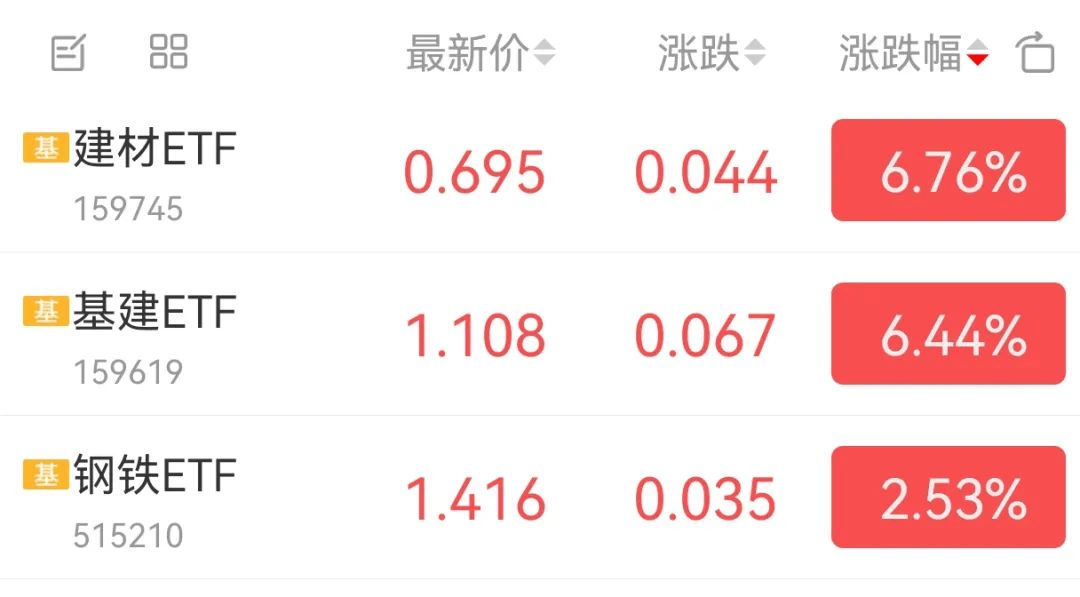
雅下水电站行情继续演绎,建材ETF(159745)、基建ETF(159619)大涨
Sou Hu Cai Jing· 2025-07-23 01:05
Core Viewpoint - The launch of the Yarlung Tsangpo River downstream hydropower project, with a total investment of approximately 1.2 trillion yuan, is expected to stimulate demand across multiple industries, including construction materials and infrastructure [3]. Demand Side - The Yarlung Tsangpo River project is a national strategic initiative that encompasses hydropower construction, infrastructure development, ultra-high voltage transmission, equipment manufacturing, civil explosives, and cement supply, which will gradually release demand along the upstream and downstream industrial chains [3]. - Recent central urban work meetings have emphasized the need to advance the renovation of urban villages and old housing, as well as the upgrading of outdated pipelines, which is likely to accelerate the introduction of related supporting policies, thereby boosting demand for construction materials and infrastructure [3]. Supply Side - The ongoing "anti-involution" policies are aimed at stabilizing growth in key industries, including steel and construction materials. The Ministry of Industry and Information Technology announced a new round of initiatives to optimize supply and eliminate outdated production capacity [3]. - The construction industry has advocated against "involution," and the China Cement Association has issued opinions to promote high-quality development in the cement sector, indicating that these policies may improve the industry landscape and benefit leading companies in the construction and materials sectors [3]. Investment Perspective - The valuation logic for cyclical sectors has shifted from "weak expectations - weak reality" to "strong expectations - weak reality," indicating that the bottom region is becoming clearer and the cost-effectiveness of investments is improving [4]. - Sectors such as construction materials, infrastructure, and steel are expected to directly benefit from the implementation of "super projects," with significant potential for both performance and valuation expansion. Investors are encouraged to pay attention to construction materials ETF (159745), infrastructure ETF (159619), and steel ETF (515210) [4].

餐饮消费有所下滑,房地产市场再度转弱,下半年如何扩大内需
Sou Hu Cai Jing· 2025-07-22 06:53
Economic Performance - China's GDP grew by 5.3% year-on-year in the first half of the year, surpassing the annual target of 5% [1] - The contribution of consumption to economic growth reached 52% in the first half of the year, with total retail sales of consumer goods amounting to 24.55 trillion yuan, a 5% increase year-on-year [4] Consumption Trends - The retail sales growth rate for the catering industry significantly declined from 5.2% in April and 5.9% in May to just 0.9% in June, with the average growth rate for the second quarter at 4.0%, down from 5% in the first quarter [4] - The "old-for-new" policy has positively impacted retail sales, but its effectiveness is expected to diminish over time, necessitating new strategies to boost domestic demand [4][9] Real Estate Market - The real estate market showed signs of weakness in the second quarter, with fixed asset investment growth slowing down and real estate investment declining further, with a year-on-year drop of 11.2% by June [5] - New residential sales area decreased by 3.7% year-on-year in June, indicating a continued downturn in the real estate sector [5] External Economic Factors - Exports to the U.S. fell by 24% in the second quarter, while exports to other regions, such as ASEAN and India, increased by 17.5% and 14.3% respectively [7] - The expiration of the 90-day tariff suspension on August 1 poses additional risks to the economic outlook, with potential new tariffs being implemented by the U.S. [7][8] Future Economic Outlook - Experts suggest that the focus for the second half of the year should be on expanding domestic demand, with fiscal spending being a key driver [9][10] - Recommendations include utilizing public budget funds and considering the issuance of an additional 2.3 trillion yuan in government bonds to support fiscal expenditure growth [9]

珩昱投资:当前人民币不动产基金市场机构化特征显著强化
2 1 Shi Ji Jing Ji Bao Dao· 2025-07-21 12:13
Core Insights - The Chinese real estate market has shifted towards comprehensive easing policies since 2023, with a focus on stabilizing the market and optimizing existing assets in 2024 [1] - The total number of real estate funds in China reached 877, with a total scale of approximately 1.8 trillion yuan, marking a turning point in the industry after a continuous decline since 2020 [1][3] Real Estate Fund Overview - As of June 2025, there are 877 private real estate funds, primarily established around 2016, with residential funds dominating the market at 71% [3] - The infrastructure fund sector is the largest, with 1,587 funds, where energy funds account for 51% and infrastructure construction funds for 43% [4] REITs Market Development - The public REITs market has seen rapid growth since its inception in June 2021, with 66 products issued and a total fundraising scale nearing 180 billion yuan [7] - The average size of single REITs products has decreased from approximately 3.3 billion yuan to 1.68 billion yuan by May 2025 [7] Investment Trends - The energy sector has become a primary investment direction for infrastructure funds, reflecting national policies supporting clean energy and carbon neutrality [6] - The diversification of asset types in real estate funds has increased since 2016, moving towards core infrastructure and value-added commercial real estate [9] Market Dynamics - The real estate industry is under pressure, but there are structural differentiations and quality assets that align with current market conditions [5] - Institutionalization of funding sources has strengthened the risk-return profile of real estate funds, with professional institutions dominating the market [9]
变局中的中国经济:二季度经济数据,从城市工作会议和反内卷政策看地产和通胀
2025-07-21 00:32
Summary of Key Points from Conference Call Records Industry Overview - The records primarily discuss the **Chinese economy** and its various sectors, including **real estate**, **infrastructure**, and **consumer markets**. Core Insights and Arguments 1. **Economic Growth and Construction Sector** - In Q2 2025, China's GDP growth rate was **5.2%**, with the construction sector's growth declining from **2.5%** in Q1 to **-0.6%** in Q2, negatively impacting overall economic growth [2][19] - Real estate investment fell by **12.9%** year-on-year, while infrastructure investment decreased by **4.6%** [2][4] 2. **Real Estate Market Dynamics** - The real estate market showed weak overall performance in H1 2025, with core cities like **Hangzhou** and **Shanghai** performing better in new home sales [4] - Older properties faced valuation pressures, while "old and small" properties with good locations were seen as deep value stocks [4] - The contribution of real estate investment to GDP has significantly decreased to about **7-8%**, down from previous peaks [4] 3. **Infrastructure Investment Trends** - Infrastructure investment saw a notable decline, with June 2025 showing a **4.6%** year-on-year drop [6] - The decline was attributed to changes in the use of special bond funds, with a shift towards debt resolution rather than new project funding [6][7] - The **Yalong River Hydropower Project**, a key investment project, is expected to cost **1.2 trillion RMB** and will provide stable support for future infrastructure investments [9][10] 4. **Consumer Market Performance** - In June 2025, the growth rate of retail sales of consumer goods slowed to **4.6%**, down from **6.4%** in May [3][11] - The decline was particularly evident in the "trade-in" category, with significant drops in sales of home appliances and communication equipment due to reduced subsidies [11][12] - The **618 shopping festival** led to a pre-emptive consumption surge in May, affecting June's sales figures [13] 5. **Inflation and Price Trends** - Inflation data indicates a downward trend, with expected CPI at **-0.1%** and PPI at **-2.5%** for Q3 2025 [20][21] - Core CPI reached **0.7%** in June, the highest since May 2024, indicating rising core inflation despite overall stability [20] 6. **Government Policy and Economic Outlook** - The Central Urban Work Conference emphasized a shift away from debt-driven growth and land finance, focusing on urban renewal and sustainable development [5][22] - The government is expected to adjust subsidy policies in the second half of 2025 to stabilize economic growth and manage high base effects from the previous year [14][21] - Economic growth in the second half of 2025 is projected to face challenges, with expectations of maintaining a growth rate of **4.6%-4.8%** to meet the annual target of **5%** [23] Other Important but Potentially Overlooked Content - The **Yalong River Hydropower Project** is not only significant for infrastructure but also has geopolitical implications, particularly concerning water resources in the context of India-Pakistan relations [10] - The shift in local government strategies towards more sustainable urban development reflects broader economic reforms initiated in previous years [22] - The consumer market's reliance on subsidy policies highlights the fragility of current consumption patterns and the need for structural adjustments [12][15] This summary encapsulates the critical insights from the conference call records, providing a comprehensive overview of the current state and future outlook of the Chinese economy and its key sectors.
匈牙利外长:将在基建、签证、能源等方面为中企提供更优服务
news flash· 2025-07-20 08:22
Group 1 - The Chinese Ambassador to Hungary, Gong Tao, attended a breakfast meeting organized by the Chinese Enterprises Chamber of Commerce and the Hungarian Ministry of Foreign Affairs, highlighting the fruitful economic cooperation between China and Hungary [1] - Ambassador Gong emphasized that Chinese investments have made significant contributions to Hungary's economic development and transformation, serving as a model for mutually beneficial cooperation [1] - Hungarian Foreign Minister Szijjarto expressed Hungary's firm opposition to bloc confrontation and support for East-West connectivity, noting that Chinese enterprises have brought jobs and high technology to Hungary, which is crucial for its economic development [1] Group 2 - The Hungarian government will continue to optimize policies to attract more Chinese enterprises to invest in Hungary [1] - Chinese enterprise representatives actively discussed their investment cooperation progress, with the Hungarian Foreign Minister responding that better services will be provided in areas such as infrastructure, visas, and energy [1]
央企援藏再升级!千亿投资落地
news flash· 2025-07-20 07:21
Core Viewpoint - The State-owned Assets Supervision and Administration Commission (SASAC) is enhancing support for Tibet's high-quality development through new project signings, focusing on improving the well-being of the local population [1] Group 1: Investment Agreements - A total of 16 central enterprises signed 75 industrial project investment agreements with the Tibet Autonomous Region, with a total investment amount of 317.537 billion yuan [1] - The signed projects primarily target critical areas such as clean energy, green minerals, electric communication, and infrastructure [1] Group 2: Employment and Support Initiatives - The projects are expected to create over 11,400 new jobs upon completion [1] - Agreements were also made regarding employment support, financial assistance, and consumer aid for Tibet [1]
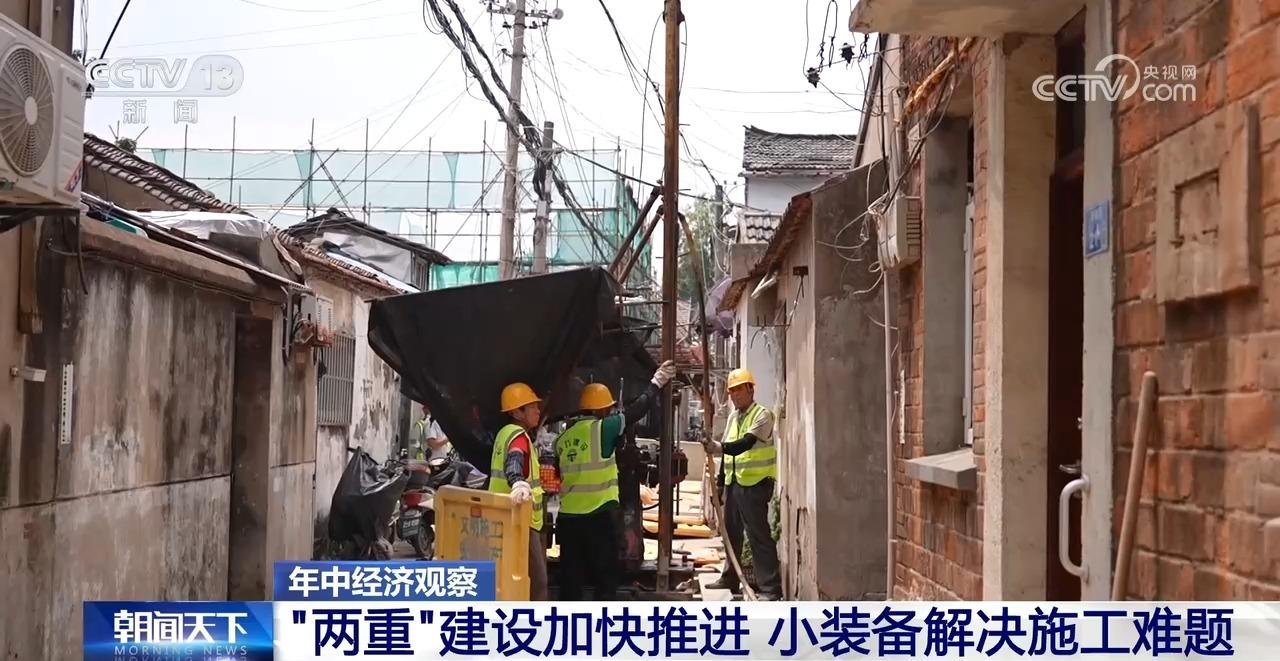
年中经济观察|“两重”建设加快推进 小装备解决施工难题
Yang Shi Wang· 2025-07-18 23:41
Group 1 - The core viewpoint of the articles highlights the significant growth in infrastructure investment in China, which increased by 4.6% year-on-year in the first half of the year, with a focus on major strategic projects and key areas of safety capability construction [1] - The government has allocated 800 billion yuan to support the construction of major projects, with urban underground pipeline construction being a key task that directly impacts the quality of life and urban safety [1] - The implementation of special long-term government bonds is facilitating new changes in project construction, particularly in the context of urban infrastructure upgrades [1] Group 2 - In Nanjing's Hehua Pond historical and cultural district, a comprehensive underground pipeline project is integrating various municipal lines, including electricity, water supply, sewage, rainwater, fire protection, and communication, while minimizing impact on historical buildings and residents [3] - The project utilizes specially designed smaller construction equipment and micro-sized underground facilities to navigate the challenges posed by the dense historical architecture [3] - Larger-scale projects, such as the fourth phase of sewage pipeline renovation in northern Nanjing, are also underway, employing robots to assist in areas where large machinery cannot operate due to space constraints [5] Group 3 - The Nanjing Water Authority has deployed over 3,600 IoT sensing devices, including cameras and smart manhole covers, as part of the smart platform to enhance the management of water infrastructure [5] - The funding support for the "two major" projects has exceeded 2 billion yuan, enabling the adoption of new technologies and equipment [5] - The ongoing "two major" projects are revitalizing ancient cities and districts, leading to tangible improvements in the living conditions of local residents [5]
6月数据点评:地产数据持续磨底,关注“反内卷”下的修复机会
Great Wall Securities· 2025-07-16 13:25
Investment Rating - The industry investment rating is "Outperform the Market" [2][30]. Core Viewpoints - The real estate data continues to bottom out, while infrastructure investment is expected to gain momentum in the second half of 2025 [11][17]. - Cement and glass production showed a slight narrowing in decline, with cement production down 4.3% year-on-year and glass production down 5.2% year-on-year for the first half of 2025 [6][9]. Summary by Relevant Sections Cement and Glass Production - In the first half of 2025, national cement production decreased by 4.3% year-on-year, with a monthly decline of 5.3% in June, slightly better than the 8.1% decline in May [6][9]. - National glass production saw a year-on-year decrease of 5.2% in the first half of 2025, with a monthly decline of 4.5% in June, also showing improvement from May's 5.7% decline [9][12]. Downstream Investment Situation - In June 2025, the year-on-year changes in commodity housing sales, construction, new starts, and completion areas were -6.5%, 4.8%, -9.5%, and -2.2%, respectively, indicating a narrowing decline in new starts and completions compared to May [11][12]. - The broad inventory de-stocking cycle in June 2025 was 5.31 years, unchanged from the previous month [14]. - Real estate investment and infrastructure investment in June 2025 showed year-on-year changes of -12.4% and 5.3%, respectively, with real estate investment's decline widening [17].
与美国达成贸易协议后,这一国家宣布降息
Guo Ji Jin Rong Bao· 2025-07-16 13:24
Group 1 - The United States and Indonesia have reached a new trade agreement, with Indonesia agreeing to a 19% tariff on all exports to the U.S., significantly lower than the previously threatened 32% [1] - In exchange, Indonesia has committed to purchasing $15 billion in energy, $4.5 billion in agricultural products, and 50 Boeing aircraft [1] - The agreement allows U.S. products to enter Indonesia with "zero tariffs and zero barriers," while imposing penalties for goods transiting through third countries to evade tariffs [1] Group 2 - Indonesia's central bank has lowered its key interest rate by 25 basis points to 5.25%, marking the fourth rate cut since September of the previous year [2] - The central bank's governor indicated that the trade agreement with the U.S. is expected to positively impact exports and the economy, providing certainty to financial markets [2] - Despite the positive outlook, Indonesia faces structural challenges, particularly in non-oil exports like footwear and textiles, which may be pressured by rising tariffs [2] Group 3 - The U.S. government views the trade agreement as a success in reducing the trade deficit with Indonesia, with average tariff rates expected to reach their highest level since 1933 [2] - Recent inflation data shows a 2.7% year-over-year increase in the U.S. Consumer Price Index (CPI) for June, raising concerns about the inflationary effects of tariffs on consumer goods [2] - The European Union has indicated potential retaliatory tariffs on approximately $84.1 billion worth of U.S. products if negotiations fail, reflecting a hardening stance in trade discussions [3]
拆解信贷“成绩单” 资金流向了哪里?
Zheng Quan Ri Bao· 2025-07-15 17:25
Group 1 - The People's Bank of China reported that in the first half of the year, new RMB loans increased by 12.92 trillion yuan, with a total loan balance of 268.56 trillion yuan as of the end of June, reflecting a year-on-year growth of 7.1% [1] - Corporate loans accounted for 89.5% of the new loans, with an increase of 11.57 trillion yuan, indicating a 6.6 percentage point rise compared to the same period last year [1] - Long-term loans for enterprises reached 7.17 trillion yuan, representing over 60% of corporate loans, supporting long-term investments and operations [1] Group 2 - Household loans increased by 1.17 trillion yuan, with 923.9 billion yuan directed towards operational loans, showing strong support for individual businesses and small enterprises [1] - The financial support for individual businesses and small enterprises is crucial for stimulating market vitality, promoting employment, and driving innovation [2] - New loans were primarily directed towards key sectors such as manufacturing and infrastructure, with manufacturing long-term loans increasing by 8.7% and infrastructure loans by 7.4% [2] Group 3 - As of the end of May, the balance of loans under the "Five Major Articles" reached 103.3 trillion yuan, with a year-on-year growth of 14%, indicating robust financial support for the real economy [3] - Technology loans amounted to 43.3 trillion yuan, growing by 12% year-on-year, while green, inclusive, pension, and digital loans saw growth rates of 27.4%, 11.2%, 38%, and 9.5% respectively [3] - The central bank's implementation of moderately loose monetary policy and new support measures effectively incentivized financial institutions to meet the financing needs of the real economy [3]