
食品饮料

Search documents
2月24日A股市场点评:马年首日收涨
Zhongshan Securities· 2026-02-24 12:07
Market Performance - On February 24, the A-share market showed a collective increase, with major indices rising, indicating a broad market rally. The Shanghai Composite Index rose by 0.87%, the Shenzhen Component Index increased by 1.36%, and the CSI 300 Index gained 1.01% [3][6] - The energy and materials sectors led the gains, with the oil and gas industry, chemicals, precious metals, and fiberglass sectors showing significant increases, driven by a rebound in international oil prices and heightened geopolitical risks [6] Sector Analysis - The top-performing sectors included: - Oil and Petrochemicals: +5.53% - Building Materials: +3.71% - Basic Chemicals: +3.45% - Non-ferrous Metals: +3.31% - Coal: +3.10% - Conversely, the underperforming sectors were: - Media: -3.20% - Computers: -1.81% - Retail: -1.46% - Food and Beverage: -0.86% - Non-bank Financials: -0.42% [3] Concept Indices - The top-performing concept indices included: - Cultivated Diamond Index: +12.05% - Fiberglass Index: +8.98% - Phosphate Chemical Index: +8.41% - Oil and Gas Extraction Index: +7.92% - Superhard Materials Index: +7.39% - The underperforming concept indices were: - Seedance Video Model Index: -5.83% - Short Drama Game Index: -4.29% - DeepSeek Index: -4.22% - Kimi Index: -4.20% - AIGC Index: -3.55% [3] Monetary Policy Insights - The People's Bank of China conducted a 7-day reverse repurchase operation of 526 billion yuan at a fixed rate of 1.40%, indicating a net withdrawal of 926.4 billion yuan for the day. This reflects the central bank's assessment that the current market liquidity is sufficient [5] - The upcoming expiration of 22.524 billion yuan in reverse repos and other liquidity tools suggests a focus on managing liquidity in response to pre-holiday cash demands [5] Market Outlook - The market is expected to continue its structural trend, supported by improved liquidity post-holiday, rising policy expectations, and signals for stable growth ahead of the Two Sessions. However, geopolitical uncertainties and tariff policy disruptions may increase volatility [6] - Investors are likely to rotate funds towards cyclical sectors while keeping an eye on new productivity areas that may benefit from policy changes [6]
食品饮料春节动销总结:餐饮链超预期,茅五起势,消费韧性强
CAITONG SECURITIES· 2026-02-24 10:56
Investment Rating - The industry investment rating is "Positive" (maintained) [1][12] Core Insights - Overall industry sales performance slightly exceeded expectations; liquor met expectations while the restaurant chain outperformed [4] - The food and beverage sector showed strong sales during the Spring Festival, with a positive outlook for post-holiday inventory replenishment [7] Summary by Category - **Liquor**: Overall performance met expectations, with a projected decline in single to double digits. Notable performances from Guizhou Moutai and Wuliangye, while real estate liquor brands like Yingjia Gongjiu and Jinhui Jiu performed better [4] - **Snacks**: Maintained good sales during the Spring Festival, with double-digit growth expected. High-end gift boxes performed well, although high-priced gift boxes showed weaker sales. Positive feedback from bulk snack channels [4] - **Restaurant Chain**: B-end performance of condiments exceeded pre-holiday expectations, with overall sales expected to grow by double digits. Leading frozen food company Anjijia performed exceptionally well [4] - **Dairy Products**: Sales during the Spring Festival showed recovery, with liquid milk returning to positive growth and significant improvements in freshness, while price competition has eased [5] Investment Recommendations - Focus on the restaurant chain, followed by snacks and certain liquor brands. Recommended liquor stocks include Guizhou Moutai, Wuliangye, Yingjia Gongjiu, and Jinhui Jiu. For consumer goods, recommended stocks include Anjijia, Angel Yeast, Yihai International, Weidong, and Wancheng Group [7]


每日报告精选(2026-02-13 09:00——2026-02-24 15:00)
GUOTAI HAITONG SECURITIES· 2026-02-24 10:30
Group 1: Macroeconomic Insights - In 2023, the market discussed a peak of 16 trillion yuan in "excess savings," with approximately 76-77 trillion yuan of residential time deposits maturing in 2026, indicating a historical peak[5] - The maturing deposits in the first quarter of 2026 are expected to reach 32-34 trillion yuan, highlighting a significant seasonal pattern[6] - The actual pressure from maturing deposits is limited, with a year-on-year increase of 9.6-10.8 trillion yuan in 2026, corresponding to a growth rate of 14.4%-16.3%, which is lower than the 17.7% growth rate in 2025[6] Group 2: Interest Rate and Asset Allocation - Approximately 25 trillion yuan of high-interest deposits are set to mature, with 32% of the total maturing deposits being two years or older, indicating a core pressure for renewal[6] - The renewal rate for deposits in 2025 remained close to 90%, suggesting that low interest rates do not automatically trigger a shift in risk appetite among residents[7] - The anticipated migration of deposits to other assets is expected to occur slowly and in a dispersed manner, with a potential 10% outflow rate from the 77 trillion yuan in time deposits being a marginal pricing variable for equity and bond markets[7] Group 3: Trade and Tariff Impacts - As of November 2025, the effective tariff rate in the U.S. reached 9.8%, the highest since 1946, with China facing the highest actual tariff rate of 30.9%[9] - The actual tariff increases have significantly impacted trade dynamics, with China and India experiencing the largest increases in effective tariffs compared to 2024, at 20.2 and 17.3 percentage points respectively[10] - Despite tariff pressures, China's export position remains robust, maintaining the largest share of global exports, while the U.S. has shifted its import structure towards North America and Europe[11] Group 4: Economic Recovery and Consumer Behavior - The Chinese economy is shifting focus towards domestic demand as a long-term strategy, with consumer spending projected to account for 56.6% of GDP by 2024, still below developed economies[39] - Consumer confidence is stabilizing, with improvements in disposable income growth and a reduction in the crowding-out effect of precautionary savings on consumption[40] - The recovery in domestic demand is supported by a reasonable rise in prices, which is expected to stimulate consumption and improve corporate profitability[40]
整个社会都在喊没钱了,为什么这些公司反而年赚百亿?
创业家· 2026-02-24 10:28
Core Insights - The article emphasizes that despite the prevailing narrative of economic hardship, certain industries are thriving and generating substantial profits, particularly in the context of Japan's "lost 30 years" and its implications for various sectors [3][4]. Group 1: Economic Trends - The concept of a "low-desire society" does not equate to a lack of opportunities, as consumer behavior is shifting towards different spending patterns [4]. - The article identifies eight key industries that are capitalizing on changing consumer demands, highlighting that demand migration and consumption segmentation present significant business opportunities [5]. Group 2: Key Industries - **Second-Hand Economy**: The second-hand luxury market in Japan, exemplified by companies like Daikokuya, has seen a dramatic increase in revenue. In China, platforms like Hongbulin and Panghu are experiencing similar growth [6][7]. - **Pet Economy**: With declining birth rates, spending on pets is increasing, as seen with brands like Inaba in Japan and Guobao in China, which are witnessing strong sales in pet food and healthcare products [12][13][15]. - **Adult Care**: The adult diaper market in Japan has surpassed $10 billion, indicating that aging populations can drive significant economic opportunities [18][19]. - **Health Food and Beverages**: The rise in health consciousness has led to increased demand for products like sugar-free tea and functional beverages in both Japan and China [21]. - **Beauty and Aesthetics**: The beauty industry continues to thrive, with products like collagen supplements and home beauty devices gaining popularity, indicating a strong consumer desire for self-improvement [23][25][26]. - **Outdoor Recreation**: Companies in the outdoor equipment sector, such as Snow Peak in Japan, are profiting from the growing interest in outdoor activities, with Chinese brands also seeing rapid sales growth [29][31]. - **Convenience Economy**: The demand for convenience is driving growth in frozen food and smart home appliances, as consumers seek to save time in their daily routines [39][40]. - **Lazy Economy**: The trend towards convenience is evident in the increasing popularity of products that save time, suggesting that time-saving solutions may hold more commercial value than cost-saving ones in a low-desire economy [42]. Group 3: Market Dynamics - The article posits that while many perceive the current market as a "winter," the true winners will be those who identify and invest in counter-cyclical opportunities [44].






A股迎马年开门红
Tebon Securities· 2026-02-24 10:05
Market Overview - The A-share market experienced a strong opening for the Year of the Horse, with the Shanghai Composite Index rising 0.87% to close at 4117.41 points, surpassing the 4100 mark. The Shenzhen Component Index increased by 1.36% to 14291.57 points, and the ChiNext Index rose by 0.99% to 3308.26 points. Over 4000 stocks gained, with a trading volume of 2.22 trillion yuan, an 11% increase from the previous trading day [2][5][7]. Sector Performance - Cyclical sectors led the market rally, with significant gains in oil and petrochemicals (up 5.25%), building materials (up 3.50%), non-ferrous metals (up 3.34%), coal (up 3.14%), and basic chemicals (up 2.85%). Notable stocks included Tongyuan Petroleum and China National Petroleum, which hit the daily limit [5][7]. - AI hardware stocks showed strong performance, with Tianfu Communication rising nearly 13% to a new historical high. The cultivated diamond index surged by 12.05%, indicating a transformative opportunity in the diamond industry for applications in AI chips and new energy vehicles [5][7]. Economic Indicators - The bond market saw a comprehensive rise, with the 30-year main contract closing at 112.96 yuan, up 0.20%. The People's Bank of China conducted a significant reverse repo operation, resulting in a net withdrawal of 926.4 billion yuan, indicating a tightening liquidity environment [7][11]. - The LPR remained unchanged, with the 1-year LPR at 3.0% and the 5-year LPR at 3.5%, reflecting the central bank's focus on targeted measures rather than broad monetary easing [7][11]. Commodity Market - The commodity index rose by 3.05%, led by precious metals, with silver and lithium carbonate increasing by 12.84% and 10.56%, respectively. Crude oil prices also surged, closing at 493.30 yuan per barrel, up 6.18%, driven by geopolitical tensions in the Middle East [7][11]. - The uncertainty surrounding U.S. tariffs has led to a resurgence in precious metal prices, with gold and silver showing strong upward trends [7][11]. Investment Opportunities - The report suggests a balanced allocation in technology and consumer sectors, with a focus on cyclical stocks as the spring market is expected to continue its upward trajectory. Key sectors to watch include photovoltaic technology, commercial aerospace, and non-ferrous metals, which may see new catalysts in the near future [7][11].
贝因美:涉5685万元本诉及7725万元反诉,结果待判
Xin Lang Cai Jing· 2026-02-24 10:02
Core Viewpoint - The company is involved in a patent contract dispute with Heilongjiang Fengyou, with a claim amounting to 56.8524 million yuan, which has been accepted by the Hangzhou Intermediate Court but has not yet gone to trial [1] Group 1 - The company has filed a lawsuit against Heilongjiang Fengyou regarding a patent contract dispute [1] - The amount in dispute from the company's lawsuit is 56.8524 million yuan [1] - Heilongjiang Fengyou has counterclaimed against the company, seeking compensation for economic losses amounting to 77.2539 million yuan and reimbursement of counterclaim costs [1] Group 2 - The counterclaim from Heilongjiang Fengyou has also been accepted by the court and is pending trial [1] - Due to the ongoing nature of the legal proceedings, the company is currently unable to estimate the impact on its profits [1] - The company will monitor the situation closely and provide timely updates on any developments [1]

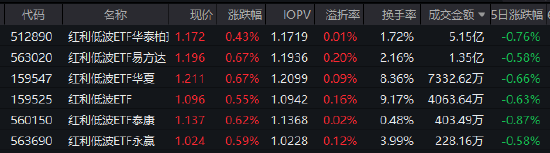
红利低波ETF华泰柏瑞(512890)近60天狂吸金48.6亿!机构:2026年科技与非科技都有机会,质量策略正当时
Xin Lang Cai Jing· 2026-02-24 09:02
Core Viewpoint - The market experienced fluctuations with the ChiNext Index rising over 2% at one point, while the Shanghai Composite Index closed up by 0.87%. In this context, the Huatai-PineBridge Low Volatility ETF (512890) increased by 0.43%, closing at 1.172 yuan, with a turnover rate of 1.72% and a trading volume of 5.15 billion yuan, leading its category [1][6]. ETF Performance - The Huatai-PineBridge Low Volatility ETF (512890) reported a trading volume of 154.12 billion yuan over the last 20 trading days, averaging 7.71 billion yuan per day. Since the beginning of the year, the total trading volume reached 250.40 billion yuan, with an average of 8.08 billion yuan per day [2][7]. - The ETF has seen significant net inflows, with 3.6 billion yuan in the last 5 trading days, 9 billion yuan in the last 10 days, 29.2 billion yuan in the last 20 days, and 48.6 billion yuan in the last 60 days [2][7]. Top Holdings - The top ten holdings of the Huatai-PineBridge Low Volatility ETF include major companies across various sectors such as banking, food and beverage, home appliances, and pharmaceuticals. Notable holdings include Shanghai Bank, Nanjing Bank, Ping An Bank, and Gree Electric Appliances, with a total market value of approximately 6.72 billion yuan, accounting for 25.34% of the ETF's total market value [2][7]. Market Outlook - Multiple institutions have expressed optimistic views on the post-holiday market and dividend strategies. CITIC Securities believes that the A-share market, primarily driven by manufacturing and finance, will be less affected by AI disruptions compared to US and Hong Kong markets, suggesting a continuation of the spring rally [4][9]. - Guotai Junan Securities noted that with China's economic policy focusing on domestic demand, investor pessimism towards traditional domestic industries is likely to be corrected, contributing to a more stable economic outlook for 2026 [4][9]. Investment Strategy - The Huatai-PineBridge Low Volatility ETF, established on December 19, 2018, has achieved a return of 76.88% over the past five years, outperforming its benchmark and ranking 51st among 909 funds. Investors are encouraged to consider regular investment strategies to mitigate volatility risks [10].
恒指跌1.82% 恒生科技指数跌2.13%
Feng Huang Wang Cai Jing· 2026-02-24 08:33
凤凰网财经讯 港股2月24日收盘走低,恒生指数收报26590.32点,跌491.59点,跌幅1.82%;恒生科技指 数收报5270.7点,跌114.65点,跌幅2.13%。 恒生指数成分股中万洲国际、恒基地产、华润啤酒涨幅居前,中国生物制药、翰森制药、中国人寿跌幅 靠前。恒生科技指数成分股中华虹半导体、联想集团、小鹏汽车-W涨幅居前,金蝶国际、商汤-W、腾 讯音乐-SW跌幅靠前。 ...
概率驱动的行业轮动决策框架:基于胜率与盈亏比的行业博弈策略
Huafu Securities· 2026-02-24 08:04
Group 1 - The report emphasizes a probability-driven approach to industry rotation, treating industry indices as repeatable gaming objects rather than one-time market judgments, focusing on win rates and profit-loss structures to assess long-term gaming value [3][12][14] - A counter-cyclical selection mechanism is introduced, which utilizes historical performance memory for weak industries, allowing for the retention of industries with reversal potential during rotation and style shifts [4][35] - The application of the Kelly formula optimizes weight distribution among selected industries, enhancing capital efficiency and long-term return quality while maintaining the selection results [5][42] Group 2 - The report outlines a basic win rate scheme based on a 24-month window, indicating that this mid-term win rate is more stable and sustainable for future returns compared to shorter periods [17][18] - The performance results show an annualized excess return of 9.6% since 2015, with a smoother return path, indicating a shift from phase-based betting to pricing long-term success capabilities [39][46] - The strategy demonstrates a systematic preference for consumer-related industries, particularly in home appliances, food and beverage, and pharmaceuticals, driven by win rates and profit-loss structures [57] Group 3 - The report highlights the importance of using comprehensive profit-loss indicators to enhance signal effectiveness, allowing for a more stable assessment of industry performance [39][46] - The strategy's weight distribution is designed to favor high win rate and high profit-loss ratio industries, improving both return stability and risk-adjusted returns [46][47] - The analysis indicates a low turnover rate, suggesting that the strategy does not chase market hotspots but rather relies on rational selection based on win rates and profit-loss metrics [57] Group 4 - The report identifies a high concentration in industry selection, with notable frequencies in sectors such as non-ferrous metals, food and beverage, and home appliances [55] - Recent holdings reflect a focus on industries with potential for recovery, indicating a strategic approach to capitalizing on past successful sectors [56] - The findings suggest that the strategy is not overly dependent on specific industries, as it maintains a diversified approach while still achieving significant returns [58]
每日报告精选(2026-02-13 09:00——2026-02-24 15:00)-20260224
国泰海通· 2026-02-24 07:59
Group 1: Macroeconomic Insights - In 2026, the maturity of fixed deposits in China is projected to reach approximately 76-77 trillion yuan, with a significant seasonal peak of 32-34 trillion yuan in the first quarter[5] - The year-on-year increase in maturity pressure for 2026 is estimated at 9.6-10.8 trillion yuan, corresponding to a growth rate of 14.4%-16.3%, which is lower than the 17.7% growth rate in 2025[6] - About 25 trillion yuan of high-interest deposits are set to mature, representing approximately 32% of the total maturity volume, indicating a core pressure for renewal[6] Group 2: Trade and Tariff Analysis - As of November 2025, the effective tariff rate in the U.S. reached 9.8%, the highest since 1946, with China facing the highest actual tariff rate of 30.9%[9] - The actual tariff increase for China and India was significant, with increases of 20.2 and 17.3 percentage points respectively compared to 2024[10] - The U.S. is diversifying its import sources, with a notable decrease in imports from Asia, particularly China, while increasing imports from countries like Vietnam and Mexico[12] Group 3: Economic Recovery and Consumer Behavior - During the Spring Festival, average daily cross-regional passenger flow reached 248 million, a year-on-year increase of 5.1%, indicating a recovery in consumer activity[17] - The consumer confidence index is stabilizing, suggesting that the negative impact of previous economic conditions is beginning to ease[28] - The overall inflation rate in the U.S. for January was 2.4%, with core inflation pressures still present, particularly in sectors like transportation and education[31]