
银行业

Search documents
引入逆周期调节机制 人民币跨境同业融资有新规范
Ren Min Ri Bao· 2026-02-28 03:15
Core Viewpoint - The People's Bank of China (PBOC) has issued a notification to enhance the level of capital account openness and develop the offshore RMB market, allowing domestic banks to conduct cross-border interbank financing in RMB with foreign institutions [1][2]. Group 1: Notification Overview - The notification supports domestic banks in conducting RMB cross-border interbank financing, which includes account financing and bond repurchase, serving as a crucial channel for providing RMB liquidity to the offshore market [1]. - The notification is effective immediately upon release and aims to better serve the real economy while guiding banks to adopt a risk-neutral approach [1]. Group 2: Business Coverage and Mechanism - The notification covers RMB financing activities between domestic banks and foreign institutions that have substantial creditor-debtor relationships, ensuring it encompasses existing and future similar business types [1]. - A key highlight of the new regulation is the introduction of a counter-cyclical adjustment mechanism, linking the net outbound balance of RMB cross-border interbank financing to the capital levels and funding strength of domestic banks [2]. Group 3: Management and Implementation - The PBOC indicates that the new rules will enhance the regulatory clarity and transparency of RMB cross-border interbank financing, facilitating stable offshore RMB liquidity supply [3]. - The management logic of the notification aligns with previous measures on overseas loans and is seen as an effective supplement to comprehensive cross-border financing macro-prudential management [3]. - The PBOC plans to steadily advance the implementation of the notification to ensure that cross-border interbank financing effectively supports the real economy and promotes the healthy development of the offshore RMB market [3].
债市早报:远期售汇业务外汇风险准备金率下调至0;资金面稳中向宽,债市止跌回暖
Jin Rong Jie· 2026-02-28 03:06
Core Viewpoint - The financial market is experiencing a stable yet slightly easing liquidity environment, with major repo rates declining and bond markets showing signs of recovery, while convertible bonds are facing downward pressure. Group 1: Domestic News - The Central Political Bureau of the Communist Party of China held a meeting to discuss the draft of the 14th Five-Year Plan and the government work report, emphasizing the need for a proactive fiscal policy and moderately loose monetary policy to strengthen domestic market construction and promote high-level technological self-reliance [2] - The People's Bank of China announced a reduction in the foreign exchange risk reserve ratio for forward foreign exchange sales from 20% to 0%, effective March 2, 2026, to support enterprises in managing exchange rate risks [3] - The China Securities Regulatory Commission (CSRC) released the "Supervision and Administration Measures for Information Disclosure of Private Investment Funds," effective September 1, 2026, aimed at enhancing transparency and protecting investors' rights [4] Group 2: International News - The U.S. January PPI rose by 2.9% year-on-year, exceeding expectations, with core PPI increasing by 3.6%, indicating potential upward pressure on inflation and complicating future monetary policy decisions for the Federal Reserve [5] - International crude oil futures prices increased, with WTI crude oil rising by 2.78% to $67.02 per barrel, and Brent crude oil up by 2.45% to $72.48 per barrel [6] Group 3: Market Dynamics - On February 27, the People's Bank of China conducted a 7-day reverse repo operation of 269 billion yuan at an interest rate of 1.40%, resulting in a net liquidity injection of 269 billion yuan for the day [7] - The liquidity environment is stable, with major repo rates continuing to decline; DR001 fell by 2.18 basis points to 1.345%, and DR007 decreased by 0.28 basis points to 1.481% [8] - The bond market showed signs of recovery, with the yield on the 10-year government bond falling by 1.10 basis points to 1.8020% [10] Group 4: Credit Bonds - On February 27, five industrial bonds experienced significant price deviations, with "H1碧地01" dropping over 87% and "H1万科04" increasing over 12% [11] - The credit rating agency Fitch withdrew the "BB+" long-term issuer rating for Weifang Urban Investment Group due to the issuer's cessation of participation in the rating process [12] Group 5: Convertible Bonds - The convertible bond market saw major indices decline, with the China Convertible Bond Index down by 0.14% and trading volume reaching 765.99 billion yuan [16] - Notable individual convertible bonds included Aiwei Convertible Bond, which rose over 9%, while Hengshuai Convertible Bond fell over 8% [17]

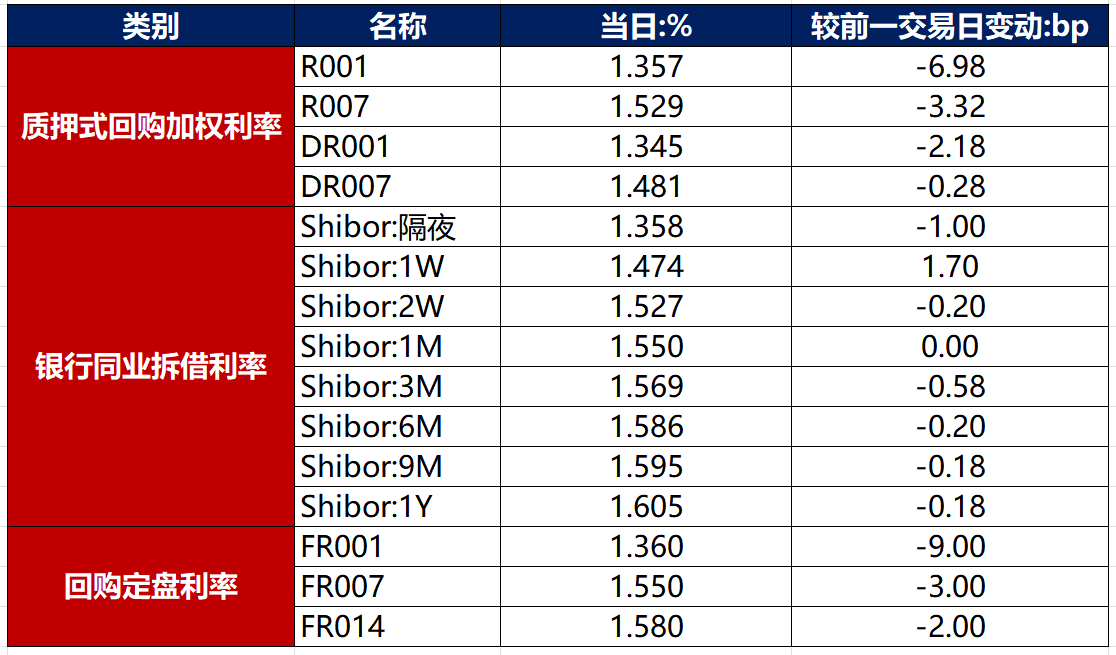
20%→0!央行,最新动作
Jing Ji Wang· 2026-02-28 01:56
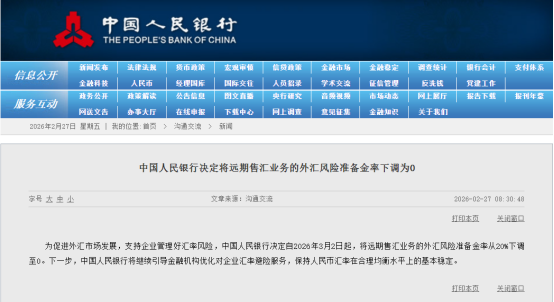
Core Viewpoint - The People's Bank of China (PBOC) has decided to lower the foreign exchange risk reserve requirement for forward foreign exchange sales from 20% to 0% starting March 2, 2026, to promote the development of the foreign exchange market and support enterprises in managing exchange rate risks [1]. Group 1: Policy Changes - The reduction in the foreign exchange risk reserve requirement is aimed at lowering the forward purchase costs for enterprises and increasing their willingness to engage in foreign exchange hedging [1]. - This marks the first use of this tool by the PBOC in nearly three and a half years, indicating a rational exit from previous measures and a return to a neutral foreign exchange policy [1]. Group 2: Impact on Enterprises - The adjustment is expected to help financial institutions provide cost-effective foreign exchange risk management products to enterprises, aligning with a broader policy initiative announced on January 15 [1]. - By 2025, it is anticipated that the hedging ratio for enterprises will increase to 30%, and the proportion of trade settled in RMB will also rise to nearly 30%, suggesting that around 60% of enterprises will be less affected by exchange rate risks in foreign trade [1]. Group 3: Market Conditions - Since the beginning of the year, the RMB has appreciated against the USD by approximately 2%, influenced by a weakening US dollar index [2]. - The PBOC plans to continue guiding financial institutions to optimize exchange rate hedging services for enterprises, aiming to maintain the RMB exchange rate at a reasonable and balanced level [2].
小摩警告:美国CLO中多达1500亿美元杠杆贷款面临AI风险
智通财经网· 2026-02-28 01:52
Group 1 - Morgan Stanley estimates that approximately $40 billion to $150 billion of leveraged loans packaged into U.S. collateralized loan obligations (CLOs) may be impacted by the AI boom, particularly in industries most associated with AI risks [1] - The report highlights that CLOs provide investors exposure to floating-rate debt rather than fixed-rate corporate bonds, and CLO managers are currently screening their portfolios to identify loans most susceptible to AI impacts [1] - The report also mentions that while concerns about the software industry are valid, it is crucial to consider the broader implications of AI disruption on CLO credit risk, which remains difficult to quantify [1] Group 2 - Concerns regarding refinancing risks are emphasized, with approximately $51 billion of software-related debt rated B- or lower maturing in 2028, and another $50 billion maturing in 2029 [2] - The report indicates that the private credit market's ability to refinance syndicated loan assets is limited, contrasting with past trends where public markets commonly transferred transactions to private markets [2] - There are worries that a weakening labor market or anxiety surrounding AI could trigger broader sell-offs, leading to price risks, although the economists expect a more gradual diffusion of AI in the economy [2]

多项电力数据披露!中华人民共和国2025年国民经济和社会发展统计公报
Guo Jia Tong Ji Ju· 2026-02-28 01:46
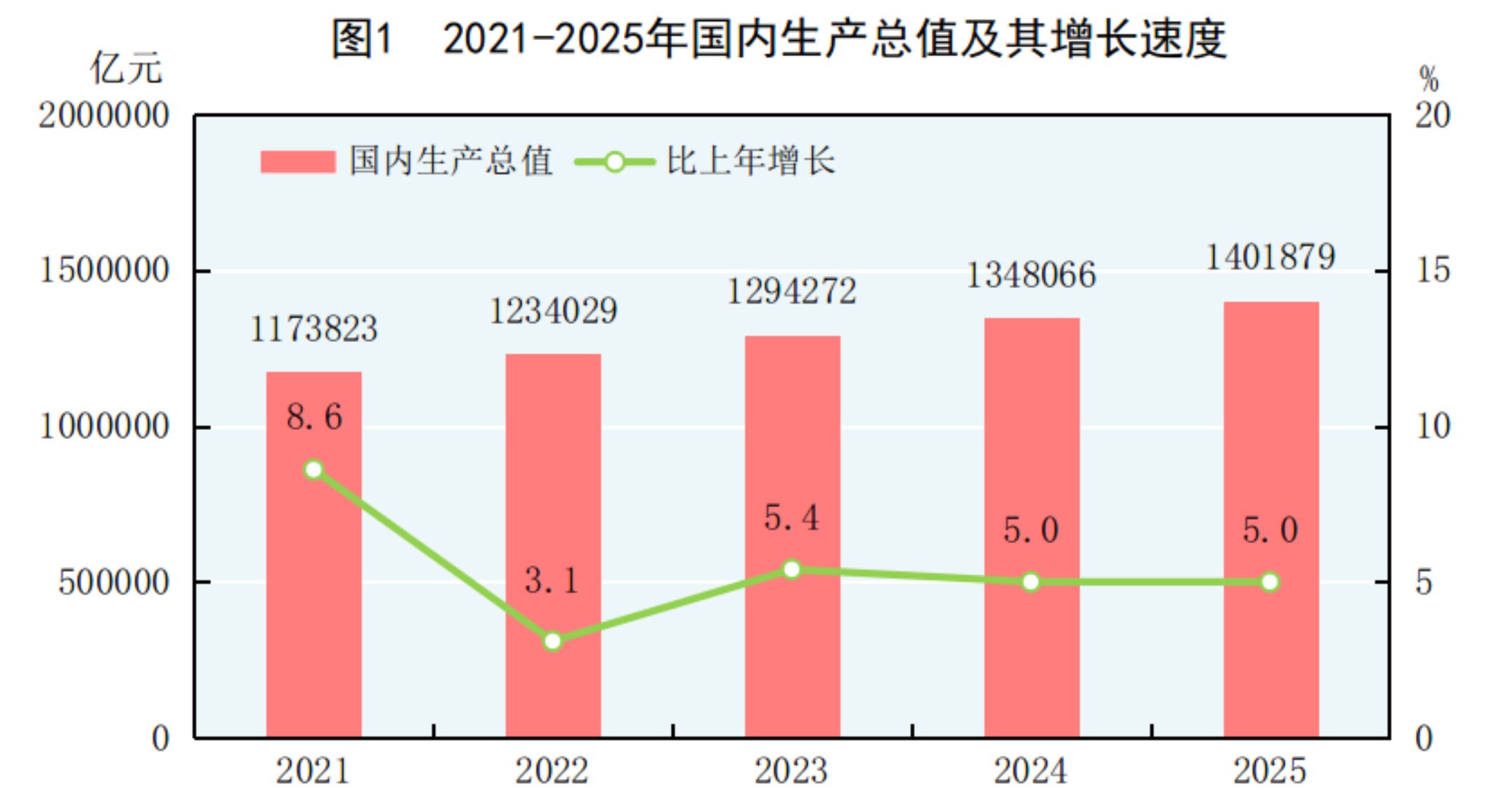
Economic Overview - The GDP for 2025 was approximately 1401879 billion yuan, reflecting a growth of 5.0% compared to the previous year [3] - The contribution to GDP growth came from final consumption expenditure (2.6 percentage points), capital formation (0.8 percentage points), and net exports (1.6 percentage points) [3] - The per capita GDP reached 99665 yuan, marking a 5.1% increase year-on-year [3] Population and Employment - The national population at the end of the year was 140489 million, a decrease of 3.39 million from the previous year [7] - The urban population was 95380 million, with an urbanization rate of 67.89%, up by 0.89 percentage points [15] - The total employment reached 72504 million, with an urban unemployment rate of 5.1% [9] Industrial and Manufacturing Sector - The total industrial output value increased by 5.8%, with significant growth in manufacturing sectors such as automotive (11.5%) and high-tech manufacturing (9.4%) [21][14] - The profits of industrial enterprises rose to 73982 billion yuan, a 0.6% increase year-on-year [22] - The production of new energy vehicles reached 1652.4 million units, a growth of 25.1% [22] Agricultural Sector - The total grain production was 71488 million tons, an increase of 1.2% from the previous year [17] - The area planted with grain crops increased to 11941 million hectares, with notable increases in corn and cotton [17] Service Sector - The value added by the service sector grew by 5.0%, with significant contributions from information technology services (11.1%) and rental and business services (10.3%) [26] - The total retail sales of consumer goods reached 501202 billion yuan, a growth of 3.7% [31] Trade and Investment - The total import and export value was 454685 billion yuan, with exports growing by 6.1% and imports by 0.5% [37] - Foreign direct investment saw a decrease of 9.5%, totaling 7477 billion yuan [42] - The number of newly established foreign-invested enterprises increased by 19.1% to 70392 [42] Financial Sector - The broad money supply (M2) increased by 8.5% to 340.3 trillion yuan [45] - The total social financing scale increased by 35.6 trillion yuan, with a year-on-year growth of 8.3% [46] - The average interest rate for new corporate loans was 3.22%, down by 41 basis points from the previous year [46]
1月份山西省金融机构人民币存贷款均实现增长
Xin Lang Cai Jing· 2026-02-28 01:39
人民银行山西省分行日前公布的《2026年1月山西省金融运行情况》显示,1月份全省金融机构人民币存 款增加1164.96亿元,同比多增141.56亿元。人民币贷款增加873.04亿元,同比少增239.93亿元。 分部门看,住户存款增加641.47亿元,非金融企业存款增加121.86亿元,财政性存款增加294.76亿元, 非银行业金融机构存款增加46.55亿元;住户部门贷款增加260.33亿元,其中,短期贷款增加139.47亿 元,中长期贷款增加120.87亿元;企(事)业单位贷款增加622.09亿元,其中,短期贷款增加255.88亿 元,中长期贷款增加492.22亿元,票据融资减少125.47亿元;非银行业金融机构贷款减少10.00亿元。 截至1月末,全省金融机构人民币存款余额65592.08亿元,同比增长5.79%。人民币贷款余额49821.99亿 元,同比增长6.69%。(记者马永亮) 人民银行山西省分行数据显示 1月份全省金融机构人民币存贷款均实现增长 ...
英国地产突然爆雷,华尔街踩雷20亿英镑:私募信贷的“蟑螂”出现了?
Sou Hu Cai Jing· 2026-02-28 01:35
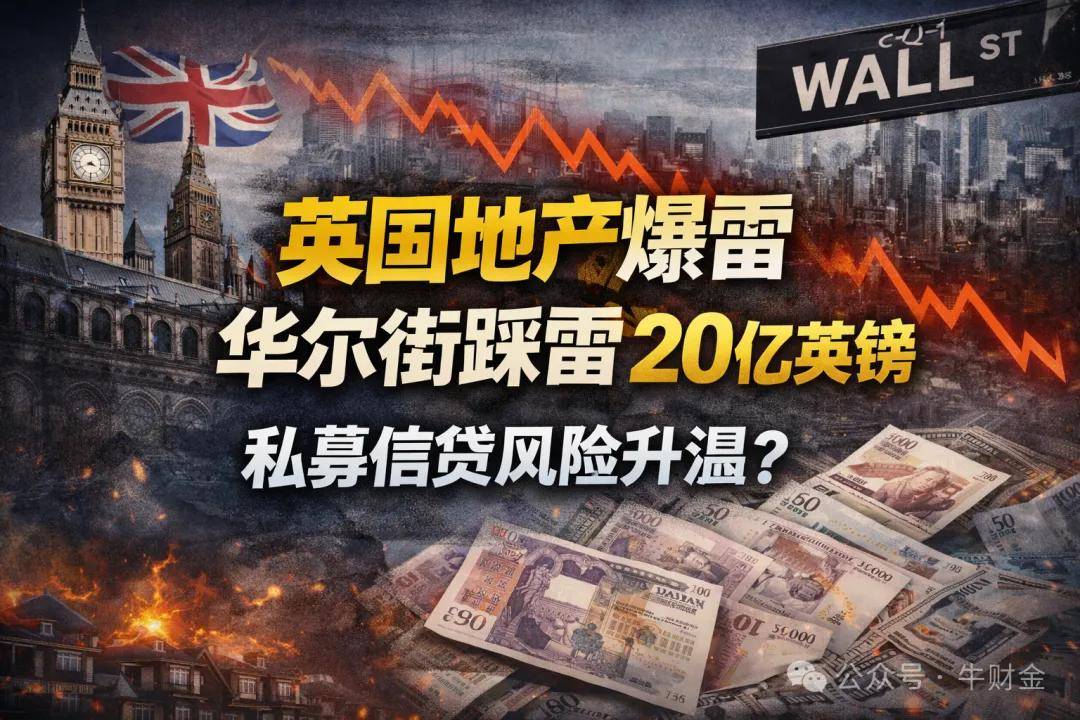
Core Viewpoint - The recent bankruptcy of Market Financial Solutions (MFS), a UK real estate lending institution backed by major Wall Street firms, signals potential risks in the financial market, particularly concerning collateral management and private credit practices [1][2]. Group 1: Company Overview - MFS is not a small player; it has received approximately £2 billion in financing from major financial institutions including Barclays, Jefferies Group, Apollo Global Management, Wells Fargo, and Santander [3][4]. - MFS specializes in high-yield bridge loans secured by real estate, offering loans up to £50 million within three days [4]. Group 2: Risk Factors - The core issue surrounding MFS's bankruptcy is "double-pledging," where the same collateral is pledged to multiple creditors, leading to potential asset security concerns [5][6]. - Historical precedents exist, such as the collapses of First Brands Group and Tricolor Holdings, which involved similar collateral and financial issues [8][10]. Group 3: Market Environment - The private credit sector has been rapidly expanding due to stricter bank regulations, attracting funds from pensions, insurance, and sovereign wealth funds, but this growth may lead to lowered risk standards [17][19]. - The current market environment shows signs of increased risk exposure, as evidenced by the recent comments from JPMorgan's CEO about the presence of "cockroaches" in the credit market, indicating that visible issues may be symptomatic of broader problems [11][12]. Group 4: Political and Compliance Risks - A significant borrower for MFS, Saifuzzaman Chowdhury, a former land minister of Bangladesh, has had his properties frozen by UK authorities, raising questions about the true value of the collateral backing the loans [22][24]. - Political risks should be a red flag in due diligence processes, as they can significantly impact asset valuations and loan security [25]. Group 5: Market Reactions - The capital markets have reacted negatively, with Jefferies Group's stock dropping approximately 10% and Barclays also experiencing a notable decline, indicating a reassessment of risk by investors [26]. - While the current situation does not suggest a systemic crisis, it highlights a growing concern over collateral authenticity and risk premiums in the private credit industry [26][27]. Group 6: Broader Implications - The collapse of MFS does not threaten the global financial system but raises critical questions about the risk exposure in the rapidly expanding private credit market [28]. - The financial system's vulnerability may increase as capital chases high yields, leading to potential mismanagement of risk and collateral [28][29].
易方达国证港股通科技交易型开放式指数证券投资基金基金份额发售公告
Zhong Guo Zheng Quan Bao - Zhong Zheng Wang· 2026-02-28 01:04
Group 1 - The fund being launched is the E Fund National Index Hong Kong Stock Connect Technology ETF, which is an open-ended index fund approved by the China Securities Regulatory Commission [1][19] - The fund will be available for subscription from March 9 to March 13, 2026, with both online and offline cash subscription options [1][22] - The maximum fundraising limit for the fund is set at 2 billion RMB, and any excess subscription requests will be subject to a proportionate confirmation method [3][4] Group 2 - Investors must have a Shenzhen Stock Exchange A-share account or a securities investment fund account to participate in the subscription [2][38] - The subscription fee for the fund will not exceed 0.30% of the subscribed amount, which will cover various fundraising expenses [7][23] - The fund's investment objective is to closely track the performance of the underlying index while minimizing tracking deviation and error [20][21] Group 3 - The fund will invest at least 80% of its non-cash assets in the components of the National Index Hong Kong Stock Connect Technology Index [8][13] - The index will include stocks listed on the Hong Kong Stock Exchange that meet specific criteria, including being technology-related and having a compound annual growth rate of over 10% in revenue over the past two years [9][10] - The index calculation will use a weighted method, ensuring that no single stock exceeds 15% of the index weight [11][12]
多品牌手机涨价超千元,玛莎拉蒂母公司巨亏1800亿 | 财经日日评
吴晓波频道· 2026-02-28 00:30
Group 1: European Central Bank Financial Performance - The European Central Bank (ECB) reported a loss of €1.3 billion (approximately $1.5 billion) for 2025, significantly reduced from the record loss of €7.9 billion in the previous year [2] - The ECB stated that it can continue to operate effectively despite the losses, and the funding gap will remain on its balance sheet to offset future profits [2] - The ECB expects to return to profitability either this year or in 2027, depending on future key interest rates, exchange rates, and the composition of its balance sheet [2][3] Group 2: Smartphone Price Increases in China - The Chinese smartphone industry is set to experience a comprehensive price increase starting March 2026, with new models expected to rise by at least ¥1,000 [4] - Market research firm Counterpoint Research predicts that the average price of new smartphones in China will increase by 15% to 25% compared to 2025 models [4] - Factors contributing to the price increase include rising costs of storage chips and AI chip demand, alongside higher costs for core components like screens and batteries [5] Group 3: Meizu's Strategic Shift - Meizu announced the suspension of its domestic smartphone hardware development projects, opting to seek third-party hardware partners while maintaining existing operations [6] - The company aims to transition from a hardware-focused strategy to one driven by AI software products, leveraging its Flyme ecosystem [6][7] - Following its acquisition by Geely, Meizu's shift reflects a strategic decision to prioritize software development in the AI era [6][7] Group 4: Netflix's Acquisition Withdrawal - Netflix announced its withdrawal from the bidding for Warner Bros. Discovery's film and streaming assets, ending its competition with Paramount [8] - Warner Bros. reported a 5.6% decline in revenue for Q4 2025, with adjusted EBITDA down 20% [8] - The market reacted positively to Netflix's decision, as it alleviated concerns about the potential debt burden from the acquisition [8][9] Group 5: Stellantis Financial Losses - Stellantis reported a net loss of €22.3 billion (approximately ¥180.2 billion) for 2025, primarily due to restructuring costs [10] - The company's net revenue for 2025 was €153.5 billion, a slight decrease of 2% year-on-year [10] - Despite the losses, Stellantis showed signs of recovery in the latter half of 2025, with a 10% increase in net revenue and an 11% rise in global shipments [10][11] Group 6: Luckin Coffee's Revenue Growth - Luckin Coffee reported a total net revenue of ¥49.288 billion for the fiscal year 2025, a 43% increase year-on-year [12] - The company opened 8,708 new stores in 2025, bringing the total to 31,048, a 39% increase [12] - Despite revenue growth, the fourth quarter showed a decline in net profit, attributed to rising costs and increased competition in the delivery market [12] Group 7: South Korean Stock Market Performance - The KOSPI index in South Korea has risen nearly 50% year-to-date, with a 130% increase over the past 12 months [13] - Major companies like Samsung Electronics and SK Hynix have seen significant stock price increases, contributing to the overall market performance [13] - Analysts have raised their target for the KOSPI index, citing government reforms and the AI-driven chip industry boom as key factors [13][14] Group 8: A-Share Market Trends - The A-share market showed mixed performance, with the Shanghai Composite Index rising by 0.39% [15] - Market sentiment has shifted towards "price increase" themes, with significant gains in metals and resource sectors [15][16] - The market is beginning to reassess the sustainability of growth in previously high-performing sectors, focusing on the impact of price increases on future earnings [16]

覆盖人民币跨境同业融资各类业务,引入逆周期调节机制——人民币跨境同业融资有新规范
Ren Min Ri Bao· 2026-02-28 00:12
Core Viewpoint - The People's Bank of China (PBOC) has issued a notification to enhance the level of capital project openness, develop the offshore RMB market, and improve macro-prudential management of cross-border capital flows, supporting domestic banks in conducting RMB cross-border interbank financing with foreign institutions [1][4]. Group 1: Overview of the Notification - The notification covers RMB cross-border interbank financing, including account financing and bond repurchase, allowing domestic banks to lend and borrow RMB from foreign institutions, thus providing liquidity to the offshore market and promoting the use of RMB [1][4]. - The notification is effective immediately upon release and aims to support and regulate banks in their cross-border financing activities while serving the real economy and guiding banks to adopt a risk-neutral approach [1][4]. Group 2: Key Features of the New Regulations - The notification adopts a "substance over form" principle, encompassing all RMB financing activities between domestic banks and foreign institutions that have a substantive creditor-debtor relationship, applicable to existing and future similar business types [5]. - A notable highlight of the new regulations is the introduction of a counter-cyclical adjustment mechanism, linking the net outbound balance of RMB cross-border interbank financing to the capital level and funding strength of domestic banks, with parameters adjusted based on market conditions and bank operations [2][5]. Group 3: Impact on Management and Operations - The implementation of the notification is expected to significantly enhance the rules and transparency of RMB cross-border interbank financing management, facilitating stable liquidity supply in the offshore RMB market [3][6]. - The management logic of the notification aligns with previous measures on overseas loans and financing, serving as an effective supplement to comprehensive macro-prudential management of cross-border financing [3][6]. - The notification encourages banks to operate within their capacity, promoting a risk-neutral philosophy and allowing for flexible adjustments in business structure within an overall net outbound balance limit [6].