
债券

Search documents
欧洲债市:欧洲债券基本持平 长债跑赢
Xin Lang Cai Jing· 2026-01-15 17:05
Core Viewpoint - Most European government bonds showed little change, with long-term bonds slightly rising due to safe-haven demand. UK government bonds fell as unexpectedly strong economic data weakened market expectations for interest rate cuts this year [1][3]. Market Summary - The 10-year German government bond yield remained stable at 2.82%, while the 30-year bond yield decreased by 2 basis points to 3.40% [4]. - The 2-year UK government bond yield increased by 4 basis points to 3.66%, and the 10-year yield also rose by 4 basis points to 4.38%. The rebound in November economic growth data led traders to bet that the Bank of England would cut rates by 43 basis points this year, down from the 48 basis points expected before the data release [5]. - The Italian 10-year government bond yield remained unchanged at 3.45%, with the Italy-Germany bond spread narrowing by 1 basis point to 63 basis points [5]. - The French 10-year government bond yield also showed little change, reported at 3.49% [5].
财政部延续两项境外机构投资相关债券利息免税优惠政策
第一财经· 2026-01-15 14:20
Core Viewpoint - The Ministry of Finance and the State Taxation Administration of China have announced the extension of tax exemption policies for interest income from bonds held by foreign institutional investors in the domestic bond market, effective from January 1, 2026, to December 31, 2027 [3][4]. Group 1: Tax Policies - From January 1, 2026, to December 31, 2027, interest income from bonds held by foreign institutional investors in the domestic bond market will be exempt from corporate income tax and value-added tax [3]. - From August 8, 2025, to December 31, 2027, interest income from foreign-issued government bonds and local government bonds will be exempt from value-added tax for foreign institutional investors [3]. - The previous announcement indicated that from August 8, 2025, value-added tax would be reinstated on interest income from newly issued government bonds, local government bonds, and financial bonds, but the new policy provides an exemption for foreign investors [3]. Group 2: Market Impact - The ongoing tax exemption policies are expected to lower the holding costs for foreign institutional investors, thereby increasing their returns and attracting more investment into China's bond market [4]. - The increasing participation of foreign investors in China's financial market is seen as a significant factor in promoting the opening up of the bond market and the internationalization of the Renminbi [4].


你抛美债我抛中债,外资减持中国债,大量资金涌向美国?
Sou Hu Cai Jing· 2026-01-15 13:47
Core Viewpoint - China is no longer the second-largest holder of U.S. Treasury bonds, reflecting a significant shift in the global financial landscape and investment strategies [2][12]. Group 1: U.S. Treasury Bonds and China's Position - The U.S. national debt has surpassed $38 trillion, with $9.2 trillion maturing by 2025, raising concerns about the long-term safety of U.S. debt among global investors [4][6]. - The high level of short-term bonds and the Federal Reserve's maintained high interest rates have resulted in annual interest payments exceeding $1 trillion, which is 1.3 times the military budget [6]. - The politicization of financial tools by the U.S., such as using the SWIFT system for pressure, has destabilized international financial markets and prompted countries to diversify their foreign exchange reserves away from U.S. dollar assets [8][10]. Group 2: China's Bond Market and Foreign Investment - China's financial market has become more accessible to foreign investors through mechanisms like "Bond Connect" and "Swap Connect," making Chinese bonds an attractive option for global asset diversification due to their relatively stable yields and manageable currency risks [10][24]. - Despite the appeal of Chinese bonds, geopolitical risks and changes in U.S.-China interest rate differentials have led some foreign investors to temporarily reduce their holdings for risk aversion and profit-taking [10][20]. - The reduction of U.S. Treasury holdings by China during the Trump administration was a strategic decision influenced by the political environment and trade tensions, with a gradual decrease from over $1.3 trillion to below $700 billion by 2025 [15][17]. Group 3: Global Financial Dynamics - The changes in U.S. and Chinese bond holdings reflect a broader adjustment in the global economic landscape and strategic rebalancing among nations [26]. - The increase in the renminbi's share in global foreign exchange reserves and the IMF's adjustment of its weight in the SDR basket indicate a solid strategic position for Chinese bonds in global diversification [24][26]. - The fluctuations in foreign investment in Chinese bonds are tactical responses to short-term factors rather than a long-term rejection of the value of Chinese debt [10][20].

【立方债市通】河南AAA主体拟发债30亿/伊川财源投资被通报批评/全国首单 “城市更新” 概念债落地
Sou Hu Cai Jing· 2026-01-15 12:42
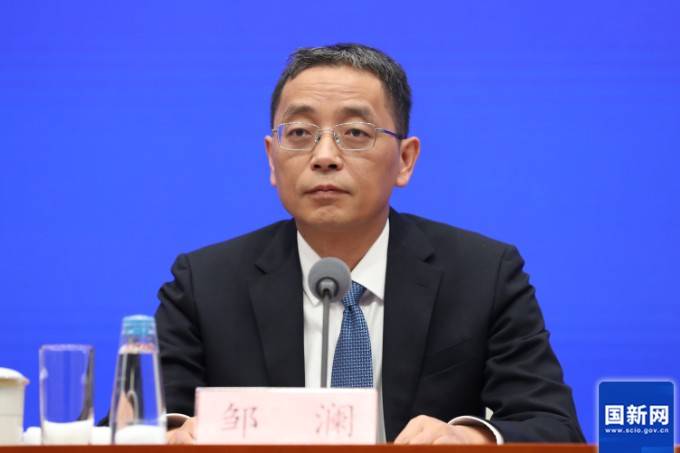
第 540 期 2026-01-15 焦点关注 央行宣布:将推出8项政策措施 人民银行新闻发言人、副行长邹澜在国新办新闻发布会上表示,根据当前经济金融形势需要,人民银行将先行推出两方面政策措施。具体包括:下调各类结 构性货币政策工具利率0.25个百分点;将商业用房购房贷款最低首付比例下调至30%等8项措施;将此前已经设立的民营企业债券融资支持工具、科技创新 债券风险分担工具合并管理,合计提供再贷款额度2000亿元。另外,邹澜表示,从今年看,降准降息还有一定空间。 央行公布2025年金融统计数据 根据中诚信分析研报的数据,2025年全国城投债发行总额约为5.5万亿元,受政策收紧影响,发行额延续下降趋势,较2024年下降约11%;净融资规模约362 亿元,不足2024年的两成。 宏观动态 2025年国债发行16万亿元,全年净增6.6万亿元 中国人民银行新闻发言人、副行长邹澜表示,近年来我国实施积极的财政政策,政府债券发行在增多,2025年国债发行了16万亿元,全年净增6.6万亿元, 年末余额大约是40万亿元,这其中,银行、非银行金融机构、境外机构分别持有了27万亿元、5万亿元和2万亿元,银行等市场机构为了改善资产 ...
两部门延续实施境外机构投资境内债券市场企业所得税、增值税政策
Xin Hua Wang· 2026-01-15 11:04
Core Viewpoint - The Ministry of Finance and the State Taxation Administration of China announced an extension of tax exemptions for foreign institutions investing in the domestic bond market, effective from January 1, 2026, to December 31, 2027 [1] Group 1: Tax Policy Changes - From January 1, 2026, to December 31, 2027, foreign institutions will be exempt from corporate income tax and value-added tax on interest income from bonds in the domestic market [1] - This policy extension follows a previous announcement made in 2021, which initially set the exemption period from November 7, 2021, to December 31, 2025 [1] Group 2: Additional Tax Exemptions - Starting from August 8, 2025, until December 31, 2027, foreign institutions will also be exempt from value-added tax on interest income from Chinese government bonds and local government bonds issued abroad [1]
两部门:延续实施境外机构投资境内债券市场企业所得税、增值税政策
21世纪经济报道· 2026-01-15 10:28
Group 1 - The Ministry of Finance and another department announced the extension of tax policies for foreign institutions investing in the domestic bond market, specifically exempting corporate income tax and value-added tax on bond interest income from January 1, 2026, to December 31, 2027 [1] - The exemption from corporate income tax does not apply to bond interest income earned by foreign institutions that have established entities or places in China, which are related to the income [1] Group 2 - A significant policy change has been introduced, allowing commercial housing loan down payments to be reduced to 30%, indicating potential easing in monetary policy [2] - The central bank has indicated that there is still room for further interest rate cuts and reserve requirement ratio reductions, which could stimulate economic activity [2] - Eight major measures will be introduced to expand the coverage of enterprise annuities, potentially enhancing retirement savings for employees [2]

财政部:自2026年1月1日起至2027年12月31日止 对境外机构投资境内债券市场取得的债券利息收入暂免征收企业所得税和增值税
Sou Hu Cai Jing· 2026-01-15 09:28
Core Viewpoint - The Ministry of Finance announced a temporary exemption from corporate income tax and value-added tax for foreign institutions investing in the domestic bond market from January 1, 2026, to December 31, 2027 [1] Group 1 - The exemption applies to interest income from bonds obtained by foreign institutions in the domestic bond market [1] - The scope of the exemption does not include interest income from bonds related to institutions or places established by foreign entities within the country [1]
一季度利率债供给怎么看?
HUAXI Securities· 2026-01-15 09:19
Group 1: Government Bond Issuance in 2025 - In Q1 2025, the net issuance of government bonds reached 14,680 billion yuan, corresponding to an issuance progress of 22%, marking a historical peak for the same period[1] - The total net financing of government bonds for the year was 65,698 billion yuan, an increase of 20,855 billion yuan year-on-year[1] - The net financing in Q2 and Q3 was 19,121 billion yuan and 20,192 billion yuan respectively, both setting historical highs for those quarters[1] Group 2: Local Government Bond Issuance - Local government bonds also saw a front-loaded issuance, with a total net financing of 72,757 billion yuan in 2025, up 4,804 billion yuan year-on-year[1] - The issuance pattern showed peaks in Q1 (36%), followed by Q2 and Q3 (24% each), and a drop in Q4 (17%)[1] - In historically weaker months like April and July, local bonds maintained significant net financing of 5,281 billion yuan and 8,124 billion yuan respectively[1] Group 3: Policy Financial Bonds - The issuance of policy financial bonds was relatively stable, with a net issuance of 21,766 billion yuan in 2025, an increase of 5,678 billion yuan year-on-year[1] - The issuance pace in August was notably high, likely due to the preparation for new policy financial tools[2] - The net financing scale in August was significantly above historical levels, indicating a proactive approach to funding[2] Group 4: Projections for 2026 - The issuance of government bonds in 2026 is expected to maintain a front-loaded trend, with a focus on Q1 and Q2 due to economic conditions[3] - The net financing for government bonds in Q1 2026 is projected to be between 13,400 and 13,600 billion yuan[3] - Local government bond issuance in Q1 2026 is anticipated to follow a "V" shape, with significant financing in January and March, and a dip in February[3]
两部门:对境外机构投资境内债券市场取得的债券利息收入暂免征收企业所得税和增值税
智通财经网· 2026-01-15 09:18
Core Viewpoint - The Ministry of Finance and the State Taxation Administration announced a policy to temporarily exempt foreign institutions from corporate income tax and value-added tax on bond interest income from the domestic bond market from January 1, 2026, to December 31, 2027 [1] Group 1 - The policy aims to further promote the opening up of the bond market to foreign investment [1] - The exemption does not apply to bond interest income earned by foreign institutions through establishments or places set up within the country that have actual connections to the income [1]
两部门:延续实施境外机构投资境内债券市场企业所得税、增值税政策
Zheng Quan Shi Bao Wang· 2026-01-15 09:10
Core Viewpoint - The Ministry of Finance and the State Taxation Administration announced a tax exemption for interest income from bonds obtained by foreign institutions investing in the domestic bond market from January 1, 2026, to December 31, 2027 [1] Group 1 - The tax exemption applies to corporate income tax and value-added tax for foreign institutions [1] - This policy aims to attract more foreign investment into the domestic bond market [1] - The exemption period spans two years, indicating a strategic move to enhance market liquidity and investment attractiveness [1]