商业航天

Search documents
亚太股市多数下挫,A股锂电逆势爆发,10倍牛股源杰科技市值突破1000亿
21世纪经济报道· 2026-03-26 04:13
Market Overview - The major Asia-Pacific stock markets mostly declined, with the South Korean Composite Index dropping nearly 3% and the Hong Kong Hang Seng Technology Index falling over 2% [1] - The A-share market saw all four major indices decline, with the Shanghai Composite Index down 0.58% and the Shenzhen Component Index down 0.38% [1][2] - The total trading volume in the Shanghai and Shenzhen markets was 1.22 trillion yuan, a decrease of 242 billion yuan compared to the previous trading day, with over 4,100 stocks declining [1] Sector Performance - The lithium battery supply chain surged against the trend, with lithium electrolyte concept stocks collectively rising, led by Haike Xinyuan, which increased over 14% [6] - The main contract for lithium carbonate on the Guangxi Futures Exchange reached over 160,000 yuan per ton, marking a four-day increase [6] - The Zimbabwean government announced a suspension of all raw mineral and lithium concentrate exports, which is expected to impact the market for about a month [6][7] Notable Stocks - Haike Xinyuan (301292) rose by 14.61% to 79.09 yuan, while Shida Shenghua (603026) increased by 10.01% to 85.32 yuan [8] - Other notable stocks in the lithium sector included Huasheng Lithium Energy and Tianji Co., with increases of 9.57% and 7.07%, respectively [8] - In the computing hardware sector, Yuanjie Technology saw its stock price rise significantly, with a total market value exceeding 100 billion yuan and a year-to-date increase of over 85% [9] Market Sentiment - Overall, the market experienced a rebound after a panic sell-off, but the strength of the rebound has been weakening, indicating cautious investor sentiment [11] - Short-term market conditions are expected to remain volatile, with recommendations for small position participation in rebounds and a focus on AI computing and power sectors for potential opportunities [11] - Long-term optimism is suggested for quality growth stocks below 3,900 points, with a recommended total position of 50-70% to maintain liquidity for geopolitical fluctuations [11]


宇树科技IPO,背后藏着中国的何种布局?
虎嗅APP· 2026-03-26 00:27
Core Viewpoint - The article discusses the ongoing wave of IPOs among Chinese technology companies, highlighting the strategic implications of this trend in the context of global technological competition and national policy initiatives [4][8]. Group 1: IPO Trends and Market Dynamics - Yushu Technology's IPO application has been accepted, aiming to raise 4.202 billion yuan, with 85% allocated to R&D projects, marking a significant step in the surge of humanoid robotics companies seeking to go public [4]. - By 2026, at least six humanoid robotics companies, including Yushu Technology and ZhiYuan Robotics, are preparing for IPOs, indicating a robust pipeline of technology firms entering the market [4]. - In 2025, the A-share IPO market saw a strong recovery, with 116 companies successfully listed, raising approximately 131.77 billion yuan, a 95.64% increase year-on-year [11]. Group 2: Funding and Investment Landscape - Various funding sources, including state-owned enterprises, venture capital, and foreign investments, are actively supporting the growth of technology companies, facilitating their rapid expansion [6][24]. - The National Entrepreneurship Investment Guidance Fund, launched in 2025, aims to support seed and early-stage technology companies, providing a stable capital foundation during high uncertainty periods [25]. - In 2025, over 2,000 financing events occurred in the domestic AI sector, with total financing exceeding 450 billion yuan, reflecting a significant increase in investment activity [26]. Group 3: Strategic Implications and National Policy - The surge in technology company IPOs is viewed as a critical national strategy to enhance China's technological self-sufficiency and competitiveness in the global arena [8][44]. - The "14th Five-Year Plan" emphasizes accelerating high-level technological self-reliance, focusing on strategic sectors and addressing weaknesses in supply chains [45]. - The introduction of the "1+6" policy reform for the Sci-Tech Innovation Board has streamlined the IPO process for unprofitable but technologically advanced companies, serving as a key driver for the current wave of listings [47]. Group 4: Competitive Landscape and Challenges - Despite the rapid growth of Chinese technology companies, significant gaps remain compared to international giants in market share, revenue scale, and technological capabilities [6][38]. - In the AI chip market, foreign companies like NVIDIA and AMD dominate, holding a combined market share of 69.7%, while domestic players like Moer Thread have less than 1% [38]. - The commercial space sector in China is also developing, with companies like Blue Arrow Aerospace preparing for significant advancements in reusable rocket technology [37].

商业航天行业深度研究报告(二):增材重塑航天制造,3D打印赋能商业火箭降本放量
Huachuang Securities· 2026-03-25 14:47
Investment Rating - The report maintains a recommendation for the commercial aerospace industry, particularly focusing on the advantages of additive manufacturing in rocket production [3]. Core Insights - The commercial aerospace sector is characterized by complex equipment structures and high manufacturing barriers, necessitating advanced technologies like additive manufacturing to overcome traditional manufacturing limitations [11][13]. - Additive manufacturing offers significant advantages over traditional methods, including reduced weight, improved material utilization, and the ability to create complex integrated structures, which are essential for modern aerospace applications [14][16]. - The report emphasizes the growing demand for rocket launches driven by low Earth orbit satellite deployment, highlighting the strategic importance of the commercial aerospace industry in national competition [8][34]. Summary by Sections 1. Complexity of Commercial Aerospace Equipment - Commercial aerospace equipment features large dimensions, complex configurations, and high-performance material requirements, making manufacturing particularly challenging [11]. 2. Bottlenecks in Traditional Manufacturing - Traditional manufacturing processes are often cumbersome and inefficient, leading to the emergence of additive manufacturing as a viable solution [13]. - Additive manufacturing allows for the creation of intricate designs and rapid prototyping without the need for extensive tooling [14]. 3. Cost Reduction and Efficiency Gains - The report outlines how additive manufacturing can significantly reduce production cycles and costs, with examples of successful applications in both domestic and international contexts [34][56]. - Notable advancements include the reduction of component counts and manufacturing times, exemplified by companies like Relativity Space and NASA [56][61]. 4. Relevant Companies - The report identifies key companies in the sector, including: - **Yinbang Co., Ltd.**: Engaged in metal 3D printing for aerospace applications, holding a stake in a company that supports rocket launches [63]. - **Feiwo Technology**: Focused on metal 3D printing services for liquid rocket engine components, with a diverse client base in the aerospace sector [64].
刚刚!全线暴涨!伊朗突发大消息!
天天基金网· 2026-03-25 08:34
Group 1 - Precious metals surged collectively as the situation in Iran showed signs of easing, leading to a weaker US dollar [1] - The US proposed a 15-point agreement to Iran aimed at ending hostilities, which includes commitments from Iran regarding nuclear weapons and the status of the Strait of Hormuz [1] - Iran stated that "non-hostile vessels" can safely pass through the Strait of Hormuz with coordination from Iranian authorities [2] Group 2 - SpaceX plans to submit its IPO prospectus soon, aiming to raise over $75 billion, significantly higher than previous estimates of $50 billion [3] - The latest funding round valued SpaceX at $1.25 trillion, and if the IPO proceeds as planned, it will surpass the previous record set by Saudi Aramco [3] Group 3 - A-shares saw a significant rebound, with the Shanghai Composite Index rising by 1.30% to 3932 points, and the ChiNext Index leading with a 2.01% increase [10] - The total trading volume in the Shanghai, Shenzhen, and Beijing markets approached 2.2 trillion, an increase of nearly 100 billion from the previous day [6] - The market showed a clear "risk-off + growth" dual-driven pattern, with the precious metals sector leading the gains [10] Group 4 - The market is currently in a rebound phase, with the Shanghai Composite Index recovering approximately 3.1% from its low of 3813 points [12] - The fear index (GVIX) decreased from 23.83 to 20.69, indicating a partial recovery in market sentiment, though it remains elevated compared to normal levels [12] - The market is expected to consolidate around the 3900-point level, with potential for further gains if it can break above 3950 points [12] Group 5 - The external environment is shifting from "extreme tension" to "tense with easing," but uncertainties remain high, impacting A-shares' strength [13] - Domestic policies are maintaining a positive tone, with ongoing support for new industrial policies and a manageable outflow pressure from foreign capital [14] - The commercial space sector is entering a critical validation phase, with multiple rocket recovery tests planned for 2026, and SpaceX's IPO is expected to catalyze the global commercial space industry [14] Group 6 - Investment focus should be on three main lines: precious and non-ferrous metals, technology growth sectors like commercial space and AI computing, and opportunities in sectors that have seen significant corrections [15] - Precious metals are expected to have value regardless of the geopolitical situation, with potential for growth in both easing and prolonged conflict scenarios [15] - The commercial space sector is poised for growth due to SpaceX's IPO and advancements in satellite internet and rocket recovery technologies [15]

全球最大IPO,新消息!
证券时报· 2026-03-25 04:27
Core Viewpoint - SpaceX is preparing for a record-breaking IPO with a target valuation of $1.75 trillion and aims to raise between $50 billion to $75 billion, which would set a new record for capital market fundraising [1][2]. Group 1: IPO Preparation - SpaceX plans to submit confidential IPO documents to regulators this week or next, with a formal launch expected in June [1]. - The IPO preparation has entered a substantive phase, with a focus on listing on NASDAQ and aiming for inclusion in the NASDAQ 100 index shortly after [1]. Group 2: Valuation and Business Model - The $1.75 trillion valuation positions SpaceX among the top ten global companies by market capitalization, supported by strong profitability and a complete business ecosystem [2]. - SpaceX's revenue is projected to reach $15 billion to $16 billion by 2025, with an estimated profit of $8 billion, indicating that the fundraising is aimed at advancing high-growth strategic projects rather than addressing operational shortfalls [2]. Group 3: Key Business Segments - Starlink is a critical component of SpaceX's valuation, with over 10,000 satellites launched and projected revenues exceeding $10 billion by 2025, capturing over 85% of the global low Earth orbit satellite internet market [2]. - SpaceX holds over 80% market share in the global commercial launch market, with government contracts and commercial launches forming the core of its revenue base [2]. Group 4: Future Projects and AI Integration - The IPO proceeds will primarily fund two major initiatives: deploying up to 1 million satellites for a space-based AI data center and advancing the lunar base Alpha project, which is part of its Mars colonization vision [3]. - The space AI data center is seen as a core future development, leveraging the unique advantages of space to reduce operational costs associated with traditional data centers [3]. Group 5: Challenges and Market Sentiment - Despite the ambitious plans, the space data center initiative faces significant challenges, including the need for approximately 6,667 Starship launches annually, which is 530 times the current global launch volume [4]. - Investor interest remains high, even amid uncertainties related to the xAI acquisition's impact on profitability and governance risks associated with a dual-class share structure [4].

智能制造行业周报:宇树科技IPO获受理,出货放量可期-20260324
Shanghai Aijian Securities· 2026-03-24 10:52
Investment Rating - The report gives a "Strong Buy" rating for the mechanical equipment sector, indicating a positive outlook compared to the market [2]. Core Insights - The mechanical equipment sector has underperformed recently, with a decline of 6.26% compared to the Shanghai Composite Index's drop of 2.19% during the week of March 16-20, 2026 [2][19]. - The price-to-earnings ratio (PE-TTM) for the mechanical equipment sector is 39.93x, which is at the 20.60% percentile over the past three months, indicating a relatively high valuation [2][24]. - The report highlights the IPO acceptance of Yushu Technology, which is expected to significantly increase its production capacity for humanoid and quadruped robots, with a projected annual output of 75,000 humanoid robots and 115,000 quadruped robots [5][6]. Summary by Sections Industry Performance - The mechanical equipment sector ranked 25 out of 31 in the Shenwan industry rankings, reflecting its recent struggles [2][19]. - The sector's performance is driven by various sub-sectors, with automation and robotics leading in PE ratios, while rail transportation and engineering machinery lag behind [2][24]. Company Highlights - Yushu Technology's IPO aims to raise 4.202 billion yuan, with 85% of the funds allocated to research and development, focusing on advanced robotic technologies [5][6]. - The company has achieved a significant reduction in losses, with a projected net profit of 0.95 billion yuan in 2024, marking a turnaround from previous losses [6][8]. - Yushu Technology's sales of quadruped robots have exceeded 30,000 units, maintaining a leading global market share, while humanoid robots are entering mass production [8][6]. Semiconductor Equipment & Components - The demand for high-performance chips and AI infrastructure is driving investments in semiconductor equipment, with significant capital expenditures expected in both domestic and international markets [2][40]. - Companies like Xianzhong Technology are expected to benefit from the ongoing trend of domestic substitution and high-end upgrades in semiconductor equipment [2][40]. PCB Equipment - The report emphasizes the strong growth potential in the PCB equipment sector, driven by the expansion of high-end PCB production and the increasing demand for advanced manufacturing technologies [2][40]. - Companies such as Yanmian Technology and Dazhu CNC are highlighted as key players in this space, with expected revenue growth driven by the demand for high-layer count and high-reliability PCBs [2][40].
情绪回暖,缩量反弹
Tebon Securities· 2026-03-24 10:47
Market Overview - The A-share market experienced a significant rebound with over 5,100 stocks rising, driven by easing geopolitical risks [2][5] - The Shanghai Composite Index closed at 3,881.28 points, up 1.78%, while the Shenzhen Component and ChiNext Index rose by 1.43% and 0.50% respectively [2] - Total trading volume in the A-share market reached 2.1 trillion yuan, a decrease of 14.4% from the previous trading day, indicating a more rational trading environment [2] Sector Performance - The market saw broad gains across sectors, with the comprehensive sector leading with a 3.93% increase, followed by textiles, building materials, utilities, and non-ferrous metals [5] - The copper-clad board index surged by 5.71%, and the lithium mining index rose by 5.48%, reflecting strong performance in technology and renewable energy sectors [5] - Only coal and petrochemical sectors experienced declines, down 0.67% and 0.58% respectively, likely due to geopolitical tensions affecting oil prices [5][15] Bond Market - The government bond futures market showed overall strength, particularly in long-term bonds, with the 30-year bond futures rising by 0.52% to close at 111.24 yuan [11] - The central bank's net withdrawal of 335 billion yuan indicates a cautious approach to liquidity management, while the overall funding environment remains loose [11] Commodity Market - The South China commodity index fell by 1.63%, with significant declines in energy and chemical products, while non-ferrous metals showed some recovery [9] - Lithium carbonate futures surged by 6.11%, driven by supply uncertainties from Zimbabwe, which has implemented a ban on lithium ore exports [15] Investment Themes - Key investment themes include artificial intelligence, commercial aerospace, nuclear fusion, consumer upgrades, brokerage firms, precious metals, and energy chemicals, with a focus on macroeconomic recovery and geopolitical developments [13][16] - The report emphasizes the importance of monitoring capital expenditure changes in leading companies and the impact of geopolitical risks on energy prices [13][16]
产业研究双周报:经济运行开局良好,产业向新向智而行-20260324
Guoyuan Securities· 2026-03-24 10:06
Economic Indicators - Economic indicators for January-February show a strong start with industrial production increasing by 6.3% year-on-year, and high-tech manufacturing growing by 13.1%[14] - Retail sales reached 86,079 billion yuan, with a year-on-year growth of 2.8% and a month-on-month increase of 0.81% in February[14] - Fixed asset investment grew by 1.8% year-on-year, with infrastructure investment increasing by 11.4%[14] Policy Support for AI and New Industries - Multiple government departments are supporting the development of the AI industry, with a goal to exceed 10 trillion yuan in AI-related industry scale by the end of the 14th Five-Year Plan[11] - The National Development and Reform Commission plans to establish a national-level merger fund to enhance venture capital turnover efficiency in the AI sector[11] - The Ministry of Transport emphasizes the implementation of "AI+" actions to promote smart transportation[12] Financial Sector Developments - The total social financing stock reached 451.4 trillion yuan, growing by 8.2% year-on-year, indicating a supportive monetary policy[16] - M2 money supply was 349.22 trillion yuan, with a year-on-year growth of 9%[16] - The average interest rate for new corporate loans was approximately 3.1%, down by about 20 basis points from the previous year[16] Emerging Industries and Innovations - The electric vehicle charging infrastructure reached 21.01 million units, a 47.8% increase year-on-year[43] - Chery announced its new battery technology, capable of charging in 8 minutes for a range of 500 kilometers, as part of its green energy strategy[44] - The successful launch of the Jielong-3 rocket marks a significant milestone in China's commercial space endeavors, with 93 satellites launched to date[46]
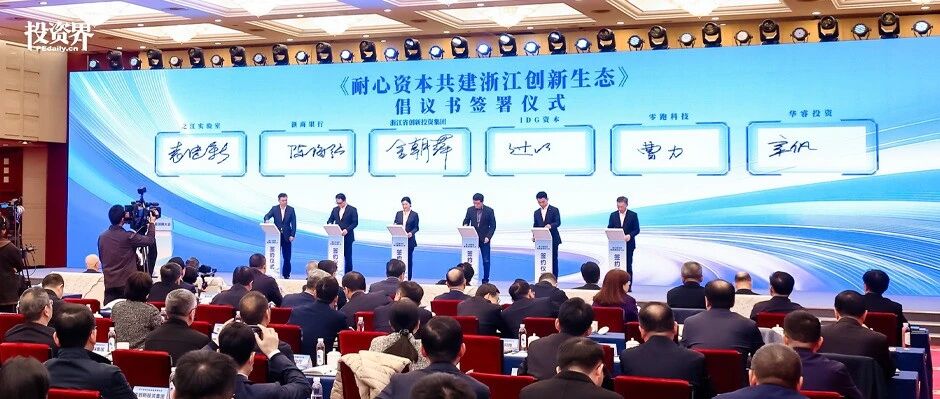
今天,投资人集体去浙江
投资界· 2026-03-24 09:37
Core Viewpoint - Zhejiang Province has established itself as a vibrant hub for venture capital and innovation, with a total provincial fund scale exceeding 3000 billion yuan, supporting over 1800 local enterprises and facilitating the successful listing of more than 100 companies [2][5][6]. Group 1: Fund Structure and Scale - The provincial fund system in Zhejiang has surpassed 3000 billion yuan, covering all stages from seed to growth and mergers [5]. - The Zhejiang Social Security Science and Technology Fund, established in October last year with an initial scale of 500 billion yuan, has already invested in 8 projects totaling 1.3 billion yuan and is in the process of selecting sub-funds exceeding 300 billion yuan [5][6]. - The "4+1" special fund group, focused on advanced manufacturing and technological innovation, has a scale of 745 billion yuan and has invested in over 500 projects totaling 450 billion yuan [6]. Group 2: Investment Philosophy and Ecosystem - Zhejiang aims to cultivate "patient capital" that allows various funds to enter, invest effectively, manage well, and exit smoothly, thereby enhancing the investment ecosystem [4][11]. - The province's fund system emphasizes long-term investment horizons, with some funds having a maximum duration of 20 years, which is rare in the current venture capital landscape [6][10]. - The government is committed to creating a supportive environment for innovation, allowing for a collaborative ecosystem where venture capital can thrive [8][10]. Group 3: Strategic Partnerships and Future Goals - Strategic partnerships have been formed, such as the collaboration between the Zhejiang Innovation Investment Group and Zhejiang University, aimed at building a robust innovation ecosystem [2][11]. - By 2030, the provincial fund scale is projected to exceed 5000 billion yuan, aiming to leverage various capital sources to invest over one trillion yuan in Zhejiang [7][11]. - The focus is on creating a conducive climate for innovation, with a significant influx of high-end resources and capital into the region [9][10]. Group 4: Case Studies and Success Stories - Companies like Blue Arrow Aerospace and Qianxun Intelligent have benefited from the provincial government's investment strategies, showcasing the effectiveness of the supportive capital environment [10]. - The collaboration between local venture capital firms and government funds has led to significant investments in emerging sectors, reinforcing Zhejiang's position as a leading innovation hub [9][10]. Group 5: Vision for the Future - Zhejiang's approach to innovation is not just about immediate gains but about building a sustainable ecosystem that fosters long-term growth and development [13][16]. - The province is committed to enhancing its core competitive advantages in technology and industry, ensuring that venture capital is willing to invest in hard technology and innovative projects [16].
商业航天五小龙,谁会成为中国版SpaceX?
和讯· 2026-03-24 08:55
Core Viewpoint - SpaceX's valuation is approaching $1.8 trillion, significantly outpacing China's five private rocket companies, which collectively exceed 100 billion RMB, highlighting a stark disparity in the commercial space industry [1][2]. Group 1: Challenges in the Rocket Business - The commercial space industry faces three major challenges: high cash burn rates, technological bottlenecks, and capital market perceptions [3][5]. - For instance, Blue Arrow Aerospace reported revenue of 36.43 million RMB in the first half of 2025, but incurred a net loss of 635 million RMB, with R&D expenses alone consuming 360 million RMB, nearly ten times its revenue [4]. Group 2: SpaceX's Success Factors - SpaceX's success is attributed to its ability to create a profitable ecosystem through its Starlink satellite service, which is projected to generate $15.6 billion in revenue by 2026, significantly contributing to its valuation [13]. - The company has also innovated in cost reduction, achieving a marginal launch cost of approximately $15 million through complete rocket reuse, which allows for a gross margin of around 68% after five missions [14]. Group 3: China's Five Dragons' Potential - The five private rocket companies in China, referred to as the "Five Dragons," have a combined valuation that is only 0.8% of SpaceX's, indicating a need for significant advancements to close this gap [2][9]. - These companies are focusing on developing reusable liquid rockets, with Blue Arrow aiming for a launch cost below 20,000 RMB per kilogram, which is one-fifth of traditional rocket costs [16]. Group 4: Market Dynamics and Future Outlook - The Chinese market is characterized by a clear demand for satellite launches, with government projects like the "National Network Constellation" and "Thousand Sails Constellation" expected to create a launch market worth approximately 26.8 billion RMB by 2026 [9]. - The unique advantages of China's supply chain may allow for competitive pricing, with costs potentially decreasing by 50% in the next 3-5 years as reusable technology matures [16][17]. Group 5: Competitive Landscape - The competition among China's private rocket companies is not just about speed but also about who can establish a sustainable business model akin to SpaceX's [18]. - Each company has its unique strengths, such as Blue Arrow's full control over the production chain, Tianbing's use of 3D printing technology, and Zhongke Aerospace's deep technical expertise [19].